
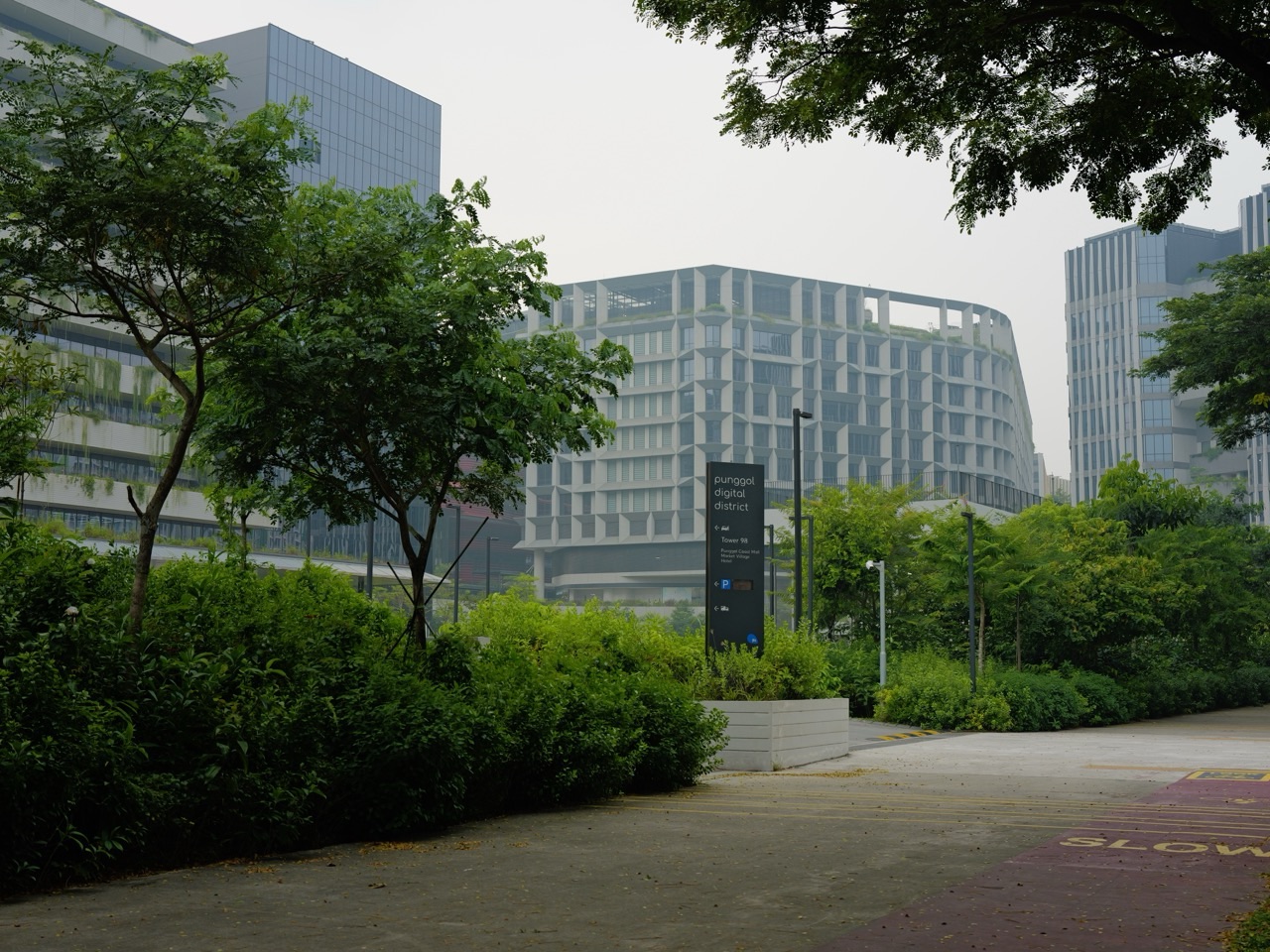
Quick answer: Punggol residents now have a new higher-education development to consider. DigiPen (Singapore) has announced three independently offered degree programmes at its expanded Punggol Digital District (PDD) facility: the BA in Digital Entertainment and Creative Technology, MA in Creative Technology and MS in Computer Science. The published January 2027 intake is for the BA only; the published September 2027 intake covers all three degrees. The programmes are DigiPen awards, not automatically Singapore Institute of Technology (SIT) degrees.
As at 23 October 2026, DigiPen’s official admissions page lists 30 November 2026 as the January BA application deadline and 30 July 2027 as the September deadline. Dates, fees, programme approvals, scholarships and admission requirements can change, so confirm each item directly before committing. For Punggol families, the opportunity is exciting precisely because a real education decision can now begin close to home—but proximity is not admission, an offer, or a promise of employment.
Start with the official DigiPen PDD admissions page, official degree-programme overview and DigiPen’s programme announcement. This guide shows how to interpret the options without mixing up university brands, study levels or the requirements of different students.
At a glance: three degrees, two intake windows, different applicants
| Programme | Typical starting point | What the published 2027 schedule says |
|---|---|---|
| BA in Digital Entertainment and Creative Technology (BA DECT) | Aspiring artists, animators, 3D creators and technically minded visual storytellers | January 2027 or September 2027 intake listed |
| MA in Creative Technology (MACT) | Graduates or experienced creatives considering postgraduate specialisation | September 2027 intake listed |
| MS in Computer Science (MSCS) | Applicants seeking advanced computer science and software/data systems study | September 2027 intake listed |
The degree comparison above is based on the programmes and intake dates DigiPen publishes, not on a guarantee that a particular applicant meets the entry requirements. A BA is an undergraduate degree; an MA and MS are postgraduate degrees. A Secondary 4 learner planning a future pathway is not making the same immediate decision as a polytechnic graduate preparing an application this year.
PDD is not itself an awarding university. It is a district developed by JTC where learning institutions and businesses operate near one another. SIT is an autonomous university in the district, while DigiPen is a separate institution and these new programmes are described as independently offered by DigiPen. Any comparison must name the institution, exact qualification, programme owner and current admissions documents.
Why this matters to a family living in Punggol
For years, parents have treated the journey to a campus as a transport problem: how early must the child leave home, where is the closest station, and how much daily time disappears on the way? A local tertiary-education option changes the practical conversation. It can reduce some travel friction for a successful applicant and make it easier to attend an open house or a carefully arranged consultation. It does not remove the harder decisions about fit, fees, ability or prospects.
The more important shift is educational visibility. A secondary-school student who has never met a rigging artist may only recognise ‘art’ or ‘computers’ as school subjects. A named local programme makes careers such as animator, technical artist, environment designer, software developer and creative technologist easier to investigate. Those are different jobs. An excellent science student may find visual production uninteresting; a talented illustrator may enjoy the design side of an interactive experience while preferring not to specialise in computing.
Residents should therefore read the announcement as a new route to examine, not a recommendation that everyone enter it. The right educational choice links a learner’s interests, current evidence, qualification eligibility, practical constraints and career direction.
What the January and September 2027 deadlines actually mean
DigiPen’s PDD admissions schedule states that the January 2027 BA application and interview process is due by 30 November 2026, rolling acceptances are listed by that date, and the published acceptance deadline is 7 December 2026. Orientation is listed for 4 January 2027. The programme’s own academic calendar determines the first class date.
For September 2027, the published application and interview deadline is 30 July 2027, the acceptance deadline is 6 August 2027, and orientation is listed for 27 August 2027. The September intake encompasses BA DECT, MACT and MSCS. This is useful planning information, but deadlines are administrative cut-offs, not assurances of a place, scholarship or programme start for a particular applicant.
The admissions page also specifies payment of the applicable term’s tuition and an S$218 administrative fee within 14 calendar days of an offer. Do not interpret that figure as total tuition or a complete cost of study. Ask about the entire fee schedule, payment terms, refunds, international-student requirements where relevant, equipment, software, transport, living expenses and what happens if the student withdraws.
BA in Digital Entertainment and Creative Technology: learning to make visual work
DigiPen describes the BA DECT as a programme combining visual craft, art fundamentals, digital tools and professional production processes. Published areas of specialisation include Animation and Rigging, Character and Environment Creation, and Technical Art. These sound similar to parents unfamiliar with the industry, but they reward distinct habits.
Animation and rigging
Animation is not simply making a picture move. A convincing animation requires observation of weight, rhythm, timing, balance, intention and sometimes facial performance. Rigging adds the underlying controllable structure by which an animator can pose a character. An applicant drawn to this direction should enjoy repeated refinement and technical feedback rather than expecting every project to be a quick drawing exercise.
Character and environment creation
A student interested in character or environment art may need strong drawing, form, anatomy or perspective skills, 3D spatial reasoning, reference research and scene composition. An environment artist must think about where a viewer stands, what the surroundings communicate and whether a scene functions within a production. The career involves communication and constraints, not only personal expression.
Technical art
Technical art sits between artistic intention and software pipelines. Someone may need to make materials render efficiently, automate repetitive tasks, solve production bottlenecks or bridge communication between artists and engineers. This is a promising fit for learners who like both design and systematic problem-solving. It should not be mistaken for a route requiring no coding or no art.
The official BA page says applicants must submit an art portfolio and describes optional complimentary portfolio guidance. That guidance does not replace a formal application or guarantee a decision. A Punggol student considering this degree should prioritise sustained original work, the ability to explain decisions and evidence that they can improve after critique.
Building a portfolio while still in secondary school or polytechnic
A portfolio is stronger when it reveals how a student works, not only what the final image looks like. A reader should be able to see the initial problem, the research, early sketches, rejected attempts, technical choices and the final result. A student who can explain a mistake and revise it may offer more useful evidence of readiness than one who presents only polished images without context.
- Keep a dated sketchbook or digital process log with basic thumbnails, observational drawings and short design intentions.
- Complete small projects to a finish. A short, functioning animation with revisions is more instructive than ten abandoned ‘epic’ projects.
- Build varied evidence: observational drawing, composition, 3D form, visual storytelling and one project that required collaboration.
- For group work, state exactly which assets, code, edits and decisions the applicant personally contributed.
- Label original work clearly. Credit references, collaborators and any licensed tools or generative AI assistance according to current portfolio rules.
- Seek specific feedback: what proportion is wrong, why movement lacks weight, where lighting loses clarity, or whether a layout guides the eye.
- Maintain backup copies and a clear file structure; a portfolio is also a demonstration of reliability.
An example school-year project could be a 20-second animation of a familiar Punggol walk: concept sketches, storyboard, blockout, movement tests, sound permissions, two feedback cycles and a final reflection. The location offers subject matter, not an admissions advantage. The same disciplined method works for an original game environment or an information-visualisation prototype.
Do not assume that an existing photography account, a generic AI-image collection or school art grades automatically meet the portfolio brief. The official requirement matters. Use DigiPen’s current submission instructions and faculty guidance, and ask whether particular formats, page counts, originality statements or interviews apply to your intended intake.
MA in Creative Technology: for learners building on an earlier degree or professional practice
The MACT is positioned as graduate-level study across design, art and technological systems. Its published themes include real-time cinematics, procedural art, simulations, virtual production and generative technologies. At postgraduate level, the meaningful question is rarely ‘Do I like digital art?’ It is ‘What specialist problem do I want to become capable of solving, and why does this degree help?’
A visual designer might want to move from making individual assets to designing repeatable workflows. A production artist might need a better grasp of scripting, technical direction or multi-disciplinary project leadership. Another applicant may want to research immersive experience design. They could all be interested in the same MA for different reasons, but their application narratives and preparation should not be identical.
Applicants should examine academic prerequisites, recognised prior qualifications, portfolio expectations, potential professional experience requirements, studio workload, capstone supervision, published learning outcomes and career services. Someone working full-time should establish whether the programme’s current format genuinely fits a work schedule. Do not assume that being located in Punggol means evening or part-time delivery.
MS in Computer Science: advanced computing is more than knowing how to code
The MSCS is described by DigiPen as a postgraduate route for advanced software and computer science capabilities, including work with data across its lifecycle. A degree of this kind requires more than a collection of short tutorials. Applicants should assess mathematical foundation, algorithmic thinking, software architecture, testing, data structures, systems understanding and readiness for deeper problem-solving.
For a Punggol resident considering a technology career change, the essential distinction is readiness for a master’s degree versus readiness for an introductory course. If someone has not yet written a reliable program, a postgraduate course is unlikely to be the appropriate first experiment. A smaller, lower-risk course or independent foundational project may reveal interests and gaps before they make a much larger decision.
An appropriate preparation exercise might be a simple but complete data application: gather openly licensed data, document where it came from, clean it, write and test code, explain uncertainty, demonstrate the interface, and report failures honestly. The quality of reasoning is more revealing than attaching fashionable labels such as ‘AI powered’.
How to compare DigiPen with SIT without getting confused
| Decision point | DigiPen PDD new independently offered degrees | SIT Punggol university pathway |
|---|---|---|
| Institution | DigiPen (Singapore) | Singapore Institute of Technology |
| Example qualification | BA DECT, MACT, MSCS | SIT undergraduate and postgraduate awards according to the selected programme |
| Admissions | Check DigiPen’s PDD admissions and portfolio or graduate-entry requirements | Check SIT’s official admissions and programme-specific criteria |
| Study method | Refer to each DigiPen programme’s published studio/project curriculum | SIT emphasises applied learning and industry collaboration; requirements vary by programme |
| Funding or aid | Use DigiPen’s programme-specific published policies; do not infer subsidies | Use SIT’s current fee, subsidy and financial-aid policies |
| Career outcomes | Investigate specific creative or computing roles and the relevant portfolio | Investigate the particular discipline and, where offered, work-study arrangements |
For a deeper introduction to SIT’s model, read SIT Campus, Applied Degrees and the Integrated Work Study Programme. For the district’s bigger role, see Growing Up Beside SIT and Punggol Digital District. Neither page should be substituted for the current admissions rules of the course the student actually wants.
The Punggol family’s decision tree
- Is the learner exploring rather than applying? Build subject interest, small original projects, conversations with professionals and a realistic reading of job tasks.
- Is the learner finishing secondary school? Identify a legitimate post-secondary route, qualification sequence and subjects that support the eventual degree; do not leapfrog academic entry rules.
- Is the learner in ITE, polytechnic or JC? Compare direct eligibility, portfolio strength, required bridging study, transfer policies and realistic financing.
- Is the learner a recent graduate? Distinguish an undergraduate programme from graduate study; decide whether the next qualification adds skills they cannot gain efficiently elsewhere.
- Is the learner a working adult? Compare direct career value, study format, income disruption, family commitments and an evidence-based return on learning.
- Is the learner an international applicant? Follow DigiPen’s student-pass instructions and ICA requirements rather than assuming a local residence or course enquiry establishes permission to study.
A practical twelve-week exploration before paying application fees
Weeks 1–2: clarify the work, not just the course label
Write down three roles the learner imagines: perhaps animator, technical artist and software engineer. For each, examine ten real descriptions of tasks, not just salary headlines. Identify whether the daily work involves drawing, programming, revision, mathematics, client communication, production schedules or technical maintenance. If the learner cannot distinguish the jobs yet, there is no shame in slowing the application conversation long enough to research them.
Weeks 3–4: test basic skill foundations
For art-oriented paths, try a small observational drawing series, storyboard and basic 3D scene. For a computing path, complete an introductory program that can be tested and explained. Record which tasks create curiosity and which ones drain it. This information is often more revealing than a generic career-interest quiz.
Weeks 5–6: produce a complete small project
Define a finish line that is possible within two weeks: a simple interactive sequence, a polished environment asset or a documented program. Fix known errors and save the earlier versions. A tiny finished project teaches estimating effort, responding to constraints and organising files.
Weeks 7–8: seek calibrated feedback
Request feedback from a teacher, practising professional or a programme’s authorised guidance service. Ask reviewers for two specific strengths, three technical weaknesses and one revision priority. Do not use anonymous internet praise as the sole quality test. Learning happens when the learner can turn feedback into changed work.
Weeks 9–10: compare entry, finance and campus realities
Download the latest entry requirements and fee information for each shortlisted programme. Work out the cost of one term and the full planned course, including plausible software or hardware needs. Confirm the mode, academic calendar, transit, withdrawal terms and support services. A family budget is not a reason to reject ambition; it is how ambition becomes sustainable.
Weeks 11–12: make a conditional application decision
Build a one-page summary with the intended degree, deadline, document checklist, strengths, gaps, funding plan and an alternative route. If crucial requirements remain unknown, submit an official enquiry. An application decision should be supported by evidence, not pressure created by a nearby campus.
Costs, scholarships and the mistake of assuming all higher education is funded alike
Singapore’s higher-education funding landscape depends on institution, course, citizenship, eligibility and the specific support mechanism. Families sometimes see the words ‘Singapore’, ‘university’ and ‘Punggol’ and assume the fees must follow another university’s subsidy schedule. They may not. DigiPen identifies a scholarship for its BA on its programme page, but scholarships must be verified against its actual published criteria, application deadlines and terms.
A sound family worksheet separates application-related charges, tuition, administrative fees, materials, devices, specialist software, transport, meals and income forgone. It also distinguishes confirmed money from hoped-for money. A possible scholarship belongs in a scenario column until a formal award is issued. Similarly, a course being near SkillsFuture-related employers does not establish that SkillsFuture Credit applies to that course.
For a general guide to training support rather than DigiPen-specific fee eligibility, read SkillsFuture Credit, Mid-Career Training and Career Guidance in Punggol. Use the official course provider and funding agency as the final authority.
Parents: questions to ask at an open house or consultation
- Who awards this exact degree, and which current course handbook controls the programme?
- What are the entry requirements for my child’s actual qualification, not a different applicant group?
- Is a portfolio mandatory? What does an acceptable submission demonstrate and how will it be evaluated?
- Can we see typical weekly work, critique, coding, studio and group-project expectations?
- Which parts of the course involve original production rather than solely tool training?
- Is study full-time or part-time? What is the required on-campus attendance?
- What does the complete fee schedule look like for this intake and citizenship or residency category?
- Which scholarships or aid programmes are specifically available, and what conditions attach?
- How is career preparation supported, and what outcome evidence is available for the exact programme?
- What happens if a student needs academic support, a leave of absence or a change of plan?
What students can already learn from Punggol Digital District
JTC describes the Punggol Digital District as a place where digital industries, the SIT campus and community spaces come together. The educational value for younger residents is not that they may enter every office or laboratory. It is that they can connect school subjects to visible systems: how a smart district moves people, manages energy, supports services, collects data and creates digital products.
A student who likes animation can sketch transitions and information signs at a public location, then design an original accessible interface. A student who likes computer science can inspect openly published data sets and build a route-planning exercise. A visual storyteller can interview consenting relatives about how the neighbourhood has changed, producing a short documentary with proper attribution. In each case, meaningful learning comes from an explicit task and the learner’s reflection, not simply visiting a high-tech landmark.
Respect campus restrictions, photography signs and the privacy of other visitors. The public-facing parts of a university campus do not make laboratories, equipment or classrooms freely available. Residents should confirm event registration, participant eligibility and access permissions directly with organisers.
Distinguish interest, readiness and formal eligibility
A family considering a new programme must answer three different questions. First, does the learner genuinely enjoy the discipline? Second, do their current projects and foundational abilities suggest readiness for the course’s technical and academic demands? Third, do their certificates, transcripts and portfolio satisfy the specific institution’s formal admission rules? Enjoyment is not the same as readiness, and readiness is not the same as eligibility. A Secondary 3 child can become deeply interested in digital animation without becoming immediately eligible for an undergraduate programme.
For an undergraduate application, the correct next step may be to strengthen an existing school or post-secondary pathway. For a graduate degree, the applicant may need to show relevant prior qualifications and discipline-specific preparation. DigiPen’s admissions office, not this article, determines how a particular qualification is assessed for the intended intake. When an answer is unclear, obtain the programme-specific guidance in writing and keep a dated record.
A useful family comparison chart can have four columns: intended course, formal requirement, evidence already available and action needed. This simple format prevents an applicant from spending on new equipment or coaching when the real issue is a missing qualification or deadline. It also helps a student see that a gap can be addressed deliberately rather than through vague anxiety.
A two-year exploration plan for a Punggol secondary student
In the first school term, begin with low-cost discovery: observational drawing, simple 3D objects, basic coding tutorials where appropriate, and discussion of actual job tasks. Ask what the student chooses to continue without being reminded. Interest that survives repeated revision is a stronger signal than enthusiasm produced by a single impressive video.
During the second and third terms, complete three modest projects. Each should include a brief, a plan, at least one technical difficulty, feedback from an appropriate mentor and an honest final reflection. A learner who can explain why a storyboard failed, how the timing was improved and what remains weak has developed more useful habits than one who presents ten unfinished effects demos.
In the following year, protect school performance and widen the comparison of post-secondary routes. Discuss how an ITE or polytechnic diploma, JC path or another recognised course might connect to the learner’s long-term aim, subject to current entry rules. The objective is not to lock a fifteen-year-old into a single degree. It is to help the learner develop knowledge and work evidence while preserving options.
Near the time of a real application, examine the latest DigiPen course handbook and portfolio requirements afresh. Requirements, dates, award structures and costs can change between a child’s first curiosity and a future intake. The right progression is exploration, disciplined work, accurate pathway research and then a decision at the proper time.
Worked project: a forty-second animated story
Suppose a teenager designs a forty-second animated scene about a fictional student finding their way through a futuristic neighbourhood. The project can be divided into a written brief, eight storyboard frames, rough movements, environmental design, one technical pass, two feedback sessions and a final revision. The learner should show earlier versions to demonstrate what changed, rather than deleting all evidence of mistakes.
The learning is not simply visual polish. Did the storyboard communicate the intended story before sound was added? Was the movement understandable? Did the creator identify a bottleneck in asset preparation or scene rendering? Could another person understand the file structure and credits? These questions introduce the collaborative processes used in digital production.
For a more computing-oriented learner, the equivalent may be a small application that reads a permitted sample dataset, displays results and tests common error cases. Document the source of the data, what was changed, what the program does not handle and which decisions were made by the student. Neither exercise is presented as a DigiPen admissions assignment; each is a safe method of developing evidence and independent judgment.
A clearer financial model for university study
A programme’s published fee is not a complete household budget. Families should separate application charges, tuition, administrative costs, software and devices, transport, meals, possible accommodation and any reduced income from paid work. A short course, a bachelor degree and a master’s degree have different time commitments and should not be compared using a single headline price.
Build a base scenario using only confirmed fees and an alternative higher-cost scenario covering plausible expenses. Add scholarships or other aid to the budget only after checking official eligibility and, for the confirmed scenario, receiving an actual award. A scholarship advertised on a course page is an opportunity to apply, not money already available to the family.
The most useful comparison may involve a legitimate alternative degree or a smaller course that tests interest first. A working adult who has never programmed should not assume that an advanced computing master’s degree is the most suitable introduction. Similarly, a talented creative learner should compare the particular curriculum and outcomes, not choose solely because the building is close to home.
Questions a portfolio or postgraduate interviewer may reveal
Students often rehearse what software they used but are less prepared to explain why they chose a particular method. Useful practice questions include: What did you try before selecting this approach? Which result surprised you? What would you change if you had half the time? Which work was your own, and which depended on collaborators? What would you need to learn to tackle a more difficult version?
A postgraduate applicant can add a related set of questions: Which capability does the degree address that work experience alone has not developed? What academic prerequisites are required? How will the proposed course fit current commitments? What evidence shows that the applicant can sustain graduate-level reading, technical work and project deadlines?
There is no benefit in inventing polished answers that conceal uncertainty. Strong creative and technical education rewards the habit of showing how a decision was reached, which evidence supported it, and what still needs investigation. That is the habit a Punggol family can begin developing long before an admissions interview.
Frequently asked questions
Are these three new degrees offered by SIT?
No. DigiPen’s announcement says the BA DECT, MACT and MSCS are offered independently by DigiPen (Singapore). SIT is a separate institution in Punggol Digital District, and its academic programmes must be checked separately.
Can a Secondary 4 student enrol directly in the BA?
Not on the basis of living in Punggol. Eligibility depends on the programme’s current qualifications and admissions rules. A younger student should use the degree as a long-range planning reference and identify the correct post-secondary steps.
Is the January 2027 intake for all three degrees?
No. The current published January 2027 schedule identifies the BA in Digital Entertainment and Creative Technology. The September 2027 schedule identifies the BA, MA and MS. Always reconfirm this before applying.
Will residents get priority because DigiPen is in Punggol?
No published general neighbourhood-priority rule has been established in the official information reviewed here. A Punggol address should not be treated as an admissions advantage unless the institution expressly says so.
Is the new BA only for students who want to create games?
No. The published curriculum and prospective roles include animation, visual effects, digital media, technical art, production design and related creative-technology work. Applicants still need to establish which specialisation matches their own aims.
Must every portfolio be built using expensive software?
The official portfolio brief controls, not a parent’s guess about branded software. Strong observational, compositional and problem-solving evidence can be built with modest resources, but format and technical requirements should be checked before submission.
Does the location guarantee an internship or a job at PDD?
No. Industry co-location is an opportunity for contact and collaboration, not an entitlement to placements. Employment depends on employers, openings, skills, selection and the chosen programme’s arrangements.
Should a mid-career learner choose the MA or MS because it is near home?
Only if the admissions requirements, graduate-level work and professional outcomes match an evidence-based goal. A shorter recognised course may sometimes be more appropriate than a full postgraduate degree.
Where do I check the latest deadlines?
Use DigiPen’s official PDD admissions page. Application dates and individual course availability can be revised, and the published page is more authoritative than a social post or a cached school listing.
The bottom line for Punggol
DigiPen’s Punggol expansion is an important new education option because it adds specific creative and computing degrees to a district already associated with applied learning and the digital economy. The correct response is neither blind enthusiasm nor dismissal. Identify the learner’s level, compare the three programmes accurately, study the admission criteria, build demonstrable work and cost the decision honestly.
When Punggol parents begin with the qualification rather than the publicity, the new campus becomes something useful: another route through which an interested learner can develop a real capability and eventually bring it into the world.
How Mathematics, English, Science and Art come together in creative technology
Punggol families exploring a creative-technology degree should not treat school subjects as unrelated examination boxes. A convincing digital environment uses visual composition, accurate proportion, material behaviour, animation timing, technical documentation and teamwork. A student who cannot calculate a consistent scale may struggle to build a believable world. A student who cannot explain a problem clearly may struggle to collaborate even when the artwork is strong. The aim during secondary school is to develop transferable capability before choosing a specialisation.
English develops the ability to interpret a brief, write a project update, give constructive critique and communicate with people from different disciplines. Mathematics supports transformations, angles, scale, measurement, vectors, probability and the organisation of timed events. Science offers reasoning about movement, materials, light and human perception. Art contributes observation, composition, storytelling and iterative experimentation. Computing contributes programmable, repeatable methods, tests and the ability to recover from technical failure.
For example, a group might build a short interactive scene depicting an imaginary Punggol waterfront market. The artist wants convincing lighting, the animator wants natural movement, the developer wants a responsive frame rate and the writer wants an understandable story. They will need to agree on priorities rather than pretending every desirable feature can be finished with unlimited resources.
| Foundation | Where it appears in production | Student-level practice |
|---|---|---|
| English | A production brief and clear explanation of revisions | Write a 150-word brief that another learner can follow |
| Mathematics | Scale, coordinates, timing and motion | Measure and draw objects at a consistent chosen scale |
| Science | Lighting, motion and material assumptions | Compare safe reference photographs with an imagined scene |
| Art | Composition, gesture and focal hierarchy | Sketch two versions and explain which communicates better |
| Computing | Repeatability, file formats and logic | Create a simple program or test checklist for a repeated task |
| Teamwork | Ownership, feedback and deadline management | Keep a project log naming actual contributions |
These activities are not advertised admissions modules. They are learning exercises families can use to decide whether a student genuinely enjoys the type of work a future qualification involves. They also protect against early over-specialisation: teenagers who improve communication, numeracy and critical thinking keep more post-secondary routes open.
How parents can review a portfolio without pretending to be admissions officers
Only DigiPen’s official portfolio brief and assessment process determine admission. Still, a home review is useful when it asks for evidence rather than merely scoring a visually pleasing result. A learner should be able to show how an original idea developed, which alternatives were rejected and what changed after feedback.
| Review dimension | Evidence worth asking for |
|---|---|
| Originality | Dated sketches, source credits, recorded creative decisions |
| Foundational skill | Observation, proportions, timing, visual hierarchy and controlled technique |
| Process | Early attempts, tests, errors and clear reasons for revisions |
| Completion | A finished deliverable that meets the stated student brief |
| Reflection | A frank description of weaknesses and a realistic improvement plan |
| Authorship | Clear distinction between individual work, group work and tool assistance |
One simple home exercise is to use a three-point scale: missing evidence, partial evidence or convincing evidence. Six dimensions produce a maximum of twelve points, but the number is not a prediction of admissions success. If a student earns low marks for completion, help them finish a smaller work. If the difficulty is authorship, fix the project documentation. If the weakest area is observational drawing, practise a fundamental rather than buying new software.
Generative AI requires particular care. Some software can create a striking image with little evidence of manual visual control. Tools may be useful, but a learner should never present AI output, traced material or teammates’ work as an independent achievement. They should follow the institution’s current instructions on acceptable assistance, declare substantial contributions appropriately and preserve evidence of what they personally can do. The strongest portfolio does not need to conceal its process.
A complete example: a fictional Punggol visitor wayfinding project
Step 1 — Define a real user need
Choose a fictional visitor who wants to find a library, a sheltered resting space or a public-transport connection. Describe the visitor’s constraints: perhaps a stroller, unfamiliarity with local signage or difficulty understanding small text. Do not claim to represent all seniors or all people with disabilities. The first output is a specific design question and a list of assumptions to test.
Step 2 — Design several solutions before opening sophisticated software
Draw three alternative screen layouts. Compare how much information is visible, how the user knows where to begin and whether important labels remain legible. Create a simple hierarchy of essential information and secondary details. Use fictional route data or responsibly attributed public information rather than copying a commercial application’s maps.
Step 3 — Build a narrow prototype
Produce five linked screens in a slide deck, a simple web page or another suitable tool. Include a welcome view, a destination choice, a route summary, a request for clarification and an error state. A functioning slideshow may be a better first prototype than an unfinished program full of effects. The output should be understandable without a long explanation from its creator.
Step 4 — Test with permission
Invite two consenting testers to complete a hypothetical task and record the result. Do not observe unsuspecting members of the public or collect personal information. Ask whether the button names were clear, what was confusing and where someone became stuck. Distinguish opinions from measured observations. If both testers stop on the same screen, revise that part of the design.
Step 5 — Document the learning
Save the early sketches, the revised prototype, a short test table and a reflection. State honestly that the work is not an authorised government directory, not an accessibility-certified service and not a live travel application. A professional portfolio needs evidence of limits as well as achievements. The value lies in a transparent process: problem, prototype, feedback, changes and conclusion.
Four different learners, four very different decisions
A Secondary 3 student fascinated by animation
This learner does not need to rush into a January 2027 degree application. They need to complete their present qualification, understand the legitimate post-secondary route and spend manageable time on drawing, stories and short original projects. Ask whether they enjoy revising work after critique. Ask whether the excitement persists after multiple versions of the same movement. That is a more meaningful indicator than loving animated films.
A polytechnic graduate considering an undergraduate BA
This applicant may be closer to entry. Their tasks are specific: check the diploma against current requirements, document individual project contributions, meet portfolio instructions, compare the full financial commitment and clarify any assumptions about exemptions or advanced standing. A prior team project is useful evidence only if the applicant identifies exactly which drawings, assets, code and decisions were their own.
A working designer considering the postgraduate MA
This person should identify a specialist capability they cannot already perform reliably. Perhaps they want stronger procedural workflows or technical leadership in a real-time production environment. A postgraduate degree is an expensive and substantial commitment, so the applicant should compare it with short focused learning, mentorship and professional project experience before deciding. They must also verify whether delivery mode and workload fit employment.
A graduate interested in the MS in Computer Science
This candidate may enjoy code but need to strengthen algorithms, systems understanding or mathematics. The right preparation is not collecting certificates indiscriminately; it is testing fundamentals and matching them to the programme’s published expectations. They may create a small documented data program, explain its limits and seek a precise admissions enquiry. Graduate-level study should not be assumed to start from zero.
The four scenarios are illustrative, not descriptions of actual residents. They demonstrate why the same neighbourhood opportunity leads to different next steps depending on academic level, readiness and resources.
How to prepare for an interview with evidence rather than slogans
Where interviews are part of an admission process, the candidate should practise explaining one completed project without memorised claims about being ‘passionate’ or ‘innovative’. A useful explanation begins with the intended audience, the problem, available tools, decisions made, mistakes found and evidence of improvement. If a student can describe why the first attempt failed, they usually understand the work more deeply than someone who can only praise the final output.
- Prepare one project that can be explained from first sketch to final export.
- Name three decisions you personally made and one choice you would now change.
- Identify what feedback revealed and how the next version differed.
- State precisely which parts were produced by collaborators or assistive tools.
- Practise a concise account of a technical obstacle, attempted solutions and verification.
- Explain a genuine skill gap and the steps already taken to address it.
- Ask informed questions about supervision, assessment, workload, industry projects and student support rather than relying only on marketing labels.
Parents can play the role of curious non-specialists in a rehearsal. They should ask questions, not supply a prepared script. A polished performance cannot substitute for authentic skills, and a hesitant but honest answer may be more useful to the family than an impressive speech covering no real work.
The total-cost worksheet that prevents mistaken comparisons
Fees are often presented in different units. A website may show an amount per academic term while a parent thinks of the total cost of a degree. Build a spreadsheet using the same units for every programme. Record the number of terms, actual published tuition, compulsory charges, anticipated equipment and a reasonable contingency. Unknown figures should remain marked unknown rather than being replaced by convenient guesses.
For example, a purely hypothetical programme charging S$X per term for N terms has tuition equal to X multiplied by N. That formula does not tell you the correct X or N for DigiPen: those must come from the provider’s current fee schedule and course structure. Likewise, a student who already owns capable equipment should not automatically include the price of an unnecessary high-end laptop in the budget. Compare realistic incremental expenses.
DigiPen’s current PDD admissions page explicitly states that the applicable academic term’s tuition and an S$218 administrative fee are due within fourteen calendar days of the offer. That is a payment rule, not the total tuition price. Before accepting, check the written refund conditions, potential payment arrangements and consequences of withdrawal or a postponed start.
A scholarship application, an advertised opportunity and a formal award are different states. Funding cannot safely be included as confirmed money until the family has an offer with clear terms. Equally, students should not infer that every qualification in Punggol has the same government tuition support as SIT, nor that every course is payable with SkillsFuture Credit. Ask the institution and the relevant agency directly.
Nine checks for the final application decision
- Use the actual programme-specific application portal and current handbook.
- Check which degrees accept applicants in January and which have September intakes.
- Confirm the awarding institution rather than treating the PDD location as the qualification.
- Match the applicant’s real academic background to the stated entry requirements.
- Check current portfolio rules, language requirements, document formats and interview instructions.
- Calculate a complete cost using verified fees, realistic study materials and written award conditions.
- Confirm full-time or part-time arrangements, academic calendar and necessary attendance.
- Preserve copies of official submissions and acceptance communications in a secure folder.
- Compare a conditional offer with the learner’s long-term goals and financial constraints before paying.


