
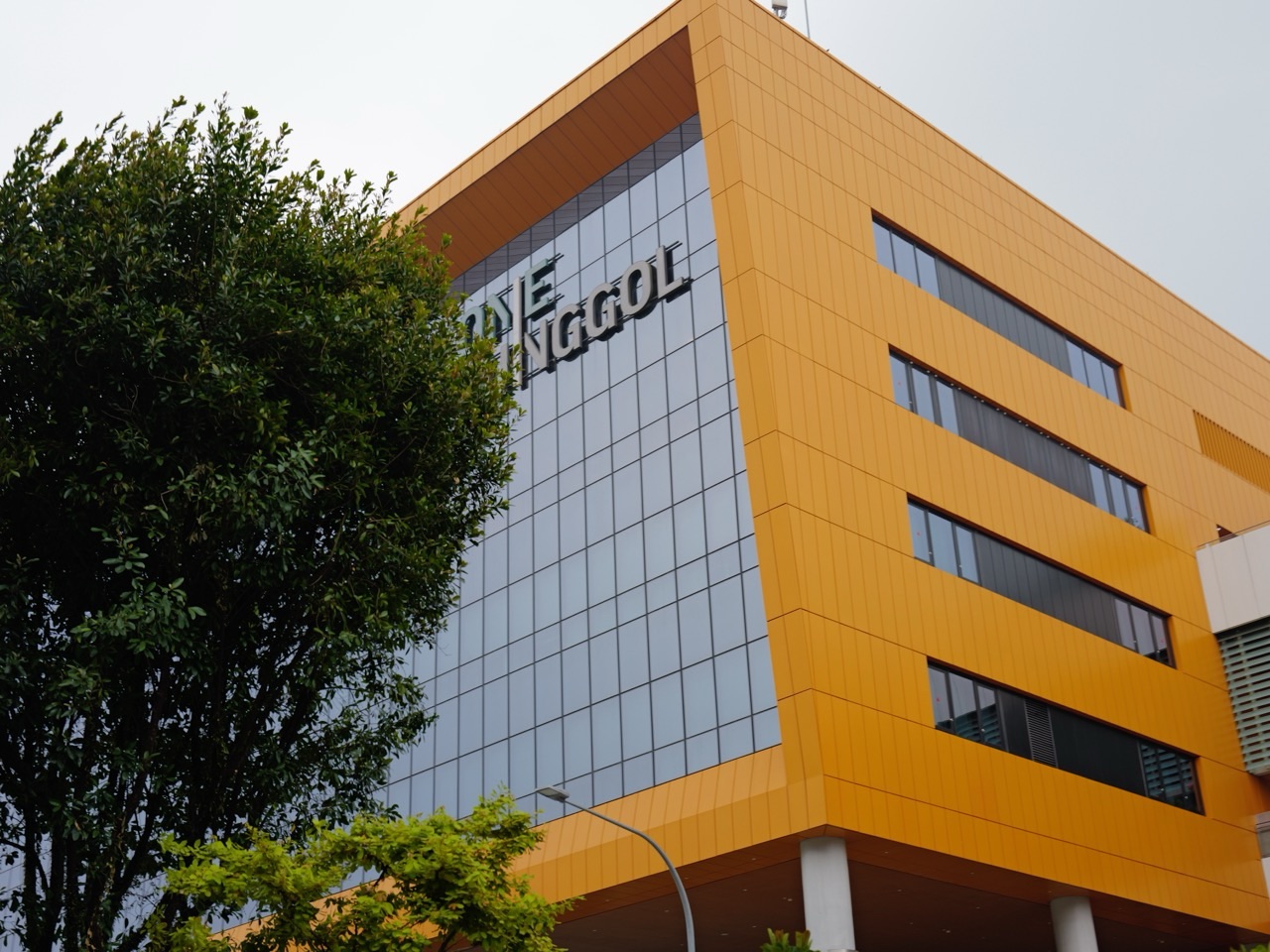
The top 10 things to do in Punggol for money-smart families are to practise saving, spending and sharing at home, borrow books at Punggol Regional Library before buying, plan a One Punggol hawker meal, compare supermarket unit prices, use LTA’s fare calculator for a car-free outing, weigh a free Waterway Park walk against paid SAFRA play, budget a cinema visit at Waterway Point, make thoughtful food choices at Punggol Coast Hawker Centre, learn to check scam messages and review actual family expenses after the day.
Best first money lesson: choose one ordinary decision and show the cost clearly. MoneySense specifically recommends teaching children with real allowance, grocery and restaurant choices. At One Punggol, a meal lets children practise adding prices without needing an invented store ranking. For a zero-purchase option, browse Punggol Regional Library. For an outdoor option, choose a safe public park visit while remembering that transport and optional food may still cost money.
The October 2026 examples below clearly label every invented price, budget and saving. Real menus, tickets, fares and promotions change; they should be read from the actual operator on the date of a purchase. Financial literacy is not a contest to choose the cheapest option every time. It is knowing the trade-offs between adequate needs, enjoyment, future goals and household capacity.
Choose a financial skill by age and need
- Preschool and early Primary: practise simple exchange, counting, saving goals and distinguishing essentials from extras without withholding necessities.
- Upper Primary: compare menus, calculate change, use a weekly saving plan and explain what must be given up when a choice is made.
- Secondary students: calculate unit prices, compare transport costs, track actual expenses and question promotions or unsolicited payment requests.
- Parents: model planning and thoughtful trade-offs; use the household’s real resources without exposing private financial information to others.
- Adults needing structured guidance: consult MoneySense’s current budgeting and emergency-fund resources, treating published rules of thumb as general rather than personal guarantees.
The four-part family money decision
First identify the purpose: a nourishing meal, a required journey, entertainment or a savings goal. Second look at the real total cost, not merely the most prominent number on the label. Third consider whether the choice leaves enough for necessities and future commitments. Fourth revisit the decision after use: was it satisfying, did the item last and was the total within expectations? This turns an outing into an opportunity to build judgement.
An ordinary conversation is often enough. A child who asks for an extra dessert can be invited to compare it with another item they genuinely want. The adult can explain why a choice fits the budget without shaming the request. Children should not be made responsible for household debt or required to forgo food as a punishment. Responsible money teaching supports confidence, not anxiety.
MoneySense advises saving deliberately and keeping track of expenses. Its 2026 Financial Basics guidance also refers to maintaining emergency reserves for adults. Those concepts are related but distinct: a child’s small savings box should support age-appropriate choices; an adult emergency fund covers genuinely unexpected essential costs. Avoid teaching an investment return as guaranteed or claiming a rule of thumb fits every family.
Ten money-smart Punggol activities
1. Start a save, spend and share money-jar challenge at home
Where: Any Punggol household, with guidance from the official MoneySense family resources.
Why it develops financial judgement
MoneySense recommends introducing children to saving, spending and sharing using separate money boxes or jars. The point is not that every family must divide money into identical fixed percentages, but that a child should see how a decision today affects choices later. A transparent or clearly labelled container can make an abstract balance visible. Young children learn from concrete examples, while older children can record deposits in a notebook or spreadsheet.
How to do it
Agree on a realistic amount of discretionary allowance that does not jeopardise a child’s essential needs. Let the child label three boxes for short-term spending, future saving and optional sharing. On each allowance day, choose amounts intentionally and write down the decision. Avoid treating donations as a penalty or saving as proof of virtue. Discuss the goal and what would make it genuinely worth waiting for. Review the balance weekly, correcting subtraction mistakes without shaming the child.
Worked Punggol example
Fictional example: a child receives S$12 for a learning exercise and chooses S$6 for immediate spending, S$4 for savings and S$2 for sharing. The sum is S$12. After three weeks of identical allocations the savings box contains S$12, assuming none was withdrawn. A parent asks what goal that savings might reach and whether the planned spending leaves enough for the child’s real requirements. Every figure is illustrative, not advice about how much a family should provide.
An extension question
Compare two hypothetical choices over four weeks. In Plan A the learner saves S$4 weekly, totalling S$16. In Plan B they save S$3 weekly, totalling S$12, but can spend S$1 more each week. Discuss the trade-off, not just the larger number. An older child can add a separate column for actual spending receipts and check whether the savings plan was realistic.
Practical limits
Do not suggest denying meals, transport or other necessities to teach consequences. Families have different resources and support needs. Money management exercises should be supportive, age-appropriate and private. Banking and investment decisions require separate consideration beyond these jars.
Primary or operator reference: Start a save, spend and share money-jar challenge at home. Always check actual prices and eligibility when applicable.
2. Browse Punggol Regional Library and practise borrowing before buying
Where: Punggol Regional Library, Levels 1–5 of One Punggol.
Why it develops financial judgement
A library makes the difference between enjoyment and ownership tangible. Families can read a book without purchasing a permanent copy, then decide later whether owning it would deliver additional value. Punggol Regional Library is a real public facility within One Punggol, so this exercise gives financial literacy a local place rather than turning it into a generic list of spending tips. It also helps children think about shared public resources and the responsibility to return what they borrow.
How to do it
Choose a topic the child genuinely enjoys, browse a public collection and check NLB’s current borrowing rules. Record the title, not a private library account number, and ask whether the family expects to reread it. For a planned purchase, compare borrowing the available title with buying a legal copy elsewhere, without implying that one decision is always best. Use any genuine store price only with a current date or create a clearly fictional comparison on paper.
Worked Punggol example
Illustrative case: a parent considers buying three storybooks priced at a hypothetical S$14 each. The paper calculation gives S$42. They decide to borrow two available books and buy one that their child wants to revisit regularly. The fictional outlay becomes S$14, a S$28 difference under the stated assumptions. This does not claim those exact titles cost S$14 or that every borrowing option is available at the Punggol branch.
An extension question
Discuss why borrowing may be less suitable when a book is unavailable, needs to be annotated or will be used frequently for a long project. Introduce value per use: a book used 20 times may justify a different decision from one read once. The skill is choosing consciously, not promising that free resources meet every educational requirement.
Practical limits
Library materials have due dates, borrower eligibility and damage or loss obligations; specialised rooms and programmes can have additional rules. Do not treat a book as free to keep or scan in violation of copyright. Reader account credentials must remain private.
Primary or operator reference: Browse Punggol Regional Library and practise borrowing before buying. Always check actual prices and eligibility when applicable.
3. Plan a fixed-cost family lunch at One Punggol Hawker Centre
Where: One Punggol Hawker Centre, Level 2, 1 Punggol Drive.
Why it develops financial judgement
MoneySense explicitly recommends using everyday meals to teach menu comparison, addition and decisions about wants. The publicly operating One Punggol Hawker Centre offers many kinds of meals, but a guide should never invent current stall menu prices. A useful budget exercise can use either real, observed prices from a menu on the day or fictional amounts clearly labelled for teaching.
How to do it
Set a meal budget that covers adequate food and allows for dietary needs. At the hawker centre, look at currently operating stalls and displayed menus without obstructing queues. Ask family members to distinguish a filling main dish from optional extras, then add the actual selected items before ordering. If teaching at home, use an invented menu; explain what would happen if a price changes or one desired dish sells out.
Worked Punggol example
Illustrative prices only: two mains cost S$5.20 each, one shared side S$3.00, and two drinks S$1.80 each. Total = S$10.40 + S$3.00 + S$3.60 = S$17.00. From a fictional S$20 budget, the remainder is S$3.00. If the family chooses drinking water they have already brought where appropriate, the arithmetic changes, but nobody should be pressured to reduce necessary food to maximise an exercise score.
An extension question
Try a three-option table for the same hypothetical group: sufficient mains only, mains plus drinks, and a more expensive combination. Calculate how much each leaves from the same budget and explain why ‘cheapest’ is not always most suitable. Include portions, dietary needs and shared dining etiquette. The family can compare calculations with an actual receipt if one is available.
Practical limits
Stall hours, halal status, menu ingredients and prices should be checked with the operator at the time. Public hawker seating is shared, not a classroom reservation area. Do not collect personal data or photograph other diners for a budgeting worksheet.
Primary or operator reference: Plan a fixed-cost family lunch at One Punggol Hawker Centre. Always check actual prices and eligibility when applicable.
4. Compare supermarket pack sizes using price per unit
Where: An operating Punggol supermarket chosen through a current directory, or a paper exercise at home.
Why it develops financial judgement
A product’s shelf price does not tell you whether it is good value per gram or per unit. MoneySense encourages children to compare grocery prices and to understand the difference between necessary purchases and optional treats. Punggol families can practise using real labels in a store they actually visit, with no obligation to buy anything. The useful lesson is converting quantities consistently and recognising that a lower unit cost may still require a larger total cash outlay.
How to do it
Choose two packages of a similar product, read the displayed prices and the net mass or volume, then convert each to a comparable unit. For example, divide a pack price by the number of hundreds of grams. Consider shelf-life, quality, available storage and whether the family will use the full contents. If a promotion requires a membership or buying several packs, note that condition. Avoid photographing staff or other customers without permission.
Worked Punggol example
Fictional example: 500g of cereal is priced at S$4.50 and 750g at S$6.00. The first costs S$0.90 per 100g, the second S$0.80 per 100g. The larger pack saves S$0.10 per 100g but costs S$1.50 more at checkout. It becomes a better value only if the quantity is useful and the extra cash is available. None of the products or prices is a claim about a Punggol shop.
An extension question
Consider a hypothetical sale in which two 500g packs together cost S$8.00. That gives 1,000g for S$8.00, also S$0.80 per 100g. Ask whether the larger quantity is needed and where it can be stored. Discuss why a unit-price tie does not establish that two purchases have equal convenience, expiry risk or financial suitability.
Practical limits
Do not compare mass and volume as identical units or assume all promotions apply to every customer. Food safety and nutrition are separate questions from a price-per-unit calculation. Buy only what your household can use.
Primary or operator reference: Compare supermarket pack sizes using price per unit. Always check actual prices and eligibility when applicable.
5. Use LTA’s fare calculator to plan a car-free Punggol day
Where: Punggol MRT/LRT, Punggol Coast MRT and actual public transport journeys.
Why it develops financial judgement
Transport is a recurring household cost, and LTA provides an official journey planner and fare calculator for routes and card fares. Punggol’s North East Line station and East and West LRT loops create genuine choices between travel modes, but a trip’s fare is determined by the actual stations, passenger category and fare rules. It is not correct to multiply the number of stops by a guessed flat price.
How to do it
Choose one public destination, enter the real origin and destination into LTA’s fare calculator, and select the applicable fare category. Compare the currently calculated fare with another sensible route if the tool supports it. Add the journeys required by the family and distinguish each person’s eligibility; concession and child-travel conditions differ. If the trip includes bus transfers, follow LTA’s integrated distance fare rules and avoid assuming every tap is a new full fare.
Worked Punggol example
Illustrative numbers, not current LTA tariffs: four people hypothetically pay S$1.80 each for an outward journey and the same amount returning. Total = 4 × S$1.80 × 2 = S$14.40. If the calculator instead gives different actual concession rates, this classroom model must be replaced with the real eligible fares, rather than being published as what a Punggol family will pay.
An extension question
Discuss opportunity cost between a journey that requires one more transfer and a route with a more comfortable step-free path. The cheapest transport outcome may not be the best for a visitor carrying a pram, an older family member or someone with mobility needs. Budgeting should recognise different legitimate constraints, not reward inconvenience.
Practical limits
LTA’s fare calculator and transport operations can change; cash, card and concession rates are not interchangeable. The North East Line’s Punggol Coast terminal is different from Punggol Point LRT. Follow live service notices and actual accessible routes.
Primary or operator reference: Use LTA’s fare calculator to plan a car-free Punggol day. Always check actual prices and eligibility when applicable.
6. Compare a free park walk with paid family play at SAFRA
Where: Punggol Waterway Park and Splash @ Kidz Amaze at SAFRA Punggol, 9 Sentul Crescent.
Why it develops financial judgement
A family does not need to spend money on every weekend outing. NParks identifies public Waterway Park walks as free, while SAFRA’s Splash @ Kidz Amaze is a paid indoor water-play attraction with capacity and safety conditions. These are different experiences, not direct substitutes. Comparing them helps children understand opportunity cost: selecting one activity means using time and money that cannot be spent simultaneously elsewhere.
How to do it
List what each option provides, including the weather suitability, ages, travel, ticket costs and supervision needed. For a genuinely paid trip, check the current SAFRA entry fees and availability directly. For a public park trip, budget realistically for transport, refreshments or other optional expenses rather than equating ‘free park’ with a guarantee of zero household spending. Ask the child to identify the one benefit they care about most.
Worked Punggol example
Illustrative budget only: a family has set aside S$45 for weekend leisure. They compare a hypothetical paid activity costing S$32 plus S$8 transport, leaving S$5, with a public park visit costing S$8 transport and S$10 optional food, leaving S$27. The numbers show different discretionary balances, not actual Punggol admission prices. A child can explain why a once-in-a-while special experience may still be worth choosing.
An extension question
Add a rainy-day contingency. If severe weather makes the park unsuitable, choosing a paid alternative only works if the venue is operating, the party meets the rules and the cost fits. SAFRA says normal Kidz Amaze admission is first-come, first-served, subject to availability. Teach the difference between having a plan and having a confirmed reservation.
Practical limits
Never pressure a family to visit unsafe outdoor conditions to save money. Splash requires appropriate adult supervision and water-play hygiene. Published promotion dates and member prices are subject to eligibility and must be checked before booking or travel.
Primary or operator reference: Compare a free park walk with paid family play at SAFRA. Always check actual prices and eligibility when applicable.
7. Use Shaw at Waterway Point to separate ticket cost from total outing cost
Where: Shaw Theatres, East Wing #B2-11, Waterway Point, 83 Punggol Central.
Why it develops financial judgement
Waterway Point’s current directory identifies Shaw Theatres as an operating cinema, giving families a concrete opportunity to distinguish a headline ticket price from the overall cost of an entertainment day. Cinema tickets can vary with session, film, format and eligibility. Food and transport add costs. A money-smart comparison asks what the complete activity requires, without pretending that a movie is a necessity or that a premium format is better for everyone.
How to do it
Check the current Shaw screening page for the actual date, film classification and seating prices. Decide whether the family’s budget also includes snacks or a meal. Add ticket fees, convenience charges if any, transport and optional refreshments before purchasing. If choosing a movie for a child, follow film-rating requirements and consider timing relative to school and sleep. Make choices based on enjoyment and affordability, not perceived status.
Worked Punggol example
Fictional budget: three tickets cost S$12 each, snacks total S$15, and transport is S$9. Total = S$60. If the family leaves snacks out and carries ordinary water where permitted, the hypothetical total is S$45. The S$15 difference is real arithmetic only under the invented worksheet assumptions; it does not establish Shaw’s current pricing or cinema food policy.
An extension question
Compare the per-person cost for a group of three with a similar-size free library visit and meal. Ask about fairness when the group has different preferences. Introduce a savings goal for a future outing rather than requiring a child to buy a ticket immediately. An enjoyable event can be planned thoughtfully without making the cheapest choice compulsory.
Practical limits
The mall directory’s opening times differ from individual screening times. Film classifications, promotions and accessible seating depend on the current provider. Never purchase before checking actual availability and conditions.
Primary or operator reference: Use Shaw at Waterway Point to separate ticket cost from total outing cost. Always check actual prices and eligibility when applicable.
8. Practise a low-waste meal decision at Punggol Coast Hawker Centre
Where: Punggol Coast Hawker Centre within Punggol Digital District, reached from Punggol Coast MRT.
Why it develops financial judgement
JTC confirms Punggol Coast Hawker Centre as operating with 40 stalls, creating another real setting for household financial decisions. MoneySense budgeting is not merely finding the lowest price: food waste, portion sizes, travel and payment habits affect the total value of an outing. A visit to a newly opened district is an opportunity to practise reading current menus without assuming a launch-day promotion lasts forever.
How to do it
Find the correct Punggol Coast destination, choose a sensible family meal and use displayed current prices to estimate spending before ordering. If the group needs different portions or dietary options, treat those as important requirements. Pay using an accepted method, check the receipt when supplied and record only your own totals. Compare the estimate with the actual bill later. Discuss whether leftovers could have been avoided through a different initial order.
Worked Punggol example
Fictional choice: two adequate meals at S$5.50 each and two drinks at S$2.00 total S$15.00. Adding a shared dessert at S$4.20 brings the total to S$19.20. A family using a S$20 meal allowance has S$0.80 remaining in the second case. The calculations are examples and do not describe any current stall or payment incentive at the hawker centre.
An extension question
Consider whether an extra transfer to a cheaper-looking food option truly lowers the overall trip cost once transit and time are included. The student can design a transparent comparison using hypothetical values or current official fare data. The lesson is about total cost and practical trade-offs, not an unsupported ranking of hawker centres.
Practical limits
Individual stalls and products change. JTC’s statement that a centre has 40 stalls does not guarantee all stalls are simultaneously operating. Do not copy launch publicity as proof of present menu prices or dining-table availability.
Primary or operator reference: Practise a low-waste meal decision at Punggol Coast Hawker Centre. Always check actual prices and eligibility when applicable.
9. Learn a financial scam-checking habit with ScamShield
Where: At home in Punggol using official ScamShield guidance and hypothetical examples.
Why it develops financial judgement
A household budget is vulnerable not only to everyday purchases but also to fraudulent payment requests. ScamShield’s official resources provide an app, checking guidance and a 24/7 helpline at 1799. Families can practise recognising false urgency, unsolicited payment demands and messages imitating trusted brands without using real bank accounts or opening suspicious links. Protecting money is part of financial literacy, but it should be taught calmly rather than through frightening a child.
How to do it
Create a fictional message claiming a parcel requires a quick S$1.50 release fee. Have the learner identify the sender’s claim, the requested action and how to verify the matter independently. Read ScamShield’s current checking advice and demonstrate opening an authentic service site by its known official channel instead of clicking the hypothetical link. Practise a short response: ‘I will pause, independently verify and never reveal an OTP or bank password.’
Worked Punggol example
A teen is offered an apparent prize but must pay an advance charge. They initially compare the prize’s supposed value to the fee and think it is profitable. The family reframes the problem: the prize is unverified and the request may be fraudulent, so the expected benefit cannot be treated as a real receivable. The correct financial choice is to stop and check, not complete a speculative bargain calculation.
An extension question
Discuss whether a discounted price from a genuine store’s own app is different from a link in a message impersonating that store. Ask what evidence confirms the seller, refund terms and total charged amount. A simple household rule—no urgent transfers based solely on a message—can prevent errors long after the exercise.
Practical limits
Never forward real bank account credentials, OTPs or live malicious links as teaching materials. If money is lost or an account compromised, use the appropriate bank, police and official reporting processes promptly; ScamShield checking is not a substitute for incident response.
Primary or operator reference: Learn a financial scam-checking habit with ScamShield. Always check actual prices and eligibility when applicable.
10. Review the complete outing budget and build a realistic savings buffer
Where: At home after an actual Punggol family outing, supported by MoneySense budgeting guidance.
Why it develops financial judgement
The full money lesson arrives after an outing when a family compares what they planned with what happened. MoneySense advises building a budget around income, needs, commitments and savings, and its Financial Basics guidance describes an emergency fund target of three to six months of expenses as a general rule of thumb. The adult financial-planning concept should be separated from a child’s small savings jar. Not every household can immediately meet a published guideline, so practical progress matters more than a rigid score.
How to do it
Gather only your household’s legitimate receipts, transport charges and notes. Sum each expense category and compare actual total with the agreed plan. Record the difference, explain its cause and decide whether a future budget should change. Older teens can learn about emergency savings as a separate long-term reserve for unforeseen essential expenses, not money to spend on movie tickets. If a family’s financial situation is complicated, use official MoneySense resources or a qualified professional rather than an improvised classroom plan.
Worked Punggol example
Illustrative outing budget: transport S$9, meals S$24, snacks S$6 and a discretionary item S$11. The total is S$50. If the initial hypothetical budget was S$45, spending exceeded it by S$5. The family does not blame a child. They ask whether an essential cost was underestimated, whether the discretionary item could be postponed or whether a bigger planned allowance was needed. The correction is a better next budget.
An extension question
Create a small variance table for three outings with planned and actual totals, then look for one repeated pattern. If transport costs repeatedly exceed the estimate, update that line using current LTA information. If every outing ends below budget, decide whether the unused amount should support a savings goal. Do not convert one month of samples into a universal prediction about family finances.
Practical limits
Budget details, debt and savings balances are private. MoneySense’s rules of thumb are educational guidance, not a personalised financial plan or a promise of investment returns. Do not pressure children to fund adult household emergencies or share family finances publicly.
Primary or operator reference: Review the complete outing budget and build a realistic savings buffer. Always check actual prices and eligibility when applicable.
Three sample money-smart family days
The simplest no-purchase learning visit
Choose Punggol Regional Library during current opening hours. Let each child pick a book to browse and discuss the difference between borrowing and owning. Read MoneySense’s family saving guidance at home and draw three small labelled boxes for saving, spending and sharing. The family has gained two concrete learning tasks without needing to buy a product. Any borrowed item still requires responsible return under NLB rules.
An ordinary transport-and-lunch trip
Before leaving, use LTA’s fare calculator for an actual journey to Punggol. Set a feasible meal budget, then read the currently displayed menu prices at One Punggol Hawker Centre. Add the selected amounts and compare the actual total with your plan, without pressuring anyone to order too little. Record the real costs privately after returning. A five-line spending log is enough to begin; a long spreadsheet is optional.
A special treat planned rather than purchased impulsively
Choose a movie at Waterway Point or water play at SAFRA Punggol as a possible future outing. Check current screening or attraction rules and total family cost. Establish a realistic discretionary saving target and compare the plan with a free public park visit. If conditions do not fit, postpone the paid outing rather than using a high-cost short-term loan. Include weather, admission capacity and transport in the decision.
Why ‘free’ does not always mean no cost
A public library may have no charge for general browsing and a public park may have no admission fee, but a family can still pay for transport, refreshments and optional programmes. A paid indoor attraction has a ticket but may reduce exposure to unsuitable outdoor weather. Neither is automatically the best choice. A good financial comparison lists what is included, when the activity is available, and which costs are optional.
Likewise a discount does not necessarily save money. If a pack is on sale but the household does not need it, buying the pack can increase spending. If a reduced ticket requires a membership fee, that membership should be considered as part of the decision. If an extra travel leg is required to access a promotion, its cost and time should be counted. Price comparisons need context.
Common money mistakes to discuss gently
- Confusing the lowest shelf price with the best price per equivalent unit.
- Assuming an advertised discount applies to every shopper and date.
- Counting travel fares from an invented rate rather than the real passenger category.
- Using an outdated cinema or attraction price without checking operator terms.
- Ignoring optional drinks, snacks or transport in the total outing budget.
- Buying more food than the family needs because an offer seems attractive.
- Calling an unauthorised text-message payment a worthwhile deal.
- Treating a child’s allowance as an adult emergency reserve.
- Making a savings target a source of shame rather than a helpful planning aid.
- Publishing private receipts, bank statements or family account details in a school project.
Frequently asked questions
What are simple financial literacy activities in Punggol?
Use a library borrow-or-buy decision, a reasonable hawker meal budget, a current public transport fare check and a modest at-home savings exercise.
What does MoneySense recommend for teaching kids?
MoneySense recommends talking about money, trying saving goals, allowing age-appropriate spending decisions, and comparing needs, wants and real prices.
Is Punggol Regional Library a free alternative to buying books?
General library browsing is publicly accessible, while borrowing is subject to membership and NLB rules. Some programmes and specialist services have separate terms.
Where can we practise adding menu prices?
One Punggol Hawker Centre is on Level 2 of One Punggol. Always use actual displayed prices for a real purchase.
Are the article’s food prices real Punggol menu prices?
No. The worked amounts are explicitly fictional teaching data unless the text names a verified official fixed figure.
What is a unit price?
It is the cost per common quantity, such as per 100g, allowing packages of different sizes to be compared consistently.
Does a lower unit price always mean a better purchase?
No. Total cash needed, expiry, storage, household use and quality also matter.
How do I calculate Punggol public transport fares?
Use the current LTA journey planner or fare calculator and select the correct journey and passenger eligibility.
Is a park walk cheaper than indoor water play?
Public park access can avoid admission fees, while indoor attractions charge and have their own rules. Compare the complete actual trip costs and safety conditions.
Does Splash at SAFRA Punggol require a normal admission booking?
SAFRA says regular Kidz Amaze admission is first-come, first-served subject to capacity. Check operating hours and specific conditions before travelling.
Where is the Punggol cinema?
Shaw Theatres is located within Waterway Point’s East Wing, #B2-11, according to the mall directory.
How can a child save for a future movie outing?
Choose an achievable savings goal, a realistic voluntary amount and a simple record, without removing money required for necessities.
Does Punggol Coast have an operating hawker centre?
JTC currently lists Punggol Coast Hawker Centre as operating with 40 stalls. Individual stall offerings, hours and prices may vary.
How do I check a suspicious payment request?
Use official contact channels and ScamShield’s scam-checking options or its 1799 helpline before taking action.
What is an emergency fund?
MoneySense describes a reserve for unforeseen essential expenses and gives a general rule of thumb of three to six months’ expenses for adults.
Should children invest their pocket money to make it grow quickly?
Do not promise investment returns or encourage risky products as a beginner exercise. Begin with age-appropriate saving and understanding risk, and consult reliable regulated guidance for any real financial products.
What if our family budget changes unexpectedly?
Update the plan around essential needs and real commitments, rather than forcing an old discretionary target to remain unchanged.
How should a family review an outing budget?
Compare actual receipts with the agreed categories, identify one cause of variance and change the next plan if needed.
Can children share their family budget at school?
They should use hypothetical examples or anonymised totals when appropriate; private income, debts and account data should not be disclosed.
Is a money-smart family required to choose the cheapest item?
No. An informed choice considers affordability, purpose, quality, fairness, safety and long-term use.
Official references and related Punggol guides
- Start a save, spend and share money-jar challenge at home
- Browse Punggol Regional Library and practise borrowing before buying
- Plan a fixed-cost family lunch at One Punggol Hawker Centre
- Compare supermarket pack sizes using price per unit
- Use LTA’s fare calculator to plan a car-free Punggol day
- Compare a free park walk with paid family play at SAFRA
- Use Shaw at Waterway Point to separate ticket cost from total outing cost
- Practise a low-waste meal decision at Punggol Coast Hawker Centre
- Learn a financial scam-checking habit with ScamShield
- Review the complete outing budget and build a realistic savings buffer
- MoneySense 2026 guide to needs and wants
- MoneySense Financial Basics and emergency reserves
- LTA public transport planning and fare information
- Related budget-friendly Punggol outings
- Related Punggol entrepreneurial learning
- Related Punggol real-world maths examples
Make the next choice with more confidence
A money-smart Punggol outing does not need expensive materials or a complicated spreadsheet. Choose one real task, use accurate current information, calculate clearly and keep family circumstances private. The greatest skill is explaining why a decision fits the household’s needs now while leaving space for future goals.


