
Looking for science activities in Punggol? Begin with the engineered wetland at Lorong Halus, Punggol Waterway Park’s aquatic planting, or the sustainable urban design visible around Punggol Digital District. These are three different living examples of how science helps Singapore manage water, urban space and the natural environment. Children and adults can enjoy them without turning a recreational visit into an unsafe experiment.
This guide to the top 10 things to do in Punggol for science lovers covers a Lorong Halus water-treatment explanation, a Waterway Park plant study, a rainwater-and-terrace model, a bridge structural challenge, a Coney Island biodiversity observation, a passive-cooling design walk, a district cooling systems study, a smart-grid reasoning exercise, a verified MakeIT digital-making session and an age-appropriate Spark!Lab invention challenge. The ten are activities and questions, not a claim that ten permanent science museums exist in Punggol.
For a short first outing, pick a single district: Punggol MRT and Waterway Park for a straightforward nature-and-engineering walk, Punggol Coast MRT for the publicly accessible Digital District and opened heritage landscape, or Lorong Halus for an intentionally planned outdoor environmental field trip. NLB’s MakeIT is on Level 4 at Punggol Regional Library within One Punggol; it recommends equipment and programmes for people aged 13 and above, and some machines require certification. A child-oriented Spark!Lab session is a separate offering, not a substitute for MakeIT’s access conditions.
The important scientific boundary is observation versus measurement. A planted slope may have a stormwater-management purpose, but the colour of a photograph cannot prove pollutant removal or quantify runoff. JTC’s description of an energy system documents a design, not the electricity output you personally observed. Keep facts, inferences and unknowns separate. This article uses official NParks, PUB, JTC and NLB descriptions current to October 2026; day-specific access, programme places and weather still require checks.
Choose your Punggol science activity by the question you want to answer
- Understand why Lorong Halus Wetland treats former-landfill water — Public learning areas around Lorong Halus Wetland, beside Serangoon Reservoir.
- Observe the role of aquatic plants in Punggol Waterway Park — Public waterside viewpoints within Punggol Waterway Park near Sentul Crescent.
- Model how terraced planting can alter rainwater runoff — Publicly viewable landscaped slopes in Punggol Waterway Park.
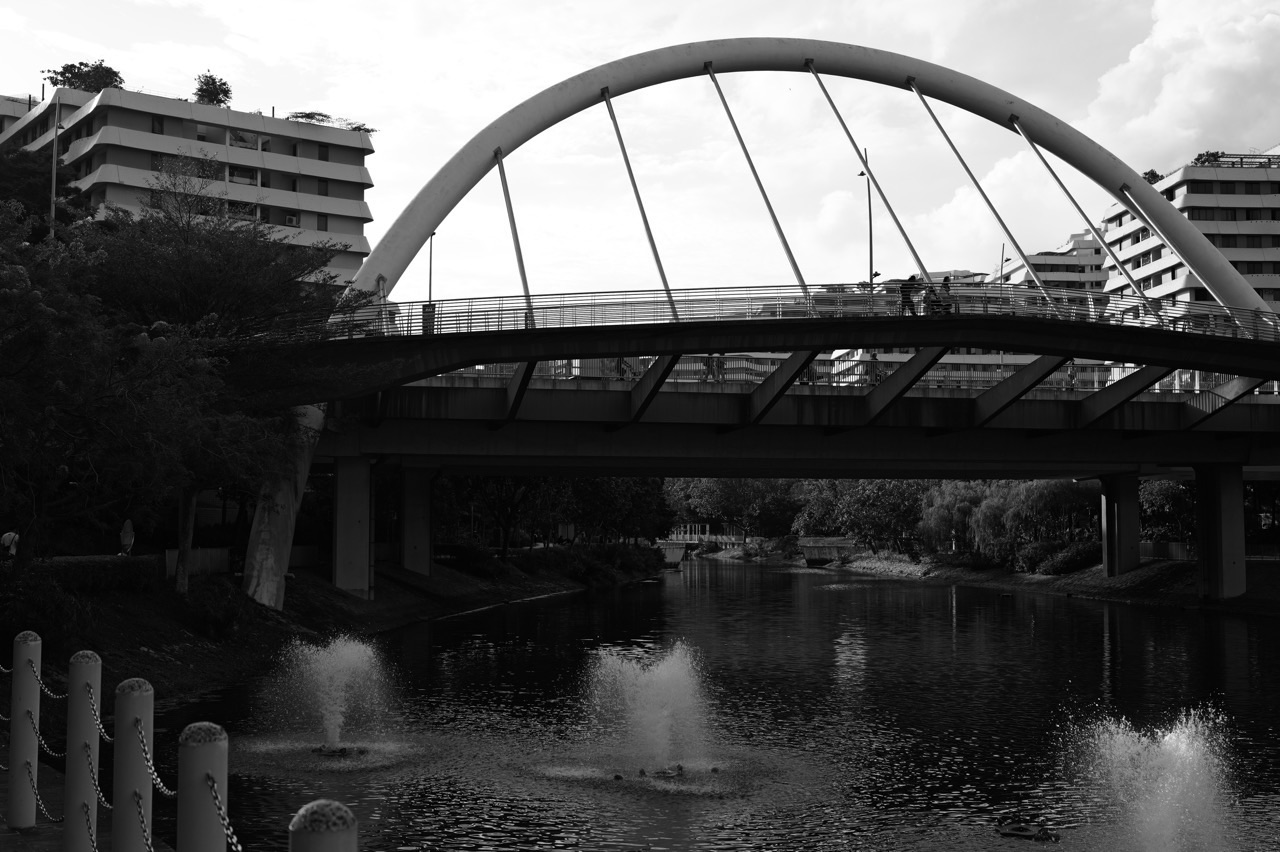
- Use Punggol’s bridges to explore structural forces without climbing — Public viewpoints beside named bridges such as Jewel, Kelong and Sunrise Bridges.
- Compare woodland and coastal habitats on Coney Island Park — Marked public paths near Coney Island’s East or West entrance.
- Examine passive cooling and shade in Punggol Digital District — Clearly open public paths near Punggol Coast MRT and Campus Boulevard.
- Understand district cooling without entering the cooling plant — Publicly accessible Digital District streets, supplemented by JTC’s online district cooling explanation.
- Explore the smart-grid and solar-energy concept in Punggol Coast — Public view of Punggol Digital District, paired with JTC’s sustainability material.
- Attend a legitimate MakeIT digital fabrication learning session — MakeIT at Punggol Regional Library, Level 4, One Punggol.
- Use a child-focused invention challenge at Spark!Lab — Spark!Lab at Punggol Regional Library, with current NLB access guidance.
These are not ranked by importance: a five-minute bridge sketch and a properly booked fabrication session solve different learning needs. A visitor should not be made to feel that a paid technology programme is intrinsically more scientific than careful observation of public water management. The right activity is the one the person can complete safely, explain accurately and learn from.
A reliable way to explore science in a living town
Frame one answerable question
Start with a testable question that suits the place. At a waterway, ask what kinds of plants the authority selected and why; at a bridge, ask what forces its supports must carry; at a mixed-use district, ask how shade, airflow and infrastructure affect energy demand. Avoid questions such as ‘Can this place prove every green technology works?’ because a visitor has neither the instruments nor the access to make such a claim.
Separate what you saw from what the authority says
Keep a two-column notebook. The left column says exactly what you personally saw: a plant form, a building façade, a slope, a shaded pavement or a sequence of public signs. The right column states what an official source explains about the place. A third box records what remains unproven. This method prevents a common error in science writing, where an attractive illustration is treated as a measurement.
Choose the appropriate source of evidence
Choose the right type of evidence. PUB’s official wetland page can establish the environmental treatment purpose at Lorong Halus. NParks can establish its park’s named plants or bridges. JTC can establish planned or operating design features in the Digital District. NLB can confirm maker services and general opening conditions. None of these automatically establishes that a particular workshop seat is free or a computer-controlled system is open to the public for technical inspection.
Do not turn public infrastructure into an experiment
Public space is not a laboratory. Do not collect wetland water, alter drainage, open electrical enclosures, enter restricted plant rooms, install sensors on public infrastructure, use drones without appropriate approvals or disturb wildlife to test a hypothesis. Safe observations, diagrams, simple tabletop models at home and official reading are enough for meaningful science learning.
Match the challenge to age and preparation
Match the work to age and ability. A young child can compare leaf shapes or explain a bridge using blocks, while a Secondary student can distinguish water treatment from water transport or discuss the trade-offs of district cooling. An adult can compare energy system claims and data requirements. MakeIT has specific age and certification guidance; Spark!Lab has its own child-focused design rather than universal access for every visitor.
Respect opening, weather and return constraints
Plan the actual exit before the educational detail. A short safe visit with one clear outcome is preferable to several sites connected by ambitious walking. Coney Island’s 7am–7pm gate hours, current Punggol Heritage Trail phasing and the 2026–2027 closure affecting Punggol Point Park mean readers must follow current access. Stop outdoor observations when lightning, haze or heat makes them inappropriate.
The ten science experiences explained
Understand why Lorong Halus Wetland treats former-landfill water
Where: Public learning areas around Lorong Halus Wetland, beside Serangoon Reservoir.
The scientific system and its evidence
PUB states that Lorong Halus Wetland collects and treats water passing through the former landfill so that it does not enter Serangoon Reservoir untreated. Its ABC Waters learning resources discuss the Four National Taps, wetland bioengineering and biodiversity. This is a designed environmental protection system, not an untreated pond or a place where visitors may use treatment equipment freely.
A practical investigation without damage
Read the PUB overview, choose a legal public trail and locate the interpretive signs. Draw three boxes—water from the former landfill, treatment through the wetland, and the reservoir receiving better-protected water. Add arrows only where PUB’s explanation supports them. Look at the planting from the path without entering water or trying to identify unseen pipes.
Worked science example
A student first writes that rainwater ‘becomes perfectly clean’ because it passes through reeds. Reviewing PUB reveals the actual claim: the wetland helps treat water associated with the former landfill and safeguard reservoir quality. The revised work focuses on intended function while acknowledging that water-quality performance would require measurements.
Safety and uncertainty
PUB offers educational resource packages, including learning activities involving water testing, but formal testing needs appropriate supervision, equipment and safety context. A casual visitor should not collect water, open infrastructure or step onto sensitive banks. Beware exposed heat and lightning near the reservoir; postpone if conditions are unsafe.
Who benefits most?
Best for science lovers who want a real local case study in engineered ecology. The visit can support water-cycle, ecosystem and sustainability discussions without inventing laboratory data. Travellers wanting a shorter urban stop may choose Waterway Park instead.
A measurable or checkable takeaway
Write a cause-and-effect statement with three separate terms: problem, intervention and intended outcome. Add the variable that would need measuring to verify performance and say explicitly that the field visit did not measure it.
The strength of this activity depends on what the participant can explain at the end. Ask which part was directly observed, which part comes from a named authority, and which part needs further evidence. If a detail cannot be verified at the site, the honest response is to leave it unresolved. Science progresses through careful questions and correction, not by claiming a field visit established everything in the official design.
The relevant official reference is available here. Use that for the system’s documented purpose, while following current visitor signs for access. A source describing an engineering feature does not guarantee access to technical equipment or that a commercial educational session is available today.
Observe the role of aquatic plants in Punggol Waterway Park
Where: Public waterside viewpoints within Punggol Waterway Park near Sentul Crescent.
The scientific system and its evidence
NParks identifies Red Thalia, Bulrush and Swamp Cabbage as aquatic plants selected to help remove pollutants. The park occupies 25.79 hectares and has four themed zones. These are factual statements about landscape design and species known from official documentation, not promises that all specimens are currently visible or that a casual photo demonstrates actual pollutant reduction.
A practical investigation without damage
Choose a short path with a legal vantage point over planted banks. Record plant shape and the relationship between planting and water; use an official guide for identification after the visit. Ask which features are known from NParks and which were personally observed. Leave a name provisional when distance hides important field marks.
Worked science example
Two students find different leaf forms and both call them reeds. They sketch one tall narrow group and one broad-leaved plant. After reading NParks, they realise that a useful field note needs distinct descriptions and a level of certainty. Their final report names the authority’s planted species separately from the uncertain plants they observed.
Safety and uncertainty
Do not lean beyond railings, pick park plants, collect water, or assume an edible-sounding plant name grants permission to harvest it. The waterway is not a public experiment basin. Weather or maintenance may prevent reaching a particular viewpoint, and a species listed years earlier may have been replaced.
Who benefits most?
Best for families who want accessible science observation with nearby food and transport. It is also useful for a school notebook because the student can illustrate evidence versus explanation. The goal is understanding designed vegetation, not obtaining specimens.
A measurable or checkable takeaway
Create a two-column evidence table: observations such as leaf form on the left and sourced claims about pollutant-removal planting on the right. End with one unanswered question that would require measured environmental data.
The strength of this activity depends on what the participant can explain at the end. Ask which part was directly observed, which part comes from a named authority, and which part needs further evidence. If a detail cannot be verified at the site, the honest response is to leave it unresolved. Science progresses through careful questions and correction, not by claiming a field visit established everything in the official design.
The relevant official reference is available here. Use that for the system’s documented purpose, while following current visitor signs for access. A source describing an engineering feature does not guarantee access to technical equipment or that a commercial educational session is available today.
Model how terraced planting can alter rainwater runoff
Where: Publicly viewable landscaped slopes in Punggol Waterway Park.
The scientific system and its evidence
NParks’ waterway guide describes terraced planting used to slow water entering the waterway. The terraced landscape offers a practical example of a civil-engineering choice that also uses plants. A particular slope’s appearance cannot tell you the volume of runoff or the efficiency of the design; those would depend on rain, ground conditions and drainage details.
A practical investigation without damage
Find an appropriate public view of the terraces and sketch a side profile. At home, compare a simple model of a steep slope with one containing steps or obstacles, using a tray and ordinary clean materials away from the park. Keep it conceptual unless you have controlled conditions and measurements. Write which features of your home model differ from the actual landscape.
Worked science example
A learner initially states, ‘Terraces eliminate flooding.’ Their diagram and the NParks description support a narrower idea: terraces can moderate the movement of water along a landscaped slope. The learner adds a question about how rainfall intensity and soil absorption could affect the result.
Safety and uncertainty
Do not pour water onto park slopes or enter maintained planting beds to simulate rain. Avoid standing on slippery ground after actual rain. The park explanation describes a design aim; it is not a prediction that any one intense storm will cause no flooding.
Who benefits most?
Best for students learning forces, Earth science and cause-and-effect reasoning in everyday engineering. This task can be done partly at home if the weather is poor. It links simple physical models to a real location without damaging infrastructure.
A measurable or checkable takeaway
Draw two arrows on a conceptual slope diagram and explain where an observation ends and a design assumption begins. Make a note of one variable you would control if building a safe tabletop model.
The strength of this activity depends on what the participant can explain at the end. Ask which part was directly observed, which part comes from a named authority, and which part needs further evidence. If a detail cannot be verified at the site, the honest response is to leave it unresolved. Science progresses through careful questions and correction, not by claiming a field visit established everything in the official design.
The relevant official reference is available here. Use that for the system’s documented purpose, while following current visitor signs for access. A source describing an engineering feature does not guarantee access to technical equipment or that a commercial educational session is available today.
Use Punggol’s bridges to explore structural forces without climbing
Where: Public viewpoints beside named bridges such as Jewel, Kelong and Sunrise Bridges.
The scientific system and its evidence
NParks lists Jewel Bridge, Kelong Bridge and Sunrise Bridge among Waterway Park’s landmarks, with distinctive contemporary shapes and historical references. These are accessible visual subjects for understanding load paths, supports and materials. The fact that a bridge has a dramatic curve does not disclose its exact structural analysis or detailed engineering drawings.
A practical investigation without damage
Choose one bridge that is lawful and comfortable to observe. Sketch the deck, obvious supports and where pedestrians travel. Ask where the weight of people and bridge materials must be transferred. Then build a small paper or blocks-based bridge at home using stable clean materials, test it with a light known object, and compare the model’s limitations to a real engineered structure.
Worked science example
A child draws a large arch and claims the curve alone ‘holds everything up’. By examining supports, they begin to understand that a bridge works as a system. The family builds two lightweight paper shapes at home and watches how they deform under the same small object, recording the result honestly.
Safety and uncertainty
Never climb railings, attach sensors, drop objects from a bridge, obstruct cyclists, or stop in the middle of a shared path to demonstrate forces. A home model is not proof that an actual public bridge would behave the same way. Use any official engineering documentation available before attributing specific construction methods.
Who benefits most?
Best for visually minded learners who enjoy physics or design. The activity also suits groups with limited time, since a single safe public viewpoint can be enough. There is no ticket or specialist gear needed for the conceptual portion.
A measurable or checkable takeaway
Label load, support and possible path of force on your sketch. Include one sentence that starts ‘We cannot tell from the view alone whether…’ to practise technical humility.
The strength of this activity depends on what the participant can explain at the end. Ask which part was directly observed, which part comes from a named authority, and which part needs further evidence. If a detail cannot be verified at the site, the honest response is to leave it unresolved. Science progresses through careful questions and correction, not by claiming a field visit established everything in the official design.
The relevant official reference is available here. Use that for the system’s documented purpose, while following current visitor signs for access. A source describing an engineering feature does not guarantee access to technical equipment or that a commercial educational session is available today.
Compare woodland and coastal habitats on Coney Island Park
Where: Marked public paths near Coney Island’s East or West entrance.
The scientific system and its evidence
NParks describes Coney Island as an 81-hectare rustic park with coastal forest, mangroves, boardwalks and biodiversity. Its gates operate 7am–7pm. The contrast with Punggol’s designed urban waterway gives a useful starting point for habitat science, but it is not permission to enter vegetation, identify every organism or disturb nests.
A practical investigation without damage
Choose an entrance and a short out-and-back public route with a return time before gate closure. Note differences between a sheltered tree area and a more exposed path, or between plants near wet and dry ground. Use binoculars or a notebook to record birds without playback or feeding. Discuss how an animal might use different habitat structures without claiming to know its private movements.
Worked science example
Two observers record that one stretch has taller canopy and another has lower vegetation. A bird flies across the path, but they cannot identify it. Their notes describe the habitat and movement without manufacturing a species name, which is better science than a confident but unsupported rare-bird sighting.
Safety and uncertainty
Some terrain is rugged and not suitable for all mobility levels. Do not collect organisms, approach wildlife, enter mangrove mud or stay past 7pm. If the group is not comfortable with the time, sun, insects or route, choose the central park instead. Wildlife presence is variable, not a booked exhibition.
Who benefits most?
Best for adults and older children prepared for a nature walk and keen to compare ecology with urban landscape design. It should be a dedicated daylight visit, not an add-on to a hurried indoor science afternoon.
A measurable or checkable takeaway
Make a habitat comparison table with shade, ground type, vegetation structure and observed animal behaviour. Avoid converting a brief visit into a claim about population size or long-term ecological trends.
The strength of this activity depends on what the participant can explain at the end. Ask which part was directly observed, which part comes from a named authority, and which part needs further evidence. If a detail cannot be verified at the site, the honest response is to leave it unresolved. Science progresses through careful questions and correction, not by claiming a field visit established everything in the official design.
The relevant official reference is available here. Use that for the system’s documented purpose, while following current visitor signs for access. A source describing an engineering feature does not guarantee access to technical equipment or that a commercial educational session is available today.
Examine passive cooling and shade in Punggol Digital District
Where: Clearly open public paths near Punggol Coast MRT and Campus Boulevard.
The scientific system and its evidence
JTC’s sustainability information says Punggol Digital District uses simulations to improve natural light, reduce solar heat exposure and support airflow. These are passive design principles aimed at reducing heat buildup and making public and building spaces more comfortable. A passer-by can observe physical shade and building arrangements, but cannot prove the numerical energy-saving effect without operational data.
A practical investigation without damage
Use a public walkway and choose two locations with different exposure, one shaded and one more open, without entering staff-only areas. Note the time of day, visible sun and whether you feel airflow. If you use a thermometer, understand that uncontrolled surface exposure can distort readings. Compare your notes with JTC’s descriptions of design intentions.
Worked science example
A class visits a shaded route and concludes it is exactly five degrees cooler everywhere. Their teacher points out that no controlled measurement was made. The class revises the claim to describe the observed shade and JTC’s stated design purpose, then lists instruments and repetitions that would be needed for an actual temperature comparison.
Safety and uncertainty
Do not enter university classrooms, roof plant areas, mechanical service space or fenced construction zones. Avoid attributing all perceived coolness to architecture because weather and time of day vary. Do not obstruct working district traffic with a large observational group.
Who benefits most?
Best for anyone interested in climate-adapted urbanism, geography or engineering. The public realm provides a useful visual lesson even without a ticketed building tour. The activity can be paired with an ordinary meal in Punggol Coast.
A measurable or checkable takeaway
Draw a pedestrian section illustrating the sun’s path, an overhang and a possible shaded zone. Label assumptions rather than pretending the drawing is a certified building-performance model.
The strength of this activity depends on what the participant can explain at the end. Ask which part was directly observed, which part comes from a named authority, and which part needs further evidence. If a detail cannot be verified at the site, the honest response is to leave it unresolved. Science progresses through careful questions and correction, not by claiming a field visit established everything in the official design.
The relevant official reference is available here. Use that for the system’s documented purpose, while following current visitor signs for access. A source describing an engineering feature does not guarantee access to technical equipment or that a commercial educational session is available today.
Understand district cooling without entering the cooling plant
Where: Publicly accessible Digital District streets, supplemented by JTC’s online district cooling explanation.
The scientific system and its evidence
JTC explains that Punggol Digital District’s district cooling system uses a central plant distributing chilled water through underground pipes and building networks. The reported design capacity and energy benefits belong to the operator’s technical account; a street visitor cannot inspect the underground distribution network or verify performance by looking at a building façade.
A practical investigation without damage
Read JTC’s explanation before visiting the district. Draw a system diagram: central cooling plant, distributed chilled water, connected buildings and return network. From public space, observe why a dense mixed-use district might benefit from shared infrastructure. Explain how this differs conceptually from every building owning an independent cooling solution.
Worked science example
A learner thinks ‘district cooling’ simply means more shade. After reading JTC, they separate passive design, which reduces heat and load, from an active system moving cooling through chilled-water infrastructure. Their revised diagram includes the plant, distribution and building heat exchange.
Safety and uncertainty
Do not attempt to enter a cooling plant, follow pipes into service tunnels or assert exact operating capacity at a moment in time. A supplier’s design estimate is not a reading you measured. Keep all claims attributed to JTC and note that implementation and operation can evolve.
Who benefits most?
Best for older students and adults studying mechanical engineering, energy systems or infrastructure. There is enough science in the official diagrams to produce a worthwhile desk-based explanation even when the visitor merely observes the public district.
A measurable or checkable takeaway
Prepare a 90-second explanation of why many buildings might share cooling infrastructure and identify at least two conditions that would influence actual energy efficiency.
The strength of this activity depends on what the participant can explain at the end. Ask which part was directly observed, which part comes from a named authority, and which part needs further evidence. If a detail cannot be verified at the site, the honest response is to leave it unresolved. Science progresses through careful questions and correction, not by claiming a field visit established everything in the official design.
The relevant official reference is available here. Use that for the system’s documented purpose, while following current visitor signs for access. A source describing an engineering feature does not guarantee access to technical equipment or that a commercial educational session is available today.
Explore the smart-grid and solar-energy concept in Punggol Coast
Where: Public view of Punggol Digital District, paired with JTC’s sustainability material.
The scientific system and its evidence
JTC says the district-level smart grid integrates solar generation, battery storage and data-driven energy control. Its sustainability page reports estimated emissions benefits and planned or operating system design. A solar panel visible from a public route proves a panel exists, not the energy it has produced or how much carbon has been saved during that particular day.
A practical investigation without damage
Read the official system description and map the logical roles of generation, storage, distribution and consumption. From a lawful public route, photograph only visible building features if permitted. Explain that electricity demand varies by time and that a battery is a storage device rather than an energy source. Avoid claiming access to live controls or real-time grid readings.
Worked science example
A student initially labels a battery as something that creates electricity. During the activity they correct their model: solar generation provides energy under suitable conditions, while storage can shift when that energy is used. They note that actual supply and emissions savings would need metered records and clear accounting assumptions.
Safety and uncertainty
Never touch electrical infrastructure, climb to rooftops or enter substations. Do not present an announced estimated figure as a measured visitor result. Smart-grid controls are operational systems, not open exhibits just because JTC publishes a public explainer.
Who benefits most?
Best for students learning energy conservation, climate systems and data literacy. It also gives adults a meaningful way to explore a new district without signing up for an unavailable technical tour.
A measurable or checkable takeaway
Draw a simple energy-flow diagram showing solar source, storage, consumers and potential external supply, then list three measurements needed to evaluate performance.
The strength of this activity depends on what the participant can explain at the end. Ask which part was directly observed, which part comes from a named authority, and which part needs further evidence. If a detail cannot be verified at the site, the honest response is to leave it unresolved. Science progresses through careful questions and correction, not by claiming a field visit established everything in the official design.
The relevant official reference is available here. Use that for the system’s documented purpose, while following current visitor signs for access. A source describing an engineering feature does not guarantee access to technical equipment or that a commercial educational session is available today.
Attend a legitimate MakeIT digital fabrication learning session
Where: MakeIT at Punggol Regional Library, Level 4, One Punggol.
The scientific system and its evidence
NLB’s MakeIT service includes 3D printing, digital cutting, robotics and coding, sewing and upcycling. The official page says starter workshops and materials are free for NLB members, generally recommends equipment and programmes for ages 13 and above, and notes that certain machines require relevant MakeIT certification. Punggol’s listed operating framework is Wednesday to Sunday, noon to 8.30pm, with closures on Mondays, Tuesdays and specified holidays.
A practical investigation without damage
Choose a fabrication question before travelling: how to turn a 3D model into an object, how a digital cutter handles intricate shapes, or how sensors guide a simple robot. Check current membership, eligibility and session registration. Attend an appropriate workshop or authorised time slot and follow staff instructions. If no seat is available, study an NLB guide and book a later session.
Worked science example
A Secondary 3 student arrives wanting to print a large model immediately. They learn that the machine requires preparation and the selected session is full. They revise their plan to design a smaller prototype, learn file requirements and secure an authorised training slot rather than demanding a machine without certification.
Safety and uncertainty
Do not bypass equipment orientation, touch unattended fabrication tools or assume every NLB member can use every machine instantly. Hours describe the service, not a guarantee of an individual appointment. Some sessions may require personal protective equipment or a supervised approach.
Who benefits most?
Best for learners at the appropriate age who enjoy prototyping and precise manufacturing. Younger children should choose a child-focused invention activity or a simple home paper model instead of attempting restricted fabrication equipment.
A measurable or checkable takeaway
Prepare a design brief with purpose, size, material limitations, expected failure and a test plan. Keep the final result modest and reproducible rather than promising an impressive product after one short session.
The strength of this activity depends on what the participant can explain at the end. Ask which part was directly observed, which part comes from a named authority, and which part needs further evidence. If a detail cannot be verified at the site, the honest response is to leave it unresolved. Science progresses through careful questions and correction, not by claiming a field visit established everything in the official design.
The relevant official reference is available here. Use that for the system’s documented purpose, while following current visitor signs for access. A source describing an engineering feature does not guarantee access to technical equipment or that a commercial educational session is available today.
Use a child-focused invention challenge at Spark!Lab
Where: Spark!Lab at Punggol Regional Library, with current NLB access guidance.
The scientific system and its evidence
Spark!Lab in Punggol Regional Library is a children’s invention-focused learning environment developed through the Smithsonian’s Spark!Lab network. Its activities emphasise imagining, prototyping, testing and changing ideas rather than producing a single correct answer. Exact facilitator sessions, age guidance and opening arrangements depend on current NLB information, so a general library opening is not a workshop booking.
A practical investigation without damage
Check whether a suitable activity is actually offered at the intended time and confirm the child’s eligibility. Choose a simple design problem using materials available under staff rules. Ask the child for one idea, encourage a test and help describe the change needed. Keep adult intervention low unless safety requires it. If the session is unavailable, do a safe paper invention prompt at home.
Worked science example
A child designs a paper bridge that bends under a lightweight toy. Instead of having an adult fix it immediately, they fold another shape, test again and notice a difference. The learning record is the series of design choices, including a failed first trial. It is not a claim that this exact challenge is running in the library on that day.
Safety and uncertainty
Do not conflate Spark!Lab with Level 4 MakeIT, which has different equipment and age recommendations. Keep small parts away from children who could mouth them and follow all venue requirements. A maker session is still a public shared activity, not private tuition or childminding.
Who benefits most?
Best for children who want a tactile introduction to inventing, with caregivers choosing the suitable age and supervision. The experience is educational because the child explains a change, not because the finished model looks polished.
A measurable or checkable takeaway
Make a four-box sketch labelled problem, first idea, result and improvement. Ask the child to point to what changed; there is no requirement to write an essay or achieve an exam-related outcome.
The strength of this activity depends on what the participant can explain at the end. Ask which part was directly observed, which part comes from a named authority, and which part needs further evidence. If a detail cannot be verified at the site, the honest response is to leave it unresolved. Science progresses through careful questions and correction, not by claiming a field visit established everything in the official design.
The relevant official reference is available here. Use that for the system’s documented purpose, while following current visitor signs for access. A source describing an engineering feature does not guarantee access to technical equipment or that a commercial educational session is available today.
Sample science day: urban ecology and simple physics
Begin near Punggol MRT and choose one short Waterway Park section with aquatic planting and a safely observed bridge. Spend perhaps thirty minutes drawing a plant-bank layout and a structural sketch. Return to a public library or home environment to compare observations with NParks. This itinerary requires no water sampling, no specialist ticket and no claim that a student measured treatment performance. It is deliberately short enough to preserve family energy.
Sample science day: how a smart district works
Start at Punggol Coast MRT, follow clearly public paths and observe shading, public circulation and building layout. Read JTC’s public descriptions of passive design, smart-grid concepts and district cooling before or after the walk. Do not attempt to enter operational plant rooms. Finish with a diagram differentiating three ideas: reduce heat gain, distribute cooling efficiently and manage energy production and storage.
Sample science day: one organised maker activity
At One Punggol, decide whether the learner is eligible for MakeIT or for a current age-appropriate Spark!Lab activity. Check actual registration, equipment and supervision. If a session is confirmed, attend it as the principal activity; an additional long nature hike should not be compulsory. If no session is available, use the regional library’s nonfiction resources to prepare a design brief for another date.
How to write a useful Punggol science field report
Start with the research question and the location. Explain the context using an official source, describe only what was observed, and state a tentative explanation if supported. Finish with the limitations of the method and a sensible next question. Photographs should have dates, truthful captions and proper attribution; do not use a photograph of green water or a rooftop as numerical proof of water quality or energy performance.
For younger learners, a one-page sketch is often enough. For older students, the same evidence structure can include variables, possible measurements, control conditions and environmental or ethical limitations. Good scientific habits transfer between school subjects: ask a precise question, keep the measurement honest and avoid claiming a conclusion beyond the evidence.
Safety and access checklist
- Pick one area rather than attempting every Punggol science site.
- Check the official operator’s latest park or library notice.
- Confirm maker-programme ages, membership and booking if relevant.
- Locate the actual public entrance and return transport.
- Bring water and comfortable footwear for outdoor tasks.
- Keep off reservoir banks, works sites, roofs and technical plant rooms.
- Do not collect specimens, samples or equipment without permission.
- Distinguish an operator’s estimate from direct measured data.
- Respect wildlife and people using shared paths.
- Stop for lightning, unsuitable heat, heavy rain or poor air quality.
Frequent misconceptions in Punggol science trips
A wetland is not simply a decorative garden, but not every green pond is a treatment wetland. Coney Island’s natural habitats and Lorong Halus’s engineered water-quality function are different concepts. Likewise, district cooling is not identical to building shade, and rooftop solar panels are not equivalent to batteries. Treat scientific terms with precision rather than grouping everything under ‘smart and green’.
Another mistake is equating a publicity statement with a real-time measurement. JTC’s technology information can establish what has been designed and explain projected benefits, but a visitor cannot verify those benefits from the street. PUB’s explanation of the wetland purpose does not report the results of an unperformed experiment. Distinguishing evidence levels makes the final article credible.
Do not turn children’s invention spaces into informal unattended workshops. MakeIT’s age, certification and workshop rules exist for a reason, and Spark!Lab has its own child-focused format. The appropriate learning experience is the one staff can accommodate safely and legitimately on the day.
Frequently asked questions
What is the best science activity in Punggol for a family?
A short Waterway Park science walk with safe observations of planted banks and bridges works well when children can enjoy outdoors. For a booked maker experience, check Spark!Lab eligibility and actual session rules; never assume a child can use MakeIT equipment.
What does Lorong Halus Wetland actually do?
PUB states that it collects and treats water passing through the former landfill to protect Serangoon Reservoir. Its public educational materials discuss wetland bioengineering, but visitors must not enter treatment infrastructure or collect water without appropriate arrangements.
Are aquatic plants in Punggol Waterway supposed to clean pollution?
NParks identifies Red Thalia, Bulrush and Swamp Cabbage as species used for pollutant-removal landscaping. Their presence does not allow a visitor to infer numerical performance from a photograph.
Can I enter Punggol Digital District’s district cooling plant?
Not as an ordinary public activity. Learn from JTC’s system descriptions and observe public design features, while respecting operational and building restrictions.
Does Punggol Digital District have solar and battery technology?
JTC’s sustainability description includes a smart-grid approach with solar energy, storage and data-driven management. Distinguish operator design or estimates from what a visitor has personally measured.
Where is MakeIT in Punggol?
NLB lists MakeIT at Punggol Regional Library, Level 4, One Punggol, with Wednesday–Sunday operating hours and equipment conditions. Check its current site before registering.
Can younger children use MakeIT 3D printers?
NLB generally recommends MakeIT equipment and programmes for ages 13 and above, with specific certification for some machines. Younger visitors should choose age-appropriate activities with approved supervision.
Is Spark!Lab the same as MakeIT?
No. Spark!Lab is a children’s invention-learning concept, while MakeIT is NLB’s broader digital fabrication service with separate equipment, age and access rules.
Can we measure water quality on our own at Lorong Halus?
PUB offers learning materials that may include water-testing exercises, but an informal visit does not authorise entry or sampling. Formal testing requires suitable tools, context and safety arrangements.
Is Coney Island a science centre?
It is an NParks ecological park with rustic habitats, not a conventional science centre. Observe biodiversity respectfully from public paths and leave before its 7pm closing time.
Can we do all ten science activities in one day?
That is impractical and unnecessary. Choose one physical district and one learning question. Several items involve separate bookings or different access conditions, and Coney Island requires a dedicated daylight route.
What is a useful science notebook format?
Separate observed fact, official explanation, inference and untested hypothesis. Record uncertainty explicitly; a well-qualified note is scientifically stronger than a sensational unsupported claim.
Official sources and deeper Punggol science guides
The venue and system claims here are grounded in the official publications linked below. Operating conditions can change, so readers should verify programmes and public routes before travelling. The supporting eduKatePunggol articles provide additional fieldwork and school-science context without claiming that one outing replaces formal instruction.
- NParks Waterway Park ecology and bridges
- NParks Waterway nature walk
- PUB Lorong Halus Wetland
- JTC Punggol Digital District sustainability
- JTC district cooling explainer
- JTC open digital platform
- JTC current visitor amenities and open heritage section
- NParks Coney Island Park
- NLB MakeIT at Libraries
- NLB Punggol Regional Library
- NEA weather and haze checks
- Punggol Waterway Science Trail companion
- eduKatePunggol science education system
The next useful science outing
Choose one question about water, energy, living habitat, structures or making. Visit one legitimate Punggol setting, record the evidence you can truly obtain and note what you still do not know. You will leave with a useful scientific explanation rather than a checklist of unrelated attractions.


