
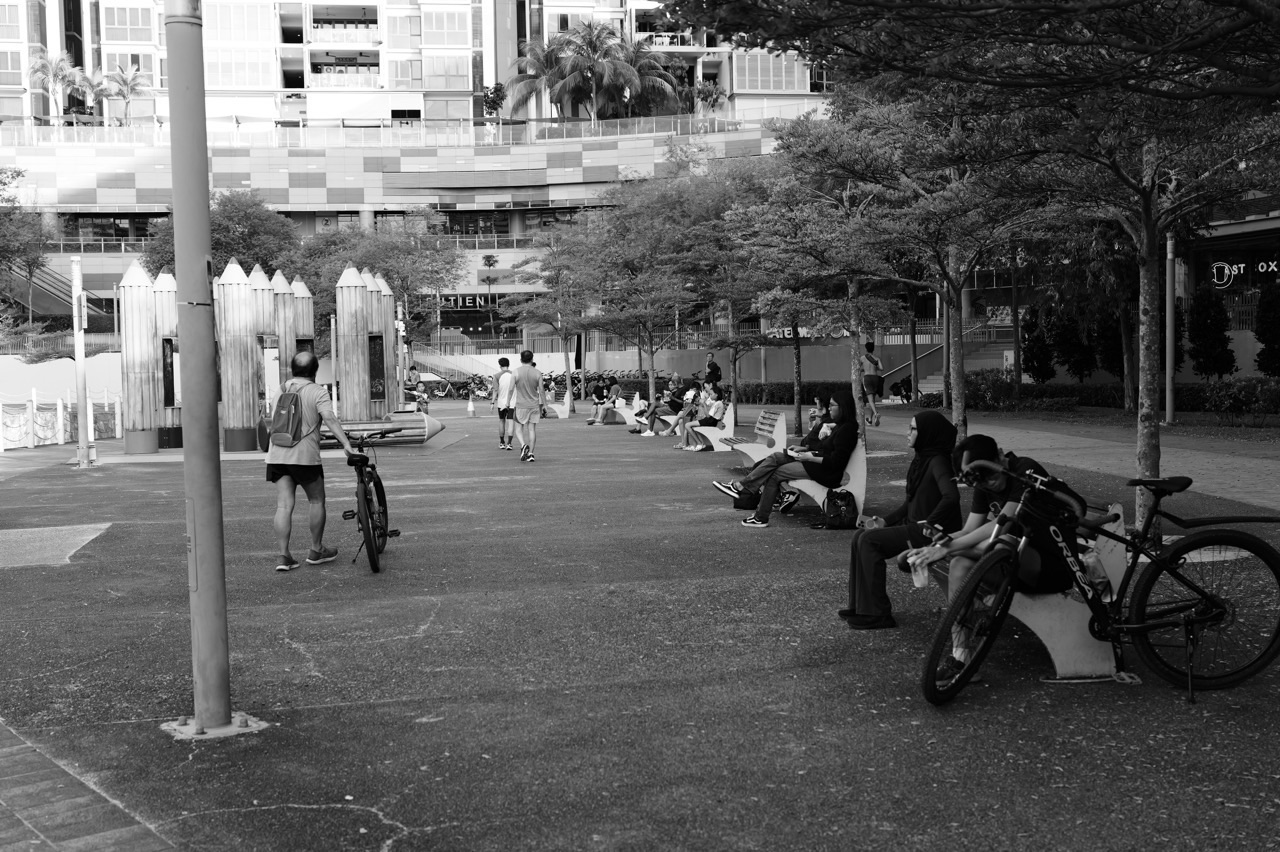
The best Punggol activities for grandparents and grandchildren begin with something both generations can enjoy at their own pace. A picture book at Punggol Regional Library, a short bridge walk along Punggol Waterway, or a relaxed hawker lunch can be a complete family day. The child gets curiosity, movement and conversation; the grandparent gets room to contribute knowledge and choose a comfortable level of involvement. No one needs to complete a strenuous tour to make the outing memorable.
This top-ten guide offers ten distinct ways to spend shared time: exchange a book at Punggol Regional Library, explore the Punggol Stories Memory Map, follow an early-years story or interactive poem, compare bridge shapes at Waterway Park, visit its therapeutic garden, watch birds quietly from a safe path, record a family-food memory at One Punggol Hawker Centre, learn a board game at the Comics & Games Library, create a short Punggol Coast mural-and-history album, and consider the Casuarina Exploratory at Coney Island when every participant can handle the terrain and gate times. These are unranked activity choices rather than ten required stops.
Family comfort varies substantially. Some grandparents are energetic cyclists; others prefer indoor reading or need a step-free route. Some grandchildren are toddlers; others are teenagers who would rather hear a family story than use playground equipment. Ask what each person wants. For the youngest children, one adult must remain explicitly responsible for water, stairs, crossings and playground supervision. More adults in a group do not automatically mean somebody is watching.
Use a simple destination cluster: One Punggol for library, exhibition and hawker food; Waterway Park for bridges and the garden; Punggol Coast for the mural, digital district and Comics & Games Library; Coney Island for a separately planned daylight nature visit. The 2026 upgrading closure affecting Punggol Point Park makes it especially important not to follow old seafront itineraries into closed areas. All venue descriptions below use official NLB, NParks, PA and JTC information, with day-specific checking still required.
Choose a shared activity by both generations’ interests
- Exchange favourite picture books at Punggol Regional Library — Punggol Regional Library inside One Punggol, 1 Punggol Drive.
- Look at the Punggol Stories Memory Map and exchange real family memories — Punggol Stories exhibition at Singaporium, Level 4, Punggol Regional Library.
- Play with stories and moving words when the NLB room is available — Level 1 Stories Come Alive Room or early-years reading zone, Punggol Regional Library.
- Play a gentle bridge-shape treasure hunt along the waterway — One or two public bridges of Punggol Waterway Park.
- Make a slow sensory garden visit near Waterway Park Carpark A — Therapeutic garden within Punggol Waterway Park, near Carpark A.
- Watch birds quietly from a safe public waterway viewpoint — A public Waterway Park path or appropriate seated lookout.
- Share a family food memory at One Punggol Hawker Centre — One Punggol Hawker Centre, Level 2 of the One Punggol hub.
- Teach each other one board game at the Comics & Games Library — Comics & Games Library, Punggol Coast Mall Tower 7, 88 Punggol Way.
- Create an old-and-new Punggol family album at the public mural — Our Punggol Story mural at Punggol Digital District Community Promenade.
- Choose a prepared Casuarina Exploratory visit for an outdoorsy family — Casuarina Exploratory near Coney Island Park’s West entrance.
These ten activities are unranked choices. A family that loves stories may find a library more rewarding than an energetic nature-play area; another family may feel the reverse. The guide emphasises meaningful participation, adult supervision and honest local facts rather than declaring a universal best destination.
How to plan an enjoyable day across generations
Let both generations choose something
Ask the grandparent and child one question each before choosing the venue. What would be fun or interesting today, and what would make the journey comfortable? A grandparent who loves storytelling may enjoy a library exhibition; a grandchild fascinated by trains may prefer learning a short MRT or LRT route. Do not assume older people only want gentle gardens or that all children want loud paid playgrounds.
Keep the day close to rest and transport
Use one main activity and a nearby rest or food stop. Different generations may need different walking speeds, toilet access, seating and transition time. If the group is taking a stroller or wheelchair, check the actual public entrance, lifts, surfaces and return route. A destination’s general accessibility designation is helpful but does not establish that every side path or facility is equally easy to use.
Make the child an active contributor
Give the child an active role without making the outing a test. A child can choose the first book, point to a bridge shape or ask about a remembered meal. The older person can share a story or explain a familiar cultural practice without being turned into an unpaid guide. Good intergenerational time has room for listening in both directions.
Protect the accuracy of family memories
Treat family memories and historical facts as related but different. NLB’s Punggol Stories includes a Memory Map about the area’s past. A grandparent’s personal recollection can add emotional richness, but it may concern a different part of older Punggol or a different decade. Record it with permission, label it as a memory and check historical dates separately when publishing the result.
Take responsibility for water and play safety
Safety near water and shared paths belongs to adults. An ornamental canal is not a wading pool; a bridge railing is not a climbing frame. Children should be supervised near traffic, escalators, bicycle lanes and public water edges. NParks’ Coney Island Casuarina Exploratory is an outdoor play environment with rustic surfaces and a 7am–7pm park opening window. It is not appropriate for every child or every mobility level.
Build in the right to stop
Keep weather, cost and the right to stop visible. A free public park walk still involves transport and possible refreshments; a mall or library may be more suitable when it rains. The family can decide in advance that the visit ends after one shared discovery and a meal. Nobody should feel responsible for spoiling the day because they are tired or choose to leave earlier.
Ten Punggol activities families can share
Exchange favourite picture books at Punggol Regional Library
Where: Punggol Regional Library inside One Punggol, 1 Punggol Drive.
The venue and its role
NLB’s regional library contains children’s reading areas and is a major facility at One Punggol. It is a convenient meeting place because a family can browse or read without a general attraction ticket, and nearby food or public rest spaces can help with breaks. Different floors and programmes have their own visitor rules, so a regular book-browsing visit should not be confused with an event requiring registration.
A practical family plan
Start with an appropriate children’s collection and ask each generation to choose something. The child can select a picture book or graphic novel, and the grandparent can share a childhood favourite or simply choose an illustration to discuss. Find a permitted quiet area and enjoy one short story. Move to a conversation space outside quiet zones when the exchange becomes lively.
How the outing can work in real life
A six-year-old chooses a book about a bus while the grandparent remembers travelling through older parts of Singapore. The child points to a vehicle picture; the grandparent describes a genuine memory without insisting that every detail applies to modern Punggol. They finish with an ordinary snack and leave with a shared topic for a future visit.
Limits, safety and dignity
A library is not a childcare centre. Keep young children supervised, follow food and noise rules, and do not hold scarce seats when the group is finished. Borrowing and event attendance may require a valid account or registration. Children may want to repeat the same page many times; there is no reason to hurry.
When to choose a different activity
Best for rainy days, short family visits and grandchildren who enjoy language or pictures. Choose the park when movement is the priority, or the Comics & Games Library when interactive play appeals to both generations and entry conditions can be met.
A shared takeaway that matters
Make a tiny joint recommendation: one sentence from the grandparent, one drawing or sentence from the child. Keep the child’s voice intact rather than correcting every expression into schoolwork.
What matters is a balanced role for each participant. The child should have something to contribute beyond being entertained, and the grandparent should be able to participate without physical pressure or assumptions about age. Afterward, ask which part felt enjoyable and whether both people would want to repeat it. One short and mutually satisfying experience is more valuable than a busy itinerary that leaves everyone exhausted.
Use the official site or operator reference to check current location, access and programme conditions. An older photograph or planned development feature is not proof that every amenity is operating today. Keep the day short when a visitor’s energy or mobility requires it.
Look at the Punggol Stories Memory Map and exchange real family memories
Where: Punggol Stories exhibition at Singaporium, Level 4, Punggol Regional Library.
The venue and its role
NLB’s permanent Punggol Stories exhibition includes a Memory Map and thematic sections about early pioneers, seaside leisure, farming and contemporary waterways. The exhibition is listed from 10am to 9pm on Levels 1, 3 and 4, with individual components having separate opening periods. It offers documented local history to compare with family memory rather than expecting the grandparent to know every date.
A practical family plan
Choose one exhibition section and let the grandparent decide whether it connects with their experience. The child can ask how people travelled, ate or played in the past. Write down a dated official claim from an exhibit label separately from the person’s recollection. Avoid trying to rush through every theme; the most useful stop may be one image that starts an interesting conversation.
How the outing can work in real life
A grandparent remembers eating seafood near old Ponggol, but the child thinks the whole town was always a modern mall and apartment district. The Punggol Stories exhibition provides wider historical context. They create a short note labelled ‘What Grandparent remembers’ and ‘What NLB describes’, keeping both voices but not treating memory alone as exact archival proof.
Limits, safety and dignity
An oral story can contain uncertain dates, locations or names. Seek permission before recording it or posting pictures of relatives publicly. Interactive screens may be busy or unavailable, and some historical content may be too serious for very young children; choose a comfortable age-appropriate part of the display.
When to choose a different activity
Best for a family that enjoys history or has a personal connection with northeast Singapore. Choose ordinary picture-book browsing if the child is too young to enjoy complex displays. The memory activity can be finished in twenty minutes if the group needs a short visit.
A shared takeaway that matters
Create two labelled captions beneath one original family photo or a sketch: an attributed family memory and one verified official contextual fact. The distinction is a useful form of historical literacy.
What matters is a balanced role for each participant. The child should have something to contribute beyond being entertained, and the grandparent should be able to participate without physical pressure or assumptions about age. Afterward, ask which part felt enjoyable and whether both people would want to repeat it. One short and mutually satisfying experience is more valuable than a busy itinerary that leaves everyone exhausted.
Use the official site or operator reference to check current location, access and programme conditions. An older photograph or planned development feature is not proof that every amenity is operating today. Keep the day short when a visitor’s energy or mobility requires it.
Play with stories and moving words when the NLB room is available
Where: Level 1 Stories Come Alive Room or early-years reading zone, Punggol Regional Library.
The venue and its role
NLB’s permanent exhibition includes Words That Move, which animates poems in English, Chinese, Malay and Tamil with light and sound in the Stories Come Alive Room. The official listing gives this component a 5pm–7pm window, distinct from the broader Punggol Stories 10am–9pm timing. Children may also enjoy ordinary early-years reading areas during relevant library hours, but room entry and sensory suitability depend on current conditions.
A practical family plan
If the family wants the interactive poetry, check the actual current 5pm–7pm window before travelling. Attend together and focus on one poem’s movement or sound. The grandparent can explain a familiar word or language, while the child describes what appears on the wall. If the room is closed or too stimulating, choose a picture book rather than asking staff to run an unavailable display.
How the outing can work in real life
An older relative remembers a phrase in Chinese while a child notices how words move through an animation. They compare the image and sound without expecting the child to translate all four languages. At the end the child draws one word with a motion arrow and the grandparent shares an expression they enjoy.
Limits, safety and dignity
Projection, sound and changing lights can feel overwhelming for some visitors. Avoid blocking others, use posted room rules and ask before filming identifiable children. A permanent installation does not guarantee every technological element works every day, and the broader library’s hours should not be substituted for this specific room schedule.
When to choose a different activity
Best for families who enjoy language and visual effects and are already visiting at the appropriate time. Choose The Lens of Literature or an ordinary reading area for older children and different time slots. Do not extend a tired child’s evening solely to meet the room’s operating window.
A shared takeaway that matters
Make an original two-line family poem: one line about something remembered and one about something visible today. Let each person contribute without grading the result.
What matters is a balanced role for each participant. The child should have something to contribute beyond being entertained, and the grandparent should be able to participate without physical pressure or assumptions about age. Afterward, ask which part felt enjoyable and whether both people would want to repeat it. One short and mutually satisfying experience is more valuable than a busy itinerary that leaves everyone exhausted.
Use the official site or operator reference to check current location, access and programme conditions. An older photograph or planned development feature is not proof that every amenity is operating today. Keep the day short when a visitor’s energy or mobility requires it.
Play a gentle bridge-shape treasure hunt along the waterway
Where: One or two public bridges of Punggol Waterway Park.
The venue and its role
NParks identifies named bridges including Jewel, Kelong and Sunrise along Punggol Waterway Park. Their shapes and waterway views provide visible design features for a family observation walk without a paid attraction. The public park is listed as open 24 hours, but a short daylight route with a clear return is more useful for a multigenerational group than attempting all four themed zones.
A practical family plan
Choose one bridge close to the family’s public-transport approach and walk at the slowest comfortable pace. Ask a young child to find a curve, a straight line and a pattern; ask an older child to consider what a bridge connects. Move aside before photographing. Agree where the group will turn around and identify a nearby food or indoor stop for recovery.
How the outing can work in real life
A grandparent who enjoys engineering and a grandchild who likes drawing stand at an appropriate viewpoint. The child sketches a curved handrail, while the grandparent explains how bridges let people reach the other side of a waterway. The family ends after one crossing rather than pressing on to a distant landmark.
Limits, safety and dignity
Keep children away from rail gaps, avoid leaning over safety barriers and remain clear of cyclists on shared routes. A stroller route should be checked for the specific crossing; not every side access is identical. Avoid exposed bridges when NEA warns of lightning.
When to choose a different activity
Best for families who want outdoor movement with a simple shared task. Choose a seated library visit when heat, mobility or wet weather makes it inappropriate. A bridge hunt is not a license for climbing or balancing games.
A shared takeaway that matters
Combine one photo or sketch from the child with a short story about a bridge or crossing from the grandparent’s experience. It becomes a tiny family record without needing an elaborate scrapbook.
What matters is a balanced role for each participant. The child should have something to contribute beyond being entertained, and the grandparent should be able to participate without physical pressure or assumptions about age. Afterward, ask which part felt enjoyable and whether both people would want to repeat it. One short and mutually satisfying experience is more valuable than a busy itinerary that leaves everyone exhausted.
Use the official site or operator reference to check current location, access and programme conditions. An older photograph or planned development feature is not proof that every amenity is operating today. Keep the day short when a visitor’s energy or mobility requires it.
Make a slow sensory garden visit near Waterway Park Carpark A
Where: Therapeutic garden within Punggol Waterway Park, near Carpark A.
The venue and its role
NParks documents a 900-square-metre therapeutic garden opened in May 2020, including a wellness zone with sensory planting, resting features and a communal planter. The garden’s general visiting hours are listed as 24 hours, while organised therapeutic horticulture programmes are separate activities conducted by trained people. It gives families a smaller nature setting than the full park connector.
A practical family plan
Choose a short legal route through the garden and notice three plant features: shape, colour and movement in the breeze. Invite the grandparent to share a garden memory if they want to, while the child selects a favourite visual pattern. Do not force touching plants. Rest at an available appropriate public seat, then finish before anyone becomes tired or overheated.
How the outing can work in real life
A grandparent who used to grow herbs describes a familiar garden smell, but the child is more interested in watching leaves moving. They share both observations without insisting on a specific educational result. The outing is meaningful because each person notices something different and listens to the other.
Limits, safety and dignity
The public garden is not a place to pick leaves, uproot flowers or harvest the communal planter. Some visitors may have fragrance sensitivities or limited walking tolerance. Do not promise therapeutic benefit from a leisure visit; a medical or structured therapeutic programme has different requirements.
When to choose a different activity
Best for a gentle green-space stop with seating and public paths. Choose Coney Island only if everyone welcomes rustic terrain and a longer outing. If rain or heat is strong, a library visit is usually more comfortable.
A shared takeaway that matters
Draw a leaf shape together and label one genuine family garden story. If the plant is not identified from authoritative field marks, leave its species name provisional.
What matters is a balanced role for each participant. The child should have something to contribute beyond being entertained, and the grandparent should be able to participate without physical pressure or assumptions about age. Afterward, ask which part felt enjoyable and whether both people would want to repeat it. One short and mutually satisfying experience is more valuable than a busy itinerary that leaves everyone exhausted.
Use the official site or operator reference to check current location, access and programme conditions. An older photograph or planned development feature is not proof that every amenity is operating today. Keep the day short when a visitor’s energy or mobility requires it.
Watch birds quietly from a safe public waterway viewpoint
Where: A public Waterway Park path or appropriate seated lookout.
The venue and its role
NParks features birdwatching as an activity and mentions species such as the Yellow-vented Bulbul and Black-naped Oriole in Waterway Park’s visitor information. A species appearing in the authority’s listing is a potential observation subject, not a guaranteed sighting. A short, quiet watch can work for family members of several ages when no one has to walk far.
A practical family plan
Choose a safe place off the shared route, preferably with nearby seating. Give the youngest child a simple task such as listening for a natural call or watching a bird’s direction of flight. The older person can describe an observation or share a memory of a bird they know. Use binoculars only if comfortable. Stay silent when birds approach rather than trying to attract them.
How the outing can work in real life
An eight-year-old hears a call but cannot find its source. The grandparent encourages waiting instead of running into planted bushes. When a bird appears briefly, the family records its size and movement without guessing a species. They decide to check an identification guide later and leave with a reason to return.
Limits, safety and dignity
Do not feed wildlife, play bird calls, approach nests or publish sensitive nesting locations. Equipment must remain clear of pedestrian paths. Wildlife behaves independently and weather affects sightings; no target bird should become a condition for a successful day.
When to choose a different activity
Best for families who value quiet shared attention and are comfortable outdoors. Choose the library when a child is impatient or weather is unsuitable. A short observation may be preferable to a long nature trail for a mixed-age group.
A shared takeaway that matters
Keep a three-column record: heard, seen and uncertain. A child can draw an outline while a grandparent adds words; neither contribution requires an exact species name.
What matters is a balanced role for each participant. The child should have something to contribute beyond being entertained, and the grandparent should be able to participate without physical pressure or assumptions about age. Afterward, ask which part felt enjoyable and whether both people would want to repeat it. One short and mutually satisfying experience is more valuable than a busy itinerary that leaves everyone exhausted.
Use the official site or operator reference to check current location, access and programme conditions. An older photograph or planned development feature is not proof that every amenity is operating today. Keep the day short when a visitor’s energy or mobility requires it.
Share a family food memory at One Punggol Hawker Centre
Where: One Punggol Hawker Centre, Level 2 of the One Punggol hub.
The venue and its role
The People’s Association identifies the hawker centre as an important Level 2 facility within One Punggol, near the regional library and community club. A range of food choices makes it possible for different generations to eat together without booking a single expensive meal. Current stalls, menu prices, certification and seating depend on actual operators.
A practical family plan
Choose the meal stop based on the family itinerary rather than travelling across Punggol for one trendy stall. Check dietary needs, allergies, child-friendly portions and whether the seating arrangement suits a stroller or mobility aid. Ask the grandparent if a dish evokes a memory; let the child choose one ingredient or colour to talk about. Record the story only with permission.
How the outing can work in real life
A grandparent remembers eating a dish during childhood and tells a younger relative how it used to be served. The family buys a meal suitable for today’s dietary needs and compares the memory with what they actually taste. They do not turn the conversation into a claim that the current stall is the historical original.
Limits, safety and dignity
Food that is safe for an adult may require preparation for a young child; maintain appropriate choking and heat precautions. A busy hawker centre can be noisy or uncomfortable. Check individual vendor allergens and halal needs directly and do not assume every table is available.
When to choose a different activity
Best as an unhurried finishing activity after the library or a short walk. If conversation requires a quieter environment or the hall is crowded, choose another suitable meal venue. Nobody needs to purchase multiple dishes to participate in the story.
A shared takeaway that matters
Write one recipe memory: what was eaten, who described it, what has changed, and which details are uncertain. This can become a meaningful family cookbook page without claiming culinary history that was never verified.
What matters is a balanced role for each participant. The child should have something to contribute beyond being entertained, and the grandparent should be able to participate without physical pressure or assumptions about age. Afterward, ask which part felt enjoyable and whether both people would want to repeat it. One short and mutually satisfying experience is more valuable than a busy itinerary that leaves everyone exhausted.
Use the official site or operator reference to check current location, access and programme conditions. An older photograph or planned development feature is not proof that every amenity is operating today. Keep the day short when a visitor’s energy or mobility requires it.
Teach each other one board game at the Comics & Games Library
Where: Comics & Games Library, Punggol Coast Mall Tower 7, 88 Punggol Way.
The venue and its role
NLB’s Comics & Games Library opened as a pop-up public library in 2025 and lists daily 10am–10pm hours. It contains graphic novels, game-related reading and board games in a shared play area. Entry requires a library-compliant ID, NLB eCard or an eligible QR day-pass process. A particular table or game is not guaranteed to be available when a family arrives.
A practical family plan
Check entry requirements for each participant and choose a small, age-appropriate game if seating is available. A grandparent can explain a simple game from their past while a child introduces a newer game. Allow each person to learn at their own pace and finish after one enjoyable round. Keep voices and materials appropriate for a public library.
How the outing can work in real life
A grandparent prefers a slow strategy game while the teenager wants something fast. They agree on a short cooperative or easy-to-explain option. Both discover that their approaches differ: one plans several moves ahead, while the other experiments. The lesson is mutual patience, not declaring a winner.
Limits, safety and dignity
A shared library is not a privately booked birthday or competition room. Do not occupy excessive space, leave children unsupervised or assume a game is always on a shelf. Some pieces may be too small for toddlers, so check age suitability and choking risks.
When to choose a different activity
Best for families with children old enough for the chosen game and relatives who enjoy gentle mental challenges. Choose ordinary reading or an outdoor bridge walk for younger children or anyone uncomfortable with a busy game area.
A shared takeaway that matters
After playing, each person explains one rule the other taught them. Reversing the teacher and learner roles is a simple way to make intergenerational activity genuinely shared.
What matters is a balanced role for each participant. The child should have something to contribute beyond being entertained, and the grandparent should be able to participate without physical pressure or assumptions about age. Afterward, ask which part felt enjoyable and whether both people would want to repeat it. One short and mutually satisfying experience is more valuable than a busy itinerary that leaves everyone exhausted.
Use the official site or operator reference to check current location, access and programme conditions. An older photograph or planned development feature is not proof that every amenity is operating today. Keep the day short when a visitor’s energy or mobility requires it.
Create an old-and-new Punggol family album at the public mural
Where: Our Punggol Story mural at Punggol Digital District Community Promenade.
The venue and its role
JTC documents the 132-metre hand-painted Our Punggol Story mural, created through a community and inclusive-arts collaboration. The work depicts stages of Punggol’s development, while nearby JTC information identifies the first 400 metres of Punggol Heritage Trail’s main alignment as open. A mural can be viewed from public space, but a future trail stage or adjacent university building is not automatically accessible.
A practical family plan
Start at Punggol Coast MRT and choose only a short publicly open route that works for everyone. Ask the older person to identify a historical scene that reminds them of a story, and let the child choose a modern symbol that interests them. Take two original photographs or sketches while allowing other promenade users to pass. Compare with official history afterward instead of inventing dates.
How the outing can work in real life
A teenager notices digital-district imagery while a grandparent recalls visits to Punggol in an earlier decade. The family takes an ‘old memory, new view’ pair of photographs and captions them carefully. They do not insist that the grandparent personally witnessed everything in the mural or that an illustrated building exists exactly as pictured.
Limits, safety and dignity
The mural is a public artwork, not permission to block the walkway or enter restricted campus premises. Respect image rights and other visitors’ privacy. Current construction may change the nearby path, and the full planned Heritage Trail should not be treated as open without confirmation.
When to choose a different activity
Best for school-aged grandchildren and grandparents who enjoy storytelling or visual art. It makes a different kind of family memory from a garden or a library. A younger child who tires quickly might enjoy just one section of the mural.
A shared takeaway that matters
Create a two-photo mini story with captions labelled ‘remembered by’, ‘shown in the mural’ and ‘confirmed by official source’. This keeps family testimony and historical interpretation distinct.
What matters is a balanced role for each participant. The child should have something to contribute beyond being entertained, and the grandparent should be able to participate without physical pressure or assumptions about age. Afterward, ask which part felt enjoyable and whether both people would want to repeat it. One short and mutually satisfying experience is more valuable than a busy itinerary that leaves everyone exhausted.
Use the official site or operator reference to check current location, access and programme conditions. An older photograph or planned development feature is not proof that every amenity is operating today. Keep the day short when a visitor’s energy or mobility requires it.
Choose a prepared Casuarina Exploratory visit for an outdoorsy family
Where: Casuarina Exploratory near Coney Island Park’s West entrance.
The venue and its role
NParks identifies the Casuarina Exploratory nature-play area near Coney Island’s West entrance, surrounded by Casuarina trees. It features wooden bridges, stepping stones and logs using fallen or upcycled material. The wider park has 7am–7pm gates, rustic routes and sometimes uneven ground. It is not the same as a town-centre toddler playground and does not suit every grandparent or child.
A practical family plan
Check the current NParks entrance, closure map and playground signs, and choose a daytime visit with enough time to return. Prepare water, appropriate shoes and adult supervision. Assess the actual child’s balance and the older person’s walking comfort before entering a play structure. If any participant would prefer to sit or take a shorter route, agree on a safe public meeting point rather than separating without clear supervision.
How the outing can work in real life
A grandparent who enjoys outdoor nature accompanies a school-aged grandchild near the West entrance. The child tries an age-suitable log balance feature while another adult remains explicitly responsible for physical supervision. The grandparent shares a story about playing outdoors in earlier times. They stop before fatigue or the park’s closing time becomes a problem.
Limits, safety and dignity
Wood and sand surfaces, insects, weather and uneven approach paths can make the outing unsuitable for some family members. Follow posted equipment instructions, do not use a log beyond a child’s ability and avoid any attempt to climb living trees or enter protected vegetation. Punggol Point Park upgrading can affect surrounding access routes, so check the actual lawful approach.
When to choose a different activity
Best for families in which every participant welcomes a rustic daylight nature outing. Choose Waterway Park or One Punggol for a more flexible and easier-to-exit visit. The older person can participate through stories and quiet observation without needing to attempt the physical play equipment.
A shared takeaway that matters
Ask how playground materials differ from a typical plastic structure and why NParks used fallen timber. The child can draw the play feature and the grandparent can add a story about a childhood game, making the outing more than a physical challenge.
What matters is a balanced role for each participant. The child should have something to contribute beyond being entertained, and the grandparent should be able to participate without physical pressure or assumptions about age. Afterward, ask which part felt enjoyable and whether both people would want to repeat it. One short and mutually satisfying experience is more valuable than a busy itinerary that leaves everyone exhausted.
Use the official site or operator reference to check current location, access and programme conditions. An older photograph or planned development feature is not proof that every amenity is operating today. Keep the day short when a visitor’s energy or mobility requires it.
Three comfortable intergenerational day plans
An indoor story-and-meal morning
Meet at One Punggol, choose one picture book or one exhibition theme in Punggol Regional Library, then eat together at the hawker centre. The activity can finish in about an hour if needed, and both generations can participate without a demanding outdoor route. Use an appropriate conversation space for lively storytelling, and follow the child’s routine rather than stretching out the visit.
A short garden-and-bridge afternoon
Choose an accessible Waterway Park entrance, walk only toward one familiar bridge or the therapeutic garden and take a seated break. One person can observe plants while another sketches a structure. Let the older participant decide whether an extension is comfortable. Avoid the water edge and shared cycling lane; the whole outing should have a clear return before heat or rain creates difficulty.
A Punggol Coast story and games day
Arrive via Punggol Coast MRT, choose a short public look at the mural and perhaps a suitable board game at the Comics & Games Library if everyone satisfies its entry and seating conditions. Finish with a meal in the same district. Do not add Coney Island as an automatic third stop, because its rustic paths and closing time require a different plan.
How to preserve an intergenerational memory without inventing history
Ask the older person whether they would like to share a memory, and give them control over whether it is recorded or published. Write the recollection in their words, with a date or approximate period if known. If the story concerns a place in older Punggol, check whether the historical neighbourhood boundaries and location names are the same as today. NLB’s displays and official heritage materials can provide context without overriding the person’s experience.
Give the child ownership of a different part of the memory: drawing a bridge, selecting a book, choosing a food photo or writing one sentence about the day. Do not demand a perfect school-style reflection. A short authentic caption can be better than a formal essay. When both parts are combined, label the child’s observed present-day detail separately from the grandparent’s past recollection.
A shared activity should also allow the older person to learn. A teenager might teach a new board game or demonstrate an accessible way to take a smartphone photo. The grandparent can contribute patience, historical experience, a recipe memory or another perspective. The interaction becomes richer when neither generation is always cast as teacher or student.
Before you leave: a multigenerational checklist
- Ask what each participant is interested in and comfortable doing.
- Choose one district and one principal shared activity.
- Assign explicit responsibility for supervising each child.
- Check stroller or mobility-aid access to the actual public entrance.
- Locate toilets, seating and a suitable meal or rest stop.
- Confirm operating and entry rules for library rooms, games and programmes.
- Check weather, heat, haze and lightning for outdoor parts.
- Bring water, suitable footwear and necessary personal supplies.
- Do not enter the waterway, closed parks or restricted private buildings.
- Let any participant request a rest or early finish without embarrassment.
Common mistakes when bringing grandparents and grandchildren around Punggol
One mistake is treating a large age range as a problem that a longer list of attractions will solve. More destinations can mean more transitions, walking and fatigue. Choose one shared purpose instead: storytelling, observation, play or a meal. The activity need not be strenuous to feel worthwhile.
Another mistake is assuming the presence of several adults ensures a child is supervised. State clearly who is watching children at water edges, during train transitions and near play structures. If someone needs to step away, hand over supervision explicitly. Shared responsibility should never become nobody’s responsibility.
A third mistake is promising a child an unavailable feature. A historic water-play photograph, a separately timed library installation or an unbooked game is not a guaranteed attraction. Check operational details before travelling and keep a calm alternative, such as ordinary reading, ready.
A fourth is using family memory as established historical chronology without context. A grandparent might remember another part of northeast Singapore or an era when Punggol’s boundaries differed. Treat recollections as attributed first-hand stories and pair them with a verified authority source when factual precision matters.
A final mistake is treating Coney Island or a coastal promenade as a short extension from every Punggol location. The island has rustic surfaces and 7am–7pm gates, while northern park upgrading can affect routes. Select a separate nature day for a willing group rather than trying to do it after a long library-and-food morning.
Frequently asked questions
What is the easiest Punggol outing for grandparents and grandchildren?
A book and brief Punggol Regional Library visit followed by food at One Punggol is a flexible option. It keeps facilities in one hub and can end early when anyone is tired.
Do grandparents have to accompany children on playground equipment?
No. Adults can participate in ways that match their interests and abilities, while an explicitly responsible caregiver supervises the child. Do not pressure anybody to climb or balance.
What if a grandparent uses a walking aid or wheelchair?
Check the actual venue entrance, lifts, path slope, seating, toilet and return before travelling. A park’s general accessibility description does not guarantee every side trail suits the person.
Can we visit Punggol Stories with children?
Yes, its themes and interactive components can support family conversation, but choose an age-suitable area and check the relevant NLB opening and room rules.
Is Words That Move open the whole day?
NLB lists this Level 1 component from 5pm to 7pm, unlike the wider exhibition’s 10am–9pm timing. Check current operations rather than assuming every display shares the same window.
What can we do outdoors for free?
A short public Waterway Park walk or a therapeutic garden visit typically requires no attraction ticket. Transport, refreshments and separately organised programmes have their own costs.
Where can children and grandparents play board games?
NLB’s Comics & Games Library at Punggol Coast Mall provides a shared board-game area, subject to library entry, game and seating availability. It is not a booked private games room.
Is Coney Island suitable for a multigenerational trip?
It can be for families comfortable with rustic paths, appropriate footwear and a gate-time plan. The Casuarina Exploratory is near the West entrance, but entrance-specific conditions and participant abilities must be checked.
Is it safe for children to play at the Waterway edge?
No. Public canals and water edges are not water-play zones. Supervise children closely and stay behind barriers; use only designated suitable play facilities.
What can a teenager do with a grandparent in Punggol?
The Punggol Stories Memory Map, the public mural, a board game or an oral-history photo album can give both people a meaningful role without assuming they share one physical activity.
Do family memories count as historical facts?
Memories are valuable personal evidence but may be imprecise about dates and locations. Attribute them to the storyteller, seek consent to record and check wider history through NLB or other reliable sources.
Should we combine Waterway Park, Coney Island and Punggol Coast in one afternoon?
That is rarely necessary. Choose one principal district and one nearby rest stop. Coney Island in particular requires an independent daylight route and a return before 7pm.
Official visitor sources and connected family guides
Venue facts, exhibitions, play features and access information come from NLB, NParks, PA and JTC. The dated official pages should be checked again before an outing, especially for special programmes and construction conditions. The related eduKatePunggol guides offer a deeper look at single-age and multigenerational planning.
- NLB Punggol Regional Library
- NLB Punggol Stories and Memory Map
- NParks Punggol Waterway Park
- NParks Waterway Park therapeutic garden
- People’s Association One Punggol facilities
- NLB Comics & Games Library entry and hours
- JTC Punggol heritage, public mural and facilities
- NParks Coney Island Casuarina Exploratory
- NParks Coney Island Park hours
- Family activity guide for grandparents and grandchildren
- Punggol seniors’ gentle outing guide
- Punggol kids’ top ten
The shared outing that matters most
Choose one experience where both grandparent and grandchild have a voice. Let the younger person be curious, let the older person decide how they want to participate, and finish while the day still feels good. Punggol will offer plenty of other activities on another visit; the story the family shares is the lasting part.


