
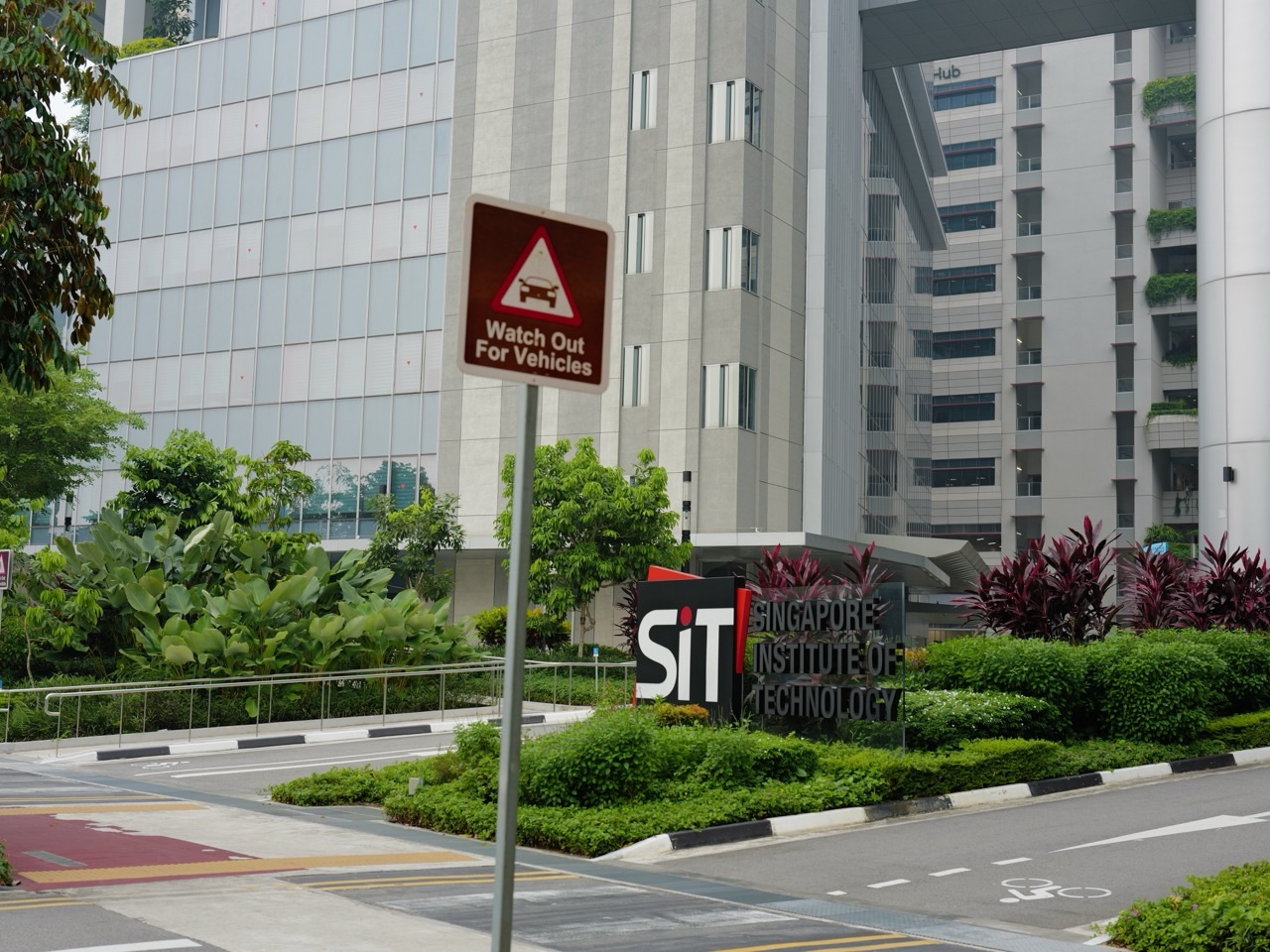
How can a student from Punggol progress from school Science to a science-related diploma, degree or career? The routes are national, not restricted to Punggol. After secondary school, eligible students can consider junior college or Millennia Institute, a polytechnic diploma, Institute of Technical Education (ITE) qualifications and later higher education or employment. University entry—including at the Singapore Institute of Technology (SIT), whose Punggol Campus is physically in the neighbourhood—depends on the chosen programme’s published requirements and selection, not on where a student lives.
This guide to the Science Education System of Punggol follows a learner from post-secondary admissions through scientific study and into applied careers. Its central advice is to choose an educational route based on course prerequisites, learning style, genuine interests, financial and time considerations, and future progression options. A learner interested in laboratory work may find value in a hands-on diploma; another who enjoys theoretical physics may prefer a pre-university academic pathway. Neither route should be dismissed as a second-class education.
The calendar matters. Singapore’s first SEC examination is in 2027; MOE has announced a new Post-Secondary Admissions Exercise (PSE) in 2028 for the first SEC cohort. Families making decisions for 2026 should not mistakenly use the 2028 arrangement as if it were already operating. Check MOE’s current post-secondary overview, the 2026 MOE policy announcements, SEAB’s SEC guidance and the intended institution’s admissions page for the student’s actual application year.
At a glance: the routes from Punggol to tertiary Science
| Route | Typical learning emphasis | Qualification or next step | What to verify |
|---|---|---|---|
| Junior college (JC) | Pre-university academic study, including relevant Science and Mathematics subject combinations | Normally two years towards the Singapore-Cambridge GCE A-Level examination, or another recognised qualification at specific institutions | Admission requirements and available H1/H2 subjects |
| Millennia Institute (MI) | A three-year A-Level pathway with its own subject offerings | Pre-university qualification, followed by possible university applications | Specific subject combinations and admissions rules |
| Polytechnic | Generally three-year, diploma-level applied learning with laboratory, project or industry components according to course | Diploma; employment or competitive progression to university | Diploma curriculum, entry requirements and accreditation if relevant |
| ITE | Applied technical learning including Higher Nitec and further opportunities under prevailing arrangements | Technical qualification; work, higher-level training or eligible diploma routes | Programme, intake, eligibility and progression conditions |
| University, including SIT | Discipline-specific degree teaching, projects and, for relevant programmes, industry-integrated experience | Bachelor’s degree; employment or further study | Exact degree prerequisites, interviews and programme duration |
| Work and continuing education | Technician, manufacturing, laboratory support, digital or industrial roles, with further training as appropriate | Employment, employer-supported learning and recognised qualifications | Safety, competence, credentials and genuine role requirements |
Durations are a useful planning guide, not a promise that every course or learner takes exactly that long. Some programmes have alternative structures, specialist requirements, or different study modes. The route that appears shortest on a diagram may not be fastest for the actual learner if essential prerequisites are missing.
A decision in four checks before choosing any course
- Confirm the qualification year. Identify the student’s actual examination or graduation year and which admissions exercise applies.
- Check the particular course. “Science” is an interest, not a universal admissions category. A pharmaceutical engineering degree can have different requirements from a dietetics, computing or environmental programme.
- Compare learning methods. Ask how much time is spent on theory, mathematics, laboratory investigations, clinical or industry work, projects and presentations.
- Find the next gate. Determine the conditions for progressing from the chosen route to its intended next qualification or career; never assume automatic admission.
Eighteen questions that explain the post-secondary Science system
1. Science pathways begin with the student, not the institution’s name
Students often hear advice to select the “best” school before asking what kind of learning they find meaningful. That reverses the useful order. Start by identifying whether the learner enjoys experimental investigation, biological systems, mathematical modelling, building physical systems, computer analysis or practical problem solving. Then research institutions and programmes that support the interest.
Example from a Punggol student’s perspective: A Punggol student interested in coastal water quality could approach the topic through biology, chemistry, environmental science, engineering or data analytics. These involve different questions and career tasks. Interest in one local problem does not automatically imply that a single degree title is correct.
What families should not assume: The error is treating a school’s reputation as a substitute for investigating a course. A student can enter a highly regarded programme and find that its daily mathematical, practical or interpersonal demands do not match their strengths. Conversely, a less glamorous-sounding qualification can be the right foundation for valuable technical work.
How to test understanding: Ask the learner to describe an activity they willingly spent extra time understanding. Was it explaining a mechanism, using a microscope, analysing numbers, designing a solution or helping someone? Ask what part was enjoyable and which part was difficult. Encourage the learner to explain the evidence behind their choice instead of simply repeating an adult’s preferred answer.
Next useful action: Translate the answer into two or three possible fields, then read actual module titles and assessment descriptions. The point is not to freeze a career choice in adolescence but to replace vague slogans with concrete possibilities. When comparing education routes, log both what is verified and what still requires confirmation; a clear unknown is better than a false certainty.
2. The 2027 SEC changes the timing of post-secondary decisions
Students completing their secondary education in 2026 sit under the applicable GCE arrangements. The SEC is introduced for the 2027 graduating cohort, with MOE announcing a new Post-Secondary Admissions Exercise in 2028. The admissions landscape must therefore be described by cohort rather than as if one set of labels applies to every family today.
Example from a Punggol student’s perspective: A Secondary 3 student in 2026 may graduate in 2027 under the SEC framework. Their family should follow the updates aimed at SEC candidates, while a sibling graduating in 2026 should refer to current 2026 school and admissions instructions. The difference affects which published procedures they follow.
What families should not assume: The misconception is that hearing about a new national certificate means older certificates suddenly cease to matter or that the new 2028 admissions exercise can be used to apply in 2026. Existing recognised qualifications continue to have their own relevant pathways.
How to test understanding: Ask the family to write a timeline with secondary graduation year, expected examination, application exercise and start of the next course. If any item is assumed rather than confirmed, check it before choosing revision resources or an application strategy. Encourage the learner to explain the evidence behind their choice instead of simply repeating an adult’s preferred answer.
Next useful action: Where criteria will change, use the most recent official MOE circular and institutional programme page. Record the retrieval date so an older guide does not silently override a newer policy announcement. When comparing education routes, log both what is verified and what still requires confirmation; a clear unknown is better than a false certainty.
3. Junior college Science develops academic depth
Junior colleges typically offer a two-year pre-university education leading to the Singapore-Cambridge A-Level examination, though selected institutions may offer a different recognised pre-university qualification. A student intending to study science-intensive degrees should pay attention to available subject combinations and exact prerequisites, not merely a generic Science label.
Example from a Punggol student’s perspective: A future engineering applicant may want a strong mathematical foundation alongside relevant sciences. A learner fascinated by biology could benefit from studying chemistry as well, depending on their eventual course requirements. However, the specific H1/H2 subjects offered and permitted combinations vary among colleges.
What families should not assume: The trap is assuming that every college offers every combination, that all students can take all H2 Sciences, or that one subject mix opens every university degree. Subject availability and university prerequisites must be checked separately.
How to test understanding: Ask the learner to compare actual JC subject combinations against the entry conditions of two degree programmes. If a needed prerequisite is absent, investigate legitimate alternatives while options are still open. Encourage the learner to explain the evidence behind their choice instead of simply repeating an adult’s preferred answer.
Next useful action: Strengthen independent study, mathematical fluency and scientific writing alongside content knowledge. Pre-university Science often rewards careful application and integration, not only rapid recall of examination examples. When comparing education routes, log both what is verified and what still requires confirmation; a clear unknown is better than a false certainty.
4. Millennia Institute offers a distinct A-Level timetable
Millennia Institute is a pre-university option generally structured across three years rather than the JC two-year A-Level route. That additional time and the institute’s own course offerings can be relevant to a learner’s learning pace and available choices. The extra year is not a guarantee of admission or examination success.
Example from a Punggol student’s perspective: A student who likes academic Science but feels that two years is too compressed may wish to compare MI with JC options. Such a comparison should include travel from Punggol, subjects on offer, entry criteria, student support and personal readiness.
What families should not assume: The misunderstanding is calling MI a university or presenting it as identical to every JC except for a slower calendar. Its actual curricular offerings and admission requirements need their own research.
How to test understanding: Ask the student to map the subjects they want against MI’s published offerings and identify the likely routine required to sustain study across the three years. Then compare with a specific JC rather than a stereotype. Encourage the learner to explain the evidence behind their choice instead of simply repeating an adult’s preferred answer.
Next useful action: Travel time matters when learning relies on sustained revision and co-curricular participation. A longer commute can affect how much study is realistic, especially if tuition is scheduled as well. When comparing education routes, log both what is verified and what still requires confirmation; a clear unknown is better than a false certainty.
5. Polytechnic Science provides applied diploma routes
Singapore’s polytechnics offer diploma programmes combining coursework with applied projects, laboratories and relevant industry exposure. Many full-time diplomas are three years, but applicants should verify each programme. Life sciences, engineering, food, environmental and other STEM-related routes can differ substantially in content and prerequisites.
Example from a Punggol student’s perspective: A student attracted to food safety may compare food science or biotechnology-related diplomas, while one fascinated by robots may investigate mechatronics or engineering. Both can involve scientific reasoning, but they require different equipment, practical procedures and future specialisations.
What families should not assume: The misconception is that polytechnic is simply “easier JC”. It has different modes of assessment and often significant independent project work. A child who relies on memorising answers may struggle when asked to deliver a real prototype or laboratory report.
How to test understanding: Ask for the current module list, project expectations, internship arrangements and graduate destinations. A course title alone may hide a heavier mathematics or programming component than the student anticipates. Encourage the learner to explain the evidence behind their choice instead of simply repeating an adult’s preferred answer.
Next useful action: Build practical notebook habits early: identify a question, record measurements honestly, document limitations and communicate a result. These are valuable both for diploma work and later university study. When comparing education routes, log both what is verified and what still requires confirmation; a clear unknown is better than a false certainty.
6. ITE and technical qualifications are part of the Science workforce
The Institute of Technical Education provides applied programmes and vocational pathways that can support technician, engineering, process, manufacturing and technology roles. The programme catalogue and admissions structure are not fixed forever; by 2026, ITE’s transition towards enhanced three-year Higher Nitec pathways forms part of the current system.
Example from a Punggol student’s perspective: A student interested in maintaining laboratory or production equipment may prefer the satisfaction of learning with tools and physical systems. Their route might involve a technical qualification, employment, an eligible diploma progression and further training, rather than a direct journey through JC.
What families should not assume: The error is confusing a technical qualification with the absence of intellectual work. Reliable technicians need measurement skills, precise procedures, troubleshooting, safety discipline and increasingly digital literacy.
How to test understanding: Ask what a graduate is trained to do on an ordinary workday, what equipment and software they use, and which subsequent courses or certifications the qualification may permit. A credible pathway has named steps and eligibility rules. Encourage the learner to explain the evidence behind their choice instead of simply repeating an adult’s preferred answer.
Next useful action: Show the learner how scientific concepts appear in applied work: pressure in a process line, electrical safety in a control system, pH in a lab task and statistical variation in quality assurance. When comparing education routes, log both what is verified and what still requires confirmation; a clear unknown is better than a false certainty.
7. Admissions requirements must be checked course by course
A university, diploma or technical programme may require specified subjects, minimum grades, relevant qualifications, aptitude assessments or interviews. Requirements can differ even between degrees that sound similarly scientific. No broad statement about “Science students” can replace the course page for the actual application year.
Example from a Punggol student’s perspective: At SIT, the current programme pages for Pharmaceutical Engineering and Dietetics and Nutrition demonstrate why specificity matters: one is an engineering degree, while the other prepares learners for a health-related professional field and describes science and mathematics prerequisites. Families must read each page in full.
What families should not assume: The trap is assuming that a student with strong Biology automatically meets the entry requirements for every healthcare profession, or that every Engineering programme has identical Mathematics demands.
How to test understanding: Make a four-column table: programme, qualification route, required subjects or conditions, evidence required for admissions. Mark any uncertain field for direct verification with the institution. Encourage the learner to explain the evidence behind their choice instead of simply repeating an adult’s preferred answer.
Next useful action: Recheck after course updates and before submitting an application. An earlier year’s requirements can guide exploration but do not create eligibility for a future intake. When comparing education routes, log both what is verified and what still requires confirmation; a clear unknown is better than a false certainty.
8. Aptitude-based admissions do not mean unqualified entry
Institutions may evaluate more than an examination score, including projects, interviews, motivation and demonstrated strengths. This is a chance to make relevant learning visible, not a guarantee that interest alone substitutes for the stated academic or professional entry criteria.
Example from a Punggol student’s perspective: A student who has responsibly developed a simple plant-growth data project can discuss what was measured, why a comparison was fair or unfair and how the results affected their conclusions. Such an account is more credible than claiming a project proved a discovery when only a small classroom investigation occurred.
What families should not assume: The misconception is that a polished portfolio outweighs all eligibility rules, or that copying impressive technical vocabulary proves aptitude. Selection methods and minimum requirements are programme-specific.
How to test understanding: Ask the student to describe one mistake found in their own project and what changed after the correction. Genuine learning leaves a trail of hypotheses, revisions and responsible documentation. Encourage the learner to explain the evidence behind their choice instead of simply repeating an adult’s preferred answer.
Next useful action: Keep portfolios authentic. Do not invent volunteer hours, practical skills, experiments, lab access or employment experience. Relevant honesty is more valuable than an elaborate fictional profile. When comparing education routes, log both what is verified and what still requires confirmation; a clear unknown is better than a false certainty.
9. SIT’s Punggol Campus creates a local university connection
The Singapore Institute of Technology’s Punggol Campus is located at 1 Punggol Coast Road, Singapore 828608. It was officially opened in September 2025 and sits within the Punggol Digital District environment. Its local presence does not make university admission automatic for Punggol residents or require every Singaporean learner to attend SIT.
Example from a Punggol student’s perspective: A Punggol family may see the campus or district buildings during an ordinary journey and recognise that tertiary applied learning is taking place nearby. That can motivate a realistic conversation about degrees, research projects and work-study opportunities, while respecting campus access rules.
What families should not assume: The misleading claim is that being near a university grants special selection priority or that every programme has the same timetable and study duration. SIT publishes degree-specific curricula and admissions conditions.
How to test understanding: Ask the student to select two SIT programmes, compare their modules and identify where biology, chemistry, physics, mathematics or programming appear. A careful comparison often reveals that one field needs a different academic foundation. Encourage the learner to explain the evidence behind their choice instead of simply repeating an adult’s preferred answer.
Next useful action: Use campus proximity for information sessions or approved public activities when available, but do not assume students or visitors can enter teaching laboratories, industry spaces or private project areas. When comparing education routes, log both what is verified and what still requires confirmation; a clear unknown is better than a false certainty.
10. Pharmaceutical Engineering joins science to manufacturing
Pharmaceutical Engineering is a concrete example of interdisciplinary STEM: chemistry, process principles, mathematics, instrumentation and quality considerations meet in the manufacture of medicinal products. SIT currently describes its Pharmaceutical Engineering bachelor’s programme as a four-year honours engineering degree at its Punggol Campus.
Example from a Punggol student’s perspective: A student interested in how a medicine moves from a laboratory formulation to reliable production should ask about mixing, heat transfer, mass balance, manufacturing controls and safe process design. The role is not equivalent to being a doctor or pharmacist.
What families should not assume: The error is assuming the word “pharmaceutical” means every graduate clinically prescribes medicine. Engineering and healthcare professions have different competencies, licensing considerations and work environments.
How to test understanding: Ask which physical quantities an engineer must measure to scale a process while preserving product consistency. For an introductory discussion, track the amount entering, remaining in and leaving a simple hypothetical system. Encourage the learner to explain the evidence behind their choice instead of simply repeating an adult’s preferred answer.
Next useful action: Investigate the university programme details and career roles separately. A degree title should be followed by questions about actual modules, industry placements and professional conditions rather than marketing imagery. When comparing education routes, log both what is verified and what still requires confirmation; a clear unknown is better than a false certainty.
11. Food science, chemistry and biotechnology need precise definitions
Food technology, chemical engineering and biotechnology sit near one another in many students’ imagination, but their objectives are not identical. Food-related study can involve chemistry, microbiology, sensory analysis and production; chemical engineering focuses on processes and systems; biotechnology applies biological processes and technologies.
Example from a Punggol student’s perspective: Consider producing a safe packaged beverage at industrial scale. Food technology may examine stability and consumer quality, biotechnology may use biological processes where relevant, while engineering examines equipment, process balances and manufacturing operation.
What families should not assume: The trap is assuming that because these courses all include laboratories they lead to interchangeable jobs or professional registrations. The subject matter, regulations and assessed capabilities can differ.
How to test understanding: Ask a learner to explain the scientific problem they want to solve and which field’s methods would suit it. Better course choices begin with knowing what the daily work involves. Encourage the learner to explain the evidence behind their choice instead of simply repeating an adult’s preferred answer.
Next useful action: Use actual module descriptions and programme outcome pages, not a headline alone. Course names, duration, intakes and award structures should be confirmed for the intended year. When comparing education routes, log both what is verified and what still requires confirmation; a clear unknown is better than a false certainty.
12. Healthcare Science and regulated professions have extra gates
Some science-rich occupations in health are regulated professions and require specific recognised qualifications, practical placements and registration processes. An interest in anatomy or nutrition does not automatically confer professional eligibility. Programme-specific requirements and relevant regulators must be consulted.
Example from a Punggol student’s perspective: A student considering nutrition research and one considering professional dietetics may share an interest in food, yet the duties and credential pathways can differ. It is especially important not to treat a generic online course as equivalent to professional clinical training.
What families should not assume: The mistake is claiming that any Life Science diploma or Biology degree qualifies a graduate to practise a regulated health profession. Professional titles and clinical responsibilities may have specific legal or accreditation requirements.
How to test understanding: Ask the learner to identify the exact intended job, then trace backwards to the authorised entry qualification, placement requirements and any regulator. If the role is unclear, do not choose an expensive course on the basis of an assumed title. Encourage the learner to explain the evidence behind their choice instead of simply repeating an adult’s preferred answer.
Next useful action: Career exploration should include ethics, communication, collaboration and the ability to handle evidence—skills that sit alongside laboratory knowledge in applied professional practice. When comparing education routes, log both what is verified and what still requires confirmation; a clear unknown is better than a false certainty.
13. Punggol Digital District offers context, not a guaranteed career
The Punggol Digital District is planned as an integrated business and education environment, bringing SIT and industry near one another. Its themes include digital and technological development, making it a useful setting for explaining how research, software, engineering and practical infrastructure can intersect.
Example from a Punggol student’s perspective: A school pupil might notice buildings, sensors or energy systems in Punggol and ask how data could improve operations. Such observations can lead to classroom questions about measurement, environmental factors and system design. They do not by themselves establish the performance of proprietary technology.
What families should not assume: The misconception is that a new district automatically gives residents internships, allows open access to business laboratories or guarantees graduate employment. Every role, event or research collaboration has its own eligibility and permissions.
How to test understanding: Ask students to identify one measurable question—energy consumption under two operating conditions, for example—and describe what data would be needed to evaluate it responsibly. Encourage the learner to explain the evidence behind their choice instead of simply repeating an adult’s preferred answer.
Next useful action: Explore official JTC and SIT information for real programme descriptions, public activities and announced partnerships. Keep aspirational promotional claims distinct from outcomes that have actually been documented. When comparing education routes, log both what is verified and what still requires confirmation; a clear unknown is better than a false certainty.
14. Research skills must outgrow examination habits
At tertiary level, the learner increasingly needs to define a problem, review reliable sources, choose appropriate methods, collect honest measurements, evaluate uncertainty and communicate findings. These behaviours can begin at Primary Science level but become more demanding in diploma and university projects.
Example from a Punggol student’s perspective: Imagine testing whether a material insulates a model container better. A school task may use two controlled readings; a university study could examine repeatability, instrument calibration, sources of heat transfer and the limits of a model. The same scientific question can be investigated at different depths.
What families should not assume: The error is treating a visually attractive graph or a long report as proof of a rigorous investigation. Without a defensible design and reliable data, neither design software nor polished prose rescues a weak conclusion.
How to test understanding: Ask the student what evidence would change their mind. A good scientist can explain what result would challenge the current hypothesis instead of designing an experiment that only confirms an expected story. Encourage the learner to explain the evidence behind their choice instead of simply repeating an adult’s preferred answer.
Next useful action: Practise small, honest reports. State the question, method, measurements, result, limitation and next test. Explicitly label made-up practice data as hypothetical whenever no real experiment was performed. When comparing education routes, log both what is verified and what still requires confirmation; a clear unknown is better than a false certainty.
15. Mathematics and statistics remain important beyond school Science
Calculations do not disappear after the SEC. Engineering may involve calculus and mathematical modelling, biology may use statistics, chemistry may require balances and rates, and data-rich health or environmental fields depend on interpreting uncertainty. The amount and level of Mathematics varies by course.
Example from a Punggol student’s perspective: A student measuring the growth of a culture in a hypothetical laboratory table needs to distinguish an absolute increase from a percentage increase. That distinction matters even when the underlying science is biological rather than a traditional Mathematics exercise.
What families should not assume: The misconception is that choosing a laboratory-oriented route means never using algebra or quantitative reasoning. A practical profession may rely on accurate units, calibration and simple but safety-critical calculations.
How to test understanding: Ask the learner to compute a rate with stated units and then explain what a change in the numbers means scientifically. Correct arithmetic without a meaningful interpretation is incomplete. Encourage the learner to explain the evidence behind their choice instead of simply repeating an adult’s preferred answer.
Next useful action: Build a short bridge from the student’s current Mathematics gaps to the actual course prerequisites. Practise proportions, graphs, scientific notation or algebra only where the relevant programme needs them. When comparing education routes, log both what is verified and what still requires confirmation; a clear unknown is better than a false certainty.
16. Safety, ethics and scientific integrity are career skills
Laboratory and industrial work may carry real hazards and legal responsibilities. Training should emphasise approved protocols, protective controls, honest data records, safe disposal and respect for equipment and people. A curious student does not need to perform unsafe home experiments to demonstrate scientific ability.
Example from a Punggol student’s perspective: A learner might be tempted to imitate a chemistry procedure seen in a university promotional video. They should instead use classroom models or supervised practical opportunities approved by the institution. Videos rarely provide the full safety assessment or trained personnel.
What families should not assume: The error is to equate risk-taking with talent or to alter recorded readings so they match a theory. In workplaces, false records can undermine quality and trust even when the numerical difference looks small.
How to test understanding: Ask what a responsible researcher should do if a measurement conflicts with an expected result. The correct response is to check methods and report honestly, not to invent a cleaner observation. Encourage the learner to explain the evidence behind their choice instead of simply repeating an adult’s preferred answer.
Next useful action: Extend by learning how to keep a clear notebook and cite sources properly. An accurately labelled hypothetical dataset is valuable practice; presenting it as a real field measurement is not. When comparing education routes, log both what is verified and what still requires confirmation; a clear unknown is better than a false certainty.
17. Work-study, internships and industry projects vary by programme
SIT and other applied institutions may incorporate workplace learning, internships or industry projects. SIT’s Integrated Work Study Programme is part of its applied-learning approach, although requirements and structure vary by degree and cohort. An industry placement is a learning opportunity with expectations, not a guaranteed permanent job offer.
Example from a Punggol student’s perspective: A student interested in the Punggol Digital District may hope to complete an industry project nearby. Whether that is possible depends on the programme, partner availability, placement selection and institutional rules. Geography can make an opportunity convenient, but it does not establish an entitlement.
What families should not assume: The misconception is that every internship must lead to employment or that a short placement can substitute for meeting all academic outcomes. A useful placement needs clear supervision, authentic tasks and reflection on skills gained.
How to test understanding: Ask what technical capabilities, communication habits and safety training a student must demonstrate before they could contribute to a workplace project. Encourage the learner to explain the evidence behind their choice instead of simply repeating an adult’s preferred answer.
Next useful action: Evaluate learning evidence: a log of tasks, feedback, revisions and a realistic understanding of job duties. Do not exaggerate a student observation or short visit into a research appointment. When comparing education routes, log both what is verified and what still requires confirmation; a clear unknown is better than a false certainty.
18. Careers, lifelong learning and route changes
A first qualification is not a lifelong verdict. Graduates may work, specialise, take bridging education, obtain further credentials or change domains where eligibility and resources permit. Science careers include research, technical operations, education, engineering, environmental work, data-related fields and many roles that combine disciplines.
Example from a Punggol student’s perspective: A student who begins in an applied diploma might discover a taste for statistical modelling and later pursue an eligible university programme. Another may start in a pre-university Science combination and decide that field-based environmental work suits them better. Both stories require real admissions and employment steps, not magical automatic transfers.
What families should not assume: The mistake is promising that every credential transfers directly into every higher one, or that any particular route guarantees employment in a fashionable industry. Progression is conditioned by performance, recognition and course requirements.
How to test understanding: Ask the learner to create a main path and a realistic alternative, with the next application gate, evidence required and a learning task they can start today. Revisit the options as interests and rules evolve. Encourage the learner to explain the evidence behind their choice instead of simply repeating an adult’s preferred answer.
Next useful action: Career planning remains optimistic when it is grounded in reality: students can learn more, develop new strengths and pursue qualifying routes, while accepting that some professions have strict prerequisites and some admissions are competitive. When comparing education routes, log both what is verified and what still requires confirmation; a clear unknown is better than a false certainty.
Original worked example 1: interpreting an engineering quality-control dataset
Hypothetical task. A group testing the filling of small sample bottles measures 97, 99, 100, 101 and 103 mL. The stated target is 100 mL. Calculate the mean, identify the range and explain whether these numbers alone prove that the filling process meets an industrial tolerance. These are invented teaching values, not readings from any SIT or industrial laboratory.
Step 1—mean. Sum = 97 + 99 + 100 + 101 + 103 = 500 mL. Mean = 500 ÷ 5 = 100 mL. That is equal to the hypothetical target, but it is a summary of five results rather than evidence that every bottle contains exactly 100 mL.
Step 2—range. Maximum = 103 mL and minimum = 97 mL. Range = 103 − 97 = 6 mL. The measurements show variation around the target. A mean equal to the target does not eliminate variation or the possibility of an unacceptable individual reading.
Step 3—scientific conclusion. We cannot determine compliance because no acceptable tolerance, sampling procedure, uncertainty estimate or process standard has been supplied. It would be an invention to claim that every measurement meets a regulatory limit. An appropriate next step is to consult the relevant approved specification and perform representative sampling with a suitably calibrated device.
Learning transfer. Replace bottle volume with the measured mass of tablets in a purely hypothetical dataset or with environmental sensor readings. The principle persists: calculate the summary, evaluate variation, identify the acceptance criterion and state what the evidence does not establish.
Original worked example 2: yield, unit conversion and honest assumptions
Hypothetical task. A supervised educational model predicts 250 g of product from a particular set of ingredients under an assumed ideal process. The measured sample contains 215 g. Calculate the percentage yield using the model’s ideal result as the denominator. No actual chemical synthesis is recommended or described by this classroom arithmetic exercise.
Worked answer. Percentage yield = (actual yield ÷ theoretical yield) × 100 = (215 ÷ 250) × 100 = 86%. This number describes the ratio between the measured amount and the stipulated model quantity.
What it does not prove. The 86% figure does not identify why less product was measured. Measurement uncertainty, incomplete conversion, collection losses and assumptions about purity are possible considerations only if relevant to the actual system. We cannot establish the cause from two numbers.
Transfer. Ask whether an 86% yield automatically means 14% of the material was destroyed. No: the apparent difference is not evidence that mass conservation failed. A complete mass balance requires defining the system boundary and accounting for all relevant flows, products and remaining materials.
Original worked example 3: percentages in a scientific survey
Hypothetical task. A student survey of 80 classmates finds that 32 express interest in engineering, 24 in healthcare and 24 in other Science-related activities. What percentage chose engineering, and what are the limits of using this result to describe the whole of Punggol?
Calculation. Engineering share = 32 ÷ 80 × 100 = 40%. Healthcare and other categories each account for 30% in this invented example.
Interpretation. This is a description of the imagined sample, not a representative estimate of Punggol students. The 80 classmates may be from one school, one class or a specially interested club; the sample design is unspecified. Making a district-wide claim would need an appropriately designed survey and evidence about the population sampled.
Study skill. Tertiary Science increasingly asks not just “Can you calculate?” but “What is the population, what was sampled, what assumptions were made and what conclusions are justified?” Start asking those questions long before the first university research project.
Four-week Science pathway investigation for Punggol families
| Week | Action | Tangible outcome |
|---|---|---|
| 1 — define interests | Review the student’s best and hardest recent Science activities. Separate genuine curiosity from parental preference and peer pressure. | Three specific topics or problems the student wants to understand. |
| 2 — verify routes | Compare one JC/MI route, one relevant polytechnic or ITE option and one possible longer-term degree, using official course pages. | A pathway table listing actual prerequisites and dates checked. |
| 3 — experience and investigate | Attend an approved information session if available, read module descriptions, and try one safe data-analysis or scientific-writing exercise. | A practical account of what the day-to-day learning and career work might involve. |
| 4 — decide next steps | Identify the current examination-year obligations, a realistic main option and an alternative route. Ask the school counsellor any unresolved eligibility questions. | A short plan with verifiable next gates, not a promise of automatic admission. |
The four weeks are a starting decision process, not a race to choose a lifelong identity. Especially in Primary and lower secondary years, preserve room to explore. Near graduation, prioritise real deadlines, current subject prerequisites and applications. Avoid purchasing specialised tuition packages before the actual academic requirement is confirmed.
How SIT and Punggol Digital District fit into the bigger picture
SIT’s physical presence makes university-level applied learning more visible in Punggol. According to SIT’s campus location information, its Punggol Campus address is 1 Punggol Coast Road. JTC’s Punggol Digital District description explains the integrated urban planning that brings an educational institution and business environment into one district. This is a meaningful connection between place and scientific aspirations, but the public should distinguish official facilities and accessible events from restricted teaching, research and industry areas.
The student should not assume that a programme exists merely because a subject appears in publicity, or that every research interest maps neatly to one university’s faculty. For accurate decisions consult SIT’s live undergraduate programme listing and current SIT undergraduate admissions guidance. Applied education can include collaboration with industry, but schedules, programme structures, placement arrangements and admission criteria vary.
For a neighbourhood-oriented set of STEM prompts, see things to do in Punggol for Science and technology lovers. Observation of local infrastructure can spark questions about data, power systems or sustainability; the best scientific follow-up still requires a fair method and trusted evidence.
Ten frequently asked questions about Punggol-to-university Science routes
Does living in Punggol give a student admission priority to SIT?
No general residency preference should be assumed. SIT’s Punggol Campus is locally convenient for some residents, but programme admissions are governed by official requirements, evaluation and competition. Apply through the relevant institutional process and do not treat geography as guaranteed eligibility. Check the current MOE and individual institution guidance for the child’s actual intake; course criteria, durations and progression opportunities can change.
Is JC the only valid route into a Science degree?
No. Singapore offers several recognised progression routes, including relevant polytechnic diplomas and other qualifications. However, acceptance of any qualification is programme-specific, and certain degrees require particular subjects or grades. The ability to apply is not the same as guaranteed admission. Check the current MOE and individual institution guidance for the child’s actual intake; course criteria, durations and progression opportunities can change.
Is the Millennia Institute a polytechnic?
No. MI is a distinct three-year pre-university route generally leading to the A-Level examination. Polytechnic diplomas are different qualifications with their own entry requirements, learning methods and employment and progression options. Check the current MOE and individual institution guidance for the child’s actual intake; course criteria, durations and progression opportunities can change.
Can an ITE student eventually study Science or Engineering at university?
Further progression may be possible through eligible pathways, additional qualifications and successful applications, but it is neither universal nor automatic. Check the current progression requirements at each transition rather than assuming every credential feeds into every programme. Check the current MOE and individual institution guidance for the child’s actual intake; course criteria, durations and progression opportunities can change.
Will 2026 secondary graduates apply through the 2028 PSE?
No. MOE’s announced 2028 PSE is connected to the first SEC cohort graduating in 2027. For a 2026 graduate, consult the admissions exercise and school information relevant to that year. Check the current MOE and individual institution guidance for the child’s actual intake; course criteria, durations and progression opportunities can change.
Does the 2028 admissions change mean all universities have the same Science prerequisites?
No. Post-secondary admission exercise reforms do not erase degree-specific entry conditions. Universities still publish academic prerequisites, assessments and other selection requirements for individual programmes. Check the current MOE and individual institution guidance for the child’s actual intake; course criteria, durations and progression opportunities can change.
Does Pharmaceutical Engineering qualify a graduate to prescribe medicine?
No. Pharmaceutical engineering concerns engineering processes and related scientific expertise. Professional prescribing and pharmacy practice have distinct regulated qualifications and role requirements, which should never be inferred from a programme’s pharmaceutical-sounding name. Check the current MOE and individual institution guidance for the child’s actual intake; course criteria, durations and progression opportunities can change.
Can a student visit SIT laboratories because the campus is near home?
No open access should be assumed. Only participate in officially advertised public visits or authorised activities under the institution’s rules. Specialised laboratories and partner workplaces may have safety, confidentiality and security restrictions. Check the current MOE and individual institution guidance for the child’s actual intake; course criteria, durations and progression opportunities can change.
Do internships or work-study guarantee a job at Punggol Digital District?
No. Placements or industry projects are programme-dependent learning activities. Job offers are separate decisions made under employer and institutional processes. The existence of nearby companies does not establish any student’s right to a placement. Check the current MOE and individual institution guidance for the child’s actual intake; course criteria, durations and progression opportunities can change.
How should a parent choose between the shortest and most interesting route?
Compare meaningful learning fit, required qualifications, course quality, admissions feasibility, fees and time, travel, and real progression. A route that matches the learner’s abilities and keeps options open may be wiser than selecting solely by duration or prestige. Check the current MOE and individual institution guidance for the child’s actual intake; course criteria, durations and progression opportunities can change.
Official sources and complete route through this Punggol Science series
- Ministry of Education — Post-secondary education overview
- MOE 2026 announcements — 2027 SEC and 2028 Post-Secondary Admissions Exercise
- MOE 2025 announcements — pre-university admission changes
- SEAB — Singapore-Cambridge Secondary Education Certificate
- MOE — CourseFinder for actual post-secondary qualifications
- SIT — Punggol Campus information and official location
- SIT — Undergraduate programme listings
- SIT — Undergraduate admissions requirements
- SIT — Pharmaceutical Engineering degree details
- SIT — Dietetics and Nutrition degree details
- SIT — Academic bulletin and applied work-study learning structures
- JTC — Punggol Digital District
- Series article 1 — Primary 3–6 Science and PSLE
- Series article 2 — Secondary 1–2 Science and Full SBB
- Series article 3 — Secondary 3–4 Biology, Chemistry, Physics and SEC
Editorial fact-check date: 18 October 2026. The material above uses Singapore’s national policies and official institutional course listings; it does not create a fictional Punggol-only education system. Durations, requirements and opportunities must be rechecked before applying. All worked scientific datasets, arithmetic examples and sample student scenarios are original and hypothetical; no invented observations are attributed to SIT, schools or employers.
Continue the Punggol Science Education Series
Choose the next stage or deeper skill. These eight guides share the same national MOE and SEAB evidence framework but answer different questions.


