
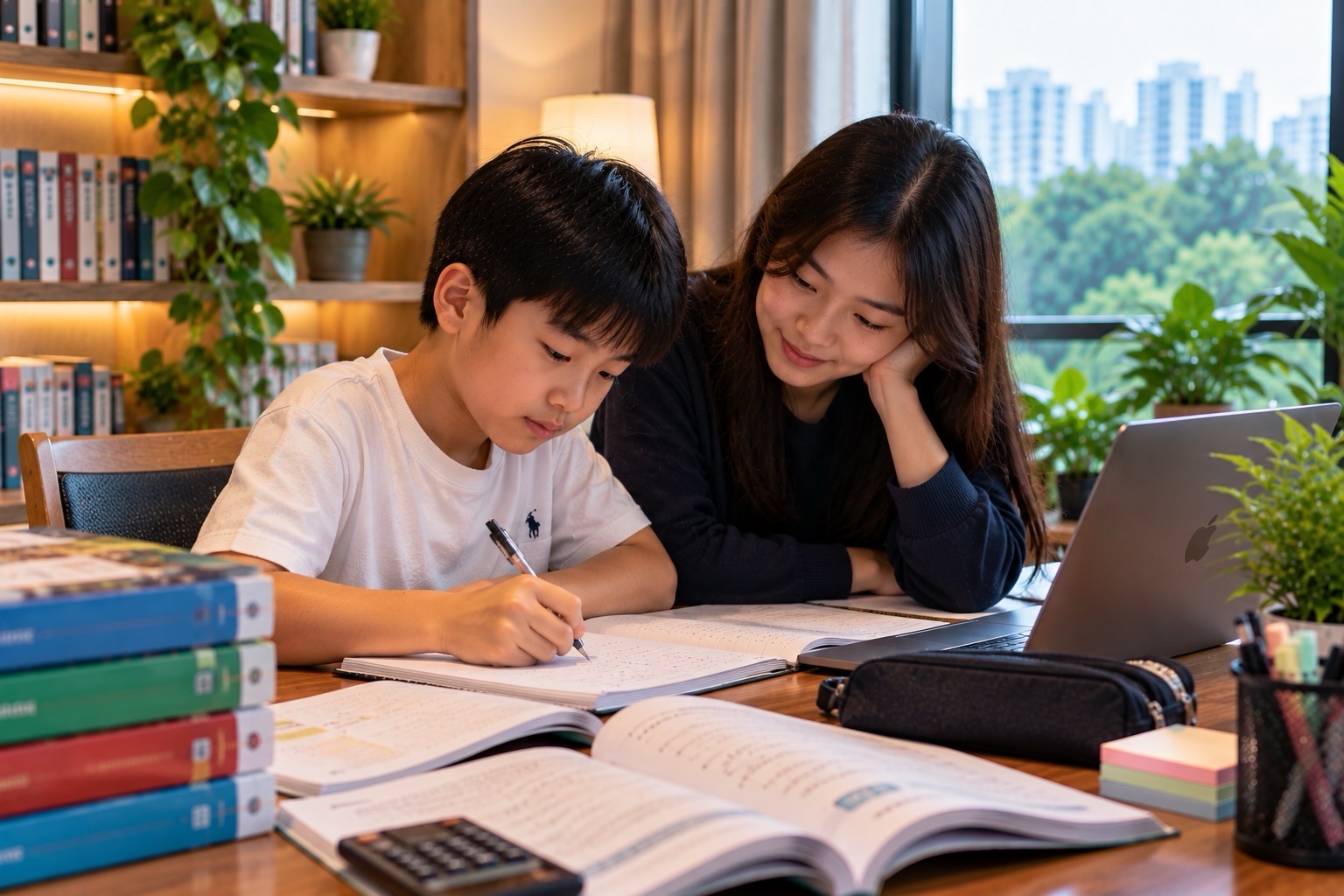
Quick answer. Home-schooling a Singapore Citizen child of compulsory primary-school age is possible only through the Ministry of Education’s exemption from compulsory education process. It is not enough to withdraw a child, buy an online curriculum or announce that a parent will teach at home. MOE considers the proposed educational plan, the child’s needs and the objectives of compulsory education before deciding whether an exemption should be granted. Exempted home-schooled children are subject to assessment conditions, including the PSLE benchmark published by MOE.
For a Punggol family, the practical first step is to check the child’s legal category, consult MOE’s current official exemption guidance, and speak to the Compulsory Education Unit before changing school attendance or making long-term commitments. If a child is experiencing medical, developmental or school-attendance difficulties, an approved school adjustment, professional assessment or deferment may be more relevant than home-schooling. These are different processes and should not be confused.
Singapore’s Compulsory Education Act primarily applies to Singapore Citizen children residing in Singapore who fall within compulsory primary-school age. It covers both mainstream national primary education and, under the applicable requirements, government-funded special education provision. Permanent Residents and foreign children are not covered in precisely the same way by this Act; that does not remove other immigration, enrolment or institutional rules for their education. A family’s citizenship, ordinary residence and school situation must be verified case by case.
This guide explains how exemption, deferment, ordinary Home-Based Learning (HBL), mainstream school, SPED placement and independent home education differ. It includes a parent decision checklist, an illustrative curriculum plan, an original worked numeracy example, a four-week preparation sequence, and authoritative source links. Reviewed for Singapore’s rules on 18 October 2026; current application conditions always override an independent guide.
At a glance: four routes that are often confused
- Ordinary mainstream school: a child is enrolled and attends a national primary school regularly, while receiving school-based support where appropriate.
- School Home-Based Learning: a school directs and supervises assigned learning activities at home; the child remains enrolled in the school. This is not home-schooling exemption.
- Home-schooling under MOE exemption: an approved alternative educational arrangement for a child otherwise within compulsory education, with conditions and monitoring set by MOE.
- Deferment: a separate request when a child is assessed as not yet ready to begin primary or junior-one schooling due to appropriate circumstances, often requiring professional evidence.
- SPED schooling: eligible children with significant needs can meet compulsory education requirements through government-funded SPED schools rather than assuming they must join a mainstream classroom.
- Private or international school: enrolling in such a school does not automatically discharge the Compulsory Education Act for a Singapore Citizen child without satisfying the applicable exemption framework.
1. Why Singapore has compulsory primary education
Compulsory education establishes a shared foundation for children living in Singapore. Its objectives include giving every child a common core of knowledge for further education and a shared educational experience supporting citizenship and social cohesion. A national school does more than deliver textbooks: children learn within groups, communicate across differences, follow routines, participate in community life and encounter common national experiences.
The framework was introduced to ensure that the opportunity to learn is not treated as wholly optional for children of primary-school age. This has consequences for home education. A family’s desire for a different pace or teaching philosophy can be discussed with MOE, but it does not remove the obligation to secure the appropriate legal approval before changing arrangements.
Compulsory primary education is not identical to saying every Singapore child must attend a mainstream school without exception. MOE recognises lawful exemptions, deferments and relevant government-funded SPED routes. The existence of an exception does not make it automatic or mean that any alternative curriculum may be used without review.
Punggol parents who see examples of home-schooling overseas should not import another country’s legal assumptions. Singapore’s compulsory education rules, PSLE requirements, national identity objectives and administration must be understood on their own terms.
2. Who is covered and why citizenship matters
The legal compulsory education framework applies to Singapore Citizens of the relevant age residing in Singapore, subject to the Act’s definitions, exemptions and other applicable arrangements. MOE’s official overview explains the obligation to attend a national primary school regularly. The usual Primary 1 intake starts in the year the child turns seven, but the birth-date eligibility tool should be checked for the relevant cohort.
Parents sometimes hear that a child is a Singapore Permanent Resident and assume every rule applying to a Singapore Citizen necessarily applies in exactly the same way. That is not a safe inference. PR and international students have separate questions about school access, residency, admission and school fees. The compulsory primary schooling obligation under this Act specifically concerns Singapore Citizens.
A child may hold more than one nationality or have complicated residence circumstances. If the family is relocating, living abroad part of the year or changing immigration status, MOE should clarify which rules apply. Informal parent-group comments rarely capture those exceptions accurately.
Before discussing the merits of home education, write down the child’s citizenship, birth date, present school, ordinary residence and intended educational arrangement. These are inputs to the legal question; they should not be guessed from a parent’s mailing address alone.
3. What qualifies as a genuine home-schooling arrangement
Home-schooling means the child’s education is organised outside a national primary-school enrolment under an approved exemption arrangement. Parents must satisfy MOE that the alternative can meet compulsory education objectives and that the child will receive a suitable education. This is materially different from tutoring after school or keeping a child home temporarily during illness.
A good educational plan identifies what the child will learn, how instruction will happen, which adults are responsible, how progress will be assessed and how the child will gain appropriate experiences of national identity and community life. The plan needs credible provision over years rather than just a schedule for a few weeks.
Parents should ask MOE for the current application requirements rather than relying on an internet claim that a particular degree, workbook or online programme alone guarantees approval. MOE may consider parental qualifications and capacity alongside the quality and practicality of the proposal. An applicant should provide truthful evidence of actual ability to deliver the plan.
Home education can offer individual pacing and flexible teaching, but it also transfers substantial instructional, organisational and social responsibilities to the family. An exemption is an administrative decision with continuing conditions, not a permanent freedom from educational accountability.
4. The two objectives a home curriculum must address
Academic foundations matter because the learner should be prepared for further education, including the skills in English, Mother Tongue, Mathematics and Science relevant to Singapore’s primary curriculum and examinations. Home-schooling does not make numeracy, literacy or scientific reasoning unnecessary. It changes who organises the teaching.
The shared educational experience and citizenship objective matters as well. National Education, understanding Singapore’s institutions and history, developing civic responsibilities and learning to interact in a plural society cannot be treated as incidental. Parents should be able to explain how the child will learn about the country and participate appropriately in its community.
For a Punggol child, the environment offers potential learning contexts: the library, public parks, community spaces, safe neighbourhood observation and nationally available educational resources. These contexts can supplement a planned curriculum; they cannot by themselves replace systematic teaching and record keeping.
A balanced plan therefore contains subject goals and civic-development opportunities, alongside social relationships and age-appropriate play. It should also identify what happens when the child cannot master a concept on the first attempt.
5. Home-schooling exemption and medical deferment are different
A deferment request concerns postponing entry to Primary or Junior One for a child not yet ready to enter the relevant school setting, subject to MOE’s approval. It may require a comprehensive needs assessment completed by a qualified professional. Home-schooling exemption proposes an alternative way of delivering education during the compulsory stage.
Consider a child with substantial developmental or medical needs who cannot currently manage a usual school timetable. The family should not automatically conclude that home-schooling is the only option. Depending on assessment, deferment, suitable SPED provision or appropriate supports might be more fitting. The route should follow qualified advice and MOE’s procedures.
The distinction is also important for documentation. MOE publishes materials concerning deferment and qualified assessment that should not be casually copied into a home-schooling application without checking relevance. A family should clarify which exact application it is making before collecting sensitive reports.
The child’s wellbeing remains central. A parent worried about safety or learning access should discuss immediate needs with professionals and the existing school, even while a longer-term educational route is being considered.
6. SPED education is part of the compulsory education framework
Singapore’s compulsory education approach was extended to children with moderate-to-severe special educational needs in the relevant cohorts. MOE’s professional guidance states that qualifying children can meet the requirement by attending government-funded special education schools, as well as mainstream schools where those are suitable.
This corrects a potentially harmful myth: a child who cannot access the national mainstream curriculum is not simply “excused from all education”. The system includes SPED pathways intended to provide learning suited to individual cognitive, adaptive and other needs. Placement and appropriate supports should be discussed with qualified professionals and the responsible authority.
Where parents propose home education for a child with substantial needs, MOE still assesses whether a suitable educational plan and exemption conditions are met. The child’s diagnosis does not itself provide blanket permission to remove the child from all schooling.
Punggol families can read the separately published SEN, mainstream support and SPED guide before assuming that only an ordinary classroom or completely unregulated home education are available.
7. Why dissatisfaction with one school is not a legal exemption
A family may be worried about academic pressure, a child’s friendships, a mismatch in teaching style, transport or an unresolved school incident. These are serious matters worth addressing. But being dissatisfied with one school is not the same as receiving formal permission to stop compulsory education.
Sometimes a school-based intervention, a supported transfer, counselling, safer classroom arrangement or targeted learning support can deal with the central problem. Other situations may require stronger action. The family should first identify which specific harm or barrier needs a remedy and which institution has the authority to provide it.
A child being bullied needs a prompt safety response, not a decision based solely on whether the family can draft a home timetable. A pupil with a reading difficulty may benefit from targeted literacy intervention more than wholesale withdrawal from school. A long commute may justify investigating another school or care arrangement.
Home-schooling should be chosen for a sustainable educational reason within the legal framework, not as a shortcut around unresolved administrative responsibilities.
8. What the official exemption process means in practice
The parent initiates a request through MOE’s Compulsory Education Unit or the current process indicated on MOE’s official exemption page. The family should establish whether the child is eligible to seek exemption, what educational plan and evidence are required, how the proposed arrangement will be reviewed and when the decision is expected.
Before removing a child from a national school, ask how attendance and registration obligations should be handled while the application is pending. Do not assume a submitted form is equivalent to an approved exemption. The current school should receive accurate information through its authorised channel.
Keep copies of the application, plans, responses and final decision. If MOE asks for further information, reply through the official route, not through an intermediary promising to guarantee approval for a fee. The authority’s written decision and conditions are what matter.
Because processes can change, this guide deliberately does not turn historical application windows into permanent deadlines. Contact MOE early in the relevant Primary 1 year and follow the current instructions, including any recommended contingency school registration.
9. How assessment of home education protects learning
MOE’s official exemption page explains that home-schooled children are subject to PSLE-related conditions and a benchmark pegged at the 33rd percentile of students in national primary schools taking the four standard-level subjects in that examination year. This is a stated policy benchmark, not a fixed raw-score threshold or a guarantee of a particular secondary school place.
The four core subjects in the relevant published context are English Language, Mother Tongue Language, Mathematics and Science. The family’s actual exemption letter and current MOE requirements should be consulted for the applicable assessments, the timing and any special circumstances. The published process also addresses National Education expectations.
Parents should not calculate a target mark such as “pass 33 out of 100”. A percentile compares performance with a distribution and cannot be converted to a universal 33-mark pass. The outcome depends on the actual benchmark in the relevant year, assessment rules and cohort.
The assessment requirement should be planned from the beginning, not discovered shortly before Primary 6. A sound education strategy builds conceptual understanding, language and reasoning steadily across several years.
10. The distinction between percentiles and percentages: a worked example
Suppose a hypothetical national assessment cohort has 100 children ranked by a particular aggregate measure. A score around the 33rd percentile describes a position relative to that distribution; it does not mean the learner answered 33% of examination questions correctly. An exam with a different score distribution could have a very different raw mark at the same percentile position.
This illustrates why parents should not advertise an easy numerical “homeschool pass line” based on an invented mark. MOE’s official policy references the percentile benchmark, which must be interpreted under its actual rules and the relevant examination cohort.
The distinction is familiar in the Singapore primary assessment environment: an Achievement Level band, a percentage score and a percentile comparison express different things. A home-schooling parent should understand all three before making claims about progress.
For actual preparation, the better focus is whether the child can tackle unseen problems independently, read questions accurately, explain working and sustain learning across the curriculum. Chasing an imaginary fixed mark undermines that goal.
11. Building a realistic Primary 1–2 curriculum at home
Early primary work should establish secure English literacy, basic Mother Tongue learning, number sense, meaningful reading, conversation, observation and positive learning habits. A home timetable should also leave room for physical activity, rest, friendships and non-academic exploration.
A family can organise learning in short focused blocks rather than imitating every bell and assembly at school. What matters is that teaching is systematic and progress is checked. Reading one picture book for enjoyment is useful but insufficient if a child never learns how to decode unfamiliar written words.
For Mathematics, begin with quantities, comparisons, place value and operations. For English, combine sounds, meaningful vocabulary, sentence understanding, reading and writing. For Science at later levels, cultivate careful observation and evidence-based explanations instead of memorising isolated facts.
Parents should identify the curriculum objectives for the level and maintain records of both teaching and independent student performance. An attractive shelf full of books does not prove that essential knowledge is secure.
12. Building a realistic Primary 3–4 curriculum at home
As subjects become more demanding, students need longer reading comprehension, multi-step Mathematics reasoning, scientific inquiry and increasing independence. Parents must consider whether they can teach material accurately and recognise when a child has misunderstood rather than merely guessed an answer.
For Mathematics, place value and arithmetic lead to fractions, measurement and problem solving. Scientific learning includes variables, evidence, explanation and the difference between an observation and a conclusion. Language learning requires increasingly detailed communication and interpretation.
A home-schooling plan should include periodic low-stakes diagnostics using unseen tasks. The purpose is to detect a weak dependency early, not simply to label the child successful because a familiar worksheet was completed. If a child cannot explain why a method works, return to the prerequisite.
National Education and social participation also need systematic attention. Reading about Singapore history, visiting appropriate public institutions and discussing everyday civic responsibilities may be useful when linked to well-defined learning goals.
13. Building a realistic Primary 5–6 curriculum at home
Upper primary schooling requires sustained academic knowledge across several disciplines and effective examination communication. For a home-schooled Singapore Citizen child subject to MOE’s conditions, PSLE readiness should be built without reducing the whole of education to practice papers.
A teaching plan should use official syllabus material, assess independent explanations and leave enough time to repair errors. Mathematics requires both correct reasoning and clear presentation. Science needs causal explanation with appropriate evidence. English and Mother Tongue require reading, writing, listening and speaking competence according to the relevant examination specifications.
Parents can use school-style assessments as a diagnostic tool, but must not confuse repeating a familiar paper with mastery. Retest with changed numbers or contexts. Track the specific concept that changed, how the learner explained it, and whether the improvement persisted after a break.
The learner should also know the examination administration process and any approved access arrangements relevant to their actual circumstances. The family must clarify responsibilities directly with MOE and SEAB; an independent article cannot substitute for official registration instructions.
14. Worked Maths lesson: diagnosis rather than doing another hundred sums
Imagine a hypothetical Primary 4 learner who answers (3/4 + 1/2 = 4/6). The mistaken answer adds numerators and denominators separately. That reveals a conceptual error about equal-sized parts; more questions following the same misconception will not repair it.
Represent one whole divided into four equal parts. Three quarters covers three parts. One half is equivalent to two quarters of the same-sized whole, so (3/4 + 1/2 = 3/4 + 2/4 = 5/4 = 1¼). Draw the same model on a number line to confirm that three quarters plus a half is more than one.
Then ask a fresh transfer question: (2/3 + 1/6). Six equal parts make a useful common unit: (2/3 = 4/6), so (4/6 + 1/6 = 5/6). If the child can justify why equal denominators are needed, teaching has addressed the misconception.
A parent should record the error as “fraction parts were not made equal before addition”, not as “weak in Maths”. That specific diagnosis makes the next home lesson efficient and preserves the student’s dignity.
15. Reading, writing and language cannot be replaced by passive videos
Online lessons can provide explanations, animations and examples, but watching a video does not automatically establish reading fluency, writing control or independent language reasoning. A child needs to retrieve knowledge, compose their own sentences and respond to feedback.
Parents can combine reading aloud, silent reading, discussions, spelling patterns, short writing assignments and regular revision. Ask the learner to explain a story’s cause and consequence, not just its last sentence. If meaning is unclear, locate the missing vocabulary or syntactic relationship.
A multilingual Punggol family can preserve rich home-language conversation while deliberately supporting the language expectations of the chosen curriculum. Replacing all everyday communication with forced workbook English may reduce the quality of genuine interaction.
Where a persistent language difficulty affects learning across settings, seek appropriate professional or educational advice. A home-schooling parent should not use a diagnostic label casually or assume a child will “grow out of it” without assessing the actual pattern.
16. Science learning at home still requires safe, disciplined inquiry
Good Science teaching helps a child distinguish a question, observation, variable, inference and conclusion. A home environment offers suitable opportunities: plant growth in pots, simple shadow observations, everyday materials and weather journaling using official meteorological data where relevant.
Activities must be age-appropriate and safe. Do not conduct hazardous chemical experiments or unsupervised electricity investigations in pursuit of a dramatic project. Everyday observations can teach rigorous thinking without exposing children to avoidable risks.
For example, when comparing plant growth, changing water amounts while keeping light and soil conditions the same can illustrate control variables. The student should describe what is measured, how the observations are recorded and why one short trial is not proof of a general law.
Home education offers flexible pacing, but that flexibility should strengthen careful reasoning, not replace structured evidence with an entertaining experiment video.
17. Citizenship learning in Punggol: more than a sightseeing checklist
A family may use Punggol Waterway, One Punggol, the public library, neighbourhood transport and community spaces to explore how a Singapore town works. These sites illustrate planning, public services and shared responsibilities, but a visit is educational only when the learner investigates a real question.
A child could compare how pedestrian crossings protect road users, examine how public messages communicate safe cycling rules, or research the town’s history using reliable public records. Explain what can and cannot be concluded from an observation. Take photographs only where permitted and avoid photographing strangers without consent.
National Education also requires attention beyond the neighbourhood: Singapore’s institutions, history, society and relationships in the wider region. Parents should follow MOE’s objectives rather than treating a few local field trips as complete national citizenship education.
Keep a modest reflection record: question, source, evidence, observation and what the learner now understands. This helps demonstrate genuine learning without turning every family outing into an examination.
18. Social development and friendships need explicit planning
A home-schooled child does not have classmates automatically scheduled every weekday. Families should consider opportunities for appropriate peer relationships, cooperation, respectful disagreement, group activities and independent social functioning. Simply being in public spaces does not guarantee meaningful peer interaction.
Children may join suitable recreational, community, sporting or cultural programmes where accessible and safe. These activities can offer friendships and experience of different perspectives. Avoid promising that a particular school CCA, public programme or facility will accept non-enrolled learners automatically; each provider controls admission.
The parent should also ask how the child learns to handle small conflicts, collaborate on longer projects and seek help from another trusted adult. These are important developmental skills, not secondary rewards after academics.
A good plan contains regular social opportunities that the child actually enjoys, alongside the ability to spend time independently. Neither continuous group pressure nor total isolation is an ideal general model.
19. Working parents need a credible adult-supervision plan
Home education shifts responsibility for teaching and daily care into the household. A schedule that assumes an adult can simultaneously teach a seven-year-old, attend six hours of meetings and supervise two younger siblings is unlikely to work reliably without support.
Document who is available at different hours, how teaching will happen, what happens on an adult’s sick day and how learning continues when work schedules change. If tutors or external resources are involved, clarify who still owns the curriculum and checks independent mastery.
Budget for teaching materials, suitable activities, possible examination-related expenses and any programme fees. Do not assume home-schooling is automatically cheaper than public education. The opportunity cost of adult teaching time can be substantial.
Punggol families should also test whether the proposed daily rhythm suits the child. Some children thrive with shorter focused sessions; others need predictable social contact and external structure. Treat the family plan as something to evaluate, not as an identity to defend.
20. How to compare home schooling with a supported school placement
Compare three dimensions: educational access, daily feasibility and the child’s wellbeing. For a child whose difficulties arise mainly from the learning task, targeted instruction at a school may be effective. For a child with substantial medical needs, the issue may involve clinical advice, accommodation or deferment. For a family seeking an educational philosophy change, the question is whether an approved home plan can meet the formal requirements.
Write what problem each option solves and what it leaves unresolved. A school transfer may shorten commuting time yet leave a literacy difficulty intact. A home-schooling plan may change pace but create new challenges in assessment, friendships or adult availability. SPED may offer specialist support but requires appropriate placement.
Do not rank the options by prestige. A suitable route is one that provides real learning, safe participation, legitimate administration and sustainable support for this child.
If several people are responsible for care, involve them in the feasibility conversation. The daily plan should not depend on an unspoken expectation that one relative will be permanently available.
21. Why online programmes are not the same as official approval
An online curriculum can be a resource, but an advertisement saying “Singapore home-schooling compliant” is not MOE’s approval of a particular child. Similarly, a foreign curriculum’s completion certificate does not automatically replace Singapore’s assessment requirements or admission procedures.
Ask any provider what it actually supplies: teaching resources, feedback, live lessons, examination registration advice or an internationally recognised qualification. Then verify each claim with the issuing educational authority. Avoid paying large non-refundable fees until the legal route and the child’s needs are clear.
Digital lessons also raise questions about screen time, data privacy, academic integrity and support when a child is confused. A child who can click through modules may still lack independent reasoning. Home-schooling parents should actively inspect the learning process.
A good provider can explain the content, assessment standard and limitations without suggesting that buying its product removes MOE’s compulsory education obligations.
22. How to monitor progress without imitating exam pressure
Choose a small set of meaningful indicators in each subject: reading new material accurately, writing a clear short explanation, applying a Maths method to an unseen problem, justifying a Science conclusion and describing a historical event with credible evidence. Review progress periodically and adjust teaching when a prerequisite is weak.
Keep samples of independent work, not only polished final products. A corrected error can be more instructive than a perfect copied answer. Record what the learner needed help with, what strategy was tried and whether it worked in another context.
For home education, the teacher and assessor may be the same parent. That creates a risk of judging progress too generously or becoming overly critical. Use appropriately benchmarked external materials where available and seek qualified advice if the child’s development is uncertain.
A pupil should have room to enjoy learning. Constructive feedback explains the next step and a plausible route to improvement; it does not turn an ordinary error into a judgement of personal worth.
23. Preparing to re-enter a mainstream school later
Family circumstances can change. Parents may return to employment, the child may wish to join peers, a support need may change or the exemption conditions may no longer be suitable. Any re-entry or placement must follow the current MOE and school procedures rather than assuming a specific campus must accept the learner immediately.
Keep curriculum records, completed work, assessments, identification documents and correspondence with MOE. They can help explain the child’s learning stage, but they do not override formal school-placement conditions or guarantee that the preferred school has a vacancy.
A transition plan should include both academic and social skills: understanding a class timetable, moving between activities, asking for help, joining group work and managing commuting safely. A child may be strong in subject knowledge yet need time to adapt to a larger learning environment.
Discuss the transition respectfully with the child. Moving into school is not a failure of home education, just as home education itself is not inherently a criticism of all schools.
24. A four-week due-diligence plan before applying
Week 1 — Establish the legal route. Confirm citizenship, age and residence, read MOE’s compulsory education overview and exemption requirements, then contact the correct unit. Ask whether the family is considering an exemption, deferment or a different school/support option. Do not stop attendance based on an informal assumption.
Week 2 — Build a credible education map. Draft subject goals, teaching capacity, National Education activities, assessment methods, health and social participation, and a timetable that reflects genuine caregiver availability. Identify areas where the parent lacks expertise and how qualified guidance would be sought.
Week 3 — Test the plan with actual teaching. Use one English, one Maths and one Science learning objective as a non-binding trial outside school hours if applicable. Observe independence, fatigue and response to correction. Test a fresh example rather than mistaking a familiar worksheet for mastery.
Week 4 — Verify and decide. Review the written plan, obtain MOE’s current instructions, make a genuine application if appropriate and maintain the required lawful school arrangement pending a decision. Keep all correspondence and avoid irreversible spending before the legal conditions are clear.
25. Mistakes that Punggol families can avoid
The first mistake is confusing home-based school assignments with legal home-schooling. The second is assuming a parent can withdraw a Singapore Citizen child from compulsory primary education by writing a personal letter. The third is believing an online programme sells a government exemption.
A fourth is treating SPED eligibility as an automatic excuse from all schooling. A fifth is assuming a child only needs to study favourite subjects and can ignore compulsory-education goals, national citizenship learning or applicable examinations. A sixth is treating the 33rd percentile benchmark as 33% of marks.
Other mistakes include leaving social development unplanned, relying on a single overworked caregiver, failing to record independent student progress and ignoring the route back to mainstream school should the family circumstances change.
Strong planning is truthful about limitations and transparent about responsibility. Educational freedom and educational accountability can be considered together rather than used as opposing slogans.
Frequently asked questions
Is it legal to home-school a Singapore Citizen child in Punggol?
It can be, provided the parents obtain the required MOE exemption and comply with its conditions. Punggol has no separate exemption system. Do not withdraw the child from compulsory primary schooling merely because an application is being considered.
Does a Permanent Resident family follow exactly the same law?
The Compulsory Education Act’s relevant obligation focuses on Singapore Citizen children residing in Singapore. Other school-admission, residence and educational requirements may still matter for PR families. Confirm the child’s exact legal category and chosen institution.
Is a school Home-Based Learning day the same as home-schooling?
No. HBL is planned learning assigned by a school while the student remains enrolled. MOE exemption concerns an approved alternative to the compulsory national primary enrolment arrangement.
Can a child with SEN simply be kept home?
No blanket exemption follows from a diagnosis. Government-funded SPED schools are part of the compulsory education framework. Suitable placement, deferment or exemption requires the appropriate assessment and MOE process.
What is the first authority to contact?
Read MOE’s official compulsory education and exemptions pages, then contact MOE’s Compulsory Education Unit or follow its current application instructions. A commercial online curriculum provider is not the decision-maker.
Does an exemption application guarantee approval?
No. MOE reviews the child and the proposed education arrangement against the applicable conditions. An application is not approval, and the parent must clarify what happens while a decision is pending.
Do home-schooled children have to take PSLE?
MOE’s published exemption rules include PSLE-related requirements for home-schooled children, including an aggregate benchmark tied to the 33rd percentile of national-school students taking four standard-level subjects. Check the exact conditions on the child’s approval and current rules.
Does the 33rd percentile mean 33 marks?
No. It is a relative position in an assessment distribution, not a universal raw-mark threshold. Do not use an invented fixed mark as a planning target.
Is a university degree always a complete qualification to teach at home?
No single credential alone guarantees approval. MOE considers the quality and feasibility of the proposed arrangement and its requirements. Ask for the current documentary criteria rather than relying on historic anecdotes.
Can private tuition replace a full curriculum?
Tuition can supplement learning, but a few weekly lessons do not automatically provide a complete, approved education. The responsible adults must plan curriculum, feedback, assessment and the child’s broader development.
Can the child learn only through educational videos?
Passive viewing is insufficient evidence of secure reading, writing, mathematical or scientific reasoning. The learner needs independent practice, explanation, feedback and transfer to new tasks.
Does home education have to use the identical timetable as a government school?
A parent may organise learning differently, subject to MOE’s approved requirements. The proposed plan must still be credible and comprehensive. A flexible schedule is not permission to omit core learning objectives.
How can a Punggol child develop social skills outside a class?
A family can plan safe, appropriate peer activities, cooperation and community participation. Provider eligibility and access must be checked. Social development should be intentional rather than assumed.
Is National Education optional for home-schooled children?
Singapore’s official compulsory education objectives include shared national identity. Home-schooling applicants need to address MOE’s citizenship and educational expectations in their plan.
What if the child becomes unwell for a long period?
Discuss medical and educational needs with professionals and the current school or MOE. Deferment or appropriate adjustments may be relevant; home-schooling is not the automatic solution to every medical difficulty.
What if an exemption is refused?
Follow MOE’s decision and instructions about lawful schooling. Do not assume an unsuccessful application suspends compulsory education. Ask about appropriate school placement or other support routes.
What if the family later wants mainstream school?
Use MOE’s current school admission or placement process and retain learning records. An earlier home-schooling plan does not promise an immediate vacancy at a preferred Punggol school.
Official primary sources and related learning
- MOE — Overview of compulsory education, including coverage and parental responsibilities.
- MOE — Exemption from compulsory education, the controlling home-schooling requirements.
- MOE parliamentary reply, February 2025 — review of home-schooling requirements.
- MOE parliamentary reply — PSLE requirements for exempted children.
- MOE — professional comprehensive needs assessment for deferment.
- Punggol Education System — Compulsory Education in Singapore.
- Punggol SEN, mainstream support and SPED.
- Punggol Home-Based Learning, SLS and AI literacy.
- eduKateSG Clementi teaching reference — diagnose, understand, practise and transfer.
Editorial verification, 18 October 2026. This is an independent educational guide, not legal advice or an MOE exemption notice. Example learners, timetables and questions are illustrative. Official MOE decisions and current published conditions take precedence.


