
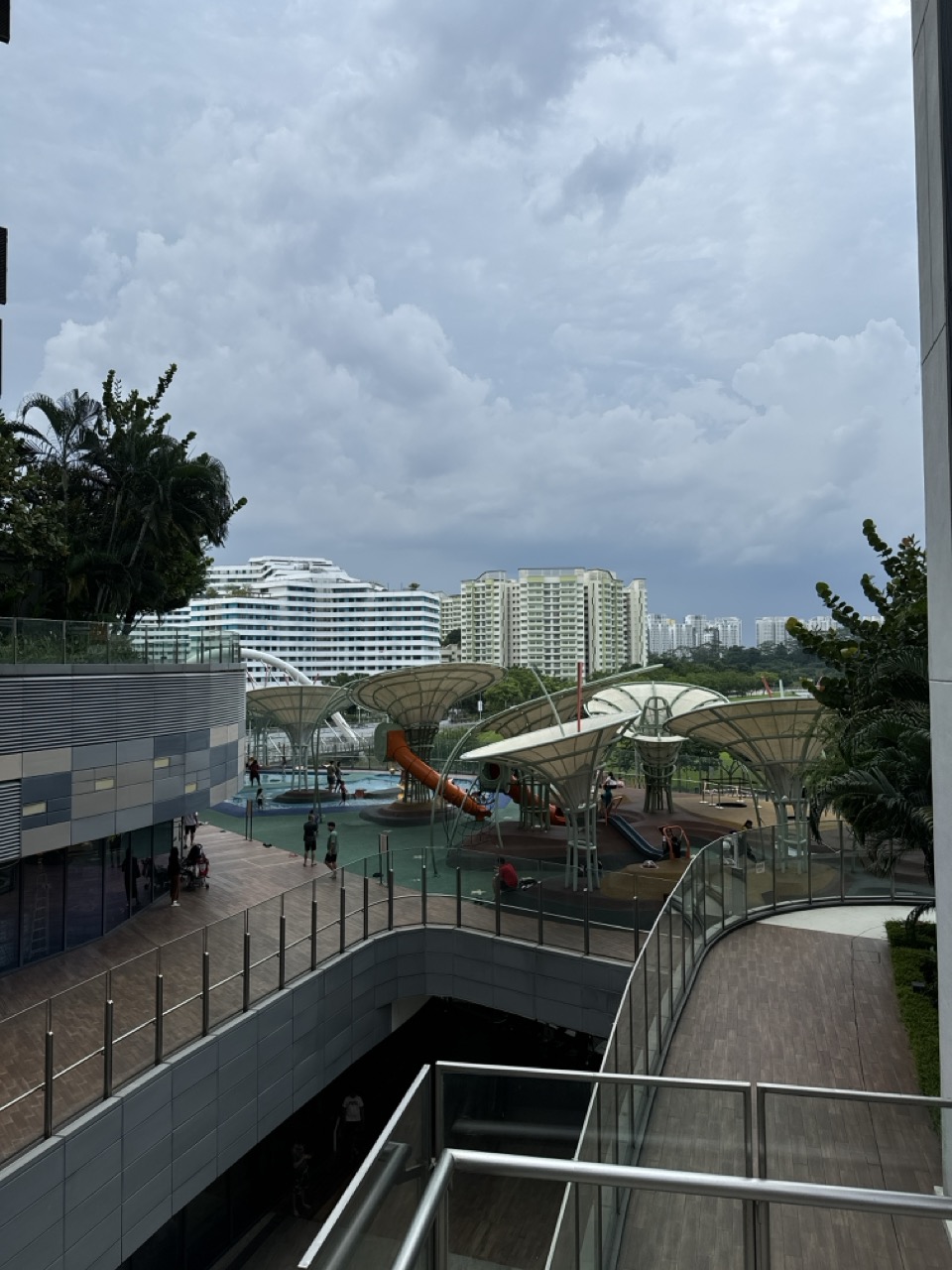
The top 10 things to do in Punggol for toddlers are a visit to the Toy Library, a Tinker Tots discovery stop, the Stories Come Alive Room, a short Waterway Park stroller-and-walk outing, a cautiously verified sand-play or playground visit, Happy Park at Waterway Point if its facilities are operating, the toddler wading zone at Splash @ Kidz Amaze, a colour-and-shape exploration at One Punggol, a short Punggol LRT observation ride and a relaxed hawker-and-story outing. The most useful first choice for unpredictable weather is Punggol Regional Library at One Punggol; for a purposely paid water-play day, check SAFRA Punggol’s latest notice before travelling.
This is a toddler guide, not a rebranded list of attractions aimed at primary-school children. A one- to three-year-old may need a nap, nappy change, snack or quiet recovery after a very short activity. Many toddlers enjoy doing one simple thing repeatedly. The safest and most enjoyable day often contains only one play anchor plus a nearby food or toilet stop, not ten hurried attractions. Every suggestion below separates permanent places from sessions, play features or equipment whose availability must be confirmed.
Punggol’s practical family clusters are the One Punggol hub near Punggol MRT; Waterway Point and the adjacent waterway; and SAFRA Punggol along Sentul Crescent. Coney Island’s rustic terrain, long walks and 7am–7pm gated access can be excellent for older nature enthusiasts but are not our default toddler itinerary. The 2026 Punggol Point Park upgrading closure is another reason not to design a toddler outing around an unverified northern coastal playground.
Official sources used here include NLB’s current Punggol Regional Library social-story map, PA’s One Punggol facilities guide, NParks, HealthHub and SAFRA. Important notice for 19 October 2026: SAFRA’s current Kidz Amaze page says Splash @ Kidz Amaze Punggol will close that Monday for cleaning and maintenance and resume on 20 October. Check the operator again before a future trip; this is a dated operational notice, not a permanent rule.
At a glance: Punggol’s 10 toddler activities
- 1. A first calm indoor activity: Toy Library, Punggol Regional Library L1. Choose one short play session.
- 2. Curious fingers and shapes: Tinker Tots, regional library L1. Check current room rules.
- 3. Language and pretend play: Stories Come Alive Room, library L1. Event or room availability differs.
- 4. Gentle outdoor movement: Short Waterway Park stroller loop. Choose an early turnaround.
- 5. Sand or splash interest: Waterway Park recreation play area. Historic guide; verify today’s operation.
- 6. Mall-linked play: Happy Park, Waterway Point L2. Check present wet/dry equipment status.
- 7. Purposeful paid water play: SAFRA Splash @ Kidz Amaze toddler area. Maintenance 19 Oct; adult supervision.
- 8. No-ticket sensory stroll: Public One Punggol spaces. Stay clear of ramps and stairs.
- 9. Transport fascination: Short Punggol LRT ride and station spotting. Fare, crowd and stroller planning.
- 10. Food-and-story finish: One Punggol Hawker Centre. Allow flexible food and hygiene.
Think of these as ten possible choices across several weeks, not one itinerary. In particular, three library spaces offer different kinds of early-years play in the same building, while the paid water playground needs a very different schedule and packing list. A useful top ten should help a caregiver eliminate unsuitable options quickly.
How to choose safely for one- to three-year-olds
Protect energy, naps and recovery
Follow the child’s energy rather than the marketing description. A toddler who is delighted by one toy may be uninterested in a large play structure. Plan fifteen to forty-five minutes of the main experience as a starting possibility, then adjust to the child; do not treat those ranges as developmental rules. Keep snacks, fluids, rest and a quick departure available. Short activities repeated at a comfortable pace can be more rewarding than an expensive high-intensity programme.
Choose the correct early-years environment
Use age-appropriate spaces. NLB’s Punggol Regional Library social story explicitly identifies the Level 1 Toy Library and Tinker Tots, Early Literacy Zone, Family Lounge and Stories Come Alive Room. These are more plausible first choices for a toddler than MakeIT’s equipment or Spark!Lab activities directed at older children. The exact use of rooms, booking and eligibility must be checked with staff. A library’s opening hours do not guarantee a facilitated activity runs continuously.
Apply water safety before enjoyment
Keep water safety non-negotiable. HealthHub advises constant adult supervision around water and an adult within arm’s reach of a child in the pool. Water-play equipment and a reservoir edge are not the same environment. A designed wading zone still requires close supervision, suitable swimwear and adherence to operator guidance. Never allow play in decorative fountains, canals, ponds or open water that is not designated and supervised for children.
Check old photos against today’s signs
Separate observed facilities from old operator marketing. Waterway Point’s owner described Happy Park’s wet and dry play areas in 2017–2019 articles, and an older NParks guide described water and sand playgrounds in Waterway Park. Those pages verify that features existed when described, but they cannot confirm that a specific fountain, sandpit or slide is running today. Check current mall or NParks notices and site signs before promising wet play to a child.
Plan nappies, clothing and a return route
Make a diaper-and-rest plan before leaving. Pick a specific entrance, locate toilets and family rooms, decide where a stroller can be parked lawfully and bring whatever clothing and supplies the child normally needs. A paid aquatic outing needs a separate dry changing set. Leave enough time for transitions—putting shoes back on, drying, a small meal and the journey home often takes more time than adults expect.
Make cancellation a normal option
Treat overstimulation and weather as legitimate reasons to change the plan. One Punggol and Waterway Point provide useful indoor alternatives, while exposed waterway paths and island walks do not. Lightning, heavy rain, heat and haze may make an outdoor plan unsuitable. Follow NEA and operator alerts. If a child becomes distressed, allow recovery without trying to extract value from a ticket or complete a photo checklist.
Ten toddler outings, with practical local examples
1. Choose one favourite activity at the Punggol Regional Library Toy Library
Where: Punggol Regional Library, Level 1, One Punggol, 1 Punggol Drive.
What is actually available or documented?
NLB’s library social-story document identifies a Toy Library and Tinker Tots zone on Level 1. It is one of the strongest first destinations for families seeking low-pressure, child-led indoor play. The purpose is to explore with a caregiver in a public library environment. It is not a promise that all toys can be taken home, that a specific toy will be available, or that children can be left unsupervised.
How to plan this visit
Arrive with a short list of two play interests—perhaps stacking and pretend play—and follow signage to Level 1. Ask staff about current Toy Library rules. Let the child choose a manageable toy and stay nearby to support turn-taking. Stop while the child is still comfortable, return shared objects properly and move to a quiet book or snack break in an area where food is allowed.
Worked toddler-and-caregiver example
A two-year-old keeps choosing the same shape toy. Instead of redirecting to five other exhibits, the caregiver lets the toddler repeat the sorting game and describes the movements with simple words. They leave after one calm session. The benefit is voluntary focused exploration and the adult’s conversation, not an impressive number of activities completed.
Safety, current access and limitations
Keep small pieces, detachable items and equipment age suitability in mind. Shared toys may be temporarily unavailable or subject to cleaning. Follow NLB staff instructions and respect other children waiting. Do not photograph unrelated children or presume the toys are always set out in the same configuration.
When this is the better choice
Choose the Toy Library over a long outdoor walk when a toddler is tired, the weather is poor or a caregiver wants predictable indoor surroundings. It is especially useful for a first outing with a new caregiver because the activity can end naturally without expensive cancellation issues.
A simple developmentally appropriate idea
Use a one-question game: ‘Which shape fits here?’ Offer a short choice without turning the visit into a lesson or requiring correct vocabulary. Observe what the child enjoys repeating and build a simple safe play version at home.
Check the venue or primary evidence here: nlb.gov.sg/main/main/-/media/NLBMedia/Documents/Visit-Us/Libraries/PRL/Punggol-Regional-Library-Social-Story-File.pdf. Published descriptions do not promise a specific room, playground feature or programme will be open during your visit.
2. Try the Tinker Tots discovery area at Punggol Regional Library
Where: Level 1 Tinker Tots area, Punggol Regional Library.
What is actually available or documented?
NLB lists Tinker Tots alongside the Toy Library on the Punggol library’s Level 1 social-story map. It is designed around young children’s hands-on curiosity rather than the more advanced making equipment associated with MakeIT or Spark!Lab. The family should confirm the current layout and participation conditions on arrival, because a floor name in a guide is not equivalent to an operating timed workshop.
How to plan this visit
Introduce the child to a single safe activity that is available in the area, such as arranging objects or exploring an age-suitable sensory element. Describe what the child does rather than telling them how the finished result must look. Keep close supervision and let the activity conclude at a natural point. If the space is busy, shift to ordinary library picture books without insisting on entry.
Worked toddler-and-caregiver example
A child explores how two safe objects fit together, then pulls them apart several times. The caregiver names ‘together’ and ‘apart’ and imitates the child’s action. Repetition is meaningful at this age even when an adult might see it as too simple. They exit when attention fades rather than forcing a second challenge.
Safety, current access and limitations
Check any posted minimum age and equipment use instructions; avoid toys with small pieces for children still mouthing objects. Respect hygiene procedures and keep the area shared and tidy. Do not assume that demonstrations, facilitators or individual modules are continuously available during all library hours.
When this is the better choice
Choose Tinker Tots for a toddler who enjoys exploring objects but may find a large playground too loud or physically demanding. Choose the Stories Come Alive Room when language and stories are more attractive, or Waterway Park for free movement outside in comfortable weather.
A simple developmentally appropriate idea
Try just three useful words: ‘open’, ‘close’ and ‘again’, where the activity naturally supports them. Real learning here is observation, cause and effect and shared attention, not teaching advanced engineering or counting every action.
Check the venue or primary evidence here: nlb.gov.sg/main/main/-/media/NLBMedia/Documents/Visit-Us/Libraries/PRL/Punggol-Regional-Library-Social-Story-File.pdf. Published descriptions do not promise a specific room, playground feature or programme will be open during your visit.
3. Share a picture-book and story moment near the Stories Come Alive Room
Where: Punggol Regional Library Level 1 Stories Come Alive Room and Early Literacy Zone.
What is actually available or documented?
NLB’s published library social story identifies both the Stories Come Alive Room and Early Literacy Zone on Level 1. They are reliable map references for finding early-years library spaces, although individual story events, room access and interactive features may follow separate schedules. A caregiver does not need a ticketed performance for a meaningful read-aloud session if ordinary browsing is allowed.
How to plan this visit
Choose one picture book with clear illustrations or repeated language, sit only in an appropriate available area and let the toddler point to a picture. Follow the child’s rhythm: name one action, imitate a sound or ask what happens next. If a story programme is advertised, check its exact start time, age range, registration and seat availability before planning around it.
Worked toddler-and-caregiver example
A toddler points repeatedly at a train picture while the adult had planned to read an animal book. The adult follows the child’s choice, makes a train sound and invites the child to turn the page. After several minutes they stop and find a space for a snack outside the reading zone. The outing succeeds because shared attention matters more than the title selected in advance.
Safety, current access and limitations
Use a normal speaking voice appropriate for children’s library areas and respect others’ quiet. Do not assume the Stories Come Alive Room is freely open at any moment or that staff provide childminding. Keep supervision continuous and avoid treating seats or book shelves as climbing play.
When this is the better choice
Choose this for language-loving toddlers and rainy days, especially when the family wants little preparation. Choose physical playground activity when the child is energetic and the weather or venue is safe. Many families do best with one short indoor story followed by a walk home.
A simple developmentally appropriate idea
Invite the toddler to tell the story using gestures or two words, without correction. You can later retell the same book at home with new pictures. Repetition of a familiar story supports conversation and pleasure without turning reading into a test.
Check the venue or primary evidence here: nlb.gov.sg/main/main/-/media/NLBMedia/Documents/Visit-Us/Libraries/PRL/Punggol-Regional-Library-Social-Story-File.pdf. Published descriptions do not promise a specific room, playground feature or programme will be open during your visit.
4. Take a very short stroller-and-walk outing beside Punggol Waterway
Where: Public Punggol Waterway Park path near a convenient town-centre entrance.
What is actually available or documented?
NParks lists Punggol Waterway Park along Sentul Crescent, open 24 hours, with four themed areas and public paths. The Waterway Park Connector is described as wheelchair friendly in official route information. That is helpful for stroller planning, but it is not a guarantee that every side route, bridge, maintenance diversion or toilet is equally easy. For a toddler, a modest loop is usually better than following the full 8.4-kilometre connector.
How to plan this visit
Choose a short section and an identifiable turnaround before leaving home. Let the child alternate between stroller time and brief supervised walking where the surface and crowds permit. Look for a leaf shape, a bird or a reflection from a safe distance. Keep to the designated path, move aside for faster users and return to a known indoor or food anchor before the child is overtired.
Worked toddler-and-caregiver example
A family expects only twenty minutes outside. The toddler notices shadows made by bridge railings and stops to point at them. The adults allow a few minutes to explore the pattern, then turn around and finish at a sheltered cafe. The child’s discovery shapes the outing; no one insists on seeing every zone of the park.
Safety, current access and limitations
Keep hands and feet away from the water edge and rail gaps, use stroller brakes when stationary and maintain continuous supervision. A sunny sky does not rule out heat discomfort; Singapore thunderstorms can also develop quickly. Cycling paths and pedestrian paths require attention, particularly when young children move unpredictably.
When this is the better choice
Choose this for a toddler who wants to move and observe but does not enjoy loud organised play. Choose the library if heat, haze, lightning or rain make a waterfront walk inappropriate. Coney Island’s rugged terrain and fixed gates make it a different level of commitment.
A simple developmentally appropriate idea
Describe what is directly observable: ‘long shadow’, ‘small leaf’ or ‘water moves’. A simple child-led pointing game uses the environment without picking plants or asking the child to remember a formal nature lesson.
Check the venue or primary evidence here: nparks.gov.sg/visit/parks/park-detail/punggol-waterway-park/. Published descriptions do not promise a specific room, playground feature or programme will be open during your visit.
5. Check a designated waterway sand-play or playground feature before promising play
Where: Recreation Zone of Punggol Waterway Park, where any current designated play equipment is open.
What is actually available or documented?
An older NParks self-guided guide documents a sand-play area and water-playground elements in the park’s Recreation Area. This establishes historical facility features, not their condition or availability on a particular 2026 visit. A current on-site sign or current NParks notice must determine whether the specific equipment is operating, appropriate for a toddler and safe. Children should never be directed into a dry fountain, closed spray area or undesignated canal edge.
How to plan this visit
Treat this as a conditional option. Check current NParks visitor information and inspect the actual play-area sign before unpacking. If designated toddler-suitable equipment is open, supervise one age-appropriate movement or sand activity at a time. Bring spare clothes or wipes if useful and stop immediately if equipment is hot, damaged, slippery or crowded. Have a stroller walk fallback.
Worked toddler-and-caregiver example
A caregiver promises a child a sandpit based on an older article, but arrives to find the expected area unavailable. Because the plan included an easy nature observation loop, they explain the change without taking the child toward a closed feature. They spend twenty minutes looking for colours and shapes in the park instead.
Safety, current access and limitations
HealthHub advises checking equipment suitability, supervising closely and avoiding playgrounds in rainy weather. Sand and small objects can be a mouthing hazard; do not use found litter as toys. Always distinguish a playground spray feature from the adjacent public waterway, which is not a place for unsupervised water play.
When this is the better choice
Choose this only after confirming present equipment. A family wanting a definite dedicated indoor water-play venue should investigate SAFRA Splash and its current access terms instead; a family needing predictable indoor rest should choose the library.
A simple developmentally appropriate idea
If sand play is safely open, use a simple ‘fill, pour, empty’ rhythm with age-suitable clean tools. The language comes from what the child does; there is no need for a complicated construction challenge.
Check the venue or primary evidence here: nparks.gov.sg/-/media/nparks-real-content/gardens-parks-and-nature/diy-walk/diy-walk-pdf-files/punggol_waterway_park_guide.pdf. Published descriptions do not promise a specific room, playground feature or programme will be open during your visit.
6. Visit Happy Park at Waterway Point if the active facilities are confirmed
Where: Happy Park, Waterway Point Level 2, 83 Punggol Central.
What is actually available or documented?
Frasers Property’s own 2017 and 2019 features described Happy Park as a Level 2 outdoor wet-and-dry playground with a view over Punggol Waterway. Those are authoritative historical descriptions of the mall’s play concept, not proof that every feature is working in October 2026. The useful advantage is the mall location, which allows a family to find food and indoor comfort without taking a long trip across Punggol.
How to plan this visit
Check Waterway Point’s latest directory, staff advice and on-site operating signs before mentioning water play as a certainty. If a suitable dry or wet section is operating, decide a short visit with close adult supervision and clothes appropriate to the active feature. If it is closed, use the mall as a rest stop and choose another toddler activity; do not enter barricaded equipment.
Worked toddler-and-caregiver example
Two toddlers meet for a playdate with different appetites for water. One wants to splash; the other prefers watching. Their caregivers decide that neither child must use the same play element and agree to finish with a food stop after a short session. If a feature is unavailable, the group can remain together for a snack.
Safety, current access and limitations
Play features can be slippery and very popular on weekends. Check posted age and equipment rules, never allow a toddler into water without constant close supervision and keep wet shoes away from indoor slip hazards. Bring towels and suitable clothes only after verifying the water feature is running, since old photos may outlast current maintenance.
When this is the better choice
Choose this when being near Punggol MRT, food and family facilities is especially useful. Choose the Toy Library when you want calm indoor play. Choose SAFRA’s Splash instead when you deliberately want a dedicated water-play outing and are willing to pay and follow its changing schedule.
A simple developmentally appropriate idea
Ask the toddler to identify one gentle action such as ‘turn’, ‘splash’ or ‘stop’ if the relevant equipment is safe and open. Repeating one safe motion with a caregiver is sufficient activity; there is no obligation to try every piece of equipment.
Check the venue or primary evidence here: frasersproperty.com/the-library/sg/2017/march/frasers-sg-an-oasis-of-fun-at-waterway-point. Published descriptions do not promise a specific room, playground feature or programme will be open during your visit.
7. Use the dedicated toddler wading zone at Splash @ Kidz Amaze when it is operating
Where: Splash @ Kidz Amaze, SAFRA Punggol, 9 Sentul Crescent.
What is actually available or documented?
SAFRA’s current official page describes a separate wading area for toddlers within its indoor water playground, alongside five slides and eight play decks for the wider family. Its operating framework differs between ordinary weekdays, weekends and school holidays; admission is first come, first served subject to capacity. The current page announces a Punggol cleaning closure on Monday 19 October 2026, with normal opening due to resume Tuesday 20 October, subject to later changes.
How to plan this visit
Confirm the specific day’s opening and capacity before travel. Prepare appropriate swimwear, towels and dry clothes. SAFRA states non-toilet-trained children need swim diapers rather than ordinary diapers in the water. At the venue, follow staff and posted rules, introduce the toddler gradually to the designated wading area and remain close enough for immediate help. Plan time for locker use, changing and a calm return.
Worked toddler-and-caregiver example
A toddler has never visited indoor water play. Instead of heading to a large slide, a caregiver begins with a brief supervised wade and allows the child to explore the sensation of splashing. After ten minutes the child asks to leave. The family treats this as a complete first experience and changes into dry clothes rather than insisting they stay to justify the ticket.
Safety, current access and limitations
Indoor does not mean risk-free. HealthHub calls for continuous adult supervision and an arm’s-length adult in pool settings; the site’s own policies also govern attire, age limits and safety. Water playgrounds are not public swimming lessons. Fees, lockers and capacity create costs beyond the standard outdoor playground plan, and no session can be guaranteed.
When this is the better choice
Choose this when the child’s temperament and current venue rules suit a paid water-play experience. Choose Happy Park only if the free mall play equipment is definitely operating. A child who dislikes splashing may prefer dry play or a quiet library visit.
A simple developmentally appropriate idea
Use the child’s natural curiosity about water—’wet’, ‘dry’, ‘pour’ and ‘stop’—but never demand skill or courage. The main outcome is a safe first sensory experience and positive caregiver interaction.
Check the venue or primary evidence here: safra.sg/facilities-services/kidz-amaze-indoor-playground. Published descriptions do not promise a specific room, playground feature or programme will be open during your visit.
8. Take a no-ticket colour-and-shape tour of public One Punggol
Where: Public walkways and appropriate family spaces at One Punggol.
What is actually available or documented?
The People’s Association describes One Punggol as an integrated civic hub with the regional library, hawker centre and community facilities. Its official facilities page also describes a Punggol Green linear park with age-appropriate playground plans, but references to planned facilities do not establish that every part is open on the day of travel. A parent can enjoy public architecture and signage with a toddler without expecting a specific playground or workshop.
How to plan this visit
Begin at one clearly public entrance, select three easy things to find—a red sign, a round column or a planted area—and allow the toddler to point while staying alongside the caregiver. Walk only a small accessible route and finish at a family toilet or rest stop. Keep clear of ramps, escalators, busy doorways and food-service traffic. Check any rooftop or garden access separately.
Worked toddler-and-caregiver example
A child spends more time watching the lifts and signs than on an expensive attraction. A caregiver turns this into a short observation game: spot a circle, find a green leaf and wave goodbye to a building. They then visit the library or go home. The activity is successful because it follows the child’s own fascination rather than adult expectations.
Safety, current access and limitations
Avoid letting toddlers play around escalators, traffic or crowded corridors. Do not block priority routes with a stroller. Some public areas are open-air and may be unsuitable during strong heat or rain; move into legitimately sheltered spaces as needed. Community classrooms and staff-only rooms are not free exploration zones.
When this is the better choice
Choose this when time or money is limited and you already have an errand at One Punggol. Choose a booked PA activity only if its age and session are confirmed. This works particularly well as a short transition between the library and an everyday lunch.
A simple developmentally appropriate idea
Use the words ‘big’, ‘small’, ’round’ and ‘green’ naturally as the child notices them. A single new word repeated in context can be more engaging than holding up flash cards throughout a busy outing.
Check the venue or primary evidence here: pa.gov.sg/our-network/one-punggol/hub-info/. Published descriptions do not promise a specific room, playground feature or programme will be open during your visit.
9. Ride one short Punggol LRT section as a transport-observation adventure
Where: Punggol LRT interchange and a chosen operating LRT station.
What is actually available or documented?
Punggol is served by the MRT and LRT network, and a short train ride can be genuinely engaging for a toddler fascinated by doors, tracks and window views. This is a paid public transport journey, not a dedicated child entertainment service. Service frequency, station access and train capacity should be checked with the current operator. The family needs a destination and a return, not an aimless all-day station hunt.
How to plan this visit
Choose a simple journey from Punggol station to one appropriate stop and back, with sufficient time for lifts and stroller manoeuvres. Avoid the worst peak crowding where possible. Explain and model the safety line, hold the toddler’s hand or secure the stroller as appropriate, and never stand in a train doorway for photographs. A caregiver should be ready to stop the activity if the child is tired or distressed.
Worked toddler-and-caregiver example
A two-year-old loves pointing at trains. The family travels only one or two stops, notices the doors opening and closing, then returns to Punggol for lunch. The child is delighted, even though the entire adventure is shorter than a typical adult commute. Because there is a planned turnaround, the trip does not cause a missed nap.
Safety, current access and limitations
Platforms and train gaps demand continuous supervision. Keep the stroller clear of doors, use lifts where appropriate and obey transit staff instructions. Public rail travel is not a place for running, play on seats or leaning over platform barriers. Carry a valid method of fare payment for the adult and check child fare eligibility and height-based rules with TransitLink or the operator.
When this is the better choice
Choose this for a toddler whose principal interest is transport and who tolerates short public journeys. Choose a park or library for children who find train noise or crowds overwhelming. Avoid creating a multi-loop travel challenge that exhausts both caregiver and child.
A simple developmentally appropriate idea
Point to one simple sequence: ‘wait’, ‘door’, ‘go’, ‘stop’. Repeat it without asking the toddler to memorise station names. The real learning is understanding a daily routine and practising safe behaviour with an adult.
Check the venue or primary evidence here: lta.gov.sg/content/ltagov/en/getting_around/public_transport/rail_network.html. Published descriptions do not promise a specific room, playground feature or programme will be open during your visit.
10. Finish with a toddler-led food and story moment at One Punggol Hawker Centre
Where: One Punggol Hawker Centre at 1 Punggol Drive.
What is actually available or documented?
PA identifies a hawker centre as part of One Punggol’s integrated hub, enabling a family to finish a library or short walk with an ordinary meal. Food is not merely a purchase for a toddler; it is an opportunity to observe colours, social routines and familiar textures under supervision. It should not be turned into a forced-tasting contest, and stall diets, allergen information and exact operating hours need checking at the stall.
How to plan this visit
Choose a quieter period when seating is easier, check high-chair or stroller space on arrival and select food appropriate to the child’s age, allergies and usual eating abilities. Keep hot food and drinks out of reach and watch closely during meals. Use the time to ask the child what they remember from the outing. End while the family still has the energy to travel home.
Worked toddler-and-caregiver example
After a library visit, a toddler chooses to tell a caregiver about a blue toy while eating a familiar meal. The adult follows the conversation rather than forcing a new dish for a photograph. The child is settled, the caregiver has a chance to rest, and the family’s short morning feels complete.
Safety, current access and limitations
Young children can choke on inappropriate pieces of food; select familiar textures and age-suitable portions. Do not leave them alone in high chairs or let them handle hot trays. Confirm ingredient and allergy concerns with the actual food operator rather than assuming a whole hawker centre meets a single dietary standard. Clear trays and respect other diners.
When this is the better choice
Choose this as a practical finishing activity rather than a reason to travel across town for one stall. If the food area is loud or crowded, use another suitable meal location. The core experience is an unhurried, safe transition from play back to the child’s routine.
A simple developmentally appropriate idea
Use three prompts, only if the child is interested: ‘what did you see?’, ‘what colour?’ and ‘what shall we do next time?’ A gesture or sound counts as participation. Shared conversation is the point, not perfect recall.
Check the venue or primary evidence here: pa.gov.sg/our-network/one-punggol/hub-info/. Published descriptions do not promise a specific room, playground feature or programme will be open during your visit.
Three family itineraries that fit real toddler routines
1. One hour indoors
Go directly to the Level 1 Toy Library or Early Literacy Zone, allow a single self-chosen activity, move to a suitable family rest point and leave before the child’s usual sleep window. Check any room restrictions and keep food out of prohibited library areas.
2. A two-hour outdoor-and-indoor option
Begin with a short shaded segment of Waterway Park in safe weather, let the child walk a small comfortable distance, then move to Waterway Point or One Punggol for an indoor toilet and meal. The second play feature remains optional.
3. A dedicated paid water-play morning
Confirm SAFRA Splash is operating—especially around the listed 19 October 2026 maintenance day—pack suitable swimming diapers or swimwear, let the toddler use the designated wading area with continuous adult supervision, dry and change before heading home. Avoid scheduling another high-energy attraction afterward.
Two sample decisions: choosing comfort rather than completing a list
Example A: a 20-month-old who needs a nap. The family has ninety minutes before the usual rest period. The caregiver compares a library visit with SAFRA water play. The library requires relatively little changing time and permits an early finish; the paid water playground requires travel, possible queuing, changing, swimming attire and a dry return. For this specific day, a Toy Library activity and an uncomplicated meal are the more sensible choice. SAFRA may become an excellent standalone outing on a different morning.
Example B: a nearly three-year-old who loves water. The family checks the official Splash maintenance notice, the correct opening window, clothing rules and admission terms. If all requirements are met, they use the dedicated toddler wading area with continuous close supervision and finish when the child has had enough. They do not add the waterway sandpit merely to claim a second attraction, especially since a historical NParks guide does not confirm current sand-play operation.
A good decision has four parts: one enjoyable action, a valid current venue, a safe adult-to-child supervision arrangement, and a simple return. If any part fails, choose a lower-friction activity rather than improvising on a closed feature or in a crowded wet area. This approach is especially useful when siblings or more than one caregiver are involved, because expectations become explicit before the first child starts playing.
Pack only what your chosen outing needs
- A comfortable stroller or carrier suited to the actual route, where needed.
- Spare nappies, wipes and a bag for used clothing or waste.
- Drinking water and age-appropriate food and feeding supplies.
- Comfortable shoes for both caregiver and child, appropriate to the ground.
- A dry change of clothes and towels for a verified water-play plan.
- Permitted swimwear and swim diapers if the operator requires them.
- Basic sun and weather protection for outdoor travel.
- Any usual personal or medically prescribed items the child needs.
- A confirmed toilet, rest and return-transport plan.
- A calm fallback that does not require another long journey.
Five mistakes families can easily prevent
The first is using a beautiful photograph as proof of current equipment. Mall spray features and public play areas can be closed for maintenance, refurbishment or safety. An old operator story documents what was advertised then. Before travelling, check today’s rules or staff advice. If a specific feature is essential to the child’s enjoyment, make another choice unless it can be confirmed.
The second is using the child’s age alone to decide whether the activity is right. Two toddlers born in the same year may have different motor skills, communication needs or sensory preferences. Watch the child and respect their behaviour. The quiet library child is not less adventurous than the splash-play child, and no outing should require the caregiver to override distress to produce a cheerful photograph.
The third is confusing a supervised designed water-play zone with a water edge. Punggol Waterway’s canals and reservoir connections are not paddling pools. HealthHub’s close-supervision guidance is relevant to any child near a body of water. A caretaker who must attend to another sibling should explicitly hand over supervision rather than assuming another adult is watching.
The fourth is trying to complete a long regional route. The official Waterway Park Connector is 8.4 kilometres; that is useful context for adult cyclists and runners but not an appropriate toddler walking target. Select one short section with a pleasant turnaround and access to rest or transport. Do not turn a child’s tiredness into a challenge to finish a planned circuit.
The fifth is failing to count transition time. Packing a wet swimsuit, searching for a toilet, waiting for lifts and settling a toddler in a stroller can take substantial time. Plan one main activity, not three. A clear, calm return protects both the caregiver’s patience and the child’s comfort.
Frequently asked questions
What is the best Punggol toddler outing for a rainy day?
Punggol Regional Library’s Level 1 early-years spaces make an easy indoor option. Check any activity-specific rules or scheduled events. Heavy weather can also affect travel, so do not assume indoor destinations justify unsafe journeys.
Where is the Toy Library in Punggol?
NLB’s Punggol Regional Library social-story document lists the Toy Library together with Tinker Tots on Level 1 inside One Punggol, 1 Punggol Drive.
Is Tinker Tots the same as Spark!Lab?
No. Tinker Tots is part of the regional library’s early-years area; Spark!Lab and MakeIT serve different interests and often older age groups or specialised sessions. Check eligibility rather than assuming all making spaces suit toddlers.
Can toddlers use SAFRA Splash @ Kidz Amaze?
SAFRA advertises a separate wading zone for toddlers. Follow its current admission, age, attire and supervision rules, and use swimming diapers for non-toilet-trained children. The venue also announced a 19 October 2026 cleaning closure.
Is Happy Park definitely operating water sprays today?
Do not assume so from the 2017 and 2019 operator articles. Those confirm the historical presence of the wet-and-dry play concept; current operating signs or mall staff must confirm today’s equipment.
Is Coney Island recommended for one-year-olds?
Not as a default first outing. It has rustic terrain and fixed 7am–7pm opening; a shorter, more predictable town-centre stroller-and-walk visit is often easier to manage. Families with the necessary preparation may make different choices.
Do toddlers need a ticket for Punggol Waterway Park?
Ordinary public park walking does not require a paid admission ticket. Commercial play, classes, transport and food are separate costs.
Is the Waterway Park sandpit still open?
An older NParks guide identifies sand and water play facilities, but this is not live confirmation. Check today’s park signs and NParks notices before promising them as a definite destination.
How long should toddler activities last?
There is no universal number. Choose a short successful version that suits the child’s age, temperament, nap routine and comfort, then allow time for meals, changing and travel. It is acceptable to leave earlier than planned.
Are toddlers safe near reservoirs and fountains?
Treat public water edges as hazards, not play spaces. HealthHub recommends very close adult supervision near water and designated safe facilities. Never let a toddler enter a canal, reservoir or decorative water feature not approved for play.
What if the child refuses the planned activity?
Stop or switch to a calmer option. A toddler may prefer a book, a short observation walk or going home. Enjoyment and safety matter more than recouping ticket costs.
Can we combine the library, playground and Splash in one afternoon?
It is usually too much for a young child. Choose one main activity and a nearby food/rest stop. SAFRA’s wet play involves changing and recovery time; the library may be better as a separate outing.
Official sources and related family guides
This article uses current NLB, SAFRA, PA, NParks and HealthHub information checked in October 2026. Where the best available description is older, the article labels the facility as historically documented rather than live-confirmed. Recheck time-sensitive hours, maintenance notices and play-area rules before leaving.
- NLB Punggol Regional Library social story and facilities
- SAFRA Splash @ Kidz Amaze operations and toddler zone
- HealthHub child and water safety
- HealthHub toddler active play
- NParks Waterway Park current information
- NParks older Waterway Park play facilities guide
- Frasers Property historical Happy Park guide
- PA One Punggol facilities
- LTA rail network information
- Punggol kids top ten companion
The simplest first outing
For most families unsure where to begin, choose one Level 1 early-years activity at Punggol Regional Library and keep lunch nearby. For a toddler specifically seeking water play, choose SAFRA Splash only after checking its date-specific opening, age and attire conditions. Leave the other eight ideas for separate days. Comfort, close supervision and shared enjoyment are more important than finishing a list.


