
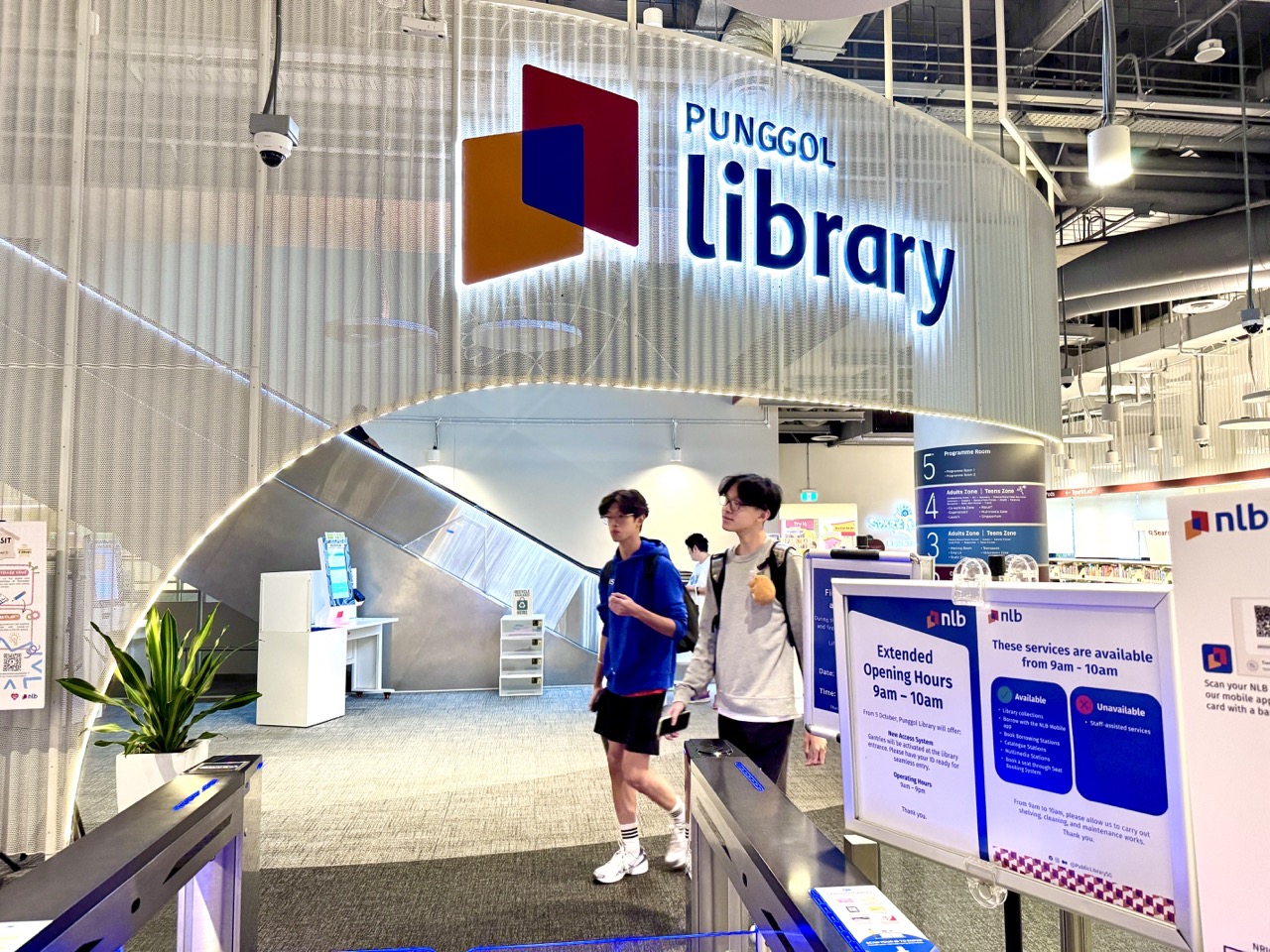
Taking little siblings to the Punggol Library Toy Library and TinkerTots is one of the sweetest things to do in Punggol during the school holidays: a free, cool, play-first morning for children aged six and below.
It is 10.15am on a weekday. A three-year-old in a dress-up crown is pouring pretend tea for a soft toy, while her nine-year-old brother insists he is far too old for this, and then quietly pulls up a chair.
This is idea #64 in eduKate Punggol’s Top 100 Things to Do in Punggol During the School Holidays. When the big kids are on holiday, the little ones need a plan too. Below you will find what these two Level 1 spaces offer, the rules worth knowing before you go, and how to turn a toddler’s playtime into a happy hour for the whole family.
School holidays are often planned around the older children.
This idea is for the smallest person in the house.
And, as it turns out, for the big sibling who secretly still loves to play.
This idea is perfect for families who want to:
- give a preschooler a bright, safe, indoor place to play;
- keep a toddler happy while an older child browses books nearby;
- swap screen time for pretend play and simple building;
- find a free, air-conditioned plan for hot, wet or hazy mornings;
- help big siblings bond with little ones through play and reading; or
- start a gentle weekly library routine before Primary 1.
Quick look
- Best for: children aged 6 and below, with a parent or caregiver; older siblings nearby
- Time needed: 1 to 2 hours, including book browsing
- Cost: free onsite play; toys are not lent out for home use
- Best time: a weekday, soon after the library opens at 10am
- Nearest MRT/LRT: Punggol MRT (NE17) and Sam Kee LRT
- Rain plan: it is indoors, on Level 1 of Punggol Regional Library
See all 100 school-holiday ideas · Chat with eduKate Punggol on WhatsApp · Visit eduKate Punggol on Facebook
A Toddler Play Morning Is Bigger Than It First Appears
To an adult, it looks like a small child moving blocks around.
To the child, it is serious work.
A toddler who stacks, knocks down and restacks is experimenting with balance. A preschooler who dresses up as a doctor is rehearsing words, feelings and turn-taking. A four-year-old who builds something with a parent is learning that problems can be solved together.
Punggol Regional Library (NLB also calls it Punggol Library) made room for exactly this kind of work. When NLB opened the library in 2023, it described two Level 1 spaces for children aged 6 and below: a Toy Library with toys, educational aids, puppets and costumes, and TinkerTots, an accessible space for simple DIY tinkering with parents or caregivers. NLB noted that the Toy Library was among the most popular spaces in the library’s first two months.
In a parliamentary answer on 15 October 2025, the Ministry of Digital Development and Information described the Toy Library as “a new service piloted at Punggol Library”. So this is not something every neighbourhood library has. Punggol families have it on their doorstep.
The Hidden Lesson in a Pretend Tea Party
Back to the tea party.
The three-year-old pours. “Here’s your tea, Bear.”
Her brother joins in. “Is it hot?”
“Yes. Blow first.”
“What kind of tea is it?”
“Strawberry tea. With sugar.”
In under a minute, she has used new words, answered questions, followed a sequence (pour, blow, drink) and imagined what Bear might need. Her brother, meanwhile, has done something just as valuable: he has asked open questions and stretched her language without her noticing.
That is the quiet power of pretend play. It builds vocabulary, sequencing and empathy long before a child meets a worksheet.
And for the older sibling, playing the “question asker” is its own lesson. Explaining, prompting and listening are exactly the skills children use later in group work, oral conversations and, one day, in caring for others.
Why Punggol Families Love the Toy Library and TinkerTots
Ask any parent of a preschooler what the holidays are like and you will hear about long mornings that need filling. This space fills them beautifully, without a ticket or a sugar rush.
The joys of a Level 1 play morning
- Onsite play is free, so you can pop in for an hour without guilt
- Everything is pitched at children aged 6 and below
- Pretend play with costumes and puppets builds language and confidence
- TinkerTots invites parent-and-child building, not just watching
- It is indoors and air-conditioned on hot, rainy or hazy days
- Picture books and the Early Literacy Zone are on the same floor
- Big siblings can browse Level 2 or read aloud nearby, so the whole family has a role
Perhaps the nicest joy of all: you get to play too.
What You’ll Find on Level 1
The details below come from NLB’s opening announcement, the MDDI parliamentary answer and our Toy Library and TinkerTots guide. Materials change, so check what is out on the day.
The Toy Library
NLB’s launch announcement describes toys, educational aids, puppets and costumes, maintained by students from MINDS Fernvale Gardens School. It is for children aged 6 and below. Play is onsite only: the Toy Library does not lend toys out for home use, and MDDI’s answer says there are no plans to provide a toy-lending service.
TinkerTots
This is a space for simple, hands-on building and tinkering, done with a parent or caregiver. When it opened, NLB described monthly building challenges and activity sheets; check what is available when you visit. TinkerTots is play under parental supervision, not a drop-off service.
The Early Literacy Zone and picture books
Level 1 also has an Early Literacy Zone set up for babies and young children, which makes it easy to follow play with a short book. Our guide to the Early Literacy Zone has more detail. A simple rhythm works well: play first, then one picture book linked to what your child just played with.
The Stories Come Alive Room next door
For children aged 4 and up, the Stories Come Alive Room on the same floor uses moving images, light and sound to tell stories. It is designed for ages 4 to 10, so it is a lovely second stop for an older preschooler and a primary-school sibling together.
Quiet spaces and accessible features
NLB’s launch announcement lists Calm Pods on Level 1, quiet sensory spaces for people who need a break from busy surroundings, along with an Accessible Collection that includes Braille, social stories and touch-and-feel books. Our Accessible Collection guide explains more.
How to Plan a Brilliant Little-Sibling Morning
Toddlers do not do schedules. They do, however, do snacks, naps and moods. Planning around those three makes all the difference.
1. Time it around the nap
Choose a morning slot that ends well before nap time. Arriving soon after the main library opens at 10am also makes it easier to ask staff about the play areas, a tip from our own guide.
2. Check the day’s notices
Look at the NLB library page for any notices, and remember that separately advertised programmes have their own registration and age ranges.
3. Give the big sibling a job
Before you leave home, agree on a role for the older child: “story reader”, “question asker” or “tidy-up captain”. Children rise to a job far better than to a request to “keep an eye on your sister”.
4. Start with one activity
Let your little one choose one thing and explore it properly before moving on. Our guide suggests exactly this: start with one activity and let the child lead.
5. Give a five-minute warning
Ending playtime is the hardest part. A calm “Five more minutes, then we choose a book” helps children move on without tears.
6. Plan what comes next
Have a clear next step: a picture book, a snack outside, or the Punggol Green playgrounds beside One Punggol, which PA says include play areas for toddlers and for children aged 6 to 12.
A Sample Holiday Day, Hour by Hour
9.30am: Breakfast and a little pep talk
Tell the children the plan. “First we play, then we pick books, then we have lunch.” Simple sequences help young children feel safe.
10.15am: Level 1 play
Head to the Toy Library and TinkerTots with your preschooler. The big sibling plays alongside or reads nearby.
11am: One book, one cuddle
Move to the picture-book shelves or the Early Literacy Zone. Let the older child read aloud to the younger one.
11.30am: Big sibling time
Swap roles. Take the older child up to Level 2 for ten minutes of their own browsing while the little one rides along or rests in the stroller.
12pm: Early lunch
One Punggol Hawker Centre is on Level 2 of the same building. An early lunch beats the crowds and the pre-nap grumpiness.
1pm: Home for the nap
Let the toddler sleep and give the older child some quiet reading time with their new books. Everybody has earned it.
Three Ways to Enjoy It
This idea is built for children aged 6 and below, but older siblings make it better.
For little explorers (Primary 1–3)
Younger primary children often remember these play spaces fondly. Give them the “story reader” role: one picture book, read aloud with funny voices for a little sibling. Note that the play spaces themselves are for ages 6 and below, so check the guidance displayed in each space before an older child joins in.
For big kids (Primary 4–6)
Older primary children can be the “question asker”: “What are you building?” “What happens if you add one more?” Those questions grow a toddler’s language. Afterwards, let them choose their own books on Level 2 as a thank-you.
For teens (Secondary 1–4)
Teens can help with play while a parent stays with the little one, or read a short book aloud with real expression, which is good practice for secondary English oral. If they would rather have their own space, the Level 3 Study Zone or Teenspace (ages 13 to 17) is two floors up, while a parent supervises the preschooler on Level 1.
The Learning Bridge: Early Language and Curious Science Without the Worksheet
This is play, not school, and it should stay that way. Still, a few good habits grow quietly in a morning like this.
- Early language: Pretend play, puppets and talking about what you are building give preschoolers new words and practice in turn-taking. Follow play with a book on the same theme, such as a vehicle story after vehicle play.
- Reading aloud: For a primary or secondary sibling, reading to a little one builds fluency, expression and confidence, part of the Reading and Viewing and Speaking and Representing areas in MOE’s English syllabus.
- Curiosity: For older siblings in Primary 3 and above, asking “Why did the tower fall?” is a playful echo of the observing and predicting habits valued in Primary Science.
For more on keeping the holidays balanced for school-age children, see our article on repairing, consolidating or preparing ahead in Science.
Little Hiccups and How to Dodge Them
“I don’t want to go home”
Transitions are tough for toddlers. A five-minute warning, a choice (“blue book or red book?”) and a clear next step soften the moment.
Sharing and busy times
The toys are shared with other families. Help your child take turns, leave room for others and return materials as directed. Weekday mornings are usually calmer than weekends and rainy afternoons.
Different needs, one parent
Two children of different ages can pull you in two directions. Give the older child a job close by, and save their own browsing for a short, clear slot.
Tired, hungry, over it
Snacks, water and a nap-friendly timetable prevent most meltdowns. Eat outside the play area and keep the visit short on sleepy days.
Holiday closures
The main library closes at 5pm on 24 and 31 December 2026, and is closed on 25 December 2026 and 1 January 2027. Plan your play mornings around those dates.
Heat, rain and haze on the walk
The play spaces are indoors, but the walk is not. Check haze.gov.sg before setting out, keep little ones out of the midday sun, and wait indoors if the MSS lightning alert page shows storms nearby. Our rainy-day plan for toddlers has more indoor ideas.
What a Great Day Looks Like
You will know it was a lovely morning when:
- your little one tells you, in their own words, what they played;
- a new word or two pops up at lunch;
- the big sibling read a book aloud without being asked twice;
- toys were shared and tidied up with only gentle reminders;
- everyone left before the meltdown, not because of it; and
- the toddler asks for “the toy library” by name the next week.
That last one means a library habit has begun.
When to Go
According to MOE, primary and secondary schools break up on Friday 20 November, and the year-end holidays run from Saturday 21 November to Thursday 31 December 2026. Next year, MOE’s 2027 calendar has holidays from 13 to 21 March, 29 May to 27 June and 4 to 12 September, with the year-end break starting on 20 November 2027. Preschool calendars differ, so check yours.
The main library is open 10am to 9pm daily and closed on public holidays. Library hours do not set a separate timetable for the play spaces, so confirm any specific activity on the day. Weekday mornings, soon after 10am, are usually the calmest.
Getting There from Around Punggol
The Toy Library and TinkerTots are on Level 1 of Punggol Regional Library, inside One Punggol. From Exit A of Punggol MRT it is about a five-minute walk, NLB says, with Sam Kee LRT and Punggol Bus Interchange nearby too; from Waterway Point, families can stroll over via Punggol Green in about five minutes. Parking is at One Punggol; our One Punggol arrival guide explains the car park and meeting points.
Location: Level 1, Punggol Regional Library, 1 Punggol Drive, One Punggol #01-12, Singapore 828629
Nearest MRT/LRT: Punggol MRT (NE17) and Sam Kee LRT
Entry: free; onsite play only
Quick Details
Activity: supervised pretend play and simple tinkering for preschoolers, with older siblings reading and helping
Where: Toy Library and TinkerTots, Level 1, Punggol Regional Library (Punggol Library)
Best ages: 6 and below, with an adult present throughout
Cost: free onsite play; no take-home toy loans
Time needed: 1 to 2 hours
Booking: none needed for general play; separately advertised programmes have their own registration
Accessibility: NLB describes TinkerTots as an accessible space and lists Calm Pods and an Accessible Collection on Level 1
Status checked: October 2026, NLB library page and MDDI parliamentary answer
What to Bring
- Water bottles and a small snack for afterwards
- Wet wipes and hand sanitiser
- A spare set of clothes for very little ones
- A favourite comfort toy for the walk home
- NLB cards or the NLB app for borrowing picture books
- A tote bag for books
- A stroller or carrier for tired legs
- An umbrella for the walk
Frequently Asked Questions
What ages are the Toy Library and TinkerTots for?
NLB introduced both spaces for children aged 6 and below.
Can we borrow toys and take them home?
No. Play is onsite only. MDDI’s October 2025 answer to a parliamentary question says there are no plans to provide a toy-lending service.
Is it free?
Yes, onsite play is free. Borrowing books needs an NLB account, and Basic Membership is free for Singaporeans.
Can I leave my child there while I browse?
No. An adult should stay with the child throughout. TinkerTots is play under parental supervision, not childcare.
Can my older child play too?
The spaces are designed for children aged 6 and below. Older siblings can read aloud and help, but check the guidance displayed in each space.
Is there anything for babies?
Yes. The Early Literacy Zone on Level 1 is set up for babies and young children, with books to share.
What time is it open?
Within library hours: the main library is open 10am to 9pm daily and closed on public holidays. There is no separate published timetable for the play spaces.
Helpful Reading for Punggol Families
- Top 100 Things to Do in Punggol During the School Holidays
- Punggol School Holiday Guide: A Week-by-Week Plan for the Year-End Break
- Toy Library and TinkerTots at Punggol Library: Free Play Guide
- Punggol Regional Library Guide 2026
- Punggol Library Early Literacy Zone
- What to Do in Punggol on a Rainy Day With Toddlers
- School Holiday Science Plan: Repair, Consolidate or Prepare Ahead?
- NLB: Punggol Regional Library Official Launch
- MDDI: Response to PQ on Toy and Board-Game Lending
The Punggol Library Toy Library for Punggol Families
Some of the most important learning in a child’s life looks exactly like playing.
A crown becomes a character.
A block tower becomes an experiment.
A big brother becomes a teacher, for ten minutes, without knowing it.
For little ones, the Toy Library is a place to pretend, build and grow words.
For big kids, it is a chance to read aloud and ask good questions.
For teens, it is a reminder of how much they can give a younger sibling with a little patience.
And for parents, it is a free, cool, cheerful hour in the middle of the holidays, where the only rule is to play together.
Plan the Rest of Your School Holidays
Browse the full Top 100 Things to Do in Punggol During the School Holidays, or take the lift up to Level 4 for idea #65, a MakeIT workshop, where teens can design and make something real.
And if a calm, small-group learning block is also on your holiday list, eduKate Punggol teaches English, Mathematics and Science in classes of three. Come find out more.
Book a consultation · Chat on WhatsApp
eduKate Punggol
Small-group English, Mathematics and Science
Primary and Secondary
By appointment · +65 8823 1234
Properly taught kids shine a bright light into the future.
← Previous: #63 Story-making at the library · All 100 ideas · Next: #65 MakeIT workshop →
Checked October 2026. Opening hours, prices, programmes and closures change, so please confirm with the official source before you go.


