
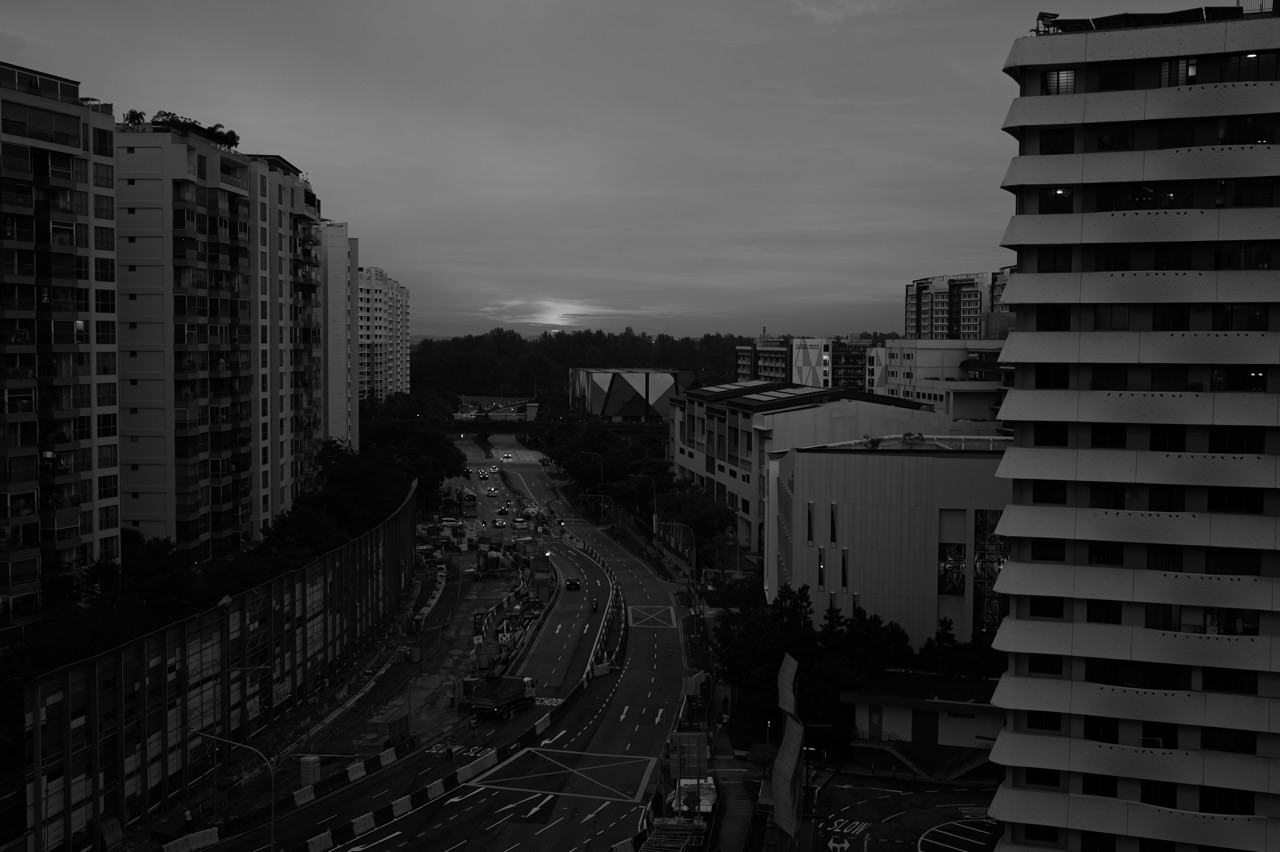
Holding a family year-in-review is one of the warmest ways to close the school holidays in Punggol, and a gentle start to goal setting for kids: one evening of photos, stories and laughter about 2026, followed by a few small, hopeful goals for 2027.
Asked for the best moment of 2026, a ten-year-old skips the birthday party and the big trip. She chooses the afternoon it poured on the way home from the library and nobody had an umbrella.
This is idea #100 in eduKate Punggol’s Top 100 Things to Do in Punggol During the School Holidays, and the last one. Below you will find a simple format for a family year-in-review, a way to set goals children actually care about, how to fit check-ins around the 2027 school calendar, and ideas for making the evening special, perhaps with a sunset walk by the Waterway first.
The point is not to grade the year.
It is to notice it.
Children who look back with pride, and forward with a small, clear goal, step into January feeling that the new year belongs to them.
This idea is perfect for families who want to:
- celebrate the year’s small wins, not just the big results;
- help children set goals that are realistic and their own;
- end the holidays with a calm, connected evening;
- talk about a hard year kindly, without blame;
- build a tradition they can repeat every December; or
- give teens a voice in planning the year ahead.
Quick look
- Best for: the whole family, from Primary 1 to Secondary 4, with grandparents welcome
- Time needed: 60 to 90 minutes, plus an optional sunset walk
- Cost: free
- Best time: an evening in the last week of December
- Nearest MRT/LRT: for the optional walk, Punggol MRT/LRT for the Waterway
- Rain plan: skip the walk; the review happens at home
See all 100 school-holiday ideas · Chat with eduKate Punggol on WhatsApp · Visit eduKate Punggol on Facebook
A Year-in-Review Is Bigger Than It First Appears
Most years end in a blur. Results, Christmas, the countdown, and suddenly it is January and the uniforms are on again.
A year-in-review is a pause button.
For one evening, the family sits together and asks: what happened to us this year? What are we proud of? What was hard? What do we want next? These are simple questions, but they are rarely asked out loud, and children love being asked.
The review matters because memory is selective. A child who struggled with Mathematics in Term II may remember only the struggle, and forget that by Term IV they had improved. A child who had a lonely start at a new school may forget the friend they made in September. Looking back together puts those quieter victories back in view.
And the goals that follow are different too. Goals set at the end of a review are grounded in real experience (“I want to keep reading before bed, because it helped”) rather than vague wishes (“Be better at school”).
The Hidden Lesson in Looking Back
Ask a twelve-year-old for a 2027 goal and you will probably hear something like, “Get better grades.”
Now ask a different question first: “When did learning feel easiest this year?”
“When I did my Science notes on Sunday, not the night before the test.”
“So what could you try in 2027?”
“Do my notes on Sunday. Every week. At least for Science.”
The ambition has not shrunk.
It has simply become something she can do on a Sunday.
The first goal is an outcome the child cannot directly control. The second is a habit they can actually do, built from their own evidence. Good goal setting rests on exactly this move: reflecting on what worked, then turning it into a small, specific action. It is the same move children make when they look back at a marked essay, notice a pattern and decide what to do differently next time.
Why Punggol Families Love a Year-End Review
It costs nothing, it fits into one evening, and it often becomes the family’s favourite tradition.
The joys of a family year-in-review
- Everyone gets to be listened to
- Small wins finally get celebrated
- Hard moments can be talked about gently
- Old photos spark stories and laughter
- Goals feel personal, not imposed
- Siblings learn things about each other
- Grandparents’ memories add depth
- It becomes a ritual worth repeating every year
Some families keep the same notebook for years, and watch their children’s handwriting, and goals, grow up page by page.
What to Expect: A Simple Format for Goal Setting for Kids
You do not need a special kit. Here are four parts that work for most families.
Part one: the photo walk-through
Each person picks three photos from 2026: a happy moment, a proud moment and a surprising one. Take turns describing each, saying why you chose it and what you remember. Phones down afterwards.
Part two: “three proud, one to try”
Everyone, adults included, writes three things they are proud of from 2026 and one thing they would like to try in 2027. Proud things can be tiny: “I learnt to take the LRT by myself”, “I finished a long book”, “I said sorry first.”
Part three: one goal, made small
Take the “one to try” and shrink it into a habit. What exactly? How often? When? “Read more” becomes “Read for 15 minutes before bed on school nights.” Write it on a card.
Part four: the check-in dates
Goals fade without check-ins. MOE’s 2027 calendar gives you natural ones: the March holidays (13 to 21 March), the June holidays (29 May to 27 June), the September holidays (4 to 12 September) and the year-end break from 20 November. Pencil a short family check-in into each.
How to Plan a Brilliant Year-in-Review Evening
A little preparation makes the evening feel special rather than like a meeting.
1. Choose the evening
Pick a calm evening in the last week of the holiday, when everyone is home and nobody is rushing. Many families like 30 or 31 December.
2. Ask everyone to choose photos beforehand
Give a day’s notice so each person can scroll and pick their three. Older children can help younger ones.
3. Set the scene
A favourite dinner, a special dessert, a notebook for each person or one family book. Small touches tell children this evening matters.
4. Agree two ground rules
“Everyone’s turn is listened to” and “No comparing with anyone else.” The second matters most when siblings had very different years.
5. Add an optional sunset walk
NParks describes Jewel Bridge, at the western end of the Punggol Waterway, as a good spot for sunsets. A short walk there before dinner makes a beautiful opening to the evening. Check the forecast, the day’s sunset time and haze.gov.sg first; October 2026 brought unhealthy haze readings.
6. Keep the goals where you will see them
Stick the goal cards on the fridge or inside the school planner. A goal you can see is a goal you remember.
A Sample Holiday Day, Hour by Hour
Here is one way to shape the final day of the year.
Morning: Something ordinary and happy
A slow breakfast and a favourite local walk or playground. Keep it gentle; the evening is the main event.
3pm: Photo picking
Everyone chooses their three photos. Younger children can print or draw theirs.
6.15pm: Sunset walk
If the weather is dry and there is no lightning, walk to Jewel Bridge or your favourite spot by the Waterway. On the way, ask: “What’s one word for this year?”
7.15pm: Special dinner
At home or at a hawker centre. Let each person choose one dish for the table.
8.15pm: The review
Photo walk-through, “three proud, one to try”, then shrinking the goals. Dessert in the middle helps.
9.15pm: Cards on the fridge
Each person sticks up their goal card. Younger children head to bed; older ones may stay up for the new year, however your family celebrates.
Three Ways to Enjoy It
Reflection looks different at six, eleven and fifteen.
For little explorers (Primary 1–3)
Keep it visual and short. Draw “my favourite day of 2026” and “something I want to learn in 2027”. Goals can be playful: “Learn to swim with my face in the water.” A child starting Primary 1 might draw what they hope school will be like. Preschool siblings can join with stickers and a drawing.
For big kids (Primary 4–6)
They are ready for the full format. Help them turn outcome goals into habit goals. For a Primary 6 child who has just received PSLE results, focus on effort and growth rather than the score, and look ahead with curiosity to secondary school.
For teens (Secondary 1–4)
Teens may prefer to write privately and share only what they choose. Respect that. They can set one personal, one school and one “people” goal, and plan their own check-in dates. Sec 4 students waiting for O-Level results, tentatively due on 13 to 15 January 2027, might do the review now and set goals once results are known.
The Learning Bridge: English and Mathematics Without the Worksheet
This is a family evening, not a lesson. Still, several real skills are at work.
- English (reflective writing): Writing about the year practises recount writing, with past tense and time connectors (“In March…”, “After that…”), and reflective writing, part of the Writing and Representing area of the MOE English syllabus.
- English (speaking): Describing a photo, giving an opinion with a reason and linking it to your own experience mirrors the shape of PSLE Stimulus-based Conversation and secondary Spoken Interaction, without any exam pressure.
- Mathematics (time and data): Marking check-in dates on a 2027 calendar, and keeping a simple tally of how often a habit happened, practise time and data handling in an everyday way.
If your child enjoyed writing about their year and you would like to see how compositions are built step by step, our Primary Composition and Creative Writing page explains the approach.
Little Hiccups and How to Dodge Them
A reflective evening can wobble. Here is how to keep it warm.
Goals that are too big
“Get straight As” is a wish, not a plan. Ask “What would you do each week?” until the goal becomes a habit a child can control.
Disappointing results
PSLE results are tentatively released on 24 to 25 November 2026, and N(A) and N(T) results tentatively from 17 to 21 December, according to SEAB. If results were hard, give them space before the review, and focus on what the child learnt and how they grew. Results are one part of a year, not the whole of it.
Sibling comparisons
Keep the “no comparing” rule firmly. Each person’s year is measured against their own last year, nobody else’s.
Eye-rolling teens
Go first and be honest about your own year, including a goal you did not meet. Teens open up when adults do.
Weather for the sunset walk
The Northeast Monsoon usually brings thundery showers on many afternoons from around the end of November, sometimes into the evening. Check the MSS lightning page, leave open paths and bridges at the first sign of lightning, and keep the review at home if needed. On very hot afternoons, the MSS heat stress advisory is worth a glance.
New Year’s Eve crowds
If you plan to join a countdown, remember that community countdown sites for 31 December 2026 had not been announced when we checked; watch the PA countdown page. A quiet review on 30 December avoids the clash.
What a Great Day Looks Like
You will know the review worked when:
- everyone laughs at least once at an old photo;
- a child names a proud moment you had forgotten;
- someone talks about a hard time and feels heard;
- each goal is small enough to start next week;
- the goal cards are still on the fridge in February; and
- a child asks, “Can we do this again next year?”
Write that request on the first page of next year’s notebook.
When to Go
The 2026 year-end school holidays for MOE primary and secondary schools run from Saturday 21 November to Thursday 31 December 2026, according to MOE. The last week of December, after Christmas Day on Friday 25 December and before New Year’s Day on Friday 1 January 2027, is the natural moment. Wednesday 30 or Thursday 31 December both work well.
Term I of 2027 starts on Monday 4 January for Primary 1 and Tuesday 5 January for Primary 2 to 6, according to MOE; secondary students follow their school’s letter. Plan the review a few days before, so the goals feel fresh on the first morning. For the sunset walk, aim to arrive a little before the day’s sunset time, and save the review for after dinner.
Getting There from Around Punggol
The review itself happens at home. For the optional sunset walk, Jewel Bridge sits at the western end of the Punggol Waterway, where it meets Sungei Punggol. NParks lists Punggol MRT and Damai LRT as stations for Punggol Waterway Park, and families on the western side of town may find Sam Kee LRT handy. Because the Waterway runs through the whole town, many families can simply walk from home; check the route on OneMap.
Location: home, with an optional walk to Jewel Bridge, western end of Punggol Waterway Park
Nearest MRT/LRT: Punggol MRT (NE17), Damai LRT; Sam Kee LRT for the western side
Entry: free; the park is open 24 hours
Quick Details
Activity: a family year-in-review evening with simple goal setting for 2027
Where: home, with an optional sunset walk by Punggol Waterway
Best ages: all ages; teens can write privately
Cost: free
Time needed: 60 to 90 minutes, plus the walk
Booking: none
Accessibility: fully adaptable; NParks lists Punggol Waterway Park as wheelchair accessible and elderly friendly
Status checked: October 2026, MOE 2027 school terms and holidays (for check-in dates)
What to Bring
- Three photos per person, on a phone or printed
- A notebook for each person, or one family book
- Coloured pens and stickers
- Index cards for goals
- A 2027 calendar for the check-in dates
- Fridge magnets or tape
- A favourite dessert
- Water bottles and an umbrella for the sunset walk
Frequently Asked Questions
What is a good goal for a child?
One that is small, specific and in the child’s control, such as “Read for 15 minutes before bed on school nights”, rather than an outcome like “Get better grades”.
How many goals should children set?
One is plenty for younger children. Teens might manage three: personal, school and “people”.
When should we check on the goals?
Use the 2027 school holidays as checkpoints: March (13 to 21), June (29 May to 27 June), September (4 to 12) and the year-end break.
What if my child had a hard year?
Name it kindly, then look for one thing they learnt or one person who helped. A hard year often holds the most growth.
Should parents set goals too?
Yes. Children take the evening more seriously when adults join in honestly.
Where can we watch the sunset in Punggol?
NParks describes Jewel Bridge, at the western end of the Waterway, as a good sunset spot. Check the weather and sunset time before you go.
Our Sec 4 child is waiting for O-Level results. Should we still do this?
Yes, but consider reviewing the year now and setting next-step goals after results, which are tentatively due on 13 to 15 January 2027.
Helpful Reading for Punggol Families
- Top 100 Things to Do in Punggol During the School Holidays
- Punggol School Holiday Guide: A Week-by-Week Plan for the Year-End Break
- School Holidays: Rest, Repair, Reading, Exploration and Preparation
- How Students Turn Goals Into Action: Aspirations, Milestones, Habits, Feedback and Course Correction
- Journaling as a Learning Tool: Reflection, Memory, Writing and Self-Knowledge
- Sunrise and Sunset Spots in Punggol
- Primary Composition and Creative Writing
- NParks: Punggol Waterway Park
- MOE: School Terms and Holidays for 2027
Goal Setting for Kids, the Punggol Family Way
A year is too big to remember all at once.
So we pick three photos.
A proud moment becomes a story.
A wish becomes a habit.
For little ones, the review is a drawing and a hug.
For big kids, it is the discovery that they have grown more than they thought.
For teens, it is a quiet promise to themselves, written in their own words.
And for parents, it is the best ending a long holiday could have: the whole family around one table, looking back with gratitude and forward with hope.
Plan the Rest of Your School Holidays
That is all 100 ideas. Thank you for exploring Punggol with us. Browse the full Top 100 Things to Do in Punggol During the School Holidays to pick favourites for the 2027 breaks, or go right back to the beginning with idea #1, Waterway Park’s four zones, and see how differently your child sees it a year older.
And if a calm, small-group learning block is also on your holiday list, eduKate Punggol teaches English, Mathematics and Science in classes of three. Come find out more.
Book a consultation · Chat on WhatsApp
eduKate Punggol
Small-group English, Mathematics and Science
Primary and Secondary
By appointment · +65 8823 1234
Properly taught kids shine a bright light into the future.
← Previous: #99 Reset the routine · Next: All 100 ideas →
Checked October 2026. Opening hours, prices, programmes and closures change, so please confirm with the official source before you go.


