
Primary 1 registration in Punggol changes from the 2027 registration exercise, for children starting Primary 1 in 2028. The headline rule is that most Singapore primary schools will reserve 60 places for Phase 2C rather than 40; schools with fewer than 180 Primary 1 places will continue to reserve 40. A separate two-track Phase 2C arrangement applies to 12 particular schools named by MOE, not to every school. Parents should not confuse the date of registration with the year the child starts school.
For Punggol families comparing primary schools, the right first action is to identify the child’s registration year, check which registration phase actually applies, and verify the official home–school distance category using the resources linked by MOE. A nearby school is not a guaranteed school. A past ballot is not a prediction. A change to the number of reserved places changes the structure of the exercise, but it does not tell you how many families will apply to your preferred school next year.
This guide is part of Understanding the Education System of Punggol. It explains the 2027 reform alongside the five established registration phases, citizenship and residence priorities, balloting, address declarations, the Punggol school-selection problem, and a calm decision process that parents can use without relying on rumours.
Policy date: reviewed on 18 October 2026. The September 2026 MOE announcement governs changes commencing with the 2027 P1 Registration Exercise. Registration-day deadlines and school-specific vacancies must be taken from the official notice issued for the relevant exercise, not copied from an older year.
Quick answer: what changed and who is affected?
- When: the 2027 registration exercise, for Primary 1 entry in 2028.
- What: most primary schools reserve 60 Phase 2C places rather than 40.
- Exception: schools with an intake below 180 P1 places retain 40 reserved Phase 2C places.
- Additional mechanism: 12 named primary schools divide Phase 2C places into two tracks, one for homes within 2 km and one for homes beyond 2 km; distance does not rank applicants within each of those tracks.
- What did not disappear: Phase 1 and earlier connection-based phases still exist, and the normal registration process remains phased.
- What parents must check: school-specific intake, whether the school is among the 12, the family’s actual phase, citizenship status, home address and current official vacancies.
These are national Singapore MOE rules, not a separate Punggol admissions policy. Punggol families use the same nationwide framework as families in Clementi, Tampines or Woodlands. What changes locally is the set of realistic schools, the journey to each school, the children’s needs and the available vacancies.
The simplest mental model: eligibility, priority, competition
A family can be eligible to register in a phase without being guaranteed admission to a particular school. Eligibility answers whether the parent may register. Priority determines which applicants are considered first if a phase is oversubscribed. Balloting resolves competition among applicants in the same applicable priority category when places run short.
Think of three separate questions: May we apply? Where would we stand in the rules? How many other applicants may choose that school? Mixing these questions causes avoidable mistakes. A family may know that it lives within one kilometre of a school yet still misunderstand its eligible phase. Another may qualify for a phase through a legitimate connection but assume this automatically beats all competitors within that phase.
The correct approach is procedural rather than emotional. Read the official rule, document the relevant fact, verify the available places, make one considered application and prepare the next eligible phase if needed.
The 2027 Phase 2C change: why 60 places matters
Phase 2C is the broad-access phase in which children need no prior alumni, volunteering or affiliated-organisation connection to the school. Reserving more places here expands the protected pool available to households without those particular ties.
MOE announced in September 2026 that the reservation would rise from 40 to 60 at most primary schools. This is an allocation rule, not a promise that 60 vacancies will still be open when every child registers. Earlier phases, unused places and actual applications determine the live position. At a school with fewer than 180 P1 places, the reservation stays at 40.
Parents sometimes interpret an increase from 40 to 60 as ’20 more total school seats’. That is incorrect. In general, the change is a redistribution of reserved seats across phases within the school’s intake, not necessarily an expansion of overall capacity. Earlier phases retain their order, but the balance of seats available at particular steps can change.
For a concrete illustration, imagine a school with 240 total places and 90 places allocated to younger siblings in Phase 1. A larger Phase 2C reservation affects how the remaining places must be protected for that later phase. The illustration shows why the structure matters; it is not a published Punggol vacancy forecast or an account of any particular school.
The 12-school two-track scheme: an important exception, not the universal rule
MOE also announced a more targeted reform covering 12 schools in areas where public housing accounts for less than 40% of homes within two kilometres. At these schools, the Phase 2C reserved pool is split equally into two tracks: one for applicants living within 2 km and one for applicants living beyond 2 km. Within each track there is no further 1 km versus 2 km priority ranking.
This creates a different competition structure. An applicant living 500 metres from one of these 12 schools is not automatically placed ahead of another applicant living 1.8 km away within the same two-kilometre track. Likewise, families beyond two kilometres compete in their own track. The arrangements are intended to widen access to schools in neighbourhoods where housing patterns create an unusually unequal geographic applicant base.
Do not apply the special track rule to every Punggol primary school. First confirm the latest official list of 12 affected schools. Where a school is not on that list, continue to use the standard phase- and distance-priority rules published by MOE. A national headline about twelve schools does not mean the home–school distance system was abolished nationally.
The five P1 registration phases, explained
Phase 1: an existing sibling
Phase 1 serves children with a sibling currently studying at that primary school, subject to the official eligibility rules. Families in this category should still complete the required registration action in the correct exercise. An older child’s past attendance at a school is not the same as having a current sibling there. Check the formal definition rather than assuming an extended family connection qualifies.
Phase 2A: eligible school connections
Phase 2A covers specified relationships such as qualifying alumni or other connections defined by MOE. The exact permitted categories and documentation matter. A parent who once attended an unrelated branch or merely knows a teacher should not infer eligibility. Membership histories and required registration conditions should be checked against the current official page.
Phase 2B: specified affiliation and volunteering routes
Phase 2B is available only when one of its formal conditions is met. Examples may include qualifying parent-volunteer arrangements and recognised community or affiliated-organisation connections, as defined by MOE. Volunteering by itself does not guarantee a seat: its requirements, deadlines and qualifying arrangements are separate from the competition for actual vacancies.
Phase 2C: open access without a prior school connection
Phase 2C is the main general-access route for eligible Singapore Citizen and Permanent Resident applicants who have not secured a place. This is where the 2027 reserved-place reform is especially consequential. Families should use current vacancy and ballot information before choosing a school, and should not assume a school that had no ballot last year will necessarily have no ballot in the new exercise.
Phase 2C Supplementary: the next step after an unsuccessful phase
Phase 2C Supplementary follows for children still without a place, subject to the official registration conditions. It is not a repeat of Phase 2C with an identical vacancy position: seats and applicants have changed. If a child is still unsuccessful, MOE has a placement process for schools with remaining vacancies. Families must follow the current official instructions rather than relying on informal calls to a school.
Citizenship matters in priority decisions
Singapore Citizens and Permanent Residents may both take part in the mainstream P1 registration phases for which they are eligible, but their priority position is not always identical. In the normal priority system, MOE considers citizenship and home–school distance when allocating oversubscribed places. The official priority sequence, not a real-estate advertisement, determines which family comes first.
International students are on a different P1 admission process. They should not simply imitate a citizen or permanent resident parent’s Phase 2C application. For an explanation of this separate route, see Primary 1 Registration for International Students: A Punggol Parent Guide.
Parents with more complex citizenship, guardianship or returning-Singaporean circumstances should confirm their exact route using MOE’s official admissions guidance.
One kilometre, two kilometres, and why you must use the official distance category
In ordinary oversubscribed P1 registration phases, home–school distance can affect priority. The familiar bands are within 1 km, between 1 km and 2 km, and beyond 2 km, but the relevant comparison depends on the phase, citizenship and whether the special two-track rule applies.
Walking distance is not the same thing as the official admission distance. One family may travel a long way around a waterway or a major road even when its straight-line geographic position appears close on a map. Conversely, a convenient bus route does not improve a household’s formal distance category.
Use the MOE distance-priority guidance and the linked official home-address and OneMap School Query guidance. Do not decide whether you are within one kilometre by measuring a screenshot with your finger, relying on Google Maps driving time, or accepting an agent’s unverified claim.
The address rule is more important than the address myth
The address used to claim home–school distance priority must satisfy MOE’s address and residence requirements. The home listed for administrative purposes, a future home under construction, a caregiver’s residence and a genuine residence are not automatically interchangeable. Documentation may be required.
The practical trap is believing that a parent can temporarily list an attractive address and later move without consequence. MOE applies residence and documentation rules, including minimum occupancy obligations where distance priority is claimed. A family must read the requirements applicable to its new, resale or caregiver arrangement before applying.
Punggol families with a recently completed BTO flat, planned resale transaction, changing tenancy or caregiving arrangement should handle the documentation early. It is much easier to resolve an address question before a phase closes than to discover during submission that the supporting document or declaration is missing.
What happens when a phase is oversubscribed?
A ballot becomes relevant when eligible applicants outnumber available places after the applicable priority rules are applied. Balloting is not an assessment of a child’s intelligence, language ability or preschool performance. It is an allocation procedure.
If all qualifying applicants can be accommodated, no ballot is needed. If a priority category has more applicants than the remaining vacancies, MOE conducts the ballot under the rules for that category. Applicants with lower priority may then have no available place in that phase. Past data can suggest whether a school often attracts strong demand; it cannot reveal the precise behaviour of next year’s parents.
The correct question is not ‘Is this school famous?’ It is ‘What is our eligible phase, our priority category, the latest published vacancies and the risk we can responsibly accept?’ This is a better starting point than an anxious list of top schools.
Worked example: three Punggol families, three different decisions
Family A lives close to School X but has no qualifying school connection. The child is a Singapore Citizen. The parent hopes to register in Phase 2C. The family should verify the official distance category and the school’s current Phase 2C allocation, then check whether School X is subject to a special rule. The family should also shortlist a practical backup school. Being near a school does not move the family into Phase 2A.
Family B has a qualifying connection at School Y and is eligible for an earlier phase. The family must still confirm what that exact connection entitles it to claim, submit within the applicable dates and check whether the earlier phase is oversubscribed. If unsuccessful, the family needs a fresh decision at the next phase for which the child qualifies. Earlier eligibility is an opportunity, not an unconditional promise.
Family C is buying a Punggol flat and expects completion around registration time. The family must establish whether the new address can lawfully be used under MOE’s current rules and which supporting documents are needed. It must not assume that signing an option-to-purchase automatically changes the address category. If uncertain, Family C should contact MOE or the relevant school before making a registration claim.
Where Punggol geography matters
Punggol includes different residential precincts, pedestrian routes and transport patterns. A home close to Punggol Waterway, Northshore, Oasis, Edgefield or the Punggol Central transport interchange does not necessarily have the same official distance relationship to each primary school. Small differences across a radius boundary can change the admission-priority category.
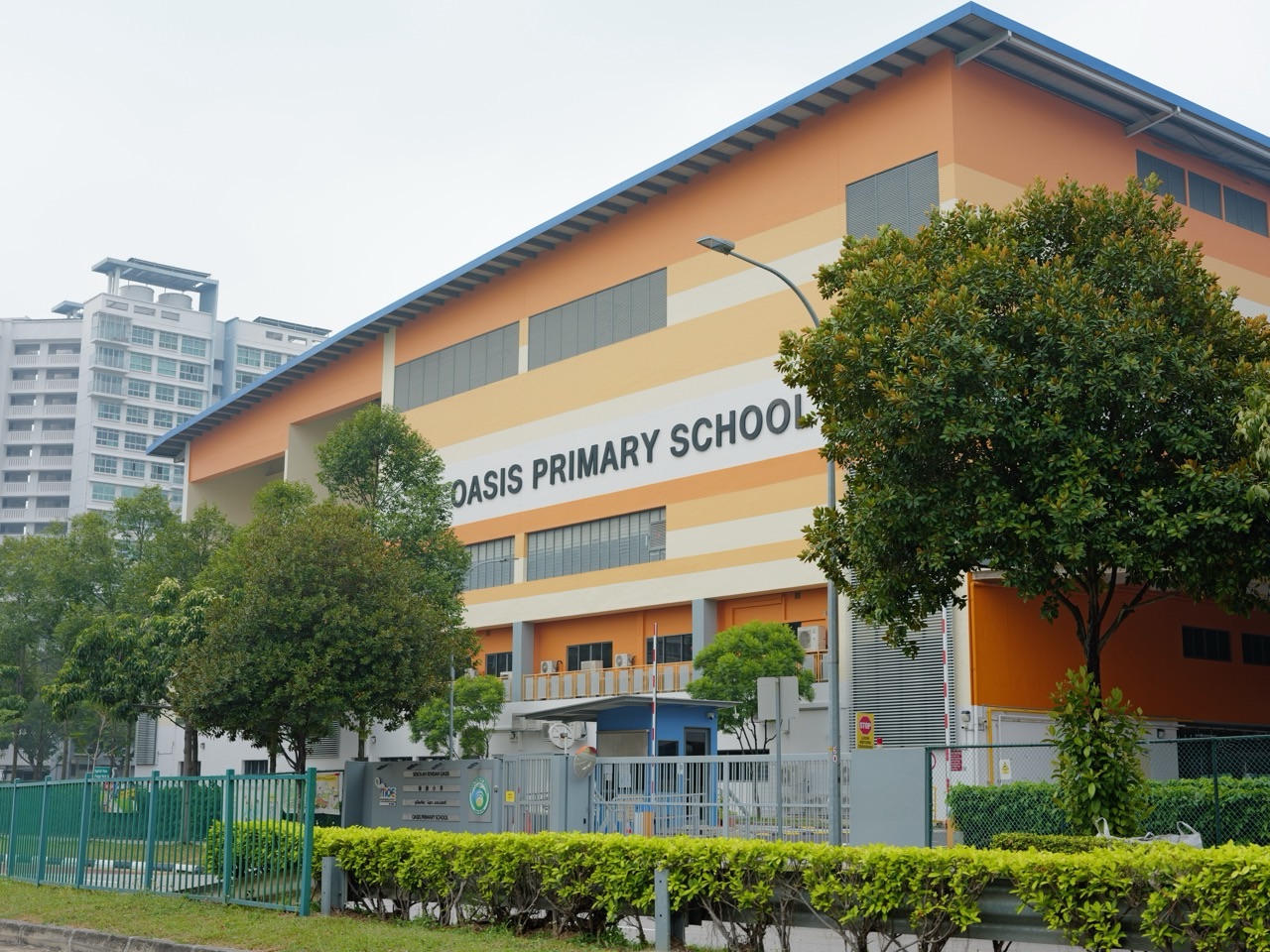
Local primary schools that Punggol families may explore include Edgefield Primary School, Greendale Primary School, Horizon Primary School, Mee Toh School, Northshore Primary School, Oasis Primary School and Punggol Cove Primary School. This is an illustrative set of local options, not a ranking, not a live vacancy list and not a claim that every school offers identical programmes or admission prospects.
Check the current MOE SchoolFinder for a school’s official profile, activities, programmes and location. Then make a realistic weekday journey. A school that feels conveniently close on a Sunday afternoon can have a substantially different journey for a six-year-old on a wet school morning.
School quality is not a ballot probability
Parents sometimes use popularity as a proxy for educational quality. That is a weak shortcut. A high-demand school may be popular for reasons including alumni networks, proximity to particular housing estates, programme reputation or geography. None of these gives a complete view of whether the school suits a specific child.
Good primary-school fit includes a safe commute, stable routines, a supportive learning environment, language needs, the school’s actual available programmes, after-school supervision and the child’s ability to rest and play. A shorter commute can create time for reading, dinner and sleep. Those are not secondary considerations: they directly affect learning readiness.
Discuss the choice as a family before the portal opens. Decide what you value and why. Then use official information to test your assumptions.
A decision framework: fit, certainty, and reversibility
Start by ranking what the family cannot compromise on: acceptable journey, after-school care availability, child’s support needs, and feasible family logistics. Next identify the preferences that would be valuable but are not essential, such as a particular programme, school tradition or optional CCA.
Then separate facts into two groups. Confirmed facts are the admission rules, the child’s citizenship, the qualifying connection, the validated address and the published school profile. Uncertain variables include this year’s applicant demand, ballot outcome, classroom peers and future staffing changes.
Good planning means making a decision that remains workable even if the uncertain variables develop differently from what you hope.
How to use historical vacancy and ballot data responsibly
Historical data is useful when interpreted correctly. It shows how demand and places interacted under a particular year’s rules. It does not create a probability guarantee for the next exercise, especially when the rules themselves change, as in 2027.
Compare several exercises where possible, identify whether the child would have belonged to the same phase and priority category, and record the fact that 2027 Phase 2C reserved places differ from 2026 at many schools.
Avoid presenting a past ballot as ‘your child’s chance of admission’. The children applying next year are a different cohort. Family addresses, siblings, school preferences and vacancies can all change. Use the evidence as one input, not as an oracle.
Documents Punggol families should prepare
- Child’s identification and citizenship or residency details, as needed for the portal.
- Registering parent’s Singpass access and relevant residential address particulars.
- Evidence of an eligible school connection, if registering in a connection-based phase.
- Documents for an approved alternative caregiver arrangement, where applicable.
- Appropriate proof for new or resale property arrangements, where required.
- A written shortlist of schools with verified official distance categories.
- A practical contact and contingency plan if the preferred phase is unsuccessful.
Some documents may be verified electronically. Others require uploading or a separate declaration. The exact required documents depend on the family’s circumstances. Follow the current MOE registration instructions, not a generic checklist copied from a previous year.
What to do during the live registration exercise
Open the official P1 registration portal during the correct phase. Verify the displayed child details, phase eligibility and permitted schools. If the system presents a discrepancy, follow the portal’s help instructions rather than repeatedly creating applications through different accounts.
Only one parent needs to submit the application under the standard portal guidance, with the required consent declaration. The official system generally accepts only one active school application for a child within a phase; amendments must follow its prescribed process before the phase closes.
Keep the acknowledgement of submission. Review the result when MOE releases it. If unsuccessful, identify the next eligible phase and revisit the available places. Avoid making irreversible housing or employment choices in the final hours of a registration phase.
After a school place is secured
Registration is an admission task, but the family needs a transition plan. Confirm school reporting instructions, school-day start and dismissal routines, uniform arrangements, school transport, meal and pocket-money arrangements, health information and any learning support the child requires.
Practise the commute more than once. Rehearse a simple home-to-school routine. Help the child learn how to ask for assistance, use the toilet, carry belongings and tell an adult when something is wrong. These are valuable transition skills regardless of which school the child attends.
If after-school supervision is needed, contact the school’s student care provider directly about its application criteria and availability. Obtaining a primary school place does not automatically guarantee a student care place.
Common mistakes to avoid
- Treating 2027 registration as 2027 entry rather than 2028 entry.
- Assuming every Punggol school is part of the 12-school two-track scheme.
- Assuming 60 reserved places means a school added 20 seats to its entire P1 intake.
- Using road travel time instead of the official home–school distance category.
- Believing a legitimate school connection makes balloting impossible.
- Assuming a future property address is automatically accepted.
- Interpreting a previous year’s ballot as a certainty about the next one.
- Choosing solely from a popularity list without considering daily routine.
- Copying old registration-day deadlines into the next year’s calendar.
- Registering through an unofficial website or sending identification documents to an unverified contact.
Questions parents ask
Is Punggol governed by a separate primary registration scheme?
No. Punggol schools operate under Singapore’s national MOE framework, with school-specific vacancies and profiles.
Does my child need a preschool entrance-examination score?
Mainstream Primary 1 registration is an eligibility and allocation process. It is not a national entrance examination in preschool English or Mathematics.
What if my child is born near the eligibility cut-off?
Use MOE’s official birth-date checker. Do not infer the correct exercise merely from the calendar year written in a social media post.
Can we apply to more than one primary school in the same phase?
The standard MOE process permits only one school application for a child in a phase. Read the current rules on amendments and withdrawal before changing it.
Will living within 1 km always secure a place?
No. Distance is a priority factor in the relevant categories, not a universal guarantee. Oversubscription and balloting still matter.
Does the 2027 special two-track rule eliminate all distance priority?
No. It changes Phase 2C allocation at the 12 affected schools. Do not extend it to schools and phases outside the announced arrangements.
What if the family’s address changes during the process?
Determine which current MOE residence or property rule applies, collect the required evidence and seek official guidance before making a declaration.
Are Permanent Residents excluded from mainstream P1 registration?
No. Eligible PR children use the relevant SC/PR phases, subject to applicable priority and intake rules.
What if a parent loses a ballot?
The parent should check the next phase for which the child is eligible, and review updated vacancies. A ballot result does not measure the child’s ability.
Should parents buy a property simply to improve school proximity?
That is a major family decision with financial and legal consequences. Verify the official school-distance category and residence rules first, and consider whether the home suits the family’s broader needs even if a ballot result differs from expectations.
A practical four-week preparation plan before registration opens
Week 1 — Establish eligibility. Confirm the child’s birth-date exercise, citizenship status, applicable phases and any genuine school connection. Open a small digital folder for official documents, and note questions that require clarification.
Week 2 — Map real schools. Use MOE SchoolFinder and official distance guidance for a shortlist. Visit public areas near each school. Time realistic routes from the actual home and consider school-day logistics.
Week 3 — Test the evidence. Read the current registration notice. Review vacancy and balloting history as historical information, not a prediction. Check whether the 2027 allocation reform changes the way your selected schools would be evaluated.
Week 4 — Make a considered choice. Discuss first choice and backup paths with the people involved in daily school logistics. Prepare the portal account and documents, set reminders based on current official dates, and leave space to respond calmly if a ballot becomes necessary.
Authoritative sources and related reading
- MOE, 10 September 2026 — Enhancing the Primary One Registration Framework for Greater Access and Inclusivity
- MOE — P1 Registration Portal and guidance
- MOE — Registration phases and key dates
- MOE — Distance-priority rules
- MOE — Addresses used for registration
- MOE — SchoolFinder
- Punggol Education System — Compulsory Education
- Punggol Education System — MOE Kindergarten
The main lesson is simple: understand which rule applies to your child before choosing which school to pursue. The 2027 reforms aim to widen access, but a family’s best decision still depends on the child, the verified eligibility category, current vacancies and a school routine that can work year after year.


