
A 1985 National Archives photograph documents a well at Kampong Wak Sumang near Punggol Point, while a 1995 oral account preserves villagers’ belief that the well was associated with Wak Sumang and that its water had healing properties. The photograph establishes a physical feature. The healing tradition establishes community belief. Neither is medical proof.
For readers searching Wak Sumang well, Punggol healing well or whether the water was scientifically proven to cure illness, the answer is no. The sources document what residents believed and practised; they do not provide laboratory analysis or clinical evidence.
Did you know? NLB’s 2023 history reproduces the 1985 archive photograph and reports a later oral account saying the well was about five metres deep and never ran dry. Those details remain attributed descriptions, not an engineering survey.
The Crazy-Rich Idea: A Community Can Be Rich in Meaning Even When Science Cannot Confirm the Belief
A well can be several things at once:
- a source of water;
- a physical landmark;
- a founder story;
- a place of remembered ritual;
- a symbol of reliability;
- an object preserved in photographs after the village changes.
Historical significance does not require us to turn belief into medical fact.
The 1985 Photograph Is the Strongest Physical Anchor
A reliably captioned archive image establishes that a well existed in Kampong Wak Sumang in that period.
It does not establish the exact construction date, original builder, depth or water chemistry.
The 1995 Account Preserves Memory and Practice
Former resident and teacher Haji Mohammed Amin Abdul Wahab described local beliefs involving the well and bathing children in its water.
This is valuable oral-history evidence about what people believed and did.
belief documented ≠ cure scientifically demonstrated.
“Five Metres Deep” Needs Attribution
If the depth comes through a later historical account or oral tradition, write “said to be about five metres deep”.
Do not convert an attributed description into a surveyed engineering measurement.
The Well Belonged to a Time Before Household Piped Water
A reliable communal water source carried practical importance in a village before modern utility networks reached every home.
Later piped-water improvements changed the infrastructure context but did not erase the well’s remembered meaning.
Founder Stories Can Preserve Values as Well as Events
Crediting Wak Sumang with a dependable well can express a wider community memory of a founder providing for later generations.
A historian can analyse that meaning without claiming an exact construction date that the evidence does not establish.
Modern Sumang Names Do Not Locate the Historical Well
Sumang Walk, Sumang Lane and Sumang LRT preserve the name in modern Punggol.
They are not evidence that the historical well stood beside those present-day features.
A Science Lesson: Different Questions Need Different Evidence
- Did a well exist? A dated photograph can help.
- What did villagers believe? Oral history can help.
- Who dug it? A construction or contemporary record would be stronger.
- Was the water medicinal? Scientific testing would be required.
A History Lesson: Oral Tradition Is Evidence of Memory
Oral history is not “false” because it cannot answer every scientific question. It is evidence for remembered experience, values and practices when attributed carefully.
An English Lesson: “Believed to Heal” Is Not “Healed”
Those two extra words preserve the difference between a historical belief and a medical claim.
Evidence Boundaries
- A 1985 archival photograph documents the well’s existence in the village.
- A 1995 oral account preserves healing beliefs and practices.
- The exact construction date and builder are not independently established here.
- No medical efficacy or water-quality claim is supported by the historical sources.
Evidence Anchors
The crazy-rich Punggol lesson is that memory can preserve meaning without pretending to prove medicine. Wak Sumang’s well survives historically because photographs, oral testimony and place memory each answer a different question.
An old well at Kampong Wak Sumang, near Punggol Point, appears in a photograph dated 1985 in Singapore’s National Archives. A later account, reported in 1995 by former resident and teacher Haji Mohammed Amin Abdul Wahab, said villagers believed the well was dug by Wak Sumang and that its water had healing properties. The story is a valuable record of community memory, not medical evidence that the water cured illness.
National Library Board historian Hannah Yeo’s 2023 BiblioAsia article identifies the well, reproduces the 1985 photograph and explains the oral tradition. The well was said to be five metres deep and never to run dry. These are attributed beliefs and descriptions in the surviving record; they are not an independent engineering survey or a laboratory analysis of water quality.
Understanding the well requires distinguishing Punggol’s early coastal village, later piped-water improvements in the 1960s, resettlement in the 1980s and the modern town. This guide places the well within that chronology, explains the difference between a photograph, an interview and a documented physical measurement, and offers safe ways to study local heritage without repeating historical medical claims as advice.
Choose your reading route
What the records prove · The 1985 image · The healing tradition · Maps and location · Learning activity
Complete article contents
- 1. What is known, what is remembered and what remains unproven
- 2. The 1985 photograph: a rare fixed point in village history
- 3. Who was Wak Sumang, and how the well became attached to his name
- 4. The reported five-metre depth and the problem of historical measurements
- 5. Healing-water beliefs and why they must be attributed
- 6. Why dawn bathing is part of the historical recollection
- 7. Water infrastructure before household piped supply
- 8. Kampong Wak Sumang and its broader coastal setting
- 9. The 1980s resettlement that changed the setting
- 10. The role of teachers and former residents as witnesses
- 11. Why a 1995 newspaper report and a 2023 history are different sources
- 12. The difference between cultural heritage and scientific evidence
- 13. How old maps help—and where they do not
- 14. How the well relates to the story of public amenities
- 15. Why old objects carry family memory across relocation
- 16. A safe local-history lesson for children and teenagers
- 17. Questions frequently asked about the Wak Sumang well
- 18. Sources, acknowledgements and unanswered questions
1. What is known, what is remembered and what remains unproven
The strongest physically grounded piece of evidence is a National Archives photograph identified as a well at Kampong Wak Sumang in 1985. Its caption establishes that a well existed in the village and that the photograph is associated with that period. The National Library Board reproduced the image in a carefully researched 2023 article. A reader can therefore discuss the feature without relying entirely on legend.
A second type of source is community memory. The same NLB history reports that residents attributed the well to the village founder, Wak Sumang, and believed that it was unusually dependable and possessed healing properties. These are beliefs documented by a historian. The article does not provide an independent construction record proving exactly who dug the well, nor scientific tests establishing a medicinal effect.
A third kind of evidence is the 1995 newspaper account of Haji Mohammed Amin Abdul Wahab, who had been a teacher and resident. He described local traditions involving people bathing children in the well water before dawn. The record matters because he could recount what villagers believed and practised. It does not transform reported recoveries into controlled proof of a treatment.
The distinction may seem small, but it changes how a local-history article should be written. ‘The well was believed to heal children’ is supported. ‘The well healed children’ makes a clinical claim for which the sources supplied here are inadequate. Likewise, ‘said to be five metres deep’ is different from ‘surveyors measured a five-metre depth’.
Start every research notebook with three columns: visible physical evidence, attributed recollection and unanswered verification questions. Put the 1985 photograph in the first, the villagers’ oral testimony in the second and the exact construction date or water chemistry in the third. This approach preserves the story without surrendering accuracy.
2. The 1985 photograph: a rare fixed point in village history
A photograph with a reliable caption is a powerful historical anchor. In Hannah Yeo’s BiblioAsia study, a 1985 image shows a well in Kampong Wak Sumang and is credited to the National Archives of Singapore. The image helps readers imagine the ordinary infrastructure of the village, but it does not show every stage of the well’s construction or prove the date on which it first came into use.
Photographs record a viewpoint, a moment and the objects visible within the frame. They rarely reveal why a feature was built, who funded it, whether it operated continuously or what every resident thought of it. Even a close image of a well cannot tell us the chemistry of its water or the truth of stories told around it. Those questions require different evidence.
The 1985 date is especially meaningful because Kampong Wak Sumang was being transformed by resettlement. The village’s headman, Awang Osman, gave oral-history interviews in 1984 and 1985, while families were leaving for new housing. A photograph taken then can capture features that had been familiar for decades but would be harder to find after redevelopment.
The Archives’ work therefore had a preservation role beyond aesthetics. Recordings, photographs and documents allowed aspects of the community to remain accessible after the original built environment changed. The well appears as one element among homes, religious spaces and roads whose significance lay in repeated use by people.
For a school display, the caption should say ‘Well at Kampong Wak Sumang, 1985; National Archives of Singapore, reproduced by NLB’ rather than making up the photographer’s name, exact camera position or construction date. The goal is not to make an image caption dramatic. It is to leave a trustworthy path back to the archival object.
3. Who was Wak Sumang, and how the well became attached to his name
Wak Sumang is associated with the founding of Kampong Wak Sumang at Punggol Point. NLB’s history explains that he is remembered as a figure who came from the Riau region and whose descendants formed an enduring coastal community. Accounts of exactly when he arrived differ. The historical writing attributed to Mastomo suggests the mid-nineteenth century; other family memories place settlement earlier.
That uncertainty affects the well story. If we do not have a definitive construction record, we cannot assign the well confidently to a precise year simply by attaching it to a founder whose chronology is itself disputed. It is reasonable to say that oral tradition credited him with creating the feature. It is not reasonable to invent a date such as 1855 and repeat it as a verified engineering milestone.
Founder stories often preserve values as well as events. A reliable water source matters to a settlement, especially before household piped water. Crediting the founder with a dependable well can express a belief that he provided something useful for later generations. A historian can analyse that meaning without claiming to know whether the literal construction story is complete.
The legacy also survives through modern place names. Sumang Walk, Sumang Lane and Sumang LRT station connect a contemporary housing district to the village’s remembered past. But these names are not evidence that the historical well stood beside the current LRT platform. The old kampong occupied a different section of the Punggol landscape near Punggol Point.
A responsible heritage lesson introduces Wak Sumang as a historical figure surrounded by documented descendants, oral traditions and conflicting chronological accounts. The well belongs within that layered memory. Its cultural significance need not depend on proving every detail of the founding legend.
4. The reported five-metre depth and the problem of historical measurements
NLB’s 2023 account says the well was believed to have been dug to a depth of five metres. This is a useful quantitative detail, but it comes to us through a historical description. The article does not reproduce a survey plan with a measuring method, measurement date and precise water level. A student should therefore write that the well was said to be five metres deep.
Depth is not the same as water quality. A deep well may access different groundwater layers from a shallow one, but many factors determine whether water is suitable for drinking or bathing. Ground conditions, nearby sanitation, contamination, rainfall and maintenance all matter. The existence of water beneath the ground does not automatically make it safe or beneficial.
Another tradition says the well did not run dry. That too should be reported as a belief, not as a verified hydrological record across every drought or season. The village’s dependence on water may explain why such a reputation developed, but the supplied sources contain no time series of water levels to test it.
These cautions make the story useful for Mathematics and Science. A class can calculate hypothetical water volumes in a cylindrical well given an assumed radius and depth, but it must label the radius as invented for practice and the five-metre figure as a historical report rather than an established measured specification. Precise mathematics applied to uncertain inputs does not make the original measurements more certain.
For a heritage museum, a label could separate ‘Traditional account: five metres deep, never ran dry’ from ‘Physical evidence: well photographed in 1985’. Visitors then learn something about historical proof while still appreciating why the feature was remembered.
5. Healing-water beliefs and why they must be attributed
Haji Mohammed Amin Abdul Wahab reportedly told the Straits Times in 1995 that villagers believed bathing children in the well’s water could relieve conditions including fever and epileptic fits. The quoted practice was a remembered community belief. The National Library Board included it in a study of heritage, not as a medical recommendation.
It is important to respect the existence of the belief while declining to present it as clinical fact. A child’s illness may change for many reasons. One family remembering an improvement after a ritual cannot establish that water from a particular location treated a neurological condition. Epileptic seizures and fever require appropriate medical assessment, and untested water can itself carry health risks.
The historical question is instead why a community might attach healing meaning to a dependable local water source. Water is involved in everyday cleanliness, food preparation, religious life and the care of children. When a feature becomes associated with the founder of a village, stories of special efficacy can also express trust, solidarity or gratitude. These are possible interpretations of the tradition, not hidden motives established by the cited interview.
A reader can be interested in a healing story without accepting it as a tested remedy. This ability to distinguish cultural significance from medical evidence is essential to responsible heritage writing. It also avoids insulting the community or turning its practices into exotic entertainment.
For schoolwork, compare two sentences: ‘Villagers believed the well water helped sick children’ and ‘The well water cured epilepsy’. Only the first is justified by the historical source. The difference is a useful lesson in reporting verbs, certainty and the ethics of health-related claims.
6. Why dawn bathing is part of the historical recollection
The 1995 account includes a particular timing: villagers reportedly brought children to bathe in the well water before dawn. That detail gives the story cultural texture. It identifies a practice with a time of day rather than a general belief that any water from the well was special. Yet the source does not fully explain why the early hour mattered.
A historian must resist inventing a ritual explanation. It may be tempting to assert a religious requirement, a cooling advantage or a spiritual significance. Those hypotheses would need a participant’s explanation or a closely related historical source. The record available here reports the timing, not a definitive reason for it.
The fact that a practice survives as remembered detail is itself important. Oral history often records routines omitted by official infrastructure files: when people gathered, who accompanied children or what an older person advised. Such memories tell us about the social dimensions of care even when outcomes cannot be independently proven.
For an interview-based class project, students can practise asking open questions: Who remembers using a village well? Was water drawn for cooking or washing? Who maintained the structure? Were there seasonal changes? Do you know why a particular time of day was chosen? The aim is to invite testimony, not to guide a witness into confirming a story already decided in advance.
All answers should be dated and attributed. A former resident’s memory is valuable even if it differs from another person’s. The historian’s task is to preserve and compare those accounts rather than smooth away uncertainty for a perfect-looking narrative.
7. Water infrastructure before household piped supply
A village well belongs to the practical history of water access. Before piped water was widely available, households often depended on sources such as wells or collected rainwater. A reliable local source could make daily life substantially easier. It would also need to be maintained and used carefully to reduce contamination.
NLB’s history of Kampong Wak Sumang states that piped water, electricity, paved roads and drainage improvements arrived in the 1960s. This is a significant chronological contrast. The well was part of a longer village world that predated those changes, even though we cannot establish the exact year in which it was dug.
New infrastructure does not immediately erase old attachments. A well may retain cultural significance after water pipes become available. Older residents may continue telling stories about it, remembering who used it or associating it with founding families. The 1985 photograph and 1995 recollection show that the feature remained part of the village’s historical memory across later decades.
A precise article should not state that every family depended exclusively on the well before the 1960s, because the source does not establish household usage figures. Nor can it assume the well remained the primary drinking source in 1985. The evidence identifies the feature, the tradition and the village’s broader modernisation.
For Geography students, compare the systems behind a well and a public water supply. Consider the source, distribution, maintenance, monitoring and responsibilities of users. A change in infrastructure affects daily work, but a heritage feature can also retain a distinct symbolic role.
8. Kampong Wak Sumang and its broader coastal setting
The well belonged to Kampong Wak Sumang, a coastal settlement associated with Wak Sumang’s descendants at Punggol Point. The village’s history involves fishing, later mussel processing, schools, religious institutions and family life, rather than only the founding stories often repeated online.
The National Library Board’s 1985 map identifies the kampong across a portion of the old coastal landscape. An 1844 map and a later 1852 survey-based map provide earlier geographical context, although neither one identifies the founder’s well as a labelled feature. A map may tell us that a settlement existed without locating every domestic structure within it.
The village’s maritime setting influenced livelihoods. Residents traded fish and mussels, supplied food outlets and used boats for work. Children attended a local Malay school that opened in 1955. Mosques and community relationships anchored families to the place. Within that setting, a well could become a physical point around which stories and routines accumulated.
The breadth of the village’s history also guards against over-romanticising the well. Families had to manage everyday work, floods, health problems, changing services and resettlement. A revered water source was not a magic solution to all those pressures. Its story belongs among many local practices that helped people make a home.
For readers who know Punggol only through HDB blocks and the waterway, the history provides a wider perspective: a place can hold family infrastructure, religious memory, commercial activity and later national development plans in successive layers. The well stands for one such layer, but should not be used to speak for all residents.
9. The 1980s resettlement that changed the setting
By the 1980s, Punggol was facing substantial redevelopment and coastal reclamation. Kampong Wak Sumang residents began leaving, and the village’s houses and institutions were eventually removed or transformed. NLB’s historical account places the main relocation period in the 1980s and preserves the recollections of the former headman, Awang Osman.
The well photograph dated 1985 is therefore a late record of a village whose built environment was approaching the end of its familiar form. This explains its value. A feature that may have stood for generations could be photographed at a moment when other buildings were being dismantled. Even if its exact later fate is uncertain, the image fixes its existence in the archive.
A local-history article should not announce a precise demolition date for the well without a dated record. Different village structures may have remained for different lengths of time. A mosque’s documented demolition in 1995, for example, cannot automatically be used as the well’s demolition date. They were related locations but distinct objects.
Resettlement also changes what a water source means. When households move into flats with piped water and sanitation, the practical tasks of daily living change. What was once part of routine may survive mainly through memory, photographs or objects. The historical value of those traces can increase precisely because the original setting becomes hard to revisit.
The key question for students is what is lost and what survives when a settlement changes form. A building can disappear while a place name or family story persists. A photograph can preserve an appearance while failing to preserve sounds, usage or relationships. Oral history helps fill some of those gaps, with its own limits.
10. The role of teachers and former residents as witnesses
Haji Mohammed Amin Abdul Wahab is significant in this well story because NLB identifies him as a teacher and resident who spoke about villagers’ beliefs. His perspective was shaped by knowing the place and the community. That gives the account value as testimony about local traditions.
But an individual’s long familiarity does not guarantee every detail of an older origin story. A person interviewed in 1995 could remember what parents or neighbours had told them about the well, which may reach back further than their own firsthand experience. Responsible historical writing asks which parts were personally observed and which were received tradition.
This distinction does not diminish oral history. Many aspects of domestic and community life are poorly documented in official records. Interviews can preserve phrases, routines and names that would otherwise vanish. The historian can compare them with photographs, maps, newspapers and other recollections to build a more complete picture.
NLB’s article also uses the work of village headman Awang Osman, whose thirty reels of oral-history interviews were recorded in 1984 and 1985. Those interviews offer a much broader record of the village. It would be careless to attribute the specific well testimony to Awang Osman when the source identifies Haji Mohammed Amin Abdul Wahab for that detail.
A simple archive index should include the person’s name, interview date, the claim, whether the speaker witnessed it and the original collection reference. The result allows future historians to ask better questions and reduces the risk of accidentally merging different voices into a single anonymous ‘villagers said’.
11. Why a 1995 newspaper report and a 2023 history are different sources
The 1995 Straits Times recollection reported the teacher’s account about the well and its believed healing properties. The 2023 BiblioAsia article by Hannah Yeo is a later researched history that brings together this report with maps, archival photographs, oral histories and older literature. Both have value but they are not the same document.
A contemporary newspaper report is relatively close to the moment someone gave an interview, although the events they discussed may have happened much earlier. It records how the story was told at the time of publication. A later historical synthesis may be stronger at checking broader context and identifying related records, but its author is still selecting and interpreting information.
The photograph dated 1985 adds a third evidentiary layer. It offers material visual evidence of the structure at a particular time. No single one of these three sources independently proves the founder personally dug it, the reported depth was measured, or the water had medical efficacy.
This is a perfect source-based question for Secondary History. Ask students to identify what the image, interview and historian’s article each support. They should then write a conclusion using language such as ‘photographed’, ‘reported’, ‘believed’ and ‘not independently established’. Such precise verbs improve both historical reasoning and English composition.
In digital publishing, an additional problem arises: later websites may quote the 2023 synthesis and present the claim as if a new investigation had independently confirmed it. Repetition online does not create independent corroboration. Always follow a claim back to the oldest available record and preserve the distinction between source and repetition.
12. The difference between cultural heritage and scientific evidence
The healing-water story illustrates a broad lesson in evaluating claims. A community’s belief can be historically significant even when science does not support the alleged mechanism. History asks what people believed, how practices were transmitted and why a place mattered. Medicine asks whether an intervention is safe and effective under controlled evidence.
These questions should not be confused. A historical account may accurately document the use of well water during childhood illness without demonstrating that the water caused recovery. That is not disrespectful; it is accurate about the kind of evidence available. It also protects present-day readers from interpreting an old remedy as current advice.
For school Science, discuss why water quality can vary with microorganisms, runoff, ground conditions and storage. A historic well, if it remained accessible, would not be automatically safe for drinking. No one should use an untested source to treat fever, seizures or any other medical condition. Such symptoms require appropriate healthcare.
For Literature or social studies, students can explore why water has special meanings in stories. A village founder associated with a dependable well may represent care for descendants, collective survival or continuity. These are plausible interpretations that should be presented as interpretations rather than claims about private intentions.
The strong historical sentence combines respect and precision: ‘Residents remembered the well as a special source of water and attributed healing qualities to it; available heritage records do not establish a medical effect.’ A weak sentence removes one half of that balance, either mocking the belief or repeating it as fact.
13. How old maps help—and where they do not
The BiblioAsia article reproduces a 1985 survey map showing the area of Kampong Wak Sumang, with the former Track 24 and Punggol Port Road among the geographic references. Earlier maps indicate settlement around Punggol Point. Such cartographic evidence can help establish the larger location of the village and its relationship to the coast.
A map that does not mark a specific well cannot be treated as an exact point location for that well. The photograph’s caption may identify the village without giving coordinates. It would be misleading to place a pin on a modern apartment block and claim the founder’s well stood there simply because the location falls within the old community’s approximate area.
Land reclamation complicates the exercise further. The shore and road alignments changed over time. An older landmark described relative to the water may no longer occupy the same relation to the present coastline. A modern map is indispensable for current navigation but cannot substitute for the landscape of 1985.
Students can build a layered map with dated evidence. Use the old village extent from a survey, the 1985 image caption and a present-day map as three distinct information sets. Mark the well’s exact modern location as unestablished unless a reliable plan supplies it. The result is a map that teaches uncertainty rather than disguising it.
This is useful beyond the well. Many Punggol historical references involve vanished tracks, farmways or buildings. Careful maps help readers understand why an old postal address or family memory cannot always be translated into a present-day GPS marker.
14. How the well relates to the story of public amenities
The transformation of Punggol included changes in basic services. NLB describes piped water, electricity, improved roads and drainage reaching Kampong Wak Sumang during the 1960s. These upgrades were major practical developments in a rural setting. They altered how residents obtained daily necessities and how public infrastructure connected to private households.
A well and a piped-water connection represent different forms of provision. One is local and linked to a particular physical source. The other depends on a wider network of treatment, distribution and maintenance. Each has its own vulnerabilities and costs, and one may continue in limited use after the other becomes available.
The historical source does not establish exactly when the well stopped supplying households or how its use changed after pipes were installed. It does, however, allow a reasonable question: what happens to a place with cultural meaning when its original daily function becomes less necessary? A village can preserve stories about a feature even as public services make it less central.
For residents of today’s Punggol, reliable treated tap water is taken for granted. The older story can encourage appreciation of infrastructure without inviting nostalgia for avoidable health risks. A historical well may evoke ingenuity and community memory, while modern water provision represents another kind of collective achievement.
A balanced article does not set up a false contest between traditional care and modern engineering. It asks how each arose from the needs and knowledge of its time. The well becomes a window into changing expectations of safety, convenience and public responsibility.
15. Why old objects carry family memory across relocation
When a village is removed, residents do not lose memories in the same way that they lose structures. Families carry stories about wells, gardens, paths, mosques, schools and neighbours into new homes. Those stories can become a way to explain identity to children who never saw the original settlement. The well’s afterlife in a 1995 interview illustrates this process.
The historian must be attentive to whose memories are preserved. A village leader may recall official gatherings; a teacher may remember children’s experiences; a fisher may describe work on the water. A single feature can carry different meanings for different people. An archive that records only the most prominent figure may miss the ordinary texture of domestic life.
Hannah Yeo’s historical article uses photographs and named accounts to restore that texture. It places the well beside stories of farming, mussel processing, institutions and resettlement. The combination prevents an isolated folktale from standing in for the whole community’s experience. It also shows why a small physical object can be worth documenting.
For intergenerational learning, invite relatives to describe a feature from a former home or neighbourhood. Ask when they last saw it, what it was used for and how they know the story. Preserve their words accurately. If two relatives disagree, record both accounts with their dates rather than treating one as a nuisance to be edited away.
A good archive does not require every memory to be a provable measurement. It requires the memory to be identified as a memory. That simple distinction respects people while giving later readers the tools to evaluate what has been preserved.
16. A safe local-history lesson for children and teenagers
Begin with a photograph and a question: what can you see? Children might identify a well, bucket, surrounding vegetation or other features visible in the 1985 archival image. Encourage observation before interpretation. Then ask what the caption tells us that the image alone cannot, such as the named village and date.
Next, read the source’s description of the well being associated with Wak Sumang. Introduce the difference between a documented photograph and a traditional account of origin. Ask students to write two sentences using different reporting verbs: ‘The archive photographed a well in 1985’ and ‘Villagers believed their founder had dug it’.
For older pupils, add the 1995 recollection. Discuss why an interview given long after a reported practice can be valuable yet uncertain. Explain that a claimed improvement after using water does not show medical causation. This links historical reasoning with science and responsible health communication.
Then build a timeline: possible nineteenth-century founding tradition; infrastructure improvements in the 1960s; late-village photograph in 1985; reported interview in 1995; NLB historical synthesis in 2023. The timeline must label event dates separately from publication dates.
Finally, connect the lesson to modern Punggol. Look at a current publicly accessible map, notice today’s waterway and housing, and discuss which features could survive only through records. Do not send children hunting for an unverified well on private, fenced or unsafe land. The purpose is source literacy, not exploration of an unknown water source.
17. Questions frequently asked about the Wak Sumang well
Was there a well at Kampong Wak Sumang? Yes. A National Archives photograph dated 1985 is identified as showing the well.
Who dug it? Community tradition credited Wak Sumang, the village founder. The source does not reproduce a construction record proving his personal involvement.
How deep was the well? It was said to be five metres deep. That is an attributed historical description, not a new survey by this article.
Did it ever dry up? The tradition describes it as never running dry; no continuous water-level record is provided.
Did the water cure illnesses? Residents believed it had healing powers, but the historical material does not establish medical effectiveness.
What illnesses were mentioned? A 1995 recollection referred to childhood fever and epileptic fits. This is a history of belief, not treatment advice.
Who provided the 1995 account? Haji Mohammed Amin Abdul Wahab, identified as a teacher and former resident.
Why was the well photographed in 1985? It forms part of the surviving archival record of Kampong Wak Sumang. The specific photographer’s motivation is not established.
Did the well stand beside today’s Sumang LRT station? The source does not locate it there; the modern station is not an authenticated historic well site.
Was piped water available later? NLB describes piped-water and other amenity improvements arriving in the village in the 1960s.
When did the well disappear? The exact date is not established by the sources used here.
Can visitors drink water from an old well? No historical account makes unknown water safe. Do not drink or use untested water for treatment.
Where can readers see the record? NLB’s 2023 BiblioAsia article reproduces the 1985 archive photograph and explains the oral tradition.
What is the best way to write about it? Use ‘photographed’, ‘reportedly’, ‘believed’ and ‘not independently verified’ for the appropriate claims.
18. Sources, acknowledgements and unanswered questions
The source at the centre of this article is Hannah Yeo’s National Library Board feature about Kampong Wak Sumang, published in 2023. It cites the 1985 archive photograph, the 1995 account, historical maps and oral histories. Readers should use the original article to check the precise wording and archival references.
National Heritage Board’s History of Punggol and Waterfront Living resources provide the broader setting of the village. They help locate Kampong Wak Sumang within an older coastal landscape rather than supply new medical evidence about the water. The 1957 Tok Sumang text is a literary source for the founder’s traditions, with its own mixture of story and inherited memory.
The documented uncertainties should remain visible. The original excavation date, actual measured depth, complete usage history, exact modern coordinates and later fate of the well require additional records. Most importantly, no clinical claim of treating fever or epilepsy follows from the historical testimony.
Related pages cover the full village story, its mosque, its 1955 school, the changing coastline and a master chronological directory. Cross-linking these histories lets readers navigate the wider setting without rewriting the same material in each page.
A disappearing village feature can be historically valuable even when some of its story is unverified. A named witness, dated photograph and clearly attributed belief preserve far more than an anonymous legend presented as certain truth. That is the standard this history aims to uphold.
Fast answers
Is the well’s exact location known?
The dated village association is documented, but no verified modern coordinate is established here.
Was the well a religious site?
Some people attributed special significance to it, but the cited records do not justify labelling it a formal place of worship.
Can we say Wak Sumang definitely excavated it?
No. That is a traditional account rather than a construction document.
How should schoolchildren interpret the medical stories?
As testimony about belief and practice, not as scientific evidence of an effective remedy.
How are the 1985 and 1995 dates different?
1985 dates an archival photograph; 1995 dates a reported recollection.
What happened after modern pipes arrived?
The record confirms broader infrastructure improvements but does not provide a well-specific usage timeline.
Where can the historic photograph be found?
In NLB’s BiblioAsia feature about Kampong Wak Sumang, credited to the National Archives of Singapore.
Is the older Punggol village the same as the modern Sumang neighbourhood?
The names preserve historical memory, but the places should not be treated as identical mapped footprints.
What if oral sources disagree?
Identify each speaker, date and exact claim rather than forcing every recollection into one definitive story.
What is this article’s main conclusion?
The physical well and the community tradition are historically documented; its legendary origin and claimed healing effect are not established as measured facts.
Primary sources and related histories
- NLB BiblioAsia: Remembering Punggol’s Kampong Wak Sumang (Hannah Yeo, 2023)
- National Heritage Board: History of Punggol
- National Heritage Board: Waterfront Living at Punggol
- Wak Sumang and Kampong Punggol: the wider village story
- History of the former Masjid Wak Sumang
- History of Tok Sumang’s 1957 literary account
- Punggol historical maps and coastline changes
- Punggol full history timeline and directory
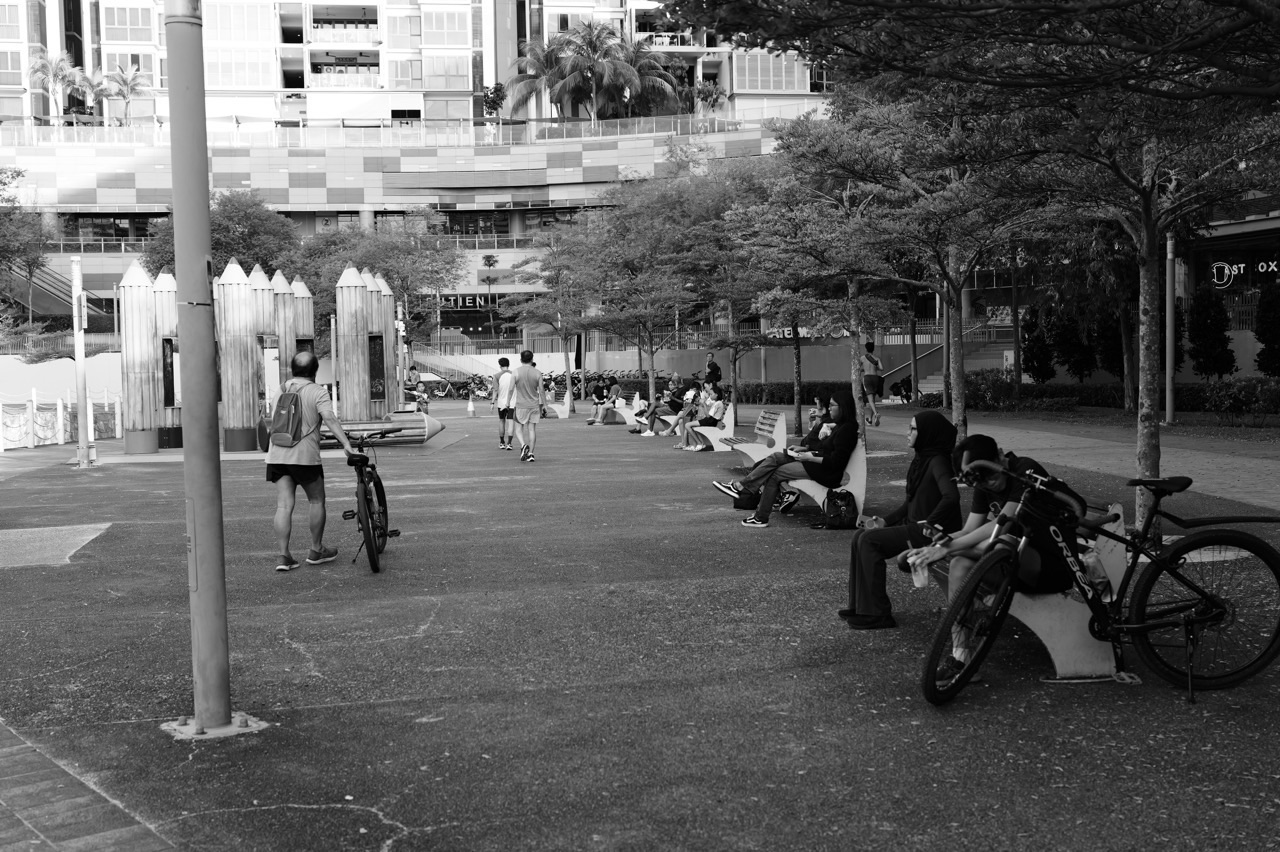
Photo integrity: the featured image shows a modern Punggol waterfront setting, not the well pictured in the National Archives’ 1985 record. For the actual archival image, follow the credited National Library Board source. Oral reports of healing are not evidence of medical effectiveness.
More early Punggol history: four connected stories
These companion articles examine different kinds of historical evidence—Indigenous travel, village memory, land traditions and post-resettlement work. Read each for its own dated sources and return to the full history directory for more periods.


