
In the 1957 Malay book Tok Sumang, an episode set in 1890 describes a colonial road proposal crossing land associated with Wak Sumang’s family, with Long Amat choosing a promise of freedom from land tax over an immediate cash payment. The literary account says road works began in early 1891.
For readers searching Tok Sumang 1890 road history, Long Amat land-tax story or whether a surviving colonial deed proves the agreement, the evidence boundary is crucial. The story is preserved in a later literary work based on community memory. The sources used here do not reproduce an original 1890–1891 land-tax instrument proving every legal detail.
Did you know? the story itself is historically layered: the alleged negotiation belongs to 1890, the road-work claim to 1891, the published Malay text to 1957, and the English translation and contextual scholarship to 2023.
The Crazy-Rich Idea: Memory Can Preserve a Community’s Decision Even When the Paper Trail Is Incomplete
Local history does not survive through one type of evidence alone.
Here, the return path runs through:
- family memory;
- a 1957 literary text;
- a modern translation;
- historical maps and contextual research;
- still-unanswered archival questions.
1890, 1891, 1957 and 2023 Are Different Milestones
- 1890: the negotiation episode as narrated in Tok Sumang;
- 1891: the narrative’s claimed start of road works;
- 1957: publication of the Malay book by Muhammad Ariff Ahmad under the pen name Mastomo;
- 2023: English translation and contextual publication in BiblioAsia.
Collapsing those dates would turn a layered historical memory into a false contemporary record.
The Land-Tax Promise Is a Narrative Claim, Not a Reproduced Legal Instrument
The literary account presents a guarantee that the family’s coastal land would not be taxed.
Without the original ordinance, land registry entry or administrative file, the exact legal authority and enforceability of that promise remain research questions.
documented story of an agreement ≠ surviving legal document proving every term.
Long Amat’s Decision Makes Infrastructure a Family-Economics Question
A road may create public benefit while crossing productive or inherited land.
The story’s central ethical tension asks whether immediate cash or a long-term tax concession better serves descendants.
A Road Can Be Both Public Infrastructure and Private Disruption
Governments may see access, transport and connectivity.
Families may see land, crops, inheritance and future obligations.
The historical value of the story lies partly in holding those two scales together.
A Literature Lesson: Reconstructed Dialogue Is Not Audio Evidence
A literary work can preserve values, remembered events and community identity while also shaping dialogue and motive for readers.
Quotations from the story should therefore be cited as literary text, not as verbatim speech recorded in 1890.
A Law Lesson: Authority Must Be Proven, Not Assumed
The story identifies a government officer, but the exact statutory authority behind any permanent tax promise would require contemporary legal and land records.
A Planning Lesson: Roads Change What Land Is Worth and How It Functions
New access can connect farms and homes to markets while also taking land and changing settlement patterns.
Infrastructure gains and land disruption can occur together.
An English Lesson: “The Story Says” Protects the Evidence Boundary
Writing “Tok Sumang says the family received a land-tax guarantee” is stronger than writing “the government legally guaranteed tax-free land forever” when the original instrument has not been produced.
Evidence Boundaries
- The negotiation is preserved in a 1957 literary account about an event set in 1890.
- The text says road work began in early 1891.
- The sources do not reproduce the original legal tax agreement.
- Dialogue and motives in a later literary work should not be treated as contemporaneous transcript evidence.
Evidence Anchors
The crazy-rich Punggol lesson is that historical wealth includes stories worth preserving even when they come with uncertainty. Tok Sumang’s road episode gives Punggol a remembered argument about infrastructure, land, family and responsibility across generations.
In the 1957 Malay book Tok Sumang, a colonial official visits Kampong Punggol in 1890 seeking permission to build a road through land associated with Wak Sumang’s family. The founder has died, so his son Long Amat speaks to the official, consults brothers Che’ Mamat and Si Kemidin, and suggests an unusual alternative to a lump-sum payment: a promise that the family’s coastal land would not be taxed. The literary account says the road project began in early 1891.
These dates and the negotiation are recorded in Muhammad Ariff Ahmad’s Tok Sumang, published under the pen name Mastomo and translated into English by Ahmad Ubaidillah for BiblioAsia in 2023. The tale is an important expression of Punggol’s remembered past, but a translated historical narrative is not itself a surveyed land grant, colonial tax statute or independently verified government agreement. That source distinction matters more than a dramatic retelling.
The story lets us study how land, roads, community leadership, family inheritance and development could intersect along an early Singapore shoreline. It also offers an unusually clear ethical question: when a public project affects family land, what kind of compensation serves descendants best? This guide answers the historical question immediately, follows the record carefully and keeps folklore, documentary maps and present-day property law separate.
Choose your reading route
1890–1891 timeline · Long Amat’s decision · What documents prove · Land lots and maps · How to research
Complete article contents
- 1. The essential timeline: 1890, 1891, 1957 and 2023
- 2. The author, the pen name and the reason the story survived
- 3. What the 1890 official was said to want
- 4. Three brothers and the earlier family division
- 5. The immediate-money option: why compensation was attractive
- 6. Long Amat’s alternative: a promise against future land tax
- 7. The claimed 1891 roadworks and their limits
- 8. Why a tax promise is not the same as a title deed
- 9. The 1986 estate record: Lots 23 and 24
- 10. Why the village’s founding date is not universally agreed
- 11. Land, inheritance and the family as a decision-making unit
- 12. The road as public infrastructure and private loss
- 13. The 1980s resettlement and the story’s later meaning
- 14. Sumang names on modern Punggol’s map
- 15. How to test the story with maps, newspapers and land records
- 16. Reading the land-tax decision as a lesson in leadership
- 17. A classroom calculation that is not an 1890 financial record
- 18. Questions readers ask about the 1890 decision
- 19. Primary sources and historical limits: a reading guide
1. The essential timeline: 1890, 1891, 1957 and 2023
The year 1890 belongs to the episode described in Tok Sumang. An official arrives in the village proposing a road across land associated with Wak Sumang and his children. The founder has died, leaving Long Amat to respond. The official offers compensation, and Long Amat asks for time to discuss the offer with his brothers. The family eventually chooses to request long-term freedom from land tax rather than immediate money. The narrative says work on the road began in early 1891.
The year 1957 belongs to the preservation of this story in published form. Muhammad Ariff Ahmad, a major Malay writer, gathered information about Wak Sumang while teaching at Sekolah Melayu Ponggol and issued Tok Sumang under the pen name Mastomo. He wrote for children and future generations who might otherwise know little about the earlier settlement. The book’s date is not the date of the family meeting itself; it marks the moment in which the oral tradition became a literary text.
The year 2023 marks a new access point. Ahmad Ubaidillah, himself descended from Wak Sumang’s family, translated the book into English, and National Library Board’s BiblioAsia published that version with contextual writing. Hannah Yeo’s researched history of Kampong Wak Sumang, also available through BiblioAsia, connects the story to maps, newspaper reports and oral interviews.
Readers should avoid inventing a fifth milestone: the discovery of a legally binding land-tax deed. The cited literary translation says a guarantee was given, but the sources examined here do not reproduce an original 1890 or 1891 tax document. The distinction does not make the story worthless. It tells us what sort of historical statement the evidence permits.
A practical research table should therefore contain separate columns for event alleged, account written, translation published and independently verified document. There is strong evidence that the story was told and published; establishing every legal detail of the original negotiation would demand additional colonial land records.
2. The author, the pen name and the reason the story survived
Muhammad Ariff Ahmad is not a character invented for this article. He was a pioneering Malay literary figure who used the name Mastomo for Tok Sumang. BiblioAsia identifies Geliga Limited as the publisher of the 1957 book. The translated foreword explains that he collected the material during a teaching assignment at Punggol Malay School beginning in January that year.
The school connection matters. A teacher is in a position to listen to families, students and a neighbourhood’s older residents. The text was informed by people who believed Wak Sumang founded Kampong Punggol. It preserved an account that was meaningful to descendants, even where the details originated long before living witnesses could have observed the events firsthand.
Ahmad Ubaidillah’s English translation adds another layer. His introduction explains family connections with Punggol, childhood trips to the beach and the relationship between local memory and a place that had changed physically. A translation can increase the audience for a historical narrative, but it also asks the reader to recognise two voices: the original storyteller and the modern translator.
A literary work may reconstruct dialogue and motives to communicate a moral. That makes the form useful for studying community values while limiting its evidentiary role in a legal or administrative history. The story’s memorable negotiation should not be quoted as if someone made an audio recording in 1890. The printed version appeared decades later.
For researchers, preserve a simple citation chain: Wak Sumang stories heard in the community, Mastomo’s 1957 book and Ahmad Ubaidillah’s 2023 English translation. If a factual claim comes from Hannah Yeo’s separate historical analysis, cite that analysis instead. Distinguishing the two BiblioAsia articles is one of the fastest ways to make the work more reliable.
3. What the 1890 official was said to want
The story begins with a government officer seeking a route across plantations belonging to Wak Sumang’s family. A road is a small word for a substantial change in a rural settlement. It can connect households to markets and services, but it can also cross productive land and alter where people work or live. A public authority may regard a road as infrastructure; the family whose land it crosses has to consider loss, access and obligations.
In the literary account, the official wishes to meet Wak Sumang but learns he has died. Long Amat receives the proposal on behalf of the family and is offered financial compensation. Rather than accept immediately, he asks the officer to return after the brothers have discussed it. The source does not provide a surveyed engineering drawing or the official’s full name, so this article will not invent those details.
It is also not established that the officer personally exercised unrestricted authority over all future taxes. The literary story presents him as the representative of government. To determine the actual legal authority of a colonial officer, a historian would need the relevant ordinance, administrative file and land registry documents of that period.
The important human detail is that Long Amat makes time for deliberation. He treats the proposal as affecting more than one person and a single day’s income. His brothers hold views about the value of the offered cash. This is the basis for the text’s conflict and its eventual moral: a leader should act with future generations in mind.
A school exercise can separate four evidence levels: documented existence of the 1957 story; the content of the story; a plausible interpretation of its themes; and historical facts that would require external corroboration. This helps readers enjoy a narrative without allowing its most dramatic details to become unsupported official history.
4. Three brothers and the earlier family division
The translated story associates Wak Sumang’s three sons with different parts of the settlement. Long Amat is linked to the seaside area, Che’ Mamat to a shoreside area and Si Kemidin to land along a river called Sungei Kemidin in the narrative. This geography helps explain why the brothers might think about a road differently. Each had a place in the family’s account of settlement and inheritance.
A tale about divisions of land is not automatically an official cadastral plan. The text does not provide survey bearings, modern lot numbers for each son’s share or an approved subdivision map from the founding period. It records a remembered arrangement and the community’s explanation of certain local names. A contemporary reader must not transform that description directly into a legal claim over today’s HDB sites.
For the 1890 meeting, the three sons’ relationship is central. Long Amat has to consider the interests of people whose inheritance could be affected after the project is built. His brothers, Che’ Mamat and Si Kemidin, are not simply background figures. They ask practical questions about compensation and its use. The story frames an ethical choice through their conversation.
The brothers do not have to agree instantly for the narrative to celebrate family unity. The text shows different preferences before a shared decision. It offers a model of leadership in which consultation matters. Whether every line of discussion occurred verbatim in 1890 is outside the documentary evidence available.
For young readers, a useful chart contains a column for each brother and the perspective assigned to him in the text. Then add a fourth column titled ‘Evidence outside the book’. Leave it blank wherever the historical record has not been located. This simple device stops literary characters from being treated as if they were directly interviewed by a present-day historian.
5. The immediate-money option: why compensation was attractive
The official’s offer of financial compensation was not trivial. Cash can help a family pay debts, purchase supplies, improve homes or support new work. Che’ Mamat, in the translated account, accepts that an adequate amount could be useful if the government proceeds. Si Kemidin is interested in the amount being offered. Their reactions make sense in the setting of a family facing a land-use decision.
Long Amat’s objection is not a denial that money has value. His concern is duration. A sum that looks large now may be spent, whereas a recurring obligation on land could affect descendants for many years. The narrative contrasts immediate consumption with relief from a continuing cost. That is the heart of the moral question.
Be careful with numbers. The account refers to an offer of a few thousand but does not establish a modern dollar value, official compensation schedule or audited amount paid. Converting the story into a precise Singapore-dollar payment would be anachronistic without determining the currency and economic conditions of the event described. This article avoids that false precision.
The broader trade-off is intelligible even without a figure. One family member may prefer liquidity today; another may seek lower future burdens. A new road can bring benefits but also disrupt productive land. Decision-makers therefore have to ask who pays, who gains and which obligations survive to the next generation.
This is an educational example rather than a modern legal template. Land acquisition, compensation and property-tax rules today are governed by contemporary legislation and professional processes. Readers should not use a story set in colonial Punggol as instructions for negotiating with a government agency in 2026.
6. Long Amat’s alternative: a promise against future land tax
The memorable decision is Long Amat’s proposal to ask that the land by the sea not be taxed, rather than accept a one-time payout. In the story, this would allow children and descendants to remain with less financial burden. He invokes the lesson attributed to his father that a person’s life should bring lasting benefit. The text treats leadership as an obligation to people who have not yet inherited the land.
The account says the brothers agree and the officer later accepts the request. It then describes roadworks beginning in the following year. That is the outcome within the literary narrative. It should be introduced as ‘the book says’, not as proof that every condition was legally enforceable in the precise form described.
It is especially important not to repeat the book’s language of a tax-free arrangement indefinitely as a current legal status. The author was writing in 1957 about remembered events before 1900. His use of the equivalent of ‘until now’ refers to the literary narrator’s historical vantage point, not automatically to Singapore in 2026.
Land taxes can mean different things across periods: government revenue on land, rates assessed on property, lease obligations or other charges. The 1957 narrative does not supply the document required to classify the promise within a modern tax category. Do not translate the old term into a present-day guarantee of exemption from every kind of property charge.
The story remains valuable even with those caveats. It asks readers to consider the difference between private benefit and multigenerational community benefit. Its ethical force does not depend on a reader being able to enforce its alleged promise today.
7. The claimed 1891 roadworks and their limits
The translated Tok Sumang story places the start of road construction in early 1891. That date is part of the literary chronology and provides a possible lead for archival research. It does not by itself prove that a particular surviving road segment was completed in the same year, nor does it establish the original surface, width or entire alignment.
Punggol Road developed across the late nineteenth and twentieth centuries. Remember Singapore’s 2018 history of the 26 tracks describes Punggol Road as a route that appeared in the later nineteenth century and changed substantially through later improvements. The broader historical description is consistent with a long process of road-making, but it should not be presented as independent confirmation of every detail in Mastomo’s narrative.
The story associates a road leading toward Tanjong Punggol with the memory of Wak Sumang and uses the name Jalan Wak Sumang. Modern Punggol has streets, walkways and LRT infrastructure carrying the Sumang name, but they are not automatically the same alignment or legal road designation described in the book. Similar names can preserve memory while their geographical use changes.
The road’s practical significance is easy to understand. Connecting a coastal village to inland travel can change access to markets, schools and public services. It can also bring new visitors and economic opportunities. These are the possible consequences of road access, not an invented list of improvements that all happened in 1891.
A historical map comparison should include a period survey, a twentieth-century Punggol Road map and a current map. Mark differences, then leave exact correspondence unproven where the sources do not permit it. A road is not one unchanging line just because generations use the same place name.
8. Why a tax promise is not the same as a title deed
A title deed establishes ownership and conditions through a recognised legal form. A literary account recounts what a community believed happened or wanted descendants to remember. These are different sources, and a strong heritage article should not quietly exchange one for the other. The Tok Sumang narrative provides the story of an accepted tax promise. It does not reproduce a deed, a revenue ledger or a gazetted rule.
To investigate the legal claim, a researcher would need to identify the relevant jurisdiction, the land parcels, the official exercising authority and records of the arrangement. Historical land registers, Survey Department maps, colonial correspondence and rate books might each provide part of the answer. Without them, modern legal conclusions would be speculative.
The question also requires attention to terminology. Land held by descendants could have had different rights, restrictions or obligations across time. The existence of lots in a later survey is not proof of a particular tax privilege. A newspaper remembering a tax-free agreement adds evidence of community belief, but it would still need to be evaluated against official land and revenue records.
This does not diminish the role of oral history. Families often preserve accounts of how an ancestor acted during a turning point. Such accounts can guide archivists towards names and documents and reveal values that formal files overlook. The proper response is to label each claim, not to dismiss the entire story or certify it without further investigation.
Readers searching ‘Was Punggol land tax-free?’ deserve the simple answer first: a 1957 literary account says the family received a promise, but the present materials do not establish a blanket, still-effective legal exemption. Any narrower verified claim requires the original records.
9. The 1986 estate record: Lots 23 and 24
Hannah Yeo’s BiblioAsia history reports that a 1986 Berita Minggu account identified two land parcels in Wak Sumang’s estate: Lots 23 and 24. Together they covered 10.27 acres, approximately 4.16 hectares. This is a different kind of information from the 1890 family conversation because it cites a much later newspaper report that referred to specific surveyed parcels.
These figures are useful when asking how substantial the remembered family estate was. They do not identify exactly which section of today’s town covers each parcel, nor do they verify that the parcels remained unchanged since the founder’s lifetime. Reclamation, survey revisions and changes in land holding can alter maps and identifiers. A lot number without a dated plan cannot be safely pinned to a modern street corner.
The article also displays a 1985 survey map showing Kampong Wak Sumang extending from Track 24 near Punggol Point towards Punggol Port Road. Its visual record illustrates the settlement shortly before major changes. Again, the map is an anchor for 1985 geography, not a measurement of every family subdivision in the 1890 tale.
The numerical comparison with the Padang used by the historical article is a scale aid, not a property valuation. A relatively large area near a working coast could include homes, orchards and service spaces in ways unlike an urban land parcel today.
For students, the best evidence table separates 1890 story events, 1957 text, 1985 survey and 1986 reported lot sizes. The facts occupy different source categories. A student who keeps those categories apart will write stronger historical answers than someone who presents all dates as though they came from one contemporaneous government file.
10. Why the village’s founding date is not universally agreed
The founding of Kampong Wak Sumang is surrounded by different traditions and interpretations. National Heritage Board material records a descendant’s view that the village existed before 1819, while other interpretations put its establishment much later. The 1957 Tok Sumang account associates the founder with the mid-nineteenth-century court of Lingga Sultan Mahmud Muzaffar Shah. Hannah Yeo notes that an 1852 map, based on earlier surveys, already shows a Malay community around Punggol Point.
These sources are not identical in what they establish. A descendant’s oral tradition speaks to family memory; a literary account tells a narrative of foundation; a survey map documents a settlement at a particular time. A map showing people in the area does not prove who individually founded the community or what date a legal title began. Likewise, a narrative about the founder does not prove that no one lived there earlier.
This disagreement is relevant to the 1890 episode because Long Amat is presented as an adult son acting after his father’s death. If the founding chronology varies, the exact family timeline deserves further work. This article does not attempt to resolve disputed dates by choosing whichever makes the tale appear most coherent.
The correct historical writing uses phrases such as ‘according to the 1957 book’ and ‘the 1985 survey shows’. It avoids saying ‘the official record confirms Wak Sumang began everything in a precise year’ unless a record actually does so. Uncertainty is not an embarrassment; it is a normal feature of reconstructing an older coastal settlement.
A class can compare a map and a literary passage to identify what each allows. The exercise illustrates why corroboration is not the same as finding two pages on the internet that mention the same name.
11. Land, inheritance and the family as a decision-making unit
The story’s choice is collective. Long Amat does not simply accept cash and keep the proceeds. He speaks with brothers who hold interests in the remembered estate. The tale therefore presents a model of family consultation at a moment when public infrastructure may affect private inheritance. That theme is distinct from the later physical history of the road.
Inheritance is not only the transfer of money or land. It can include responsibility for maintaining a place where relatives live, grow food or run businesses. In the story, Long Amat’s concern about tax burdens suggests that the family’s relationship to the land should remain viable beyond his lifetime. The decision is framed as stewardship.
That framing should not be romanticised into a claim that every descendant benefited equally. The source does not provide distribution records, individual household finances or subsequent disputes. It communicates an ideal of service and foresight. The gap between ideal and actual outcome is a legitimate topic for further investigation, not something to fill with imaginary harmony.
The characters’ contrasting attitudes also allow readers to explore how decisions are made when costs and benefits occur at different times. One brother sees the value of compensation today; another questions its lasting power. Both concerns can be rational, depending on family needs and future uncertainty.
A modern reader should take the lesson as a historical question about competing horizons, not direct financial advice. Long-term benefits may be valuable, but an unenforceable promise would be risky in a real modern transaction. Historical interpretation and contemporary decision-making must remain clearly distinct.
12. The road as public infrastructure and private loss
In the narrative, government wants a road and the family controls land needed for it. This is a classic public infrastructure dilemma. A road can allow more people to travel, reach jobs and bring supplies, but the route may cross gardens or homes and remove land from existing uses. Compensation seeks to address that conflict, though it may not capture every social or cultural loss.
Punggol’s actual transport history stretched across many generations. The old Punggol Road eventually served farms, seafood businesses, coastal recreation and village communities. Later paving, lighting and safety improvements changed its function. Its name persisted while surrounding roads were realigned or replaced. A single family story should not be credited as the entire origin of every later transport facility.
The 2018 road history describes an old section of the route being converted to pedestrian heritage use. That modern project is one more layer in the road’s changing purpose. It is not evidence that the 1891 road was built with the same width, materials or alignment as the later heritage trail.
A useful historical question asks who counts as the public. Villagers might benefit from improved access while also giving up productive ground. Visitors might see the road as a convenience. Authorities might see it as regional connectivity. Landowners might see it as an obligation affecting descendants. A strong account can hold these perspectives together without pretending the trade-off had one simple answer.
For a family history project, map the purposes of transport in three periods—rural settlement, coastal leisure and contemporary residential town. Mark what the documents establish and what is a reasoned interpretation. The exercise reveals why a road can become an archive of social change.
13. The 1980s resettlement and the story’s later meaning
Kampong Wak Sumang survived long after the period described in Tok Sumang. Hannah Yeo’s historical account follows residents into the 1980s, when reclamation, public housing plans and resettlement brought substantial change. The source reports that the village was largely vacated in connection with works, while some former residents continued to visit and some maritime livelihoods persisted.
A story about land being passed to descendants acquires different emotional force when the place itself is no longer a living kampong. It can preserve a memory of forebears trying to protect family continuity even when later policies and economic conditions change the landscape. That is an interpretation of how the text may be read, not a claim that every resettled person thought the same way.
The 1985 survey and photographs show an identifiable village before its final disappearance. Newspaper interviews capture people coping with relocation. The 1957 book reflects family tradition from an earlier period. Together they provide multiple windows into continuity and loss, but they cannot be collapsed into a single uninterrupted legal story of land ownership.
An often repeated detail is that Sumang’s descendants enjoyed a long tax arrangement. The book presents an apparently lasting concession, and Yeo writes that the arrangement is remembered as continuing for almost a century. This is useful historical reporting, but it is not proof that a contemporary Sumang-named HDB plot has the same tax status.
The school lesson is to consider the changing meaning of heritage. A piece of land can be inherited, altered, resettled and then remembered through books, names and archive records. The descendants’ connection to a place need not end when its original houses no longer stand.
14. Sumang names on modern Punggol’s map
Today’s Punggol carries the Sumang name on several roads and an LRT station. National Heritage Board lists Sumang Walk, Lane, Link and Crescent, and the Sumang LRT station, as reminders of Wak Sumang’s legacy. These names keep a family and village story within the daily geography of residents who may know little about the earlier coast.
Names, however, are not exact historical coordinates. A modern street bearing Sumang’s name need not lie within the precise original boundaries of a plantation or the route built in the tale. Heritage naming acknowledges association, and later town planners may apply names across a wider district. The historical claim must be made at the correct scale.
A student can photograph a modern sign and label it with the date of the photograph. Next to it, place a properly licensed excerpt or link to the 1985 village map. The comparison illustrates survival of memory through public naming. It does not prove the same buildings, roads or ownership conditions continued into the modern town.
Punggol also has new geography created through reclamation and the development of the waterway. Shorelines and transport routes no longer match every old record. Maps with dates are essential to avoid drawing confident but false links between a passage in the story and today’s walking path.
For readers looking for a place to visit, the best responsible suggestion is to use current public roads and heritage facilities rather than search for an exact 1890 bargaining spot. No publicly verified coordinate for the meeting is established by the sources in this article.
15. How to test the story with maps, newspapers and land records
Begin with the original narrative: Tok Sumang as published in 1957 and translated in 2023. Record its description of the official visit, the brothers’ discussion and the claimed start of roadwork. Do not quote the entire story or assume the reproduced dialogue was verbatim from 1890. The original book is the evidence for what the literary tradition says.
Next, use Hannah Yeo’s researched BiblioAsia account to locate documentary anchors: 1844 and 1852 mapping, the 1985 survey, the 1986 report of estate lots and newspaper memories of resettlement. These documents are dated differently and answer different questions. A map may establish that a settlement existed; it does not necessarily authenticate an oral account’s proposed tax arrangement.
Third, inspect historical road sources, including the older Punggol Road chronology. Identify which dates are supported independently of the book. Distinguish the later nineteenth-century existence of a route from the precise 1891 construction claim. An independent source saying a road existed is not automatic confirmation of how compensation was settled.
Fourth, if the legal exemption matters to a serious historical study, seek original administrative material. A cadastral plan, grant, tax assessment and colonial correspondence could potentially clarify ownership and revenue obligations. The available articles do not provide that complete chain. A responsible researcher reports the gap rather than fabricating missing documents.
Finally, record confidence levels. You can be highly confident that the story was published in 1957. You can be confident the English translation appeared in 2023. You can attribute the 1890 negotiation to the book. The existence and precise enforceability of the historical tax promise require separate evidence. This tiered approach is the practical heart of good local history.
16. Reading the land-tax decision as a lesson in leadership
The ethical centre of the narrative is the principle that a leader should leave benefits for others. Long Amat is portrayed as thinking beyond a short-term payment. The brothers deliberate and eventually agree on a request they believe will help descendants. The story is therefore about stewardship, consultation and future burdens rather than simply an anecdote about a clever bargain.
This kind of literature can preserve communal aspirations. The book’s foreword says the author wanted younger readers to know the history of the Malay community at Punggol. Its moral vocabulary should be read in that educational context. It is not necessary to prove every word of dialogue happened precisely as printed to appreciate the values the narrative communicates.
At the same time, the historical account becomes stronger when it can ask uncomfortable questions. Did all heirs have the same interests? Would a future tax concession actually protect land use? Who would maintain the new road? What records would demonstrate that the village benefited? The source does not answer these questions, and the article should not pretend it does.
Readers may find modern parallels in choices involving family businesses, housing, education and public infrastructure. The worthwhile parallel is how people reason across time. Directly copying the historical arrangement would be misguided because the legal and financial contexts are entirely different.
An educational discussion can end with a clear distinction: the story teaches an ideal of intergenerational responsibility, while the historical investigator asks how much of the reported arrangement can be independently documented. The two forms of learning support each other rather than compete.
17. A classroom calculation that is not an 1890 financial record
Mathematics can clarify why Long Amat’s question is interesting, provided teaching numbers are not disguised as historical accounts. Imagine a purely hypothetical choice: take a one-time payment of 3,000 units today or receive relief from a recurring land charge of 120 units per year. Ignoring inflation, interest and enforcement risk, it would take 25 years for nominal charge relief to total 3,000 units. The calculation is 3,000 divided by 120.
That simple comparison shows why time matters, but real decisions are much harder. A sum paid now can be invested; future tax rates can change; a promise might not remain enforceable; and a family might need immediate money for urgent needs. Land value, access and social relationships can be more important than either figure. The calculation must not be presented as a valuation of Wak Sumang’s estate.
A better exercise asks students to write the assumptions before the arithmetic. How long will the charge continue? What rate applies? Does the same family still hold the land? Who bears uncertainty? What information is missing? A mathematically correct answer to an invented scenario is not historical proof.
The lesson can be extended into English argument writing. Students might argue for compensation, against it or for a mixed arrangement. Require them to distinguish evidence from hypothetical examples and to acknowledge a counterargument. This is an opportunity to practise structured reasoning rather than a contest to imitate a fictional family member’s words.
For History, the final question is evidentiary: which real document would establish the compensation offer or a tax obligation? Students should answer that they would need archival land and government files. This prevents quantitative confidence from overwhelming historical uncertainty.
18. Questions readers ask about the 1890 decision
Did Wak Sumang meet the officer in 1890? The literary narrative says he had died and that Long Amat spoke with the officer.
Who were Long Amat’s brothers? The 1957 account names Che’ Mamat and Si Kemidin.
Was there a cash offer? The story describes an offer of financial compensation. The available sources do not establish an official monetary amount and currency through a contemporary file.
Why did Long Amat reject cash? The narrative portrays him as concerned that a one-time payment would eventually be spent while descendants might face recurring land-tax burdens.
Did the government agree? The book says the official accepted the family’s requested guarantee. No original signed concession is reproduced in the sources reviewed here.
When did construction begin? The story places the start of works in early 1891.
Was land in Punggol definitely exempt from all taxes forever? That broad legal conclusion is not established by the story. The claim must be attributed to the 1957 text and investigated in relevant revenue records.
Was Jalan Wak Sumang the same as today’s Sumang Walk? A name in a narrative cannot be assumed to mark an identical modern road alignment.
Who wrote the story? Muhammad Ariff Ahmad, using the pen name Mastomo, published Tok Sumang in 1957.
Who translated it? Ahmad Ubaidillah, a descendant of Wak Sumang, translated it for the 2023 BiblioAsia publication.
Is the founding date of the kampong settled? No. Oral traditions, literary accounts and historical maps support different levels of certainty.
What is independently established about the estate? A researched account cites a 1986 newspaper report identifying Lots 23 and 24, with a combined 10.27 acres.
Can a family find the exact negotiation site? Not from the sources presented here; no verified coordinates are provided.
What is the lesson of the story? It explores lasting benefit, shared deliberation and the responsibilities of leaders towards later generations.
19. Primary sources and historical limits: a reading guide
Begin with the BiblioAsia English translation of Tok Sumang. It is the direct source for the episode, including the family’s discussion and the claimed 1891 road start. Credit the original author Muhammad Ariff Ahmad and the translator Ahmad Ubaidillah, rather than presenting the story as anonymous folklore.
Then read Hannah Yeo’s Remembering Punggol’s Kampong Wak Sumang and the Man Who Made It Happen. That study supplies archival and newspaper context, including the 1985 map, estate lots reported in 1986, and the longer story of the village. The National Heritage Board History of Punggol resource summarises competing founding traditions and the continuing use of the Sumang name.
For road history, consult Remember Singapore’s 2018 account of the 26 tracks of Punggol Road. It helps readers understand the later road network and why modern Punggol cannot be read from an old passage alone. It should not be used to claim independent proof of the details of the 1890 negotiation.
This article does not reproduce any original colonial land-tax agreement because none was verified in the cited materials. It makes no claim that a modern HDB homeowner is entitled to a tax exemption. It has also kept illustrative arithmetic and interpretations separate from reported historical events.
The result is a specific local-history study with a clear purpose: explain the 1890 land-tax story accurately, show the difference between inherited narrative and legally corroborated history, and direct readers towards records that could refine the account further.
Short research answers
Is the 1890 event a proven legal transaction?
It is a detailed account in a 1957 literary narrative. The actual legal agreement requires original government and land records not established by the cited sources.
Why does the 1957 text say the land was still untaxed?
That is the narrator’s claim from the period when the book was published; it cannot be carried forward automatically to 2026.
Does the 1986 record of two land lots prove the tax arrangement?
No. It supports a later description of estate parcels, not every claimed historic tax condition.
Did Long Amat invent Punggol Road?
The story connects him with a reported road-building negotiation. The wider road has a longer, separately documented development history.
Is ‘Tok Sumang’ a biography or a modern textbook?
It is a 1957 Malay literary retelling informed by local accounts, later translated into English.
How should I quote the source?
Credit Mastomo, the 1957 book and Ahmad Ubaidillah’s 2023 translation; use brief attributed quotes rather than reproducing long passages.
What was the reported size of the estate?
Hannah Yeo cites a 1986 report of Lots 23 and 24 totalling 10.27 acres, about 4.16 hectares.
Where do I start a school project?
Read the translation, build a dated evidence table, and check the older maps before making conclusions about land, ownership or road alignment.
What is the main ethical question?
Whether an immediate payment or reduced burdens on future generations would better serve a community affected by development.
Where can I find related Punggol histories?
Use the master timeline, the village history, the well article and the Punggol Road tracks article as distinct but linked chapters.
Official and historical sources
- National Library Board: Tok Sumang—A Translation (2023)
- National Library Board: Remembering Punggol’s Kampong Wak Sumang
- National Heritage Board: History of Punggol
- Remember Singapore: Retracing the 26 Tracks of Punggol Road
- Wak Sumang’s Well: The 1985 Photograph and 1995 Account
- Tok Sumang, the 1957 book and English translation
- Punggol old maps and the changing coastline
- Kampong Wak Sumang’s wider history
- Punggol history complete timeline and hub
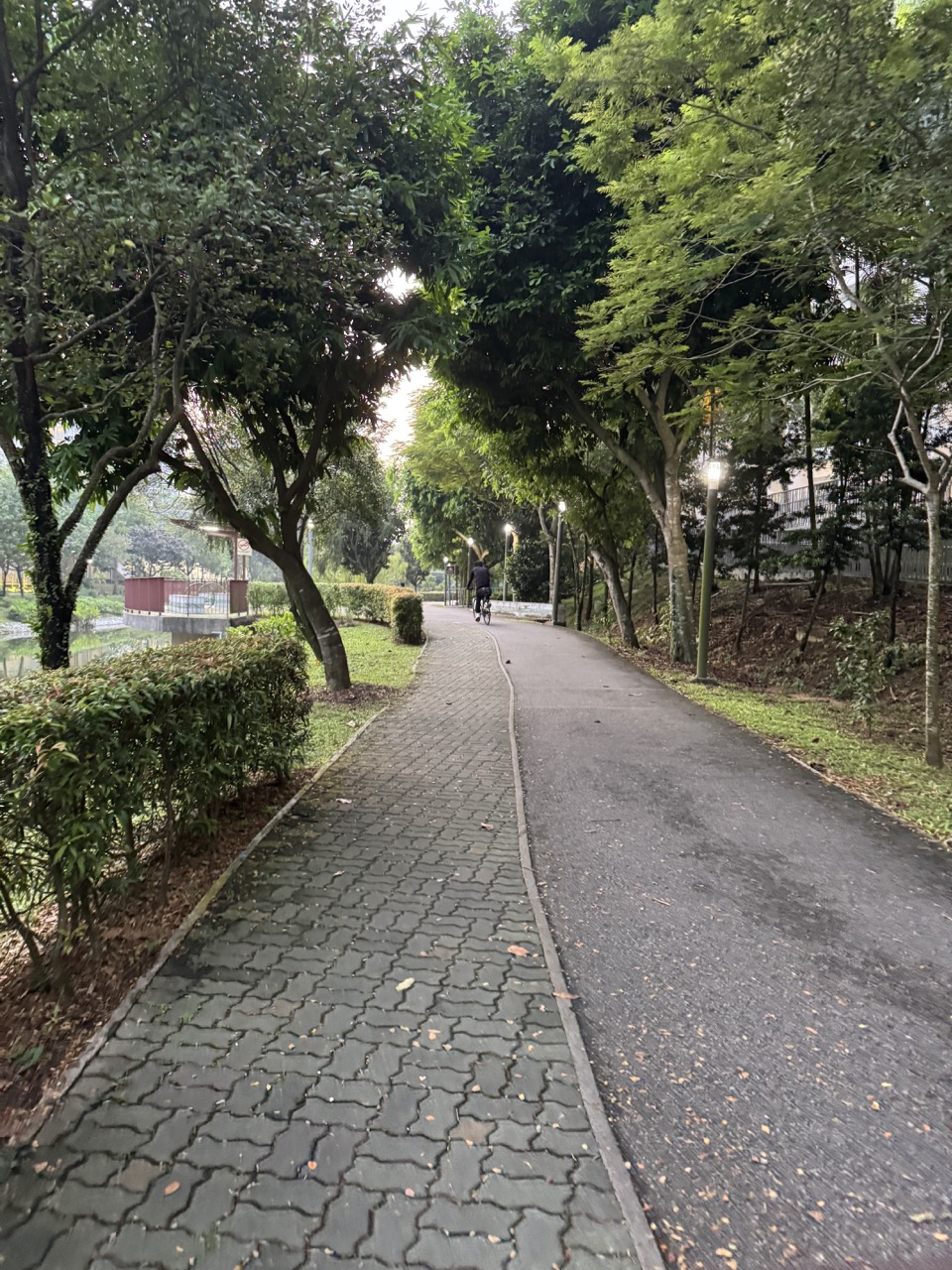
Image note: the featured image shows modern Punggol waterfront scenery, not a documented 1890 road meeting. Historical statements attributed to Tok Sumang are a literary record, not proof of a currently effective land-tax exemption.


