
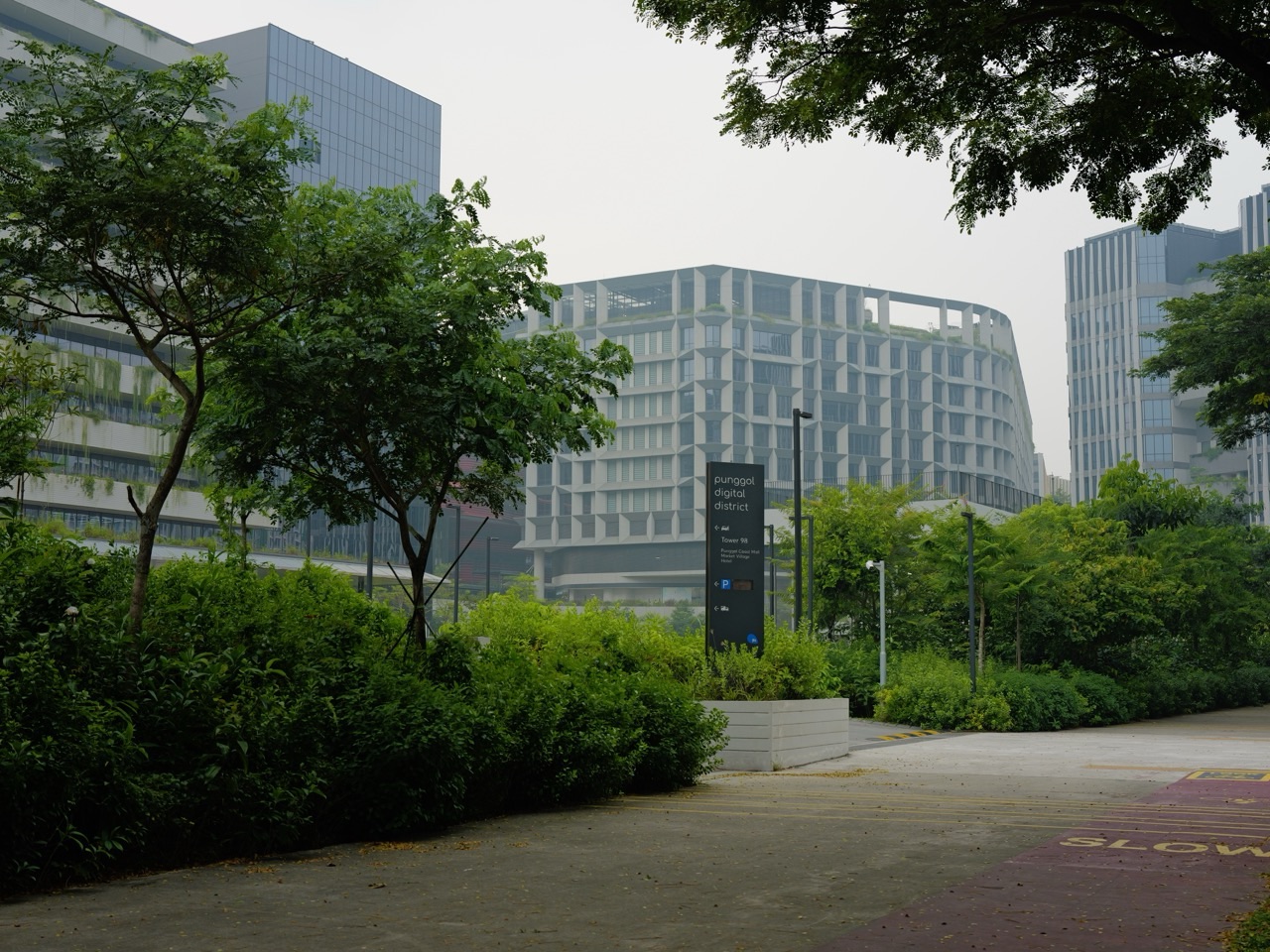
Punggol Digital District’s sustainability approach combines building design, shared infrastructure and digital control. JTC describes passive design that improves light and airflow while reducing solar heat, alongside renewable-energy and energy-management systems. A greener district involves more than planting around buildings.
District cooling supplies chilled water from a central plant to connected buildings through a pipe network. A smart grid manages electricity, including solar generation and battery storage. These are different systems: cooling serves air-conditioning needs, while the grid coordinates electrical supply and demand.
For a parent, student or visitor, the useful questions are what each system does, how it may reduce resource use and what evidence supports a savings claim. A projected reduction is different from a measured result, and district-wide performance cannot be established from a photograph or a comfortable afternoon walk.

Find what you need
Passive design reduces the load · What district cooling does · How solar, batteries and control fit together · Read environmental numbers carefully · Explore and learn responsibly
Passive design reduces the load
JTC’s PDD sustainability page describes using simulations to shape daylight, shading and airflow. These features influence the conditions a building’s mechanical systems need to handle.
As a general building principle, reducing unnecessary heat gain can reduce the cooling demand. A shaded surface receives less direct solar energy, while airflow can improve comfort in suitable spaces. These explanations describe mechanisms; they are not measurements taken during our visit.
When walking around the district, observe shade, planting and the arrangement of open spaces from permitted public areas. Then compare observations with the official explanation. Seeing a feature helps identify it, but does not tell you its annual energy saving.
What district cooling does
JTC’s explanation of ENGIE’s PDD district cooling system describes a central underground plant distributing chilled water to buildings. Central control and storage support the system’s operation.
Think of the network as shared cooling infrastructure. Instead of treating every building as a completely separate cooling problem, the connected development can organise part of the service together. Pumps, pipe routes, controls and maintenance still matter.
The JTC story gives estimated emissions reductions and potential energy savings. Read those with their comparison and operating assumptions. An estimate should not be rewritten as an independently verified result for every occupied building.
How solar, batteries and control fit together
JTC identifies its district smart-grid collaboration with Univers and PacificLight and links it to the Open Digital Platform. The published description includes solar generation, battery storage and adjusting demand across time.
As a general explanation, solar panels generate electricity when sunlight is available. Batteries can store energy for later use, while control systems help coordinate equipment and demand. Storage does not create electricity; it changes when some energy can be used.
Distinguish installed equipment, available capacity and actual output. A panel’s presence does not establish how much electricity it generated on a particular day. Performance needs records over a stated period.
| System | Main question |
|---|---|
| Passive design | How much unwanted heat or lighting demand can be avoided? |
| District cooling | How efficiently is cooling supplied to connected buildings? |
| Solar generation | How much electricity is produced over the measured period? |
| Battery storage | When is energy stored and used? |
| Digital control | How are operating decisions informed by data? |
Read environmental numbers carefully
Ask four questions about a headline saving: what is being measured, compared with what, over which period and at what stage of development? A percentage without its baseline can be difficult to interpret.
A forecast can be useful for planning, but actual operation may differ with occupancy, weather, maintenance and demand. Likewise, a successful system still uses resources. Sustainability is an assessment of impacts and performance, rather than a claim that consumption disappears.
For a school project, label observations, official descriptions and your own interpretation separately. This makes the work easier to check and keeps an interesting idea from becoming an unsupported fact.
Explore and learn responsibly
Use the Punggol Digital District visitor guide for the area and our Open Digital Platform explainer for the data connection.
Keep exploration to accessible visitor spaces. This guide does not promise entry to utility plants, control rooms or rooftops. A useful family learning activity is to identify one visible design feature and one invisible service, then explain how each might affect daily life.
Independent eduKatePunggol guide. Information checked on 11 October 2026. Follow the operator’s current notices and booking instructions.


