
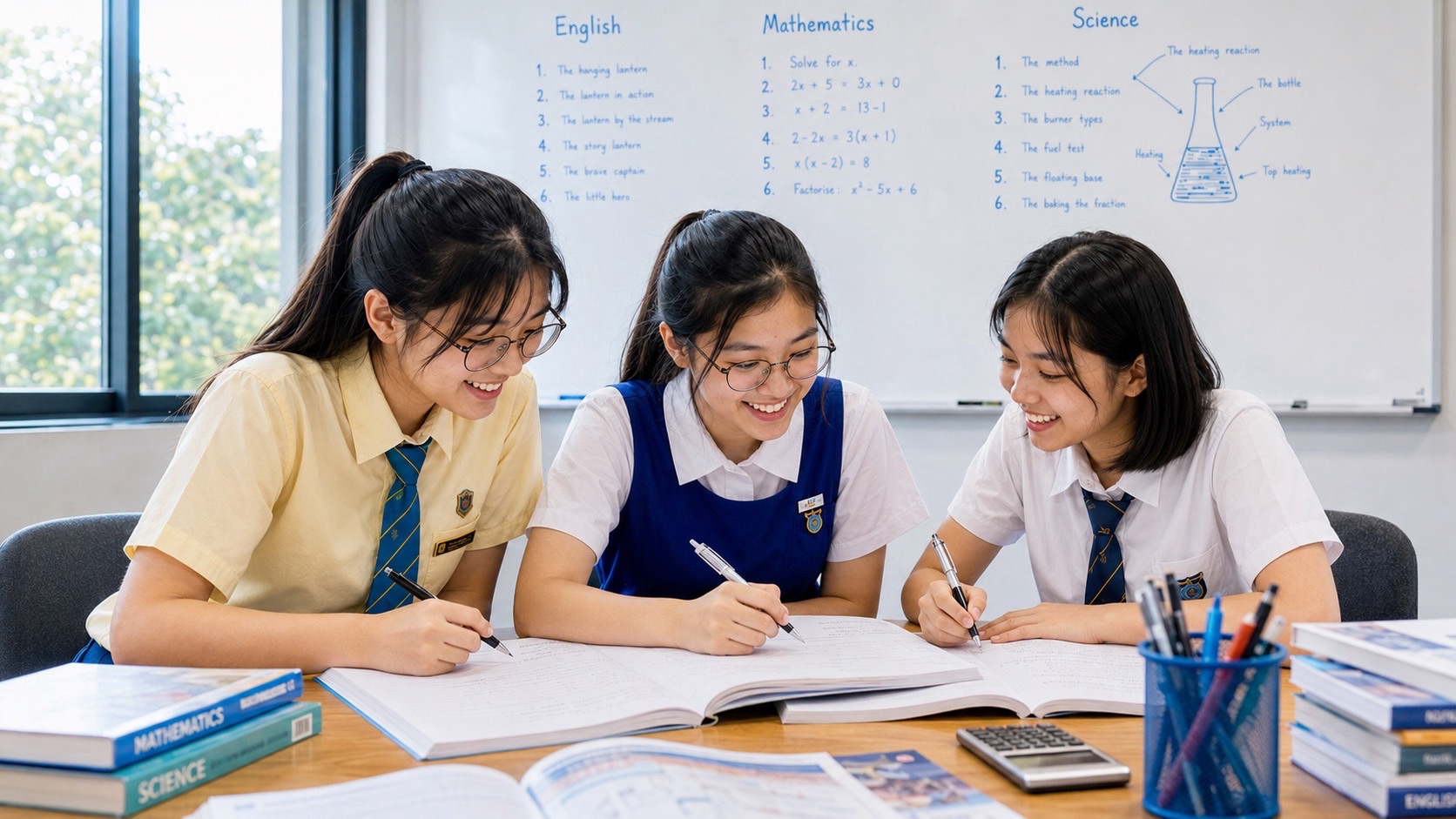
Did you know? A student can remember Biology facts yet struggle to choose which fact explains a new situation. Application questions require a connection between the information given and a biological process. Biology tuition can help by teaching the learner to find that connection and explain it clearly.
Try one marked question. Ask your child to identify what changed, what result needs explaining and which process links the two. If the relevant process is unknown, revisit it. If the process is known but the answer repeats a definition, practise explaining how it operates in this particular situation.
Bring the question, attempted answer and teacher feedback to a prospective tutor. Ask for a lesson that separates factual knowledge, interpretation and explanation, followed by a new context. A useful goal is a relevant explanation completed with fewer prompts.
Find your next step
Why is a correct fact sometimes insufficient? · How can structure and function become an explanation? · What should Biology tuition teach next? · What progress should parents look for?
Why is a correct fact sometimes insufficient?
A definition tells the reader what a process is. An application answer uses the process to explain the given outcome. The learner may write everything they remember because they cannot decide which information matters. Highlighting the question’s change and outcome can help narrow the reasoning.
Ask the child to connect each sentence to the question. Does it identify a relevant feature, explain a mechanism or account for the result? This check helps remove unrelated detail while preserving the explanation.
How can structure and function become an explanation?
Consider a question asking how a root hair cell is suited to absorption. Naming the root hair is a start; explaining its large surface area makes the structure relevant to its function. The learner should connect the feature to increased opportunity for absorption across the cell membrane.
Now ask the child to explain another specialised cell from the school topic. The wording and structure will differ, but the habit remains useful: identify a feature and explain how it supports the function. Avoid copying a root-hair explanation into a context where the mechanism is different.
What should Biology tuition teach next?
The tutor can model a short causal explanation and ask the learner to build one for a changed example. A labelled diagram may help the child organise a process before writing. Feedback should distinguish an inaccurate concept from a missing connection or an answer that ignores the supplied information.
The 2027 G3 Biology syllabus explicitly connects specialised-cell structures to functions and includes movement of substances. Use these learning outcomes to choose appropriate practice. Questions should stay within the learner’s actual course while providing opportunities to apply ideas in different representations.
What progress should parents look for?
Look for increasingly relevant choices and explanations that account for the result rather than list facts. Ask the learner to explain a new example before reviewing the answer. In a 3-pax group, ask how the tutor checks each child’s reasoning before classmates supply a complete response.
Confirm current Biology availability and check the exact subject and examination year. Standalone G3 Biology and Science combinations have separate requirements. Follow school guidance for practical learning as well; a written-answer lesson does not cover every aspect of the course.
Keep exploring
Tuition and syllabus series directory · Why Have Secondary 4 Punggol Biology Tuition | O-Level Biology MCQ and Structured Answers · How tuition works at eduKatePunggol
Official references: SEAB 2027 G3 Biology K325 · SEAB 2027 G3 school-candidate syllabuses.


