
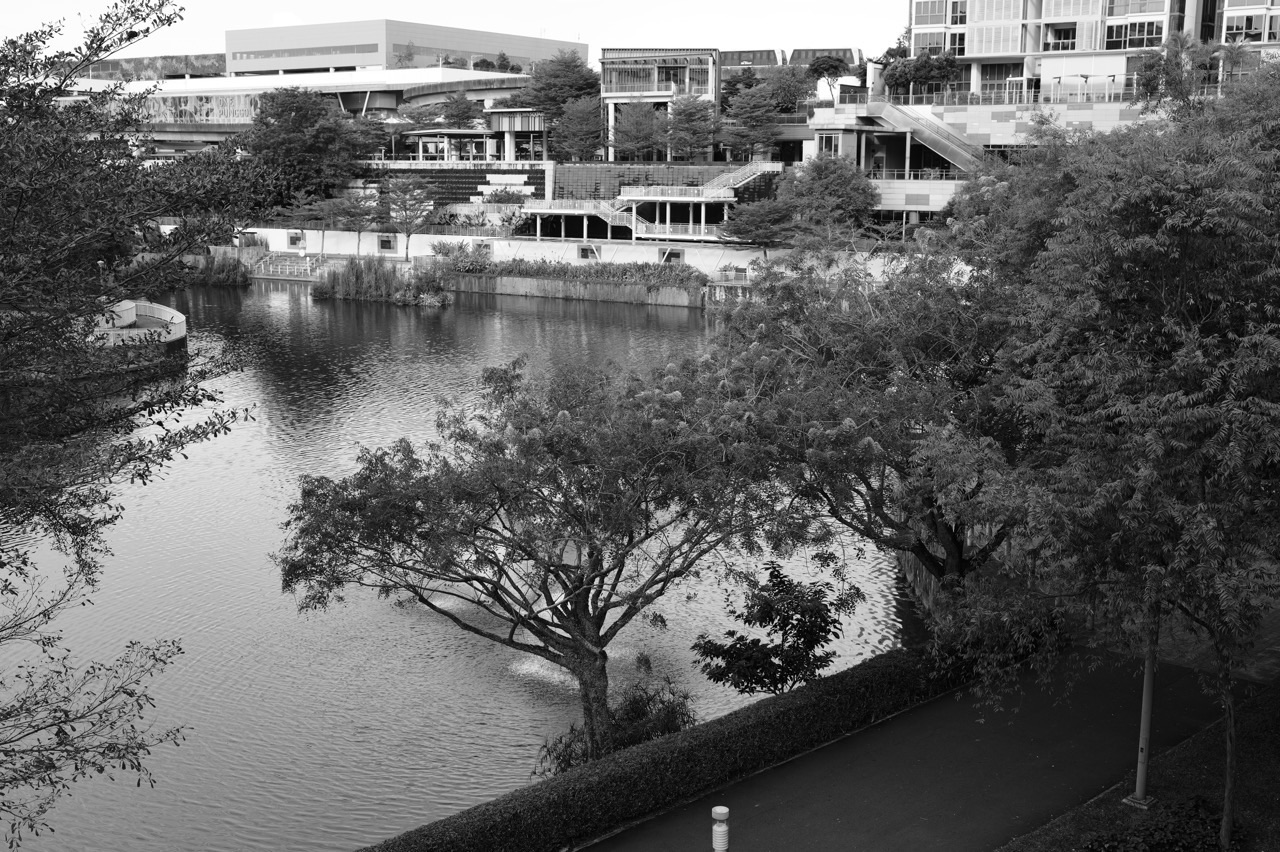
A Secondary 2 student looks at the trees beside Punggol Waterway and makes a confident prediction: “If the weather becomes hotter, every plant here will grow faster.” It is a lively question disguised as a conclusion. Warmth can affect biological processes, but plants also need water, suitable light and many other conditions. Different species respond differently. One step beyond a memorised climate-change paragraph lies the more interesting scientific task: understanding how living systems and their environments actually interact.
Secondary 2 Punggol Biology tuition can be valuable when students need help with climate change, biodiversity, ecosystem conservation, environmental Science, food webs, abiotic factors and Secondary 2 Science structured questions. The MOE G2/G3 Lower Secondary Science syllabus explicitly links ecosystem understanding with environmental conservation and the effects of human activities. The work is generally part of integrated lower-secondary Science, not a separate Pure Biology public examination in Secondary 2. Good tuition checks the learner’s current G1, G2 or G3 pathway and helps turn broad environmental ideas into specific, evidence-based explanations.
This is a useful year for such learning. Students are old enough to notice that environmental decisions involve trade-offs, but are still building the skills needed to read unfamiliar graphs and separate a local observation from a global trend. The aim is neither fear nor a lecture about everything going wrong. It is knowledge, curiosity and the ability to ask which response might actually help.
The first reason to consider tuition
A student may remember the terms global warming, biodiversity and conservation without understanding how they are related. They might claim that one unusually hot afternoon proves long-term climate change, that more individual organisms necessarily means higher biodiversity, or that protecting a habitat always produces immediate increases in every population.
Those answers have a common weakness: the student moves from a familiar word to a conclusion without enough biological reasoning or evidence.
Purposeful tuition can help by identifying which part is missing. Perhaps the learner does not understand a temperature graph. Perhaps they cannot explain predator–prey relationships. Perhaps they confuse the number of individuals with the diversity of species.
The task is to repair one measurable weakness and test it on a changed question. If the student already understands and applies the school content independently, adding tuition may not be necessary.
What MOE expects in lower-secondary ecosystem work
The MOE lower-secondary G2/G3 Science framework includes understanding biotic and abiotic factors, food chains and food webs, interactions among organisms, the survival value of certain traits and the importance of environmental conservation. It also includes considering how human activities and technology affect ecosystems.
Some advanced investigation outcomes, such as collecting environmental data using instruments, are marked optional for G2 in the published syllabus. Schools can organise the topics in different orders across the lower-secondary stage. This article therefore provides a teaching route, not a claim that every Secondary 2 class faces an identical assessment this term.
For G1 students, use the MOE G1 Lower Secondary Science syllabus and the student’s actual school materials. The scope and expected depth are not interchangeable across levels.
A responsible tutor should say which topic is examinable now, which is prerequisite review and which is optional enrichment.
Biodiversity is not just a crowd of animals
Biodiversity concerns the variety of life, considered at more than one scale. It may include genetic diversity, diversity among species and variation among ecosystems. The level of detail expected depends on the learner’s school course.
Imagine two fictional ponds. Pond A contains many individuals of a single fish species. Pond B contains fewer fish overall but several kinds of aquatic organisms and plants. The pond with the larger total count does not automatically have greater biodiversity in every relevant sense.
The student needs to ask what is being compared: number of individuals, number of species, the relative abundance of different species, or some broader ecological measure.
This matters in examination questions because a graph labelled total number of organisms cannot be read as though it necessarily measures number of species.
An original practice question about biodiversity
Question: A simplified survey records 200 organisms from two species in Habitat A, and 150 organisms from six species in Habitat B. A student writes, “Habitat A has higher biodiversity because it contains more organisms.” What is wrong with the reasoning?
Better answer: “The larger total count in Habitat A does not, by itself, mean greater species diversity. The survey reports more species in Habitat B. A fuller assessment would also consider relative abundances, sampling methods and the relevant definition of biodiversity.”
This answer distinguishes two kinds of information: abundance and species richness. It does not pretend that one brief survey measures every aspect of an ecosystem.
For transfer, the tutor can offer another dataset with identical species counts but different distributions among species. The child must explain why even simple biodiversity comparisons need thought.
Biotic and abiotic factors must be kept distinct
Biotic factors involve living components or relationships among living organisms, such as predation, competition and food availability. Abiotic factors are non-living aspects of the environment, such as temperature, light, water availability and soil conditions.
A common pupil error is to classify “dead leaves” automatically as a living organism. Dead organic material originates from living things but is not itself a living organism; it can form part of the ecosystem’s non-living material and be used by decomposers.
Another error is to say that rainfall is a biotic factor because plants need water. The fact that living things respond to rainfall does not change rainfall into a living organism.
A tutor can introduce a Punggol-inspired fictional habitat and ask students to categorise factors, then explain how the factors interact. Classification is useful, but relationships matter more.
The light-and-water problem
Suppose a class finds more small plants in a shaded area than in an exposed open space. Is lower light necessarily the reason?
Not without further evidence. Moisture, plant species, soil, human disturbance and temperature may differ too. A student should identify possible explanations and decide which conditions a fair comparison would need to examine.
The point is not that Science can never reach a conclusion. It is that the conclusion must fit the measurements.
If the pupil says, “Shade helps every plant,” the tutor can ask them to compare photosynthetic needs among different species. The child should learn that a favourable condition is relative to a species and its other environmental requirements.
What climate change means in a Science answer
Climate describes patterns of weather conditions over longer periods and relevant scales. Weather describes shorter-term atmospheric conditions. One unusually warm or rainy day should not be treated as stand-alone proof of a long-term change in climate.
Human-driven climate change is associated with increased greenhouse-gas concentrations from activities including fossil-fuel use and other emissions. Greenhouse gases influence how energy is retained in Earth’s system. The exact mechanism belongs to a wider environmental Science explanation.
For lower-secondary Biology, the practical connection is how changes in temperature, rainfall patterns, sea level or extreme-event conditions may affect habitats and living organisms.
A tutor should distinguish the physical process from the ecological consequence. “Climate change affects biodiversity” is a topic sentence, not yet a complete explanation.
Why hotter weather does not mean every organism thrives
Some biological processes increase in rate with temperature over a suitable range. But organisms have physiological limits, water needs and complex interactions with other species. Temperatures beyond a species’ suitable range can reduce performance or survival.
The student in the opening story overlooked this. Warmer conditions do not guarantee faster plant growth when water availability, respiration, nutrient supply and thermal stress also matter.
An effective explanation names the organism, the relevant environmental change and the process that could be affected. It may discuss different responses by different species rather than assuming one universal direction.
A changed question about an aquatic habitat can test the same logic. The learner should not automatically transfer a land-plant rule to every aquatic organism.
Food webs reveal indirect consequences
A food web contains feeding relationships among organisms. A change in one population may affect others through predation, competition or altered resource availability.
Imagine an invented ecosystem in which birds eat both caterpillars and beetles. A decline in beetles might reduce one food source, but the birds also have another potential food. The actual population response depends on the extent of the change, alternative resources and other factors.
A student who says every bird must die has jumped from a relationship to an unwarranted certainty.
Tuition can teach the child to read the food web, trace more than one possible consequence and explain what additional evidence would improve the prediction. The skill transfers to larger environmental questions.
Adaptations are context-dependent
Organisms differ in their structural and behavioural characteristics. Some traits can be advantageous in certain habitats and less useful in others.
A fictional desert plant might have features that help conserve water. Another plant in a moist environment may have very different characteristics. Neither is universally a “better” organism; their features are relevant to different conditions.
This connects Secondary 2 ecology to the Secondary 1 guide on structural and behavioural adaptations.
The pupil should avoid saying organisms consciously redesign their genes because of the weather. At lower-secondary level, the essential idea is that traits and environmental conditions can affect survival, with deeper evolutionary mechanisms developed later where appropriate.
Conservation is an action with a purpose
Conservation involves protecting, maintaining or managing ecosystems, species and resources in ways that support the living world and its ecological functions.
A child may write, “Conservation is important because nature is good.” The sentiment is understandable, but an examination answer needs a more specific account. Conserving habitats can help protect the organisms and ecological relationships dependent on them; maintaining biodiversity may contribute to ecosystem function and resilience.
A tutor should ask what is being conserved, why it matters and how a proposed action might produce the intended effect.
Not every intervention has the same cost or consequence. Scientific decisions require evidence, careful planning and awareness of the trade-offs faced by people and ecosystems.
What does ecosystem resilience mean?
An ecosystem may be described as resilient when it can withstand or recover from disturbances while maintaining important functions, though the concept has several precise scientific definitions in different contexts.
A pupil should not equate resilience with “nothing ever changes.” A system may experience population fluctuations, habitat changes or altered species composition while some processes continue. A system may also cross thresholds beyond which recovery becomes much harder.
At Secondary 2, keep the idea accessible: ask how habitat connectivity, suitable environmental conditions and ecological relationships could affect the response to disturbance.
Avoid promising that greater biodiversity always guarantees perfect resilience. The actual relationship depends on the ecosystem, type of disturbance and measures involved.
Human activities: benefits and pressures
Human activities influence ecosystems in many ways. Construction, transport, waste generation, resource use and land management can alter habitat conditions. Environmental planning, restoration and conservation can also reduce impacts or support some ecological functions.
In a dense city such as Singapore, students can appreciate why decisions involve more than a simple choice between humans and nature. People need housing, transport, energy and public facilities; ecosystems also require suitable conditions to function.
A good Science answer identifies the specific activity, the environmental change, and the consequence for organisms or habitat function.
It should also avoid claiming that one particular local project has caused a named ecological loss without reliable evidence. Fictional planning scenarios can teach the reasoning safely.
Punggol Waterway: observe before drawing conclusions
The Punggol landscape offers pleasant opportunities for discussing urban nature, water, plants and public spaces. A student may see greenery, insects or birds while travelling through the neighbourhood.
These observations can inspire questions about habitat conditions, but they do not, by themselves, establish a trend in biodiversity or the effects of climate change. One photograph is not a time series; one visit is not a controlled ecological survey.
A simple exercise is to record visible observations, identify possible environmental factors and write one question that could be investigated more carefully.
Always respect public-space rules and avoid collecting or disturbing plants and animals. Thoughtful observation is enough to start a meaningful Science discussion.
Reading a fictional biodiversity table
Consider an invented class exercise measuring the number of plant species recorded at three imaginary sites. Site A has four recorded species, Site B has seven, and Site C has five.
The student can describe that the survey recorded the highest species count at Site B. But they should ask whether the survey effort and sampling methods were comparable before concluding that one habitat truly has higher richness.
If the data include only recorded counts, the answer should not invent details about overall genetic diversity, health or conservation success. Those require more information.
A tutor can extend the table with unequal sampling times and ask why the comparison becomes less reliable. This reveals whether the child understands controls and measurement limitations.
Distinguishing trend, explanation and recommendation
A typical environmental Science question may ask students to describe a trend, explain a possible biological consequence and suggest a management action. These are three different tasks.
For example, a graph may show declining vegetation cover. The pupil can describe the measured decline. A possible consequence is reduced habitat for some organisms, depending on the context. A proposed action could involve protecting or restoring suitable habitat, but its effectiveness would need to be evaluated.
A rushed student often writes the recommendation first because it sounds helpful. A more rigorous answer works from evidence to plausible mechanism and then to action.
This structure is useful in Geography and Social Studies as well as Science, but each subject still has its own assessment conventions.
Beware of the universal solution
Students sometimes assume that planting more trees fixes every environmental issue. Trees can provide shade, habitats and other services, but their value depends on location, species selection, maintenance, water needs and ecological context.
An unsuitable planting scheme can perform poorly or create other problems. Likewise, reducing one source of pollution may help but not remove every ecological pressure.
A tutor should help the child evaluate whether an action addresses the specific mechanism identified in the question. A clear recommendation is matched to the problem, not pulled from a generic list of sustainability slogans.
This is a valuable lesson for young people learning to make informed decisions.
A second invented data-based question
Suppose a fictional stream contains fewer insect larvae after repeated high-temperature periods. A pupil writes, “Heat killed all the insects.”
The measurement may show a decline, but not necessarily complete mortality or a single cause. Temperature could be relevant, while oxygen availability, flow conditions, sampling methods and other factors may also matter.
A more defensible answer states the recorded change and suggests possible links using the information provided. The pupil can identify what additional measurements would distinguish competing explanations.
Good tuition trains the learner to be neither overconfident nor paralysed by uncertainty. Evidence can support carefully bounded conclusions.
Why graphs and numerical language deserve attention
Environmental Biology often involves tables, percentages, time series and comparisons. Students can make conceptual errors simply by overlooking units or confusing absolute and relative change.
A graph showing a reduction from 100 to 80 organisms represents a decrease of 20 individuals, or 20% of the original count. But if sampling effort changed, the measurement may not support a direct population comparison.
The scientific task involves reading the number, understanding how it was obtained and drawing the right conclusion.
A tutor can show a short dataset and ask for one accurate observation, one possible explanation and one limitation. Repeating this habit builds transferable scientific literacy.
The exact weakness matters more than the chapter name
One child may confuse biodiversity with sheer abundance. Another may know the concepts but treat one hot day as climate evidence. A third can explain climate change but cannot interpret a food web after one population declines.
Those students should not receive the same worksheet package simply because the cover says “Secondary 2 Biology.”
A proper diagnostic involves independent attempts, a record of the first failed idea, a targeted explanation and a changed retest. The learner’s ability to use the corrected concept without prompting is the main measure.
If the child improves quickly, tuition can be reduced or discontinued rather than becoming a permanent habit.
How a three-student small group could help
Three students can examine the same invented urban habitat scenario but make different mistakes. One misreads the table, one offers a weak explanation of habitat loss and one jumps straight to an untested conservation recommendation.
A tutor can address each error individually, then ask everyone to write a fresh answer without seeing a model solution. The work becomes personalised through observation and correction, not merely through group size.
The immutable eduKateSG three-student tutorial reference demonstrates the diagnostic principle in Mathematics. That is a pedagogical reference, not confirmation of a specific Secondary 2 Biology class or available timetable in Punggol.
For current programme enquiries, visit the eduKatePunggol tuition hub.
A seven-week learning route
Week 1 — Diagnose: check school scope and independently test biodiversity, food webs and graph reading.
Week 2 — Living and non-living factors: distinguish biotic and abiotic conditions and explain interactions in a habitat.
Week 3 — Biodiversity: compare abundance and species richness using correctly labelled data.
Week 4 — Environmental change: practise distinguishing weather from climate and explaining possible effects on organisms.
Week 5 — Conservation: compare proposed actions with the specific problem, identifying limitations and trade-offs.
Week 6 — Data interpretation: analyse unfamiliar tables and graphs and support claims with measurements.
Week 7 — Independent transfer: retest with a different fictional ecosystem, review errors and decide whether tuition remains useful.
This is an illustrative plan. A school’s topic order, assessment calendar and the student’s actual gaps should determine the lessons.
Does this help the Secondary 3 subject choice?
Potentially, because a student who reasons well about ecosystems may be developing valuable Science habits: interpreting evidence, connecting concepts and communicating explanations accurately.
But success in one ecology chapter does not guarantee placement in Pure Biology or a particular Combined Science combination. Schools consider broader performance, offerings, eligibility and student choices.
The best near-term aim is strong learning in the student’s current integrated Science course. A tutor can help parents understand what is improving without overstating what it predicts about future pathways.
When tuition is unnecessary
If the learner can explain ecosystem relationships, distinguish biodiversity measures and interpret environmental data independently, the family may not need more Science lessons.
A student genuinely interested in nature could gain value from appropriate reading, conversations or respectful outdoor observation. If weak graph skills are the only difficulty, address those directly. If the child’s timetable is overloaded, restoring time to rest and independent study may be a better intervention.
The educational goal is capability that persists beyond a tutor’s presence.
FAQs about Secondary 2 biodiversity tuition
Are biodiversity and climate change relevant to lower-secondary Science?
Yes. The MOE G2/G3 Lower Secondary Science framework addresses ecosystems, conservation, human impacts and climate-change effects. Specific assessment timing depends on school scope.
Is biodiversity the same as total number of organisms?
No. A larger count does not automatically establish greater biodiversity. Species variety and distribution are among the relevant considerations.
Is climate change proved by one very hot day?
No. Climate concerns longer-term patterns. One day of weather should not be treated as stand-alone evidence of a long-term climate trend.
Does every species benefit from warmer conditions?
No. Organisms have different needs and tolerance ranges. Temperature interacts with other biological and environmental factors.
Do food webs guarantee one result when a species declines?
No. A food web models relationships, but responses depend on alternative resources, environmental conditions and other ecological interactions.
Can planting trees solve every conservation problem?
No. The suitability and benefits of an intervention depend on the habitat, species, pressures and implementation.
Can a student learn this through observation at Punggol Waterway?
Thoughtful observation can support questions and curiosity, but a short visit cannot replace appropriate evidence for population or climate claims.
Can tuition guarantee improved Science grades?
No. Useful tuition should show clearer explanations and better independent handling of unfamiliar questions, not promise a particular grade.
The connected eduKate Biology series
Read the Secondary 1 Structural and Behavioural Adaptations guide and Secondary 1 Food Chains, Food Webs and Ecosystems for the biological foundations.
The Secondary 1 Science Experiments and Fair Tests guide builds inquiry skills that transfer to environmental datasets. For the authoritative scope, consult the MOE G2/G3 Lower Secondary Science syllabus.
The eduKatePunggol tuition information page is the appropriate route for discussing a real learner’s needs, rather than assuming a dedicated environmental Biology class is currently running.
The better environmental question
The child by the waterway started with a single rule: hotter means faster growth. A better Biology explanation asks which organism, which conditions, what evidence and what other changes could matter.
Secondary 2 Punggol Biology tuition is worthwhile when it helps the learner build that method. The real achievement is not merely repeating “protect biodiversity.” It is understanding living systems well enough to make thoughtful, evidence-based decisions—and to recognise when further evidence is needed.


