
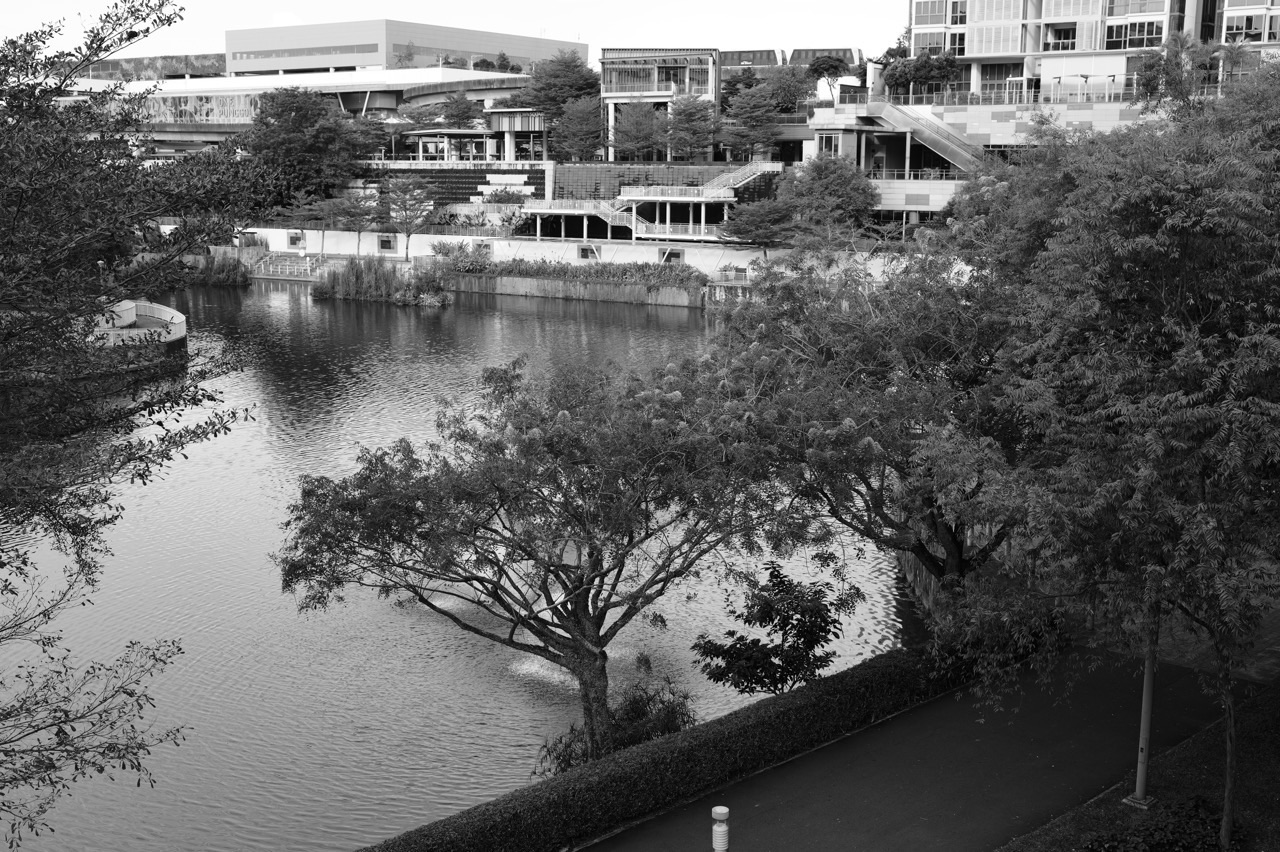
A Secondary 1 student returns from a walk beside Punggol Waterway with a theory. The plants growing in one shady corner look taller than those nearby, so shade must make plants grow faster. It is a perfectly good beginning: the student has noticed something and wants to understand it. The trouble begins only when an interesting possibility is mistaken for a proven conclusion. Perhaps the plants are different species. Perhaps one patch gets more water. Perhaps height is not the best measure of growth. Biology becomes much more exciting when a child can ask what would actually settle the question.
Secondary 1 Punggol Biology tuition is useful when it helps students master scientific inquiry, fair tests, independent and dependent variables, life-science experiments, observations, food webs and Lower Secondary Science answering skills. In mainstream Singapore schools, Biology-related concepts generally sit inside integrated Lower Secondary Science, rather than a separate Secondary 1 Pure Biology examination. Effective support therefore builds on Primary Science while respecting the student’s actual G1, G2 or G3 curriculum, current school topics and readiness. The aim is to turn curiosity about living things into careful, testable explanations.
There is no need to turn a thirteen-year-old into a laboratory technician overnight. What matters is acquiring a reliable habit of thinking: ask a sensible question, consider alternative explanations, make observations honestly, and decide whether the evidence is strong enough. These are skills that make Biology easier, other Science subjects more understandable, and everyday claims a little less intimidating.
Why fair-test skills matter before harder Biology chapters
Parents often search for Secondary 1 Science tuition in Punggol because a child can memorise a chapter and still lose marks on unfamiliar questions. The student knows what photosynthesis is, but cannot say which factor a plant investigation changed. They know the parts of a cell, but cannot distinguish what a microscope image shows from what the textbook model suggests. They know that producers and consumers interact, but make absolute predictions from a simplified food web.
Those errors may share a common source: a weak connection between concepts and evidence. A Biology-focused lesson is valuable when it repairs that connection. It need not rely on longer homework or prematurely teach an upper-secondary syllabus.
One poorly answered experiment question does not prove that tuition is necessary. Check whether the problem recurs across schoolwork and independent attempts. If the child is already learning successfully and has a healthy workload, ordinary school support, thoughtful reading and observations outdoors may be enough.
The curriculum map: Biology within Lower Secondary Science
Singapore’s MOE G2/G3 Lower Secondary Science syllabus places strong emphasis on scientific inquiry, models, experimental evidence and meaningful applications. It includes Biology-relevant topics such as cells, interactions within ecosystems, digestion and transport in living things. The MOE G1 Lower Secondary Science syllabus provides a differently scoped, accessible route.
These documents govern the lower-secondary stage; the exact order of topics varies by school. A fair-test exercise involving plants can teach a useful cross-Science skill even when the student’s current classroom topic is not plant biology. It should not be described as a compulsory stand-alone Secondary 1 Biology practical examination.
An appropriate tutor asks to see the actual school worksheets before planning a sequence. The correct next step for a pupil struggling with graph labels is different from the step for a pupil who cannot identify an experimental control.
Scientific inquiry starts with the difference between seeing and explaining
Return to the shady plants near the waterway. The child has observed that plants in one area appear taller. That is a description, subject to how height was measured. Saying they are taller because of the shade is an explanation that requires additional evidence.
A hypothesis is a proposed explanation or relationship that can be investigated appropriately. It is neither an established conclusion nor merely any random guess. One possible hypothesis is that light conditions affect the growth of a particular plant species when other relevant conditions are held comparable.
A good teacher asks which measurements and comparisons would test it. The child learns that being wrong about an initial hypothesis is not the same as failing at Science. Revising an explanation in response to good evidence is part of the scientific process.
The aim is not endless scepticism. It is confidence grounded in what the evidence supports.
Independent variable, dependent variable and controls
An independent variable is the factor deliberately changed in an investigation. A dependent variable is the outcome measured. Controlled variables are other conditions kept as comparable as reasonably possible so that the intended relationship can be investigated.
Imagine an approved classroom investigation using seedlings of the same species grown under different light exposures. Light exposure could be the independent variable. A clearly defined growth measure, such as increase in plant height over a specified period, could be the dependent variable. Water supply, growing medium, initial size, temperature and other relevant conditions might need attention as controls.
The challenge is not simply listing those three categories. A student should explain why a control matters. If one set of seedlings also receives more water, the observed growth difference cannot confidently be attributed to light alone.
This reasoning is a foundation for later Chemistry, Physics and upper-secondary Biology. It travels across subjects because experiments share a discipline of comparison.
A worked fair-test question with a misleading conclusion
Original practice question: A class places one seedling in strong light with plenty of water and another in shade with very little water. After two weeks, the first plant is taller. A student concludes, “Light always makes seedlings grow faster.”
Weak answer: “Yes, because light is needed for photosynthesis.”
Better answer: “The investigation changed both light exposure and water supply. Because two relevant conditions differed, the result does not isolate the effect of light. It also does not justify the word ‘always’. A better comparison would keep water and other important conditions comparable while changing the intended light condition.”
This answer does not deny that light affects photosynthesis. It distinguishes a scientifically reasonable principle from what this particular experiment demonstrated.
To check learning, the tutor can replace seedlings with a yeast or enzyme dataset, keeping the question about variables and controls. If the student still identifies the problem independently, the fair-test concept has transferred.
Measuring growth is more complicated than saying “looks healthier”
Students can be surprisingly inventive about what constitutes growth. A taller plant could have fewer leaves. A leafier plant could be shorter. A plant could change in fresh mass partly because of water content. Each measure describes a different aspect.
Before an investigation begins, define the dependent variable clearly. If the task concerns height, choose a consistent method of measuring height and a defined time interval. If it concerns number of leaves, specify what counts as a leaf. If it concerns mass, be aware of the meaning and limitations of the measurement.
A tutor can ask the child to choose an appropriate measure for the actual question and justify it. This helps students avoid vague claims that one specimen is “better” or “healthier” without a defined criterion.
No elaborate equipment is necessary for the conceptual lesson. A prepared photograph sequence or fictional data table can support accurate reasoning.
Why repeated measurements matter
One measurement can be informative, but natural variation and measurement error can make a single observation unreliable. Multiple suitable replicates and consistent procedures can improve confidence in a pattern, though they do not guarantee perfect results.
If three fictional plants in one condition grow by different amounts, the difference is not automatically evidence that the experiment has failed. Biological organisms vary. The pupil should record observations honestly and consider whether the design permits a meaningful comparison.
A student who replaces an inconvenient measurement with a guessed number has missed an important scientific value: integrity. Data must not be altered to fit a favoured explanation.
The MOE lower-secondary Science framework emphasises developing the practices and attitudes of Science, not only factual recall. Honest reporting is part of being a competent learner.
Invented dataset: can you describe before you explain?
Consider these fictional teaching values for average change in plant height across three comparable observations.
- Condition A, lower measured light exposure: 1.2 cm average increase.
- Condition B, moderate measured light exposure: 2.0 cm average increase.
- Condition C, higher measured light exposure: 2.3 cm average increase.
The student can accurately describe the numbers: the recorded average height increase was greatest under Condition C and smallest under Condition A. They may also note that the difference between Conditions B and C was smaller than the difference between A and B.
What should they avoid? Claiming that all plants in the world necessarily grow taller as light exposure increases, or that light alone caused the measured pattern without examining the experimental controls and biological context.
The tutor can then ask what additional evidence would improve confidence, what a longer study might reveal and whether height is the best outcome measure. One small table becomes a lesson in observation, interpretation and cautious generalisation.
The graph question behind a surprisingly common mark loss
A learner may interpret a rising line as “the plant is healthy” without reading the axes. A graph can instead be showing temperature, mass, volume of gas, number of organisms or a rate. The shape alone does not identify the biological process.
Teach students to read the measured quantity, its units, the time or treatment axis, and the relevant conditions before stating a trend. Then the child should locate any numbers used to support a comparison.
A clear statement might be: “Between day two and day four, the measured mean height rose by the amount shown in the graph.” An explanation of why that occurred is a separate step, which requires the stated experimental context and a suitable biological mechanism.
Graph reading is therefore not a small extra skill. It is the point where Mathematics, language and scientific evidence meet.
Food webs make a useful second investigation
A student who understands the idea of a fair comparison can use it when studying ecosystems. Suppose a fictional food web shows that birds eat beetles and caterpillars. An observed decline in beetles could affect the birds, but the result is not predetermined if alternative prey are available.
The learner should distinguish what the food web represents from what a particular observation proves. A food-web arrow conventionally shows the direction of energy transfer from food to consumer. A diagram omits numerous environmental influences and temporal changes.
A tutor may offer two hypothetical habitats and ask what should be measured before attributing bird abundance to insect numbers. Students can compare sampling effort, observation duration, habitat conditions and the limitations of a short visit.
This reinforces the same inquiry habit introduced by the seedlings: do not confuse an interesting relationship with a complete causal explanation.
Biological classification and the importance of defining categories
A child looking at several leaves may group them by colour, size or shape. These are genuine observations, but a simple visual grouping is not necessarily a scientifically accurate classification of species.
A teacher can introduce the idea that biological classification uses defined characteristics and accepted scientific frameworks. At the lower-secondary level, the important task is often to recognise what feature is being used to group examples and whether the categories make sense for the question.
A small classification key with invented organisms can be a safe enrichment task, provided it is presented as an exercise rather than an official examination topic for every school. Ask whether each step distinguishes the alternatives clearly.
This supports precise language, controlled comparison and attention to evidence. It also allows curious students to enjoy natural variation without inventing unsupported identifications of local wildlife.
Scientific drawing: show the observation, not the wish
If a child draws a leaf or prepared cell image, they may be tempted to add the features they know ought to be there. But a labelled observation should distinguish visible structures from textbook background knowledge.
A tidy scientific drawing needs clear lines and appropriate labels, subject to the school’s conventions. More importantly, it should not claim to reveal what the instrument or photograph cannot show.
One productive lesson compares a prepared image with a simplified model. Ask which features can be identified from the actual observation, which are model elements and which would require different equipment or preparation.
The goal is the same as in a fair test: communicate what is supported by the evidence and be clear about limitations.
The five types of errors a tutor should distinguish
Missing concept: the child does not know what an independent variable means.
Broken connection: the student can define a variable but cannot explain why controls matter in the experiment.
Misleading interpretation: the child reads the table correctly yet infers an unsupported universal causal rule.
Language problem: the learner has a reasonable scientific idea but uses “prove,” “always” or “healthy” in an imprecise way.
Independence problem: the student succeeds with hints but cannot begin an unseen question alone.
These problems need different solutions. A tutor should identify the earliest failed step, model an appropriate correction and give another task with changed details. More difficult practice is not automatically more useful.
An improvement in independent reasoning can be observed before the next school examination mark arrives.
How a three-student tutorial could approach fair tests
Imagine three pupils answering the same question about plant growth. One names the independent and dependent variables correctly but overlooks water as a control. Another lists good controls without explaining why they matter. The third understands the experiment but misreads the height graph.
In a focused small group, each learner first writes an independent response. The tutor then corrects the specific gap, not the whole chapter for everyone. The first student revises the comparison, the second explains the role of controls and the third practises reading axes and units.
Afterwards, every student completes a changed question. The tutor checks whether the correction travels with the child to the new example.
The immutable eduKateSG small-group tutorial reference describes this close diagnosis-and-correction principle through a Mathematics example. It is a pedagogical reference, not a confirmation of a current Punggol Biology class or particular available seat. Families can ask about arrangements through the eduKatePunggol tuition hub.
A seven-week Science inquiry learning route
Week 1: Establish the baseline. Review the current school topic, actual syllabus level and one unseen fair-test question. Separate language difficulties from experimental reasoning problems.
Week 2: Name the variables. Identify manipulated, measured and controlled factors in two appropriate living-things examples. Explain the reason for each control.
Week 3: Record real evidence carefully. Interpret photographs, prepared tables, simple observations and biological drawings. Distinguish measurements from interpretations.
Week 4: Explain trends. Read axes, units, comparisons and simple variation without treating one pattern as an unquestionable cause.
Week 5: Challenge the hypothesis. Use changed conditions and alternative explanations to practise how scientists revise ideas when evidence is incomplete.
Week 6: Apply the skill elsewhere. Move from plant growth to a food-web or enzyme data scenario at the depth appropriate to the current course.
Week 7: Independent retest. Compare the child’s unaided work on new tasks against the baseline, and decide whether the specific problem has been repaired.
This is an illustrative route, not an official term plan or a promised eduKate schedule. The school may teach a different topic sequence. The tutor should adapt the content while preserving the reasoning method.
A sensible outdoor exercise for a Punggol family
A short walk beside a public park can provide inspiration, but nature does not owe us a controlled experiment. The child could write three things they noticed, one possible explanation and one type of evidence that would help test the idea.
For example, record that two locations appear to have different vegetation. Ask what else might differ besides light. Could moisture, soil condition, species identity or maintenance influence the appearance? Do not present this as a measured conclusion from a casual stroll.
Do not capture, collect, damage or disturb living organisms or habitats. Public areas and wildlife should be treated respectfully. There is no need to conduct unsupervised experiments with chemicals, biological samples or risky equipment.
A curious conversation can support classroom learning without turning the weekend into an examination.
When tuition is useful, and when it is not
Consider targeted tuition when a student repeatedly cannot design a fair comparison, confuses observations with explanations, guesses from graphs or is unable to answer unfamiliar Science questions after ordinary school feedback.
But if school learning is sound, the child enjoys exploring ideas and can independently explain what a fair test requires, another weekly lesson may not add value. The alternative may be reading, normal revision and time for rest.
Likewise, a child with serious difficulties in mathematical axes or scientific English might need a targeted cross-subject intervention rather than more Biology facts. Diagnosis should determine the support.
Progress should be judged using different but comparably demanding unseen questions. A rehearsed answer cannot demonstrate transfer on its own.
FAQ: Secondary 1 Biology experiments and tuition
Is there a separate Secondary 1 Biology practical examination?
Usually not as a national stand-alone Pure Biology subject in mainstream schools. Biology concepts and inquiry skills are taught within lower-secondary Science, with school assessments depending on level and programme.
What is the difference between independent and dependent variables?
The independent variable is deliberately changed, while the dependent variable is the measured outcome. Other relevant conditions should be kept reasonably comparable in a fair test.
Why do controls matter in Science experiments?
Controls help isolate the effect of the intended changed factor. Without them, other differences may explain an observed result.
Does a hypothesis have to be correct?
No. A hypothesis is a proposed testable idea. Evidence can support, challenge or lead to refinement of it.
Is drawing a graph enough to explain an experiment?
No. The graph displays measurements or patterns; biological interpretation requires reasoning about the setup, controls and relevant processes.
Can we run plant investigations at home?
Simple, safe observations can be valuable with appropriate supervision. Avoid disrupting natural habitats or using risky substances or tools. A prepared dataset can teach the reasoning just as well.
Do good marks mean Science tuition is unnecessary?
Marks are useful evidence but not the only evidence. If the learner can reason accurately and independently in unfamiliar contexts and is coping well, tuition may be unnecessary.
Can a small group guarantee better examination results?
No. A small group can permit close feedback, but results depend on teaching quality, the learner’s starting point and sustained independent progress. No responsible tutor can promise a specific grade.
Continue through eduKate’s Punggol Biology progression
For connected Secondary 1 reading, see Microscope Skills and Cell Diagrams, Food Chains, Food Webs and Ecosystems and Lower Secondary Science and Cell Biology.
For deeper inquiry and graph work, Biology Data-Based Questions and Graph Interpretation explains how to use evidence at later levels. The MOE G2/G3 Lower Secondary Science syllabus and G1 syllabus give the official scope.
For enquiries about a particular learner, consult eduKatePunggol tuition information. An article explains a teaching approach; it does not establish that a named class is running or places are available.
The purpose of a good experiment is a better explanation
The child at Punggol Waterway began with a guess about shade and plant growth. That guess was not the problem. The opportunity was learning how to ask what else could matter, what should be measured, and what conclusions an observation can support.
That is a compelling reason for Secondary 1 Biology-focused tuition when a real learning gap exists. It turns memorised Science into an evidence-based way of thinking. The best outcome is a student who can ask a better question—and knows how to begin testing the answer without someone doing the thinking for them.


