
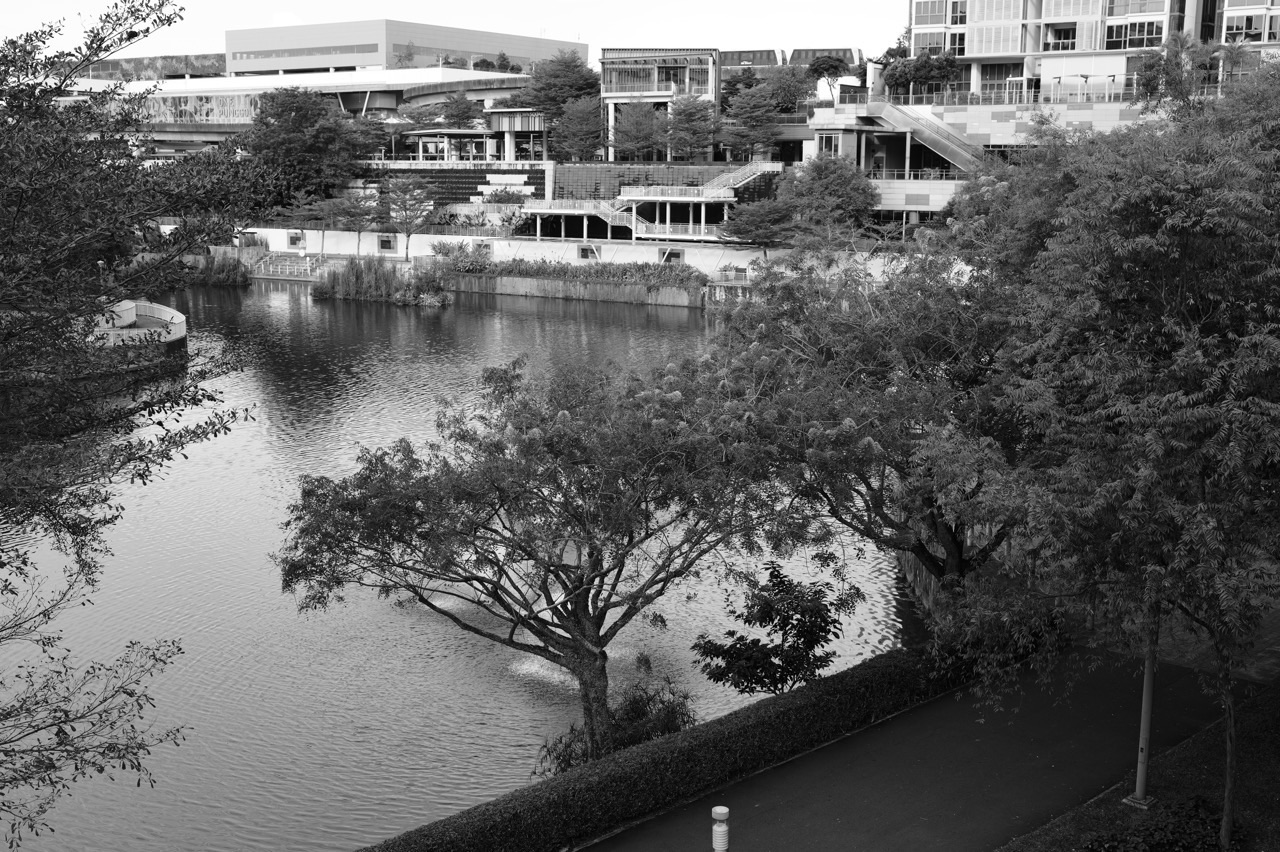
On a walk along Punggol Waterway, a child spots a small bird landing near a patch of grass and announces, with pleasing certainty, “That bird must eat the insects here.” Maybe it does. Maybe it has landed to rest. Maybe it has been looking for seeds. The important part is not to take the delight out of the observation. It is to preserve the delight while introducing a new question: How could we know?
That is the heart of Secondary 1 Punggol Biology tuition when the focus is food chains, food webs, ecosystems, biodiversity and lower-secondary Science. Children moving from PSLE Science into Secondary 1 often remember producers and consumers, but the new challenge is to distinguish an observation from a hypothesis, read the direction of energy transfer correctly, understand interactions among living and non-living factors, and write evidence-based explanations. In Singapore’s mainstream lower-secondary curriculum, Biology-related topics normally belong to integrated Science, so good tuition must follow the learner’s current G1, G2 or G3 course rather than invent a separate compulsory “Sec 1 Pure Biology” examination.
There is an encouraging reason to study ecology at thirteen. It teaches children that a neat diagram can be useful without telling the whole story. The natural world has relationships, uncertainty, competing explanations and consequences. A careful tutorial can turn these complexities into a way of thinking that improves Science answers and makes ordinary outdoor life more interesting.
Why ecology is a particularly useful place to begin
Parents searching for Sec 1 Science tuition in Punggol, lower secondary Biology tuition, or food web and ecosystem notes often describe the same difficulty. Their children remember the words yet cannot explain what the arrows, relationships and variables mean in a question they have not seen before.
An ecology question might ask what could happen if one population declines. The student confidently writes that another population “will definitely increase.” That confidence may come from a single memorised food chain. But a food web can include alternative food sources, competition and responses that are not immediate. The student needs to make a qualified prediction, not a blanket claim.
This is where purposeful tuition can help. The goal is to find the exact step that fails: identifying organisms, reading arrows, understanding transfer of energy, interpreting data or forming a proportionate conclusion. Then the tutor repairs that step and checks whether the student can apply it to a different ecosystem.
If the child already understands the concept, enjoys school Science and works independently, there is no automatic reason to add tuition. A walk, a nature book and an honest conversation about evidence may be more useful than extra worksheets.
First, get the school syllabus right
Singapore’s MOE G2/G3 Lower Secondary Science syllabus includes Interactions within Ecosystems as one of the thematic topics, alongside cell models, scientific endeavour and living systems. The MOE G1 Lower Secondary Science syllabus should be checked separately for its intended scope.
These documents describe a lower-secondary learning journey; they do not require every school to teach ecology during the same Secondary 1 month. The student’s school worksheets, subject level and teacher instructions should determine the immediate tuition content. The examples below are a teaching route that may be adjusted accordingly.
The crucial distinction is that “Secondary 1 Biology tuition” generally means Biology-focused support within integrated Secondary Science. A tutor should be able to explain that plainly. Upper-secondary Pure Biology and Combined Science belong to later decisions and different formal syllabuses.
A producer is more than the first box in a chain
Imagine a simple model with grass, a plant-eating insect, a small insect-eating bird and a predator of that bird. We can write a hypothetical chain:
Grass → caterpillar → insect-eating bird → snake
In this model, the arrows show the direction of energy transfer as one organism is eaten by another. They do not mean the grass is chasing the caterpillar or that the caterpillar is chasing the bird. The chain is deliberately simplified: the bird may eat other foods and the snake may have other prey.
The grass is a producer because green plants can make organic substances through photosynthesis. The caterpillar and bird are consumers because they obtain organic substances by consuming other organisms. These names describe ecological roles in a model, not a ranking of the organisms’ worth.
Ask a student to redraw the same chain and explain the meaning of one arrow in a complete sentence. Then remove the labels and present a different group of hypothetical organisms. If the pupil can identify the roles and direction of transfer correctly, they have learned a concept. If they can only repeat the original example, the concept is still tied to its picture.
The arrow problem: tiny mark, important meaning
A student who reverses food-chain arrows is often making a deeper mistake than a drawing error. They may have confused “what eats what” with “where energy goes.” A useful corrective exercise has three stages.
First, write a sentence: “The caterpillar eats grass.” Second, identify where the caterpillar obtains chemical energy in this model. Third, draw the arrow from grass to caterpillar. The arrow now has a reason.
Next, ask a deliberately awkward question: “If a caterpillar eats the grass, shouldn’t the arrow point from caterpillar to grass because the caterpillar is doing the eating?” The student should explain why the energy-transfer convention still points from the food source to the consumer.
This kind of counterexample is valuable because it reveals whether the pupil understands the meaning of a convention or only remembers which way the textbook’s arrow faced.
From food chain to food web: biology becomes a network
A food chain is a selected pathway. A food web shows several connected feeding relationships. Real ecosystems rarely work like isolated chains, because many organisms can consume more than one type of food and be eaten by multiple predators.
Suppose a hypothetical habitat contains grasses, grasshoppers, caterpillars, frogs, birds and snakes. Grasshoppers and caterpillars feed on plants; frogs and some birds feed on insects; some snakes feed on frogs or birds. Different arrows become possible, subject to the exact model provided.
If the number of grasshoppers falls, what happens to frogs? A student may initially predict a decline because one potential food source becomes less available. But the answer might depend on whether the frogs can eat alternative prey, how strongly the populations compete, whether other environmental conditions have changed and how long we observe the system. The scientifically responsible prediction reflects the information supplied.
That is a powerful lesson in lower-secondary Science: a plausible consequence is not the same thing as a guaranteed consequence. Tutors can teach how to use words such as “may,” “likely,” and “under the stated conditions” without making the answer vague.
Worked question: a food web with two competing explanations
Question: In an invented food web, small birds feed on both beetles and caterpillars. Frogs also feed on beetles. A temporary decline in beetles is observed. A classmate says the number of birds must immediately fall. Is that conclusion justified?
Weak answer: “Yes, because birds eat beetles.”
Stronger answer: “A decline in beetles could reduce one food source for the birds, but the food web shows that the birds also feed on caterpillars. The question does not give enough evidence to conclude that the bird population must immediately fall. Other food supplies, population changes and time would need to be considered.”
The stronger answer is not necessarily better because it is longer. It identifies the relevant evidence, recognises an alternative pathway and limits the claim to what is justified.
The next diagnostic changes the organism names and includes a new predator. Does the pupil still know how to reason from the food web, or do they merely remember that birds can eat caterpillars? Transfer is the measure that matters.
Decomposers: the organisms children forget
Many learners can identify producers and consumers yet struggle to explain the role of decomposers. Bacteria and fungi may break down dead organic matter and waste products, releasing inorganic nutrients that can be reused by other living organisms in ecosystems.
Care is needed here. Energy flows through ecosystems and is dissipated, particularly as heat; matter and nutrients can be recycled. Saying “all the energy is recycled by decomposers” is not a scientifically accurate summary. This distinction becomes increasingly important when pupils progress to upper-secondary Biology.
A useful home question is: “When a fallen leaf decomposes, what happens to the material, and where could some of its nutrients go?” The child should not answer with a vague “it disappears.” An explanation links the action of decomposers with the movement of material through the environment.
For school-level questions, use the terminology and depth required by the student’s actual syllabus. The aim is to make the mechanism intelligible, not overwhelm a thirteen-year-old with advanced biochemical cycles.
Living things interact with non-living conditions
An ecosystem includes organisms, relationships among them and interactions with the non-living environment. Light, temperature, water availability, dissolved oxygen and suitable habitat conditions can all influence which organisms thrive in particular places.
A Punggol parent might point to a shaded and a sunny patch of vegetation and ask whether all the differences are caused by sunlight. The correct response is not to invent a dramatic claim. Moisture, soil, exposure, human activity and other conditions could matter, too. A student can propose a hypothesis, identify what evidence would be relevant and recognise that a single observation does not settle the question.
This moves ecology from a vocabulary exercise into scientific inquiry. Biology becomes connected to measuring, comparing, recording and revising explanations in the light of evidence.
Punggol Waterway as a field notebook, not a laboratory
The neighbourhood offers public spaces where families can practise attention and curiosity. A child may notice different plants, birds, insects and water conditions during an ordinary walk. These observations can inspire Science questions without requiring any claim that a particular species, population or ecological relationship is definitely present at that location.
Try a short three-column field notebook:
- Observed: what can actually be seen, heard or counted, with the location and approximate conditions.
- Possible explanation: a careful idea that could account for the observation but is not yet established.
- Next evidence: something that would help distinguish this explanation from an alternative.
For example: “Two birds visited a flowering bush during our short observation.” The possible explanation could be that the bush provides a food resource, but a photograph alone might not reveal what the birds were doing. A longer, non-disruptive observation or an appropriate reliable field guide might help.
Do not touch nests, feed wildlife, remove plants, capture organisms or enter restricted habitat areas for an assignment. Respect the environment and public-space rules. A child can learn a great deal by noticing carefully and accepting uncertainty.
What happens when humans change a habitat?
Lower-secondary ecology can open a thoughtful conversation about environmental decisions without turning every answer into a slogan. Changes in habitat area, water quality, introduced species or human disturbance can affect populations and interactions, but the exact effect depends on the organisms and conditions involved.
A tutor might use a simplified dataset showing changes in a hypothetical pond after a disturbance. The task is to describe the trend, identify possible relevant factors and propose what further measurements would strengthen a conclusion. It is not to announce a single cause merely because two trends happened together.
The distinction between correlation and causation, even when taught in accessible language, protects students from weak answers. “The fish population declined after the temperature rose” is an observation about timing; whether temperature caused the decline needs evidence and biological reasoning.
The data task that often reveals the true learning gap
Suppose students count insects in two different imaginary habitats on three mornings. One set of counts is consistently higher. A student writes, “Habitat A is better for insects.”
That conclusion may be too broad. Which insect species? How were counts collected? Were conditions, sampling duration and detection methods similar? Could temperature or weather differ? Does a higher count by itself establish that the habitat is “better,” and in what sense?
The tutor can begin with a more defensible statement: “Under the sampling method used, more insects were counted in Habitat A across the three mornings.” The student can then develop a possible explanation and identify what additional evidence would help.
This is precisely the kind of reasoning that also supports Chemistry and Physics experiments. The Biology content makes the context vivid, but the underlying skill is scientific honesty.
Five ecology errors that are worth diagnosing directly
Error 1: A food-chain arrow means “eats.” Correct it by identifying the direction of energy transfer.
Error 2: One population changing guarantees exactly one outcome. Correct it by reading alternative relationships and recognising limitations.
Error 3: Producers obtain energy by eating soil nutrients. Correct it by distinguishing energy from light and inorganic materials required for growth.
Error 4: Decomposers recycle all energy. Correct it by distinguishing cycling of matter from energy flow and dissipation.
Error 5: A diagram explains the entire habitat. Correct it by recognising that a model omits organisms, time, environmental conditions and uncertainty.
A careful diagnostic does not merely tick these off. It asks the student to explain the faulty idea and then construct a better answer in a new example. The tutor should watch for a recurring mechanism rather than assume every wrong answer arises from carelessness.
Why worksheets alone can fail
A pupil can complete ten matching exercises about producers and consumers and still be unable to reason about a new food web. The worksheet may have rewarded recognition rather than explanation. This is not a criticism of all practice: retrieval and repetition are useful when they build a specific capability.
The sequence matters. First, confirm what the child understands. Then introduce one carefully chosen problem, let them make an independent attempt, explain the missing principle, practise a changed version and check again after a delay. Teach, test, transfer is more helpful than simply show, copy, repeat.
The immutable eduKateSG three-student tutorial reference offers a clear example of diagnosis, guided correction and close attention in a Mathematics setting. Here it serves as a teaching-method reference, not a claim that an identical Biology course or timetable is operating in Punggol. Class arrangements and availability must be verified separately.
An example of a small-group ecology lesson
Imagine three learners with three different difficulties. One reverses arrows; another understands the food web but makes absolute population predictions; the third can explain food chains but struggles to write concise answers.
A tutor can give all three the same short unfamiliar food web and require an independent first response. The first learner receives an energy-transfer clarification, the second receives a counterexample with alternative prey, and the third practises a claim–evidence–reasoning answer. The pupils then attempt changed questions alone.
The crucial outcome is not that the group has completed one page together. It is that each learner has repaired a distinct problem and can demonstrate the improvement independently. Small classes can make such close observation easier, but group size by itself does not establish quality.
A six-week ecology and Science reasoning route
Week 1: Find the real gap. Review the current school unit, a food-chain question, an unfamiliar food web and a short evidence task. Record the earliest point of failure.
Week 2: Build the energy-transfer model. Clarify producers, consumers, decomposers and arrow direction. Use two different hypothetical habitats rather than drilling one diagram.
Week 3: Think in food webs. Practise alternative feeding relationships, reasonable population predictions and the limits of simplified models.
Week 4: Connect organisms to environment. Study non-living factors using appropriate data and discuss how to make a fair observation.
Week 5: Answer with evidence. Interpret small tables, distinguish observation from inference and write short explanations using accurate vocabulary.
Week 6: Check transfer. Use an unseen food web and an unfamiliar investigation to test whether learning is stable without prompting.
This is an illustrative route, not an MOE-prescribed six-week timetable. If ecology is not the child’s present school topic, the approach can be retained while the content changes to the school’s current unit. If the child already understands ecology well, do not manufacture six weeks of lessons.
How to help at home without creating extra homework
A parent does not need to know every species in a local park to support a young Science learner. One good question is often enough: “What evidence led you to think that?” Follow with: “Could there be another explanation?” Those are generous questions when asked with genuine curiosity, not as traps.
When reviewing schoolwork, ask the child to explain the meaning of an arrow, define the role of one organism and justify the likely consequence of a stated change. If the answer is incomplete, offer a smaller prompt and let the pupil repair it. Avoid supplying an entire model paragraph before the child has tried.
A few purposeful minutes are better than turning family dinner into an oral examination. Science curiosity grows when it is allowed to remain enjoyable.
How parents can decide whether tuition is justified
Tuition may be worth considering if the child repeatedly confuses basic ecological roles, struggles to interpret unfamiliar webs, produces unsupported predictions or cannot answer a data-based question even after teacher feedback. An improvement plan should identify exactly which issue is being addressed.
Ask the prospective tutor to show how a mistaken prediction becomes a corrected one, and how that new reasoning is checked on another example. Ask whether lessons follow the child’s actual school level. Ask what evidence would show that support is no longer necessary.
If the student is managing well, extra tuition may offer little advantage. Environmental observation, reading and ordinary school study may be enough. The purpose is to strengthen capability, not to maximise scheduled hours.
FAQs: Secondary 1 Biology tuition and ecosystems
Is Biology a separate examination in Secondary 1?
In mainstream Singapore lower-secondary schooling, Biology-relevant content is generally part of integrated Science. School-specific programmes may differ, so confirm the timetable and current curriculum. A search for “Sec 1 Biology tuition” should usually lead to lower-secondary Science support with life-science expertise.
Does this topic appear in every Secondary 1 term?
No. MOE’s lower-secondary curriculum spans the stage, and schools can sequence chapters differently. Check the child’s scheme of work before planning revision.
Are food webs harder than food chains?
Food webs introduce more relationships and require students to consider alternatives and uncertainty. That is a useful increase in reasoning demand, not an invitation to memorise larger diagrams.
Which way do food-chain arrows point?
In the standard energy-transfer convention, arrows point from the food source to the consumer receiving energy through feeding. Always follow the convention specified by a particular question.
Are all plants always producers in every possible context?
Green photosynthetic plants are commonly modelled as producers. Real biology includes exceptions and complexities. Use the school model accurately without making an unnecessarily universal claim.
Are decomposers consumers?
Decomposers obtain energy and nutrients from organic materials they break down and play a vital ecological role. School classifications may explain them separately from familiar feeding-role categories; follow the terminology of the learner’s syllabus and diagram.
Can a neighbourhood walk replace tuition?
An enjoyable, careful walk can support observation, vocabulary and curiosity. It cannot automatically replace targeted help for a persistent misconception or assessment difficulty, but it can be valuable without any paid tuition.
What if my child scores well but dislikes Science?
A high mark does not necessarily reveal engagement. Try connecting topics to interesting observations and let the child ask questions. Another weekly class may not be the best answer to a motivation problem.
How soon should progress be visible?
Look for changes in independent answers: correct arrow directions, defensible population predictions, precise vocabulary and careful statements about evidence. Avoid promising a particular score by a particular date.
Continue the eduKate learning journey
For the foundations beneath ecology, revisit Secondary 1 Punggol Biology tuition: Lower Secondary Science and Cell Biology. Students preparing for the next year can read Secondary 2: Human Body Systems and Science Subject Choices. For later in-depth work, Photosynthesis and Plant Transport and Biology Data-Based Questions demonstrate how ideas become more demanding.
The official MOE G2/G3 Lower Secondary Science syllabus provides the curricular reference. Families seeking help can visit the eduKatePunggol tuition and consultation hub; publication of this article does not verify a dedicated ecology class, location or vacant place.
The best outcome: a child who asks what would count as evidence
A food chain is a simple line on a page. Understanding an ecosystem requires the courage to ask whether that line tells the entire story. Secondary 1 Biology-focused tuition has a good reason to exist when it helps a child cross that distance: from labels to explanations, from observations to questions, from memorised arrows to scientific thought.
The child standing beside the waterway need not know exactly what the bird is doing. A much more valuable beginning is to know the difference between what they saw and what they think it means—and to be curious enough to find out.


