
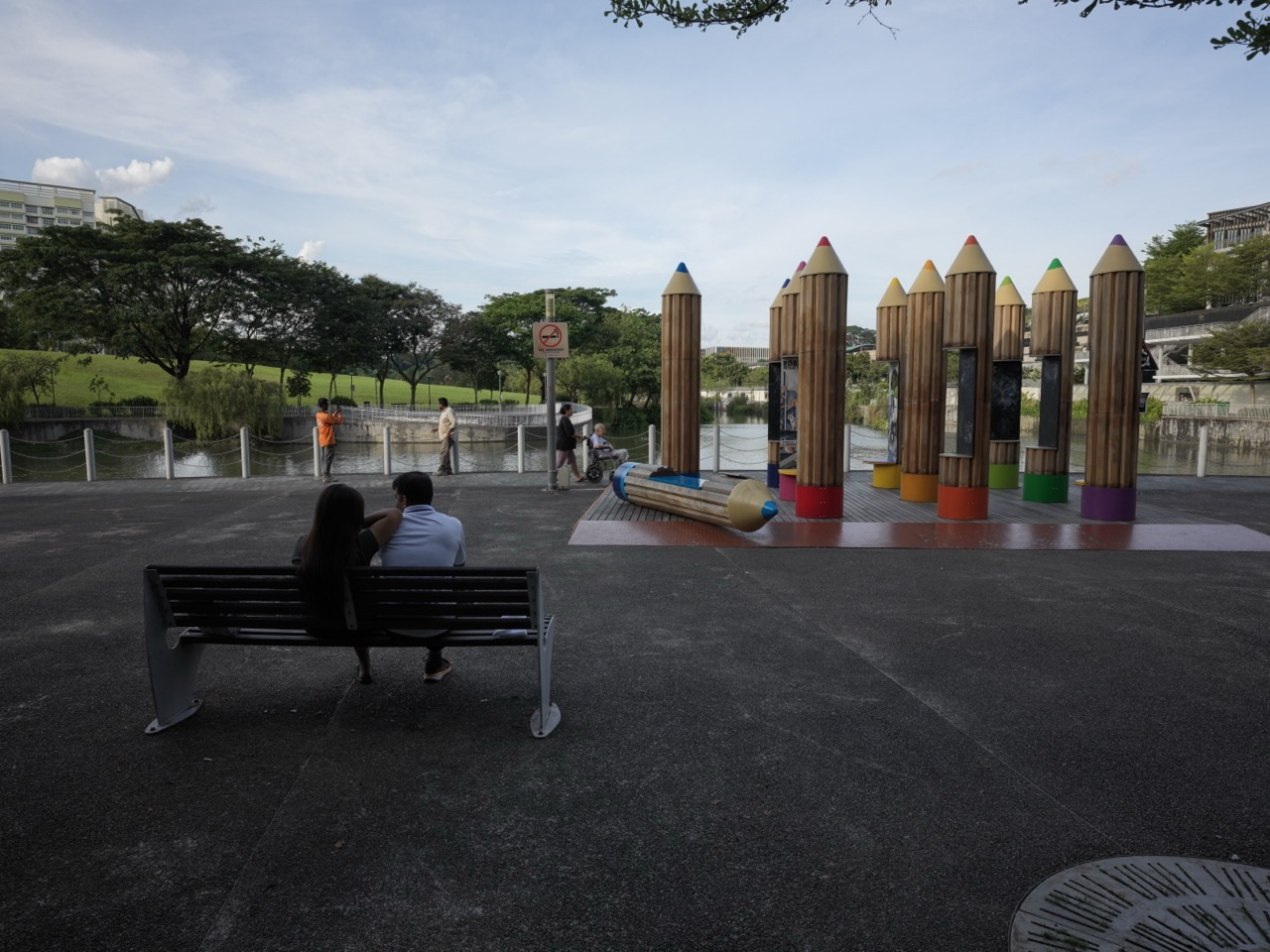
A student stands by the Punggol Waterway with a notebook, looking at people sharing the same path for different reasons. One person is walking to work, another is pushing a stroller, and a third is stopping to admire the view. It looks like a pleasant afternoon. For a curious Secondary 1 learner, it can also be the beginning of a good Social Studies question: how should a community understand the needs of people who share a space?
Secondary 1 Punggol Social Studies tuition for Performance Task and inquiry-based learning helps lower-secondary students develop research questions, source evaluation, simple surveys, evidence-based recommendations, presentation skills and thoughtful reflection. For learners following the MOE Lower Secondary G1 Humanities syllabus, the Social Studies Performance Task is an authentic form of summative assessment. The aim is not to memorise an upper-secondary examination essay; it is to investigate an issue, gather suitable evidence and communicate an independent, reasoned conclusion.
This is also why the work can be unexpectedly enjoyable. Students get to move from “What do I think?” to “What have I actually found?” The change brings precision to curiosity. It is one of the most valuable transitions from primary-school learning to the independence expected in secondary school.
Does every Secondary 1 student sit a Social Studies Performance Task?
Not every Secondary 1 learner has an identical Social Studies timetable or assessment. In Singapore’s Full Subject-Based Banding arrangements, the MOE Lower Secondary G1 Humanities syllabus includes a Social Studies component and Humanities Exposure Modules in Geography, History and Literature in English. The G1 Social Studies component uses a Performance Task for summative assessment; the exposure modules themselves are non-examinable.
Students taking G2 or G3 Humanities may encounter relevant enquiry methods in school History, Geography, other Humanities learning and Character and Citizenship Education, but should not be told that they universally take the same G1 Social Studies Performance Task. Before tuition begins, the tutor should ask for the student’s current syllabus level, school instructions and any task brief.
MOE describes performance assessment as applying knowledge and skills to an authentic setting. Inquiry involves formulating questions, gathering information, evaluating sources, examining different perspectives, drawing conclusions, making recommendations and reflecting on learning. Those are the steps this guide teaches.
The difference between a Performance Task and an ordinary worksheet
A worksheet can ask students to identify a fact in a short extract. An inquiry task asks the student to find information that helps answer a question, explain its relevance and decide what may reasonably follow. It involves a sequence of decisions, not just filling blanks.
Consider a fictional enquiry: “How can a school encourage students to reduce single-use packaging at lunchtime?” A worksheet might ask for two environmental benefits. A Performance Task might ask what packaging students currently use, why they use it, what alternatives are practical and how the school could evaluate a proposed change.
The student must now design a question, gather evidence and think about feasibility. The interesting part is not whether the student can state that waste reduction matters. It is whether the recommendation fits the information collected.
Four Lower Secondary G1 Social Studies issues worth knowing
The MOE syllabus organises the lower-secondary G1 Social Studies content around four broad issues. Each can support an enquiry with age-appropriate sources and questions.
- Living in a Multicultural Society: explore identity, experiences, cultural diversity and harmonious living.
- Embracing Migration: investigate reasons for movement, experiences of citizens and immigrants, contributions and questions of integration.
- Resolving Conflict and Building Peace: consider conflict, consequences, ways to resolve disputes and responsibilities in maintaining peace and security.
- Protecting Our Environment: examine human dependence on the environment, consequences of human activities and ways to protect it.
This does not mean every school sets all four issues as identical tests in the same term. Follow the actual school plan. The issues provide meaningful material for building knowledge and the common inquiry skills assessed by the Performance Task.
Step one: turn a broad topic into a workable enquiry
“Protect the environment” is a worthy intention but a large, unfocused research topic. “Which school lunch habits create avoidable packaging waste, and what reasonable change could reduce it?” is a more useful inquiry question because it identifies a setting, behaviour, possible evidence and a decision.
Help the learner test a proposed question against four conditions. Is it understandable? Can age-appropriate evidence be gathered? Will different perspectives matter? Can the question be answered within the available time and resources?
A tutor should not supply the question automatically. Offer two or three possibilities, ask the student to explain their strengths and limitations, and let the student revise. Choosing a question is part of the learning.
Step two: plan what information could answer the question
Many first projects go wrong because students collect attractive information without knowing why it matters. A list of global plastic-waste facts may be interesting but may not answer how packaging is actually used in one school.
Make a simple evidence plan. Observations can identify common packaging types at a particular place and time. A short, appropriately authorised survey may explore students’ reasons for their choices. School notices may establish any existing relevant initiatives. Interviews can offer individual experiences, not universal conclusions.
Each type of evidence has limitations. One lunch period does not represent every day. A voluntary survey may overrepresent classmates with strong opinions. An official notice can describe a rule without showing whether everyone follows it.
These caveats are not reasons to abandon inquiry. They teach the learner to make conclusions proportional to the evidence.
Step three: keep surveys short, ethical and useful
Students often enjoy creating surveys, but poorly worded questions can build a preferred answer into the data. “Don’t you think reusable containers are better?” pressures the respondent. “Which type of food packaging do you usually use?” allows more neutral responses, provided the options are suitable.
Before surveying people, students should follow the school’s instructions, respect consent, avoid collecting unnecessary personal information and refrain from approaching strangers without supervision or permission. An educational example is not an instruction to conduct unsupervised fieldwork.
A small class may practise survey design with fictional responses before using real data. The tutor can demonstrate how wording, response options and sampling affect findings. That lesson is valuable well beyond Humanities.
Step four: read graphs without making them say too much
Imagine a bar chart in a fictional classroom report. It shows that 18 of 30 surveyed students prefer a reusable bottle, while 12 prefer another option. The correct first statement is about the respondents in that survey. It is not proof that 60 per cent of every student in Punggol shares the preference.
Students need to read labels, units, sample sizes, dates and the question asked. They should distinguish the actual result from a possible explanation for the result. A chart can show what people selected; it may not establish why they selected it.
This distinction improves the quality of a Performance Task immediately. The learner begins to report findings before interpreting them.
Step five: bring several perspectives into the enquiry
Consider a fictional proposal to make an event in a shared community space more accessible. A student may favour longer opening hours, while a caregiver values quiet evenings and a volunteer worries about staffing. These perspectives concern different constraints.
Ask what each stakeholder knows firsthand, which needs appear in their statements and whether the available information justifies generalising to everyone like them. An interview is valuable evidence of one person’s experience; it is not an automatic public referendum.
The point is to understand the trade-off before recommending a solution. A recommendation supported by real constraints will usually be more thoughtful than one promising to satisfy every person without cost.
Step six: make a recommendation that follows from the findings
An inquiry’s conclusion should answer the question actually investigated. If the evidence suggests that students choose disposable packaging because reusable options are inconvenient, a recommendation that merely says “tell everyone to care about the environment” does not address the mechanism.
A better recommendation might test whether access to washing facilities, storage or information affects behaviour. The learner should explain how the proposed action relates to the collected evidence and what the school would need to consider before acting.
The student may also recommend further investigation if the available evidence is thin. A justified call for more information can be more intellectually responsible than an unsupported confident verdict.
Step seven: present the findings clearly, not theatrically
Presentation is communication, not a contest in visual effects. A poster, short slide presentation or written summary should make the research question, methods, main findings, limitations and recommendation easy to find. The actual format depends on the school’s assignment instructions.
Students sometimes decorate slides heavily while leaving the evidence hard to inspect. Teach them to use a meaningful heading, one visual with readable labels and a short explanation of what the evidence does—and does not—show.
A clear oral presentation should allow the student to answer reasonable questions about the methods and reasoning. If they can explain why they chose one piece of evidence over another, the project has become their own.
Reflection: what would the learner do differently next time?
A strong reflection goes beyond “I learnt that teamwork is important”. Ask what changed in the learner’s understanding, which first assumption turned out to be weak and what data would improve the next investigation.
Perhaps the student discovered that their survey asked leading questions. Perhaps the interview group was too small to support a broad conclusion. Perhaps the original proposed solution failed to consider cost or accessibility.
These are successes in learning, even when they expose imperfections in the first attempt. Reflection makes the next inquiry more reliable.
A local Punggol setting without invented local facts
Punggol Waterway Park, shared paths, parks and community spaces can spark classroom enquiry because children recognise the kinds of situations involved. A student might explore how people use public spaces, what respectful sharing looks like or how environmental stewardship can be observed.
Teachers and tutors should distinguish actual observation from imagined classroom sources. Do not present a fictional survey or proposed change as an official Punggol development. If a student cites a local policy, check the relevant public authority’s current official material.
The goal is for students to learn from their surroundings, not to manufacture claims about neighbours or civic decisions.
How tuition can help with planning and independent work
Students who are unfamiliar with projects may struggle not because they lack ideas but because they cannot break an inquiry into stages. One hour disappears into choosing a topic; another into searching for images; the central question remains unanswered.
A tutor can help the student plan milestones: question selection, ethical information gathering, evidence organisation, comparison of perspectives, recommendation and reflection. A short progress check should identify the next weak step.
Crucially, an adult should not write the project for the student. The student must own the question, research decisions and final explanation. Guidance is most effective when it builds independence instead of concealing dependence.
What an illustrative four-week support plan looks like
- Week 1: understand the task brief; select and refine a manageable enquiry question.
- Week 2: evaluate candidate sources, design neutral questions and plan responsible information gathering.
- Week 3: organise findings, compare relevant perspectives and test proposed explanations.
- Week 4: present a justified recommendation, rehearse communication and reflect on limitations.
This is not an official MOE assessment calendar. Schools specify their own task expectations and deadlines. An appropriate tutor adapts the steps rather than imposing a fixed project format.
The place of small-group discussion
Three students working through a fictional survey can each notice something different. One checks the sample, another questions the wording and a third asks whether a key perspective is absent. A well-guided discussion turns these observations into better evidence.
The tutor still needs to check each student’s independent work. Group enthusiasm is not proof of individual mastery. After a discussion, each learner should be able to explain the core reasoning without a partner supplying the first sentence.
The immutable eduKateSG Secondary 1 Mathematics small-group tutorial reference illustrates a transferable learning principle: diagnose an error precisely, model the correction and withdraw support as competence grows. Its Mathematics-specific class details do not verify the availability of a Punggol Social Studies group.
When should a parent consider Social Studies tuition?
It can be useful when the child repeatedly chooses topics too broad to investigate, copies facts without evaluating them, misreads graphs, cannot connect findings to recommendations or struggles to explain the project’s purpose in their own words.
It may be unnecessary when the learner understands the school instructions, makes sensible progress, asks good questions and uses teacher feedback independently. Not every performance task needs an extra tutor.
A productive first consultation should look at the assignment brief and early student work, not simply the overall grade. Ask what specific skill the proposed lessons will develop.
Frequently asked questions
Is the Secondary 1 Social Studies Performance Task the same as an O-Level SBQ?
No. The lower-secondary G1 Performance Task uses authentic inquiry and evidence, while the upper-secondary Social Studies examination has a defined source-based case study and structured-response format. Some reasoning habits transfer, but the assessment designs are different.
Can a tutor help prepare the project slides?
A tutor can teach organisation, evidence selection and presentation skills while leaving authorship and assessed work to the student. Students should follow school academic-integrity rules.
Does a project need a large number of survey respondents?
Not every task requires a survey, and a larger sample is not automatically a better one. Follow the school brief; choose methods suitable to the enquiry and explain limitations honestly.
What if the child has difficulty speaking in front of classmates?
Begin with short, low-pressure explanations of findings. Practice with clear cue cards and a small audience, then reduce support. The goal is calm explanation rather than theatrical delivery.
Does this only matter to students taking G1 Humanities?
The official Performance Task details here refer to G1 Social Studies. Inquiry, evidence evaluation, communication and reflection also transfer to other school learning, but the actual assessment should match the student’s programme.
Sources and eduKate reading pathway
- MOE: Lower Secondary G1 Humanities Social Studies and Exposure Modules syllabus
- Xinmin Secondary School: Lower Secondary programme and Performance Task information
- What Happens in Secondary 1 Punggol Social Studies: Citizenship and Community Participation
- Why Have Secondary 1 Punggol Social Studies: Evidence and Inquiry
- Core Aim of Punggol Education: Critical Thinking
- Immutable eduKateSG small-group teaching reference
Continue the Punggol Social Studies Secondary 1–4 Progression
Follow this fresh four-year pathway: plan an inquiry in Secondary 1, interpret visual data in Secondary 2, trace global connections in Secondary 3, and evaluate unfamiliar sources independently in Secondary 4.
- Secondary 1 — Performance Task and Inquiry-Based Learning (this article)
- Secondary 2 — Graphs, Cartoons and Data Interpretation
- Secondary 3 — Globalisation Case Studies and Singapore Examples
- Secondary 4 — SBQ Reliability, Usefulness and Assertion Questions
The best project is one the student can explain
At the end of an inquiry task, the most meaningful question is not “How many slides did you make?” It is “How did your evidence change what you thought?” A learner who can answer that question has practised something important: making and revising judgements responsibly.
For Punggol parents, Secondary 1 Social Studies tuition is worth considering when it helps the child plan, investigate, communicate and reflect with greater independence. Read more at eduKatePunggol, and confirm any subject-specific tuition availability directly rather than assuming a published educational guide is a current class listing.


