
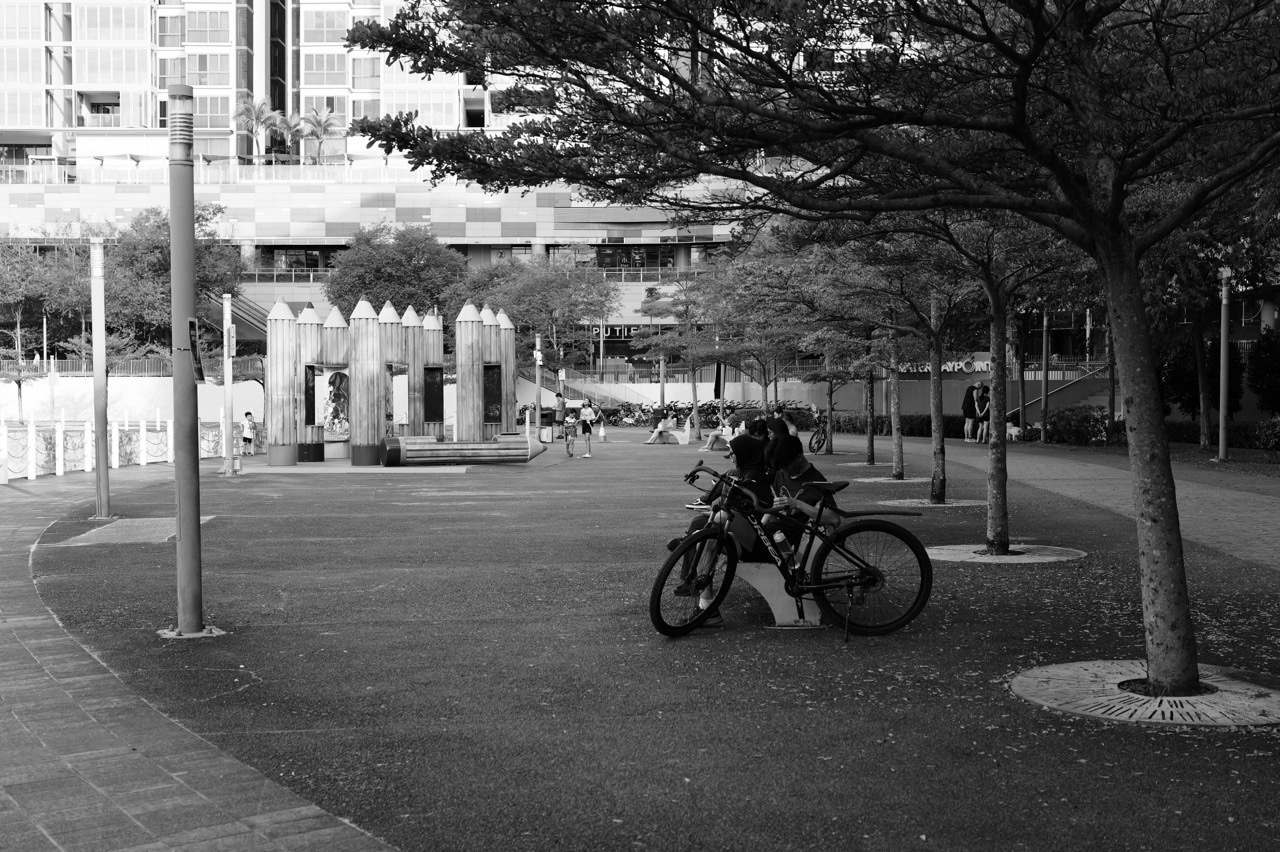
A new Secondary 1 student steps into a crowded public space in Punggol and notices an odd thing. Every person is walking through the same place, yet they are all using it differently. A parent is shepherding a child towards the library. A teenager has stopped to help a friend find the right route. Someone is looking for somewhere quiet to sit. The space is shared, but the needs are not identical. It looks like ordinary life. It is also the opening scene of a very good Social Studies lesson.
Secondary 1 Punggol Social Studies tuition focused on citizenship and community participation teaches students to explore Singapore identity, the meaning of community, civic responsibility, shared spaces and participation through inquiry. These are foundation skills rather than a promised Secondary 1 O-Level paper. In Singapore’s lower-secondary G1 Humanities syllabus, Social Studies is explored through issues such as living in a multicultural society, embracing migration, resolving conflict and building peace, and protecting the environment. Its learning is assessed through a Performance Task. The Humanities Exposure Modules are non-examinable. G2/G3 students commonly meet parallel inquiry skills through their lower-secondary Humanities disciplines.
That distinction is the beginning of honest tuition. We do not need to pretend that every thirteen-year-old is enrolled in a standalone examinable Social Studies subject to show why civic understanding matters. A student who can notice different needs, investigate sources, discuss identity respectfully and make a reasoned recommendation is building a foundation for all of Humanities—and for everyday life beyond school.
What does citizenship mean to a Secondary 1 student?
Citizenship has a legal dimension, but a thirteen-year-old’s first encounter with the idea is usually human. Who belongs? Who helps? What does someone owe to a shared community, and what support may they reasonably expect in return? These questions bring an abstract term within reach without reducing it to a slogan.
A useful tutorial begins with a drawing of concentric circles: self, family, school, neighbourhood, Singapore and the wider world. Students place responsibilities and relationships in the circles. They may notice that helping a younger sibling and respecting a public space are different acts but share a concern for others. The tutor then asks which actions are personal choices, which involve shared rules and where government or community organisations might play a part.
The exercise should not confuse legal citizenship with someone’s worth or entitlement to respect. Residents may have different nationalities and statuses, and not every right or obligation is identical. Social Studies helps the learner make those distinctions carefully while recognising that daily community life involves people whose stories are different.
A syllabus clarification every Punggol parent deserves
Under Full Subject-Based Banding, schools offer subjects at different levels, and a student’s actual timetable matters. The official 2024 lower-secondary G1 Humanities syllabus combines Social Studies with Humanities Exposure Modules in Geography, History and Literature in English. Social Studies includes inquiry, source interpretation, reflective thinking and a Performance Task as a form of summative assessment. The exposure modules are non-examinable, intended to broaden experience rather than add another large written examination.
Lower-secondary G2 and G3 Humanities provision is different. Students may take History, Geography and Literature as subjects, and citizenship themes can also arise through Character and Citizenship Education and school activities. A tutor should ask what the child actually studies, not tell every family that their school has the same Secondary 1 Social Studies examination.
Even within G1, the syllabus lists four issues, not a single fixed “citizenship chapter” officially assigned to Secondary 1 at every school. The approach in this article is a year-appropriate conceptual bridge. Teachers may choose different sequences, performance-task questions and local learning experiences. The tutor’s job is to align practice with the actual classroom evidence.
From identity to belonging: a better first question
Ask a student to complete the sentence, “I feel part of a community when…” The answers will vary. One student may talk about a sports team; another about a shared festival, familiar neighbours or being included in a school activity. These are useful entry points, not a survey that proves how an entire generation feels.
The next question is where deeper thinking begins: “Does belonging require everyone to have the same interests?” Students quickly notice that shared participation need not mean identical identity. A neighbourhood can be connected by common spaces and acts of care even when residents speak different languages, have different routines and enjoy different activities.
A strong tutor makes students explain why an example demonstrates belonging. Saying “a festival brings people together” is vague. Saying that people from different households have an opportunity to meet, cooperate and learn about one another identifies a possible mechanism. The child is already moving from a nice idea to an explanation.
The difference between a right, a responsibility and a kind action
Secondary 1 students benefit from separating concepts that everyday conversation often blends. A right is an entitlement recognised within a particular legal or institutional framework. A responsibility is something a person is expected or obliged to do. A kind action may be voluntary and commendable without being a legal duty.
Consider a fictional shared-space scenario. A resident expects a safe walkway; users have a responsibility to observe applicable safety rules; someone voluntarily helps carry a heavy bag. These actions occupy related but distinct categories. The tutor asks which statements depend on a specific law or rule, which describe social expectations and which are discretionary generosity.
This prevents a familiar Social Studies problem: using moral enthusiasm instead of analytical precision. Students can care passionately about society while still asking what the actual rule is, who is responsible for a decision and what support makes a proposal feasible.
Shared spaces: a Punggol classroom outside the classroom
The walkways near Punggol MRT, public seating areas and the Punggol Waterway provide familiar settings for discussing common use. A photograph from the eduKatePunggol local image collection can become an evidence source. A student identifies what is visibly present—paths, seating, access routes—then considers which kinds of people might use them.
The tutor should keep observation separate from assumption. A photograph of a cyclist does not establish how often cycling conflicts occur. An image showing an empty bench at one moment cannot prove that the seating is always sufficient. Students can suggest what further evidence might help: observations at different times, publicly available planning documents or an appropriately designed, authorised survey.
This is civic thinking in miniature. Before proposing an improvement, identify who uses a space, how different needs interact, what constraints exist and how success would be assessed. The result is not a complaint disguised as homework. It is an investigation.
A worked scenario: who gets the quiet corner?
Imagine—purely for classroom practice—that a school wants to turn a corner of its common area into a shared student space. One group asks for quiet reading tables. Another wants room for collaborative projects. A third points out that the space must remain accessible during busy transitions.
First, students list the interests without mocking any group. Quiet reading supports concentration. Collaborative use supports discussion and creativity. Clear access protects movement. Next, they decide what information is missing: how large is the area, when is it most crowded and whether other rooms are available?
Finally, propose an arrangement and explain the trade-off. A flexible layout may work but require supervision; scheduled use might reduce conflict but restrict spontaneity. The important lesson is that responsible recommendations name their costs as well as their benefits. A cheerful compromise still needs a plausible explanation.
How informed, concerned and participative citizenship develops
The Singapore Social Studies curriculum uses the aspiration of informed, concerned and participative citizens. For a younger student, these words can become three practical questions. Informed: what do I know, and how do I know it? Concerned: whose needs matter, including those I may overlook? Participative: what responsible action could help, and is it within my role to take?
A tutor can give one fictional community issue and ask the student to fill out these three headings. The informed section describes facts and uncertainties. The concerned section identifies stakeholders and possible consequences. The participative section proposes a suitable individual or collective response.
This approach should not be used to imply that students must personally solve complicated social problems. Sometimes responsible participation means listening, checking a source, following a reasonable rule or discussing an issue respectfully. Understanding the limits of one’s knowledge and authority is itself an important part of citizenship.
Small acts are not the same as public-policy solutions
A young person might help keep a shared space tidy. That is worthwhile, but it does not prove that individual kindness can replace the planning, maintenance and rules needed for an entire public facility. Equally, the presence of public services does not remove every opportunity for citizens to contribute.
This distinction prepares students for upper-secondary Exploring Citizenship and Governance, where complementary roles and competing interests become explicit syllabus concerns. In Secondary 1, the concepts should be introduced through accessible examples. Who can act immediately? Who has the authority to change a rule? Who is affected by the decision?
A good answer shows both human agency and institutional responsibility. It avoids simplistic conclusions such as “the government should do everything” or “residents should handle every problem themselves”. An issue-based approach asks what kind of action fits the problem.
How a tutor teaches perspective-taking without stereotypes
A tutor might hand out four fictional role cards: student, caregiver, older resident and facility organiser. Each describes a specific need about the same imagined community event. Students identify the priorities, then switch cards and explain a concern they did not initially share.
The exercise must not treat age or background as destiny. An older resident may enjoy lively activities; a teenager may prefer quiet. The role cards describe individual scenarios, not the preferences of whole populations. The tutor should explicitly teach the difference between a role in an exercise and a claim about real people.
Once the viewpoints are understood, ask students to write a recommendation that acknowledges at least two perspectives. The point is not to please everybody with a vague statement. It is to show why the proposed action responds to a real constraint and what it might still leave unresolved.
A three-source inquiry on a fictional community event
Source A is an imaginary event poster. It announces that a community activity welcomes all ages. Source B is a volunteer’s short account of how the event was organised. Source C is a fictional attendee’s comment saying that the timing made participation difficult.
Students first identify what each source actually establishes. The poster describes an intention and planned invitation; it does not prove universal attendance. The volunteer describes organisational effort; that account may illuminate a challenge. The attendee provides a real kind of concern within the scenario, but one voice cannot tell us how common the difficulty was.
The tutor then asks whether all three sources can be simultaneously true. Yes: an event may be advertised inclusively, organised conscientiously and still inconvenience someone. That moment is educationally powerful because it shows that respectful disagreement is not always a contest in which one person must be dishonest.
Inquiry questions: avoid questions that already contain the answer
“Why is volunteering always good for everyone?” is a poor starting question. It assumes the conclusion and discourages consideration of limitations. “Under what circumstances might volunteering improve a community’s well-being?” is more open and invites evidence about effectiveness, access and sustainability.
Young students can rewrite leading questions. “Don’t residents agree that the new rules are necessary?” becomes “What benefits and concerns might residents identify regarding the proposed rules?” The goal is not to remove values from Social Studies but to make claims examinable rather than pre-decided.
A practical tutor encourages the question before the source hunt. Once the student knows what they are trying to find out, selecting information becomes easier and the risk of simply collecting supportive quotations is reduced.
Social Studies and the art of listening
Some of the most important Humanities learning happens before anyone writes an answer. A learner hears a classmate’s view, pauses, paraphrases it fairly and then offers a reasoned response. That sequence involves comprehension, empathy, self-control and evidence handling at once.
A listening routine can be simple: each student must explain the previous speaker’s central point before adding a new one. The original speaker can clarify if the summary is inaccurate. The tutor keeps the discussion grounded in the question and does not reward the loudest voice with the final word.
These skills matter in a small group, but small numbers alone do not guarantee them. Ask a tuition provider how quiet students participate, whether everyone writes independently after discussion and how feedback addresses reasoning rather than personality.
What a performance task can look like
The official G1 Social Studies syllabus describes summative assessment through a Performance Task. It is designed to let students apply knowledge and inquiry skills to an authentic context. The exact school assignment will vary, but students might need to develop a question, gather and interpret information, consider perspectives, explain findings and make recommendations.
An illustrative task for tutoring could ask, “How might our school help more students feel welcome during a shared activity?” The student could examine teacher-provided, privacy-safe source material, compare fictional stakeholder statements and propose a manageable improvement. No one needs to conduct an unauthorised interview or collect private information from strangers.
The resulting work could take the form of a short written report, visual presentation or another format if the school allows it. The tutor should first read the actual task brief and rubric. Preparation should strengthen inquiry, not produce a polished adult-written submission that conceals the student’s understanding.
Source handling belongs inside the citizenship lesson
If students only discuss civic values in general terms, they may become eloquent without evidence. A good lesson pairs ideas with material that must be interpreted: a simple map, photograph, timetable, notice or short written viewpoint.
Ask, “What does the source say directly?” then, “What can we reasonably infer?” and finally, “What else would we need to know?” Suppose a picture shows people attending a community activity. It may support the observation that people are present, but not a claim about how many people participate throughout the year or whether the programme has met its goals.
The sequence builds the source literacy students will need later for Social Studies SBQ and Humanities assessments. Yet it should remain proportionate to the child’s stage. A fourteen-line model answer about reliability is unnecessary if the immediate weakness is identifying one precise clue.
The first writing habit: explain the link
A student may write, “The community centre helps people because everyone is happy.” The phrase expresses goodwill but provides neither evidence nor mechanism. Help the learner revise it: “A shared activity can help neighbours meet people they do not usually encounter, which may build familiarity and make it easier to cooperate on common concerns.”
The revision is more careful. It says “can” and “may” rather than promising that all participants will become friends. It explains why the activity might help. It also leaves room to ask what would prevent the benefit: unsuitable timing, inaccessible venue or lack of sustained participation.
For Secondary 1 students, two or three strong sentences that genuinely answer the question are an achievement. Teach point → reason → relevant example → explanation as a flexible routine, not as an official grading formula or a substitute for thought.
The language of responsible disagreement
A child needs phrases that keep discussion open without becoming weak or evasive. “The source suggests…” leaves room for evaluation. “I see why this group values…, but the proposal may also…” names a trade-off. “The evidence does not yet show…” distinguishes uncertainty from refusal to decide.
Encourage students to identify when they agree about a goal but disagree about a strategy. Many social debates are structured that way. Two residents may both want safe and lively common spaces while differing about whether the best solution is scheduling, redesign or additional facilities.
The resulting writing is not about finding the perfect neutral sentence. It is about being willing to take a supported position while recognising an honest counterargument. That is a vital early bridge towards later structured-response questions.
A six-week citizenship-and-community learning cycle
Week 1 — identity and belonging. Use a short writing sample and an oral conversation to diagnose how the student defines belonging, distinguishes fact from opinion and explains an example. Record the precise next skill instead of issuing a general judgement about ability.
Week 2 — rights, responsibilities and voluntary action. Sort scenarios, question overgeneralised claims and practise explaining who is authorised or able to take action in each case.
Week 3 — shared spaces and stakeholders. Use a local photograph and a fictional planning problem. Identify user groups, priorities, constraints and facts that would help an informed decision.
Week 4 — source awareness. Compare a poster, a personal account and an informational notice. Decide what each proves, what it cannot prove and what another source might clarify.
Week 5 — inquiry and recommendation. Plan an ethical mini-investigation using approved material. Construct a short recommendation that names its likely benefit and a credible trade-off.
Week 6 — independent transfer. Present a fresh issue and ask the student to investigate, explain and reflect with less prompting than in Week 1. Share feedback on evidence use and reasoning, not only presentation neatness.
This sequence is a model for parents to understand the teaching logic. It is not a claim about a real eduKate timetable, fees, official term-by-term syllabus order or the number of students in a class.
Two simple home exercises that make a difference
The first is a weekly community lens. Choose an age-appropriate public notice or school announcement. Ask who it addresses, what action it invites, and whose needs it may have to balance. Let the student give a short oral answer. The parent does not need to demand an essay after dinner.
The second is a kindness-versus-system conversation. When the student notices a thoughtful individual action, ask what larger arrangement makes that action possible and what might be needed for everyone to benefit. This helps the learner see that personal contribution and institutional design are connected without being identical.
Both exercises should stop before they become an interrogation. Curious children learn more when adults sometimes answer, “That’s a good question; we should check,” than when every conversation ends with a model paragraph.
What to avoid when teaching citizenship
Avoid presenting a single person’s story as a complete account of a cultural group or generation. Avoid telling students that participation only counts when it is public and impressive. Avoid treating a persuasive poster as proof that a programme worked. Avoid invented numbers, fake policy announcements and imagined official quotations passed off as facts.
Do not confuse the aim of civic learning with promoting a particular party or partisan position. Social Studies teaching should equip students to examine evidence, understand public responsibilities, engage respectfully and make reasoned judgements, not instruct them whom to support.
Finally, do not rush to advanced examination acronyms at the expense of reading and explanation. A learner can recognise “SBQ” without being able to identify the main claim in a poster. Work on the actual bottleneck.
How much local context should a tutor use?
Punggol gives students useful visual anchors: public transport connections, pedestrian routes, parks, library spaces and places where people share facilities. Images can spark inquiry because the learner recognises the setting and has experiences to compare with the source.
But a local example is a starting point, not the boundary of Social Studies. The curriculum asks students to think about Singapore and the world. Once a pupil understands trade-offs in a familiar shared space, the tutor should transfer the concept to a different setting so the child does not merely memorise a Punggol story.
A skilled teacher can ask the same reasoning question using a school, a neighbourhood and an unfamiliar city. If the learner still explains stakeholders, evidence and constraints, the concept has travelled.
How to spot progress without obsessing over grades
Look for more accurate claims and better questions. A student begins saying “some users may…” instead of “everyone thinks…”. They refer to a detail in a source, represent an opposing viewpoint without ridicule and can explain why a proposal has a trade-off.
For a G1 student, performance-task feedback may show how they handle evidence, inquiry and recommendations. For a G2/G3 learner, school Humanities work will provide a different set of indicators. Keep a small folder of independent work across six weeks so improvement can be observed rather than imagined.
A useful tutor update has three parts: the reasoning habit practised, an example of independent progress and the next task. Vague statements about confidence are less helpful unless accompanied by a specific change in student behaviour.
How this year leads to Secondary 2
Secondary 1 builds the ability to recognise citizenship, responsibility, belonging, stakeholders and basic evidence. Secondary 2 can deepen the discussion by examining multicultural living, migration, integration and social cohesion. The next step is not simply a harder worksheet; it is a more sophisticated understanding of people living alongside one another.
The progression then moves into upper-secondary Social Studies where Exploring Citizenship and Governance becomes a formal issue, and later into globalisation and examination synthesis. Students should be able to see the thread: understand the people, examine the institutions, weigh the evidence and consider responsible choices.
For the direct continuation, see Secondary 2 Punggol Social Studies Tuition | Diversity, Integration and Harmony. For the later stages, visit Secondary 3 citizenship and governance and Secondary 4 globalisation.
Frequently asked questions
Does Secondary 1 Social Studies have a written examination?
It depends on the programme and school, so check the school’s actual assessments. For G1 Humanities, the official syllabus specifies a Social Studies Performance Task for summative assessment, while Humanities Exposure Modules are non-examinable. Do not assume every Secondary 1 student is preparing for a separate written Social Studies paper.
What citizenship themes should a Secondary 1 tutor teach?
Age-appropriate themes include belonging, shared responsibilities, diverse perspectives, community participation and how decisions affect different groups. Use the real syllabus and assignment to choose depth. The formal upper-secondary Issue 1, Exploring Citizenship and Governance, is a later stage, not automatically a Secondary 1 unit.
Is Social Studies tuition useful for a G2 or G3 student?
It may be useful as Humanities skills enrichment if the learner needs source interpretation, inquiry, evidence-based explanations or perspective-taking. That is different from claiming that the student is taking a standalone lower-secondary Social Studies paper. Ask how the instruction supports actual school tasks.
Can local photographs count as educational sources?
Yes, if they are accurately described and used with care. A photograph records a moment from a particular viewpoint. It can support observations and questions, but it should not be used to claim what all residents think or how a place works at every hour.
Does a quiet student need to become outspoken?
No. Participation can begin with independent annotation, writing, careful listening and one supported verbal explanation. The goal is thoughtful engagement, not the loudest contribution.
How can parents tell whether a small-group tutorial is good?
Ask whether the tutor can diagnose each student’s specific reasoning error and demonstrate independent improvement on a new task. Confirm actual class size, fees, schedules and arrangements rather than assuming the label “small group” describes a particular service.
Official references and useful eduKate reading
The foundational source is the MOE Lower Secondary G1 Humanities Teaching and Learning Syllabus (implementation from the 2024 Secondary One cohort). It describes the four Social Studies issues, inquiry skills and Performance Task. For the longer path, see the MOE Full Subject-Based Banding experience, the 2027 SEC G2 syllabus listing and 2027 SEC G3 listing.
For a complementary first-year reading guide, explore Secondary 1 critical thinking and media literacy. The Core Aim of Punggol Education: Critical Thinking and Punggol Education and Town-Life Index help parents connect Humanities learning to wider education in the estate.
The eduKate principle is not that every student needs more tasks. It is that every student needs the right next question. At thirteen, that question may be as gentle and as profound as “Who else is affected by what I want?” If a learner can answer it with evidence, empathy and curiosity, the real work of Social Studies has already begun.


