
Singapore can be both a beautiful place to live and a difficult place to plan. A resident in Punggol may love the waterfront greenery, depend on reliable trains, need an affordable home, value convenient services and hope that future generations will inherit a liveable city. Every wish makes sense. Yet land, energy, money and nature are not unlimited. Parents searching for Punggol Geography tuition, Sustainable and Resilient Singapore notes, O-Level Pure Geography revision or Singapore Green Plan 2030 Geography are looking for a way to understand how these goals can be pursued together.
The core aim of Punggol Geography tuition for Sustainable and Resilient Singapore is to help students explain why sustainable development matters, how coordinated planning and governance support it, and how environmental, economic and social resilience can be strengthened without pretending that trade-offs disappear. In the 2027 G3 full Geography syllabus, Topic 5.3 asks learners to examine long-term planning, urban governance, climate and resource responses, economic adaptation and community involvement. An excellent answer connects a national goal to a specific mechanism, evidence and a thoughtful evaluation.
Punggol makes a lovely starting point because these national questions become visible in ordinary life. A shaded public path, a neighbourhood facility, a transport connection and a landscaped waterway are not isolated pieces of scenery. They are prompts for asking how public space, mobility, ecology and long-term planning fit together. But one photograph of the town is never proof that a policy succeeded across Singapore. Good Geography teaches students to enjoy the place and measure the claim.
The Core Aim: Sustainability Is a Continuing Decision
Sustainable development concerns meeting present needs while safeguarding the ability of future generations to meet their own. It is not simply a destination that a country reaches once and for all. Demographics change, technology improves, climate conditions evolve and people develop different needs.
Resilience concerns the capacity to withstand, adapt to and recover from shocks and stresses. A sustainable city without resilience may find years of improvement disrupted by a severe event. A resilient city focused only on short-term survival may fail to improve everyday wellbeing or ecological conditions.
The two are connected but distinct. A flood barrier might improve resilience against a defined hazard while also introducing land-use and ecological trade-offs. Better access to public transport may improve mobility and reduce some transport emissions, yet still require land, energy and investment.
A strong Geography tutor asks the student to explain what each intervention achieves, who benefits, what it costs and how it performs over time.
Course Alignment: Full Geography and Elective Geography Are Different
The official 2027 G3 full Geography syllabus, K329 includes the separate Singapore cluster. Topic 5.3, Sustainable and Resilient Singapore, is one of its components. The 2027 K335 Humanities (Social Studies, Geography) course includes sustainability within Geography in Everyday Life but does not list this separate Singapore cluster.
These distinctions affect the detail of assessed content, the applicable questions and the study plan. Students following the earlier O-Level syllabuses or later SEC cohorts must refer to the correct official material for their year.
This article owns a specific learning job: to explain national sustainability and resilience strategies and how to evaluate them. The companion Sustainable Urban Neighbourhoods and Ecosystem Services focuses instead on the everyday-neighbourhood scale.
Both are geographically useful; they should not be confused as identical examination topics.
Why Singapore Must Balance Economic, Social and Environmental Needs
Singapore aims to maintain a competitive economy, healthy environments and a high quality of life. These goals may reinforce one another. A healthy, connected city can support productivity, social wellbeing and the attractiveness of a place for investment.
They can also compete for scarce space or resources. An industrial facility may provide jobs but require careful management of emissions and surrounding land uses. A new housing project can meet demand but must consider accessibility, public space, ecosystem services and the needs of future residents.
The geographical task is to make the trade-offs explicit. Do not merely list “economy, society and environment” and conclude that the balance is important. Show how a particular decision affects at least two of the dimensions and why the final outcome depends on context.
A useful classroom exercise provides a fictional budget and three projects. Students must identify benefits, opportunity costs and who would be most affected by delaying one project.
Economic Sustainability: Competitiveness With Resilience
A competitive economy can support jobs, livelihoods, public resources and investments in infrastructure. Sustainable economic planning considers whether development can continue without weakening the environmental and social conditions on which it depends.
For Singapore, international connectivity offers opportunities but can transmit shocks. An industry may depend on imported components, overseas customers or specialist skills. If one supply route is disrupted, the effect may spread through several linked sectors.
Students should distinguish growth, diversification and resilience. Growth concerns expansion in an activity; diversification reduces concentration in certain dependencies; resilience concerns the ability to cope with changes and continue functioning. None guarantees the others.
The best answers explain which strategy improves which property and recognise the investment or coordination it requires.
Social Sustainability: Quality of Life Is More Than Income
A good city supports residents’ capacity to live, learn, work, travel and participate in community life. Accessibility to healthcare, education, public spaces and everyday necessities can matter as much as the total number of facilities.
Different groups encounter a city differently. A young child, an older adult, a wheelchair user, a person working irregular shifts and a family with several children may have different needs even in the same neighbourhood.
A student should learn to distinguish availability from accessibility. A clinic may exist within a district but still be difficult to reach for some residents. A park may be nearby in straight-line distance but separated by a major road or inaccessible path.
Social sustainability therefore depends on the distribution and usability of opportunities, not only their presence on a map.
Environmental Sustainability: Protect What Makes Living Possible
Environmental sustainability involves conserving natural capital, reducing pollution and waste, and ensuring that development does not undermine ecological systems that support wellbeing.
Urban nature can provide habitat and ecosystem services, while efficient infrastructure may reduce resource demand or manage some environmental pressures. But these outcomes must be analysed, not presumed from a green colour on an illustration.
For example, planting trees can improve shade and contribute to biodiversity under suitable conditions. Yet the benefits depend on species, location, maintenance, ecological connectivity and growth over time.
An accurate answer asks what the measure does physically and what evidence could show it worked. The word “green” is not an environmental performance metric.
Singapore Green Plan 2030: The Five Pillars
The Singapore Green Plan 2030 frames national sustainability efforts under five pillars: City in Nature, Sustainable Living, Energy Reset, Green Economy and Resilient Future. These cover different systems and therefore call for different kinds of evaluation.
City in Nature centres on ecological integration and access to greenery. Sustainable Living addresses consumption and resource use. Energy Reset concerns cleaner energy and efficient use. Green Economy connects environmental action with business and skills. Resilient Future emphasises adaptation and protection from climate-related risks.
Students should read the current official targets rather than rely on old posters when specific numbers are necessary. Targets may have time frames and qualifying conditions; they are not automatically evidence that the promised outcomes have already occurred.
In a Geography response, use the Green Plan as a framework for analysing mechanisms and stakeholders, not a decorative list that can be attached to every essay.
Integrated Long-Term Planning: Why Time Matters
Land-use decisions often outlast a school generation. Roads, rail corridors, utility networks, drainage systems and protected spaces require long-term coordination. A decision to reserve land now may preserve an option for a future need that is not yet fully predictable.
Singapore’s URA Long-Term Plan sets strategic directions over decades, while the URA Master Plan guides medium-term land use with a more specific statutory framework.
The Master Plan 2025 was gazetted in December 2025, according to URA. Students should distinguish an adopted planning framework, a proposed project and a completed development when interpreting sources.
The key geographical idea is that good planning balances present demand, future flexibility and the consequences of different land allocations. A future map is a statement of intended or permitted use under specified rules, not a live photograph of what exists today.
Dynamic Governance Means Revisiting the Plan
A long-term plan must be stable enough to coordinate investment and flexible enough to respond to new evidence. Demographic changes, climate projections, new technologies and shifting economic needs may require adjustments.
Dynamic urban governance involves more than a leader announcing a policy. Planning agencies, service providers, communities and other stakeholders need clear roles, communication and processes for implementing decisions.
Students should be able to trace an outcome through the system: objective → policy or plan → implementation → monitoring → revision. A well-written sustainability answer includes the middle stages.
Do not equate the publication of a policy with proof of its effect. A strategy can be carefully designed and still face financial, technical or behavioural limits during implementation.
Land Use: Why Mixed Functions Need Thoughtful Design
Some urban functions can be combined. A building may accommodate community facilities and other services; a neighbourhood may integrate walking paths with ecological corridors; compact development may help reduce certain travel distances.
However, mixing uses requires planning. Noise, deliveries, safety, privacy, accessibility and ecosystem protection can constrain which functions belong together.
A student may say “put everything in one building to save space.” A better answer evaluates whether the combination genuinely improves accessibility or efficiency for users while creating manageable impacts.
The geographical principle is not that maximum density always wins. It is that spatial design should serve the needs of people and systems over time.
Transport Sustainability: Connectivity and Reliability
Public transport can carry many people efficiently along organised routes. Walking and cycling connections may improve access to local destinations when routes are safe, comfortable and practical.
Yet a route’s benefit depends on more than station proximity. Transfer quality, walking distance, reliability, shelter, travel time, affordability and accessibility affect whether people can use it effectively.
For Punggol students, familiar MRT and LRT connections make this idea tangible. But do not assume that a photo of rail tracks proves strong access for every household or traveller.
A tutor can give two fictional routes with equal straight-line distance but different transfers and walking requirements. Ask which is more accessible for a particular person and why. This trains contextual evaluation instead of abstract praise for connectivity.
Buildings and Energy Efficiency
Building design influences energy demand, thermal comfort and operational emissions. Natural shading, appropriate ventilation, efficient systems and suitable materials can reduce resource use under particular conditions.
The challenge is to explain how a feature works. “A green building uses less electricity” is incomplete. Which feature reduces cooling demand or improves efficiency? What conditions affect its performance? Are there costs in materials or maintenance?
A strong Geography answer separates design intent from measured performance. Certifications and standards may offer useful evidence, but students should identify the criteria being used rather than treating labels as universal guarantees.
This makes energy-efficient buildings an excellent case for practising evidence-based sustainability evaluation.
Water Resilience and the Four National Taps
Water resilience is not just having a large reservoir. Singapore’s water strategy uses different sources with distinct characteristics: local catchment, imported water, NEWater and desalination.
The PUB overview and Ministry of Sustainability and the Environment’s water guide explain the Four National Taps. Their diversification supports supply security, while conservation and long-term planning remain important.
A student should explain why reliance on several sources can reduce certain vulnerabilities without pretending the sources are completely independent. Desalination and water reclamation use energy and infrastructure, while rainfall and catchment management involve environmental and land-use considerations.
The right question is which vulnerabilities a water strategy addresses and which dependencies remain.
Food Resilience Needs a Systems View
Singapore’s food resilience is influenced by external supply chains, domestic production capabilities, storage, food safety systems and the ability to change procurement when conditions shift.
Local high-technology farming may contribute to resilience in appropriate areas, yet demands energy, expertise and investment. Diversified imports can spread supply risk but still depend on international transport and trading conditions.
Students should not confuse food security with producing every item locally. The aim is reliable access, which may require several complementary strategies.
A good evaluation includes affordability and access, not only volume produced or the number of countries supplying imports. If food is physically available but unaffordable to some households, an important dimension of security remains unresolved.
Cleaner Energy Is a Portfolio Problem
Energy transition involves improving efficiency, lowering emissions and maintaining a reliable supply. Different technologies have different geographic and technical constraints.
Solar deployment, energy imports, storage, grid improvements and demand management may play complementary roles. Their suitability depends on land and roof area, available connections, investment, reliability and other conditions.
A student should never claim that one option is “completely clean and free” or that a modern city can switch to one technology overnight without considering infrastructure.
The skill is to compare the benefits and limitations of a portfolio, then make a proportionate judgement using the question’s criteria. This is as much Geography as it is environmental science because resource location, networks and land constraints affect the choices.
Economic Resilience Requires Innovation and Skills
A country can strengthen economic resilience by developing adaptable firms, varied international connections and a workforce able to learn new skills as industries change.
The key causal chain is not simply “teach people and the economy grows.” Skills matter when they meet real employment and innovation needs, when businesses can use them and when people have opportunities to apply them.
An internationally connected economy may benefit from partnerships and knowledge exchange while remaining exposed to wider disruptions. Diversification can reduce concentration risk but cannot make a country immune to every global change.
Students should evaluate strategies in context and avoid assuming that economic performance depends on one simple intervention.
Social Resilience Is Also About Relationships
A community is more resilient when people have appropriate information, trust, networks of support and ways to participate in collective responses. Social resilience can help residents share resources and coordinate during disruption.
Public spaces may support these connections. A gathering place, shared facility or community programme can offer opportunities for interaction, although the existence of a physical space does not guarantee strong relationships.
The national syllabus includes skills development and the creation of shared spaces as examples of social resilience efforts. A student should explain how the measure improves access, participation or capacity rather than merely naming the facility.
This is where Geography’s physical map connects with lived experience. The same place may have very different value to different residents.
SkillsFuture and Adaptation Through Learning
Skills development can help workers adjust to changing sectors or new technological demands. The SkillsFuture Singapore ecosystem provides an official starting point for understanding continuing learning opportunities.
However, a student’s evaluative paragraph should not assert that a programme automatically produces employment or wage gains for everyone. Outcomes depend on course relevance, participation, employers and wider economic conditions.
The geographical connection is how a country’s demographic and economic characteristics interact with the distribution of opportunities. Who can access training? Which locations or industries need skills? What barriers may limit participation?
Good tuition treats a policy as an action with a mechanism and measurable outcomes, not an automatic answer.
Environmental Resilience Through Greening
Singapore’s NParks City in Nature strategies include growing nature park networks, naturalising spaces, restoring nature in urban areas and connecting green spaces.
Connectivity matters ecologically as well as socially. Isolated green patches may support some benefits, while connected habitats can enable particular species to move between areas under suitable conditions.
Urban greening may also influence shade, recreation, wellbeing and aspects of environmental quality. The effect depends on site design and ecological management.
A Geography student should learn to evaluate several services at once without reducing nature to an attractive accessory. Protecting biodiversity is an aim in itself alongside the human benefits of ecological systems.
Local Example: Punggol Waterway and Shared Space
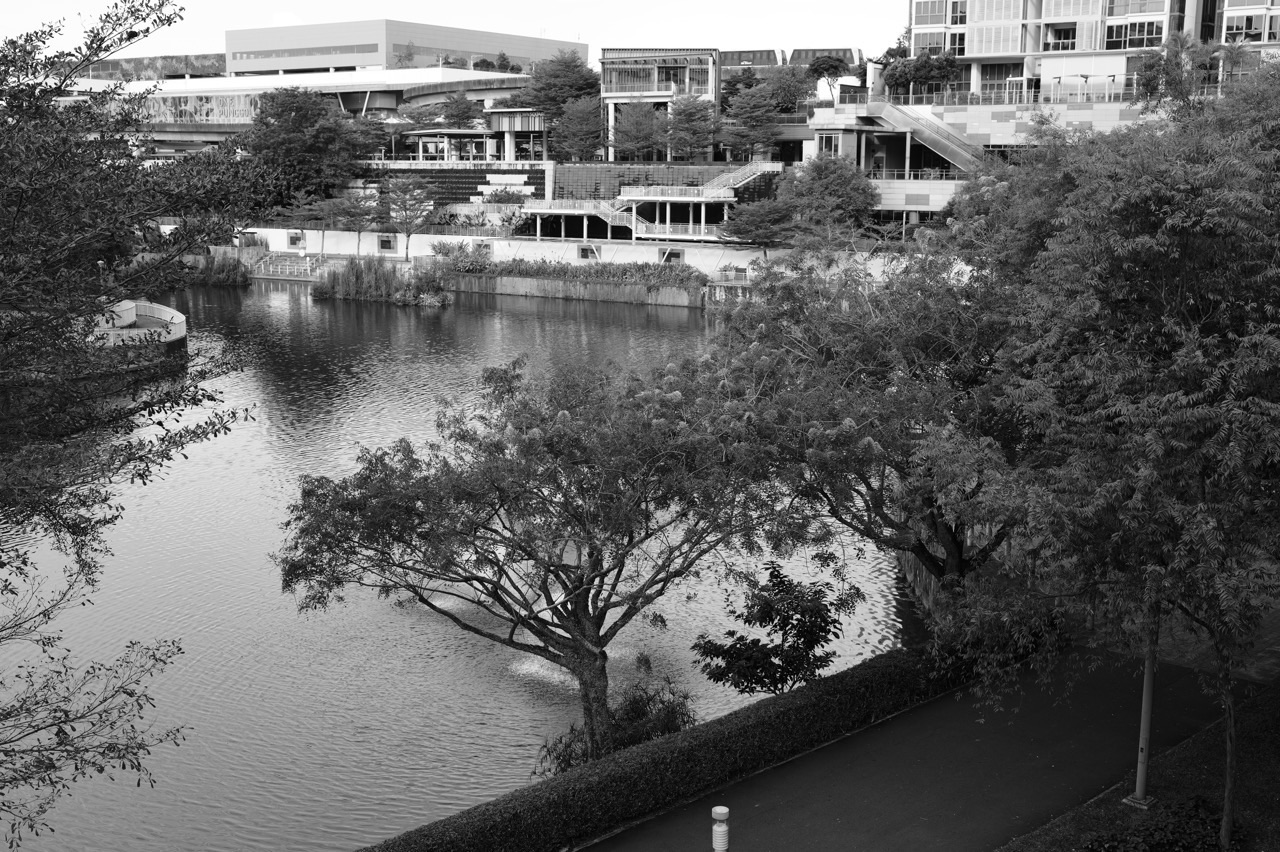
A Punggol photograph of the waterway can show paths, planted spaces and adjoining development. It offers an accessible prompt for investigating how nature, recreation and movement can share a town setting.
<figure class=”wp-block-image size-full”><img src=”https://edukatepunggol.com/wp-content/uploads/2026/10/edukatesingaporeleica04-10-2026-at-20.01.47-117.jpg” alt=”Punggol Waterway Park beside Waterway Point, with landscaped open space” /><figcaption>Punggol Waterway offers a local observation prompt for urban nature, land-use decisions and shared public space.</figcaption></figure>
The photograph is not a hydrological report, biodiversity survey or evaluation of government policy. Students should describe what is visible before inferring which functions it serves. Any technical claim about a particular structure should be checked against reliable site-specific information.
That distinction turns a nice picture into a Geography lesson: observe, question, investigate and evaluate.
Worked Example: A Fictional Neighbourhood Investment Choice
Imagine a planning team considering three options for a growing urban district: a new community facility, additional shaded walking connections and upgraded water-management infrastructure.
The learner is asked to choose the most useful combination under a stated budget and time horizon. The first task is to define criteria: social access, risk reduction, cost, environmental consequences and future flexibility.
A strong answer might recognise that the water-management upgrade addresses a particular hazard while shaded routes improve everyday comfort and access. A community facility may build social opportunity. The preferred sequence depends on the district’s current needs, which the source would need to describe.
The educational point is not that a student must choose a particular option. It is that the judgement should arise from evidence rather than personal preference alone.
Worked Example: National Resilience Under a Supply Shock
Consider a hypothetical supply disruption affecting one imported resource. Students compare a system dependent on one major source with another that has several usable sources and a plan for demand management.
The latter may be better able to adapt under some disruptions, but multiple sources can share vulnerabilities. If all depend on the same transport corridor or power supply, the system may still have a common point of failure.
A thoughtful answer identifies diversity, redundancy, capacity to adapt and cost. These concepts are useful across food, water, energy and economic systems.
Then the tutor asks what further evidence is needed: source shares, backup capacity, costs, expected disruption duration and affected users. That makes the evaluation practical instead of abstract.
The Difference Between Policy Announcement and Real-World Success
An official target sets an intended outcome. An implemented measure shows action taken. An evaluation examines what changed as a result. Those three stages are related but not equivalent.
Suppose a target proposes more public greenery. A report that trees were planted demonstrates activity, but more information is needed to judge survival, ecological connectivity, accessible shade and the needs of residents.
A strong student writes “the measure aims to…” when discussing a proposal, and “the evidence indicates…” when verified outcomes are available. They do not silently convert objectives into achievements.
This precision matters across the Singapore Green Plan, land-use planning, resource diversification and social programmes.
How to Write a Nine-Mark Evaluation Thoughtfully
Where the student’s examination includes a nine-mark judgement question, the response should identify the decision, criteria, competing consequences and a conclusion that matches the preceding evidence. The precise assessment requirements must come from the student’s syllabus.
A useful planning outline is claim → mechanism → relevant evidence → limitation → comparison → justified judgement. It is a scaffold, not a guarantee of marks and not the only possible structure.
For instance, evaluating an urban greening strategy may involve shade and biodiversity benefits alongside land requirements, maintenance and varying accessibility. A judgement might find the strategy valuable but insufficient on its own for a wider resilience problem.
Long answers are not automatically more developed. A clear causal chain and well-chosen criteria usually matter more than repeating a list of slogans about being green.
The Four-Week Sustainable Singapore Tuition Cycle
Week one — Build the concepts. Distinguish sustainability, resilience, growth, quality of life and ecosystem services. Use one local place and one national example to practise changing scale.
Week two — Understand the systems. Map land, transport, water, food, energy and economic connections. Identify one key dependency and one possible shock in each system.
Week three — Evaluate strategies. Compare planning, greening, cleaner energy, resource diversification and social programmes. Require students to name beneficiaries, constraints and the evidence needed.
Week four — Transfer to an unfamiliar decision. Provide a fictional planning scenario or official data extract. The student constructs a balanced judgement independently and reviews the first reasoning error.
Progress is demonstrated by transfer, not by finishing an arbitrary number of chapters in four weeks.
What Parents Can Ask a Geography Tutor
Ask for the exact weakness in the child’s work. Is the issue confusing sustainability with resilience, listing policies without mechanisms, making claims about targets as if they were completed results, or offering one-sided evaluations?
A good tutor should identify one repeatable repair. The next lesson should then check that improvement on a different policy or scenario. If the student can evaluate a new water-security strategy after learning from a transport example, the underlying skill is becoming portable.
Families also need to consider time, travel and competing school demands. Long-term learning should strengthen the student’s independence without replacing rest and normal family life with endless worksheets.
The purpose of Punggol Geography tuition is to cultivate good decisions about evidence—not simply to consume more revision hours.
Common Mistakes in Sustainable Singapore Geography Answers
- “Sustainable means zero impact.” Explain how environmental, social and economic needs are balanced and how impacts are reduced or managed.
- “Resilient means nothing bad can happen.” Distinguish preparedness, resistance, adaptation, recovery and ongoing vulnerability.
- “A target proves success.” Separate commitment, implementation and measured outcome.
- “More density always means better land use.” Evaluate capacity, accessibility, environmental quality and user needs.
- “More trees solve all climate problems.” Identify the specific ecosystem services and limitations.
- “Diversification means complete independence.” Trace remaining common dependencies and costs.
- “A public space guarantees community trust.” Explain how design and participation may create opportunities for relationships.
- “The best policy has no disadvantages.” Compare real trade-offs against explicit criteria.
The repair should always change the student’s next action: check the measure, name the mechanism, identify stakeholders or state a limitation.
Frequently Asked Questions About Sustainable and Resilient Singapore Tuition
Is this in the full G3 Geography syllabus?
Yes. Sustainable and Resilient Singapore is Topic 5.3 of Cluster 5 in the 2027 K329 G3 full Geography syllabus. Students should still match their study materials to their actual examination year.
Is the same Singapore cluster examined for Elective Geography?
No separate Cluster 5 is listed in the 2027 K335 Humanities Geography syllabus. Sustainability principles do appear in its Geography in Everyday Life cluster, so the skill remains relevant while the content coverage differs.
Is sustainability the same as climate action?
Climate action is an important component, but sustainability also includes economic, social, ecological and resource dimensions. A city can make a climate-related improvement while still needing to address other challenges.
What is resilience in Geography?
Resilience is the capacity of systems and communities to withstand, adapt to or recover from shocks and stresses, depending on the framework used. The explanation should specify the system and hazard.
Why do URA plans matter to Geography students?
They provide real examples of spatial planning, time horizons, competing land uses and the relationship between policy and physical development. Students must distinguish approved plans from existing construction.
What role does the Green Plan 2030 play?
It is a national sustainability framework with five key pillars. Students can use it to examine aims and strategies, but should use current official information when citing targets and results.
How can the Four National Taps demonstrate resilience?
They diversify water sources and reduce some dependencies, while still requiring infrastructure, energy, conservation and continuing management.
Does technology guarantee a sustainable outcome?
No. Technology may help when suited to the problem, maintained and made accessible. Costs, resource inputs, environmental effects and implementation influence results.
Can Punggol be a useful local example?
Yes. Its paths, transport and green spaces can prompt investigation of land use, connections and ecosystem services. Claims about policy outcomes require relevant evidence beyond a familiar photograph.
What is a strong final judgement in a Singapore Geography answer?
It identifies the criteria, weighs benefits against limitations, uses the source accurately and gives a conclusion proportionate to the evidence and context.
A Better Future Begins With a Better Geographical Question
Students can continue through Singapore as a Small Island City-State to understand the country’s characteristics, then Singapore’s Opportunities and Challenges to understand what pressures those characteristics create. For the neighbourhood-scale counterpart, read Sustainable Urban Neighbourhoods and Ecosystem Services.
The broader How Geography Works library connects place, scale and systems. The official SEAB 2027 G3 syllabus listing determines examination coverage.
The future of a city is not written on a single blueprint, and the future of a learner is not written on a single test paper. Both improve through observation, sound choices, honest review and the willingness to adjust. That is the core aim of Geography tuition for a sustainable and resilient Singapore.


