
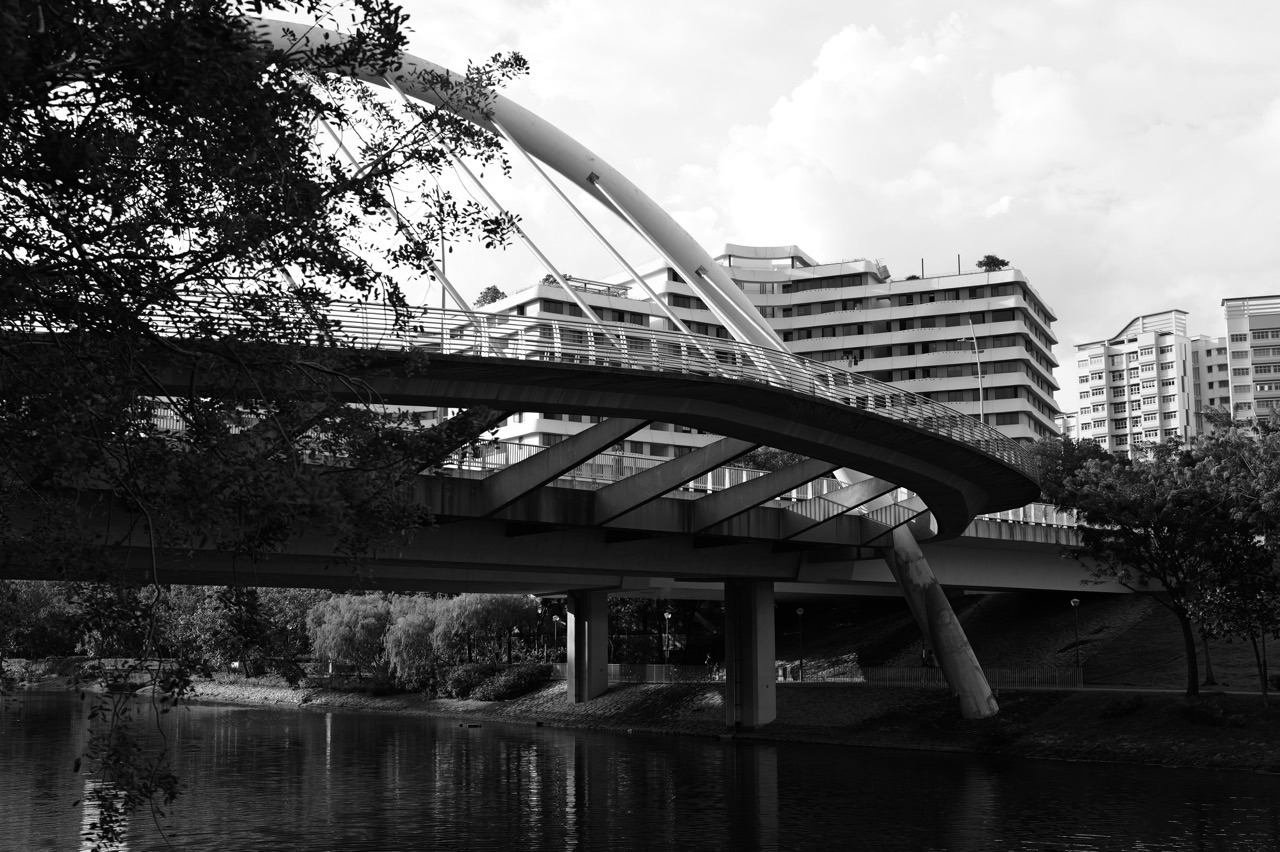
On a school morning in Punggol, everything seems wonderfully ordinary: commuters head towards the station, children cross familiar walkways and the town’s public spaces begin to fill. Then Geography asks a larger question. What if rainfall becomes more intense, an international supply route is disrupted or visitor demand changes? A family searching for Geography tuition in Punggol, Singapore Geography opportunities and challenges, O-Level Pure Geography notes or G3 Geography Singapore revision needs an approach that connects local routines to national systems rather than a scrapbook of alarming headlines.
The core aim of Punggol Geography tuition on Singapore’s opportunities and challenges is to teach students to identify a pressure, explain why Singapore’s characteristics alter its consequences, and evaluate realistic responses alongside the new opportunities those responses may create. In the 2027 G3 full Geography syllabus, Topic 5.2 connects Singapore’s setting to climate change, tectonic hazards and tourism. A strong learner moves between physical process, social or economic vulnerability, action and trade-off without confusing one with another.
Geography is at its most useful when it resists two tempting stories: that every challenge is a catastrophe and that clever planning removes every limitation. Reality sits between. Singapore has constraints, capabilities and connections. A student should learn to examine how those features interact and why one intervention can solve a problem while creating another choice to manage.
The Core Aim: Read a Challenge and an Opportunity as One System
A challenge can be a changing condition, a gap between demand and capacity, an external shock or a physical risk. An opportunity may appear in the way people respond: new infrastructure, innovation, cooperation or improvements in planning.
But not every action that follows a problem is automatically an opportunity, and a positive-sounding development is not proof of a positive outcome. The geographical task is to explain the mechanism.
For example, more intense rainfall may increase pressure on drainage under certain conditions. A possible response is to improve stormwater management through infrastructure, source controls and planning. The benefits would need to be assessed against costs, site constraints and future uncertainties.
A good tuition lesson asks four questions in order: What changes? Who or what is exposed? What response changes the outcome? What remains uncertain or costly?
The goal is a learner who can apply this sequence to an unfamiliar case rather than memorise a list of stock phrases about resilience.
Which Singapore Geography Students Need This Topic?
The 2027 Singapore–Cambridge SEC G3 full Geography syllabus (K329) includes Cluster 5, Singapore, with the topic Challenges and Opportunities. It is part of the full Geography programme. The G3 Humanities (Social Studies, Geography) syllabus (K335) does not have this separate Singapore cluster; it has its own prescribed Geography content and question choices.
Students may still learn useful Singapore examples in other courses, but their formal revision plan must match the subject entered, examination year and instructions of their teachers.
This page concentrates on the specific purpose of Topic 5.2: explain why climate, regional tectonics and tourism create distinctive challenges and opportunities for Singapore. It does not attempt to replace the whole of Climate, Tectonics or Tourism; the companion tutorials own those disciplinary processes in greater detail.
The most efficient tuition respects that boundary. First understand the external mechanism. Then apply it to Singapore’s particular geographical circumstances.
The Three-Lens Method: Hazard, Context, Response
Teach the learner to inspect every scenario through three lenses.
Lens one — the event or pressure. Is it a longer-term rise in sea level, a period of exceptionally heavy rain, a regional earthquake, disruption from volcanic activity or a change in tourist demand? Name the phenomenon accurately.
Lens two — Singapore’s context. Which characteristics matter: low-lying coast, dense infrastructure, limited land, international connectivity, population needs or the structure of the economy? Avoid treating all characteristics as relevant to every issue.
Lens three — the response. Could planning, technology, partnerships, better information or diversification reduce harm or improve opportunity? What new costs and dependencies arise?
Students should be able to draw an arrow through the lenses and narrate the connection. If they cannot explain why a chosen characteristic matters, the point is probably filler.
An answer grounded in this method is likely to be shorter and more convincing than one that lists every possible Singapore fact.
Climate Change: Sea-Level Rise Changes Long-Term Planning
As a low-lying island, Singapore has to account for rising mean sea levels and associated coastal risks in long-term planning. The geographical issue is not simply “water rises.” Higher baseline sea levels can change the conditions under which tides, waves, storm-related events and coastal infrastructure interact.
A student’s explanation should specify the time horizon. Climate projections can span decades; a coastal protection decision may have a long design life; a single high tide is an event within that broader setting.
The National Climate Change Secretariat’s adaptation overview is a suitable official reference for Singapore’s wider planning response. Students should not convert national projections into unsourced claims that a named Punggol street or building will be submerged by a particular year.
The strongest discussion of sea-level rise therefore combines national awareness with local humility: the physical process is understood, while site-level risk needs topography, engineering and scenario-specific evidence.
Coastal Protection Is Not Only About Sea Walls
A coastal response may involve engineered barriers, changes to the land profile, drainage management, nature-based approaches or a mixture of measures where appropriate. The specific strategy depends on the coastline, land use and level of protection required.
A sea wall may offer direct protection at one site but require substantial investment, maintenance and consideration of ecological or access impacts. Nature-based measures can offer co-benefits but may not meet every protection requirement or fit every shoreline.
Students should compare options using criteria: effectiveness for the defined hazard, cost, feasibility, environmental effects, long-term flexibility and consequences for neighbouring areas.
A weak evaluation says “build higher sea walls because they stop floods.” A more careful one explains which coastal pathway the structure addresses, which events remain relevant and how performance would be assessed under changing sea levels.
The teaching aim is neither automatic enthusiasm for engineering nor automatic rejection of it. It is reasoned evaluation.
Changing Rainfall: Distinguish Weather From a Climate Trend
Singapore experiences high rainfall and thunderstorms, but one intense event cannot establish a long-term trend. When examining possible changes in rainfall patterns, students must separate the weather event, the dataset’s observation period and the projection’s conditions.
An urban area may face heightened flood-related pressure where intense rainfall interacts with drainage capacity, impermeable surfaces, elevation or tide conditions. That relationship is geographical because different sites may respond differently to the same storm.
The waterway visible in Punggol is an engaging entry point for questions about land, drainage and public space. Yet it is not a universal example of every type of flood-control infrastructure; students should verify the actual function of any feature before relying on it as a case study.
A lesson can begin with a hypothetical rainfall graph. The learner identifies the measure and trend, then explains what additional site information would be needed to judge a flood risk.
The Urban Heat Island Is Not the Same as Global Warming
Built-up areas may experience temperatures that differ from less urbanised surroundings because of surface materials, the geometry of streets and buildings, vegetation, anthropogenic heat and other conditions. This is the urban heat island effect.
Global climate change is a distinct, wider-scale process. The two can interact, and both may affect local heat exposure, but a student should not use the terms interchangeably.
Heat impacts also depend on the time of day, shade, ventilation and people’s activities or vulnerabilities. A tree-lined route and an uncovered route may offer different thermal experiences without proving a specific air-temperature difference from appearance alone.
In assessment writing, students should explain the causal chain: urban characteristics influence surface or air-temperature conditions; those conditions may affect thermal comfort or exposure; planning responses can change some of the factors.
This is much stronger than the slogan “plant more trees to solve climate change.”
Health Implications Require Careful Mechanisms
The Singapore topic includes potential concerns relating to vector-borne diseases under changing environmental conditions. Temperature, rainfall and water availability can influence some vector life cycles and habitats, but disease outcomes also depend on public-health measures, population behaviour and other ecological factors.
An answer should not claim that every hotter day directly causes an outbreak. The causal relationship has several links and significant contingencies.
Students can distinguish conditions that may change risk from evidence that a particular outbreak has occurred. They should use appropriate official health and climate sources and avoid attaching invented disease numbers to a locality.
This also teaches a broader principle: physical geography influences human health through environments and systems, not through a single magic cause.
Climate Change Can Threaten Biodiversity and Resource Security
Changing environmental conditions can place pressure on ecosystems, including temperature-sensitive and coastal habitats. The level and nature of the impact depend on the ecosystem, exposure, connected pressures and conservation response.
Food, water and energy systems are also exposed to climatic and global risks. Crop production and transport in source countries may be disrupted; water resources may face different stresses; energy demand can respond to changing temperatures.
Singapore’s resource resilience therefore involves systems operating beyond the island as well as the infrastructure on it. A strong explanation does not assume that a single national policy controls the weather or agriculture in other countries.
Ask students to trace a hypothetical disruption from an overseas source region through transport and wholesale networks to consumers. Then identify where diversification, technology or storage might help.
Adapting to Climate Risk Creates Planning Opportunities
Responses to climate pressures may also produce opportunities for innovation. More resilient urban design, improved monitoring, water technologies, environmental engineering and climate-related skills can provide benefits beyond immediate hazard reduction.
But every proposed opportunity should be tested. Does the technology reduce the relevant vulnerability? Who can access the benefit? How expensive is installation and maintenance? Does it create new environmental demands?
The key word is feasibility. High-tech farming may contribute to food resilience in suitable settings, but it also uses energy, water, land, skills and capital. Better water treatment can diversify supply but requires investment and infrastructure.
Teach students to describe what the solution contributes without declaring that it eliminates every constraint. A modest, well-supported claim is more geographical than a dramatic promise.
Tectonic Hazards: Proximity Without Oversimplification
Singapore is not located along the main plate boundaries that produce many major earthquakes and volcanic eruptions in the region. Yet it exists within Southeast Asia, where large tectonic events can affect neighbouring areas and sometimes have indirect consequences for Singapore.
Some distant earthquakes have been felt as tremors in Singapore. Regional eruptions can disrupt aviation or affect air quality under particular circumstances. Such possibilities justify awareness and preparedness, not a claim that Singapore has the same risk profile as a settlement next to an active subduction zone.
The plate tectonics and disaster risk tuition guide explains the processes in greater detail. In this Singapore-specific lesson, the question is how regional events might affect the island through physical exposure or international connections.
Distance matters, but it does not provide absolute immunity.
Earthquake Tremors: Why Building Context Matters
A regional earthquake may generate waves felt far from the fault. Whether those waves cause damage at a particular building depends on the earthquake, distance, wave characteristics, ground conditions, structural behaviour and other factors.
Students must distinguish magnitude from local shaking intensity and consequences. A large earthquake far away does not necessarily produce damage in Singapore, and noticing a tremor does not mean local structures have failed.
The official syllabus also raises concerns about the behaviour of structures built on reclaimed land in plausible regional events. A thoughtful answer explains why ground characteristics and engineering matter without claiming that all reclaimed sites are unsafe.
Good tuition asks: What do we know about the event? Which aspect of local exposure matters? Which information would engineers need? This is a more responsible response than turning a dramatic regional headline into a blanket prediction.
Tsunamis, Ash Clouds and Indirect Disruption
Severe regional tectonic events may produce different hazards depending on location and process. A tsunami is not simply “a large wave caused by every earthquake.” Its formation and propagation depend on the disturbance and ocean conditions.
Volcanic ash can affect aviation and potentially health or other activities under suitable wind and eruption conditions. But describing a regional eruption does not automatically establish an ash exposure in Singapore on a specific day.
Students should understand the difference between the physical event, potential pathway of impact and documented consequence. Many weak Geography answers jump straight from a distant hazard to a local catastrophe without showing the intervening mechanism.
A map-based practice can show a fictional regional source area, wind direction or transport route. Ask learners what the source does and does not justify. This integrates tectonic knowledge with map literacy.
Disaster Risk Management Is an Opportunity to Cooperate
Preparedness can include monitoring, communication, infrastructure design, national response planning and regional collaboration. These approaches work differently: some improve understanding of a threat, while others reduce vulnerability or strengthen the ability to respond and recover.
A monitoring network does not stop plate movement. A warning system does not guarantee that everyone can act safely. Cooperation agreements do not remove physical exposure. Good evaluation identifies exactly which part of the risk each measure influences.
Regional cooperation can matter because hazards, smoke, transport disruption and recovery needs may cross borders. Students should explain what information or capacity is shared and why that sharing improves outcomes.
A convincing judgement considers feasibility, timing, coverage and the populations most affected, not simply whether a response sounds sophisticated.
Tourism: Growth Can Support the Economy
Tourism brings spending, employment, services and opportunities to promote culture and attractions. For Singapore, a globally connected city, visitor flows interact with accommodation, transport, food businesses, events and many related sectors.
But a student should distinguish visitor arrivals, receipts, jobs and profitability. A rising arrival count does not prove that every business or worker benefits equally.
A chain might run: improved accessibility increases the potential reach of a destination; visitor demand supports services; spending can contribute to business activity and employment. Each link depends on actual conditions.
This is the Singapore application of the broader Sustainable Tourism Development guide. It should be used to evaluate Singapore’s particular opportunities and constraints rather than repeat the entire tourism syllabus.
Tourism Creates Social and Environmental Pressures Too
Popular places may experience crowded public spaces, increased transport demand, waste-management needs or pressure on ecological and heritage sites. The magnitude of these effects depends on how many people visit, when they arrive, the infrastructure in place and visitor behaviour.
Tourism can also support conservation and heritage investment. A destination might use revenue or educational programmes to improve protection, although such benefits must be shown rather than assumed.
Students should evaluate the distribution of costs and benefits. Local businesses may welcome more visitors while some residents prefer quieter public spaces. A site manager may need to protect habitat while maintaining public access.
The skill is not to choose a pro-tourism or anti-tourism slogan. It is to identify stakeholders, mechanisms and trade-offs.
Regional Competition and Changing Visitor Expectations
Tourism destinations compete for attention, spending and time. Singapore may benefit from connectivity, attractions and business activity while also facing regional competition and visitors whose preferences change.
A strategy that succeeds one year may not remain sufficient when transport, economic conditions or consumer expectations shift. Tourism resilience therefore includes the ability to adapt products, skills and environmental management, not merely build more attractions.
Students should be careful with predictions. A new facility may create an opportunity, but it does not guarantee visitor growth without evidence of demand, capacity and context.
A strong evaluation compares approaches: upgrading an existing destination, improving accessibility, supporting new skills, or protecting distinctive local environments. Each addresses different constraints.
Place-Making Is More Than Cosmetic Improvement
Place-making involves shaping and managing places to support meaningful human activities, identity and experiences. Public spaces, cultural assets, walkability, accessibility and community participation can all matter.
In a tourism context, place-making may make a destination more attractive, but the benefits should also be considered for residents. A public space should not be judged successful only by visitor photographs or retail turnover.
The Punggol waterfront provides an approachable local prompt for discussing how built and natural environments support different activities. Still, students should not label ordinary neighbourhood use as international tourism.
A tutor can ask the learner to design a fictional place-making proposal with three criteria: resident benefit, visitor experience and environmental care. This encourages balanced judgement instead of decorative marketing language.
Tourism and Sustainability Innovation
Tourism businesses may trial energy efficiency, resource-saving practices, improved waste systems and other sustainability approaches. The value of a measure depends on its actual outcomes and wider effects.
A hotel that reduces water use can lower some operating demands, but its overall environmental footprint also depends on other factors. A destination that markets “green travel” should substantiate the claim with measurable practices rather than an appealing label.
Students should analyse evidence of implementation. What is being measured? How much improvement occurred? Were costs or impacts shifted elsewhere? Does the programme remain effective as visitor numbers change?
These are exactly the evaluation habits that support strong Geography answers about Singapore’s opportunities.
Worked Example: A Hypothetical Triple-Challenge Scenario
Imagine a fictional planning team preparing a coastal visitor district for three pressures: rising long-term sea level, greater peak visitor demand during events, and possible disruption to an international transport connection.
The team could consider coastal infrastructure, safer pedestrian access, managed event capacity, emergency communication and business continuity measures. Each strategy addresses a different pressure.
Ask students to place the proposals in a table with the headings pressure, mechanism, benefit, limitation and evidence needed. They may notice that a broader public walkway helps visitor movement but can conflict with habitat protection; protection structures may have land or cost implications; diversification improves continuity but requires partnerships.
The aim is not to choose every proposal. It is to justify a manageable package and show why its parts work together.
Worked Example: Choose Between Two Adaptation Measures
A fictional classroom source compares two areas. Area A has little space for large new structures but high pedestrian activity. Area B has more land available but a sensitive coastal ecosystem.
Students are asked whether identical coastal responses should be installed at both sites. The careful answer is likely to consider different environmental, engineering and social conditions. But it should not prescribe a specific structure without sufficient information.
A well-argued response would state the necessary further evidence: elevation, projected water levels, ecological surveys, assets, costs and maintenance requirements.
The transferable skill is recognising that an effective response in one place may be inappropriate in another because geography changes the constraints.
A Four-Week Opportunities and Challenges Tuition Plan
Week one — Climate applications. Distinguish sea-level rise, weather extremes and urban heat from one another. Use source evidence to identify the mechanism and Singapore-specific exposure.
Week two — Regional tectonic pathways. Separate regional event, possible indirect effect and proven local consequence. Practise reading maps and explaining what monitoring or preparedness can accomplish.
Week three — Tourism opportunities and trade-offs. Trace spending, place-making, competition and environmental or social impacts. Identify stakeholders and evaluation criteria.
Week four — Integrated judgement. Present an unfamiliar planning scenario combining at least two pressures. Students select relevant evidence, compare responses and defend a conclusion with explicit limitations.
This is a model of how targeted tuition can proceed, not a promise of grades or a claim about a specific timetable at any centre.
What Parents Should Look for in a Geography Tutor
Bring a marked question about Singapore. Ask the tutor to explain the first incorrect move rather than simply provide the “correct” paragraph. Did the student confuse risk with impact, identify the wrong scale, skip the physical mechanism or evaluate without any criteria?
A useful correction has a new behaviour attached to it. If the child jumped from a regional earthquake to a Singapore disaster, the next exercise should require the pathway of exposure and an appropriate qualifier. If the child lists tourism benefits without describing how money or employment changes, the tutor should rebuild the economic chain.
Then give a fresh question to test transfer. One polished rewritten answer is encouraging, but the method must work beyond the same worksheet.
Parents should also evaluate the child’s weekly workload and wellbeing. A lesson helps most when a student has enough energy to think, question and retain.
Common Misconceptions and Their Repairs
- “Climate change means every rainstorm is worse.” Distinguish individual weather events, patterns, projections and location-specific exposure.
- “Sea-level rise means every Punggol path will flood.” Require elevation, time horizon, hazard pathways and site-specific evidence.
- “Every regional earthquake is dangerous to all buildings in Singapore.” Distinguish event magnitude from local shaking conditions and vulnerability.
- “Monitoring predicts exact future earthquakes.” Explain what monitoring, hazard estimation and warning can or cannot accomplish.
- “Tourism receipts equal benefits to every resident.” Follow spending pathways and consider costs and distribution.
- “New attractions guarantee more visitors.” Assess demand, access, competition and capacity.
- “Every technology makes a city sustainable.” Examine the intended mechanism, lifecycle demands, implementation and outcomes.
- “An opportunity removes a challenge forever.” Identify residual risk and what happens under new conditions.
Strong Geography tuition makes these repairs precise enough to apply independently.
Frequently Asked Questions About Singapore Challenges and Opportunities
Is this a compulsory topic in 2027 full Geography?
Yes. Challenges and Opportunities is Topic 5.2 of the Singapore cluster in the 2027 K329 G3 full Geography syllabus. Students should check their specific examination cohort and school sequence.
Do 2027 G3 Elective Geography students study Cluster 5 in their examined syllabus?
No separate Singapore cluster is listed for the K335 Humanities Geography component. Climate, Tectonics and Tourism concepts are present within that course’s own prescribed structure, but the examined material is not identical to full Geography.
Is Singapore at high risk of every tectonic disaster?
No. Singapore’s location differs from places on active tectonic boundaries. Some regional events may have indirect or occasional effects, but risk must be evaluated by hazard type and evidence.
Why does climate change matter if Singapore already has good infrastructure?
Long-lived infrastructure still needs to account for changing hazard conditions, future demand and uncertainty. Strong current systems improve capacity but do not remove every exposure.
Is coastal reclamation always a good adaptation measure?
No. Suitability depends on engineering, cost, ecological implications and planning context. Any evaluation should consider alternatives and long-term consequences.
Can tourism contribute to sustainability?
It can support jobs, livelihoods and investment in heritage or conservation, but may also create environmental and social pressure. The outcome depends on how tourism is managed and who benefits.
How can students distinguish an opportunity from an actual outcome?
An opportunity is a potential benefit made possible by circumstances or an intervention. Demonstrated outcomes require evidence of implementation and results.
Are high-tech farming and water technologies guarantees of resource security?
No. They can contribute to diversified systems while requiring energy, investment, maintenance and appropriate supply chains. Good resource security usually involves managing multiple dependencies.
What is a good Singapore case-study answer?
It identifies a precise issue, connects Singapore’s relevant characteristics to a mechanism and uses verified context to judge a response. It should not recycle generic slogans or invented neighbourhood data.
How can parents check progress after tuition?
Use an unfamiliar Singapore-related source and ask the child to identify the challenge, explain the local exposure, propose a response and state one trade-off. An independent, proportionate answer shows real learning.
The Core Aim Is a Better Question, Not a Longer List
An outstanding Geography student might stand by Punggol Waterway and notice a protected path, a public transport link or a nearby commercial space. Instead of declaring the town “perfectly planned,” the student asks what each feature is intended to do, who it serves and what data would be needed to assess it.
For the national characteristics, see Singapore as a Small Island City-State. For the planning responses, continue to Sustainable and Resilient Singapore. The wider eduKate How Geography Works resource explains the discipline’s emphasis on place, connection and scale.
Climate pressures, regional tectonic events and tourism markets may appear to be three unrelated chapters. Geography reveals the common question underneath: when the world changes, how does a particular place respond—and what would make that response work? That is the core aim of Punggol Geography tuition for Singapore’s opportunities and challenges.


