
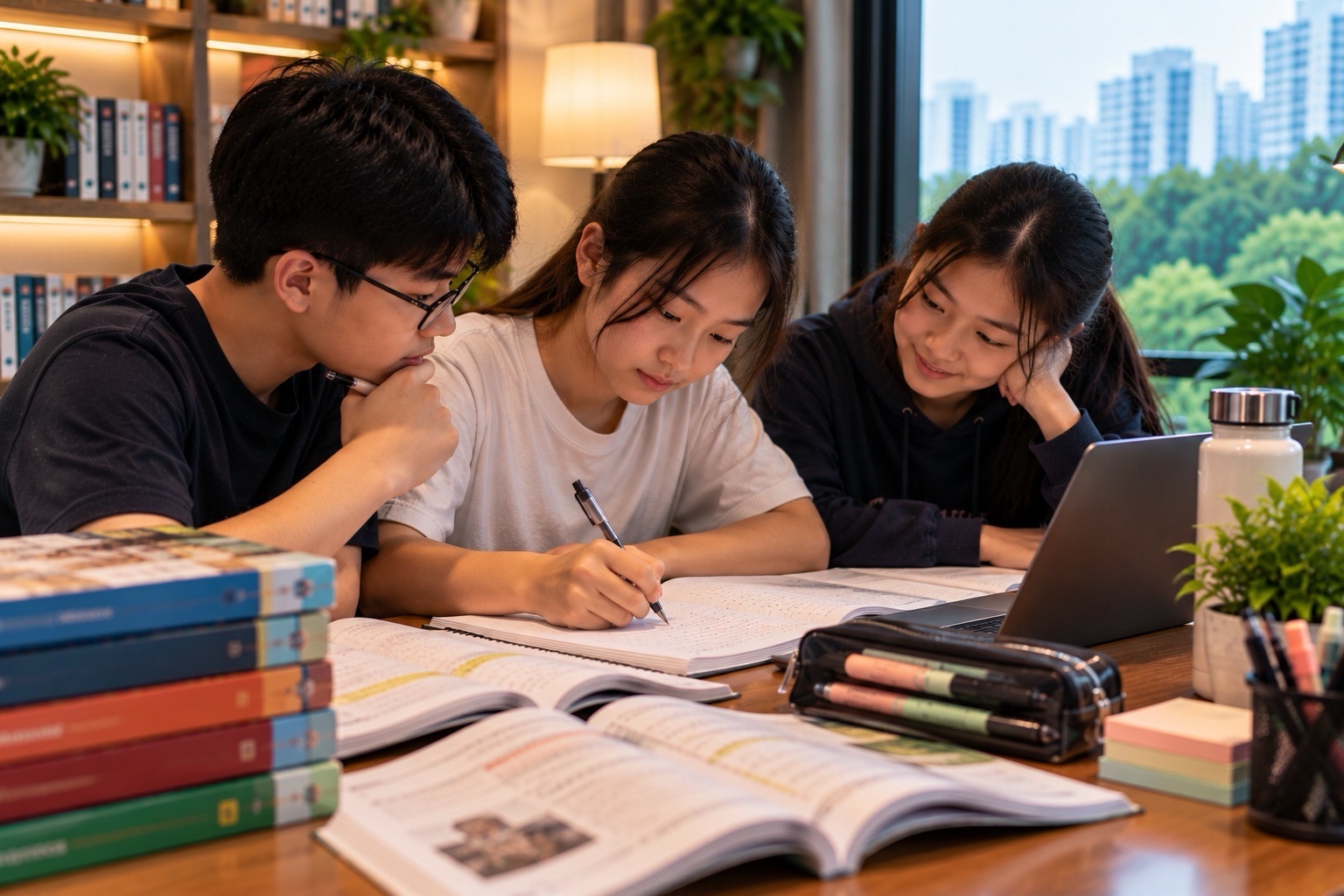
Social emotional learning in Punggol matters because students do not learn with their academic brain in one room and their emotions in another. Confidence, anxiety, belonging, frustration, relationships and self-control all change how well a child can listen, remember, ask for help, recover from mistakes and stay engaged with school. Parents searching for social emotional learning, emotional intelligence for students and how to help children manage emotions are really asking how a learner can function well enough inside themselves and with other people to keep learning.
That is the core aim of Punggol education through social emotional learning: help students understand themselves, regulate emotions, build healthy relationships, make responsible decisions and stay able to learn even when feelings are strong. In Singapore, these capabilities sit naturally within Character and Citizenship Education because personal development, values, relationships and learning are deeply connected.
Explore related education guides and choose your next reading step.
The Core Aim in One Sentence
Social emotional learning helps students manage themselves well enough to learn, relate and make good decisions under real pressure.
This is not about making children cheerful all the time. It is about giving them language and strategies for what to do when they are disappointed, angry, nervous, excluded, overwhelmed or unsure.
Did You Know? Emotion Changes Academic Performance
A student may understand a topic at home and perform poorly in a test because anxiety disrupts retrieval. Another may stop asking questions because they are afraid of looking weak. A child may appear “unmotivated” when repeated failure has made effort feel pointless.
The academic problem and the emotional problem are often interacting systems.
The eduKatePunggol article English Education Systems and Emotion explores how anxiety, confidence, shame, belonging and psychological safety can change performance and learning.
The Five Core Social Emotional Capabilities
1. Self-awareness
Students need to notice what is happening inside themselves.
- I am frustrated, not confused.
- I am anxious because this test matters to me.
- I am avoiding this task because I do not know how to start.
- I am tired, and my attention is dropping.
- I am angry with my group and that is affecting how I listen.
Naming the state accurately makes better action possible.
2. Self-management
Once students notice the state, they need ways to regulate it.
Self-management may include pausing, breathing, breaking a task into smaller parts, moving physically, asking for help, changing strategy, delaying a reaction or returning after a short reset.
The goal is not suppression. It is regulation.
3. Social awareness
Students learn to notice other people’s perspectives, emotions and needs.
This matters in classrooms, friendships, group projects and CCAs. Social awareness helps students recognise that another person’s behaviour may have causes they cannot immediately see.
4. Relationship skills
Healthy relationships depend on communication, boundaries, listening, repair and cooperation.
- Ask instead of assuming.
- Disagree without humiliating.
- Apologise when needed.
- Set boundaries clearly.
- Offer help without taking over.
- Repair trust after conflict.
5. Responsible decision-making
Students need to consider consequences, values, safety and other people before acting.
This connects directly with The Core Aim of Punggol Education | Responsibility and Character Education.
Social Emotional Learning Is Not Therapy
Social emotional learning gives all students useful everyday skills. It is not a substitute for professional mental health care when a child needs clinical support.
Schools, families and tutors can help students name feelings, build routines, improve communication and cope with ordinary stress. When distress is persistent, severe or significantly affects daily functioning, specialist support may be appropriate.
Social Emotional Learning in Primary School
Primary-school students are still learning the basic language of emotions and relationships.
Useful practices include:
- name feelings without shaming them;
- separate the feeling from the behaviour;
- teach turn-taking and repair after conflict;
- use simple calming routines;
- help children ask for help clearly;
- show that mistakes can be corrected;
- give predictable routines so the environment feels safe.
A young child who can say, “I am frustrated because I cannot do this yet” is already much easier to help than one who can only throw the pencil.
Social Emotional Learning During PSLE
PSLE can intensify comparison, anxiety and fear of disappointing adults.
Students benefit from learning to distinguish:
- a low practice score from a permanent identity;
- normal nervousness from a reason to avoid the task;
- one bad paper from the whole revision journey;
- useful pressure from chronic overload.
The companion article The Core Aim of Punggol Education | PSLE keeps examination preparation serious without turning one score into the whole child.
Social Emotional Learning in Secondary School
Secondary school adds new layers: adolescence, stronger peer influence, identity formation, CCAs, social media, more academic independence and more complicated friendships.
Students increasingly need to manage emotions without immediate adult intervention while still knowing when to seek support.
This is where social emotional learning becomes closely connected to self-regulation, resilience, communication and judgment.
Social Emotional Learning and Resilience
Resilience is difficult without emotional regulation.
Students need to recover enough after disappointment to re-enter the learning problem. The article The Core Aim of Punggol Education | Resilience develops the recovery side of this system.
Social Emotional Learning and Self-Discipline
Self-discipline becomes stronger when students understand the emotions that interfere with action.
A child may think they “lack discipline” when the real issue is fear of failure, task ambiguity or exhaustion.
See The Core Aim of Punggol Education | Self-Discipline.
Social Emotional Learning and Communication
Students need language for emotional situations.
- “I need a minute before I answer.”
- “I do not understand what you meant.”
- “I felt left out when the decision was made without me.”
- “I need help with this part.”
- “I am sorry. I should have told you earlier.”
Clear emotional communication reduces guessing and escalation.
See The Core Aim of Punggol Education | Communication Skills.
Social Emotional Learning and Collaboration
Collaboration depends on more than task skills. Students need to manage frustration, accept different working styles, tolerate disagreement and repair conflict.
See The Core Aim of Punggol Education | Collaboration Skills.
The Social Emotional Mistake: Telling Students to “Calm Down”
“Calm down” describes the desired outcome but not the method.
Students need concrete tools:
- name the emotion;
- reduce immediate stimulation;
- slow breathing;
- move physically;
- state the problem in one sentence;
- choose one next action;
- return after a short reset.
Regulation is teachable when the steps are visible.
The Other Mistake: Treating Every Strong Emotion as a Problem
Strong feelings are not automatically unhealthy.
Excitement, disappointment, anger and nervousness all carry information. The educational goal is to help students interpret and respond to feelings rather than eliminate them.
Belonging and Learning
Students learn better when they feel they belong in the classroom and are safe enough to make mistakes.
Belonging does not mean everyone is best friends. It means the student feels recognised, included and able to participate without constant fear of humiliation.
This is one reason teacher and tutor tone matters so much. Psychological safety affects whether students reveal confusion early enough to repair it.
Confidence Is Not the Same as Competence
Social emotional learning should not become empty confidence-building.
The strongest confidence is evidence-based: “I have handled this before,” “I know what to do if I get stuck,” “I can ask for help,” “My method improved.”
This connects with The Core Aim of Punggol Education | Growth Mindset.
Emotional Regulation During Exams
Students can practise simple examination recovery routines.
- Notice the panic signal.
- Pause for one slow breath.
- Mark the difficult question.
- Move to an available mark elsewhere.
- Return later with more time.
- Use a concrete first-principles prompt: what do I know, what is being asked, what relationship connects them?
The goal is not zero anxiety. It is maintaining enough control to continue operating.
Friendships Are Part of Education
Peer relationships shape belonging, habits and motivation.
The local article Education in Punggol | Friendships Are Part of Education explores how peers, belonging and growing up interact with school life.
Social Emotional Learning in the Age of Social Media
Students now manage relationships across both physical and digital spaces.
They need skills for:
- not reacting instantly;
- recognising social comparison;
- handling exclusion or group-chat conflict;
- setting boundaries;
- not forwarding harmful content;
- asking whether online behaviour matches offline values.
Digital life amplifies emotion quickly. Regulation and judgment become more important, not less.
Social Emotional Learning in the Age of AI
AI can become an emotional shortcut as well as an academic one.
Students may use it for reassurance, advice or difficult conversations. The important educational questions are:
- Is this advice appropriate for the situation?
- Should a trusted adult be involved?
- Am I using AI to avoid a conversation I actually need to have?
- Does the tool understand the full context?
AI can support reflection, but it should not replace human relationships or professional support where those are needed.
How Parents Can Build Social Emotional Skills at Home
- Name emotions without labelling the child.
- Ask what happened before offering solutions.
- Separate feelings from behaviour.
- Model calm repair after adult mistakes.
- Give children language for boundaries and help-seeking.
- Keep routines predictable during stressful periods.
- Avoid making every emotional disclosure an immediate lecture.
A child is more likely to communicate honestly when disclosure does not automatically produce punishment or panic.
How Tutors Can Support Social Emotional Learning
Tutors are not therapists, but they still shape the emotional environment of learning.
- Treat mistakes as useful evidence.
- Avoid public humiliation.
- Notice when frustration is becoming unproductive.
- Give students a brief reset and a clear re-entry point.
- Praise specific improvement.
- Build questions gradually when confidence is fragile.
- Encourage precise help-seeking.
At eduKatePunggol, small-group tuition can support psychological safety because students learn that confusion and correction are ordinary parts of serious learning.
What Progress Looks Like
Social emotional progress is visible when students:
- name emotions more accurately;
- recover faster after frustration;
- ask for help earlier;
- communicate boundaries more clearly;
- handle disagreement with less escalation;
- separate one poor result from their identity;
- recognise when fatigue is affecting learning;
- return to tasks after a reset;
- show more empathy toward peers;
- make more deliberate decisions under pressure.
A Simple Social Emotional Routine
- Notice — what am I feeling?
- Name — what is the emotion telling me?
- Separate — what is feeling, and what is fact?
- Regulate — what will help me regain control?
- Choose — what is the next useful action?
- Communicate — who needs to know?
- Reflect — what can I learn from this pattern?
Frequently Asked Questions
What is social emotional learning?
Social emotional learning develops skills for self-awareness, self-management, social awareness, relationships and responsible decision-making.
Why is social emotional learning important for students?
Emotions and relationships affect attention, motivation, memory, confidence, help-seeking and academic performance. Social emotional skills help students stay functional when pressure rises.
Can social emotional skills be taught?
Yes. Students can practise naming emotions, regulating reactions, communicating needs, repairing relationships and making responsible decisions.
Is social emotional learning the same as mental health treatment?
No. Social emotional learning is universal education for everyday skills. It does not replace professional support when a student has significant or persistent mental health needs.
How can parents help children regulate emotions?
Help children name the emotion, model calm behaviour, teach a few concrete regulation strategies and discuss the next useful action once the immediate intensity has reduced.
What is the strongest sign of social emotional growth?
The student can experience a strong emotion, remain connected to reality and relationships, and choose a more useful response than they would have before.
Useful Routes for Punggol Families
- eduKatePunggol home — local education, tuition, parent, student and pathway routes.
- The Core Aim of Punggol Education | Character Education.
- The Core Aim of Punggol Education | Resilience.
- The Core Aim of Punggol Education | Growth Mindset.
- The Core Aim of Punggol Education | Communication Skills.
- English Education Systems and Emotion.
- Friendships Are Part of Education.
- Punggol Atlas.
The Best Social Emotional Learning Keeps Students Available for Life
Students do not need to become emotionless. They need enough awareness and regulation that emotions can inform them without controlling every decision.
That is the core aim of Punggol education through social emotional learning: help students understand themselves, stay connected to other people and remain capable of learning, choosing and recovering even when feelings are strong.
Properly taught kids shine a bright light into the future.


