
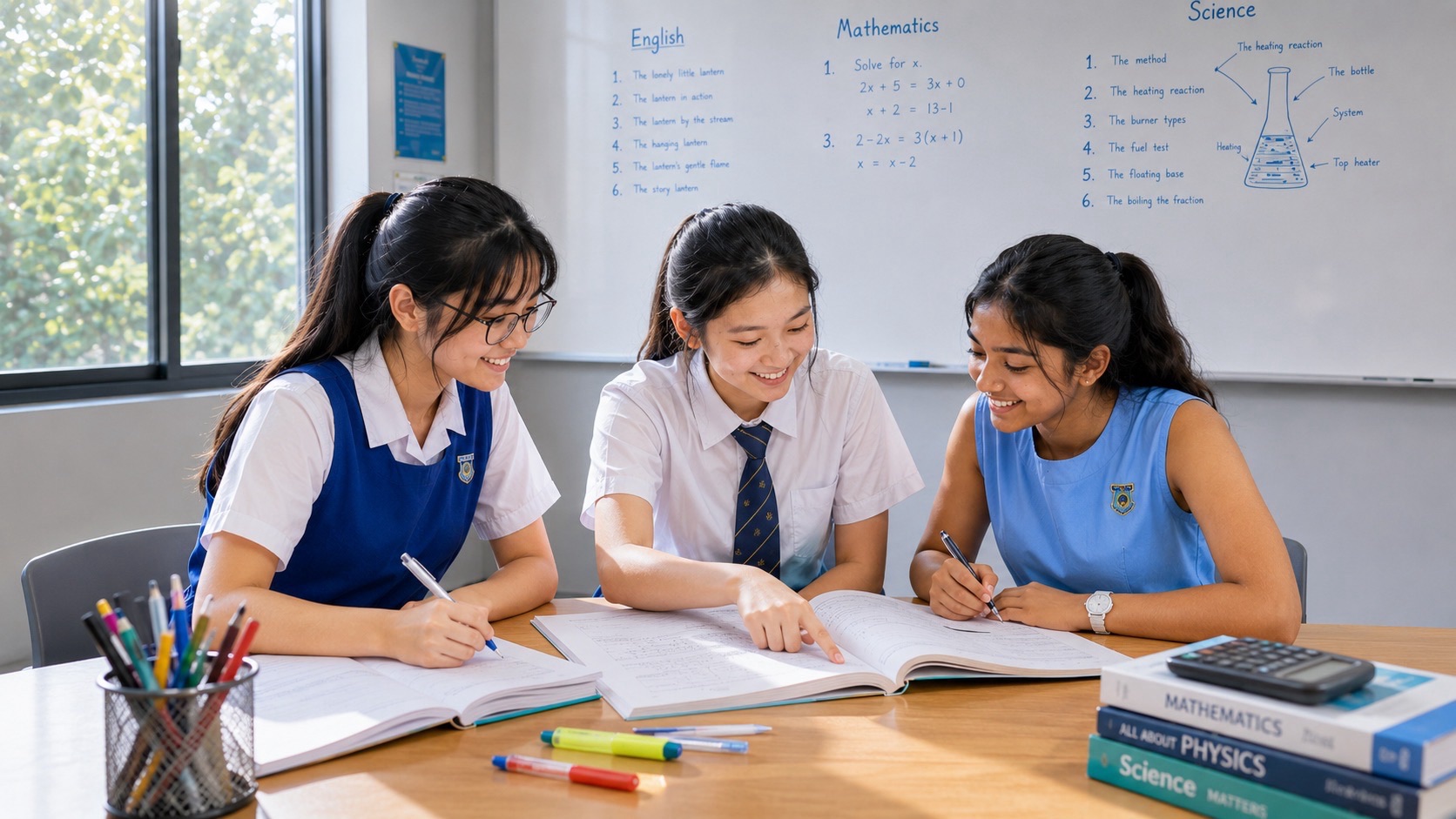
Education in Punggol is shaped not only by teachers, parents and tutors, but by the other children a student spends time with. Friends influence language, habits, confidence, effort, humour, risk, belonging and what a child begins to think is normal.
For families thinking about Punggol schools, Punggol tuition, CCAs and student development, friendships deserve to be understood as part of the learning environment. A peer group can make school feel safer, make study routines easier to maintain and give a child social confidence. It can also normalise avoidance, distraction or unhealthy comparison.
The parent’s job is not to choose every friend. It is to help the child develop enough judgement to recognise which relationships make growing up easier, kinder and more capable.
1. Belonging Changes How School Feels
A student who feels socially secure often has more attention available for learning. A student who spends the day worried about exclusion, conflict or embarrassment may arrive home exhausted even when the academic work was manageable.
Belonging is therefore not separate from education. It changes the conditions under which education happens.
2. Friends Teach What Is “Normal”
Children observe one another closely. Is it normal to finish homework before gaming? Is asking the teacher a question embarrassing? Is reading considered interesting? Is revision only something done the night before a test?
Peer norms can strengthen or weaken routines without anyone explicitly giving advice.
3. Study Partners Can Help Without Becoming Dependency
Friends can compare notes, quiz one another, explain a missed lesson or practise oral responses. This can be useful because explaining to another person exposes whether the idea is actually understood.
The boundary is important. A study partner should help the learner think, not become the person who supplies every answer.
4. Group Chats Are Part of the School System Now
Class and friend group chats can carry homework reminders, project information and practical help. They can also create distraction, anxiety and a feeling that school never fully ends.
Students need digital judgement: know when to check, what to ignore, when not to forward something and when a problem should move out of the chat and into a real adult conversation.
5. Friendship Is Not a Popularity Contest
A child does not need a large social circle to be socially healthy. One or two reliable friends may provide more stability than constant movement through a bigger group.
Parents should be careful not to make “many friends” another performance metric.
6. Conflict Can Be Educational
Small disagreements teach perspective, boundaries, apology, negotiation and repair. Adults may be tempted to intervene immediately, but some conflicts are safe enough for children to work through with light guidance.
The aim is not to remove every difficult social moment. It is to help the child learn what a reasonable repair looks like.
7. Parents Need to Distinguish Conflict From Harm
Not every disagreement is bullying, and not every repeated social problem should be dismissed as “children being children”. Patterns matter. Power differences matter. Exclusion, intimidation and repeated targeting deserve adult attention.
Parents should look for pattern, duration and effect rather than reacting only to a single emotional account.
8. Friends Can Influence Academic Identity
A child may begin saying “I’m just not a Maths person” because that language circulates in the peer group. Another may become more confident because friends treat effort as normal.
Parents can help children notice that group language is not always a fact about the self.
9. CCAs Create Another Social Learning Environment
CCA friendships often form around shared practice rather than classroom seating. This can give students another social identity and another route into belonging.
For some children, that broader network matters especially during school transitions.
10. Tuition Groups Also Create Peer Effects
In a small tuition class, students see how others think, ask questions and respond to correction. The peer environment can make effort visible and normal.
But class matching matters. A student should not spend every lesson feeling permanently behind or permanently unchallenged.
11. Parents Should Ask About People, Not Only Marks
“Who did you sit with today?” “Who helped you?” “Who makes school easier?” “Was there anyone you helped?” These questions can reveal the child’s social world without turning it into an interrogation.
12. Teach Children to Be a Good Friend Too
Friendship education should not focus only on whether other children are good enough. The child also has responsibilities: keep confidence, apologise when wrong, include where possible, avoid humiliation and do not use friendship as leverage.
13. Friendships Change Across Stages
Primary friendships may be built around play and proximity. Secondary friendships can become more tied to identity, interests, academic tracks, CCAs and increasing independence.
Parents should expect change without assuming every change is a crisis.
14. A Useful Parent Standard
- Does the child have at least one person at school who feels safe?
- Do friendships generally support or undermine routines?
- Can the child disagree without collapsing the relationship?
- Can the child ask for help and offer help?
- Does the child still have an identity outside the peer group?
15. Education in Punggol Includes Learning How to Be With Other People
Children will eventually work, collaborate, disagree and build relationships with people they did not choose. School friendships are one of the first long apprenticeships in that reality.
The goal is not perfect social life. It is a child who becomes more capable of belonging without surrendering judgement.


