
A student can know every word in a passage and still fail to understand the passage deeply. One reason is background knowledge.
For Punggol students, comprehension becomes easier when new information has somewhere to attach. Knowledge about Science, society, technology, transport, environment, history, culture and everyday institutions gives unfamiliar texts more anchors.
Background knowledge is therefore one of the hidden engines of Advanced English.
Words need concepts behind them
A student may understand the dictionary meaning of “inflation”, “biodiversity”, “migration”, “renewable energy” or “public housing” but still miss the significance of the passage if the larger concept is unfamiliar.
Vocabulary provides labels. Background knowledge provides the system those labels belong to.
Knowledge reduces cognitive load
When students already know something about a topic, they do not need to build every concept from zero while reading.
That frees attention for harder work: tone, inference, evidence, argument and author purpose.
This is why wider knowledge can make reading feel easier even when the vocabulary level is unchanged.
Inference depends on what the reader brings
Inference combines textual evidence with relevant prior knowledge.
If a passage says a reservoir level has fallen after months of low rainfall, a student who understands the water cycle and supply constraints has more conceptual support for interpreting the consequence.
The important boundary is that prior knowledge should support interpretation, not replace the text.
Background knowledge helps identify what matters
Experts often read efficiently because they know which details are central and which are secondary.
A student reading about transport who understands basic ideas such as capacity, congestion and connectivity can recognise why a statistic matters.
Knowledge improves navigation.
Knowledge improves vocabulary learning
New words are easier to remember when they join an existing network.
A student who understands ecosystems can connect “habitat”, “biodiversity”, “species”, “conservation” and “food web”. The words reinforce one another.
This is one reason the eduKateSG Vocabulary ecosystem emphasises semantic networks and context rather than isolated lists.
Knowledge improves writing content
Students often say they “have no ideas” when the deeper problem is limited content knowledge.
A learner who reads widely has more examples, mechanisms, comparisons and real-world cases available for writing.
Better knowledge does not automatically create better writing, but it gives the language system more useful material to work with.
Knowledge improves oral discussion
Oral answers become thin when students have little to say about the topic.
Background knowledge gives the speaker more than one route: personal experience, observation, explanation, example, consequence and comparison.
The student can then focus on organisation and language instead of inventing content under pressure.
Science is a powerful knowledge feeder
Science gives students concepts about systems, evidence, cause, change, environment, health and technology.
Those concepts appear regularly in English reading and writing.
The Mathematics, Science and Knowledge article shows how subject learning and English can reinforce one another.
Singapore itself is a knowledge field
Students living in Singapore have direct access to useful background knowledge through daily life: public transport, housing, parks, schools, hawker centres, digital services, water management, urban planning and multicultural communities.
These are not merely local trivia. They provide concrete examples for understanding larger ideas about cities, infrastructure, environment and society.
Punggol is a useful local classroom
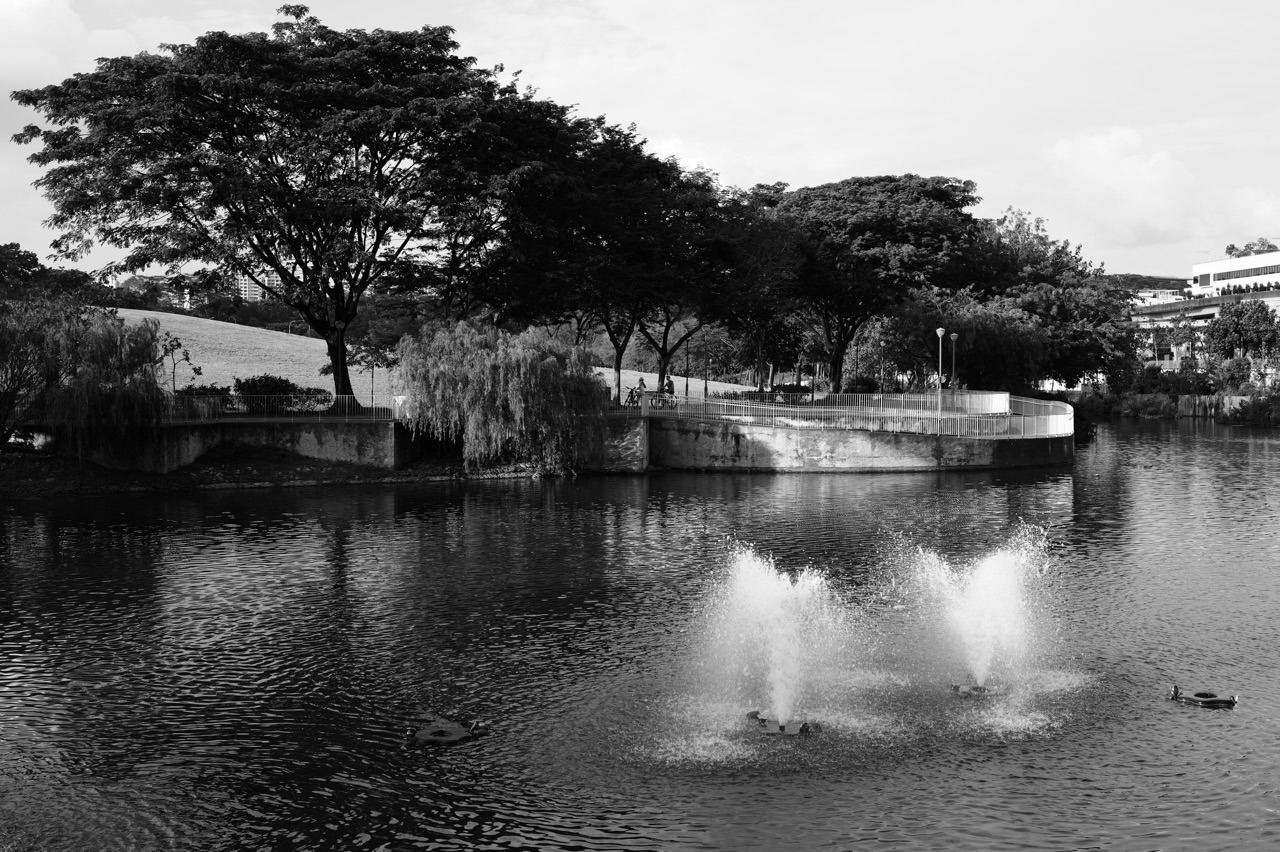
Punggol offers visible examples of urban development, waterways, transport, community spaces, housing, parks and changing infrastructure.
Students can observe a local place, describe it, ask why it is designed that way, connect it to a larger concept and then use the knowledge in reading, writing or oral discussion.
Local observation turns abstract vocabulary into something concrete.
Current affairs can help, but depth matters more than endless headlines
Students do not need to follow every piece of news. A small number of topics understood well can be more useful than dozens of headlines remembered vaguely.
Choose themes with lasting value: technology, climate, education, health, transport, energy, society and culture.
Read enough to understand the mechanism, not just the event.
The knowledge-building loop
- Read or observe something real.
- Learn the important vocabulary.
- Identify the central concept.
- Connect it to what is already known.
- Explain it in simple language.
- Use it later in writing or discussion.
- Return to the topic when new information appears.
Knowledge becomes stronger through repeated connection.
Do not confuse background knowledge with guessing
A student may know a lot about a topic and still need to answer from the passage.
eduKateSG’s FENCE™ English Learning System is important here. The question defines how much external knowledge is allowed to influence the answer.
Use knowledge to understand the text. Use the text to justify the answer.
Knowledge should widen interpretation, not overpower evidence
When several interpretations are possible, background knowledge may help a student see them. But the final interpretation should still be tested against the wording.
Advanced comprehension balances what the reader knows with what the text actually permits.
A useful weekly knowledge routine
- Choose one topic outside the English textbook.
- Read one accessible article or explanation.
- Learn five useful words.
- Write a three-sentence summary.
- Explain one cause-and-effect relationship.
- Discuss one implication or trade-off.
- Return to the topic a week later and retrieve what remains.
The three-layer knowledge test
- Facts: what happened or what is true?
- Mechanism: how or why does it work?
- Implication: why does it matter?
Students who can move through all three layers have much more useful material for Advanced English.
How three-student tuition can use knowledge effectively
Three students may bring different experiences and prior knowledge to the same passage.
The tutor can use those differences to expand the group’s knowledge while repeatedly returning to the text and task boundary.
This creates richer discussion without allowing unsupported personal opinion to replace evidence.
Signs the knowledge engine is growing
- Unfamiliar passages feel less alien.
- Vocabulary connects to known concepts faster.
- Inferences become more plausible and better explained.
- Writing contains more specific examples.
- Oral answers develop more naturally.
- The student can connect ideas across subjects.
- New information is stored in larger conceptual networks rather than isolated facts.
Continue the Punggol Advanced English journey
- From Information to Explanation
- How Mathematics, Science and Knowledge Make English Stronger
- Reading Is Navigation
Continue through the wider eduKate ecosystem
Background knowledge is one of the quietest advantages in English. It helps words make sense, supports inference, gives writing content and makes oral discussion richer. Build knowledge widely, then use FENCE™ to keep every answer anchored to the actual task.


