
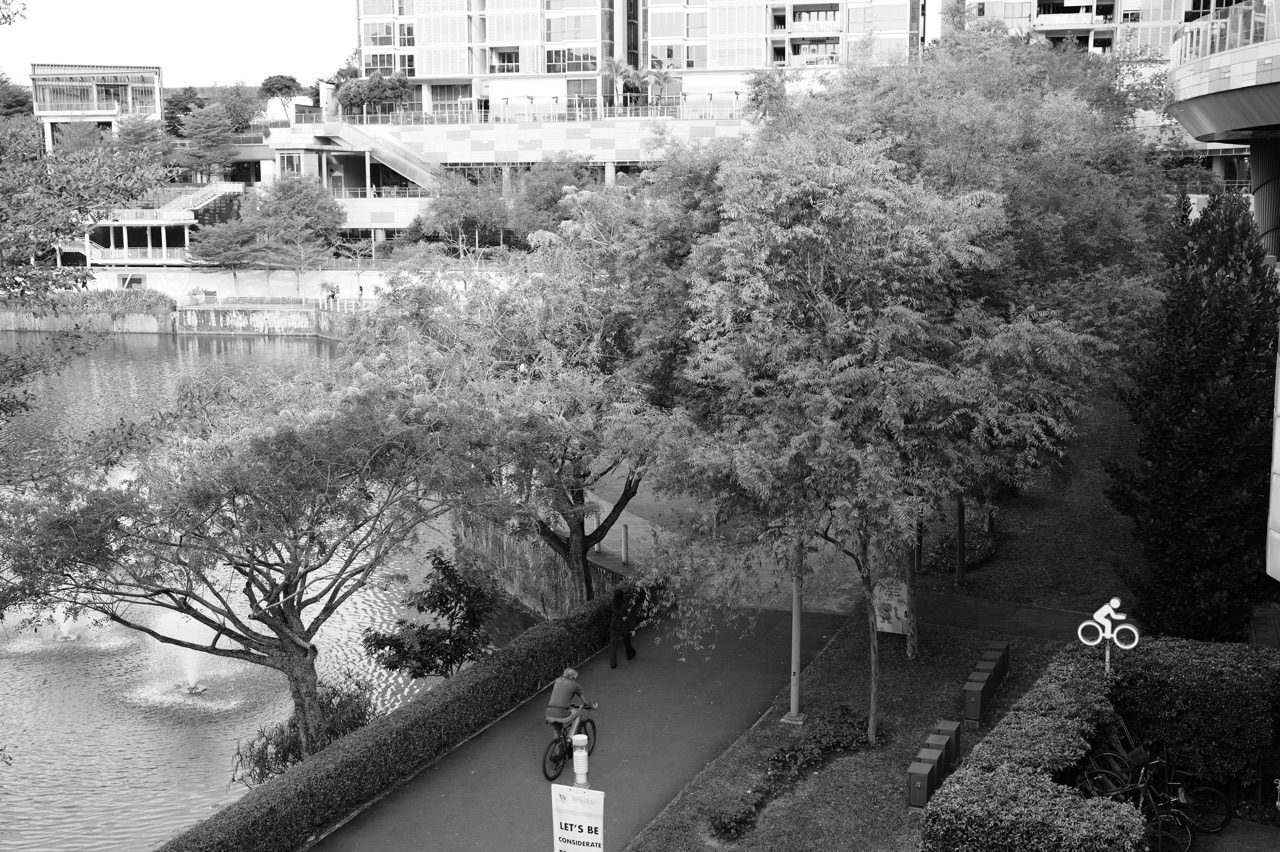
A student cycling along Punggol Waterway is carrying a complete Biology lesson.
Muscles contract. Breathing rate changes. Heart rate rises. Blood carries oxygen and nutrients. Heat is produced. Sweat evaporates. The body coordinates all of these processes while balance, vision and the nervous system keep the rider moving safely.
This article continues the Journey of Learning Advanced Science in Punggol by using exercise as a bridge between Biology, Chemistry and Physics.
It also links naturally to The Science of Movement and Transport in Punggol.
Muscles Need Energy
Muscle contraction requires energy. During activity, the body must increase the supply of usable energy to working tissues.
That is why respiration becomes more important during exercise.
Students should distinguish clearly between breathing and cellular respiration. Breathing moves air into and out of the lungs. Respiration is a chemical process in cells that releases usable energy from food molecules.
Why Breathing Rate Increases
During more intense exercise, muscles require more energy. Aerobic respiration therefore needs more oxygen and produces more carbon dioxide.
Breathing rate and depth can increase to support gas exchange.
The strongest explanation is a chain: greater muscle activity → greater energy demand → greater respiration demand → increased oxygen requirement and carbon dioxide production → increased ventilation.
Why Heart Rate Increases
The circulatory system must transport oxygen and nutrients to active tissues and carry carbon dioxide and heat away.
The heart increases cardiac output through changes in heart rate and stroke volume.
Students do not need all advanced cardiovascular detail at first. The central model is enough: demand increases, transport increases.
Gas Exchange Depends on Surface Area
The lungs are designed for efficient gas exchange. Large surface area, thin exchange surfaces and a maintained concentration gradient all help diffusion.
This connects human Biology to the wider principle explored in Surface Area-to-Volume Ratio — Cells, Diffusion, Heat Exchange and Reaction Rate.
Cycling Is Also Physics
Human Biology does not act alone. The cyclist must overcome rolling resistance and air resistance.
At higher speed, air resistance becomes increasingly important. That increases the power the rider must produce.
For the Physics extension, see Air Resistance and Drag — Parachutes, Terminal Velocity, Shape and Relative Wind.
The Body Produces Heat
Muscle activity is not perfectly efficient. A large part of the energy involved eventually appears as thermal energy.
The body must keep its internal temperature within a safe range. Blood flow to the skin and sweating help regulate temperature.
Evaporation is especially important because water changing from liquid to vapour removes thermal energy from the skin.
Humidity Changes Cooling
Singapore’s humid climate makes this scientifically interesting.
When the air already contains more water vapour, evaporation from sweat can be less effective than in drier air. A student may therefore feel much hotter even at the same air temperature.
This is a good reminder that one variable rarely tells the whole story.
Exercise Is a Coordinated System
| System | Role during exercise |
| Muscular system | produces movement |
| Respiratory system | moves air and supports gas exchange |
| Circulatory system | transports gases, nutrients and heat |
| Nervous system | coordinates movement and senses conditions |
| Skin and thermoregulation | helps control body temperature |
The body works because these systems coordinate.
A Safe Student Investigation
Students can investigate recovery after mild exercise without turning the activity into a fitness challenge.
- Measure resting pulse for a fixed interval.
- Perform a safe, moderate activity appropriate to the student.
- Measure pulse immediately afterward.
- Repeat at fixed recovery intervals.
- Plot pulse rate against recovery time.
- Explain the trend using energy demand and circulation.
The focus is the pattern, not competition between students.
Graphs Make Human Biology Visible
Heart-rate recovery creates a simple time-series graph. Students can ask:
- How high did the rate rise?
- How quickly did it return toward resting level?
- Were repeated trials similar?
- What variables were uncontrolled?
- What can and cannot be concluded from one person’s result?
This brings experimental design back into Biology.
Exercise and Adaptation
Repeated training can change the body over time. That introduces the distinction between an immediate response and a longer-term adaptation.
This is another useful systems idea: some changes happen in seconds, others over weeks or months.
How eduKate Can Use Everyday Exercise
A tutor can use a familiar cycling or walking example to connect respiration, circulation, diffusion, energy and heat regulation.
The student then learns the same concepts in a form that is easier to visualise and transfer.
Continue the Journey
- Previous: Materials and Structures in Punggol.
- Earlier: Biodiversity and Ecology in Punggol.
- Earlier: Smart Town Science — Sensors, Buildings, Data and Energy.
- Return to the Punggol Science Tuition hub.
A simple cycle along the waterway can reveal one of Biology’s most important lessons: life is coordinated chemistry, transport, energy and control happening together in real time.
Browse more learning guides
Use the Punggol Science article index to find another topic, or return to Learning Routes to choose a subject or school-year guide.


