
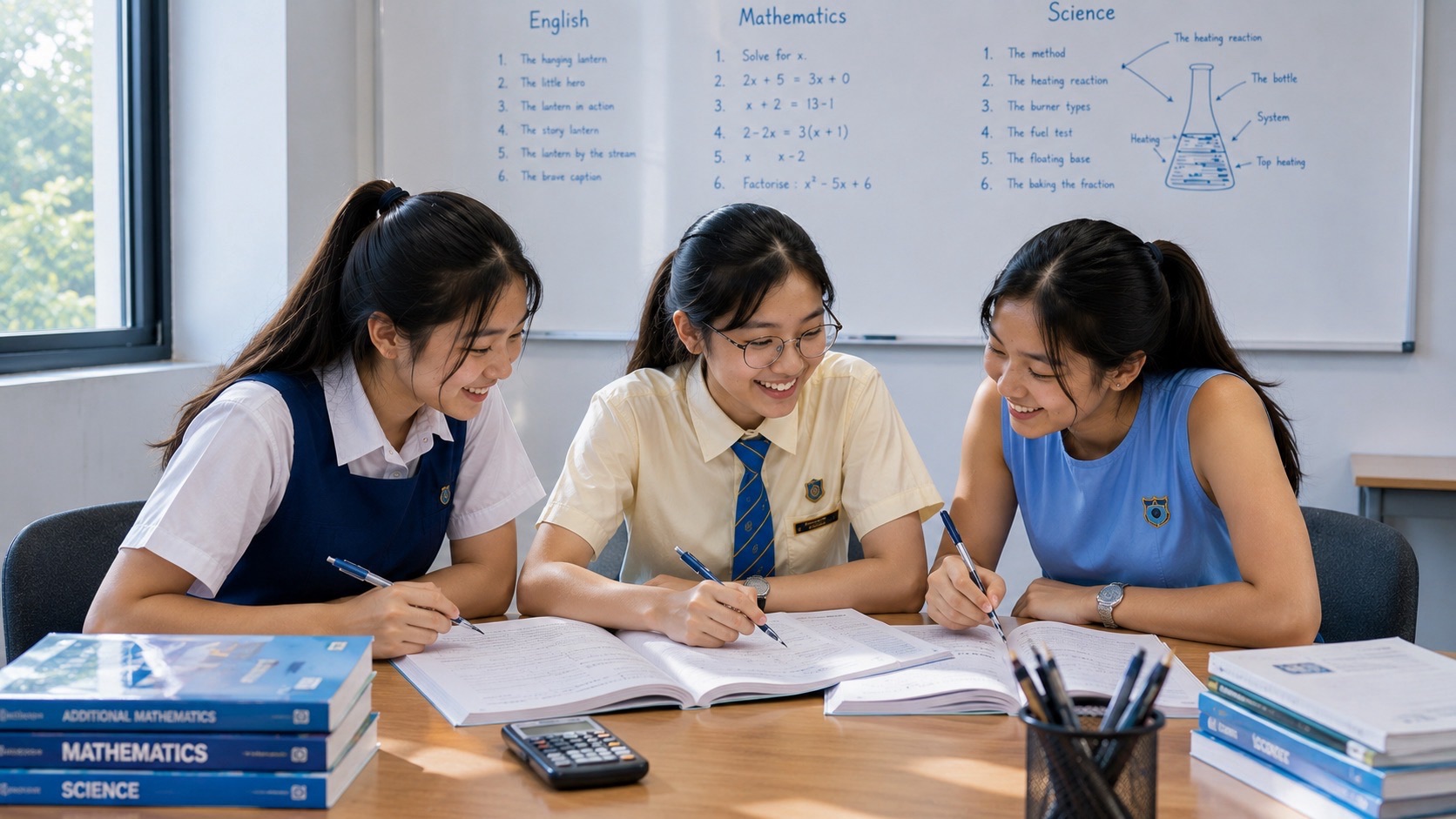
A home-based learning day removes the school commute but does not remove the school day.
The child is at home. A parent may also be working from home. Siblings may need devices at the same time. Meals happen inside the learning schedule. The bedroom, dining table and living room suddenly have to become classroom, office and home without any of them working perfectly as all three.
For searches such as home based learning Singapore, HBL, online learning at home, working from home with kids, Punggol students, study at home and Punggol family routine, the useful goal is not recreating school exactly.
It is giving the child enough structure to complete the school day without turning the entire home into a classroom.
The morning still needs a start
Without the school commute, the day can become strangely soft around the edges.
The child wakes later, breakfast drifts, the device opens slowly and the first task begins with no clear transition.
A simple start helps: wash, dress, eat, clear the workspace and begin at the required time. The child does not need a school uniform, but the day benefits from being visibly different from a Sunday morning.
The device is infrastructure, not the lesson
Home-based learning can make technology look like the centre of education.
It is not.
The device carries instructions, resources, video, submissions and communication. The learning still depends on reading, thinking, writing, solving, explaining, checking and asking for help.
Families should solve the technical basics early—charging, connection, headphones, login access—so the device becomes invisible enough for the work to matter.
Working parents need boundaries around interruption
A parent working from home can appear permanently available to a child.
That is rarely true.
Families can create simple rules: which problems the child should try independently, which problems can wait, and which problems justify interrupting a meeting.
The aim is not to make the child struggle alone. It is to prevent every forgotten password or unclear instruction from becoming an emergency.
Younger and older children need different levels of supervision
A younger primary child may need help interpreting instructions, managing breaks and returning to task.
An older student should increasingly be able to organise the sequence independently, ask for help when genuinely stuck and submit work without a parent becoming the project manager.
Home-based learning can reveal exactly where independence is strong and where it is still being borrowed from adults.
Meals are useful anchors
At school, bells and timetables create breaks.
At home, meals can do part of that work.
Breakfast starts the day. Lunch can create a real midpoint. A snack can mark the transition between school work and the afternoon.
The family does not need a restaurant-quality meal. It needs a pause that is not another screen.
The home should not become permanently educationalised
When school enters the home, parents can begin seeing every room through an academic lens.
The dining table becomes a desk. The sofa becomes reading practice. The bedroom becomes revision space.
Once the school day ends, return the home to the family.
This principle is developed in Build an Educationally Rich Home Without Turning Home Into School.
Getting outside matters more after a screen-heavy day
One advantage of Punggol is that the town gives families several ways to reset locally.
A short walk, playground, cycling route, Waterway path, library visit or neighbourhood errand can provide a clean change of state after hours of devices and indoor concentration.
The child does not need another structured programme. Often the useful thing is simply movement and distance from the desk.
Do not schedule extra tuition merely because travel time disappeared
Home-based learning can create the illusion that the child has gained a large block of free capacity.
In reality, the child may be more screen-tired and less socially refreshed than after an ordinary school day.
Tuition should still be judged by learning need and total load, not by whether the commute happened to disappear that day.
A workable HBL day
- Keep a recognisable morning start.
- Prepare devices and logins before lessons begin.
- Give children age-appropriate help-seeking rules.
- Use meals as genuine breaks.
- Separate parent work time from child support time where possible.
- End the school day visibly.
- Get outside or move after long periods of screen-based work.
What HBL reveals about learning
School normally hides a great deal of scaffolding.
Timetables, bells, teachers, peers, classrooms and routines keep the student moving.
At home, some of that structure disappears. What remains becomes revealing: can the child start, persist, ask for help, manage a device, take a break and return?
Those capabilities matter long after the HBL day ends.


