
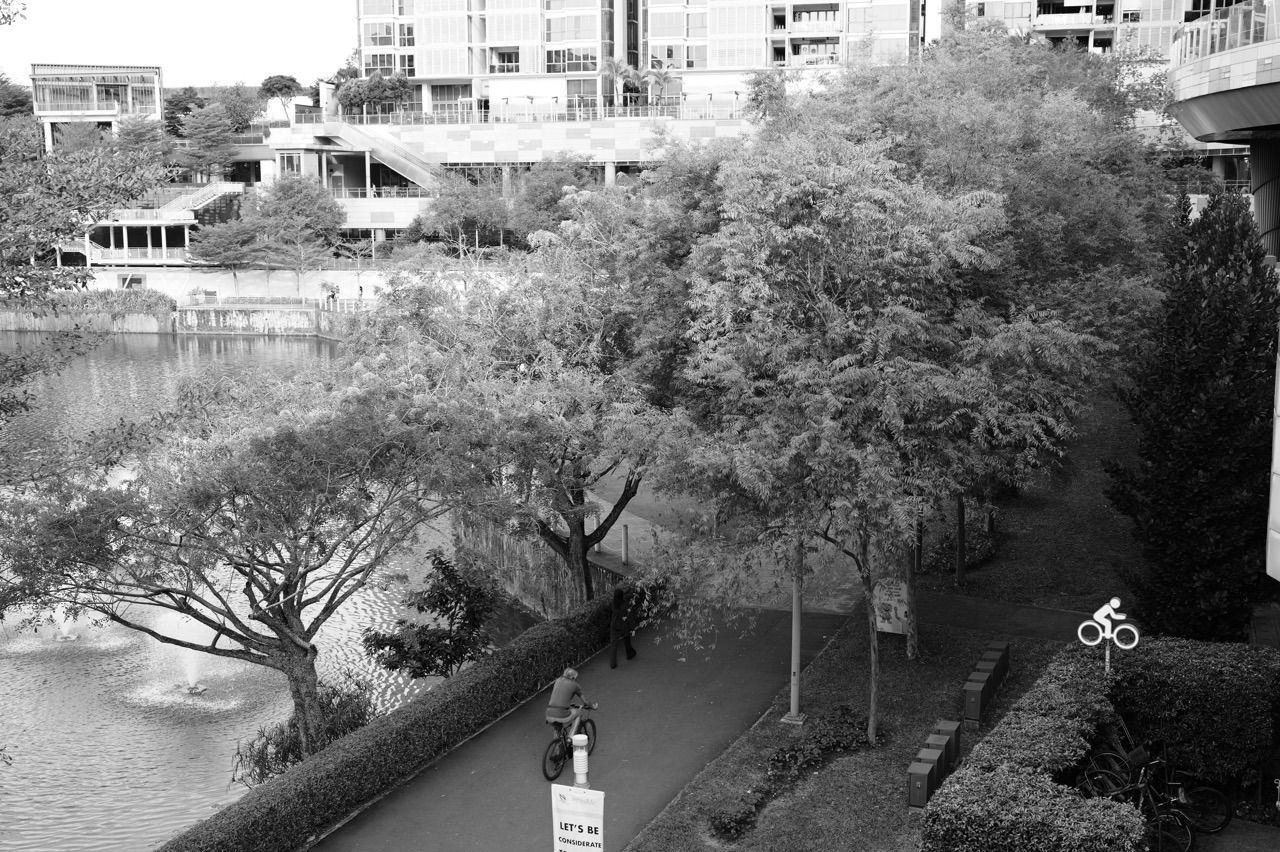
Education in Punggol is often pictured sitting down: classroom chairs, tuition tables, homework desks and revision papers. Yet children learn inside bodies, and bodies need movement. Walking, sport, cycling, playground time and ordinary physical activity can support attention, recovery, coordination, confidence and the ability to return to academic work with more usable energy.
For families balancing Punggol schools, Punggol tuition, CCA, homework and screen time, movement should not automatically be treated as time stolen from study. The educational question is whether the whole week helps the child remain capable of learning.
This does not mean every child needs competitive sport. It means physical activity belongs inside a sustainable learning system.
1. Sitting Still Is Not the Same as Paying Attention
A child can remain in a chair while attention has already disappeared. Parents sometimes respond by extending study time.
A short movement break can occasionally restore more effective work than another thirty minutes of low-quality sitting.
2. Walking Can Be a Transition
A walk home from school, the LRT station or the library can create a natural decompression period. The child leaves one environment before entering the next.
In Punggol, parks, connectors and neighbourhood walking routes make ordinary movement part of daily life for many families.
3. Sport Teaches Practice Differently
Sport makes repetition visible. A movement is awkward, practised, corrected and gradually becomes more automatic.
Students can transfer this understanding to academic learning: fluency is often built rather than discovered.
4. Movement Can Support Emotional Recovery
After a poor result or difficult school day, some children benefit from talking immediately. Others need to move first. Walking, cycling or sport can lower the intensity enough for a later conversation to become more productive.
5. Do Not Fill Every Free Hour With Tuition
A timetable with several empty hours may look underused. But some of that space may be doing important recovery work.
Adding another class has an opportunity cost if it removes the child’s main period for physical activity.
6. CCA Sport Counts as Education
Sports CCAs can develop teamwork, discipline, response to feedback, performance under pressure and responsibility to others.
The physical activity is only one layer of the learning.
7. Non-Sporting Children Still Need Movement
A child does not need to identify as athletic to benefit from movement. Walking, cycling, playground time, swimming, dancing or casual family activity can provide enough variety.
The goal is sustainable movement, not athletic prestige.
8. Heavy Study Periods Need Deliberate Breaks
During PSLE revision or Secondary examination preparation, students may spend longer periods at a desk. That makes short movement breaks more important, not less.
The break should have a clear end so that recovery does not become avoidance.
9. Family Activity Can Replace Some Screen Time Without Becoming a Battle
It is easier to reduce passive screen time when a concrete alternative exists. A walk, ride or simple outing gives the family something to do rather than merely something to stop doing.
10. Movement Teaches the Geography of the Town
Walking and cycling through Punggol help children learn routes, distances, landmarks and how neighbourhoods connect. This strengthens practical independence as well as local knowledge.
The town becomes easier to read when it is experienced at human speed.
11. Do Not Use Exercise as Punishment
When physical activity becomes a consequence for bad behaviour, children can learn to associate movement with punishment.
Movement should remain part of ordinary life, not a penalty.
12. Watch the Whole Child
If a child is constantly restless during homework, the problem may not always be motivation. Look at how much movement the day contained, how long the child has been sitting and whether the week is physically unbalanced.
13. A Simple Movement Standard
- Some movement most days.
- Long study blocks interrupted by short physical breaks.
- At least one form of movement the child does not hate.
- Enough recovery after heavy school or CCA days.
- No assumption that every free hour must become academic time.
14. Education in Punggol Needs Bodies That Can Carry the Week
A student can have excellent books, tuition and study plans and still struggle if the week leaves no space for movement and recovery.
Physical activity is not a replacement for academic work. It is one of the conditions that can make sustained academic work more realistic.


