
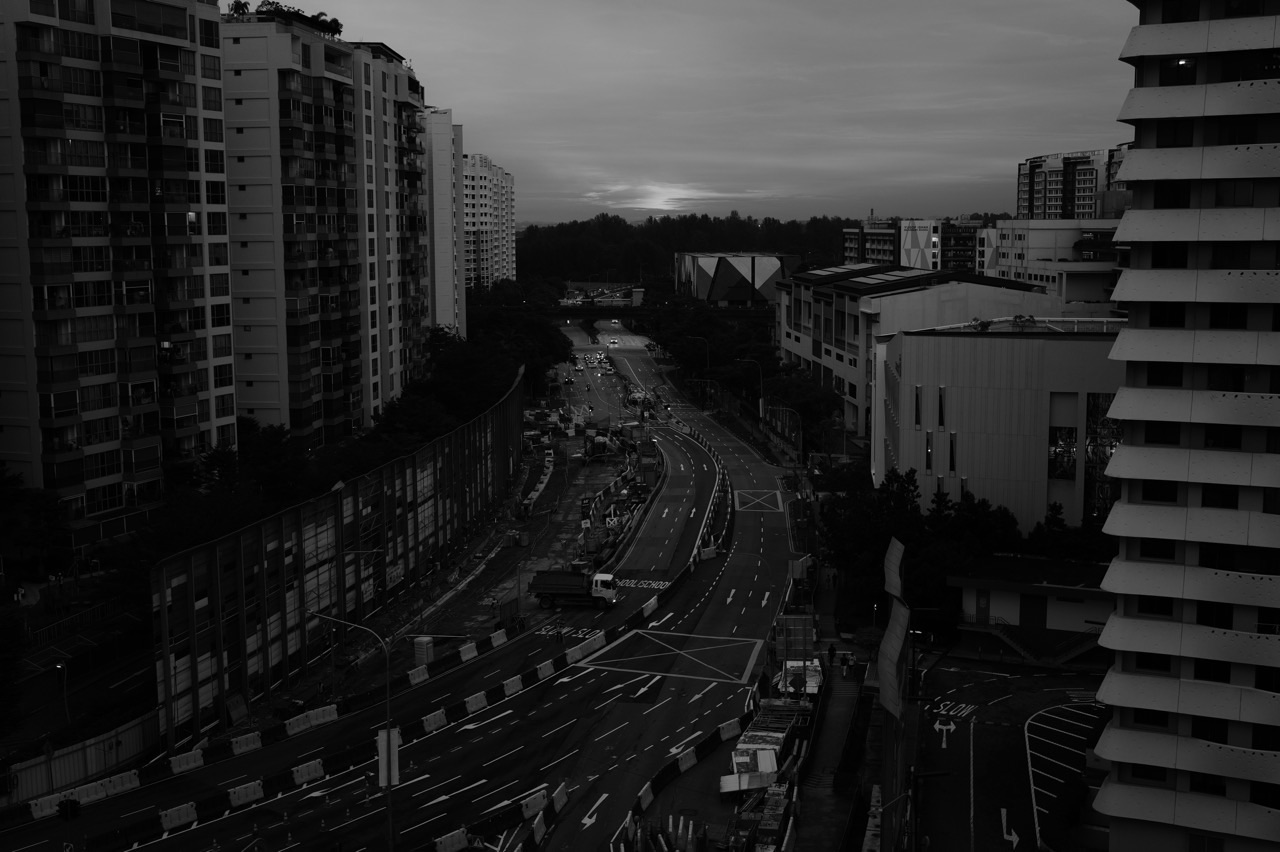
Education in Punggol sits inside a town with two construction sites. One is easy to see: stations, campuses, businesses, homes, public spaces, water systems and technology. The other is almost invisible: knowledge, confidence, judgement, responsibility and skill developing in the children who live here. Punggol’s future is being built twice.
The first future appears in planning maps and physical projects. The second appears in classrooms, homes, libraries, school bags, corrected mistakes and conversations. One can be measured in kilometres, buildings and investment. The other is measured in what a young person can understand, do, explain and carry forward without constant adult support.
The two futures eventually meet. URA describes Punggol Digital District as an integrated environment for work, learning and community. JTC describes a 50-hectare district where academia, industry, government agencies and businesses converge. The usefulness of such infrastructure ultimately depends on people capable of understanding, operating, improving and governing it.
The visible future can be built faster than the human one
A station can open on a scheduled date. A building can reach completion. A digital platform can be launched. Human capability develops differently. It requires years of accumulation.
Reading grows through thousands of encounters with language. Mathematical confidence develops through concepts that survive long enough to support later concepts. Scientific judgement grows through repeated experiences of prediction, evidence and revision. Responsibility develops through increasingly real consequences.
Education therefore operates on a slower clock than construction, even though both are investments in the future.
A town can be ready before a child is ready
New opportunity does not automatically become usable opportunity. A nearby university cannot help a learner who cannot yet access the pathway. A technology ecosystem does not automatically create digital judgement. A well-connected town does not automatically produce people who know where they want to go.
This is not a deficit story. It is a reminder that physical access and human readiness are different variables.
The first build: infrastructure
Infrastructure changes the field in which families live. Transport reduces or rearranges travel friction. Libraries expand access to information. Schools organise formal learning. Parks create public space. Universities and workplaces bring new institutions closer to home.
The local estate already explores these visible systems through the Complete Punggol Guide, A New Connection Changes More Than a Journey Time and A Town Is Not Only Where People Sleep.
The second build: capability
Human capability is the ability to turn opportunity into action. It includes subject knowledge but extends beyond it.
- Read difficult material without giving up too early.
- Represent a problem before rushing to an answer.
- Use evidence without overstating what it proves.
- Explain an idea so another person can follow it.
- Recognise when a method has stopped working.
- Ask for help without outsourcing responsibility.
- Recover after failure and return to useful work.
These capabilities accumulate quietly. No crane marks their progress.
The two builds require different maintenance
Infrastructure needs inspection, repair and upgrading. Learning does too. Knowledge fades when unused. Bad habits become defaults when they are repeatedly rewarded. A child can appear fine until the next level reveals that an earlier prerequisite did not survive.
Good tuition can act as educational maintenance when it identifies the weak link, repairs it and returns the learner to independent progress. Tuition should not become a permanent external control system that replaces the learner’s own capability.
A city of technology still depends on human interpretation
Smart systems can monitor, recommend and optimise. They still operate inside goals chosen by people. Someone decides what should be measured, what counts as success and which trade-offs are acceptable.
This is why the local article A Smart Town Still Needs Thoughtful People belongs beside any story about Punggol’s technological future.
A sustainable district still depends on sustainable behaviour
Buildings can be designed for efficiency. Transport can make car-lite choices easier. Green infrastructure can reduce environmental load. Residents still make daily decisions about use, care and participation.
The human layer does not replace good design. It completes it.
Parents participate in the second construction site
A parent does not need to become a professional educator to influence the human build. Ordinary family routines matter.
- Reading together when a child is young.
- Expecting work to be checked rather than merely completed.
- Allowing the child to make age-appropriate decisions.
- Asking “How do you know?” rather than supplying the answer.
- Protecting sleep and recovery when the week becomes overloaded.
- Letting the child experience manageable consequences.
- Celebrating correction as evidence that thinking improved.
These practices do not look like grand future planning. They are exactly how the second future is built.
A child can inspect both construction sites
Ask the child to choose one visible Punggol development and one personal capability they are currently building. Put them side by side.
| Town build | Human build |
|---|---|
| New connection | Learning to navigate independently |
| University beside business | Learning to apply knowledge to real problems |
| Smart infrastructure | Learning to verify and judge automated output |
| Public learning space | Building a reading and research habit |
| Sustainable design | Learning stewardship and responsible use |
The comparison helps the child see that the future is not only something adults are constructing around them. They are also constructing themselves.
The quiet standard
Punggol’s future will be visible in concrete, rail, data, water, greenery and institutions. It will also be visible much later in how its children think, work, care, decide and contribute as adults.
A town becomes its future only when the next generation is ready to inherit what has been built. That is why education belongs inside the story of Punggol’s development, not beside it.


