
Education in Punggol sits beside a useful question: what does it mean for a child to grow up in a smart town? The easy answer is technology. Sensors, data, digital systems, robotics and connected infrastructure can make parts of a district work more efficiently. The harder answer is human: someone still has to decide what problem matters, which trade-off is acceptable and whether an automated result deserves trust.
Punggol makes this question local. HDB describes the town as a living laboratory for sustainable urban ideas and Northshore as an early smart district. JTC describes Punggol Digital District as a place where education, industry, technology and community converge. In May 2026, JTC also announced a physical-AI testbed in the district for real-world robotics. The machines may become increasingly capable. The educational question is whether the people around them become more capable too.
For Punggol families, smart town education should not mean teaching children to admire technology automatically. It should mean helping them ask better questions about evidence, purpose, reliability, fairness, safety and human responsibility. Current public context is available through HDB, JTC and URA.
Smart is not the same as wise
A system can process more information than a person and still require human judgement about goals. A route optimiser can reduce travel time, but someone must decide whether time is the only value. A sensor can detect a pattern, but someone must decide what response is proportionate. An AI system can generate options, but someone must decide which evidence is trustworthy enough to act on.
This is where education matters. Children need technical literacy, but they also need the habits that prevent technical capability from becoming automatic obedience.
Five questions a thoughtful person asks of a smart system
- What problem is this system trying to solve?
- What evidence or data does it use?
- What can it get wrong?
- Who gains, who bears the cost and what trade-off is being made?
- Who remains responsible for the final decision?
These questions are useful whether the object is a transport app, a recommendation system, a robotic device or a school learning platform. They turn technology from spectacle into something that can be examined.
A child can practise this without becoming an engineer
The aim is not early specialisation. A Primary student can compare two routes suggested by a map and ask why the “fastest” route may not be the easiest. A Secondary student can compare an automated summary with the original source and identify what disappeared. A family can discuss why a system optimised for efficiency might produce a different answer from one optimised for access or safety.
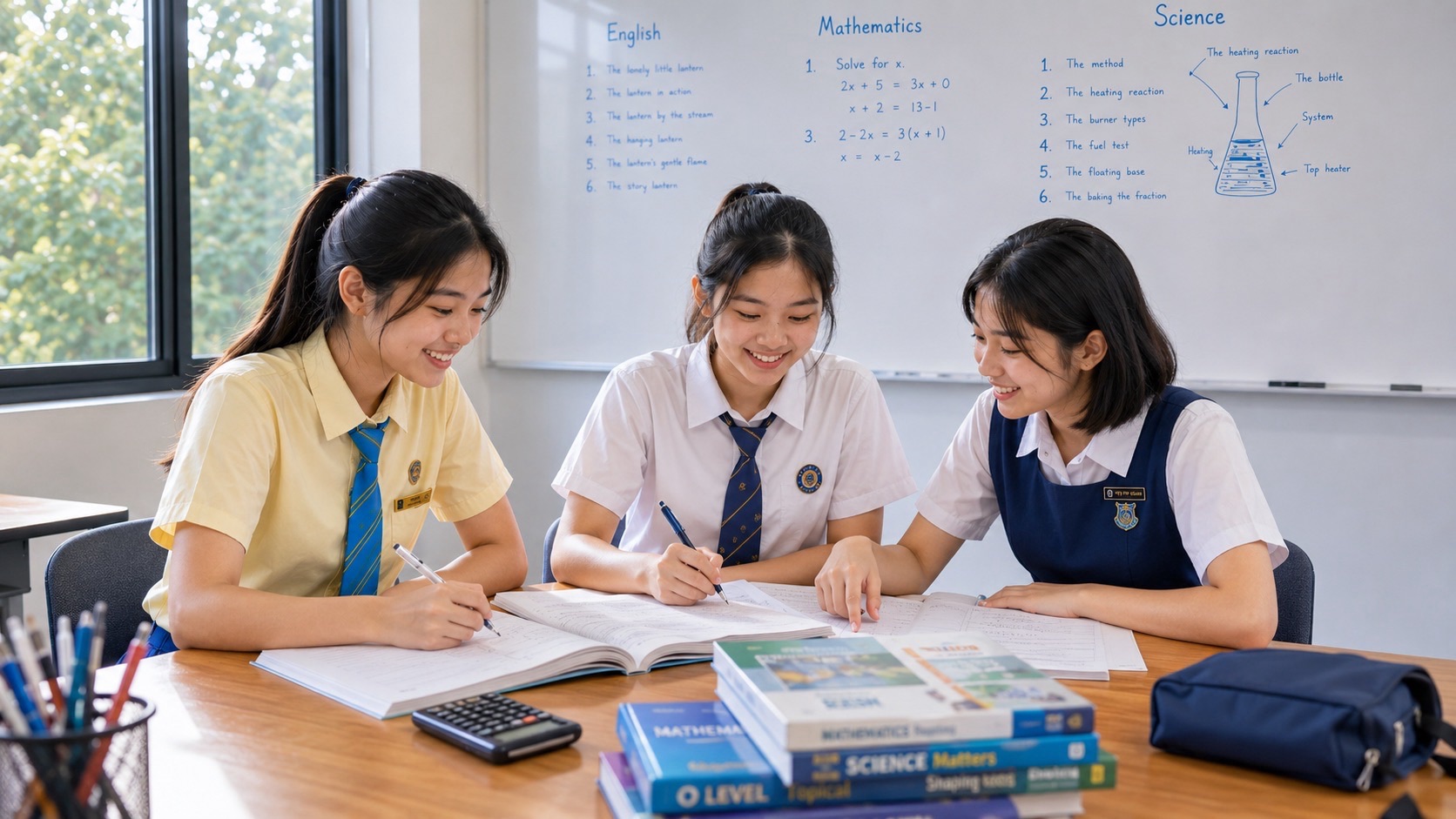
The learning is interdisciplinary. Mathematics helps with quantities and optimisation. Science helps with evidence and testing. English helps with claims, explanation and ambiguity. Civics appears when the child asks who decides and who is affected.
The local environment makes abstract digital literacy concrete
Punggol Digital District is designed around integration: SIT, business activity, community uses, greenery, walking, cycling and public transport. That makes the district an unusually good place to discuss systems. A smart district is not one machine. It is an arrangement of buildings, networks, institutions and human routines that must coordinate.
Ask a child to choose one ordinary experience—arriving by train, crossing between buildings, finding a service, entering a library, using a map. Then ask what invisible systems make the experience possible. Electricity. Timetables. Signage. Data. Maintenance. Rules. Human labour. Good systems often disappear from attention precisely because they work.
Thoughtfulness includes knowing when not to automate
Efficiency is valuable, but not every human problem should be reduced to speed. Education should preserve judgement about contexts in which patience, conversation, discretion and care matter.
A tutor who reads a child’s hesitation may notice something no score has captured. A parent may decide that a slightly slower routine produces a calmer evening. A teacher may choose a difficult discussion instead of an instant answer because the struggle itself is educational. Smart systems should expand human capability, not quietly define the only values that count.
Teach verification as a daily habit
When technology produces an answer quickly, verification becomes more important, not less. Children should learn to return to sources, test calculations, compare claims and notice when confidence is higher than evidence.
| Fast output | Thoughtful response |
|---|---|
| A route suggestion | Check whether it matches the family’s real constraints |
| An AI summary | Open the original source and compare |
| A numerical result | Estimate whether the answer is plausible |
| A confident claim | Ask what evidence supports it |
| A recommendation | Ask which criteria produced the recommendation |
A smart town also needs trust
No urban system works through technology alone. People queue, follow signals, report faults, care for shared spaces, cooperate during disruption and trust institutions enough for coordinated action to remain possible. These are social capabilities.
Children learn them through ordinary life: returning library books, respecting shared facilities, helping a younger sibling navigate a route, following safety instructions, asking before assuming and correcting an error without hiding it. The smart city has a human operating system.
A smart town raises the standard of human judgement
When systems become more automated, connected and data-rich, people can appear to have fewer decisions to make. In practice, the remaining decisions often become more important. A route can be suggested automatically, but someone still decides whether it suits the actual family. A recommendation can appear instantly, but someone still decides whether the source is trustworthy. A system can optimise for speed while a human decides whether speed is the right objective.
That is why a smart town still needs thoughtful people: automation removes some routine work while concentrating responsibility in the places where human judgement remains necessary.
Teach children to ask what the system is optimising
Every recommendation reflects an objective. A navigation system may optimise time. A school timetable may optimise room use. A queue may optimise throughput. A family may care about a different objective: safety, cost, accessibility, recovery, fairness or learning quality.
Students should learn to ask: “What is this system trying to make better, and what might it be ignoring?”
Fast output still needs slow verification
Technology can produce confident answers quickly. Verification becomes more important precisely because speed reduces the natural pause during which a person might otherwise reconsider the claim.
A strong student habit is to separate output from evidence: what did the tool say, what source supports it, and what would make me revise the conclusion?
Use three verification levels
- Low consequence: quick plausibility check.
- Moderate consequence: compare with a reliable source or independent calculation.
- High consequence: use authoritative sources, qualified adults or formal procedures.
Children do not need the same verification effort for every fact. They need proportional judgement.
Automation should not erase accountability
When a system makes a recommendation, people may be tempted to say, “the computer decided”. Thoughtful citizenship requires a clearer model: people design objectives, choose data, approve systems, interpret outputs and remain responsible for how tools are used.
Students should understand that automated output does not remove human responsibility.
Teach children to notice hidden infrastructure
A smart town can make complex systems feel invisible. Payments, transport, utilities, logistics and digital services may work with little conscious effort. Education should occasionally reveal the layers beneath the smooth interface.
Ask what happens if the network fails, the device is unavailable or the automated service gives a wrong result. The child begins to see resilience as part of system quality.
A smart system still needs a manual fallback
Families already practise this in small ways. A child should know the normal route even when the phone battery is low. A household should know the backup adult when an app message fails. A student should know how to estimate an answer before trusting a calculator.
Fallback knowledge protects agency when automation becomes unavailable.
Use smart-town questions to teach data literacy
When a claim refers to usage, traffic, energy, participation or performance, ask what was measured, over what period, and for which population. Numbers become meaningful only when the learner understands the measurement.
This keeps “data-driven” from becoming a phrase that automatically ends debate.
Teach the difference between correlation and cause
If a town becomes more connected and local activity increases, the connection may be one factor among several. New institutions, population growth, pricing and wider economic conditions may also matter.
Older students should learn to describe association carefully before claiming that one change caused another.
Smartness includes accessibility
A system is not fully intelligent if it works smoothly only for confident, able-bodied, digitally fluent users. Thoughtful design considers older people, young children, wheelchair users, visitors, people with limited language proficiency and people without ideal devices.
Students can use local routes and public facilities to ask who finds the system easy and who carries extra friction.
Smartness includes recoverability
Systems should not only work when everything is normal. They should recover when one layer fails. A thoughtful child can ask: what is the fallback, how quickly can normal service return, and who needs help during disruption?
This is a practical way to introduce resilience without abstract jargon.
Use public space to teach cooperative intelligence
Queues, crossings, lifts, libraries and shared facilities work partly because people coordinate. Technology can support that coordination, but behaviour still matters.
Returning a book, giving way, reporting a fault accurately, following a safety instruction and not blocking an access path are small acts that help the larger system work.
Teach children that optimisation creates trade-offs
Making one thing faster can make another thing less pleasant. Making a system more efficient can make it harder to understand. Increasing convenience can increase dependence on digital infrastructure.
Thoughtful design asks not only “Did this improve?” but “What else changed because of the improvement?”
Use AI as a verification lesson
When children use AI tools, ask them to treat the output as a draft model or possible answer, not as authority. The learner should still check claims, calculations, dates, quotations and source quality according to consequence.
The deeper capability is knowing when the tool is useful and when human verification must take over.
Teach purpose before tool choice
A child should know the job before choosing the technology. If the goal is to understand a difficult paragraph, perhaps slow reading matters more than faster summarisation. If the goal is to navigate, perhaps a map helps. If the goal is to remember, perhaps retrieval practice matters more than another generated explanation.
Tool choice becomes better when purpose remains visible.
Privacy is part of thoughtful technology use
Convenient systems can invite people to share more information than necessary. Children should learn that names, school details, routes, family schedules, account information and private images deserve boundaries.
A smart user asks what information is required, who needs it and whether it should be shared publicly at all.
Primary students can learn through visible choices
Younger children can practise comparing a route suggestion with the route they know, checking a calculator answer with estimation and asking why a public rule exists.
The goal is not technical complexity. It is the habit of checking.
Secondary students can analyse systems
Older students can ask what is optimised, which data matters, what failure modes exist, who may be excluded, what trade-offs appear and what governance keeps the system accountable.
Punggol becomes a practical environment for systems reasoning rather than merely a catalogue of smart technologies.
Build a smart-town judgement card
| Question | Human job |
|---|---|
| What is being optimised? | Clarify purpose |
| What evidence supports the output? | Verify |
| Who may be excluded? | Consider accessibility |
| What happens when it fails? | Plan recovery |
| What trade-off was introduced? | Evaluate consequences |
| Who remains accountable? | Preserve responsibility |
Thoughtfulness should survive convenience
The best smart systems make life easier without making citizens passive. Children should learn to enjoy useful automation while keeping enough understanding to question, verify, recover and participate when the system behaves unexpectedly.
That is the human capability a smart town cannot automate away.
Human judgement matters most when systems look effortless
The smoother a system becomes, the easier it is to forget how many assumptions sit behind the interface. A route appears instantly. A payment clears. A recommendation arrives. A gate opens. A service predicts demand. Thoughtfulness begins when the user remembers that convenience does not remove the need to understand consequences.
The best education therefore teaches children to use convenient systems without becoming intellectually passive inside them.
Keep one human check for every automated convenience
A navigation suggestion can be checked against local knowledge. A calculator result can be checked by estimation. An AI summary can be checked against the source. A timetable recommendation can be checked against the child’s actual energy and family constraints.
The check does not need to be elaborate. It needs to be proportional to consequence.
Teach children to notice when a system cannot see the whole context
Automated systems often work from the variables available to them. They may know distance but not the child’s heavy school bag, travel time but not a grandparent handover, cost but not family preference, or past behaviour but not a sudden change in circumstance.
Human judgement adds context the system may not possess.
Use disagreement with the system as a reasoning exercise
If the child chooses a different route, rejects a recommendation or questions an output, ask them to explain why. A good explanation should identify the missing context or competing objective rather than simply saying “I do not like it”.
This turns technology use into an opportunity to practise justified decisions.
Keep people legible inside data
Metrics can make a system easier to manage while hiding individual experience. Average travel time, attendance, usage or performance can be useful without describing every person accurately.
Older students should learn to ask what the average hides and which groups may experience the system differently.
Good judgement includes knowing when not to automate
Some tasks benefit from automation. Others depend on empathy, interpretation, negotiation, trust or contextual judgement. A child should learn to ask whether faster execution actually improves the human outcome.
This is especially important in education, caregiving and public systems where the quality of the relationship can matter as much as procedural efficiency.
Smartness should increase agency, not reduce it
The strongest smart system helps people understand options, act more independently and recover when something goes wrong. A weak system can make users dependent on one interface without giving them any model of the underlying process.
That is a useful standard for children to carry forward: technology is most valuable when it expands human capability while preserving enough understanding for people to remain responsible users.
The quiet standard
A smart town does not reduce the need for thinking. It raises the standard. When systems become faster, more connected and less visible, citizens need enough knowledge to understand them and enough judgement to question them.
The best future-facing education in Punggol is therefore not a race to make children more machine-like. It is the opposite: build people who can use powerful tools without surrendering purpose, evidence or responsibility.
Continue through Growing Up Beside SIT and Punggol Digital District, The Invisible City and the Complete Punggol Guide.
Explore the Punggol education and town-life library for related guides.


