
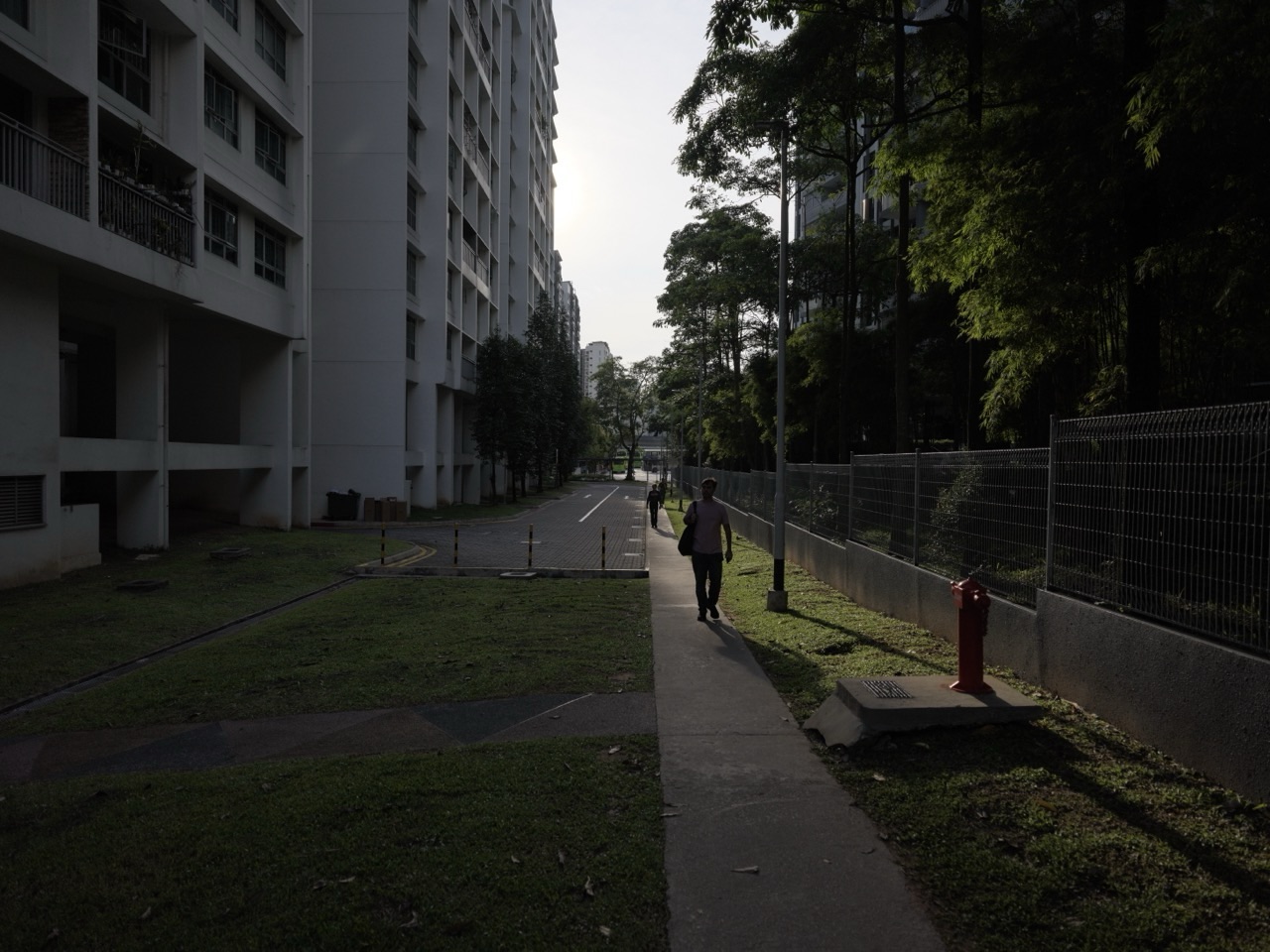
Families around Sumang Walk and Sumang Lane searching for English tuition in Punggol are often balancing a very practical local question with a much more important educational one. The local question is whether tuition can fit into the family’s route through school, CCA, student care, homework and home. The educational question is what the child actually needs: reading fluency, vocabulary, grammar, comprehension, composition, oral communication, listening or examination control.
Sumang Walk and Sumang Lane form part of the western Punggol residential network and are served by the wider Punggol LRT/bus system. For families here, a central Punggol tuition route can be relatively practical. But convenience should only reduce friction; it should never replace diagnosis. A nearby class that repeats worksheets without identifying the learner’s real bottleneck can still waste a year. A strong class should make the child’s error pattern visible and then reduce the amount of help the learner needs.
This page is the micro-location English route for Sumang Walk and Sumang Lane. It sits under the canonical English Tuition at eduKatePunggol owner and connects into the estate-wide eduKatePunggol Atlas V2.3. It also sits beside the broader Sumang & Waterway English guide; this page narrows the intent to the Sumang Walk/Lane residential cluster.
Why Sumang Walk and Sumang Lane deserve a separate local route
Micro-location SEO only works when the page does something useful. For Sumang Walk and Sumang Lane families, that means connecting a home-area search to the correct stage of English learning and showing how the tuition decision affects the whole week.
- Primary 1–2: reading access, vocabulary, spelling and sentence independence.
- Primary 3–4: reading-to-learn, inference, grammar transfer and paragraph control.
- Primary 5: PSLE runway and error-profile building.
- Primary 6: final calibration from school evidence.
- Secondary: wider text purposes, register, evidence, writing and G1/G2/G3 alignment.
Primary 1–2: build the base before the workload grows
Lower-primary English should become easier to use over time. The learner should read common words with less effort, understand classroom instructions more quickly, retrieve vocabulary more reliably and write complete sentences with less adult support.
Parents should watch for hidden dependence. A child may appear strong when an adult supplies every sound, word or next step. The better test is whether the child can begin, attempt and correct familiar work independently.
Use Primary 1 English Tuition and Primary 2 English Tuition for the year-specific routes.
Primary 3–4: identify whether the child cannot access, reason or express
Primary 3 and Primary 4 are where the system becomes more demanding. Reading passages grow longer, Science adds new language, comprehension requires more inference and composition begins exposing weak planning or grammar transfer.
| What parents see | What tuition should test first |
|---|---|
| Child reads accurately but cannot explain the text | Meaning integration and vocabulary |
| Child understands but writes incomplete answers | Question scope and expression |
| Composition contains many events but little focus | Prompt interpretation and causality |
| Grammar is correct in drills but not writing | Transfer under load |
| Homework needs repeated adult reminders | Task-start and independence |
Use Primary 3 English Tuition and Primary 4 English Tuition.
Primary 5: build the PSLE runway with targeted repair
Primary 5 is the year to find the recurring errors that would otherwise become expensive in Primary 6. The student should begin recognising personal weak patterns instead of treating every lost mark as unrelated.
- inference without enough evidence;
- answers that are broadly right but incomplete;
- composition that drifts away from the prompt;
- vocabulary known but not retrieved under pressure;
- grammar that disappears during longer writing;
- oral answers that stop after one short point;
- timed sections that repeatedly run over.
The detailed route is Primary 5 PSLE Runway for Comprehension, Composition and Oral.
Primary 6: the final plan should become selective
By Primary 6, especially after prelims, the learner has enough school evidence to prioritise. A total score is only the beginning. The tutor should ask why each important mark was lost.
- Knowledge: the child did not know.
- Retrieval: the child knew but could not access it quickly enough.
- Interpretation: the task or text was misunderstood.
- Expression: the idea was known but written incompletely.
- Execution: timing, attention or checking failed.
Use Primary 6 PSLE English Tuition, PSLE English Tuition and Prelims to PSLE Final English Calibration.
Secondary English: align to year, subject level and actual need
Secondary English widens the language job. Students read more mature texts, write for more purposes, manage tone and viewpoint, and need greater independence. Under Full Subject-Based Banding, tuition should also know whether the student is taking G1, G2 or G3 English.
Sumang Walk and Sumang Lane: preserve the weekly learning rhythm
A local route can reduce the amount of the week consumed by transport. The benefit is not simply convenience. The benefit is what that convenience returns to the learner: reading time, homework capacity, dinner, sleep and a less rushed arrival.
Parents should therefore look at total door-to-door time rather than the lesson alone. A 1.5-hour class that occupies three hours of the evening is a different intervention from the same class reached quickly within the estate.
Use Near Punggol MRT or Farther Away? for the complete logistics comparison.
3-pax: small groups still require careful matching
eduKatePunggol uses three-student classes because individual thinking remains visible. One student may have an evidence problem, another a vocabulary problem and another a writing-structure problem even when their overall marks look similar.
The group should still be compatible in school year, subject level, reading access, writing demand, pace and independence. Use How Should a 3-Pax English Class Be Matched?.
A Sumang Walk / Sumang Lane parent checklist
- What exact English capability is unstable?
- Does the proposed class match the correct year and G-level?
- Can the child sustain the weekly travel?
- Is independent reading still protected?
- Are school scripts used as diagnostic evidence?
- Does feedback transfer to fresh work?
- Are tutor prompts getting smaller?
- Can tuition taper when the learner becomes more stable?
Local route: Sumang Walk and Sumang Lane into the wider English system
Use this page for the Sumang Walk/Sumang Lane local decision, Sumang & Waterway for the adjacent broader cluster, English Tuition at eduKatePunggol for the canonical owner, and the Punggol Atlas for estate-wide navigation.
The micro-location page should shorten both the physical route and the decision route. Sumang Walk and Sumang Lane families should be able to identify the child’s stage, isolate the weak link, choose a class that fits the week and know what evidence would justify continuing, changing or tapering support.
Explore the Punggol English reading library for related guides.


