
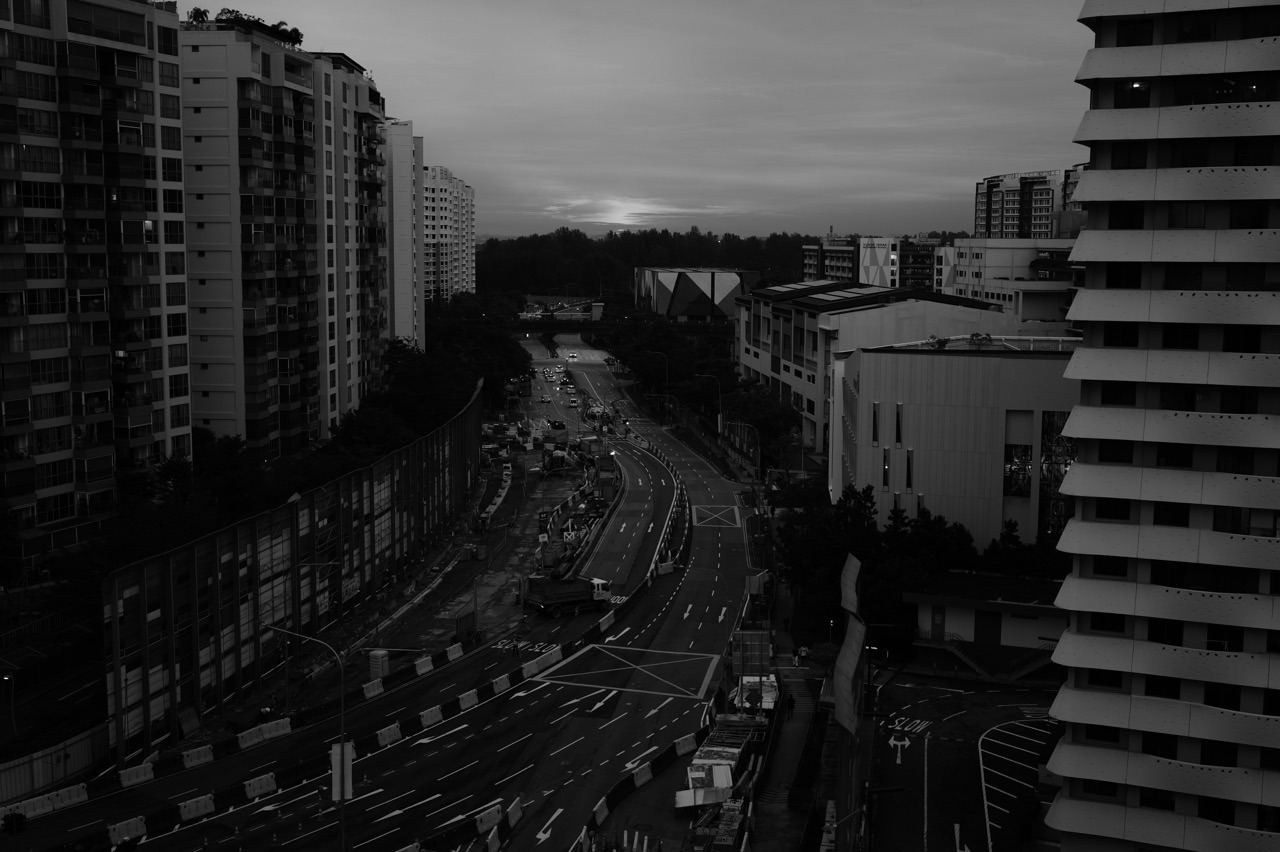
Education in Punggol has an unusual local advantage: children can watch a town change while they are growing up inside it. The future of Punggol is not an abstract chapter about urban development. It is visible in new connections, new institutions, changing neighbourhoods, new places to work and study, and a wider idea of what the town can become.
That matters because the Punggol a child knows at eight may not be the Punggol they encounter at eighteen, twenty-five or forty. Families do not need to predict that future precisely. They need to help children become observant enough to notice change, knowledgeable enough to understand some of its causes, and thoughtful enough to ask what those changes mean for people.
This is a local education job, not a national forecasting page. eduKatePunggol’s role is to help families read their own town carefully. Current public planning context can be checked through the Urban Redevelopment Authority’s Punggol Digital District information, the JTC Punggol Digital District, the HDB Punggol town page and the Land Transport Authority’s Cross Island Line information.
Growing up in a changing town is an education in time
Children tend to experience the present as normal. A station exists because stations exist. A waterway looks permanent because it was there when they first remember the town. A business district can quickly become part of the background. History begins when a learner realises that these things were planned, built, revised and connected over time.
Punggol makes that sequence unusually visible. HDB describes Punggol as Singapore’s first Eco-Town and a living laboratory for sustainable urban ideas. URA describes Punggol Digital District as integrating SIT, business activity, community, greenery and transport. LTA’s current rail plans include the Cross Island Line–Punggol Extension, targeted for completion in 2032. These are not predictions invented by a family. They are public developments with official sources and different time horizons.
Teach children to separate what exists, what is under way and what is planned
Future literacy begins with careful language. Open, operating, under construction, planned, targeted and proposed are not interchangeable. A child who learns those distinctions in a local town guide is also learning how to read news, policy, Science, business and history more responsibly.
| Statement type | Question to ask |
|---|---|
| Exists now | What source verifies that it is currently operating or completed? |
| Under way | What is being built or implemented, and what remains unfinished? |
| Planned | Who announced it, and what date or condition is attached? |
| Interpretation | What might this change, and what evidence would show the effect? |
This small discipline protects the child from a common adult error: turning an announced future into a completed fact.
A changing town changes the questions children can ask
A mature local education site should not merely list new buildings. It should show what questions those buildings create. If more learning and work are brought closer together, how might that change commuting? If a district is designed to be walkable and cycling-friendly, what design choices make that possible? If technology is embedded in ordinary infrastructure, how do people know whether it improves life?
The child does not need expert answers. The educational gain is learning to form better questions and identify which subject helps answer them.
- Mathematics: travel time, scale, capacity, comparison and change over time.
- Science: energy, materials, environmental systems and evidence.
- English: reading official sources, comparing claims and explaining change clearly.
- History: what came before, what changed and which records survive.
- Geography: land use, movement, water, density and connections between places.
The future should not erase the past
A town becomes richer when a child can see several versions of it at once. There is the older Punggol of roads, coastline, farms and memory. There is the new-town period of housing, transport and Punggol Waterway. There is the present expansion around Punggol Coast, SIT and the Digital District. None of these layers needs to cancel the others.
Use Old Punggol Road: Why a Future Town Still Needs Memory together with How Punggol Became Punggol. Ask the child what each page is trying to preserve, explain or interpret.
Parents are not preparing children for one fixed destination
A changing town is a useful reminder that education cannot be reduced to one examination and one imagined career. Knowledge still matters. So do judgement, explanation, adaptability, cooperation and the ability to learn again when a familiar environment changes.
The strongest preparation is not constant anticipation of the next trend. It is a durable foundation: read accurately, reason with evidence, handle quantities, understand systems, communicate clearly and remain able to revise an old model when reality changes.
A simple family project: Punggol at three dates
Choose one part of Punggol—a transport node, waterfront area, neighbourhood or institutional district. Find one reliable older source, one current source and one official future-facing source. Ask the child to create three short sections: What was here? What is here now? What is planned or still changing?
The final paragraph should answer a harder question: What changed for people? That moves the exercise beyond dates and buildings into consequences, while still requiring the child to separate fact from interpretation.
Prepare children for changing systems, not one imagined future
A child growing up in Punggol will probably see several versions of the same town. Transport patterns will change. New institutions will open. Familiar spaces may take on different functions. Some plans will arrive later than expected, some will change, and some everyday routines will disappear because another system replaces them.
The educational question is therefore not “What exact future should we train the child for?” It is “What capabilities help a person remain useful when the environment changes?”
Build five durable capabilities beneath every new trend
- Read accurately: understand instructions, claims, evidence and ambiguity.
- Reason quantitatively: compare scale, time, cost, risk and probability.
- Verify: separate observation, source, inference and speculation.
- Explain: communicate a model clearly enough for another person to inspect.
- Adapt: update a plan when evidence or conditions change.
These capabilities remain valuable whether the child eventually works in healthcare, design, finance, public service, engineering, education, technology or a field that does not yet have a familiar name.
Use Punggol itself as a change laboratory
A changing town gives children repeated opportunities to practise adaptation with low stakes. A route changes. A facility opens. A construction zone alters walking patterns. A public space gains a new function. The family can ask what changed, what stayed stable and which assumptions need updating.
The point is not to turn every walk into a lesson. It is to help the child notice that systems are not fixed and that competent people revise their mental model when reality changes.
Teach children to distinguish trend, plan and reality
Future-facing conversations often mix three different things. A trend is a pattern that appears to be developing. A plan is an announced intention. Reality is what is currently operating. Children should learn to keep these categories separate.
This prevents two weak habits: assuming every announced future is guaranteed, and assuming nothing meaningful can be discussed until every project is complete.
Use conditional language when discussing the future
Words such as “may”, “could”, “is intended to”, “is planned to”, “if completed as announced” and “would make it possible to” are not signs of weak writing. They are signs that the learner understands uncertainty.
That discipline is useful far beyond urban development. Science, technology, economics and career planning all require people to distinguish what is known from what is projected.
Teach continuity at the same time as adaptability
Adaptability does not mean changing identity every time the environment changes. Children also need durable reference points: family values, language, relationships, ethical boundaries, knowledge of place and the ability to remember what earlier systems were trying to do.
A person adapts more intelligently when they know what should remain stable and what is allowed to change.
Ask “what problem was this system trying to solve?”
When a new facility, transport route or public system appears, ask the child what problem it is intended to solve. Then ask whether the solution creates new trade-offs.
This keeps future thinking grounded in mechanism. The learner stops treating change as decoration and begins to see design as a response to constraints.
Build a family “change log” once a term
Once each school term, choose one local change the child noticed and record four lines: what changed, what probably caused it, who is affected, and what remains uncertain. Keep the entry short.
Over several years, these notes become a record of both town change and the child’s growing ability to reason about systems.
Use maps to show that opportunity is spatial
A child’s practical world is shaped by what can be reached. New connections, institutions and services can widen the map of realistic opportunities. Another change can narrow it by making a route less convenient or shifting where time is spent.
Drawing a before-and-after opportunity map helps children see that education, work and participation are partly shaped by access.
Do not confuse novelty with progress
New systems deserve evaluation, not automatic praise. Ask what improved, what became more difficult, what cost was introduced and whether the system is understandable to the people expected to use it.
This is a useful civic habit: welcome improvement while preserving the right to inspect outcomes.
Do not confuse preservation with refusing change
Remembering older Punggol does not require freezing the town. Preservation can mean keeping stories, names, routes, photographs, testimony or public memory intelligible even when physical form changes.
Children can learn that heritage and development are not always opposites. The harder task is deciding what deserves continuity and how that continuity should be carried.
Use public infrastructure to teach maintenance
Children often see the launch of a new system but not the maintenance that keeps it useful. A station, park, library, path or public space requires cleaning, repair, rules, inspection and user cooperation.
The future is therefore not only about invention. It is also about maintenance, reliability and stewardship.
Use changing technology to teach tool independence
Specific apps and interfaces will change. The child should therefore learn the deeper job beneath the tool: navigate, verify, calculate, communicate, create, search, compare, organise and recover from error.
A learner who understands the job can move between tools more easily than a learner who has memorised only one interface.
Career education should focus on capability transfer
Instead of asking only which job will exist in the future, ask which capabilities move across jobs. Clear writing, quantitative reasoning, evidence evaluation, collaboration, systems thinking and responsible use of technology remain transferable even when job titles change.
This gives the child a more stable educational foundation than chasing a list of fashionable occupations.
Primary students can practise noticing change
Younger children can compare maps, draw routes, label what is new, ask older family members what used to be there and describe which part of their own day changed.
The first capability is attention.
Secondary students can evaluate consequences
Older students can ask who benefits, what becomes easier, what new demand appears, what evidence supports the claim and which future outcomes remain uncertain.
This moves local change from observation into public reasoning.
A future-ready child should know how to revise a plan
When a route fails, a project changes or a new constraint appears, ask the learner what part of the plan needs updating. This simple habit trains adaptation without dramatising change.
People who can revise intelligently are more resilient than people who need the environment to remain exactly as expected.
Stewardship is part of inheritance
The town a child inherits is partly shaped by earlier decisions and partly by how current residents use, maintain and interpret shared systems. Children are not passive recipients of place. They become users, workers, voters, neighbours, professionals and caregivers within it.
Education should therefore build the ability to participate responsibly, not only the ability to benefit privately.
Build one annual “what changed for us?” conversation
At the end of each year, ask the family what changed in the town and what changed in the child’s own independence. Perhaps the student began travelling alone, using the library independently, understanding a new institution or contributing more to the household.
The comparison reminds the child that growth happens in both the place and the person.
The inheritance test
| Question | What the child is learning |
|---|---|
| What changed? | Observation and chronology |
| What stayed important? | Continuity and values |
| Who benefits? | Perspective and distribution |
| What is uncertain? | Evidence discipline |
| What responsibility comes with this system? | Stewardship |
| What capability helps me adapt? | Transfer and resilience |
The strongest inheritance is not a perfectly finished town. It is the capacity to understand what has been inherited, improve what can be improved and keep enough memory that future change remains intelligible.
Teach inheritance as responsibility, not entitlement
Children often hear that they will “inherit the future” as if inheritance were only about receiving better technology, stronger infrastructure or more opportunity. A more complete idea is that inheritance also includes responsibility for systems they did not design but will eventually use, maintain, question and improve.
A future resident inherits roads, schools, institutions, norms, public spaces, environmental trade-offs and historical decisions. Some will be excellent. Some will be incomplete. Some will need repair. Education should help the child recognise the difference.
Ask what must be maintained
New systems attract attention when they open. Maintenance is quieter. Children can learn that a reliable town depends on recurring work: inspection, repair, cleaning, updating, training, funding and responsible use.
This makes “future-ready” less glamorous and more realistic. A civilisation does not survive on invention alone; it survives because people know how to keep useful systems working.
Ask what should remain understandable
As systems become more complex, people can lose sight of how they work. Children do not need expert-level knowledge of every public system, but they should retain enough understanding to navigate, ask questions, recognise failure and know where responsibility sits.
A system that becomes completely opaque can make citizens more dependent even while becoming more convenient.
Ask what should be preserved even when use changes
A route, shoreline, place name, memory, institution or public story may deserve preservation even when the surrounding function changes. Preservation does not always require freezing the object physically. It can mean keeping the record, explanation or public memory available.
This teaches the child that stewardship includes both use and remembrance.
Ask what should be allowed to end
Not every old system deserves permanent continuation. Some arrangements become inefficient, unsafe or no longer fit current needs. Mature inheritance therefore includes knowing when to retire a system cleanly, preserve what is worth remembering and move resources elsewhere.
This is another reason historical understanding matters: it helps people distinguish between respecting the past and repeating it automatically.
Use one stewardship question for every future claim
When the family discusses a future facility, transport connection, digital service or public programme, add one question: “If this becomes real, what will people need to do to keep it useful?” The child may identify maintenance, funding, responsible behaviour, staff, public trust or accessibility.
This turns future thinking from passive excitement into operational understanding.
The child should inherit the ability to ask better questions
No family can predict exactly which systems the child will encounter as an adult. What can be transferred is a questioning discipline: what changed, who benefits, what evidence supports the claim, what trade-offs appear, what needs maintenance, what remains uncertain and what should be preserved.
That questioning ability may be one of the most durable inheritances a changing town can give.
The quiet standard
The town your child grows up in will not remain still. That is not a reason to chase every new thing. It is a reason to teach continuity: how to understand change without losing memory, how to welcome possibility without confusing plans with outcomes, and how to remain capable when familiar surroundings acquire new purposes.
Continue through the Complete Punggol Guide, What about Punggol? and the eduKatePunggol Atlas.
Explore the Punggol education and town-life library for related guides.


