
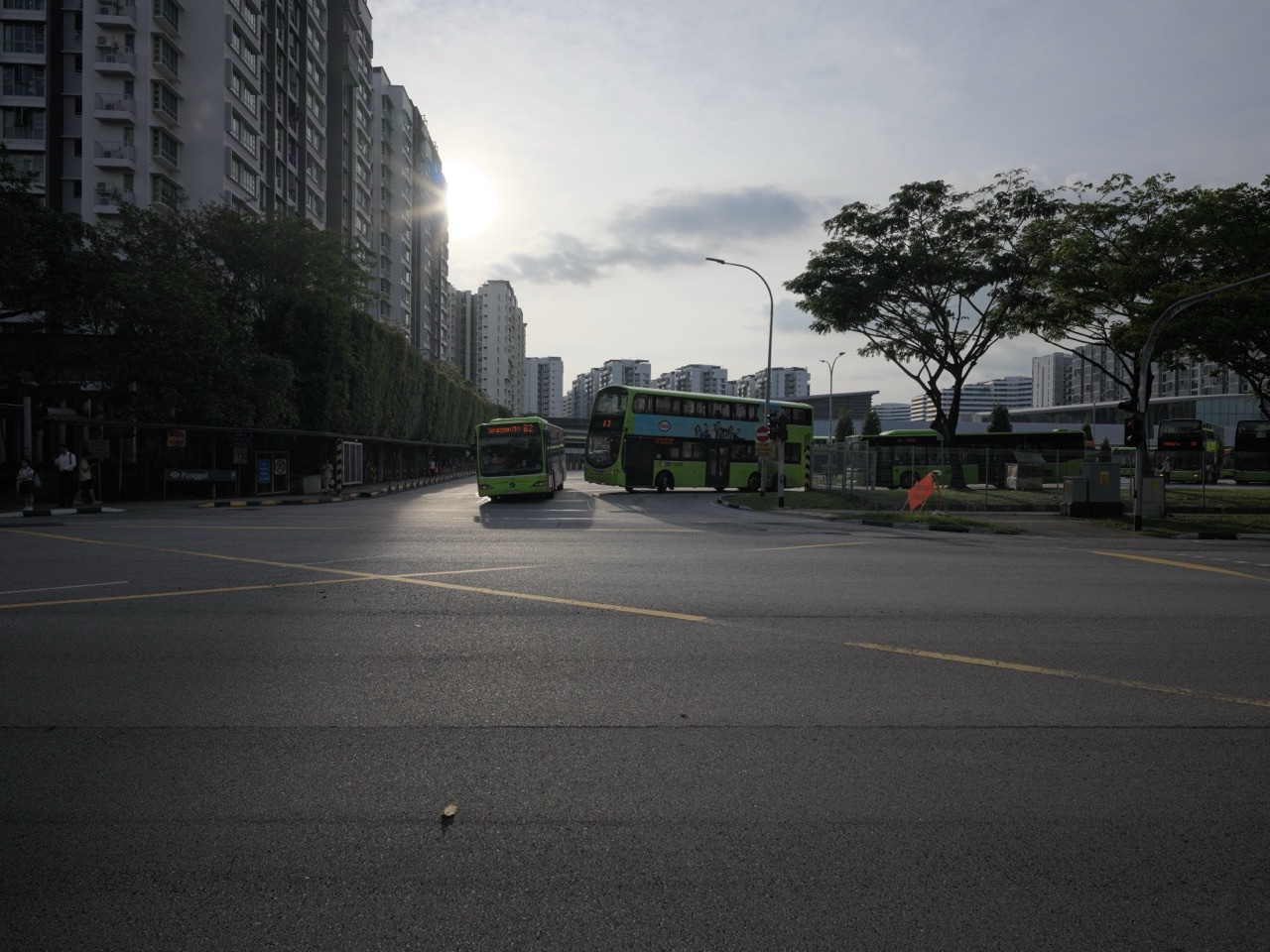
Punggol has two bus interchanges now, and they do different jobs. The original Punggol Bus Interchange remains beside Punggol MRT/LRT and Waterway Point in the Town Centre. The newer Punggol Coast Bus Interchange opened on 29 June 2025 inside Punggol Digital District, integrated with Punggol Coast MRT and Punggol Coast Mall.
That split matters because several major services were moved or added to the northern hub. Services 34 and 117/117M shifted to Punggol Coast when the interchange opened. Service 104 began in October 2025, Service 44 began in November 2025, and from 13 September 2026 Service 381 was extended to Punggol Coast. The bus map a Punggol resident knew in 2024 is therefore no longer the current map.
This guide explains the two hubs, the key routes and which interchange to think of first. It is not intended to permanently reproduce every berth and timetable. For exact current departures, use LTA/MyTransport or the bus operator’s live information.
The two Punggol bus hubs at a glance
| Hub | Best thought of as… | Key connections |
|---|---|---|
| Punggol Bus Interchange | Town Centre interchange | Punggol MRT/LRT, Waterway Point, One Punggol, east/west neighbourhood buses, regional trunk routes |
| Punggol Coast Bus Interchange | Northern Integrated Transport Hub | Punggol Coast MRT, PDD, SIT, Punggol Coast Mall, Northshore, airport/Yishun/Serangoon-Woodleigh links |
Punggol Bus Interchange — the Town Centre hub
The original Punggol Bus Interchange sits beside Punggol MRT/LRT (NE17/PTC) and Waterway Point. It remains the most useful bus hub for much of central, eastern and southern Punggol and for transfers between the bus network and the East/West LRT loops.
Go-Ahead Singapore’s current bus-services page lists the following services at Punggol Bus Interchange:
3, 43, 43e, 62, 82, 83, 84, 85, 118, 119, 136, 381, 382, 384 and 386.
That list should still be verified live before a journey because services and termini can change as Punggol develops.
What the Town Centre hub is good for
- Waterway Point / One Punggol / Town Centre;
- transferring from Punggol MRT to neighbourhood bus services;
- east-side and south-side residential routes;
- regional services toward Hougang, Kovan, Tampines and Changi Business Park corridors;
- school and after-school movement through Punggol Central.
Service 118 — direct toward Changi Business Park
Current bus-route directories and operator information continue to show Service 118 operating from Punggol Bus Interchange toward Changi Business Park. This remains useful for commuters working in the eastern business district and for some Tampines/ITE College East connections.
Service 43 / 43e — Serangoon / Paya Lebar / Marine Parade corridor
Services 43 and 43e form part of the southbound bus corridor through Sengkang/Buangkok/Serangoon toward Paya Lebar and the east/south-east. They can be useful when the bus destination sits away from an MRT station or when a one-seat ride matters more than raw speed.
Neighbourhood services at the Town Centre
Services such as 381, 382, 384 and 386 serve intra-town and neighbourhood movement. Their exact routing is especially important because small extensions and new stops continue to appear as housing districts fill out.
LTA’s September 2026 update is a good example: Service 381 was extended from Punggol East to Punggol Coast, improving access to the newer northern hub while still serving the established eastern neighbourhoods.
Punggol Coast Bus Interchange — the northern Integrated Transport Hub
Punggol Coast Bus Interchange opened on 29 June 2025 as Singapore’s 15th Integrated Transport Hub. It sits inside Punggol Digital District and is integrated with Punggol Coast MRT (NE18) and Punggol Coast Mall.
LTA designed it with barrier-free access, priority queue zones, seating, wheelchair-accessible toilets, a baby-care room and a commuter-care room.
Services 34 and 117/117M — the first major moves north
When Punggol Coast Interchange opened, LTA moved Services 34 and 117/117M from Punggol Bus Interchange to the new northern hub and extended their local Punggol routes.
Service 34 was extended through Punggol Central, Sumang Walk, Sumang Link and Punggol Way before reaching the Coast hub. Service 117/117M was extended through Punggol Place, Sentul Crescent and Sentul Walk.
Service 34 — Punggol Coast to Changi Airport
Service 34 provides a direct public-bus connection between Punggol and Changi Airport, while also serving local Punggol neighbourhoods and the TPE corridor. LTA explicitly identifies Changi Airport and Tampines among the destinations whose connectivity improved with the Coast interchange opening.
For many residents, the MRT can still be more predictable depending on terminal and time of day. The value of Service 34 is the one-seat bus route for people close to its local Punggol corridor.
Service 44 — peak-hour airport express-style connection
Service 44 began on 10 November 2025. It operates between Punggol Coast and Changi Airport during weekday peak periods, excluding public holidays.
The current operator timetable shows:
- from Punggol Coast toward Changi Airport: weekday morning peak, roughly 6.30am–8.30am;
- from the airport toward Punggol Coast: weekday evening peak, roughly 5.15pm–7.15pm;
- the route serves Terminals 1–4 and uses the TPE/PIE corridor.
It is not an all-day airport bus. That distinction matters.
Service 104 — Punggol Coast to Woodleigh via Northshore, Buangkok and Serangoon
Service 104 began on 26 October 2025 and links Punggol Coast with Woodleigh Integrated Transport Hub. LTA says it improves connections through Northshore, Sumang, Buangkok Drive, Serangoon and Bidadari.
This is one of the most useful new cross-town bus routes for residents who want direct access to Serangoon/Buangkok/Woodleigh corridors without first forcing every journey through Punggol MRT.
Service 117 / 117M — north toward Yishun and Sembawang
LTA’s current route architecture places 117/117M at Punggol Coast, improving inter-town connectivity toward the Yishun/Sembawang side. The peak variant and ordinary service have different operating patterns, so check the live timetable for the trip.
Service 381 — now connects more of Punggol to the Coast hub
From 13 September 2026, LTA extended Service 381 from Punggol East to Punggol Coast. The stated purpose is to improve intra-town travel to amenities and give more residents direct access to Punggol Coast Integrated Transport Hub.
This is the kind of update that makes old bus guides age quickly.
Which interchange should you use?
| If your destination is… | Think first… |
|---|---|
| Waterway Point / One Punggol / Town Centre | Punggol Bus Interchange |
| SIT / Punggol Digital District / Coast Mall | Punggol Coast Bus Interchange |
| Northshore | Punggol Coast / Service 104 / local routes depending block |
| Changi Airport | Service 34; Service 44 during its peak operating window; compare MRT |
| Serangoon / Woodleigh / Buangkok | Service 104 may be useful |
| Yishun / Sembawang side | 117/117M |
| Punggol Field / east-side neighbourhoods | Town Centre buses and 381/local services |
Do not assume every bus still starts at Punggol Town Centre
This is the most important resident habit change after 2025. Some routes that used to originate at the Town Centre now start at Punggol Coast. Others still call at Punggol MRT/Waterway Point en route.
If an old memory says “take that bus from Punggol Interchange”, check whether the service has moved north.
Bus + MRT can be better than bus-only
One-seat bus rides feel convenient, but they are not always faster. For city journeys, the North-East Line often gives a more predictable trunk journey. Buses are strongest when:
- the destination is not near an MRT station;
- the bus provides a direct airport/business-park route;
- the family has a stroller, luggage or senior passenger and wants fewer transfers;
- the route avoids doubling back through Town Centre;
- the bus stop is much closer to the home block.
Bus + LRT
Punggol’s LRT still provides the fine-grained residential grid. The bus interchanges become more useful when you think of them as transfer points between the LRT neighbourhood loops and longer regional routes.
Use Punggol LRT Guide.
Punggol Coast is becoming more important every year
The Coast interchange is part of a broader shift. SIT, PDD, Coast Mall, the hawker centre and new northern housing all create more travel demand that starts or ends in northern Punggol rather than passing through the original Town Centre.
The two-interchange model reduces the need to funnel every Punggol bus journey through one node.
The live-service rule
For exact route, berth and departure questions:
- use MyTransport / LTA live information;
- use Go-Ahead Singapore for current Punggol-operated service pages;
- check SBS Transit where the service is operated there;
- look for temporary diversions before large events or road works;
- do not rely on a screenshot from an old article.
Current official/operator sources
- LTA — Punggol Coast Bus Interchange opening
- LTA — September 2026 bus enhancements
- Go-Ahead Singapore — current bus services
- JTC — current PDD transport access
Last checked: 26 September 2026. Bus routes, berths and schedules can change.
Continue the transport route
- Punggol Coast MRT Station Guide
- Punggol LRT Guide
- Punggol Autonomous Shuttle Guide
- The Complete Punggol Guide
Punggol no longer has one bus interchange that explains the town. Use the Town Centre hub for the established centre and neighbourhood network; use Punggol Coast for the northern district and new cross-town routes. Then let the live journey planner decide the final bus.
Estate routing: Return to the eduKatePunggol Atlas for the full learning, family and town knowledge graph, or continue through the transport routes above.
Punggol Bus Interchanges: Current-Operator Transfer System
This Future Build section deepens the existing canonical transport owner rather than creating a competing URL. The reader job is using Punggol and Punggol Coast bus interchanges and understanding their different transfer jobs. bus services, routes, berths, frequencies and operating arrangements change; current public-transport operator/LTA information owns changing facts.
Current-source boundary
Treat current-source boundary as an operational transport variable. Separate stable geography from routes, frequencies, works, prices and rules that can change. A transport guide should show the structure of the journey while making clear which details must be rechecked.
Build from door to door. Include the walk or ride to the station, waiting, transfers, the final mile and the return trip. The fastest observed journey is not the same as a reliable planning time; use realistic ranges and add margin where the consequence of delay matters.
When safety, legality, current service or payment rules are involved, use the current authority or operator. If conditions change, update the route rather than defending an old itinerary. The useful Punggol skill is not memorising one route forever; it is knowing how to reconstruct a good route from current information.
Date stamp
Treat date stamp as an operational transport variable. Separate stable geography from routes, frequencies, works, prices and rules that can change. A transport guide should show the structure of the journey while making clear which details must be rechecked.
Build from door to door. Include the walk or ride to the station, waiting, transfers, the final mile and the return trip. The fastest observed journey is not the same as a reliable planning time; use realistic ranges and add margin where the consequence of delay matters.
When safety, legality, current service or payment rules are involved, use the current authority or operator. If conditions change, update the route rather than defending an old itinerary. The useful Punggol skill is not memorising one route forever; it is knowing how to reconstruct a good route from current information.
Route continuity
Treat route continuity as an operational transport variable. Separate stable geography from routes, frequencies, works, prices and rules that can change. A transport guide should show the structure of the journey while making clear which details must be rechecked.
Build from door to door. Include the walk or ride to the station, waiting, transfers, the final mile and the return trip. The fastest observed journey is not the same as a reliable planning time; use realistic ranges and add margin where the consequence of delay matters.
When safety, legality, current service or payment rules are involved, use the current authority or operator. If conditions change, update the route rather than defending an old itinerary. The useful Punggol skill is not memorising one route forever; it is knowing how to reconstruct a good route from current information.
Shared paths
Treat shared paths as an operational transport variable. Separate stable geography from routes, frequencies, works, prices and rules that can change. A transport guide should show the structure of the journey while making clear which details must be rechecked.
Build from door to door. Include the walk or ride to the station, waiting, transfers, the final mile and the return trip. The fastest observed journey is not the same as a reliable planning time; use realistic ranges and add margin where the consequence of delay matters.
When safety, legality, current service or payment rules are involved, use the current authority or operator. If conditions change, update the route rather than defending an old itinerary. The useful Punggol skill is not memorising one route forever; it is knowing how to reconstruct a good route from current information.
Park connectors
Treat park connectors as an operational transport variable. Separate stable geography from routes, frequencies, works, prices and rules that can change. A transport guide should show the structure of the journey while making clear which details must be rechecked.
Build from door to door. Include the walk or ride to the station, waiting, transfers, the final mile and the return trip. The fastest observed journey is not the same as a reliable planning time; use realistic ranges and add margin where the consequence of delay matters.
When safety, legality, current service or payment rules are involved, use the current authority or operator. If conditions change, update the route rather than defending an old itinerary. The useful Punggol skill is not memorising one route forever; it is knowing how to reconstruct a good route from current information.
Cycling rules
Treat cycling rules as an operational transport variable. Separate stable geography from routes, frequencies, works, prices and rules that can change. A transport guide should show the structure of the journey while making clear which details must be rechecked.
Build from door to door. Include the walk or ride to the station, waiting, transfers, the final mile and the return trip. The fastest observed journey is not the same as a reliable planning time; use realistic ranges and add margin where the consequence of delay matters.
When safety, legality, current service or payment rules are involved, use the current authority or operator. If conditions change, update the route rather than defending an old itinerary. The useful Punggol skill is not memorising one route forever; it is knowing how to reconstruct a good route from current information.
Pedestrians
Treat pedestrians as an operational transport variable. Separate stable geography from routes, frequencies, works, prices and rules that can change. A transport guide should show the structure of the journey while making clear which details must be rechecked.
Build from door to door. Include the walk or ride to the station, waiting, transfers, the final mile and the return trip. The fastest observed journey is not the same as a reliable planning time; use realistic ranges and add margin where the consequence of delay matters.
When safety, legality, current service or payment rules are involved, use the current authority or operator. If conditions change, update the route rather than defending an old itinerary. The useful Punggol skill is not memorising one route forever; it is knowing how to reconstruct a good route from current information.
Children cycling
Treat children cycling as an operational transport variable. Separate stable geography from routes, frequencies, works, prices and rules that can change. A transport guide should show the structure of the journey while making clear which details must be rechecked.
Build from door to door. Include the walk or ride to the station, waiting, transfers, the final mile and the return trip. The fastest observed journey is not the same as a reliable planning time; use realistic ranges and add margin where the consequence of delay matters.
When safety, legality, current service or payment rules are involved, use the current authority or operator. If conditions change, update the route rather than defending an old itinerary. The useful Punggol skill is not memorising one route forever; it is knowing how to reconstruct a good route from current information.
Teen cycling
Treat teen cycling as an operational transport variable. Separate stable geography from routes, frequencies, works, prices and rules that can change. A transport guide should show the structure of the journey while making clear which details must be rechecked.
Build from door to door. Include the walk or ride to the station, waiting, transfers, the final mile and the return trip. The fastest observed journey is not the same as a reliable planning time; use realistic ranges and add margin where the consequence of delay matters.
When safety, legality, current service or payment rules are involved, use the current authority or operator. If conditions change, update the route rather than defending an old itinerary. The useful Punggol skill is not memorising one route forever; it is knowing how to reconstruct a good route from current information.
Adult commuting by bike
Treat adult commuting by bike as an operational transport variable. Separate stable geography from routes, frequencies, works, prices and rules that can change. A transport guide should show the structure of the journey while making clear which details must be rechecked.
Build from door to door. Include the walk or ride to the station, waiting, transfers, the final mile and the return trip. The fastest observed journey is not the same as a reliable planning time; use realistic ranges and add margin where the consequence of delay matters.
When safety, legality, current service or payment rules are involved, use the current authority or operator. If conditions change, update the route rather than defending an old itinerary. The useful Punggol skill is not memorising one route forever; it is knowing how to reconstruct a good route from current information.
Bike rental
Treat bike rental as an operational transport variable. Separate stable geography from routes, frequencies, works, prices and rules that can change. A transport guide should show the structure of the journey while making clear which details must be rechecked.
Build from door to door. Include the walk or ride to the station, waiting, transfers, the final mile and the return trip. The fastest observed journey is not the same as a reliable planning time; use realistic ranges and add margin where the consequence of delay matters.
When safety, legality, current service or payment rules are involved, use the current authority or operator. If conditions change, update the route rather than defending an old itinerary. The useful Punggol skill is not memorising one route forever; it is knowing how to reconstruct a good route from current information.
Bike parking
Treat bike parking as an operational transport variable. Separate stable geography from routes, frequencies, works, prices and rules that can change. A transport guide should show the structure of the journey while making clear which details must be rechecked.
Build from door to door. Include the walk or ride to the station, waiting, transfers, the final mile and the return trip. The fastest observed journey is not the same as a reliable planning time; use realistic ranges and add margin where the consequence of delay matters.
When safety, legality, current service or payment rules are involved, use the current authority or operator. If conditions change, update the route rather than defending an old itinerary. The useful Punggol skill is not memorising one route forever; it is knowing how to reconstruct a good route from current information.
Rain
Treat rain as an operational transport variable. Separate stable geography from routes, frequencies, works, prices and rules that can change. A transport guide should show the structure of the journey while making clear which details must be rechecked.
Build from door to door. Include the walk or ride to the station, waiting, transfers, the final mile and the return trip. The fastest observed journey is not the same as a reliable planning time; use realistic ranges and add margin where the consequence of delay matters.
When safety, legality, current service or payment rules are involved, use the current authority or operator. If conditions change, update the route rather than defending an old itinerary. The useful Punggol skill is not memorising one route forever; it is knowing how to reconstruct a good route from current information.
Lightning
Treat lightning as an operational transport variable. Separate stable geography from routes, frequencies, works, prices and rules that can change. A transport guide should show the structure of the journey while making clear which details must be rechecked.
Build from door to door. Include the walk or ride to the station, waiting, transfers, the final mile and the return trip. The fastest observed journey is not the same as a reliable planning time; use realistic ranges and add margin where the consequence of delay matters.
When safety, legality, current service or payment rules are involved, use the current authority or operator. If conditions change, update the route rather than defending an old itinerary. The useful Punggol skill is not memorising one route forever; it is knowing how to reconstruct a good route from current information.
Heat
Treat heat as an operational transport variable. Separate stable geography from routes, frequencies, works, prices and rules that can change. A transport guide should show the structure of the journey while making clear which details must be rechecked.
Build from door to door. Include the walk or ride to the station, waiting, transfers, the final mile and the return trip. The fastest observed journey is not the same as a reliable planning time; use realistic ranges and add margin where the consequence of delay matters.
When safety, legality, current service or payment rules are involved, use the current authority or operator. If conditions change, update the route rather than defending an old itinerary. The useful Punggol skill is not memorising one route forever; it is knowing how to reconstruct a good route from current information.
Night riding
Treat night riding as an operational transport variable. Separate stable geography from routes, frequencies, works, prices and rules that can change. A transport guide should show the structure of the journey while making clear which details must be rechecked.
Build from door to door. Include the walk or ride to the station, waiting, transfers, the final mile and the return trip. The fastest observed journey is not the same as a reliable planning time; use realistic ranges and add margin where the consequence of delay matters.
When safety, legality, current service or payment rules are involved, use the current authority or operator. If conditions change, update the route rather than defending an old itinerary. The useful Punggol skill is not memorising one route forever; it is knowing how to reconstruct a good route from current information.
Visibility
Treat visibility as an operational transport variable. Separate stable geography from routes, frequencies, works, prices and rules that can change. A transport guide should show the structure of the journey while making clear which details must be rechecked.
Build from door to door. Include the walk or ride to the station, waiting, transfers, the final mile and the return trip. The fastest observed journey is not the same as a reliable planning time; use realistic ranges and add margin where the consequence of delay matters.
When safety, legality, current service or payment rules are involved, use the current authority or operator. If conditions change, update the route rather than defending an old itinerary. The useful Punggol skill is not memorising one route forever; it is knowing how to reconstruct a good route from current information.
Town Centre
Treat town centre as an operational transport variable. Separate stable geography from routes, frequencies, works, prices and rules that can change. A transport guide should show the structure of the journey while making clear which details must be rechecked.
Build from door to door. Include the walk or ride to the station, waiting, transfers, the final mile and the return trip. The fastest observed journey is not the same as a reliable planning time; use realistic ranges and add margin where the consequence of delay matters.
When safety, legality, current service or payment rules are involved, use the current authority or operator. If conditions change, update the route rather than defending an old itinerary. The useful Punggol skill is not memorising one route forever; it is knowing how to reconstruct a good route from current information.
Waterway
Treat waterway as an operational transport variable. Separate stable geography from routes, frequencies, works, prices and rules that can change. A transport guide should show the structure of the journey while making clear which details must be rechecked.
Build from door to door. Include the walk or ride to the station, waiting, transfers, the final mile and the return trip. The fastest observed journey is not the same as a reliable planning time; use realistic ranges and add margin where the consequence of delay matters.
When safety, legality, current service or payment rules are involved, use the current authority or operator. If conditions change, update the route rather than defending an old itinerary. The useful Punggol skill is not memorising one route forever; it is knowing how to reconstruct a good route from current information.
Northshore
Treat northshore as an operational transport variable. Separate stable geography from routes, frequencies, works, prices and rules that can change. A transport guide should show the structure of the journey while making clear which details must be rechecked.
Build from door to door. Include the walk or ride to the station, waiting, transfers, the final mile and the return trip. The fastest observed journey is not the same as a reliable planning time; use realistic ranges and add margin where the consequence of delay matters.
When safety, legality, current service or payment rules are involved, use the current authority or operator. If conditions change, update the route rather than defending an old itinerary. The useful Punggol skill is not memorising one route forever; it is knowing how to reconstruct a good route from current information.
Punggol Coast
Treat punggol coast as an operational transport variable. Separate stable geography from routes, frequencies, works, prices and rules that can change. A transport guide should show the structure of the journey while making clear which details must be rechecked.
Build from door to door. Include the walk or ride to the station, waiting, transfers, the final mile and the return trip. The fastest observed journey is not the same as a reliable planning time; use realistic ranges and add margin where the consequence of delay matters.
When safety, legality, current service or payment rules are involved, use the current authority or operator. If conditions change, update the route rather than defending an old itinerary. The useful Punggol skill is not memorising one route forever; it is knowing how to reconstruct a good route from current information.
Coney Island boundary
Treat coney island boundary as an operational transport variable. Separate stable geography from routes, frequencies, works, prices and rules that can change. A transport guide should show the structure of the journey while making clear which details must be rechecked.
Build from door to door. Include the walk or ride to the station, waiting, transfers, the final mile and the return trip. The fastest observed journey is not the same as a reliable planning time; use realistic ranges and add margin where the consequence of delay matters.
When safety, legality, current service or payment rules are involved, use the current authority or operator. If conditions change, update the route rather than defending an old itinerary. The useful Punggol skill is not memorising one route forever; it is knowing how to reconstruct a good route from current information.
Punggol interchange
Treat punggol interchange as an operational transport variable. Separate stable geography from routes, frequencies, works, prices and rules that can change. A transport guide should show the structure of the journey while making clear which details must be rechecked.
Build from door to door. Include the walk or ride to the station, waiting, transfers, the final mile and the return trip. The fastest observed journey is not the same as a reliable planning time; use realistic ranges and add margin where the consequence of delay matters.
When safety, legality, current service or payment rules are involved, use the current authority or operator. If conditions change, update the route rather than defending an old itinerary. The useful Punggol skill is not memorising one route forever; it is knowing how to reconstruct a good route from current information.
Punggol Coast interchange
Treat punggol coast interchange as an operational transport variable. Separate stable geography from routes, frequencies, works, prices and rules that can change. A transport guide should show the structure of the journey while making clear which details must be rechecked.
Build from door to door. Include the walk or ride to the station, waiting, transfers, the final mile and the return trip. The fastest observed journey is not the same as a reliable planning time; use realistic ranges and add margin where the consequence of delay matters.
When safety, legality, current service or payment rules are involved, use the current authority or operator. If conditions change, update the route rather than defending an old itinerary. The useful Punggol skill is not memorising one route forever; it is knowing how to reconstruct a good route from current information.
MRT transfer
Treat mrt transfer as an operational transport variable. Separate stable geography from routes, frequencies, works, prices and rules that can change. A transport guide should show the structure of the journey while making clear which details must be rechecked.
Build from door to door. Include the walk or ride to the station, waiting, transfers, the final mile and the return trip. The fastest observed journey is not the same as a reliable planning time; use realistic ranges and add margin where the consequence of delay matters.
When safety, legality, current service or payment rules are involved, use the current authority or operator. If conditions change, update the route rather than defending an old itinerary. The useful Punggol skill is not memorising one route forever; it is knowing how to reconstruct a good route from current information.
LRT transfer
Treat lrt transfer as an operational transport variable. Separate stable geography from routes, frequencies, works, prices and rules that can change. A transport guide should show the structure of the journey while making clear which details must be rechecked.
Build from door to door. Include the walk or ride to the station, waiting, transfers, the final mile and the return trip. The fastest observed journey is not the same as a reliable planning time; use realistic ranges and add margin where the consequence of delay matters.
When safety, legality, current service or payment rules are involved, use the current authority or operator. If conditions change, update the route rather than defending an old itinerary. The useful Punggol skill is not memorising one route forever; it is knowing how to reconstruct a good route from current information.
Bus transfer
Treat bus transfer as an operational transport variable. Separate stable geography from routes, frequencies, works, prices and rules that can change. A transport guide should show the structure of the journey while making clear which details must be rechecked.
Build from door to door. Include the walk or ride to the station, waiting, transfers, the final mile and the return trip. The fastest observed journey is not the same as a reliable planning time; use realistic ranges and add margin where the consequence of delay matters.
When safety, legality, current service or payment rules are involved, use the current authority or operator. If conditions change, update the route rather than defending an old itinerary. The useful Punggol skill is not memorising one route forever; it is knowing how to reconstruct a good route from current information.
Service changes
Treat service changes as an operational transport variable. Separate stable geography from routes, frequencies, works, prices and rules that can change. A transport guide should show the structure of the journey while making clear which details must be rechecked.
Build from door to door. Include the walk or ride to the station, waiting, transfers, the final mile and the return trip. The fastest observed journey is not the same as a reliable planning time; use realistic ranges and add margin where the consequence of delay matters.
When safety, legality, current service or payment rules are involved, use the current authority or operator. If conditions change, update the route rather than defending an old itinerary. The useful Punggol skill is not memorising one route forever; it is knowing how to reconstruct a good route from current information.
Frequency variability
Treat frequency variability as an operational transport variable. Separate stable geography from routes, frequencies, works, prices and rules that can change. A transport guide should show the structure of the journey while making clear which details must be rechecked.
Build from door to door. Include the walk or ride to the station, waiting, transfers, the final mile and the return trip. The fastest observed journey is not the same as a reliable planning time; use realistic ranges and add margin where the consequence of delay matters.
When safety, legality, current service or payment rules are involved, use the current authority or operator. If conditions change, update the route rather than defending an old itinerary. The useful Punggol skill is not memorising one route forever; it is knowing how to reconstruct a good route from current information.
Peak hour
Treat peak hour as an operational transport variable. Separate stable geography from routes, frequencies, works, prices and rules that can change. A transport guide should show the structure of the journey while making clear which details must be rechecked.
Build from door to door. Include the walk or ride to the station, waiting, transfers, the final mile and the return trip. The fastest observed journey is not the same as a reliable planning time; use realistic ranges and add margin where the consequence of delay matters.
When safety, legality, current service or payment rules are involved, use the current authority or operator. If conditions change, update the route rather than defending an old itinerary. The useful Punggol skill is not memorising one route forever; it is knowing how to reconstruct a good route from current information.
Off peak
Treat off peak as an operational transport variable. Separate stable geography from routes, frequencies, works, prices and rules that can change. A transport guide should show the structure of the journey while making clear which details must be rechecked.
Build from door to door. Include the walk or ride to the station, waiting, transfers, the final mile and the return trip. The fastest observed journey is not the same as a reliable planning time; use realistic ranges and add margin where the consequence of delay matters.
When safety, legality, current service or payment rules are involved, use the current authority or operator. If conditions change, update the route rather than defending an old itinerary. The useful Punggol skill is not memorising one route forever; it is knowing how to reconstruct a good route from current information.
First mile
Treat first mile as an operational transport variable. Separate stable geography from routes, frequencies, works, prices and rules that can change. A transport guide should show the structure of the journey while making clear which details must be rechecked.
Build from door to door. Include the walk or ride to the station, waiting, transfers, the final mile and the return trip. The fastest observed journey is not the same as a reliable planning time; use realistic ranges and add margin where the consequence of delay matters.
When safety, legality, current service or payment rules are involved, use the current authority or operator. If conditions change, update the route rather than defending an old itinerary. The useful Punggol skill is not memorising one route forever; it is knowing how to reconstruct a good route from current information.
Last mile
Treat last mile as an operational transport variable. Separate stable geography from routes, frequencies, works, prices and rules that can change. A transport guide should show the structure of the journey while making clear which details must be rechecked.
Build from door to door. Include the walk or ride to the station, waiting, transfers, the final mile and the return trip. The fastest observed journey is not the same as a reliable planning time; use realistic ranges and add margin where the consequence of delay matters.
When safety, legality, current service or payment rules are involved, use the current authority or operator. If conditions change, update the route rather than defending an old itinerary. The useful Punggol skill is not memorising one route forever; it is knowing how to reconstruct a good route from current information.
CBD commute
Treat cbd commute as an operational transport variable. Separate stable geography from routes, frequencies, works, prices and rules that can change. A transport guide should show the structure of the journey while making clear which details must be rechecked.
Build from door to door. Include the walk or ride to the station, waiting, transfers, the final mile and the return trip. The fastest observed journey is not the same as a reliable planning time; use realistic ranges and add margin where the consequence of delay matters.
When safety, legality, current service or payment rules are involved, use the current authority or operator. If conditions change, update the route rather than defending an old itinerary. The useful Punggol skill is not memorising one route forever; it is knowing how to reconstruct a good route from current information.
Changi commute
Treat changi commute as an operational transport variable. Separate stable geography from routes, frequencies, works, prices and rules that can change. A transport guide should show the structure of the journey while making clear which details must be rechecked.
Build from door to door. Include the walk or ride to the station, waiting, transfers, the final mile and the return trip. The fastest observed journey is not the same as a reliable planning time; use realistic ranges and add margin where the consequence of delay matters.
When safety, legality, current service or payment rules are involved, use the current authority or operator. If conditions change, update the route rather than defending an old itinerary. The useful Punggol skill is not memorising one route forever; it is knowing how to reconstruct a good route from current information.
Jurong commute
Treat jurong commute as an operational transport variable. Separate stable geography from routes, frequencies, works, prices and rules that can change. A transport guide should show the structure of the journey while making clear which details must be rechecked.
Build from door to door. Include the walk or ride to the station, waiting, transfers, the final mile and the return trip. The fastest observed journey is not the same as a reliable planning time; use realistic ranges and add margin where the consequence of delay matters.
When safety, legality, current service or payment rules are involved, use the current authority or operator. If conditions change, update the route rather than defending an old itinerary. The useful Punggol skill is not memorising one route forever; it is knowing how to reconstruct a good route from current information.
School commute
Treat school commute as an operational transport variable. Separate stable geography from routes, frequencies, works, prices and rules that can change. A transport guide should show the structure of the journey while making clear which details must be rechecked.
Build from door to door. Include the walk or ride to the station, waiting, transfers, the final mile and the return trip. The fastest observed journey is not the same as a reliable planning time; use realistic ranges and add margin where the consequence of delay matters.
When safety, legality, current service or payment rules are involved, use the current authority or operator. If conditions change, update the route rather than defending an old itinerary. The useful Punggol skill is not memorising one route forever; it is knowing how to reconstruct a good route from current information.
SIT commute
Treat sit commute as an operational transport variable. Separate stable geography from routes, frequencies, works, prices and rules that can change. A transport guide should show the structure of the journey while making clear which details must be rechecked.
Build from door to door. Include the walk or ride to the station, waiting, transfers, the final mile and the return trip. The fastest observed journey is not the same as a reliable planning time; use realistic ranges and add margin where the consequence of delay matters.
When safety, legality, current service or payment rules are involved, use the current authority or operator. If conditions change, update the route rather than defending an old itinerary. The useful Punggol skill is not memorising one route forever; it is knowing how to reconstruct a good route from current information.
PDD commute
Treat pdd commute as an operational transport variable. Separate stable geography from routes, frequencies, works, prices and rules that can change. A transport guide should show the structure of the journey while making clear which details must be rechecked.
Build from door to door. Include the walk or ride to the station, waiting, transfers, the final mile and the return trip. The fastest observed journey is not the same as a reliable planning time; use realistic ranges and add margin where the consequence of delay matters.
When safety, legality, current service or payment rules are involved, use the current authority or operator. If conditions change, update the route rather than defending an old itinerary. The useful Punggol skill is not memorising one route forever; it is knowing how to reconstruct a good route from current information.
Door-to-door timing
Treat door-to-door timing as an operational transport variable. Separate stable geography from routes, frequencies, works, prices and rules that can change. A transport guide should show the structure of the journey while making clear which details must be rechecked.
Build from door to door. Include the walk or ride to the station, waiting, transfers, the final mile and the return trip. The fastest observed journey is not the same as a reliable planning time; use realistic ranges and add margin where the consequence of delay matters.
When safety, legality, current service or payment rules are involved, use the current authority or operator. If conditions change, update the route rather than defending an old itinerary. The useful Punggol skill is not memorising one route forever; it is knowing how to reconstruct a good route from current information.
Waiting time
Treat waiting time as an operational transport variable. Separate stable geography from routes, frequencies, works, prices and rules that can change. A transport guide should show the structure of the journey while making clear which details must be rechecked.
Build from door to door. Include the walk or ride to the station, waiting, transfers, the final mile and the return trip. The fastest observed journey is not the same as a reliable planning time; use realistic ranges and add margin where the consequence of delay matters.
When safety, legality, current service or payment rules are involved, use the current authority or operator. If conditions change, update the route rather than defending an old itinerary. The useful Punggol skill is not memorising one route forever; it is knowing how to reconstruct a good route from current information.
Transfer penalty
Treat transfer penalty as an operational transport variable. Separate stable geography from routes, frequencies, works, prices and rules that can change. A transport guide should show the structure of the journey while making clear which details must be rechecked.
Build from door to door. Include the walk or ride to the station, waiting, transfers, the final mile and the return trip. The fastest observed journey is not the same as a reliable planning time; use realistic ranges and add margin where the consequence of delay matters.
When safety, legality, current service or payment rules are involved, use the current authority or operator. If conditions change, update the route rather than defending an old itinerary. The useful Punggol skill is not memorising one route forever; it is knowing how to reconstruct a good route from current information.
Wet-weather commute
Treat wet-weather commute as an operational transport variable. Separate stable geography from routes, frequencies, works, prices and rules that can change. A transport guide should show the structure of the journey while making clear which details must be rechecked.
Build from door to door. Include the walk or ride to the station, waiting, transfers, the final mile and the return trip. The fastest observed journey is not the same as a reliable planning time; use realistic ranges and add margin where the consequence of delay matters.
When safety, legality, current service or payment rules are involved, use the current authority or operator. If conditions change, update the route rather than defending an old itinerary. The useful Punggol skill is not memorising one route forever; it is knowing how to reconstruct a good route from current information.
Disruption backup
Treat disruption backup as an operational transport variable. Separate stable geography from routes, frequencies, works, prices and rules that can change. A transport guide should show the structure of the journey while making clear which details must be rechecked.
Build from door to door. Include the walk or ride to the station, waiting, transfers, the final mile and the return trip. The fastest observed journey is not the same as a reliable planning time; use realistic ranges and add margin where the consequence of delay matters.
When safety, legality, current service or payment rules are involved, use the current authority or operator. If conditions change, update the route rather than defending an old itinerary. The useful Punggol skill is not memorising one route forever; it is knowing how to reconstruct a good route from current information.
Work shifts
Treat work shifts as an operational transport variable. Separate stable geography from routes, frequencies, works, prices and rules that can change. A transport guide should show the structure of the journey while making clear which details must be rechecked.
Build from door to door. Include the walk or ride to the station, waiting, transfers, the final mile and the return trip. The fastest observed journey is not the same as a reliable planning time; use realistic ranges and add margin where the consequence of delay matters.
When safety, legality, current service or payment rules are involved, use the current authority or operator. If conditions change, update the route rather than defending an old itinerary. The useful Punggol skill is not memorising one route forever; it is knowing how to reconstruct a good route from current information.
Late return
Treat late return as an operational transport variable. Separate stable geography from routes, frequencies, works, prices and rules that can change. A transport guide should show the structure of the journey while making clear which details must be rechecked.
Build from door to door. Include the walk or ride to the station, waiting, transfers, the final mile and the return trip. The fastest observed journey is not the same as a reliable planning time; use realistic ranges and add margin where the consequence of delay matters.
When safety, legality, current service or payment rules are involved, use the current authority or operator. If conditions change, update the route rather than defending an old itinerary. The useful Punggol skill is not memorising one route forever; it is knowing how to reconstruct a good route from current information.
Driving
Treat driving as an operational transport variable. Separate stable geography from routes, frequencies, works, prices and rules that can change. A transport guide should show the structure of the journey while making clear which details must be rechecked.
Build from door to door. Include the walk or ride to the station, waiting, transfers, the final mile and the return trip. The fastest observed journey is not the same as a reliable planning time; use realistic ranges and add margin where the consequence of delay matters.
When safety, legality, current service or payment rules are involved, use the current authority or operator. If conditions change, update the route rather than defending an old itinerary. The useful Punggol skill is not memorising one route forever; it is knowing how to reconstruct a good route from current information.
Expressway access
Treat expressway access as an operational transport variable. Separate stable geography from routes, frequencies, works, prices and rules that can change. A transport guide should show the structure of the journey while making clear which details must be rechecked.
Build from door to door. Include the walk or ride to the station, waiting, transfers, the final mile and the return trip. The fastest observed journey is not the same as a reliable planning time; use realistic ranges and add margin where the consequence of delay matters.
When safety, legality, current service or payment rules are involved, use the current authority or operator. If conditions change, update the route rather than defending an old itinerary. The useful Punggol skill is not memorising one route forever; it is knowing how to reconstruct a good route from current information.
HDB parking
Treat hdb parking as an operational transport variable. Separate stable geography from routes, frequencies, works, prices and rules that can change. A transport guide should show the structure of the journey while making clear which details must be rechecked.
Build from door to door. Include the walk or ride to the station, waiting, transfers, the final mile and the return trip. The fastest observed journey is not the same as a reliable planning time; use realistic ranges and add margin where the consequence of delay matters.
When safety, legality, current service or payment rules are involved, use the current authority or operator. If conditions change, update the route rather than defending an old itinerary. The useful Punggol skill is not memorising one route forever; it is knowing how to reconstruct a good route from current information.
Mall parking
Treat mall parking as an operational transport variable. Separate stable geography from routes, frequencies, works, prices and rules that can change. A transport guide should show the structure of the journey while making clear which details must be rechecked.
Build from door to door. Include the walk or ride to the station, waiting, transfers, the final mile and the return trip. The fastest observed journey is not the same as a reliable planning time; use realistic ranges and add margin where the consequence of delay matters.
When safety, legality, current service or payment rules are involved, use the current authority or operator. If conditions change, update the route rather than defending an old itinerary. The useful Punggol skill is not memorising one route forever; it is knowing how to reconstruct a good route from current information.
PDD parking
Treat pdd parking as an operational transport variable. Separate stable geography from routes, frequencies, works, prices and rules that can change. A transport guide should show the structure of the journey while making clear which details must be rechecked.
Build from door to door. Include the walk or ride to the station, waiting, transfers, the final mile and the return trip. The fastest observed journey is not the same as a reliable planning time; use realistic ranges and add margin where the consequence of delay matters.
When safety, legality, current service or payment rules are involved, use the current authority or operator. If conditions change, update the route rather than defending an old itinerary. The useful Punggol skill is not memorising one route forever; it is knowing how to reconstruct a good route from current information.
Drop-off
Treat drop-off as an operational transport variable. Separate stable geography from routes, frequencies, works, prices and rules that can change. A transport guide should show the structure of the journey while making clear which details must be rechecked.
Build from door to door. Include the walk or ride to the station, waiting, transfers, the final mile and the return trip. The fastest observed journey is not the same as a reliable planning time; use realistic ranges and add margin where the consequence of delay matters.
When safety, legality, current service or payment rules are involved, use the current authority or operator. If conditions change, update the route rather than defending an old itinerary. The useful Punggol skill is not memorising one route forever; it is knowing how to reconstruct a good route from current information.
Pickup
Treat pickup as an operational transport variable. Separate stable geography from routes, frequencies, works, prices and rules that can change. A transport guide should show the structure of the journey while making clear which details must be rechecked.
Build from door to door. Include the walk or ride to the station, waiting, transfers, the final mile and the return trip. The fastest observed journey is not the same as a reliable planning time; use realistic ranges and add margin where the consequence of delay matters.
When safety, legality, current service or payment rules are involved, use the current authority or operator. If conditions change, update the route rather than defending an old itinerary. The useful Punggol skill is not memorising one route forever; it is knowing how to reconstruct a good route from current information.
School pickup
Treat school pickup as an operational transport variable. Separate stable geography from routes, frequencies, works, prices and rules that can change. A transport guide should show the structure of the journey while making clear which details must be rechecked.
Build from door to door. Include the walk or ride to the station, waiting, transfers, the final mile and the return trip. The fastest observed journey is not the same as a reliable planning time; use realistic ranges and add margin where the consequence of delay matters.
When safety, legality, current service or payment rules are involved, use the current authority or operator. If conditions change, update the route rather than defending an old itinerary. The useful Punggol skill is not memorising one route forever; it is knowing how to reconstruct a good route from current information.
Parking rates
Treat parking rates as an operational transport variable. Separate stable geography from routes, frequencies, works, prices and rules that can change. A transport guide should show the structure of the journey while making clear which details must be rechecked.
Build from door to door. Include the walk or ride to the station, waiting, transfers, the final mile and the return trip. The fastest observed journey is not the same as a reliable planning time; use realistic ranges and add margin where the consequence of delay matters.
When safety, legality, current service or payment rules are involved, use the current authority or operator. If conditions change, update the route rather than defending an old itinerary. The useful Punggol skill is not memorising one route forever; it is knowing how to reconstruct a good route from current information.
Grace periods
Treat grace periods as an operational transport variable. Separate stable geography from routes, frequencies, works, prices and rules that can change. A transport guide should show the structure of the journey while making clear which details must be rechecked.
Build from door to door. Include the walk or ride to the station, waiting, transfers, the final mile and the return trip. The fastest observed journey is not the same as a reliable planning time; use realistic ranges and add margin where the consequence of delay matters.
When safety, legality, current service or payment rules are involved, use the current authority or operator. If conditions change, update the route rather than defending an old itinerary. The useful Punggol skill is not memorising one route forever; it is knowing how to reconstruct a good route from current information.
Season parking
Treat season parking as an operational transport variable. Separate stable geography from routes, frequencies, works, prices and rules that can change. A transport guide should show the structure of the journey while making clear which details must be rechecked.
Build from door to door. Include the walk or ride to the station, waiting, transfers, the final mile and the return trip. The fastest observed journey is not the same as a reliable planning time; use realistic ranges and add margin where the consequence of delay matters.
When safety, legality, current service or payment rules are involved, use the current authority or operator. If conditions change, update the route rather than defending an old itinerary. The useful Punggol skill is not memorising one route forever; it is knowing how to reconstruct a good route from current information.
EV charging questions
Treat ev charging questions as an operational transport variable. Separate stable geography from routes, frequencies, works, prices and rules that can change. A transport guide should show the structure of the journey while making clear which details must be rechecked.
Build from door to door. Include the walk or ride to the station, waiting, transfers, the final mile and the return trip. The fastest observed journey is not the same as a reliable planning time; use realistic ranges and add margin where the consequence of delay matters.
When safety, legality, current service or payment rules are involved, use the current authority or operator. If conditions change, update the route rather than defending an old itinerary. The useful Punggol skill is not memorising one route forever; it is knowing how to reconstruct a good route from current information.
Road works
Treat road works as an operational transport variable. Separate stable geography from routes, frequencies, works, prices and rules that can change. A transport guide should show the structure of the journey while making clear which details must be rechecked.
Build from door to door. Include the walk or ride to the station, waiting, transfers, the final mile and the return trip. The fastest observed journey is not the same as a reliable planning time; use realistic ranges and add margin where the consequence of delay matters.
When safety, legality, current service or payment rules are involved, use the current authority or operator. If conditions change, update the route rather than defending an old itinerary. The useful Punggol skill is not memorising one route forever; it is knowing how to reconstruct a good route from current information.
Weekend traffic
Treat weekend traffic as an operational transport variable. Separate stable geography from routes, frequencies, works, prices and rules that can change. A transport guide should show the structure of the journey while making clear which details must be rechecked.
Build from door to door. Include the walk or ride to the station, waiting, transfers, the final mile and the return trip. The fastest observed journey is not the same as a reliable planning time; use realistic ranges and add margin where the consequence of delay matters.
When safety, legality, current service or payment rules are involved, use the current authority or operator. If conditions change, update the route rather than defending an old itinerary. The useful Punggol skill is not memorising one route forever; it is knowing how to reconstruct a good route from current information.
Public holiday
Treat public holiday as an operational transport variable. Separate stable geography from routes, frequencies, works, prices and rules that can change. A transport guide should show the structure of the journey while making clear which details must be rechecked.
Build from door to door. Include the walk or ride to the station, waiting, transfers, the final mile and the return trip. The fastest observed journey is not the same as a reliable planning time; use realistic ranges and add margin where the consequence of delay matters.
When safety, legality, current service or payment rules are involved, use the current authority or operator. If conditions change, update the route rather than defending an old itinerary. The useful Punggol skill is not memorising one route forever; it is knowing how to reconstruct a good route from current information.
Normal Tuesday
Treat normal tuesday as an operational transport variable. Separate stable geography from routes, frequencies, works, prices and rules that can change. A transport guide should show the structure of the journey while making clear which details must be rechecked.
Build from door to door. Include the walk or ride to the station, waiting, transfers, the final mile and the return trip. The fastest observed journey is not the same as a reliable planning time; use realistic ranges and add margin where the consequence of delay matters.
When safety, legality, current service or payment rules are involved, use the current authority or operator. If conditions change, update the route rather than defending an old itinerary. The useful Punggol skill is not memorising one route forever; it is knowing how to reconstruct a good route from current information.
Fastest trip fallacy
Treat fastest trip fallacy as an operational transport variable. Separate stable geography from routes, frequencies, works, prices and rules that can change. A transport guide should show the structure of the journey while making clear which details must be rechecked.
Build from door to door. Include the walk or ride to the station, waiting, transfers, the final mile and the return trip. The fastest observed journey is not the same as a reliable planning time; use realistic ranges and add margin where the consequence of delay matters.
When safety, legality, current service or payment rules are involved, use the current authority or operator. If conditions change, update the route rather than defending an old itinerary. The useful Punggol skill is not memorising one route forever; it is knowing how to reconstruct a good route from current information.
Time range
Treat time range as an operational transport variable. Separate stable geography from routes, frequencies, works, prices and rules that can change. A transport guide should show the structure of the journey while making clear which details must be rechecked.
Build from door to door. Include the walk or ride to the station, waiting, transfers, the final mile and the return trip. The fastest observed journey is not the same as a reliable planning time; use realistic ranges and add margin where the consequence of delay matters.
When safety, legality, current service or payment rules are involved, use the current authority or operator. If conditions change, update the route rather than defending an old itinerary. The useful Punggol skill is not memorising one route forever; it is knowing how to reconstruct a good route from current information.
Family cost
Treat family cost as an operational transport variable. Separate stable geography from routes, frequencies, works, prices and rules that can change. A transport guide should show the structure of the journey while making clear which details must be rechecked.
Build from door to door. Include the walk or ride to the station, waiting, transfers, the final mile and the return trip. The fastest observed journey is not the same as a reliable planning time; use realistic ranges and add margin where the consequence of delay matters.
When safety, legality, current service or payment rules are involved, use the current authority or operator. If conditions change, update the route rather than defending an old itinerary. The useful Punggol skill is not memorising one route forever; it is knowing how to reconstruct a good route from current information.
Editorial review
Treat editorial review as an operational transport variable. Separate stable geography from routes, frequencies, works, prices and rules that can change. A transport guide should show the structure of the journey while making clear which details must be rechecked.
Build from door to door. Include the walk or ride to the station, waiting, transfers, the final mile and the return trip. The fastest observed journey is not the same as a reliable planning time; use realistic ranges and add margin where the consequence of delay matters.
When safety, legality, current service or payment rules are involved, use the current authority or operator. If conditions change, update the route rather than defending an old itinerary. The useful Punggol skill is not memorising one route forever; it is knowing how to reconstruct a good route from current information.
Evidence review
Treat evidence review as an operational transport variable. Separate stable geography from routes, frequencies, works, prices and rules that can change. A transport guide should show the structure of the journey while making clear which details must be rechecked.
Build from door to door. Include the walk or ride to the station, waiting, transfers, the final mile and the return trip. The fastest observed journey is not the same as a reliable planning time; use realistic ranges and add margin where the consequence of delay matters.
When safety, legality, current service or payment rules are involved, use the current authority or operator. If conditions change, update the route rather than defending an old itinerary. The useful Punggol skill is not memorising one route forever; it is knowing how to reconstruct a good route from current information.
Source routing
Treat source routing as an operational transport variable. Separate stable geography from routes, frequencies, works, prices and rules that can change. A transport guide should show the structure of the journey while making clear which details must be rechecked.
Build from door to door. Include the walk or ride to the station, waiting, transfers, the final mile and the return trip. The fastest observed journey is not the same as a reliable planning time; use realistic ranges and add margin where the consequence of delay matters.
When safety, legality, current service or payment rules are involved, use the current authority or operator. If conditions change, update the route rather than defending an old itinerary. The useful Punggol skill is not memorising one route forever; it is knowing how to reconstruct a good route from current information.
Refresh trigger
Treat refresh trigger as an operational transport variable. Separate stable geography from routes, frequencies, works, prices and rules that can change. A transport guide should show the structure of the journey while making clear which details must be rechecked.
Build from door to door. Include the walk or ride to the station, waiting, transfers, the final mile and the return trip. The fastest observed journey is not the same as a reliable planning time; use realistic ranges and add margin where the consequence of delay matters.
When safety, legality, current service or payment rules are involved, use the current authority or operator. If conditions change, update the route rather than defending an old itinerary. The useful Punggol skill is not memorising one route forever; it is knowing how to reconstruct a good route from current information.
The Final Transport Principle
The intended return is a transfer plan based on current services rather than a frozen route list. Keep current services, rules and rates with their owners; keep geography and route logic clear; test the real first and last mile; and refresh when the network changes.


