
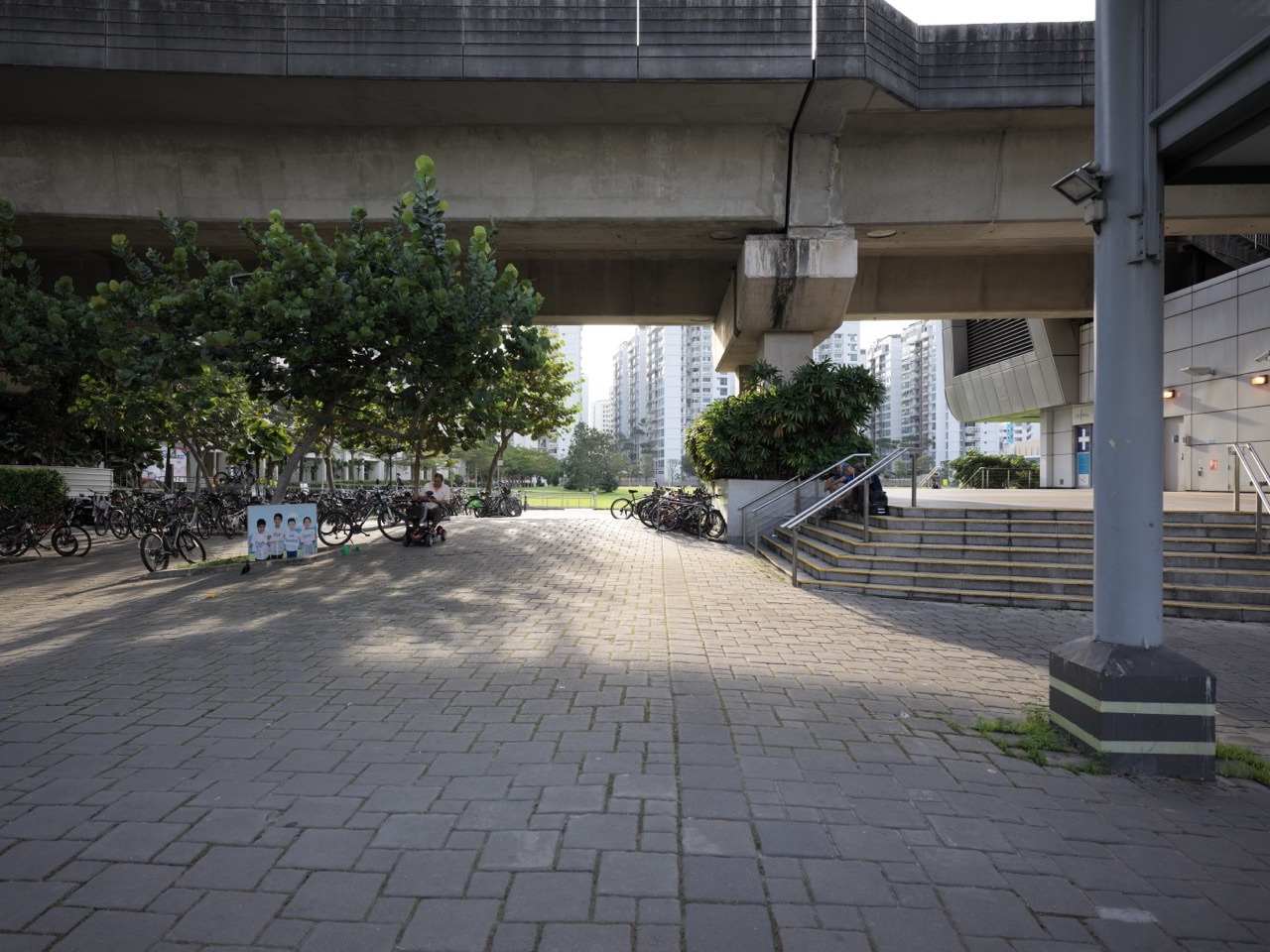
Living in Punggol without a private car is a practical option for some households, but it is not the same as never needing a car-based journey. The useful question is whether work, school, care, groceries and ordinary appointments can run reliably without depending on a vehicle parked downstairs.
Start with your own block and your actual destinations. A person working near a North East Line station may have a very different experience from a shift worker, a caregiver making several pickups, or someone travelling with mobility equipment. Those differences deserve a workable plan, not a lecture about making better choices.
This guide explains how to build that plan: which journeys to test, how to use Punggol’s different centres, how to organise groceries and school handovers, and where public transport needs a realistic backup. It includes provider-verified reference points, not a promise that every street, service or household has the same level of convenience.
Current-service note, 30 September 2026: Service 44 is a weekday directional peak airport service, not an all-day route. Punggol Coast MRT is already operating, while the Cross Island Line’s Punggol Extension remains a future project. Those distinctions matter when planning a journey for today.
Decide what “without a car” means for your household
There are several reasonable versions of car-free living. One household may make almost every journey on foot or by public transport. Another may use public transport on workdays and an occasional taxi for family visits. A third may use deliveries for heavy goods while retaining a booked vehicle arrangement for a relative’s appointments.
None of those patterns needs to be treated as a failure. The question is how much regular dependence you have on car-based transport, whether the required service is available, and whether the cost fits your budget. A plan that includes occasional paid transport can be more realistic than a promise to avoid it under every condition.
Write down your intended arrangement before comparing costs. Are you replacing an existing car, deciding whether to buy one, or moving to Punggol without ever having owned one? Those starting points affect what needs to change. Keep essential accessibility and care requirements separate from discretionary convenience; the household should not be expected to sacrifice a genuine need to fit a label.
Make a small inventory of the journeys that matter
List the journeys made in an ordinary week, including those carried out by other caregivers. Record the start, destination, required arrival time, person travelling and typical load. A schoolbag, stroller, grocery trolley and wheelchair create different practical requirements from an adult carrying a small work bag.
| Journey | What the plan needs to establish |
|---|---|
| Work | A route that reaches the actual workplace at the required time, including the final entrance. |
| School | The permitted gate, reporting time, supervision arrangement and return journey. |
| Care | A confirmed handover between the responsible adults or provider. |
| Groceries | A manageable carrying method or a verified delivery arrangement. |
| Routine healthcare | The correct provider and appointment, with suitable transport. |
| Late return | A journey available at the time you will leave, not merely when you arrive. |
| Unusual heavy-load trip | An agreed alternative rather than an improvised argument on the day. |
Do not count an occasional outing as though it happens daily. Equally, do not leave out a caregiver’s twice-weekly trip because it is absent from the parents’ calendar. The point is to identify the repeated pressure, not to prove that public transport is either perfect or impossible.
Learn the difference between Punggol and Punggol Coast
The names are close, but the stations serve different parts of the town. Punggol Coast became the northern terminus of the North East Line on 10 December 2024. LTA’s opening factsheet records that change. An older journey description ending at Punggol may therefore miss an option that is now relevant.
Use the station that fits the destination rather than automatically travelling through the original Town Centre. JTC’s Punggol Digital District directions identify Punggol Coast MRT and Teck Lee LRT for access to that district. A journey to the district is not necessarily the same as a trip to Waterway Point or One Punggol.
When giving directions to another family member, state the station name and destination explicitly. “Meet at Punggol” can be too vague when someone means Punggol Coast. A clear meeting point saves more trouble than a long explanation sent after two people have reached different places.
Compare walking, LRT and bus for the first part of the trip
The nearest rail station is not automatically the best beginning. Compare the full alternatives from your block. Walking may avoid a wait but involve exposure to rain. The LRT may shorten the walk but introduce a transfer. A bus may take you closer to the destination without using the rail network at all.
Punggol’s LRT is organised into East and West loops connected at Punggol. Use the current LTA system information and the station displays when choosing a service. Do not treat a station list copied from an old guide as an instruction about which train is arriving now.
Try the alternatives when they matter to you. The best route for an unhurried adult on a dry morning may differ from the choice after school with a younger child. You need not discover one winning route for every situation. Two understood options—a normal route and a useful alternative—are often more practical than repeatedly searching for the theoretically fastest journey.
Use neighbourhood centres instead of sending every errand through one hub
A car-free household benefits from knowing what can be done locally. Divide errands by purpose: a small grocery top-up, a planned larger shop, a library visit, an appointment, or a meal after separate family journeys. They do not all need the same destination.
Useful verified reference points include the library at 1 Punggol Drive, One Punggol, Oasis Terraces at 681 Punggol Drive, and Northshore Plaza I and II at Blocks 407 and 418 Northshore Drive. See the NLB library information, HDB Oasis Terraces page and HDB Northshore Plaza page.
Those addresses help with orientation; they do not establish that every required shop or service is open. Check the particular provider, then decide whether the errand fits a journey already being made. A modest local option may be more useful on a busy evening than a larger destination requiring another round trip.
A work commute needs a usable arrival time
Start with the time you must be at work, not the time you would like to leave home. Work backwards through the last walk, main journey, waiting and first connection. Include the parts that a route planner may not know: leaving the unit, a workplace security process, or walking through a large site.
Use the same method for the trip home. A service that suits the morning may not suit an irregular finish. A shift worker should check the relevant day of the week and direction, not only the route map. The family also needs to know when the returning adult can realistically take over childcare or dinner.
A few trial journeys can reveal a weak assumption without proving a permanent travel time. Record the conditions and the range you experienced. Avoid planning every day around the fastest result. If one missed connection would make a fixed arrival impossible, leave more margin or identify another route before the routine depends on it.
The airport example: useful services still have limits
The current Go-Ahead timetable for Service 44 lists departures from Punggol Coast Interchange in the weekday morning peak and from the airport in the weekday evening peak. It lists no service on Saturdays, Sundays or public holidays. This is a useful option to investigate for a matching work schedule, not a general solution for every airport trip. Check Service 44 directly with the operator.
For other journeys, compare the current alternatives using the exact terminal or workplace and the required arrival time. Do not assume that a service calling at the airport also solves access to every building in the wider Changi area. The last part of the journey may be decisive.
A holiday trip adds another question: what can the family comfortably carry? Suitcases, a stroller and tired children can justify a different arrangement from a solo commute. Plan both directions. Returning after midnight is a separate transport problem from departing during a convenient weekday window.
Future rail belongs in a separate part of the plan
LTA lists the Cross Island Line’s Punggol Extension for 2032, while Phase 1 is expected by 2030. Those are planned project dates, not services available for a 2026 school or work journey. Keep them separate from the routes that the household can use now. LTA’s CRL programme is the reference for changes.
A future link can influence how a family thinks about the longer term. It should not erase the cost of the intervening years. If a present journey is difficult, decide whether you can accept it or improve it using current options. Do not write a future benefit into today’s timetable and then blame the household when the timetable fails.
The same caution applies to a planned shop, care centre or facility. Record it as a possibility until access is actually established. A stable car-free routine needs dependable arrangements for ordinary needs, with future changes treated as potential improvements rather than missing foundations.
Build the school morning around the actual gate
A school’s map pin is not always the entrance a pupil uses. Confirm the current reporting arrangements with the school and plan the journey to that gate. Do not use a generic departure time for every child in Punggol; the required timing depends on the school, home and route.
Rehearse the journey with the child when practical. Notice where the route changes direction, where supervision is needed and what the child must carry. Use the pace the child can sustain rather than an adult’s fastest walk. A route that is comfortable with an empty backpack may feel different with the ordinary school load.
Prepare the morning before the morning. Put essential materials in a known place and make the adult responsibility clear. This is not an argument for making children carry every logistical task. It is a way to avoid preventable last-minute searching while the family is trying to leave at a fixed time.
Dismissal is a different journey
School dismissal can combine heat, crowds, several bags and a child who wants food or rest. The collecting adult may arrive from a different starting point than the morning escort. Record that journey separately instead of assuming that the morning plan reverses neatly.
For student care, establish the exact transfer arrangement. Who receives the child? Is the child collected at school, escorted elsewhere, or expected to follow another process? The answer must come from the school and care provider, not from an assumption based on the distance between buildings.
Keep changes simple and explicit. If CCA changes the collection time, the responsible adults need one current instruction. The child should know the part that affects their next action, but should not be made the sole messenger between several adults. A successful car-free school day depends on clear responsibility as much as transport infrastructure.
Join journeys carefully instead of overloading them
Combining errands can save a separate trip, but there is a limit. Collecting a child, buying a large grocery load and making another appointment may look efficient on a map while becoming difficult in practice. The person walking those legs bears the cost of carrying, waiting and supervising.
Combine tasks that genuinely fit. A small grocery top-up while returning from work may be straightforward. A large shop with a tired child may be better handled separately or through delivery. Judge the sequence by the actual load and available time rather than the satisfaction of putting several ticks on a list.
Leave one task movable. If weather worsens or the child finishes late, the household should know what can be postponed without creating another problem. A flexible errand is a useful buffer; a chain of fixed appointments is not. This makes the routine less dependent on everything going exactly as planned.
Make the grandparents’ route visible
When grandparents help, start planning from where they actually live. Count the journey to the child, the activity they perform and their return home. A route that is convenient for the parents is not automatically convenient for the person providing care.
Ask which mode they prefer and why. Familiarity can matter. A direct bus with a known stop may be more comfortable than a rail journey that requires several unfamiliar movements, even when an app estimates the rail route as faster. Mobility, seating and carrying needs also deserve explicit attention.
Agree on backup days and unexpected changes. A grandparent should not be treated as permanently available simply because they usually help. A car-free plan becomes more resilient when the family understands which commitments are dependable, which require notice, and which need another arrangement. Gratitude and practical clarity can coexist.
Teach independence as a route skill
For an older child or teenager, independent travel involves more than permission to leave alone. The student needs to identify the destination, choose the correct direction, recognise the stop, understand the last walk and know what to do when the expected journey changes.
Build that ability gradually. Travel together, let the student explain the route, then allow them to lead while an adult accompanies them. Later stages depend on the family’s judgement and the student’s needs. A child who can follow a familiar route is not automatically ready to improvise a new one late at night.
Agree on a small communication routine. State the meeting point clearly and decide what information matters if the student is delayed. Avoid replacing route understanding with continuous tracking alone. The useful goal is a young person who can describe where they are and ask for appropriate help, not someone who moves only because an adult is directing every turn remotely.
A rainy-day plan should not begin with everyone rushing
Decide before a difficult day what changes when walking becomes impractical. The alternative might be an earlier departure, a different bus, a changed pickup arrangement or paid transport. It may also be postponing an optional errand. Not every trip needs to go ahead unchanged.
Check shelter along the actual route. A covered section at one end does not prove that the entire journey is protected. Identify the exposed crossing or transfer, and consider the people and items travelling. A family with schoolbags and a stroller may choose differently from a single adult.
Do not promise that private-hire transport will always be available instantly or at the same price during rain. If a journey is essential, build a plan that does not depend on the most optimistic booking time. For dangerous weather, follow current official warnings and transport or venue instructions rather than trying to complete an outing because it was already scheduled.
Accessibility is not a side issue
A household using mobility equipment should assess the whole trip, including the home entrance and destination. The existence of a lift at a station is only one part of the journey. Its location, the surrounding route and current operating condition also matter.
Where practical, rehearse with the equipment and person involved. A stroller that can be folded does not pose the same requirements as a wheelchair whose user needs to remain seated. Avoid assuming that the same advice fits both. Ask the relevant transport operator or building about material access questions rather than relying on a generic statement that the area is accessible.
Keep an appropriate alternative for essential journeys. That may include accessible booked transport. Using it does not undermine the rest of a car-free routine. A responsible plan accommodates the person instead of demanding that the person conform to the plan.
Buy groceries according to carrying capacity
Treat grocery planning as a load problem as well as a shopping preference. Identify which goods are light enough to collect on foot and which are awkward, heavy or time-sensitive. A household may reasonably use a neighbourhood top-up shop, a larger planned shopping trip and delivery for different parts of the basket.
Test the return journey, not only the outward walk. Consider lifts, crossings, bags and whether a child is travelling too. A store that is easy to reach empty-handed may be a poor option for a large shop unless the carrying arrangement changes.
Do not buy a trolley or special equipment merely because a checklist says it will solve the problem. First establish the route and the load it needs to carry. Sometimes changing the shopping frequency is simpler. Sometimes delivery is the practical answer. The better choice is the arrangement that the household can repeat without turning every shopping trip into an exhausting event.
Delivery is useful, but give it a clear role
Delivery can remove a difficult carrying task, but it does not remove all planning. Check the provider’s service to the actual address, the available window, the charges and the process for substitutions or missed items. Do not treat an advertised option as proof that the required slot is available today.
Decide who will receive the delivery and where items will go. Avoid booking a window that overlaps with the only caregiver’s school pickup unless another person can receive it. A delivery arrangement that repeatedly creates a new conflict has not simplified the week.
Keep a modest local fallback for essentials. The family does not need several competing delivery subscriptions or a large emergency stockpile. It needs a way to handle an ordinary missed item without rebuilding the entire meal plan. A useful service makes the rest of the routine easier rather than adding another schedule that everybody has to manage.
Dinner can be planned around the return home
Map where the family members are likely to be before dinner. If one adult passes a food option on the way home, collecting a meal may fit naturally. If everybody arrives from different directions, a simple home meal may remove another journey. There is no single pattern that a car-free household must follow.
Use current venue information for hours and dietary questions. A restaurant listing does not guarantee a table, a particular menu item or the suitability of ingredients. When a food requirement matters, verify it directly rather than inferring from the cuisine or the name of the outlet.
Avoid making every activity depend on eating outside. The added spending and waiting can become part of the real cost of an otherwise manageable timetable. Equally, do not insist that every meal must be cooked at home if that creates unsustainable pressure. Compare the ordinary week honestly and leave room for more than one reasonable solution.
Routine healthcare needs the right destination
For a planned visit, use the address and instructions from the provider handling the appointment. Do not choose a clinic or hospital merely because an article calls it the closest or the usual option for Punggol. The required service is more important than a town-wide label.
SingHealth lists Punggol Polyclinic at 681 Punggol Drive, Oasis Terraces, #02-01. Its official location page links to operating and last-registration information. Use those details for an appointment there rather than assuming that the surrounding retail centre’s hours describe the clinic.
Plan the journey at a comfortable pace and consider the return after the visit. A person who feels unwell or has received specific clinical instructions may need a different transport arrangement from their usual commute. Ask the provider about any relevant practical requirement. A neighbourhood transport guide should help a family reach care, not make clinical decisions for them.
Late-opening primary care is not emergency care
Unihealth’s own site currently lists its Punggol outlet as a 24-hour clinic at 88 Punggol Way, #02-122, Punggol Coast Mall. The provider page is the reference for checking the outlet and making enquiries. Keep the address with the name so that nobody confuses Punggol Coast with the original Town Centre.
A 24-hour listing does not establish that every service is available at every hour or that waiting is unnecessary. Contact the provider when service availability affects the visit. Do not infer paediatric, specialist or emergency capability from opening hours alone.
For a medical emergency, use SCDF’s emergency medical guidance and call 995 as appropriate. A private-hire fallback in a transport plan is not a substitute for emergency assistance. This distinction is important in a car-free household, but it is equally important in a household with a car.
Build an evening return plan
Before an evening activity, check the route home at the expected leaving time. The service used earlier in the day may operate differently later, and a final feeder connection can matter even when the main rail journey remains available. Consult the current operator timetable and notices rather than an old screenshot.
For teenagers, agree on the destination, return arrangement and a reasonable way to communicate a change. A low phone battery, unfamiliar exit or delayed activity should have a known response. The purpose is not to make the student afraid of travelling; it is to make ordinary uncertainty manageable.
For adults working shifts, consider the repeated cost and reliability of the late journey. A car-free plan that works only by ignoring several expensive returns a week is not yet an honest comparison. Record those trips in the budget and decide whether the whole arrangement remains suitable.
A bicycle is an option, not an assumed solution
Cycling can be worth considering for some journeys, but the relevant questions are continuity, legal use, rider ability, weather, parking and what must be carried. A short line on a map does not establish that a person can comfortably or lawfully cycle every part of it.
Check current active-mobility rules and route conditions through LTA and the relevant park or path notices. Do not infer permission from another person’s behaviour. For children, the decision also needs appropriate supervision and a route suited to their ability.
Think about arrival. Is there a suitable place to secure the bicycle? Does the destination allow the equipment you plan to bring? Will a wet return leave the family with a difficult carrying problem? Cycling may be a useful part of a mixed routine without needing to replace every bus or walking trip.
Keep a transport budget that does not count the same cost twice
Separate two questions: the money leaving the household each month and the longer-term economic cost of different arrangements. They are related, but they are not interchangeable calculations. A cash-flow budget helps the family pay bills; an economic comparison helps assess the cost of using an asset or service over time.
For a car-free month, record public-transport spending, taxis or private-hire trips, deliveries that replace travel, and any rentals actually used. For ownership, use a consistent method. Do not add a full loan instalment to a full depreciation estimate as though both were separate measures of the same period’s consumption; loan principal and depreciation can overlap in what they represent. Do not add COE separately if it is already embedded in the vehicle purchase figure being compared.
No universal saving is claimed here. Insurance, parking, financing, maintenance, usage and resale assumptions can differ substantially between households. Use current quotations and appropriate financial advice where needed. The practical aim is to see the real cost of the routine, including the trips that are easy to forget.
A hypothetical monthly comparison
The following example illustrates record-keeping rather than Singapore fare levels. Suppose a household records public-transport spending, eight paid car trips, two grocery deliveries and one occasional rental during a trial month. The useful result is not simply the total. Label what each paid trip solved: late work, rain, a heavy load, a family visit or an appointment.
If six of the eight trips are regular late returns, they belong in the expected monthly plan. They are not exceptional simply because the family would prefer not to count them. If one expensive trip resulted from an avoidable scheduling clash, changing the schedule may be more useful than reconsidering car ownership immediately.
Also record journeys shared by several family members without charging the same cost to each person and then summing it again. For delivery, distinguish the fee from the cost of groceries that the household would have bought anyway. The objective is a fair comparison, not an artificially low car-free total or an artificially high ownership total.
Test one normal day before redesigning the entire week
Choose an ordinary weekday and write the sequence in order. Include the first departure, school handover, work, groceries if needed, collection and dinner. Identify which steps have fixed times and which can move. The movable tasks are where you can create breathing room.
Run that day using the proposed routes where practical. Note what actually caused difficulty. Was the route too long, or was departure delayed because materials were not ready? Did a transfer fail, or was the family using the wrong entrance? Was the grocery load the problem rather than the walk itself?
Change the part that caused the difficulty before concluding that the whole town or transport mode is unsuitable. At the same time, do not minimise a genuine structural problem. If an essential journey cannot be completed at the required time, that needs another arrangement. Encouragement does not replace a feasible route.
A worked pickup plan, without assuming a private car
Consider a hypothetical Friday on which one child finishes an activity later than a sibling. The household should not begin by asking which vehicle would travel fastest between the two places. First establish whether the two collection windows overlap and whether either child is under an agreed supervision arrangement while waiting. A transport solution cannot replace a missing care arrangement.
Suppose the earlier-finishing child can remain with an authorised caregiver until an agreed time. The parent may be able to collect the second child and then make one combined return. If that supervision is not available, a different adult or activity time may be needed. The correct plan emerges from the actual responsibilities, not from an optimistic journey estimate.
Keep the instruction brief enough that another adult can follow it: who collects each child, where the meeting occurs, what time applies and who takes over afterward. Confirm changes directly between adults where necessary. The child can learn to recognise the plan, but should not have to negotiate which conflicting message is correct.
After the first few Fridays, inspect the result. Are both children collected comfortably? Does the return leave enough time for dinner? Is the caregiver arrangement still workable? If the sequence repeatedly fails, change it rather than treating every Friday as an exceptional emergency. The successful outcome may still include an occasional paid car trip, but it will be a deliberate part of a complete plan rather than a rescue whose true cost remains invisible.
Plan for disruption without maintaining five complicated backups
A useful backup should be easy to explain and genuinely available. For an essential journey, identify one alternative route or mode and the condition that would make you use it. Keep the current operator notices accessible. For less urgent errands, postponement may be the simplest backup.
Distinguish a transport disruption from a household delay. Missing an alarm, a child needing extra time and a rail-service interruption call for different responses. One should not automatically be used as evidence about the other. A clear record helps the family repair the cause rather than arguing about a general sense that mornings are always difficult.
If a disruption occurs, follow the operator’s current instructions. Do not improvise through restricted areas or treat an old online detour as guaranteed access. The household needs a plan for being late as well: who should be informed, what commitment can move and who takes over a care responsibility if necessary.
Give each adult enough information to act
A transport plan is incomplete when only one adult understands it. The person collecting a child should know the current destination, time, necessary belongings and the next responsible adult. They do not need every detail of the family’s week.
Use one clear update when something changes. For example: the collection time has moved, the usual adult is unavailable, and another named adult will use the agreed meeting point. Avoid sending fragments through several chats and expecting a child or grandparent to assemble the final instruction.
Respect privacy when sharing routine information. A caregiver may need the appointment time and destination without needing a full medical history. A tutor may need the revised arrival time without seeing family disagreements. Good coordination sends the necessary information to the person who can use it, then lets them perform the task without repeated supervision.
Your phone should support the journey, not be its only memory
A charged phone and access to current journey information are useful, but keep the essentials understandable without a perfect connection. Know the destination name, a suitable contact and the main landmark or station. For a child, practise describing where they are in ordinary language.
Do not publish private home or school routines unnecessarily in shared notes. Store contact information in a way that the people who need it can use, while considering the consequences of a lost device or publicly visible message. Keep the plan proportionate to the journey and the person’s needs.
At a new destination, identify the return meeting point before separating. “Outside the mall” may refer to several different places. A specific entrance or agreed landmark reduces confusion, particularly around Punggol Town Centre and Punggol Coast, where similar place names can lead people to different hubs.
A four-week trial can reveal the real pattern
In the first week, observe rather than optimise everything. Use the ordinary routes and record repeated difficulties. Do not make every trip unusually easy by arranging extra help that will disappear after the trial. The point is to understand the sustainable arrangement.
In the second week, change one or two practical issues. Perhaps a grocery load should be delivered, a school bag should be prepared earlier, or a bus route deserves testing instead of an LRT transfer. Keep the change specific enough that you can tell whether it helped.
In the third week, inspect the essential backups. Check a late return, a caregiver change or a wet-weather alternative when circumstances permit; do not create unsafe conditions merely to test them. In the fourth week, review the cost, time, comfort and reliability. The outcome may be to continue, adjust the mix of transport, retain a car for particular needs, or reconsider the arrangement. A trial is useful because it can change the conclusion.
Three different households can reasonably choose different mixes
An illustrative solo commuter may mainly need a reliable work route, groceries near an existing journey and occasional paid transport. Their success does not prove that the same routine fits a household making multiple school pickups.
An illustrative family with a Primary pupil may place more weight on the school-to-care handover and the person collecting the child. They might use public transport for work and booked transport for one awkward weekly activity. The extra expense belongs in the plan without being described as poor discipline.
An illustrative household supporting an older adult may require accessible transport for appointments while using walking and public transport for most other tasks. Its decision should follow the person’s needs. These examples are not resident testimonials. They show why a practical car-free guide should explain choices rather than prescribe one transport identity for everybody.
Notice when the problem is the timetable rather than the route
If two activities require the same caregiver in different places at the same time, transport cannot fully solve the conflict. A faster journey may help at the margin, but the schedule itself needs attention. Check whether an activity can move, a different adult can take over, or an optional task should be removed.
This matters particularly when school, CCA, tuition and enrichment have been added separately. Each may look reasonable until the combined week appears. Put them together before buying another service or assuming that a private car is the only missing ingredient.
Conversely, do not blame scheduling when the need is genuinely physical or geographical. A wheelchair-accessible journey, a very early shift or a fixed clinical appointment may require a particular transport solution. The useful distinction is between a conflict the family can redesign and a requirement it must accommodate.
Decide what would make you keep or change the arrangement
A working routine does not need to be perfect. It needs to meet the important requirements with an acceptable cost and a tolerable amount of effort. Name those requirements before reviewing the trial: timely school arrival, reliable care handovers, a manageable work commute, access to necessary care and a budget the family can sustain.
Avoid continually reopening a satisfactory arrangement because someone else describes a faster route or a more convenient lifestyle. Their starting point, household and priorities may be different. Adopt a useful idea when it solves your problem, not merely because it sounds efficient.
Review again when something material changes. A new school, workplace, caregiving responsibility, mobility need or transport service can alter the answer. Changing the arrangement later is not evidence that the earlier decision was foolish; it is a response to a different set of circumstances.
Common questions about car-free Punggol living
Must I live directly beside Punggol MRT?
Not necessarily. A home elsewhere may have a useful walking, bus or LRT connection and better access to the family’s other destinations. Compare the entire routine. Station proximity matters, but it is not the only way to reduce travel, and it does not guarantee that every trip will be convenient.
Does Punggol Coast replace the original Town Centre?
No. It provides another important destination and rail access point. A trip to PDD or SIT may use a different route from a trip to Waterway Point or One Punggol. Learn the names and entrances that match the actual destination rather than treating all Punggol journeys as one interchange problem.
Is Service 44 useful for a midnight flight?
Its currently published timetable is not an all-day schedule. It is a weekday directional peak service. Check the operator’s timetable for the specific journey, then arrange another option if the required day, direction or time falls outside it. Do not assume that a bus reaching the airport operates whenever a flight departs.
Is using a taxi during rain a sign the plan does not work?
No. Occasional car-based transport can be an intentional part of the plan. The questions are whether it is suitable, available and affordable when needed. If a supposedly occasional trip becomes frequent, include it honestly in the normal budget and review the arrangement.
Can a child manage the journey independently?
That depends on the child, route, time and circumstances. Build route knowledge gradually and agree on what to do when something changes. Do not infer readiness solely from age or from another child’s experience. The family should assess the particular journey and the support the child needs.
Can the family rely on a 24-hour clinic listing?
Use the provider’s current address and contact information, and check the service required. Opening hours alone do not establish clinical suitability or immediate availability. Medical emergencies belong with the emergency response system, not with a comparison of neighbourhood clinic convenience.
What should I do about a broken lift or changed entrance?
For an essential accessible journey, consult the current operator or building information and use an appropriate alternative. Do not assume that a route remains usable because it worked previously. A complete plan includes the person’s access requirements from the home entrance through to the destination.
How much money will a household save?
There is no reliable universal figure. Record actual public-transport costs, paid car trips, delivery fees and any rentals. Compare them consistently with the relevant ownership costs without double-counting financing and depreciation. The answer depends on usage, requirements and current prices.
What counts as a successful trial?
The essential journeys work, the family can explain the handovers, the budget is understood and the routine does not depend on extraordinary daily effort. A successful plan can contain walking, public transport, deliveries and occasional paid transport in different proportions.
A practical way to live, not a test of virtue
The strongest car-free plan is the one the household can actually use. It respects the child who needs supervision, the adult working an unusual shift, the caregiver carrying groceries and the person who needs an accessible journey. It does not dismiss those needs as poor choices.
Build from current services, specific destinations and real trial journeys. Keep a simple alternative for the important trips. Count the costs that actually occur. Then allow the routine to become ordinary rather than continuously proving that it works.
For more local orientation, use Living Near Punggol MRT and Town Centre, the Cove LRT neighbourhood guide, and the existing stroller- and wheelchair-friendly routes guide. For a comparison before a move, read Punggol, Pasir Ris and Tampines. Use current operator and provider information for the specific journey rather than treating any general guide as a live availability guarantee.


