
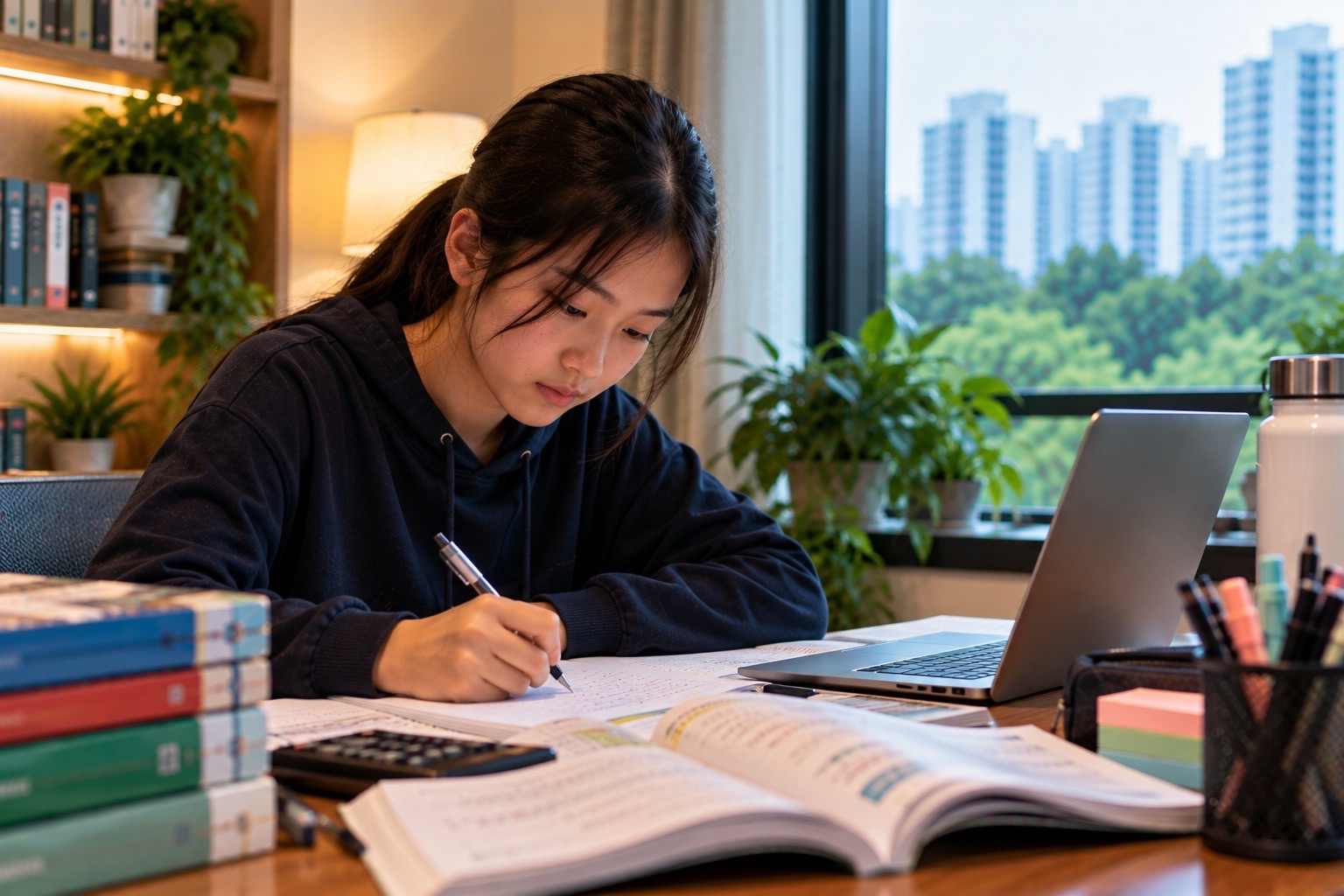
Singapore creative writing enrichment becomes more effective when students learn to work in two deliberately different modes. Exploration Mode is where ideas are generated, observations are collected, language is stretched, characters are tested and unexpected connections are allowed. Exam-Writing Mode is where the writer selects, structures, compresses, times and executes.
Weak programmes often confuse the two. Some students are trained only for examinations and become technically neat but creatively brittle. Others are encouraged to “be creative” without enough structure and produce interesting fragments that collapse under time. Strong writing needs both modes—and the ability to switch between them on purpose.
This rebuilt legacy page keeps its existing 2017 title and URL while giving it one clear job: distinguish Exploration Mode from Exam-Writing Mode and show how the two should support each other. The goal is not to choose creativity over examinations or examinations over creativity. The goal is to teach students when to explore and when to execute.
The central distinction: generate widely, select narrowly
Exploration Mode expands possibilities. Exam-Writing Mode reduces them. This is not a contradiction; it is the normal cycle of good writing.
During exploration, the student might collect ten possible story problems, five details from a real place, several lines of dialogue, three possible endings and two different points of view. During exam execution, most of those possibilities are discarded. The writer selects one clear causal chain and develops it fully enough to be coherent within the time available.
Creativity generates options. Examination skill chooses among them.

Exploration Mode has a different success criterion
In exploration, the student does not need to produce a finished composition every time. A page of observations, character sketches, sensory fragments, possible conflicts or alternative openings can be successful because the objective is to enlarge the writing bank.
This changes the emotional climate. The child is allowed to try an odd idea, abandon a weak one, write badly for a few minutes, or follow a detail without knowing whether it will survive into a final piece.
The tutor should judge Exploration Mode by the quality of noticing, variety of possibilities and willingness to revise ideas—not by exam polish.
Exam-Writing Mode has a different success criterion
Exam mode is constrained. The writer has limited time, a fixed prompt, a marking context and a need for coherence. The best idea is not necessarily the most original idea imaginable. It is the idea the student can execute clearly, relevantly and convincingly within the available time.
Exam mode therefore values decision speed, structure, paragraph control, relevance, pacing and checking. Creativity remains present, but it is serving a specific task.
The mistake: exploring during the whole exam
Some students continue generating possibilities after they should have committed. They restart plans, add unrelated twists or chase a more dramatic ending halfway through. The composition becomes unstable because Exploration Mode never ends.
Teach a switch point. Once the writer has a workable situation, disruption, choice, consequence and resolution, planning should stop expanding. Drafting begins.
A good exam plan closes doors deliberately.
The opposite mistake: entering exam mode too early
Students who are constantly trained with fixed templates may begin every creative task by asking, “What is the correct plot?” They avoid risk because every sentence feels judged immediately.
This produces safe but repetitive writing. Exploration Mode restores possibility. The student can play with perspective, setting, character goal, objects, misdirection, dialogue and consequence before choosing what deserves full development.
Exploration Mode tool 1: observation banks
Students can collect ordinary details from school, neighbourhoods, public transport, family routines and weather. The value is not description for its own sake. Each observation should be converted into a possible story function.
- A queue can create waiting and social pressure.
- A lost object can create responsibility or misunderstanding.
- A closing gate can create urgency.
- A sound can reveal or hide information.
- Rain can change route, pace and visibility.
- A message can arrive too late.
- A small rule can create a moral choice.
Observation becomes useful when the child can ask, “What could this detail cause?”
Exploration Mode tool 2: character goal before plot
Instead of inventing events randomly, begin with what the character wants. To reach a meeting point. To hide a mistake. To return something. To win approval. To avoid embarrassment. To help someone without being late.
A goal gives the writer a filter. Setting details become relevant or irrelevant depending on whether they help or obstruct that goal.
Story structure emerges more naturally when the writer knows what matters to the character.
Exploration Mode tool 3: multiple consequences
Take one event and list three possible consequences. A student drops a wallet. Someone notices. Another person assumes it was stolen. A friend picks it up but leaves before explaining. Each consequence produces a different story.
This teaches students that originality often comes from branching cause-and-effect, not from searching for one magical plot.
Exploration Mode tool 4: viewpoint change
Rewrite one small scene from another character’s point of view. The child discovers that the same event contains different information, priorities and emotions.
Point-of-view work expands empathy and also teaches selective detail. Different characters notice different things because their goals differ.
Exploration Mode tool 5: object transformation
Choose an ordinary object—umbrella, receipt, key, bottle, library book, shoe, lunchbox—and ask how it could become causally important.
The object might be lost, mistaken, damaged, returned, borrowed, recognised or hidden. The story grows from what the object changes, not from describing it beautifully.
Exploration Mode tool 6: dialogue fragments
Students can collect or invent short lines of dialogue without building the full scene yet. A line such as “I thought you had it” can become the seed of misunderstanding. “We have five minutes” creates urgency.
Later, the child decides which fragment deserves a story around it.
Exploration Mode tool 7: alternate endings
Write three possible endings to one plot. One resolves through admission, one through consequence, one through repair. This forces the writer to understand what the story is actually about.
The final exam version uses one ending; Exploration Mode creates the options.
Exploration Mode tool 8: sentence experiments
Students should occasionally write sentences for rhythm, contrast or imagery without worrying whether they belong in an exam composition. Try a short sentence after a long one. Use repetition deliberately. Reverse the order of information. Start with dialogue. Start with movement.
Some experiments will fail. That is the point. Writers need a space where failure is cheap.
Exploration Mode tool 9: vocabulary through use
Instead of memorising “good words”, choose a small theme and use words in several different sentences, moods and contexts. A word becomes useful when the child knows its register and associations.
Creative enrichment should build vocabulary networks, not isolated decoration.
Exploration Mode tool 10: read like a writer
When reading fiction, students can ask why a scene works. Where does tension begin? Which detail returns later? What information is delayed? How does dialogue reveal conflict?
The child borrows principles, not sentences.
Reading becomes a source of craft awareness.
Exam-Writing Mode begins with relevance
The examination prompt controls the writing. The first task is to identify the non-negotiable requirement. What must happen, be shown or be addressed? Which stimulus detail cannot be ignored?
A beautiful story that solves the wrong task is still a weak exam response.
Relevance should be checked before planning expands.
Exam-Writing Mode needs a fast causal plan
A practical narrative structure is situation → disruption → choice → consequence → resolution. The exact shape can vary, but each event should create the next.
Students should avoid event lists where things merely happen one after another without causal connection.
The plan exists to preserve coherence under time.
Exam-Writing Mode needs time allocation
The student should know roughly how long to spend interpreting the prompt, planning, drafting and checking. The exact distribution depends on level and paper format, but the principle is stable: planning cannot consume the whole task, and checking cannot be left to chance.
A practiced timing routine reduces panic because the student knows when to move on.
Exam-Writing Mode needs a development budget
Not every event deserves equal space. The turning point, decision and consequence usually need more development than routine background.
Teach students to spend words where meaning changes. One good paragraph on the decisive moment is more valuable than three decorative paragraphs before the story starts.
Exam-Writing Mode needs sentence stability
Under time pressure, students often lose tense, punctuation and sentence boundaries. Strong creative ideas cannot compensate indefinitely for unstable sentences.
The tutor should identify personal recurring grammar patterns and build a short final check around them.
Exam writing is integrated performance: idea plus language control.
Exam-Writing Mode needs vocabulary restraint
Students often try to insert every advanced word they have learned. This can distort tone, create awkward sentences and consume time.
Use precise words that the student controls. One accurate verb is better than one impressive adjective used incorrectly.
Exploration expands vocabulary; exam mode selects only what fits.
Exam-Writing Mode needs purposeful description
Description should orient the reader, create mood, reveal character or affect the causal chain. It should not pause the story so the student can display memorised phrases.
A useful revision question is: what changes if this sentence is deleted?
If nothing changes, the description may be decorative.
Exam-Writing Mode needs a stopping rule
Students sometimes keep improving an answer until time is gone. Teach a stopping criterion: the story is relevant, complete, coherent, grammatically stable enough, and checked for personal high-risk errors.
Perfection is not an exam strategy. Reliable completeness is.
The two modes should not be practised in equal proportions all year
Earlier in the year or during enrichment periods, Exploration Mode can occupy more space. As major assessments approach, more time shifts into Exam-Writing Mode.
The shift should not become total. Even near examinations, short exploration sessions can keep ideas, vocabulary and voice alive.
The balance changes with the calendar and learner state.
A student can be overtrained in exam mode
Signs include repetitive plots, fear of unusual ideas, dependence on model phrases, excessive concern about “correct” openings and difficulty writing without a prompt template.
The repair is not to abandon exam practice. It is to restore some low-stakes generation where risk is allowed.
A student can be undertrained in exam mode
Signs include beautiful fragments, unfinished compositions, weak relevance, inconsistent pacing, excessive planning and no stable checking routine.
The repair is execution practice: select, structure, time, complete and check.
The tutor should diagnose which mode is currently weaker
Some students have many ideas and little control. Others have control and little originality. The tuition programme should not give both students the same creative writing work.
Mode diagnosis makes enrichment more targeted.
The tutor should sometimes forbid editing during exploration
Students who self-correct every sentence immediately can interrupt idea generation. Give five or ten minutes where crossing out is discouraged and the goal is only to produce material.
Editing returns later.
This separates generation from judgement.
The tutor should sometimes forbid new ideas during exam drafting
Once a timed plan is committed, the student should not keep inventing unrelated twists. Put new possibilities aside unless the existing plan genuinely fails.
This teaches commitment under constraint.
The tutor should make the mode switch explicit
Say, “We are exploring now—quantity and possibility matter.” Later: “We are switching into exam mode—relevance, causality and time matter.”
Naming the mode helps students understand why the rules have changed.
Mode confusion can create unnecessary conflict at home
A parent may see messy exploratory notes and think the child is careless. Or see a tightly timed exam draft and think the child is not being creative enough.
The family should know which mode the task belongs to before judging the work.
Exploration notebooks should remain messy enough to be useful
They can contain fragments, diagrams, lists, half-sentences, observations and failed ideas. The notebook is a generator, not a presentation piece.
Students should not spend more time decorating the notebook than using it.
Exam notebooks should become cleaner and more selective
Error checklists, timing records, high-carry vocabulary and planning routines belong in a more structured revision system.
The contrast between the two notebooks can reinforce the contrast between the two modes.
The child should learn to mine exploration later
An observation collected months earlier can become useful in a new prompt. A line of dialogue can be adapted. A character conflict can be transplanted into another setting.
This is how enrichment compounds rather than disappearing after each class.
The child should learn to discard most exploration
Not every idea deserves to become a composition. Selection is part of creativity.
Strong writers can let go of attractive but irrelevant material because the task requires something else.
Reading supports both modes differently
In Exploration Mode, reading expands possibilities: voices, structures, images, conflicts and vocabulary. In Exam-Writing Mode, reading becomes craft analysis: how quickly does the writer establish tension, how is evidence placed, how does the ending close the causal loop?
The same book can serve both purposes.
Vocabulary supports both modes differently
In Exploration Mode, students widen semantic networks and test nuance. In Exam-Writing Mode, they retrieve only words they can deploy accurately and efficiently.
This protects exam writing from forced sophistication.
Feedback should change by mode
Exploration feedback asks: what is interesting here, what possibility could be pushed further, what detail feels alive, what assumption could be reversed? Exam feedback asks: is it relevant, causal, developed, controlled and complete within time?
Using exam criteria during every exploration session can shut down generation. Using exploration criteria during timed exam work can create chaos.
Peer discussion should change by mode
In exploration, peers can brainstorm alternatives and ask “what if?” In exam mode, peers can compare plans for relevance and identify where a story risks becoming too complicated.
The social purpose changes with the mode.
Three-student groups can support both modes well
In exploration, each student can generate a different response to the same object, image or situation. The contrast expands everyone’s idea bank.
In exam mode, the same group can independently plan the prompt, compare which plans are most executable and then write separately.
Shared stimulus, different output, individual proof.
Exploration can be local without becoming location-dependent
Students can observe Punggol, Sengkang, Holland Village, school corridors or public transport and collect story mechanisms. The place supplies material, but the underlying skill is noticing constraints, movement and human choices.
The child should later transfer the same attention to unfamiliar settings.
Exam mode should become increasingly independent
At first, tutors may provide planning frames and timing prompts. Over time, those supports should fade.
The student should know how to interpret, plan, draft and check without the tutor announcing each stage.
A four-week dual-mode cycle
Week 1: Explore
Collect observations, vocabulary, conflicts and possible character goals. Produce fragments without requiring a full composition.
Week 2: Shape
Choose one idea and build a causal plan. Test viewpoint, turning point and ending.
Week 3: Execute
Write under realistic constraints with a fixed time and deliberate development budget.
Week 4: Transfer
Use a fresh prompt. Reduce scaffolds. Compare what exploration material transferred and what exam routines remained stable.
A holiday programme can lean toward exploration
Longer blocks and lower assessment pressure create room for observation, reading, experimentation and extended revision.
The goal should still include transfer back into school writing so enrichment does not become an isolated hobby.
A pre-exam programme can lean toward execution
Near examinations, students need speed, relevance, planning discipline and checking. Exploration is still useful in smaller doses to keep vocabulary and idea generation alive.
The ratio changes; the two modes remain connected.
Parents should ask what mode the homework is training
- Idea generation?
- Vocabulary expansion?
- Observation?
- Planning?
- Timed drafting?
- Sentence accuracy?
- Revision?
- Transfer to a new prompt?
If the answer is unclear, the workload may be too generic.
What progress looks like in Exploration Mode
- More varied story possibilities.
- More specific observations.
- Stronger character goals.
- Greater willingness to abandon weak ideas.
- Richer vocabulary in context.
- More flexible viewpoints.
- Less dependence on memorised plots.
What progress looks like in Exam-Writing Mode
- Faster prompt interpretation.
- More proportionate planning.
- Clearer causal structure.
- Better development of the turning point.
- More stable sentence control.
- Fewer forced phrases.
- More reliable completion and checking.
Frequently asked questions
Is creative writing enrichment useful for exams?
Yes when exploration is deliberately converted into transferable planning, vocabulary and craft. Enrichment should expand resources that exam mode can later select.
Should students memorise model compositions?
Models can teach structure and craft, but memorising complete pieces creates brittle transfer. Analyse principles, then write something different.
How much freedom should students have?
More during exploration, less during timed execution. Freedom and constraint are both useful when applied at the right stage.
Why does my child have ideas but never finish?
The student may remain in exploration too long. Teach commitment, planning limits and a clear drafting switch.
Why does my child write competent but boring stories?
The student may be overtrained in exam mode. Restore low-stakes observation, reading and idea branching.
How do I know whether enrichment is helping?
Look for greater idea flexibility and better exam selection: the child generates more possibilities but commits faster when the task requires it.
Related eduKatePunggol reading
- Creative Writing Holland Village | Use Urban Observation Without Turning Composition Into a Travel Brochure
- Waterway Point Creative Writing | Turn Place Observation Into Original Composition Material
- How to Get Your Child to Read
- eduKate Punggol Contents & Learning Routes
The deeper rule: creativity needs both expansion and compression
Writers become stronger when they can generate more than they use and choose more carefully than they generate.
Exploration Mode gives the child material, range and voice. Exam-Writing Mode gives the child relevance, structure and reliability.
Neither mode is the enemy of the other. They are two halves of one writing system.
Explore widely. Select deliberately. Execute clearly. Then return to exploration with more craft than before.
Exploration Mode should have its own revision process
Revision in exploration is not the same as exam correction. The writer is still asking what the piece could become. A scene can be cut, reordered, expanded or rewritten from another point of view. The purpose is discovery.
Students should learn that revision can change the idea itself. If the strongest part of the draft is a small interaction in paragraph three, the next version can begin there. If the original ending feels false, the writer can choose a quieter consequence.
Exam-Writing Mode should have a narrower revision process
Under examination conditions, revision is constrained by time. The student should check the highest-risk issues first: relevance, missing causal step, tense instability, sentence boundary, incomplete ending or a personal recurring error.
The writer is not redesigning the entire composition at the last minute. The goal is to protect coherence and recover avoidable marks.
A creative bank should store mechanisms, not memorised plots
Students can keep a bank of useful narrative mechanisms: delay, misunderstanding, lost object, peer pressure, responsibility, accidental discovery, false assumption, interrupted plan, unexpected help, choice under time pressure.
These mechanisms are portable because they can appear in many settings and prompts. A memorised plot is rigid. A mechanism can be recombined.
A vocabulary bank should store relationships, not isolated “good words”
Group words by function and theme: movement, hesitation, relief, embarrassment, urgency, conflict, weather, observation. Add collocations and example sentences. Note which words sound formal, conversational or literary.
This makes vocabulary easier to retrieve accurately in exam mode because the word already belongs somewhere in the learner’s language network.
A sentence bank should store craft moves
Instead of memorising complete model sentences, students can collect structural moves: delayed subject, short sentence after a long build, parallel clauses, controlled repetition, dialogue interrupted by action, description embedded inside movement.
The student later recreates the principle with original content. This is much more transferable than copying a surface phrase.
Exploration Mode should include reading outside the syllabus
Students need exposure to more language than exam worksheets provide. Short stories, novels, essays, journalism, memoir, comics and well-written non-fiction can all expand voice, knowledge and sentence awareness.
The tutor does not need to turn every reading experience into comprehension homework. Sometimes the educational value is noticing what the writer did and wanting to try something similar.
Exam-Writing Mode should still borrow from real reading
Students who read widely have more material to select from under time. They have seen how dialogue works, how scenes open, how paragraphs turn and how writers control information.
Exam writing becomes less dependent on memorised school phrases because the learner has a larger language repertoire.
Creative confidence should come from generating alternatives
A child who believes there is only one good story idea can freeze when that idea fails. Exploration Mode teaches abundance. There is another viewpoint, another consequence, another object, another setting pressure, another ending.
Confidence becomes a process: if this idea fails, I know how to generate another.
Exam confidence should come from a stable execution routine
The timed writer needs a different kind of confidence: I can interpret the prompt, generate several possibilities quickly, choose one, plan proportionately, draft, and finish with a short check.
That confidence comes from repeated full-cycle practice, not reassurance alone.
The writer should know when an idea is too expensive
Some plots require too many characters, too much backstory or too many location changes. They may be interesting in Exploration Mode and dangerous in an examination.
Teach students to estimate narrative cost. How much explanation will this idea require before the central conflict even begins?
The writer should know when an idea is too thin
The opposite problem is a story that can be resolved in one sentence. If there is no meaningful choice, consequence or development, the student may spend the whole piece stretching description around a weak core.
Exploration Mode should test whether the idea contains enough pressure to sustain a composition before Exam-Writing Mode commits to it.
Use the “one-sentence story” test
Before a timed draft, ask the student to state the story in one sentence: who wants what, what interrupts the plan, what choice follows and what consequence matters.
If the sentence is impossible to state clearly, the plan may still be too diffuse.
Use the “why this story?” test
Ask what changes in the character or relationship by the end. This prevents event-heavy stories that contain action but no meaning.
The answer need not become a moral. It can be a new understanding, a repaired relationship, accepted consequence or altered choice.
Exploration Mode can include unfinished work deliberately
A student may write only a scene, opening or dialogue exchange because the learning objective is craft. Requiring every session to end with a complete composition can reduce the time available for deep experimentation.
Completion matters in exam mode. It does not need to dominate every enrichment lesson.
Exam-Writing Mode should practise full completion regularly
Students who practise only fragments can become excellent at openings and weak at endings. Timed full pieces are necessary to learn pacing, stamina and final-stage checking.
The programme should therefore alternate fragment craft with full-cycle execution.
P3–P4: exploration should dominate more often
Middle Primary students benefit from building observation, vocabulary, sentence fluency, story logic and confidence. They still need exam structure, but over-formalising too early can make writing feel like a checklist.
Short timed pieces can coexist with generous exploration.
P5: the two modes should begin integrating more deliberately
Primary 5 is an important bridge. Students need wider material and stronger craft while beginning to manage more formal school demands.
The tutor can ask the learner to explore freely, then select one idea and convert it into a timed school-style piece later in the week.
P6: exam mode becomes more prominent without eliminating exploration
PSLE preparation requires reliable relevance, pacing and completion. Yet students still need enough exploration to avoid becoming template-dependent.
Short idea-generation and reading sessions can preserve creative range while full-paper routines become more frequent.
Secondary students need Exploration Mode for argument as well as narrative
Exploration at Secondary level can mean generating positions, counterarguments, examples, definitions and tensions around an issue. The same principle applies: produce more possibilities before choosing the most defensible structure.
Exam mode then narrows the argument and allocates evidence under time.
A strong programme should tell parents which mode is active
A messy creative notebook should not alarm parents if the lesson is deliberately exploratory. A tightly structured timed composition should not be criticised for lacking the looseness of a free-writing session.
Different modes use different standards because they are training different parts of the writing system.
The modes should eventually become internal
At first, the tutor announces the switch. Later, the child should recognise it independently: now I need options; now I need commitment; now I need drafting; now I need checking.
This is a form of self-regulation. The writer manages the writing process rather than waiting for the tutor to manage it.
The final parent checklist
- Does the child generate more than one possible idea?
- Can the learner discard attractive but irrelevant material?
- Is there a clear point where exploration stops and planning begins?
- Can the student complete full pieces under realistic time?
- Does vocabulary appear naturally rather than being forced?
- Are sentence experiments transferred into original writing?
- Does the child read widely enough to keep the idea bank alive?
- Can a new prompt be handled without a memorised plot?
- Does the checking routine remain short and personal?
- Can the student explain which mode a task is training?
When both sets of answers improve, creative writing enrichment is doing more than producing attractive compositions. It is building a flexible writer who can generate and execute.
The final writing cycle
Explore. Select. Shape. Execute. Review. Return to exploration with new craft knowledge.
The cycle matters because examination discipline should sharpen creativity rather than replace it, and creative range should feed examination writing rather than remain separate from it.
That is the purpose of Singapore creative writing enrichment at its best: not to choose between freedom and structure, but to teach the learner when each one is useful.
The tutor can diagnose mode problems from recurring symptoms
- Too much exploration: repeated restarts, unfinished drafts, too many characters, late plot changes, weak endings.
- Too much exam mode: repetitive plots, memorised openings, forced vocabulary, fear of unusual ideas, dependence on fixed templates.
- Weak mode switching: good ideas but poor timed execution, or strong timed writing with no flexible idea generation.
Once the symptom is identified, the tutor can change the task design rather than telling the student simply to “be more creative” or “plan better”.
Exploration Mode should sometimes be silent
Brainstorming aloud can be useful, but confident speakers can dominate group idea generation. Give students private observation or free-writing time before discussion. This protects original thought and prevents one student’s plot from becoming everyone’s plot.
After private generation, comparison becomes richer because the group has genuinely different material to share.
Exam-Writing Mode should sometimes be public before it becomes private
Planning can be compared openly before students write. Which plan is most relevant? Which one carries too much narrative cost? Which one has a weak consequence? The group learns from structural contrast.
Then each learner writes independently. The discussion sharpens judgement; the final work proves ownership.
Exploration Mode should tolerate abandoned drafts
Abandoning an idea after discovering that it has no meaningful conflict is not failure. It is selection. Students need experience deciding that an attractive idea is not worth developing.
This saves time later because the writer becomes better at evaluating story potential before the exam clock is running.
Exam-Writing Mode should tolerate imperfect but complete drafts
Students who chase perfect phrasing can run out of time. A complete relevant composition with controlled language is usually stronger than an exquisite opening attached to a rushed ending.
Teach the learner to preserve the whole piece first and polish selectively second.
The child should know which risks are allowed in each mode
Exploration can risk unusual structure, strange viewpoint, difficult vocabulary and unresolved endings because the cost of failure is low. Exam mode should choose risks the student can still control.
This is not cowardice. It is professional decision-making under constraints.
Creativity becomes more reliable when constraints are understood
Paradoxically, knowing the exam constraints can improve creativity. When the writer understands the time, prompt and length boundaries, idea generation becomes more useful because options can be judged against reality.
Constraints focus invention rather than automatically suppressing it.
A one-hour enrichment lesson can deliberately include both modes
- Ten minutes of observation, reading or idea generation.
- Ten minutes comparing possibilities and selecting one.
- Ten minutes building a causal plan.
- Twenty minutes drafting a focused scene or partial composition.
- Ten minutes revising against the mode-specific goal.
The exact timing can change. The important thing is that the learner experiences the switch rather than remaining in one mode all lesson.
A full exam rehearsal should simplify the mode switch
Under realistic time, the student has only a brief exploration window. Generate a few workable options, choose quickly, plan enough, then commit. The months of broader enrichment make that short window more productive because the child already has a deep bank of observations, mechanisms and language.
Exploration training therefore appears inside the exam as faster idea quality, not as a long brainstorming session.
The long-term outcome is a writer who can change gears
Strong writers are not permanently free-form and not permanently exam-driven. They know when to open the field and when to narrow it. They can collect, experiment and read widely, then become disciplined when a task demands relevance and completion.
That gear change is a form of writing intelligence. It allows creativity to remain alive without becoming chaotic and allows examination discipline to remain reliable without becoming sterile.
For families evaluating creative writing enrichment, that is the useful final question: is the child becoming better at both generating possibilities and choosing one well?
The final creative-writing audit should test both modes separately
Take one month of work and divide the evidence. On the exploration side, look for variety of ideas, more specific observation, wider vocabulary use, stronger character goals and a greater willingness to revise or abandon weak material. On the exam side, look for faster prompt interpretation, more proportionate plans, clearer causal structure, more reliable completion and a shorter personal checking routine.
If only the exam side improves, the student may be becoming technically safer but creatively narrower. If only the exploration side improves, the learner may be richer in ideas but still unable to convert them into dependable school performance. The programme should know which imbalance needs the next teaching block.
What a useful parent update sounds like
A strong update might say: “Your child now generates several workable story directions quickly, so idea shortage is no longer the main issue. The current bottleneck is mode switching: too much time is still spent improving the plan during timed writing. We are setting a fixed commitment point and practising complete drafts.”
Or: “Exam structure is secure, but the writing has become repetitive. We are increasing observation, reading and low-stakes scene work so the material bank becomes broader again.”
These updates are useful because they describe which part of the writing system is changing rather than saying only that the child needs “more creativity” or “more practice”.
The final standard for creative writing enrichment
The student should eventually be able to open up and close down deliberately. Open up when the task is to observe, imagine, read, experiment and generate. Close down when the task is to choose, structure, draft, finish and check.
That ability travels beyond composition. It is a general creative process: expand possibilities before judgement, then apply judgement firmly enough to produce something complete.
When a student can switch modes without the tutor announcing every transition, creative writing has become more self-directed. The learner knows when freedom helps and when constraint helps.
Explore without fear. Execute without drift. Revise according to the mode. That is the balance worth building.
The strongest evidence appears on a fresh prompt. The student can generate several possibilities without panic, discard the ones that are too expensive or irrelevant, choose one workable line, complete the piece inside the time available and still preserve enough originality that the writing feels owned rather than memorised. That is where enrichment and examination preparation finally meet. The exploration was not wasted because it improved the quality of selection; the exam discipline was not restrictive because it helped the selected idea reach completion.
That is the mature writing cycle: abundance before commitment, discipline after commitment, reflection after completion.
Parents should therefore expect a good creative-writing programme to make the student both freer and more controlled over time: freer when generating, more controlled when selecting, and increasingly capable of knowing which mode the task requires without waiting for an adult to announce it.
When both capacities grow together, creative writing becomes a durable skill instead of a collection of memorised exam moves or unfinished imaginative fragments.
Together.


