
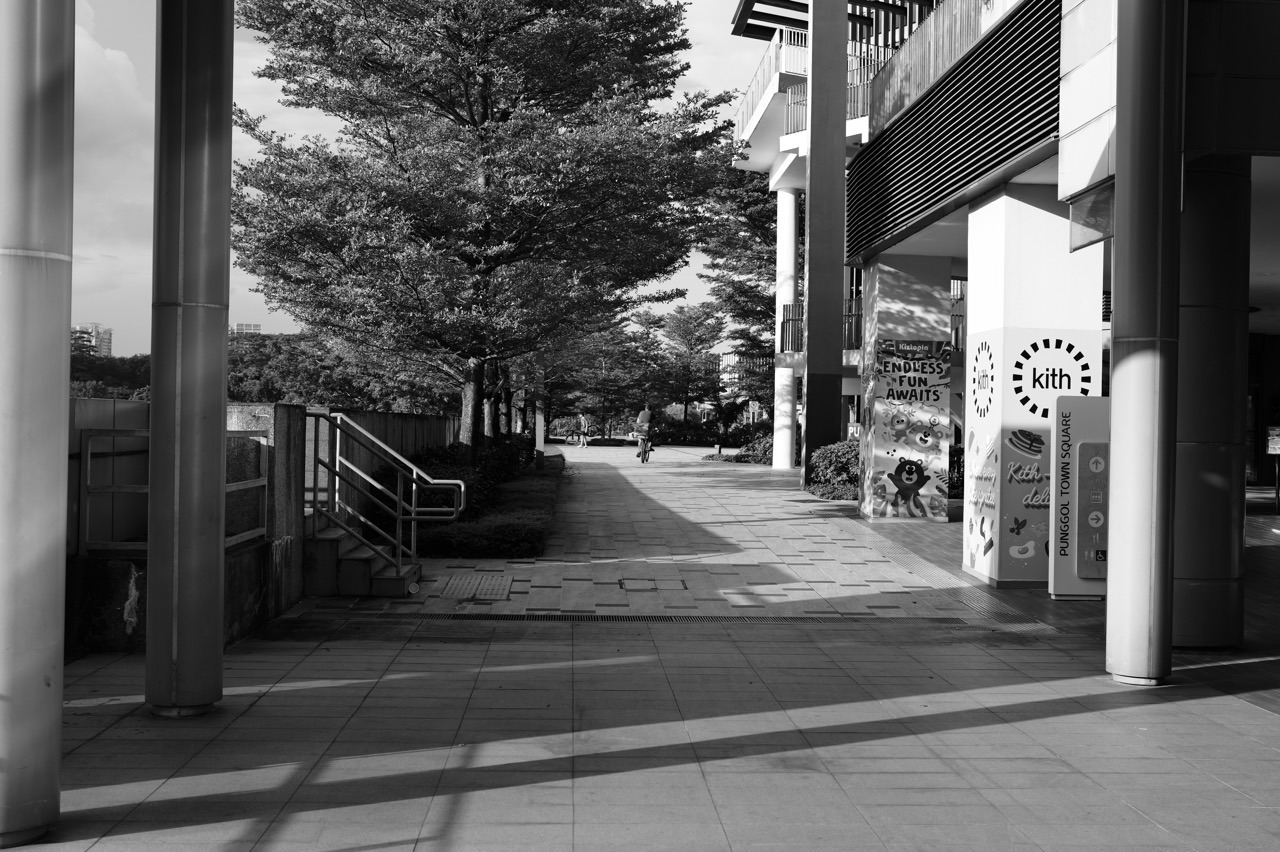
Waterway Point creative writing becomes useful when a child stops treating a place as background and starts treating it as a working system. A mall is not merely “crowded”. It has entrances, exits, queues, escalators, lifts, announcements, shopfronts, wet umbrellas, closing shutters, impatient adults, distracted children, dropped objects, meeting points and moments when two people want different things. That is already the beginning of story.
For Primary composition in Singapore, the difference between a flat piece and a convincing piece is often not vocabulary. It is causality. Something happens because the setting, character, timing and choice interact. A familiar Punggol place such as Waterway Point can therefore become an excellent observation laboratory. The student does not need to copy a real incident. The child learns to notice how places create possibilities and constraints, then converts those observations into original story material.
This rebuilt article keeps the original Waterway Point creative-writing idea but turns it into a complete writing system: observe → select → transform → structure → draft → revise → verify. It is useful for Punggol families searching for creative writing, Primary English tuition, composition support or a way to help a child move beyond memorised phrases. It also makes one boundary clear: this page uses Waterway Point as a familiar observation setting. Families should confirm current lesson location and class availability directly with eduKatePunggol.
Why place-based writing works
Young writers often experience the blank page as a demand to invent everything at once. Character, setting, conflict, vocabulary, sequence and ending must somehow appear from nowhere. That is cognitively expensive. Place observation reduces the invention load without reducing originality. The environment supplies raw material while the student still makes the creative decisions.
A real place gives the writer three things immediately. First, it gives spatial logic: people must move through doors, corridors, platforms, shops and crossings. Second, it gives sensory evidence: light, sound, texture, movement, temperature and crowd density. Third, it gives constraints: closing time, rain, limited visibility, queues, blocked routes, missing items, a phone with low battery, a lift that stops on every floor.
Constraints are especially valuable because they create decisions. Stories become interesting when characters cannot simply obtain what they want. A student who learns to observe constraints can generate plots more reliably than a student who waits for inspiration.
A setting becomes story material when it changes what the character can do next.
The first writing skill is not description. It is noticing.
Many children have been taught to “add description” after the plot is already written. This often produces decorative sentences that do not affect the story: the sky was as blue as the ocean; birds chirped melodiously; the mall was bustling like a beehive. The language may be technically acceptable, but the details do very little work.
Observation is different. The child notices details with consequences. A wet floor sign narrows the walking space. A crowd hides a younger sibling. A closing gate creates urgency. A faulty umbrella changes the route. An announcement reveals that the last train is approaching. These details are useful because the story can lean on them.
Good description is therefore selective. The writer does not report everything visible. The writer chooses details that support mood, action, character or cause.
A five-layer observation grid
- Movement: Who is walking, queuing, rushing, waiting, turning back or standing still?
- Sound: What can be heard, and what information does the sound carry?
- Objects: Which physical items could become important later?
- Constraints: What makes movement, communication or choice harder?
- Interactions: Where do strangers, friends, workers, parents or children affect one another?
A ten-minute walk through a familiar public place can produce more usable composition material than memorising ten “beautiful phrases”. The observation is not the final story. It is the inventory from which the story will be built.

Waterway Point as a writing laboratory
Waterway Point is useful not because it is exotic but because it is familiar enough for a child to understand its movement. The mall connects to Punggol MRT and LRT, opens into different retail zones, sits beside the waterway, and contains shops, food, services and meeting points. A writer can therefore move a character through changing micro-environments without needing a fantasy world.
Consider how many story pressures can emerge from one ordinary afternoon. A child is asked to meet a parent at a particular exit. Two exits look similar. Rain begins. The phone battery is nearly flat. A friend suggests taking a shortcut through another level. A wallet is found on a bench. An elderly person asks for directions. A younger sibling disappears behind a crowd. A shop is about to close. The character must choose.
None of these ideas requires a dramatic accident. Strong Primary composition can grow from ordinary responsibility under pressure. In fact, believable small stakes often produce better writing because the student can reason about them with more control.
Turn one observation into a story question
The most useful transformation step is to convert a neutral observation into a question with a decision inside it.
- Crowded platform → What happens if two people are separated?
- Dropped wallet → Who notices it, and what temptation or responsibility follows?
- Heavy rain → Which route becomes impossible, and what does the character do instead?
- Closing shop → What becomes urgent because time is running out?
- Broken lift → Who is affected, and what alternative route reveals something about the character?
- Long queue → What does the character risk losing while waiting?
- Repeated announcement → What important information does one character miss?
- A familiar meeting point → What happens when the expected person is not there?
The question creates narrative direction. The student now has a problem to solve rather than a page to decorate.
Do not copy real people. Borrow structure, not private lives.
Place-based observation has an ethical boundary. A child may notice people in public, but the writer should not turn identifiable strangers into detailed private characters. The safer and more creative move is to borrow structure rather than biography.
If the child sees a person carrying too many shopping bags while trying to answer a phone, the useful writing idea is not “write that person’s actual story”. It is “what happens when a character has both hands occupied at the moment something important occurs?” The observed constraint becomes fiction.
This distinction helps students understand originality. Original writing is not the absence of influence. It is the transformation of material through new choices, combinations and consequences.
Spatial clarity: the hidden skill behind believable action
Primary compositions often become confusing when characters appear to teleport. The child writes quickly and assumes the reader can see the scene that exists in the writer’s head. The reader cannot.
A real place helps because the child can build a simple mental map. Entrance. Escalator. Food court. Corridor. Exit. MRT gate. Waterfront. The writer does not need to name every exact location. The map simply prevents impossible movement and supports sequence.
Spatial clarity is especially important in stories involving separation, searching, rushing, accidents, lost items or helping someone. If the reader cannot understand where people are relative to one another, tension collapses.
A simple spatial writing check
- Where is the character at the start of the scene?
- What can the character see or hear from there?
- Where is the important object or person?
- What route must be taken?
- What blocks or delays that route?
- Where does the scene end?
Sensory detail should carry information
Students are often told to use the five senses. The instruction is useful but incomplete. A writer who mechanically adds one smell, one sound and one colour can produce a paragraph that feels crowded but not alive.
The stronger question is: what does the sensory detail tell us? The metallic warning tone of a train door tells us time is ending. The sudden reduction in crowd noise suggests the character has entered a quieter corridor. Cold air from a shop entrance marks a transition. Rain drumming on a sheltered walkway makes conversation harder to hear. The sharp smell of spilled coffee may reveal the location of an earlier collision.
Sensory detail earns its place when it creates orientation, mood, anticipation or consequence.
The setting can do four jobs at once
A well-used setting is efficient. It can establish mood, create a problem, reveal character and control pacing at the same time. Imagine a child waiting near a mall exit during heavy rain. The rain creates sound and visual blur. It delays transport. It tests patience. It may force a choice between staying safe and rushing to meet someone.
When students understand this, they stop treating setting as a paragraph that must be completed before “the action begins”. Setting is part of the action.
Character emerges through decisions, not adjectives
Young writers often describe a protagonist as kind, brave, responsible or selfish before the story has shown anything. A stronger composition lets behaviour prove the trait.
A character finds a wallet. Returning it despite being late shows responsibility. A child notices a lost younger student and gives up a place in a long queue to help. A teenager hides a mistake until the consequences grow, then finally admits it. These actions create character because they involve cost.
The useful writing formula is not “character trait + exciting event”. It is pressure + choice + consequence. The place supplies pressure. The character supplies the choice. The consequence supplies story.
How to build a causal chain
The heart of composition is causality. Event B should happen because of Event A, not merely after it. Children often write chronological lists: we went to the mall, then we ate, then I saw my friend, then something happened. The sequence moves but the story does not tighten.
A causal chain is different: Because the child stopped to help someone pick up scattered papers, the family moved ahead. Because the child hurried to catch up, the child took the wrong escalator. Because the phone was in a backpack and could not be heard, the separation lasted longer. Each event changes the next.
The chain can be drawn before drafting. This reduces the risk of mid-story panic and random endings.
A six-link planning chain
- Normal situation.
- Small disruption.
- Choice under pressure.
- Consequence that makes the problem harder.
- Second choice based on new information.
- Resolution that grows from the character’s action.
Why small problems can produce strong compositions
Students sometimes believe a composition must contain a major accident, crime or disaster to be interesting. This creates plots that are difficult to manage and often unrealistic. The problem becomes so large that the child spends the rest of the piece describing emergency vehicles rather than developing meaning.
A misplaced item, broken promise, misunderstanding, lost route, missed meeting point or ethical choice can be enough. The smaller scale leaves more room for thought, dialogue, observation and consequence. It also makes the ending easier to earn.
The best Primary composition problem is usually large enough to require change and small enough for the student to control.
Dialogue should change the situation
Dialogue is another area where memorised writing appears. Students insert lines because compositions are “supposed” to contain speech. The result may sound natural but add nothing.
Useful dialogue reveals information, creates misunderstanding, pressures a decision, shows a relationship or changes the direction of the scene. “Where are you?” matters if the phone call is breaking up and the characters are separated. “I told you not to leave the meeting point” reveals both information and tension. “That wallet is not yours” creates moral pressure.
After writing a line of dialogue, ask: if I delete this line, does anything change? If nothing changes, the line may be decorative.
Primary composition is not a thesaurus contest
Vocabulary matters, but the most valuable word is the word that makes meaning more exact. A child who replaces every common verb with an elaborate synonym can make the prose harder to read without making the story better.
Strong vocabulary often comes from specificity: shuffled, hesitated, glanced, gripped, scanned, whispered, announced, flickered, blocked, spilled, tightened. These words carry action or perception. They do not need to be rare.
A useful revision question is: can one precise verb replace a weak verb plus several adjectives? “She walked quickly and nervously” may become “She hurried” or “She edged through the crowd”, depending on the scene. Precision is more powerful than ornament.
Description should move with the character
Instead of stopping the story for a long description of Waterway Point, let details appear as the character encounters them. The child hears the station announcement while searching. The wet umbrella brushes a sleeve. The escalator carries the character away from the level that seemed correct. The bright shop sign becomes a landmark.
This technique keeps pacing alive because perception is tied to action. It also prevents the common composition structure in which paragraph one is a memorised weather description and paragraph two begins the actual story.
Observation can improve composition even when the exam picture is different
The goal of place-based writing is not to prepare one “mall composition”. That would be narrow and fragile. The goal is to build a reusable library of spatial, sensory and causal understanding.
A student who learns how crowds affect visibility can use that idea at a fair, station, school event or market. A student who learns how rain changes movement can use it in many settings. A student who learns how a closing time creates urgency can transfer the structure to a library, clinic, shop or transport scene.
Transfer is the real educational value. The observed world becomes a bank of mechanisms, not a set of memorised paragraphs.
From picture stimulus to original story
Visual stimuli in Primary composition can tempt students to describe the picture literally. The stronger move is to identify the idea or relationship the picture suggests, then build a story around it.
Suppose the stimulus shows an umbrella. The story does not need to be “about an umbrella”. The umbrella may become a constraint: two people share one in heavy rain; one is left behind; a broken umbrella forces shelter; an umbrella is mistakenly taken; the object becomes the reason two strangers speak.
Place observation trains exactly this kind of transformation. Students learn to ask not “what is this object?” but “what can this object make possible?”
A planning method that does not kill creativity
Some students resist planning because they feel it makes the story predictable. Other students over-plan until the composition becomes a diagram they are afraid to change. The answer is a light plan with strong causal anchors.
Before drafting, decide the starting situation, the central disruption, the decisive choice and the resolution. Leave room for sentence-level discovery. This gives the story direction without scripting every line.
For younger writers, four boxes may be enough. For stronger writers, add character motive and the point of realisation. Planning should reduce cognitive load, not become another assignment.
The opening: start close to the pressure
A common weak opening spends too long establishing a normal day: “It was a sunny Saturday morning. My family and I decided to go shopping. We woke up, brushed our teeth, ate breakfast and took the train.” By the time the story problem appears, too many words have been spent on low-value actions.
A stronger opening begins near the story’s pressure. The family may already be at the meeting point. The rain may already be beginning. The character may already have noticed the dropped wallet. The reader receives the ordinary context quickly and enters the meaningful decision earlier.
This is not a rule that every composition must begin dramatically. It is an efficiency principle: begin where the story starts changing.
The middle: make the problem evolve
The middle is where many Primary compositions become repetitive. The character worries, then worries again, then calls someone, then worries more. The story needs changing information.
Each paragraph should alter the situation. A search reveals the wrong exit. A stranger provides partial information. A phone finally connects but the line cuts out. The character realises the item was not lost where expected. The consequence of an earlier choice now appears.
This creates forward motion. The reader learns something new, and the character must update the plan.
The ending: resolve the cause, not merely the scene
Weak endings often arrive from outside the story: a security guard appears, a parent suddenly finds the child, a stranger solves everything, or the writer ends with “I learnt a valuable lesson”. The external rescue may be plausible, but it can reduce the protagonist’s role.
A stronger ending grows from the character’s decisions. The child remembers an agreed meeting point, asks the right person for help, returns the wallet, admits a mistake or uses information noticed earlier. The resolution should answer the central causal problem.
Reflection is useful after the resolution, but it should arise from what happened. Instead of naming a generic moral, show the changed behaviour or understanding.
Revision: the real creative writing lesson begins after the first draft
Students often think creativity happens only before the first sentence. In practice, revision is where much of the writing becomes intelligent. The writer can now see the whole piece and ask whether details, choices and consequences actually connect.
A first draft proves that the story exists. A revision makes the story work.
A seven-pass revision system
- Cause: Does each major event grow from something earlier?
- Clarity: Can the reader understand where people are and what they want?
- Character: Do decisions reveal the person, or are traits merely stated?
- Detail: Do sensory details carry information or just decorate?
- Language: Can vague wording be replaced by precise verbs and nouns?
- Pacing: Are low-value sections too long and important moments too short?
- Accuracy: Check grammar, punctuation, tense, paragraphing and spelling after the story logic is stable.
Grammar correction should preserve the student’s voice
When adults correct composition, there is a temptation to rewrite every sentence into adult prose. The finished piece improves, but the child may not know how to reproduce the improvement independently.
A better correction identifies the smallest rule the student can own. If tense shifts repeatedly, isolate the tense problem. If pronoun reference is unclear, fix that chain. If sentence boundaries collapse, teach how to recognise where one complete idea ends.
The correction should make the learner more capable, not merely make the page more beautiful.
The role of model compositions
Model essays can be useful for studying structure, pacing, dialogue, transitions and sentence control. They become harmful when students memorise paragraphs and paste them into unrelated prompts.
The best use of a model is analytical. Ask what the opening does. Trace the causal chain. Highlight where setting changes action. Notice how the writer delays information. Then close the model and write a different story using the same structural principle.
Borrow technique. Do not borrow identity.
What three-student creative writing can do well
In a small group, one shared place or picture can produce three different observation lists and three different stories. This is educationally powerful because students see that originality does not require having a completely different stimulus. It comes from selection and consequence.
One student may notice movement. Another notices sound. A third notices social interaction. The tutor can ask each child to defend which detail has the strongest story potential. Students then plan independently and later compare how different causal chains emerged from the same source.
The group should not converge on one “best composition”. The objective is to improve each student’s control over observation, structure and revision.
When creative writing enrichment is useful
Creative writing enrichment is useful when the student already has enough language control to benefit from broader experimentation, or when imaginative work can strengthen observation, vocabulary, narrative logic and confidence. It is less useful when a child has severe sentence-level weaknesses that make every paragraph exhausting. In that case, repair and enrichment may need to run together.
The important distinction is between novelty and growth. An exciting activity is not automatically enrichment. The student should leave with a capability that can travel into later writing.
When tuition should focus on repair instead
A child who repeatedly cannot form complete sentences, maintain tense, sequence events or understand the prompt may need more direct repair. It is not a failure to step back. It is efficient.
The strongest creative writing class can move between repair, extension and enrichment. One student may need help controlling dialogue punctuation. Another may need deeper causal planning. A third may be ready to experiment with viewpoint. The shared lesson can remain coherent while the feedback differs.
A one-hour Waterway Point observation exercise for parents
Families can do this without turning an outing into school. The aim is curiosity, not interrogation.
- Spend ten minutes moving through one small area rather than the whole mall.
- Ask the child to notice five movements, five sounds and five objects.
- Choose one constraint: crowd, rain, queue, closing time, missing item, wrong direction.
- Ask: what problem could this create for an invented character?
- Ask for two different choices the character could make.
- At home, draw a six-link causal chain.
- Write only one scene, not a full composition, and revise it for spatial clarity.
The exercise works because it narrows the task. The child is not “writing an essay” until enough story material has already been generated.
A four-week writing reset
Week 1: observation and precision
Collect details from familiar places. No full compositions yet. Write short descriptive moments where every detail carries information. Replace vague verbs with precise ones.
Week 2: causality
Build short six-link plots from ordinary constraints. Practise “because” chains orally before writing. Identify stories where events merely happen in sequence and repair them.
Week 3: character and dialogue
Write scenes where a choice reveals responsibility, fear, temptation or empathy. Remove dialogue that changes nothing. Keep speech purposeful.
Week 4: timed composition and revision
Plan lightly, draft under realistic time, then perform structured revision. Compare the first draft and corrected draft to identify one recurring writing pattern for the next month.
What parents should look for in Primary composition progress
- The child starts more quickly because a planning routine exists.
- Stories contain fewer random events and stronger cause-and-effect links.
- Settings influence action rather than sitting in decorative paragraphs.
- Vocabulary becomes more precise rather than simply more difficult.
- Dialogue reveals information or pressure.
- Endings grow from the protagonist’s choices.
- Corrections recur less often after explicit teaching.
- The child can explain why a revision improved the piece.
What not to optimise for
Do not optimise for the largest number of memorised phrases. Do not optimise for maximum adjective density. Do not optimise for an adult-sounding voice that the child cannot reproduce. Do not optimise for a shocking plot twist at the expense of coherence.
Optimise for control: the child knows what the story is doing, can select details deliberately, can move characters through space clearly, can link consequences and can revise after feedback.
Frequently asked questions
Does Waterway Point creative writing mean lessons are held at Waterway Point?
Not necessarily. This page uses Waterway Point as a familiar Punggol observation setting and writing lens. Families should confirm the current eduKatePunggol teaching location, timetable and availability directly.
Is place-based writing only useful for compositions about malls?
No. The method teaches observation, spatial logic, constraints and causal transformation. Those skills transfer to school, parks, transport, neighbourhoods, homes and unfamiliar visual prompts.
Should my child memorise good descriptive phrases?
A few useful language patterns can support fluency, but memorised phrases should not replace observation and precision. Students need to know why a phrase fits the scene and how to adapt it.
What if my child says there is “nothing to write”?
Narrow the task. Ask for one movement, one object, one sound and one problem. The blank page becomes easier when the child is choosing from observed material rather than inventing everything simultaneously.
How can a child make writing more original?
Originality grows through selection and combination. Use a familiar place, then choose an unusual but plausible constraint, character goal and consequence. The same setting can produce many stories.
How much planning is enough?
Enough to know the opening situation, central disruption, important choice and resolution. The plan should reduce cognitive load without scripting every sentence.
Should parents correct every grammar mistake?
No. Prioritise recurring errors that affect meaning or accuracy. Too many simultaneous corrections can overwhelm the child and hide the most important pattern.
Can creative writing help comprehension?
Yes. Writing requires the child to think about cause, motive, viewpoint, sequence and evidence—many of the same relationships that readers must infer in texts. The transfer is not automatic, but the underlying language awareness can support both.
Related eduKatePunggol reading
- Singapore Creative Writing Enrichment | Exploration Mode vs Exam-Writing Mode
- How to Get Your Child to Read: Building a Reading Life Without Turning Books into Homework
- Primary English Tuition Coursework in Punggol | Reading, Writing, Grammar & Exam Skills
- English Tuition Punggol | Find the Highest-Value Language Bottleneck Before Adding More Practice
- eduKate Punggol Contents & Learning Routes
A compact composition checklist
- What does the character want?
- What in the setting makes that harder?
- Which detail will matter later?
- What choice reveals the character?
- How does one event cause the next?
- Can the reader understand where everyone is?
- Does the dialogue change anything?
- Does the ending grow from the character’s action?
- Can vague language be made precise?
- What one recurring grammar error should be checked before submission?
The deeper point: the world is already full of writing material
A child does not need to become more dramatic to become a better writer. The child needs to become more observant. Once the student notices how places organise movement, how objects create problems, how weather changes decisions and how people respond under small pressures, ordinary life becomes structurally rich.
Waterway Point is useful precisely because it is ordinary to many Punggol families. The student already understands the environment. The learning move is to see it again with a writer’s attention.
From there, the child can travel anywhere. A station, school corridor, hawker centre, library, park or HDB void deck can become story material. The setting changes. The writing system stays the same: observe carefully, select deliberately, create pressure, follow consequence, revise for clarity.
That is a much stronger foundation for Primary composition than a folder of sentences waiting to be pasted into the next prompt.
How the same place can train different writing levels
Place observation scales well because the task can be simplified or deepened without changing the basic setting. A younger or weaker writer may collect concrete nouns and verbs: queue, escalator, railing, announcement, hurry, wait, spill, search. A stronger writer can examine motive, misinterpretation, delayed information and the way a physical constraint changes a moral choice.
This matters in mixed-ability learning. The environment does not need to become more exotic for the thinking to become more sophisticated. The tutor can keep the source stable while increasing the demand. One student identifies what happened. Another explains why it happened. Another explores what would change if the character had made a different choice.
That progression also protects confidence. The learner can see that “better writing” is not a mysterious talent. It is a sequence of increasingly controlled decisions.
Level 1: notice
The student names concrete details accurately and distinguishes what was seen from what was imagined. This prevents vague description and gives the child a usable vocabulary base.
Level 2: connect
The student links a detail to a possible consequence. A queue causes delay. A crowd reduces visibility. A slippery floor changes movement. The child is now thinking causally.
Level 3: select
The student chooses which detail deserves space in the story and which can be ignored. Selection is an advanced writing skill because every sentence competes for limited time and reader attention.
Level 4: transform
The student changes the observed situation into fiction: a different character, different motive, different object, different consequence. The real place becomes scaffolding for an original narrative rather than a report.
Level 5: control
The student can deliberately use setting to pace the story, delay information, create pressure, reveal character and support the ending. At this point, place is no longer scenery. It is narrative machinery.
Build a personal bank of mechanisms, not a folder of model essays
A useful writing notebook can be organised around mechanisms rather than topics. Instead of pages titled “A Day at the Mall”, “A Rainy Day” and “Helping Someone”, keep pages titled “separation”, “delay”, “miscommunication”, “temptation”, “time pressure”, “lost object”, “wrong assumption”, “helping a stranger”, “weather changes route” and “one detail noticed too late”.
Mechanisms transfer. A model essay about losing a sibling at Waterway Point may be useless if the examination prompt concerns responsibility at school. But the mechanism “I made a careless choice, hid it, then had to repair the consequence” can travel into many settings.
This is one reason strong composition teaching should not overfit students to previous prompts. The goal is to build flexible story intelligence.
The relationship between reading and place-based writing
Children write better when they read because reading exposes them to sentence patterns, narrative pacing, viewpoint, character behaviour and the ways writers select details. Place observation adds another source of material: the world itself.
The two inputs work differently. Reading supplies language and narrative possibilities. Observation supplies concrete evidence about how people and places actually behave. A child who only reads may imitate story worlds without noticing local reality. A child who only observes may have material but lack the language to shape it elegantly. The richest writing grows when both streams meet.
Parents can therefore pair the activities lightly. After reading a scene set in a station, market or school, ask what the author noticed that the child might also notice in Punggol. After an outing, ask whether a similar constraint appeared in any story the child has read. The purpose is connection, not another worksheet.
Why background knowledge makes composition easier
A writer with more world knowledge has more plausible options. The child understands how MRT gates work, why shops close, what a lost-property counter might do, how rain affects visibility, why queues form, how adults use meeting points and why certain public rules exist. This knowledge reduces the need to invent mechanisms inaccurately.
Background knowledge also improves vocabulary because words attach to known concepts. “Platform”, “gantry”, “directory”, “shelter”, “escalator landing” and “announcement” become easier to use when the child has experienced the objects and functions.
Creative writing is therefore not separate from learning about the world. The wider the child’s knowledge, the larger the set of believable situations available for fiction.
How to use photographs without turning writing into captioning
A photograph is useful when the child treats it as evidence, not as a script. Begin by listing what can actually be seen. Then separate inference: what might be happening? Finally separate invention: what story could begin here?
This three-part distinction—observation, inference, invention—prevents a common error in which the child presents guesses as though the picture proves them. It also trains comprehension. Readers constantly move between what a text states, what it implies and what they personally imagine.
- Observation: three people are standing near an exit.
- Inference: they may be waiting for someone.
- Invention: one has realised they arranged different meeting points.
A stronger parent conversation after a composition
Instead of beginning with “How many marks did you get?”, ask one structural question. “Which part of this story caused the next part?” “Which detail became important later?” “Where did the character have to choose?” “What did you change after your teacher’s feedback?”
These questions tell the child that writing is a craft that can be inspected. Marks still matter, but they become an outcome of controllable decisions rather than a mysterious judgement.
Over time, the student should be able to answer with increasing precision. That metacognitive language is itself a sign of progress: the child can see the writing process from the outside and make deliberate changes.
A final Waterway Point writing challenge
Choose one ordinary location near Waterway Point: an MRT exit, sheltered walkway, food court, shop queue or waterfront path. Write down six factual observations. Circle two that could create pressure. Invent a character with one simple goal. Add one time constraint. Then build a story in which the ending depends on something noticed in the first third of the composition.
The exercise forces several useful skills to work together: observation, selection, causality, foreshadowing, spatial clarity and controlled resolution. The story does not need fireworks. It needs structure.
Repeat the exercise a week later with the same place and a different character goal. If the child can produce a genuinely different story, the student is no longer dependent on one memorised route. The place has become a flexible writing tool.
Why this matters beyond the composition paper
The deeper value of place-based writing is that it teaches a child to move from the world into language. The student notices, selects, interprets and represents. Those same operations appear in comprehension, oral communication, Science explanation and later argumentative writing. A learner who can distinguish what was observed from what was inferred is already practising a form of evidence control.
The habit also changes reading. Once students have tried to create tension through space, they begin noticing how published writers do it. Once they have struggled to make dialogue carry information, they become more attentive to dialogue in stories. Writing and reading start feeding one another.
That is why a simple Punggol setting can become more than a composition exercise. It can train attention itself. The child learns that the world is not empty until a worksheet tells them what to notice. The material is already there; the learner’s job is to see structure, then turn that structure into meaning.


