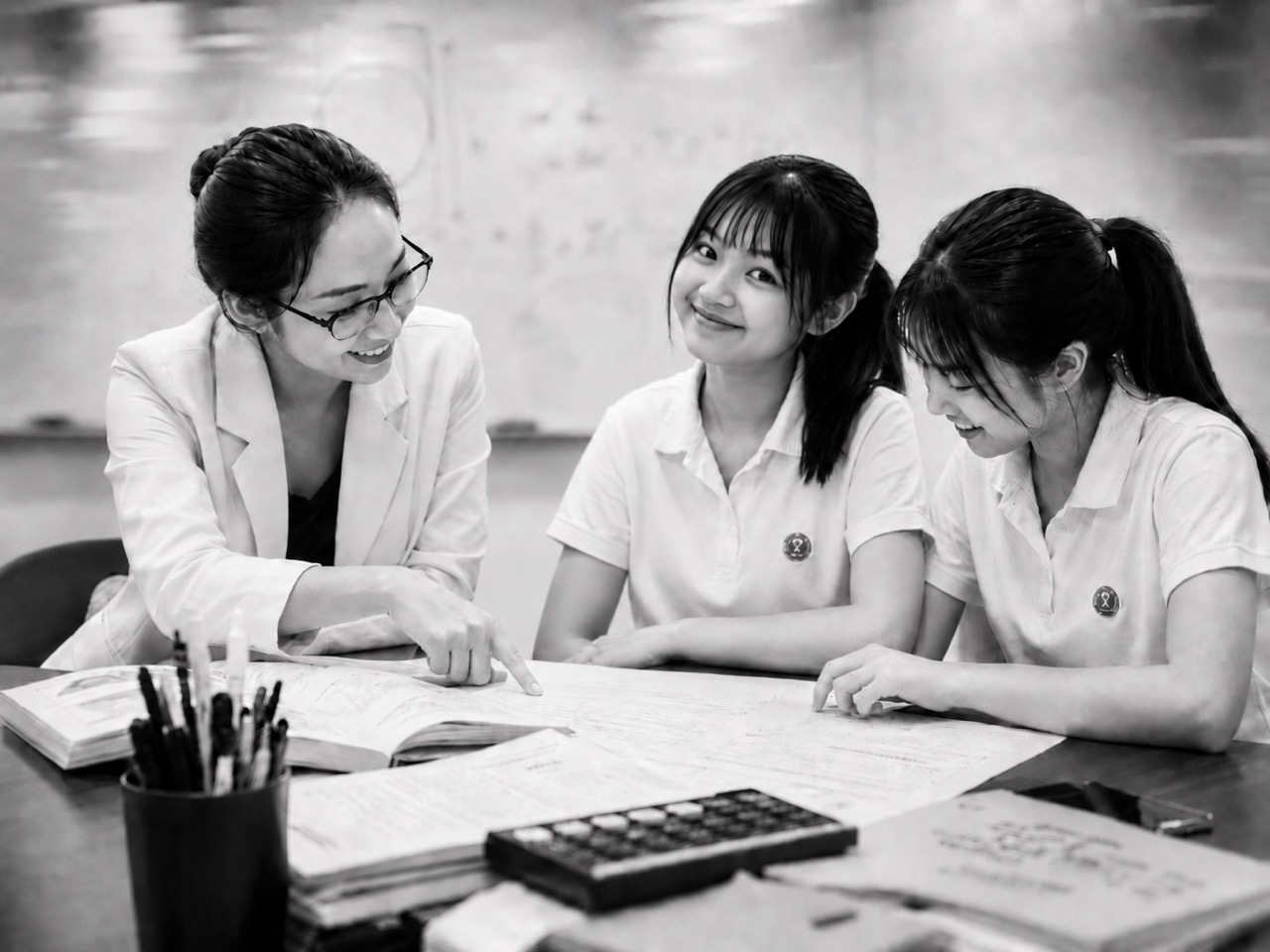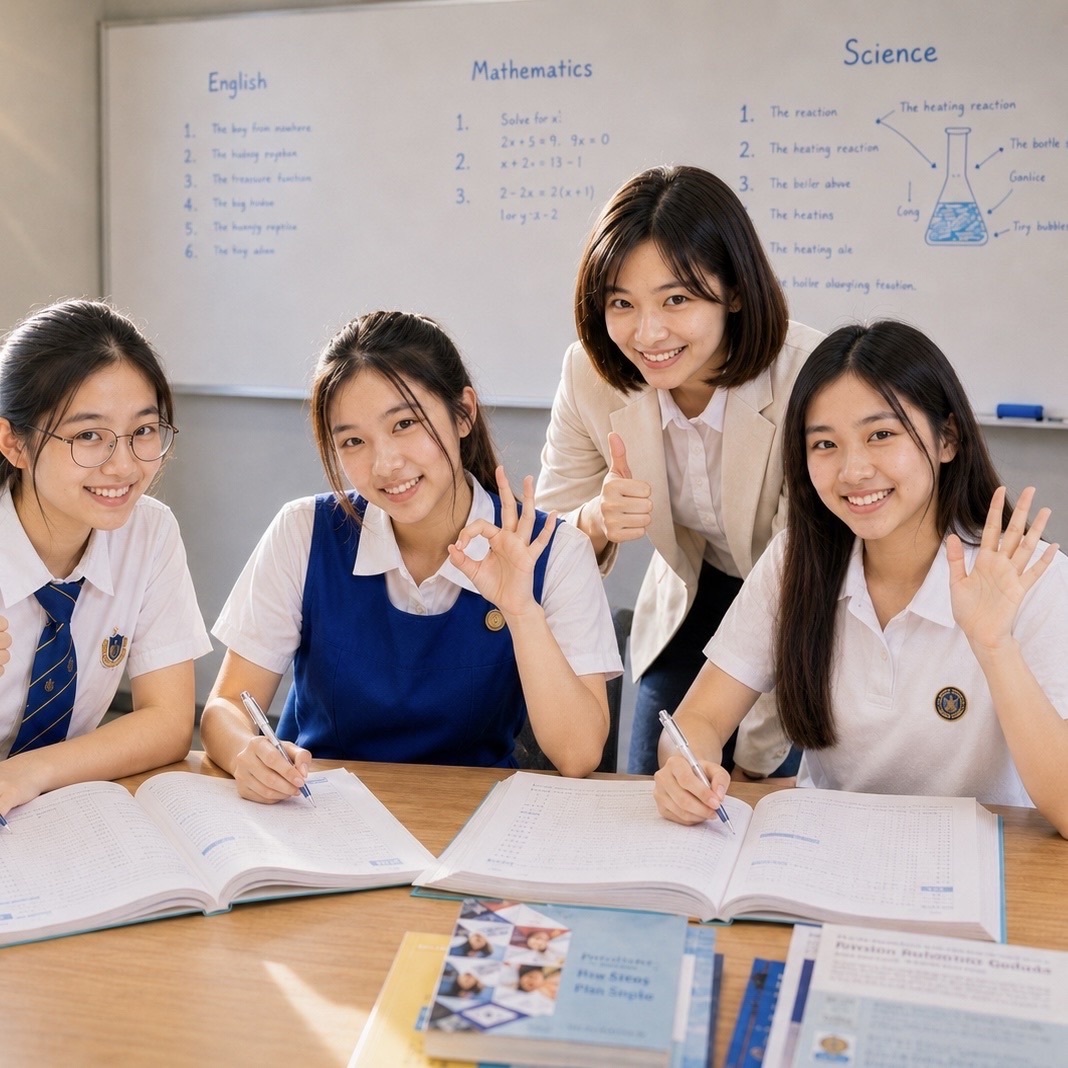
A good Mathematics tutor does more than know how to solve questions. A good tutor knows how to make Mathematics visible, understandable, and manageable for the student. This means identifying weak foundations, explaining concepts clearly, correcting mistakes properly, and helping the student become more confident and independent over time.
At eduKate Punggol, a good Mathematics tutor should not only help students get through today’s homework, but also strengthen the mathematical structure underneath their long-term performance.
Start Here: https://edukatepunggol.com/mathematics/
Classical Baseline
A good Mathematics tutor is an educator who helps students improve understanding, skill, and performance in Mathematics through explanation, practice, feedback, and guidance. The tutor should be able to adapt teaching to the student’s level and support steady academic progress.
One-Sentence Definition
A good Mathematics tutor is someone who can accurately diagnose a student’s weaknesses, explain Mathematics clearly, build stronger habits, and guide the student toward confident independent performance.
Core Mechanisms
1. Clear Explanation
A good tutor can explain a topic in a way the student can actually understand.
2. Accurate Diagnosis
A good tutor identifies the real source of the student’s difficulty instead of guessing from the surface.
3. Structured Teaching
A good tutor teaches in an organised way so that the student can see how the parts fit together.
4. Meaningful Correction
A good tutor does not only mark answers wrong, but helps the student understand why the mistake happened.
5. Confidence Building
A good tutor helps the student feel that Mathematics can be learned, improved, and managed.
6. Growth Toward Independence
A good tutor does not create permanent dependence, but teaches the student to think more clearly alone.
A Good Mathematics Tutor Does More Than Give Answers
One of the biggest misunderstandings about tutoring is the idea that a tutor’s job is mainly to help students finish work and produce correct answers. That is only a small part of the real role.
A good Mathematics tutor helps students understand why a method works, where their weak points are, how to organise their working, and how to avoid repeated mistakes. The student should gradually become more capable, not just more assisted.
This matters because many students can temporarily survive with help, but only good tutoring builds lasting control.
Clear Explanation Matters
Mathematics becomes difficult for many students not only because the topic is hard, but because the structure is not visible to them yet. A good Mathematics tutor knows how to make that structure clearer.
This means the tutor should be able to:
- break ideas into smaller parts
- use examples effectively
- show the logic behind the method
- connect new topics to old ones
- explain in a way suited to the student’s current level
A tutor who knows Mathematics but cannot explain it clearly may still leave the student confused.
Diagnosis Matters More Than Volume
A good Mathematics tutor must know how to locate the real problem.
For example:
- a student weak in algebra may really be weak in fractions
- a student weak in problem sums may really be weak in reading structure
- a student with many careless mistakes may really be overloaded or unclear in method
If the tutor does not diagnose well, the student may end up doing many questions without repairing the actual weakness.
This is why good tutoring is not just about how much practice is given. It is about whether the practice is aimed correctly.
A Good Tutor Understands Different Student Types
Not all students need the same kind of help.
Weak Students
They usually need foundation repair, slower pacing, clearer explanation, and confidence rebuilding.
Average Students
They often need stronger structure, better consistency, fewer repeated mistakes, and improved transfer across question types.
Strong Students
They often need refinement, precision, efficiency, and stronger performance discipline.
A good Mathematics tutor understands these differences and adjusts the teaching accordingly.
A Good Tutor Builds Method, Not Just Memory
Students who rely only on memorised steps often collapse when the question changes shape. A good tutor teaches students how to recognise structure, choose methods, and think through a problem.
This means the tutor should help students:
- identify what the question is asking
- choose an appropriate method
- lay out steps clearly
- check whether the answer makes sense
- transfer the concept across different forms
This is one of the main differences between shallow tutoring and strong tutoring.
A Good Tutor Corrects Mistakes Properly
Mistakes are one of the best sources of improvement if they are handled well.
A good Mathematics tutor should help the student see:
- what the mistake was
- why it happened
- whether it was a concept error, method error, reading error, or careless error
- how to avoid it next time
Without this correction loop, the student may keep repeating the same failures.
Start Here: https://edukatesg.com/how-mathematics-works/
A Good Tutor Builds Confidence the Right Way
A good tutor should help students feel more confident, but not through false reassurance alone. Real confidence comes from clearer understanding, more successful practice, and stronger control.
This means confidence should be built through:
- visible progress
- smaller successes
- better clarity
- reduced repeated mistakes
- stronger ability to work independently
A tutor who only praises without building real skill may create shallow confidence that collapses in exams.
A Good Tutor Is Patient but Precise
Patience matters because many students need time to rebuild concepts that were missed earlier. But patience alone is not enough. A good tutor should also be precise.
This means the tutor should know:
- where the student is breaking down
- what to reteach first
- how much to simplify
- when to push and when to slow down
- how to move the student from guided practice toward independence
Strong tutoring combines calmness with clarity.
A Good Tutor Builds Independence, Not Dependence
One of the clearest signs of a good Mathematics tutor is that the student becomes stronger outside the lesson, not only during it.
A good tutor should help students:
- start questions more independently
- show fuller working
- make fewer repeated errors
- rely less on hints
- approach school tests with greater calm
The goal of tuition is not to make the student permanently dependent on someone beside them. The goal is to help the student stand more strongly on their own.
What Makes a Good Mathematics Tutor at Different Levels?
Primary Mathematics
A good tutor should build number sense, arithmetic fluency, problem-sum structure, and early confidence.
PSLE Mathematics
A good tutor should help students manage concept integration, application, structured problem-solving, and exam handling.
Secondary E-Math
A good tutor should strengthen algebra, equations, graphs, geometry, and orderly working habits.
Additional Mathematics
A good tutor should support algebraic precision, symbolic fluency, function handling, trigonometry, and abstraction with clarity and discipline.
Warning Signs of a Weak Tutor Fit
Not every tutor is the right fit for every student. Warning signs include:
1. The Student Is Doing More Work but Understanding No Better
This often means teaching is not reaching the real issue.
2. The Student Depends on Constant Prompting
If the student cannot work at all without hints, independence may not be developing.
3. The Same Errors Continue for Too Long
This suggests that correction is not deep enough.
4. The Student’s Confidence Is Falling
A good tutor should challenge the student, but should not repeatedly leave the student feeling more lost.
5. The Tutor Only Follows the Latest Worksheet
If old weak foundations are ignored, the student’s performance may stay fragile.
What Makes a Good Mathematics Tutor at eduKate Punggol
At eduKate Punggol, a good Mathematics tutor should be someone who can support students across Primary Mathematics, PSLE preparation, Secondary E-Math, and Additional Mathematics with clarity, structure, and purposeful correction.
The tutor should understand that different students need different forms of help. Some need repair. Some need consistency. Some need refinement. In every case, the tutor’s role is to make Mathematics more understandable, more structured, and more manageable.
A good Mathematics tutor should not only solve the question in front of the student. The tutor should help the student become someone who can solve more questions independently in the future.
Conclusion
What makes a good Mathematics tutor is not only subject knowledge, but the ability to diagnose accurately, explain clearly, correct meaningfully, and build the student’s confidence and independence over time. Good tutoring is structured, thoughtful, and matched to the student’s real needs. For families in Punggol, the right Mathematics tutor should help students move from confusion toward stronger control, better habits, and more reliable long-term progress in Mathematics.

How this Mathematics guide fits into PunggolOS
This guide belongs to the structure-and-method route inside PunggolOS. Use the current Mathematics pathway to connect number sense, representation, method choice, error correction and independent performance.