
For Punggol parents receiving the 2026 PSLE results on Tuesday, 24 November 2026 at 11.00am, the decision about G3 or G2 secondary schools begins with the child’s official Posting Group eligibility, not a list forwarded by another parent. A PSLE Score of 21 or 22 normally allows a choice between Posting Group 2 (PG2) and Posting Group 3 (PG3); those groups guide the initial subject levels and school-entry competition. Families must choose one Posting Group for all six ordinary Secondary 1 school choices, compare the correct historical cut-off column and check whether the child can manage the intended subjects, CCAs and journey from the actual Punggol home.
The Ministry of Education and Singapore Examinations and Assessment Board formally announced on 17 November 2026 that the online S1 Portal opens at 11.30am on 24 November and closes at 4.30pm on Monday, 30 November 2026. A parent needs a valid Singpass; only one parent is needed to submit the choices. Secondary 1 posting results are tentatively scheduled for Friday, 18 December 2026, subject to a later confirmation. These official dates replace earlier estimates circulating online. The school choices must be made thoughtfully but before the confirmed submission deadline; read the full SEAB/MOE release and the MOE S1 Posting website for operational instructions.
- Results collection: Tuesday, 24 November 2026, 11.00am, through the child’s primary school; follow its collection arrangements.
- If the pupil cannot collect in person: the official release says a proxy can be appointed by Thursday, 26 November 2026.
- S1 choices: online from Tuesday, 24 November, 11.30am until Monday, 30 November, 4.30pm (Singapore time).
- Access: a valid parent Singpass; contact the primary school for help before the deadline.
- Posting results: tentatively Friday, 18 December 2026; confirm the final release date through MOE.
- Score 21–22: PG2 or PG3 is ordinarily available; one selected group covers the complete six-choice list.
- Punggol historical evidence: use the completed 2026 intake PG2 or PG3 score column—not a promise of 2027 admission.
- List quality: MOE recommends at least two or three choices with less stringent previous-year cut-offs than the pupil’s score.
- Long-term view: Full SBB permits different qualifying subject levels, while later JC/polytechnic/PFP/ITE/university admissions depend on actual subsequent results.

The official results-and-posting calendar for 2026
| Event | Confirmed or tentative time | Parent action |
|---|---|---|
| PSLE results released | Tuesday 24 November 2026, 11.00am (confirmed) | Follow the primary school’s instructions to receive the child’s results |
| S1 Portal begins accepting choices | Tuesday 24 November 2026, 11.30am (confirmed) | Sign in with a valid Singpass and review school options |
| Proxy arrangement deadline | Thursday 26 November 2026 (per official release) | Ask the primary school how to appoint a proxy if the child cannot attend |
| S1 submission closes | Monday 30 November 2026, 4.30pm (confirmed) | Make sure the final six choices and posting group are submitted |
| S1 posting results released | Friday 18 December 2026 (tentative) | Wait for MOE confirmation; check S1 Portal, SMS or primary school |
A useful parent article must distinguish confirmed dates from a tentative release date. The PSLE results date and the school-choice submission window were confirmed in the joint release dated 17 November. The posting-result date was described as tentative. Do not call 18 December a guaranteed publication date while MOE says it will update the release date later.
The original 2026 release also specifies that primary schools will tell families the collection arrangements. It does not tell every Punggol family to report to a particular hall or at a particular earlier time. A parent whose child is ill or overseas should contact the school and follow the official proxy arrangement rather than relying on a community group’s instructions.
This calendar has practical consequences. The opening of the S1 Portal at 11.30am is only thirty minutes after results release, but families are not obliged to make a permanent school decision in those thirty minutes. They have the published submission window to evaluate. At the same time, they should not treat the deadline as flexible and begin checking the portal at the very last moment.
First thirty minutes: what to read on the result document
Start with the actual overall PSLE Score, each subject’s Achievement Level, whether subjects were taken at Standard or Foundation level, and the student’s individual posting-group eligibility. A family may have been planning PG3 for months only to receive an eligible PG2/PG3 option, or may discover that their old projected score was inaccurate. Do not use a tuition-centre estimate in place of the official result.
A lower PSLE total is stronger. It is possible for two pupils to earn the same overall score from different subject profiles, so a score of 21 alone does not reveal whether the child is particularly strong in Mathematics, English or Science. Under Full Subject-Based Banding, a pupil’s subject strengths can be relevant to later G3 subject offers, even if the pupil initially enters by PG2.
The immediate discussion should not be ‘Are we in the good group?’ It should be ‘What choices are actually open, what are our child’s strengths and what would the school day look like?’ Parents can postpone secondary-school ranking until the child has had an opportunity to understand their result, rest and participate calmly in the decision.
Which Posting Group applies to each score?
| PSLE overall score | Usual eligible Posting Group | Parent action |
|---|---|---|
| 4–20 | PG3 | Use eligible PG3 school choices and the PG3 score-range column |
| 21–22 | PG2 or PG3 | Compare the child’s readiness and two possible six-school lists, then select one group |
| 23–24 | PG2 | Use PG2 history; ask about qualifying individual G3 subject offers |
| 25 | PG1 or PG2 | A different boundary choice; do not reuse the 21–22 example |
| 26–30, with specified English and Mathematics conditions | PG1 | Read the actual personalised eligibility statement and current MOE instructions |
The national bands establish the main framework. There may be detailed conditions for pupils taking Foundation subjects or receiving particular school-related offers. The actual official result and S1 Portal indicate the student’s eligibility, and those sources take precedence over simplified tables.
For the specific question ‘G3 or G2 Secondary Schools for Punggol’, the Score 21–22 family faces a genuine trade-off. Choosing PG3 ordinarily means starting most subjects at G3 and competing for the school’s PG3 places. Choosing PG2 ordinarily means beginning most subjects at G2, with possible more demanding individual subjects where eligible. A PG2 entry is not a promise of a future G3 upgrade, but it also does not permanently cap every subject.
One group across six choices: a rule families must not misread
A parent can prepare a PG2 draft and a PG3 draft on paper to understand the trade-off. They cannot submit three Punggol schools as PG2 and three Hougang schools as PG3 within one ordinary six-choice submission. The selected group applies across the list. This rule can radically change the geographic and historical shortlist for an eligible Score 21 or 22 pupil.
Do not treat the same school’s PG2 and PG3 cut-off as rival estimates of the same place. Each refers to a separate admission group. For example, a school with a completed intake PG3 last-posted score of 16 and PG2 of 23 has two different historical observations. A Score 22 pupil choosing PG3 cannot point to the old PG2 23 and assume the PG3 application is realistic.
Ask the family to complete two questions in the correct order: ‘Which group suits the student’s academic readiness?’ and ‘Which six real schools have a sensible historical and travel fit within that group?’ Neither question can be answered accurately by looking at one column from a search engine screenshot.
The four mainstream Punggol schools: correct historical columns
| Punggol campus | Completed 2026 intake PG3 last posted | Completed 2026 intake PG2 last posted | School area |
|---|---|---|---|
| Edgefield Secondary | 14 | 23 | 36 Punggol Field |
| Greendale Secondary | 16 | 23 | 51 Edgedale Plains |
| Punggol Secondary | 19 | 24 | 51 Edgefield Plains |
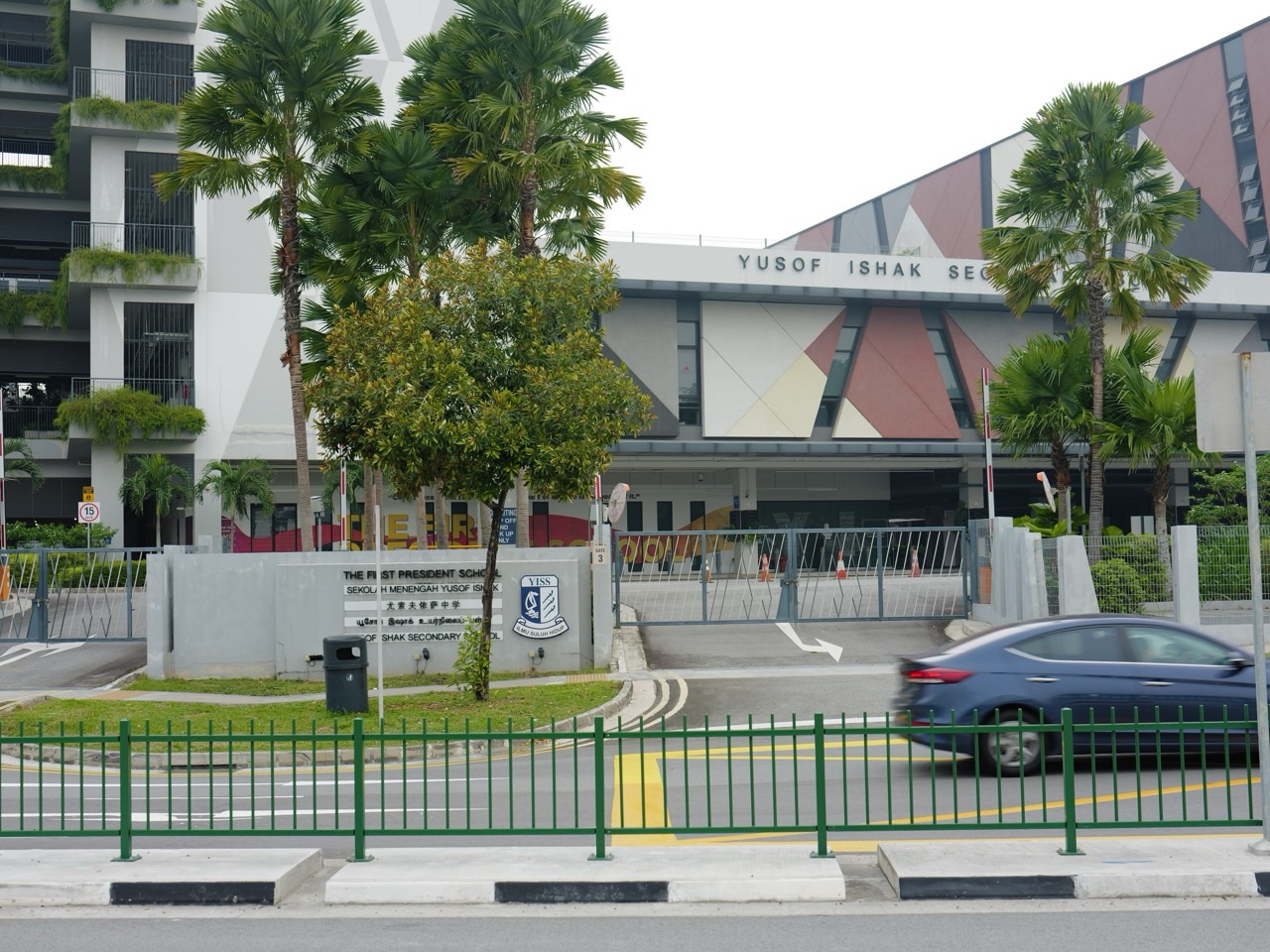
| Yusof Ishak Secondary | 15 | 22 | 8 Sumang Walk |
These are completed 2026 Secondary 1 intake results, derived from the previous PSLE cohort, not predictions for the 2027 intake following the 2026 PSLE results. The new cohort’s final cut-offs are unknown before choices are submitted and places allocated. A historical score is not an admission guarantee, and different school capacities or applicant preferences can move the final cut-off by a few points.
For a child with Score 21 or 22, each of these four local schools historically had a PG3 cut-off that was numerically stronger than the child’s score, so the PG3 shortlist may require schools farther afield. The same student’s result may fall within the historical PG2 numerical ranges of these four campuses. This difference is why the group choice should be made alongside school location and academic readiness, not by prestige.
A parent whose child scores 23 or 24 normally uses the PG2 column. At Score 24, Punggol Secondary’s old PG2 cut-off of 24 was at the boundary; the others had tighter historical boundaries. This should prompt the family to consider options beyond four Punggol campuses instead of submitting six dream schools with no meaningful range of past scores.
What MOE says about balancing six school choices
In its 17 November 2026 release, MOE and SEAB urged families to include at least two or three schools whose previous-year cut-offs were less stringent than the child’s result. Because lower PSLE totals are stronger, a score of 21 is numerically better than a historical cut-off of 23, for instance. This creates a greater historical margin, not a guaranteed offer.
The same release cautions that previous cut-offs can vary by a few points from year to year depending on cohort results and student choices. Parents should resist assigning an invented ‘90% acceptance chance’ to a school just because the previous score was two points looser. No public forecast can establish a future individual placement with that precision.
A balanced list includes schools the student would genuinely attend and where the group and score comparison is plausible. A school may be historically accessible but have a long, exhausting commute. Another may have an appealing programme but lack a subject combination the student needs. Choice order should reflect informed preference rather than superficial league-table positions.
Geography: Punggol is not one transport origin
A family living at Sumang or Matilda may find Yusof Ishak’s Sumang Walk campus particularly worth investigating. An Oasis or Riviera family may approach Greendale or Punggol Secondary differently, while a Northshore or Punggol Coast household has yet another transport pattern. Even two schools inside Punggol can require substantially different routes, depending on bus/LRT connections and walking.
For every serious option, record the actual home block, exact school student gate, expected morning reporting time, walking, waiting, transport transfers and the journey after CCA. A map pin at the nearest MRT station is not the school’s gate. Do not invent a universal fifteen-minute or thirty-minute travel claim for all Punggol children.
Nearby Sengkang schools can expand the list: Compassvale, North Vista, Seng Kang Secondary, Pei Hwa and Outram’s new Anchorvale Secondary 1 campus are distinct destinations, not one Sengkang interchange. Hougang, Kovan, Serangoon, Pasir Ris and Tampines may also provide appropriate schools depending on the child’s actual group and score. Parents should investigate specific school profiles rather than treating every neighbouring town as an automatic backup.
The school programme question matters alongside admissions
The four Punggol campuses describe different programmes. Edgefield emphasises entrepreneurship, problem solving and character through sport. Greendale highlights Design, Technology and Engineering plus Outdoor Adventure Education. Punggol Secondary has Environmental Education and Community and Youth Leadership themes. Yusof Ishak describes STEM related to sustainability and smart cities as well as student leadership.
These differences may be educationally valuable, but a school’s Applied Learning Programme is not the same as a national SEC examinable subject. A child attracted by robotics should confirm the formal Computing, Mathematics or Science subject choices later. A child who enjoys environmental projects should check what Science combinations will actually be offered. A choir or drama enthusiast should check the real CCA selection and training commitment.
Questions to ask at school open houses or through official email are specific: Which modules do all Secondary 1 pupils experience? Which activities require CCA selection? How does the school support G2/G3 subject differences? How are subject-level reviews communicated? What happens after a pupil falls behind? Broad claims about excellence do not replace this evidence.
A Score 21 worked example without a false guarantee
Imagine a pupil who scores 21 with English AL6, Mathematics AL4, Science AL5 and Mother Tongue AL6. The Mathematics result indicates a relative strength, but English may need more support. A PG2 plan might involve more local school options historically and a school-confirmed G3 Mathematics offer if eligible. A PG3 plan might involve a more demanding starting curriculum and a search beyond the four Punggol campuses because of old PG3 cut-offs.
The question is not which option protects the parent’s status. It is whether the child can sustain the subject demands and daily journey while learning effectively. An excellent Maths AL is not proof that every other subject should begin at G3, and an English weakness is not proof that the child can never progress to a more demanding level. Readiness, teaching and individual subject-level criteria matter.
Neither plan guarantees future JC entry. The pupil will sit a later national examination and apply using the subject combinations and grades actually obtained. A parent can preserve academic ambition while choosing a realistic starting plan.
A Score 22 worked example with a different strength pattern
Now imagine English AL4, Mathematics AL6, Science AL6 and Mother Tongue AL6, totalling 22. The child has stronger relative evidence in English than in Mathematics. Under a PG2 plan, the parent can ask the receiving school whether an eligible more demanding English offer is appropriate. Under a PG3 plan, the family should consider how the child will manage the Mathematics and Science workload and the wider school search.
A strong English result may help with Humanities, reading and writing, but it does not erase the need for Mathematics fundamentals. A family could use the first term to build algebra, comprehension across subject texts and independent homework habits. This is a more useful plan than treating PG3 as a guarantee that the child will succeed without help.
The invented profiles illustrate decision logic; they are not real students or predictions of future achievement. Only the individual child’s official results and school offer determine the actual eligible options.
DSA-Sec and ordinary six-choice posting are separate routes
Some families already participated in the Direct School Admission for Secondary Schools (DSA-Sec) exercise. A successful final DSA allocation has its own commitment and affects whether the pupil participates in the ordinary S1 choices. Parents should check the formal DSA result accompanying the PSLE outcome and follow the instructions for their actual status. Do not assume every child may submit the ordinary six-school list regardless of DSA allocation.
A pupil who did not secure a final DSA place normally follows ordinary S1 Posting if otherwise eligible. DSA talent offers still depend on relevant minimum PSLE Posting Group eligibility for the admitting school, even though the ordinary last-posted cut-off is not used as the DSA selection threshold. The two routes must not be mixed into an invented appeal or backup strategy.
Singpass, portal confirmation and administrative safety
The joint release says parents submit choices online through the S1 Portal accessible from the MOE S1 Posting website. A valid Singpass is needed. Only one parent needs to log in and submit the registration. If the family needs help with online submission, it should contact the pupil’s primary school before the deadline at 4.30pm on 30 November.
Use the official website, check the selected Posting Group and order of all schools, and retain the submission acknowledgement. Beware of third-party sites asking for Singpass credentials or a payment to guarantee posting. No school-choice consultant can offer guaranteed admission based on an old cut-off table. Families should keep the child’s result slip and personal details private.
If there is a technical issue, seek the official support channels promptly rather than waiting until the last minute. A public article cannot see the family’s actual portal status or confirm that a particular submission has been accepted. Confirmation must come from the portal and authorised school or MOE channels.
After submitting: make a realistic December plan
Until MOE confirms the actual posting-result date, parents should describe 18 December as tentative. Posting results are expected to be accessible via the S1 Portal, by SMS if a local number was provided, or through the child’s primary school. Keep an eye on official updates rather than forwarding a screenshot that might have been created before the date was confirmed.
Families can still prepare practical tasks: identify likely school-day routes, understand which school-related purchases should wait for confirmed placement, discuss the child’s academic interests and protect the holiday period from excessive anxiety. Do not purchase expensive G3 or G2 subject textbooks until the actual receiving school gives its confirmed booklist and subject-level offers.
If the eventual school is not a preferred choice, follow the receiving school’s reporting instructions and official transfer/appeal channels; an appeal is not an automatic second posting exercise. The child’s adjustment to the allocated school deserves attention even if the family explores a permitted appeal. Avoid promising a transfer without a confirmed vacancy and authorised approval.
How this decision connects to the SEC and future pathways
The Singapore-Cambridge Secondary Education Certificate begins for the graduating cohort in 2027 and records the pupil’s actual G1, G2 or G3 subject results. A child entering Secondary 1 in 2027 will ordinarily sit the later examination several years afterward. The published post-secondary changes from 2028 therefore illustrate possible routes but must not be represented as unchanged guarantees for the younger cohort.
JC and MI have subject-specific L1R4 requirements under the revised framework. Direct polytechnic Year 1 recognises a prescribed combination of G3 subjects plus a permitted G2 or G3 best subject, with course-specific prerequisites; PFP and ITE have separate qualifying routes. A student may later progress towards university through accepted pre-university, diploma or other recognised qualifications, subject to institutional rules. No PSLE Posting Group itself is a university offer.
A seven-day decision checklist for the family
- Before 24 November: bookmark the official SEAB release, MOE S1 Posting and SchoolFinder pages; make two group-based drafts only if the child might be in the boundary band.
- 24 November at 11.00am: collect the official result and read every subject AL and the actual Posting Group eligibility.
- From 24 November at 11.30am: enter the S1 Portal through MOE when ready; use a valid Singpass.
- 24–26 November: confirm any proxy arrangement through the primary school if relevant; discuss school fit, not just score.
- Before 30 November: verify six school choices, one selected group, programme offerings, transport and a range of historical cut-offs.
- By Monday 30 November at 4.30pm: ensure the official form is actually submitted and save its acknowledgement.
- December: follow MOE updates for the posting-result date, then obey the receiving school’s actual reporting and booklist instructions.
Frequently asked questions
Have the 2026 PSLE result date and school-choice deadline actually been confirmed?
Yes. The SEAB/MOE announcement of 17 November confirmed results on 24 November at 11.00am and an S1 Portal window from 24 November at 11.30am until 30 November at 4.30pm.
Is the 18 December 2026 posting result date final?
Not yet in that release. The 17 November announcement describes Friday, 18 December as tentative and says there will be an update. Check MOE again.
Can a Score 21 pupil choose PG3 for two schools and PG2 for four others?
No. For an eligible boundary-score pupil, the selected group applies across the six ordinary S1 school choices. Two alternative drafts can help decision-making, but only one group is submitted.
Does an old PG2 cut-off of 23 guarantee a Score 22 pupil a place?
No. It is a historical comparison, not the final cut-off for the 2027 intake. MOE explicitly cautions that school cut-offs can change by a few points between cohorts.
Should a parent log in immediately at 11.30am?
The portal opens then, but families may use the confirmed submission period. The more important requirement is an accurate form submitted before the 30 November 4.30pm deadline.
Will PG2 prevent my child from studying G3 Mathematics or reaching a university later?
Not automatically. Eligible individual subject offers and later academic progression are possible under Full SBB; future entry requires actual qualifying subjects, grades and credentials. Neither a G3 offer nor a degree is guaranteed.
Official sources and connected Punggol guides
- SEAB/MOE, 17 November 2026: confirmed PSLE results, S1 submission dates and tentative posting results
- MOE official S1 Posting website and portal entry
- MOE SchoolFinder: schools, prior cut-offs and programme offerings
- MOE PSLE scoring and Full Subject-Based Banding
- MOE Schoolbag secondary-school open house information
- MOE 2026: later post-secondary admissions arrangements
- eduKate Punggol: Score 21–22 and the six-choice PG2/PG3 decision
- eduKate Punggol: four local campus cut-offs and commutes
- eduKate Punggol: after posting, appeals and Secondary 1 support
Research and editorial check: 20 November 2026. This article describes dates officially announced on 17 November; the posting-result date remains tentative. The local school score figures relate to the completed 2026 Secondary 1 intake and cannot promise a place in the next exercise. This is independent parent education; MOE, SEAB and the pupil’s schools determine actual admissions and instructions.


