
If your Punggol child says they want to become a teacher, choose a secondary school that helps them learn subjects deeply, explain ideas clearly, develop patience and responsibility, and work respectfully with other people. A twelve-year-old does not need to attend an Integrated Programme, independent school or a specially branded ‘education school’ to keep teaching as a future ambition. The four mainstream secondary schools inside Punggol—Edgefield Secondary, Greendale Secondary, Punggol Secondary and Yusof Ishak Secondary—offer different real-world learning and character programmes where a pupil can develop these skills. None guarantees admission to the National Institute of Education (NIE) or a future teaching appointment, and no historic school cut-off point measures teacher quality.
When 2026 PSLE results are released on Tuesday, 24 November at 11.00am, parents should first check the child’s actual total, individual subject ALs and PG1, PG2 or PG3 entry options for Secondary 1 in 2027. The student can then compare English, Mathematics, Science, Humanities, Mother Tongue, student leadership and Values in Action opportunities at eligible schools. Teaching is a future profession with its own qualifications and recruitment requirements. Currently, routes include MOE-linked training through NIE, such as the Postgraduate Diploma in Education for eligible university graduates, but those requirements may change before a 2027 Secondary 1 pupil is old enough to apply. This article compares local schools, the completed 2026-entry historical cut-offs, helpful skills and a six-school family decision process before the 30 November 2026, 4.30pm S1 deadline.
Quick parent summary
• A future teacher needs strong subject understanding, clear communication, empathy, organisation and willingness to keep learning.
• No Punggol secondary school guarantees an NIE place or future MOE teacher appointment.
• Edgefield develops initiative and problem-solving; Greendale design and outdoor teamwork; Punggol Secondary community leadership; Yusof Ishak smart-city STEM and leadership.
• Student leadership and Values in Action can develop useful skills, but an ordinary pupil does not need a prefect badge to aspire to teaching.
• NIE PGDE is a current graduate professional training route; actual qualifications and MOE selection must be checked in the future.
• Use the correct previous PG1/PG2/PG3 cut-off for the child’s entry route, clearly marked historical.
• Rank six eligible, genuinely suitable schools by learning, culture and daily travel rather than one career dream.
Why children say they want to teach
Some pupils enjoy helping a younger sibling understand a Maths question. Others admire a Primary 6 teacher who was patient or inspired them to read. A child may love explaining facts, storytelling, organising people or watching someone gain confidence after finally understanding a difficult idea. These are encouraging signs of an interest in teaching, but they are not a complete occupational decision.
Ask what the child likes about teachers. Is it sharing knowledge, making lessons interesting, helping people, working with children, discussing books or solving problems? The answer may reveal a broader set of interests in communication, psychology, Science, writing or leadership. A student might later become an educator, coach, researcher, designer, therapist or another professional who helps people learn.
Parents should encourage the aspiration without creating pressure to stay with it for life. A child entering Secondary 1 in 2027 will encounter new subjects, people and experiences. It is entirely normal to change ideas about a profession several times. A good school gives the child opportunities to explore and develop their own judgement.
What does a good teacher actually do?
| Teaching skill | What the child can practise in secondary school | What not to assume |
|---|---|---|
| Understand a subject | Learn Mathematics, Science, English or another subject thoroughly | A strong PSLE score means the pupil already knows how to teach |
| Explain clearly | Use examples, drawings and careful language | Speaking loudly is the same as effective explanation |
| Listen and support | Notice when someone is confused and respond respectfully | Every helpful student must become a prefect |
| Plan and organise | Prepare materials, manage deadlines and work with others | Organisation is a talent a child either has or lacks |
| Assess understanding | Ask useful questions and reflect on errors | Finishing a worksheet proves another student understands |
| Ethics and fairness | Respect privacy, dignity and individual differences | A leader may share classmates’ problems publicly |
| Lifelong learning | Accept feedback and keep developing skills | Teaching qualification ends all professional learning |
The student who explains a difficult idea carefully may be practising a teaching skill, but this should be done respectfully. Children are not responsible for grading classmates, diagnosing another child’s learning difficulty or replacing trained adults. They can learn empathy and communication through ordinary school group work and supervised peer-support activities.
What the current NIE and MOE training routes mean
The MOE ‘Become a Teacher’ website describes recognised recruitment and training pathways for the teaching service. One current route is the Postgraduate Diploma in Education (PGDE), which NIE provides for suitable university graduates selected through the relevant process. The National Institute of Education’s PGDE overview describes preparation for primary, secondary and pre-university teaching, with subject-specific professional training.
Professional teaching qualifications are not the same as ordinary graduate study in education. NIE’s published FAQ says its general graduate programmes do not automatically qualify a graduate to teach in MOE schools; applicants need the appropriate teacher-training and recruitment route. Other routes and scholarships can have different entry requirements. A family should check current MOE guidance at the time the pupil is actually applying, not assume that a 2026 web page creates a permanent promise.
MOE also announced plans to shorten PGDE teacher training from sixteen to twelve months from 2027, while maintaining professional preparation. That is an example of why pathways can evolve. A twelve-year-old does not need to plan the exact length, bond, course or future salary of a qualification now. Instead, they can build habits and later seek accurate Education and Career Guidance (ECG).
Choosing a teaching subject cannot be settled by one PSLE AL
A child who enjoys reading may imagine teaching English or Literature; another might love Mathematics and want to explain fractions or algebra. A student who enjoys experiments may imagine teaching Science, and one interested in art, music or physical activity may later explore related teaching specialisations. These are legitimate interests, but future subject preparation and eligibility vary.
A strong PSLE English or Maths result does not by itself guarantee entry to an NIE teaching subject decades later. Teacher recruitment considers educational qualifications, subject knowledge, suitability and other current requirements. The child will make many academic decisions after Secondary 1, including upper-secondary subject choices and a later post-secondary pathway.
Parents should not force a pupil into G3 subjects regardless of readiness solely because of a possible future teaching career. Under Full Subject-Based Banding, Posting Groups guide ordinary school entry while individual subjects may be offered at different G1, G2 or G3 levels when eligible. A pupil’s foundations, motivation and learning support matter more than copying another child’s subject combination.
How Edgefield Secondary can develop useful teaching skills
Edgefield Secondary at 36 Punggol Field, Singapore 828814 focuses its Growing the Edgefield Mindset ALP on initiative, creative problem-solving, collaboration and real-world concerns. A child who likes teaching may find opportunities to explain project ideas, listen to others, plan tasks and evaluate whether a solution actually helped someone.
Its character education through sport can provide further opportunities to practise patience, fairness and respect for learning differences. Ask which responsibilities are part of ordinary Secondary 1 activities and which roles are selective. A parent should not promise that the pupil will become a peer tutor or student leader immediately because they want to teach.
Also ask about the quality of ordinary English and Mathematics feedback. Future educators benefit from being taught well themselves and from learning how to ask a precise question when they do not understand a concept.
How Greendale Secondary can develop teamwork and explanation
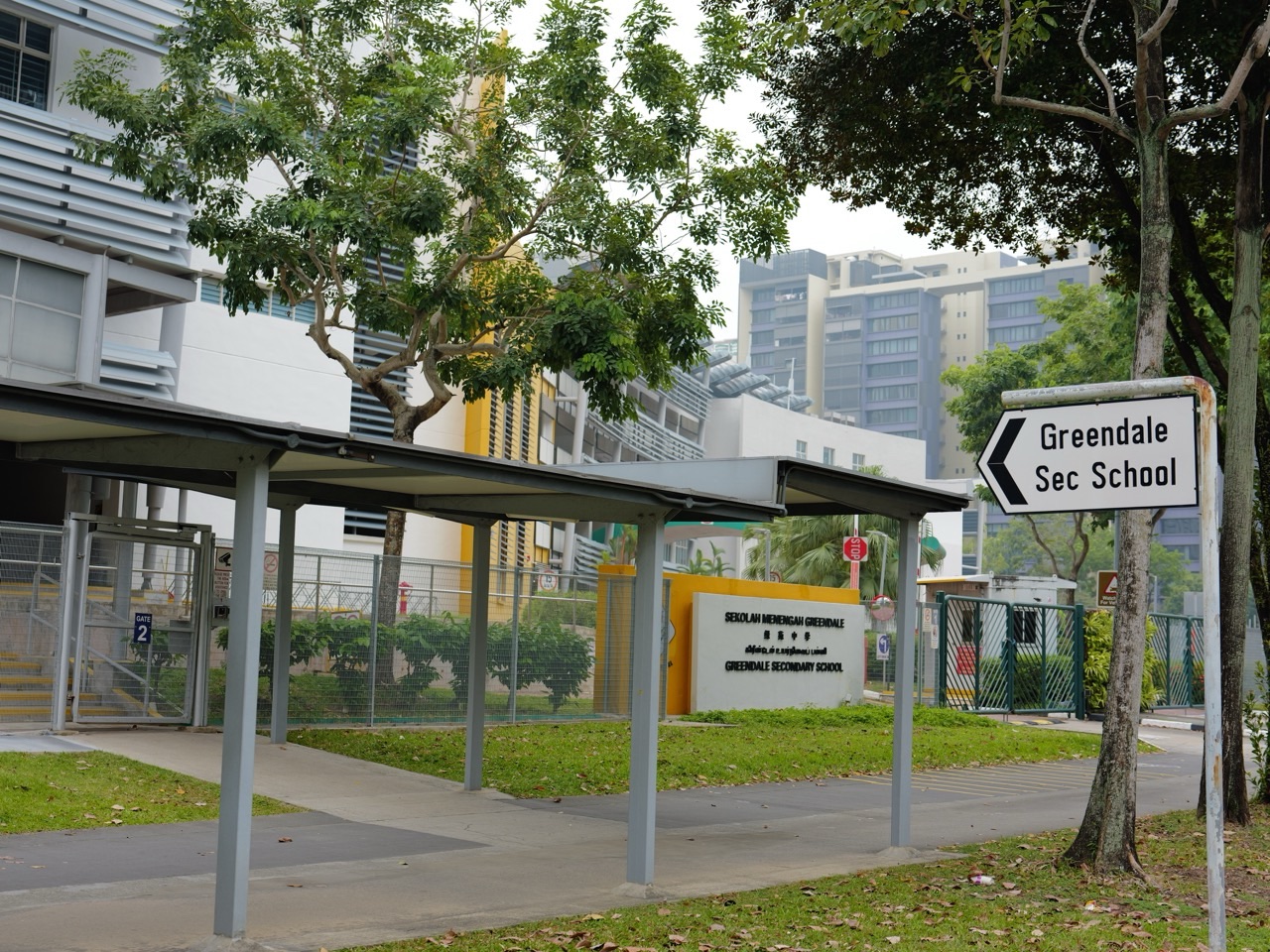
Greendale Secondary at 51 Edgedale Plains, Singapore 828866 has a Design, Technology and Engineering ALP and Outdoor Adventure Learning for Life Programme. In design projects, pupils may plan an idea, test it and explain changes to teammates. Outdoor learning can involve group planning, communication and the responsibility to help others safely.
A child aspiring to become a Science or Mathematics teacher may enjoy discussing how a prototype works, but a coding ALP is not an NIE teacher-preparation course. The useful question is how the school helps pupils explain reasoning clearly, receive feedback and cooperate with people of different abilities.
Greendale’s arts and broadcasting activities may also appeal to a pupil interested in communication and storytelling. Ask about actual CCA allocation and suitable opportunities for beginners rather than promising a certain leadership position.
How Punggol Secondary can develop empathy and service
Punggol Secondary at 51 Edgefield Plains, Singapore 828870 emphasises environment education and community and youth leadership. A student who wants to help people learn may find opportunities to understand community needs, explain sustainability issues and work responsibly with others.
Values in Action and relevant class responsibilities can help a pupil learn service, reflection and listening. Ask which experiences reach all new pupils and which require selection. Being interested in teaching does not create automatic admission to Student Council or an external volunteering placement.
The school’s actual subject teaching and learning feedback remain central. A pupil who loves explaining environmental Science needs to understand the Science accurately and express evidence in clear English.
How Yusof Ishak Secondary can develop communication and leadership
Yusof Ishak Secondary at 8 Sumang Walk, Singapore 828676 highlights sustainable smart-city STEM and leadership development. Its S4TEM@YI programme can encourage pupils to explain technical ideas and think about how learning helps society. Student leadership offers another context for responsibility and working constructively with people.
A child interested in teaching might enjoy using a simple diagram or model to explain a technical issue to peers. The family can ask about ordinary project learning, school-wide leadership experiences and CCAs. None of these programmes guarantees a later teaching qualification or a specific school leadership role.
For families near Sumang, the location may be convenient; others should check morning and late CCA travel. A manageable daily routine can leave time for reading, practising explanations and ordinary childhood interests.
The four Punggol schools’ historical score comparison
These are the previous last-admitted scores from Secondary 1 entry in 2026, following PSLE 2025. They are not guaranteed cut-offs for 2027 or rankings of how many teachers a school produces. A lower numerical PSLE Score reflects stronger aggregate examination performance.
| Punggol school | 2026-entry PG3 COP | 2026-entry PG2 COP | 2026-entry PG1 COP |
|---|---|---|---|
| Edgefield Secondary | 14 | 23 | 27 |
| Greendale Secondary | 16 | 23 | 27 |
| Punggol Secondary | 19 | 24 | 27 |
| Yusof Ishak Secondary | 15 | 22 | 27 |
A PG3 pupil scoring 18 may genuinely want to join Edgefield because of its enterprise learning, but the school’s prior PG3 endpoint of 14 was more competitive than that score. Punggol Secondary’s historic PG3 endpoint of 19 was numerically less stringent, while Greendale 16 and Yusof Ishak 15 were also more competitive. Those are planning references rather than future admission promises.
At PG2 score 24, Punggol Secondary was at its former PG2 boundary and the other local schools had more competitive prior PG2 endpoints of 22 or 23. A pupil with Score 25 may have a PG1/PG2 option, where the four local PG1 values were all 27. Choosing a teaching career is not a reason to mix Posting Group cut-offs or demand the most academically demanding route regardless of readiness.
If Punggol alone cannot provide an appropriately balanced six-choice list, investigate eligible schools in Sengkang, Hougang and other reachable areas. Teaching aspirations can be nurtured at many schools; the decision must be grounded in actual subjects, programmes, support and travel.
Six habits a child can practise without becoming a classroom teacher
| Habit | Safe home or school example | What the adult should reinforce |
|---|---|---|
| Explaining ideas | Describe why a Mathematics answer works | Reasoning rather than memorised steps |
| Active listening | Ask what someone found confusing | Respect and patience |
| Choosing examples | Use a drawing or everyday object to clarify a concept | Adaptability in communication |
| Giving helpful feedback | Say what was clear and ask one useful question | Kindness without public judgement |
| Organisation | Prepare a short plan before a family activity | Responsibility and realistic timing |
| Reflecting | Say what could be improved next time | Lifelong learning and humility |
The activities should be age-appropriate and voluntary. A pupil can show a younger sibling a familiar concept with adult agreement, but must not be expected to supervise a sibling’s education or act as a substitute parent. Helping peers can be valuable, provided the school’s actual rules and boundaries are respected.
The most important teaching-related skill at twelve may simply be learning to understand a concept rather than copy an answer. Ask the pupil what surprised them in class and which explanation helped. This builds appreciation for the work of effective teachers while improving the student’s own learning.
A four-week holiday exploration of teaching
Week 1: remember a helpful explanation
Invite the child to recall one teacher who made something difficult easier. Ask what the teacher did: draw a picture, explain a word, listen to a question, demonstrate a model or encourage the child to try again. The pupil learns that teaching is more than standing in front of a class.
Week 2: explain one simple topic
Choose an age-appropriate topic the pupil already understands, such as equivalent fractions, a plant part’s function or how a story’s character changed. Have them explain it in two minutes to a willing family member. Encourage an example and ask how the listener might check understanding.
Week 3: respond to a genuine question
Invite a family member to ask a question the child did not anticipate. If they do not know the answer, show that it is acceptable to say so and look for a reliable source. A good teacher does not invent certainty. This also teaches evidence-checking and responsible use of digital tools.
Week 4: reflect on the learning
Ask which part was enjoyable and which was hard. Did the child prefer explaining, preparing examples, listening or researching? They might discover that tutoring one person is enjoyable but speaking to a group is stressful, or that a different field interests them more. That is a valid outcome.
Questions about school culture and preparation
- How does the school help a pupil understand core subjects rather than simply memorise answers?
- Are there age-appropriate class responsibilities and supervised ways to support peers?
- How are students taught to give feedback kindly and to listen to different opinions?
- What Values in Action and community service experiences reach ordinary Secondary 1 pupils?
- What opportunities exist to develop communication, storytelling or leadership without demanding an immediate formal title?
- Can a pupil interested in teaching explore English, Mathematics, Science, Mother Tongue, Humanities and the arts?
- How does the school help students who struggle with a subject while preserving confidence?
- What student wellbeing and safeguarding arrangements apply during peer-support activities?
- Does the school provide Education and Career Guidance as pupils progress?
- What time will the child return home after school and CCA, and can the family sustain the routine?
What a realistic six-choice list should include
- Confirm the pupil’s official PSLE Score, individual subject ALs and selected Posting Group.
- Identify several subjects the child enjoys learning and explaining, without making a permanent teaching-specialisation choice.
- Research each school’s academic teaching, student development and current CCA offerings.
- Check the correct 2026-intake historical cut-off for the chosen PG1, PG2 or PG3 route.
- Include two or three schools with previous COPs less stringent than the child’s result where suitable, as SEAB recommends.
- Broaden to eligible schools outside Punggol if local historical admission choices are too competitive.
- Compare school culture, wellbeing, safe travel and family costs as well as academic programmes.
- Ask which leadership or helping activities are school-wide rather than selected.
- Rank six schools the pupil would genuinely attend if their career aspirations changed.
- Submit through the MOE S1 Portal and keep the official acknowledgement.
Ordinary S1 Posting begins with academic merit, and citizenship, preference order and computerised balloting apply in relevant same-score competitions. A pupil’s aspiration to teach does not provide special normal posting priority, just as living near a school does not. A good application balances genuine educational preferences with historical admission uncertainty.
The official PSLE 2026 and S1 2027 timeline
| Milestone | Announced date |
|---|---|
| PSLE results released | Tuesday, 24 November 2026, 11.00am |
| S1 Portal opens | Tuesday, 24 November, 11.30am |
| School-choice submission closes | Monday, 30 November, 4.30pm |
| Posting result | Tentatively Friday, 18 December; final confirmation to follow |
The SEAB 17 November 2026 announcement confirms the results and submission window. An eligible parent with valid Singpass can use MOE S1 Posting and seek help through the primary school before the deadline where needed.
Frequently asked questions
Does my child need to attend IP to become a teacher?
No. Teaching has later subject qualifications, recruitment and professional training requirements. IP is a distinct school programme, not a universal prerequisite for teaching.
Is NIE a secondary school the pupil can join after PSLE?
No. NIE is a teacher-education institution within NTU, involved in later professional preparation. The pupil should first choose an appropriate Secondary 1 school.
Can a PG1 or PG2 student aspire to become a teacher?
The child can develop an interest in teaching. Later opportunities depend on actual qualifications, subject strengths, academic progression and prevailing recruitment rules—not one Primary 6 Posting Group alone.
Will joining Student Council guarantee a teaching scholarship?
No. A leadership role can develop skills, but scholarships and teacher recruitment are separate decisions with specific criteria. Do not promise awards years in advance.
Should the pupil choose a school solely for English or Mathematics?
Not solely. A future teacher needs broad learning and may change subject preferences. Compare complete school fit, curriculum, student wellbeing and opportunities.
Can a child with a weak PSLE result still learn to explain ideas?
Yes. Communication, patience and understanding can develop with appropriate teaching and practice. Formal future qualifications still matter, but a score does not define personal worth or all capabilities.
Official sources and related eduKate guides
- MOE: becoming a teacher and current professional pathways
- NIE/NTU: current Postgraduate Diploma in Education teacher training
- NIE: general graduate study is not automatically a professional teaching qualification
- MOE LEAPS: Participation, Service, Leadership and Achievement
- MOE SchoolFinder: school types, programmes and previous score ranges
- SEAB: PSLE result and S1 choice dates
- eduKate Punggol: leadership and service as development
- eduKate Punggol: choosing schools without a fixed career
- eduKateSG: immutable Clementi small-group Mathematics teaching reference
Parent conclusion: A child who wants to become a teacher can begin by learning well, asking good questions, communicating kindly and helping others responsibly. There is no need to choose a secondary school for a professional qualification that comes much later. Compare the four Punggol schools by genuine learning, character development and everyday fit, using correct historical admission ranges and six thoughtful preferences.


