
If your Punggol child has a diagnosed food allergy, asthma or another health need, choose a secondary school that is academically suitable and can explain how it will work with the family and treating clinician on safe daily attendance and an individualised emergency plan. There is no reliable public ranking that identifies Edgefield Secondary, Greendale Secondary, Punggol Secondary or Yusof Ishak Secondary as universally the ‘safest’ school for food allergies or asthma. Each case is different. A family’s useful questions concern reporting essential health information securely, the responsible school contact, canteen food choices, Food and Consumer Education (FCE), Physical Education (PE), CCAs, outdoor activities, prescribed medication access and emergency communication. None of these should be inferred from a school’s previous PSLE cut-off point.
When 2026 PSLE results are released on Tuesday, 24 November at 11.00am, confirm the child’s actual PSLE total and Posting Group, then compare genuine options for Secondary 1 entry in 2027. Singapore’s Agency for Care Effectiveness published a September 2026 Food Allergy clinical guideline that includes collaboration among healthcare professionals, parents, teachers and school staff. That is a sound basis for discussing the child’s specific documented needs with the receiving school rather than expecting generic promises. This guide provides a school-enquiry checklist, practical questions for lunches, cooking lessons, sports and camps, and a balanced six-school posting method. Ordinary S1 choices close on Monday, 30 November 2026 at 4.30pm.
Quick parent summary
• The child’s actual clinical diagnosis and treating clinician’s written instructions take priority over generic online advice.
• Do not assume any named Punggol school has an allergen-free canteen, specialist on-site medical team or guaranteed medication procedure without confirmation.
• Ask about confidential health-information sharing, a named school contact and the approved emergency response plan.
• Food allergies and asthma are different conditions; PE, outdoor activities and FCE lessons may raise different practical questions.
• Serious breathing difficulty or suspected anaphylaxis is an emergency: follow the individual’s medical plan and call 995 for an ambulance.
• Use the pupil’s correct PG1, PG2 or PG3 historical school cut-off column, not a health-based prediction of admission.
• Rank six genuinely suitable schools, then complete the receiving school’s actual medical handover promptly after posting.
The most important first step: identify what the child actually needs
A pupil with a mild food intolerance may need a different approach from a child with a clinically confirmed severe allergy. A pupil with well-managed asthma may participate comfortably in PE and CCAs under a clinician’s advice, while another may have a more specific activity plan or triggers to consider. Families should not treat all conditions bearing the same name as identical.
Before choosing a school, review the child’s current medical information privately with the treating healthcare professional. Parents can ask whether the clinician recommends a written emergency action plan, what situations require avoidance or monitoring, which prescribed medication must be accessible, and who should be trained or informed. The school should receive the relevant information through authorised channels, not public social-media posts.
The family should also think about independence. A Secondary 1 student may buy canteen food, move between subject rooms, attend outdoor activities, use public transport and join a CCA after lessons. Parents can prepare age-appropriate self-advocacy, but the pupil should not have to manage a serious emergency alone. The school and family need an agreed practical process.
Food allergy, intolerance and asthma are not interchangeable
| Situation | What parents should establish with clinicians | School question |
|---|---|---|
| Clinically diagnosed food allergy | Known allergens, reaction history and individual medical plan | How are canteen, FCE and offsite food risks discussed? |
| History of severe allergic reaction | Clinician’s emergency instructions and prescribed rescue treatment | Who receives the action plan and knows the emergency procedure? |
| Food intolerance or dietary restriction | What is medically required versus a family preference | How can appropriate lunch arrangements be handled honestly? |
| Asthma | Doctor’s documented triggers, management plan and activity considerations | How are PE, CCA, haze and urgent symptoms managed? |
| Another health condition | Only relevant practical information and clinician recommendations | What support or safe adjustments are actually available? |
Do not diagnose a new food allergy from one stomachache or assume that every cough during sport is asthma. A qualified clinician should establish diagnosis and treatment. Likewise, do not remove prescribed medication, change doses or substitute food restrictions based on an online school-choice article. The family’s aim is a reliable handover and the right questions for professionals.
Singapore’s Agency for Care Effectiveness Food Allergy guideline published September 2026 explicitly includes guidance for healthcare professionals working with parents, teachers and other school personnel. That supports cooperative planning rather than broad assumptions about which school is ‘good with allergies’.
What should a school know before term starts?
Once the receiving school is confirmed, ask about its official medical-information submission and updating procedure. Tell the appropriate school contact what is relevant for the child’s safety, including any clinically confirmed diagnosis, key triggers and the healthcare professional’s current action plan. Keep records factual and current, and ask who will share the information with authorised personnel such as form teachers, relevant activity supervisors and the school office.
Do not expect a school to discuss another child’s medical information or reveal private details about past incidents. The school’s ability to explain a general process is useful. Your child’s specific plan should be agreed with the actual receiving school after posting; a school staff member at an open house may be unable to promise an individual accommodation before enrolment.
Parents can ask whether there is a named person for medical and safety communication, how school and family contacts are kept current, what staff should do if an emergency happens during a CCA or camp, and what the pupil should do if they cannot immediately locate their form teacher. Schools may have different practical arrangements, and none should be invented.
Canteen: useful questions, but do not assume guaranteed allergen-free food
An ordinary school canteen is not automatically a dedicated allergen-free kitchen. Where a child has a diagnosed food allergy, parents should ask how food stalls communicate ingredient information, whether suitable options are available and what limitations exist concerning accidental contact or cross-contact. A seller’s general assurance that a dish looks safe is not a substitute for the child’s medical requirements or verified ingredient information.
Do not promise a food-allergic child that every Punggol secondary school can make every canteen meal safely. The family may need to discuss bringing food, selecting appropriate items or other school-approved arrangements. Ask about practical school policies instead of assuming that a new child must eat from the canteen daily.
The Singapore Food Agency and Ministry of Sustainability and the Environment have explained food safety regulation for school food businesses. General food hygiene standards are important, but compliance with hygiene requirements is not proof that a specific meal has no trace allergen. This is why the family should discuss the child’s individual allergy with the receiving school and relevant food providers rather than relying on an old menu photograph.
Food and Consumer Education lessons are a separate planning issue
Under Full Subject-Based Banding, Food and Consumer Education (FCE) is a lower-secondary common curriculum subject. Pupils may learn about nutrition, consumer decisions, safe food preparation and the science of food. A student with a significant food allergy may need a specific plan for ingredients, shared equipment or cooking activities according to their medical requirements.
Ask the actual school what happens when a relevant practical lesson uses an ingredient the child cannot handle safely. The teacher and family can discuss an appropriate plan based on current clinician advice and school safety procedures. Do not assume the pupil will be excluded from all FCE lessons or that every lesson is automatically safe without any communication.
For a child with asthma, an FCE cooking room may involve relevant environmental triggers depending on their individual condition. The family should not invent restrictions; the treating clinician’s guidance and the school’s actual facility and lesson arrangements are the proper basis for a discussion.
Physical Education, sports CCAs and outdoor learning
A pupil with asthma should not automatically be told to stop sport, nor should a child be pushed into an activity without considering the individual medical plan. Families should ask their healthcare professional and the receiving school what is appropriate for PE, CCAs, school camps and any outdoor activities. Relevant considerations can include the pupil’s known triggers, the availability of prescribed medication, supervision and what to do if symptoms arise.
The four Punggol schools have different co-curricular and outdoor programmes. Greendale publishes Outdoor Adventure Education; Edgefield has sport-based character development; Punggol Secondary has environmental and community activities; Yusof Ishak includes STEM and sports CCAs. These are reasons to ask activity-specific questions, not reasons to exclude a school automatically.
If a pupil participates in a late CCA, plan a safe way home and an emergency contact. For outdoor learning or camps, clarify what medical information and permissions are needed, who is responsible for medication according to school policy, and what happens if an activity is unsuitable under the clinician’s directions. A generic outdoor programme description does not tell us the child’s individual risk.
What an emergency conversation should cover
HealthHub’s emergency guidance for children describes anaphylaxis as a serious, potentially life-threatening allergic reaction. Features can include difficulty breathing, wheezing, mouth or tongue swelling, fainting or other serious symptoms. Call 995 for an ambulance when anaphylaxis is suspected or the child has severe breathing difficulty. Follow the child’s clinician-prescribed emergency plan, including use of prescribed emergency medication by appropriately trained people in line with that plan.
Families should not wait for a symptom checklist to become complete before seeking urgent emergency help when serious symptoms develop. A child can deteriorate quickly. The receiving school should have the current parent contact and know whom to contact immediately. This article does not provide medication doses or substitute for emergency response training.
A pupil should learn an age-appropriate way to alert a teacher or other adult when unwell. However, the adult response plan must be clear; the child should not be made solely responsible for deciding whether a reaction is dangerous. The family and school should discuss the actual circumstances with qualified healthcare professionals.
How to compare the four Punggol schools fairly
Edgefield Secondary — 36 Punggol Field
Edgefield’s Growing the Edgefield Mindset ALP and sports-related character development may appeal to a student who enjoys enterprise and physical activity. Parents should ask about its 2027 canteen arrangements, FCE practical lessons, PE and CCA supervision, and how an individual clinician-directed plan can be communicated to authorised staff after posting.
Do not describe Edgefield as guaranteed allergen-free, or unsuitable for asthma, without individual evidence. The appropriate question is whether the school can explain its procedures and work with the family on specific needs alongside ordinary academic teaching.
Greendale Secondary — 51 Edgedale Plains
Greendale’s Design, Technology and Engineering ALP and Outdoor Adventure Education make practical activities and camps worth discussing. Ask about how staff obtain relevant health information before outdoor programmes, how emergency contacts are handled and what students should do if they feel unwell. Also ask about canteen and FCE arrangements relevant to the child’s medical plan.
A child with health needs may still enjoy outdoor learning where a suitable clinician-guided plan can be implemented. The parent should neither assume automatic exclusion nor demand a blanket guarantee that every activity will be medically appropriate. The actual individual case should guide arrangements.
Punggol Secondary — 51 Edgefield Plains
Punggol Secondary’s environmental education and community leadership programmes may involve nature observation, service, school events and CCAs. Parents can ask how the school communicates about outdoor activities and whether an individual health plan can be provided to relevant supervisors in a secure and appropriate way.
A historic PSLE cut-off provides no evidence that the canteen or teaching staff are more or less equipped for a specific medical condition. Ask the actual school about relevant school-day arrangements, and evaluate academic fit and journey at the same time.
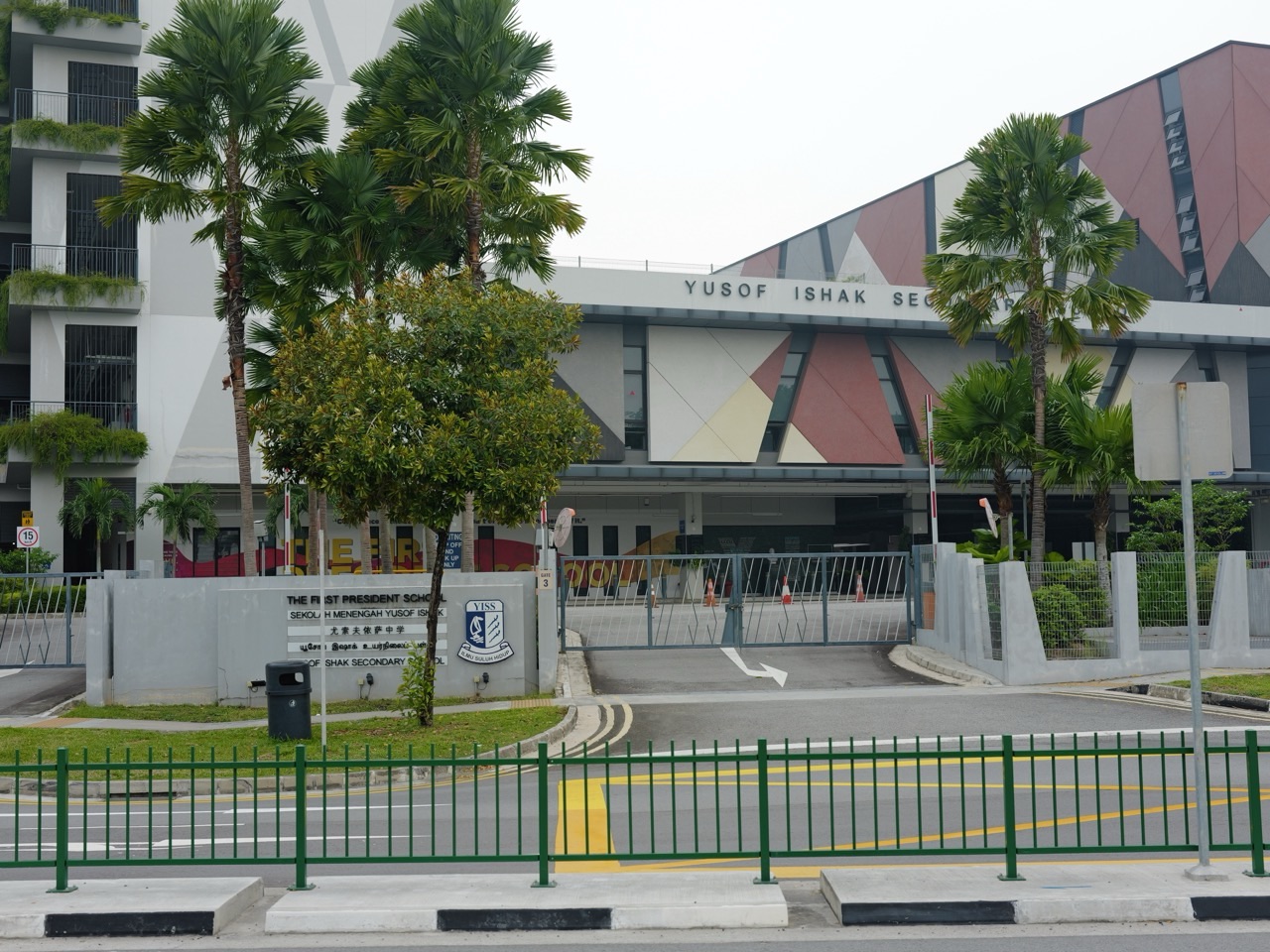
Yusof Ishak Secondary — 8 Sumang Walk
Yusof Ishak’s S4TEM@YI learning includes smart-city STEM and urban farming, with separate sporting and other CCAs. A pupil may enjoy these programmes, but the family should ask about any individual medical considerations for specific lessons, outdoor spaces and CCA routines.
For a family near Sumang, the journey may be practical; a household elsewhere in Punggol should test the real route. If the child has an emergency while travelling, the family needs an age-appropriate safe contact and response plan as advised by the clinician and relevant school contacts.
A school-choice comparison table that does not invent medical capabilities
| Question | Edgefield | Greendale | Punggol Secondary | Yusof Ishak |
|---|---|---|---|---|
| Which individual health information must parents provide? | Confirm after posting | Confirm after posting | Confirm after posting | Confirm after posting |
| What is the canteen ingredient-information process? | Ask current school | Ask current school | Ask current school | Ask current school |
| How do FCE practical lessons handle a known medical need? | Ask teacher/school | Ask teacher/school | Ask teacher/school | Ask teacher/school |
| What PE/CCA/camp considerations can be discussed? | Ask staff | Ask staff | Ask staff | Ask staff |
| Who receives the emergency action plan? | Confirm authorised contact | Confirm authorised contact | Confirm authorised contact | Confirm authorised contact |
| What actual subject and student support is offered? | Check official profile | Check official profile | Check official profile | Check official profile |
The intentionally unanswered cells are important. There is no validated 2027 public comparison of all four schools’ individual emergency procedures, food providers or health accommodation for this child. It would be misleading to fill the table with made-up promises. Use it to collect accurate responses from the schools and your healthcare professional.
The historical PSLE cut-offs remain a separate admissions question
The following are the completed 2026 Secondary 1 intake historical last-posted scores based on PSLE 2025. They are not the final scores for the 2027 intake and are not medical-safety ratings. A numerically lower PSLE total represents stronger aggregate performance.
| Punggol school | Previous PG3 COP | Previous PG2 COP | Previous PG1 COP |
|---|---|---|---|
| Edgefield Secondary | 14 | 23 | 27 |
| Greendale Secondary | 16 | 23 | 27 |
| Punggol Secondary | 19 | 24 | 27 |
| Yusof Ishak Secondary | 15 | 22 | 27 |
For a pupil with PG3 Score 18, Punggol Secondary’s old PG3 endpoint of 19 was numerically less stringent, while the other three previous PG3 endpoints were 14, 16 and 15, more competitive. That historic information helps parents plan an eligible school list but tells them nothing about the canteen’s allergen procedures. A family should examine school medical communication separately from admission.
For PG2 Score 24, the past local PG2 endpoints were 23, 23, 24 and 22. Punggol Secondary was at the old boundary, not a guaranteed seat. For Score 25, the child may have PG1/PG2 options, with different previous school ranges and academic starting pace. A medical need does not automatically make the ordinary Posting Group scoring rules interchangeable.
Where the four local schools offer insufficient historically less stringent choices, research suitable schools beyond Punggol in Sengkang, Hougang or elsewhere with manageable travel. Assess actual eligibility and the child’s needs together, without assuming proximity gives normal S1 posting priority.
Eight things parents can prepare for the receiving school
- A current clinician-provided statement or care plan describing the relevant condition and practical requirements.
- The family’s correct emergency contacts and an authorised alternative contact.
- The list of relevant triggers or allergens documented by the treating clinician, not an unverified self-diagnosis.
- The prescribed medication and individual instructions where applicable, including access and handling arrangements.
- Questions about meals, canteen choices and any necessary food preparation limitations.
- Questions about PE, CCAs, school camps, practical lessons and outdoor events.
- A plan for the pupil to alert an adult when symptoms arise, appropriate to age and ability.
- An agreed process for updating the school if the clinician changes the recommendations.
Share sensitive medical information directly through the receiving school’s authorised channels and only as needed for safety and education. Do not publish the child’s records in parent chat groups or place a diagnosis on a public school-review website. A school may legitimately need specific details to provide appropriate support, but other families do not need to see them.
Three family examples
A child with a diagnosed food allergy who likes Greendale’s design programme
The pupil may be excited about coding and practical technology, but the family worries about canteen food and FCE. Ask for the school’s actual medical-information procedure, how practical food lessons are organised and what options exist within the clinician’s care plan. There is no reason to assume that a design ALP necessarily prevents attendance, nor to promise all food activities will be safe without a documented arrangement.
A student with asthma who loves outdoor adventure and sport
The pupil may enjoy Greendale’s outdoor learning, Edgefield’s character education through sport or a sports CCA at another school. The family should discuss suitability and any individual activity instructions with the clinician, then ask the school about supervision and emergency communication. Avoid making blanket assumptions that every sport is forbidden or always safe.
A pupil whose health is usually stable but who will travel alone
The family may be mostly concerned about travelling from a Punggol HDB block to a school and what happens if the student becomes unwell while commuting. Agree on a child-appropriate contact plan with family and school, learn the real route and know when emergency services are needed. A shorter direct route may be a legitimate school preference even though it does not create ordinary admission priority.
Questions to ask a school after PSLE results
- What process does the school use for confidential medical or health-information submission?
- Which authorised staff will know what they need to know about the pupil’s care plan?
- Who should parents contact to discuss a documented food allergy, asthma or other relevant condition?
- What canteen arrangements and ingredient-information limitations should we know about?
- How does the school plan FCE and other practical lessons when a documented allergy is relevant?
- How are PE, CCA, outdoor and camp activities reviewed against the pupil’s clinician guidance?
- How is prescribed emergency medication handled under the school’s actual policy?
- What should the pupil do if unwell during lessons, on a field trip or after CCA?
- How will school staff contact parents or emergency services when necessary?
- How is the plan updated, and can the family review it after the pupil settles into Secondary 1?
A school may not be able to approve an individual arrangement at a public open house. In that case, ask for the proper official contact after posting and find out what documents are needed before the first school day. The aim is accurate preparation, not forcing a teacher to make medical decisions outside their professional role.
How to prepare six sensible school preferences
- Confirm the pupil’s PSLE total, individual ALs and selected PG1, PG2 or PG3 entry route.
- Check official eligibility and the correct historic COP for each school.
- Compare academic teaching, actual programmes, CCAs and school culture, not only medical arrangements.
- Ask each school about the general process for collaborating on documented health needs; do not demand a public diagnosis discussion.
- Consider the home-to-school and after-CCA journey, including relevant family emergency arrangements.
- Include two or three schools with prior COPs less stringent than the child’s score where suitable, as MOE recommends.
- Research eligible schools beyond Punggol if the local historical admissions range is too narrow.
- Discuss genuine child preferences and any particular activity concerns with the family.
- Rank six schools in real preference order and submit through the official S1 Portal.
- After the actual posting, complete the approved medical handover and review it with the receiving school.
Ordinary S1 posting considers academic merit, and citizenship, school-choice order and computerised balloting apply in relevant same-score competitions. A Punggol address or health condition should not be described as automatically reserving a particular ordinary S1 place unless MOE formally confirms a distinct process for an individual circumstance. Parents need accurate admission planning and appropriate medical coordination as separate responsibilities.
The November and December 2026 deadlines
| Event | Announced date and time |
|---|---|
| PSLE results released | Tuesday, 24 November at 11.00am |
| S1 Portal opens | 24 November at 11.30am |
| Six-school choice deadline | Monday, 30 November at 4.30pm |
| Posting results | Tentatively Friday, 18 December; final date to be confirmed |
SEAB’s 17 November 2026 statement confirms the result release and S1 submission period. A parent with valid Singpass can ordinarily submit through the MOE S1 Portal; families needing help should contact their primary school before closing. After posting, ask the receiving school about registration and any required health documentation.
Frequently asked questions
Which Punggol secondary school is safest for food allergies?
There is no verified public ranking for the child’s specific condition. Parents should discuss documented needs, canteen processes, FCE safety and emergency planning with the actual schools and relevant healthcare professionals.
Does a school canteen guarantee meals without a particular allergen?
Do not assume so. Food hygiene requirements do not establish that every meal is safe for every allergy. Discuss the child’s medically documented restrictions and appropriate food arrangements with the school and provider.
Can a child with asthma join PE and a school CCA?
Participation depends on the individual child’s health, clinician advice and actual school activity arrangements. Do not make blanket restrictions or guarantees. Coordinate an appropriate plan with the school and treating professional.
What if my child develops severe breathing problems at school?
Severe breathing difficulty or suspected anaphylaxis is an emergency. The school should follow the child’s medical action plan, seek urgent assistance and call 995 for an ambulance. Parents should agree on the emergency information before term begins.
Do I need to publicly tell other parents about the allergy?
No. Share relevant information privately with authorised school personnel and other appropriate caregivers according to the individual plan. Protect the child’s sensitive medical information from unnecessary public disclosure.
Should we choose a school solely because it is the closest to home?
Distance can matter for daily safety and family response, but academic eligibility, actual school support and overall educational fit also matter. Ordinary S1 posting does not provide an automatic selected-school distance guarantee.
Official sources and related eduKate parent guidance
- Agency for Care Effectiveness: Food Allergy diagnosis and management guideline, September 2026
- HealthHub: serious allergic reaction signs and emergency response
- HealthHub: adrenaline autoinjector information and clinician-directed use
- MSE: regulation and food safety of school canteens and catering
- MOE: guidance on working with new schools and sharing relevant support needs
- MOE SchoolFinder: school programmes, eligibility and previous cut-off points
- SEAB: 2026 results and Secondary 1 posting timeline
- eduKate Punggol: discussing documented student support with receiving schools
- eduKate Punggol: home-school contact and safe daily routine planning
- eduKateSG: immutable Clementi Secondary 1 teaching reference
Final parent move: A child’s health needs should be addressed through a confidential, clinician-informed plan with the actual receiving school. Do not choose a secondary school from an unverified allergy or asthma safety ranking, and do not ignore genuine emergency preparation. Combine correct PSLE eligibility, supportive teaching, practical travel and school-specific health communication to choose six schools where the child can learn and participate safely.


