
If your Punggol child is worried about sleeping away from home, heights, outdoor camps, water activities or meeting unfamiliar classmates, choose a secondary school by asking about the real outdoor education programme, supervision, communication and appropriate individual support—not by assuming any school is entirely ‘camp-free’. Outdoor Education is part of Singapore’s national Physical Education curriculum, and schools can offer different day trips, cohort camps and co-curricular experiences. Greendale Secondary has a particularly explicit Outdoor Adventure Education Learning for Life Programme, while Edgefield Secondary, Punggol Secondary and Yusof Ishak Secondary have different character, environmental and leadership programmes. A child who feels nervous about adventure can still be an enthusiastic learner and deserves clear information rather than ridicule.
For the 2026 PSLE results released on Tuesday, 24 November at 11.00am, Punggol parents must first determine the child’s official score and eligible Posting Group, then compare actual programmes at the four local mainstream secondary schools for 2027 Secondary 1 entry. A school’s outdoor identity is only one part of school fit: English, Mathematics, Science, CCAs, orientation, student wellbeing and daily travel matter too. This guide explains how to distinguish compulsory school activities from selected outdoor CCAs and DSA talent programmes, how to ask about safety and individual health needs, and how to make six genuine preferences using completed 2026-entry historical cut-offs rather than pretending the next year’s admissions are guaranteed. The S1 application deadline is 30 November 2026 at 4.30pm.
Quick parent summary
• Outdoor Education appears in MOE’s secondary Physical Education syllabus; do not assume any mainstream school permanently avoids outdoor learning.
• Greendale explicitly offers an Outdoor Adventure LLP and also a separate Outdoor Adventure Club and DSA outdoor talent route.
• An ordinary cohort activity, selected outdoor CCA, DSA commitment and later OBS course are distinct arrangements.
• Ask about day versus overnight activities, safety, supervision, access, food, medication and approved individual adjustments.
• Listen to the child’s specific worry—sleeping away, unfamiliar peers, physical challenge or a documented health need—before recommending a school.
• School programmes and former PSLE COPs do not prove that one school is safest or most suitable for every child.
• Build six eligible preferences, including historically less stringent choices where suitable, and submit on time.
What does the child mean by being afraid of camp?
A child may be nervous about sleeping away from family, using unfamiliar toilets, getting lost, being expected to climb, speaking to strangers or experiencing a medical issue. Those are different concerns. Some are ordinary first-time uncertainty; others may relate to a previous harmful experience, a disability or a documented medical restriction. Parents should ask the pupil which specific moment they worry about and what information would make them feel better prepared.
Avoid telling the child that fear proves weakness or that courage means doing every activity without a question. Outdoor learning can develop judgement, teamwork, self-care and resilience, but those outcomes are more likely when pupils receive appropriate preparation and safe supervision. A child who asks sensible questions about safety is using a skill the curriculum itself values.
The parent should also avoid making an absolute promise such as, ‘This school will never require you to go camping.’ Actual learning programmes may change, and the national curriculum includes outdoor education. A more responsible promise is that the family will seek clear school information, share genuine individual needs through authorised channels and help the child learn what to expect.
What the MOE Physical Education syllabus actually says
MOE’s 2024 Physical Education syllabus describes secondary outdoor learning through outdoor living, a sense of place and risk assessment and management. Students learn competencies such as navigation, shelter building, outdoor cooking and trip planning, with appropriate progression. The syllabus uses day trips and cohort camps as contexts for applying learning.
This establishes that outdoor education is not simply an optional ‘adventure school’ speciality. However, it does not prove every incoming Secondary 1 pupil in every school undertakes an identical overnight camp in the first week of January. The actual programme, age level, venue, activities and schedule belong to the receiving school’s current cohort information.
The national document also emphasises safety, environmental responsibility and assessing risk. Ask how the school communicates an activity’s objectives, how it prepares students and how teachers respond when a pupil identifies a difficulty. A family should not equate safe risk assessment with refusing every new challenge, nor view an inappropriate challenge as proof of character.
Four different outdoor experiences a parent must distinguish
| Experience | What it generally means | What to check |
|---|---|---|
| PE outdoor learning | Part of the national curriculum and school lessons | Age-appropriate objectives and current school arrangements |
| Sec 1 orientation or cohort camp | School-specific transition and student-development event | Day or overnight format, date, communication and supervision |
| Outdoor Adventure Club or Canoeing CCA | Selected regular co-curricular participation | Recruitment, prerequisites, training and timetable |
| DSA-Outdoor Adventure | Separate talent-based admission and a programme commitment | Whether the child actually has an accepted DSA placement |
| Later cohort outdoor programme | Possible activity in a subsequent secondary year | Do not infer exact 2027 dates from an old year’s brochure |
A parent should not assume that every pupil studying at Greendale must join ODAC or Canoeing. Greendale’s school-wide Outdoor Adventure LLP is distinct from its Outdoor Adventure Club and selected DSA Outdoor Adventure route. The CCA and the DSA programme can have more intensive activities and commitments than normal school-wide learning.
Likewise, students at the other three Punggol schools may participate in outdoor education as part of ordinary Physical Education and school programmes even though their LLPs have different titles. Programmes should be compared honestly rather than dividing schools into ‘no camp’ and ‘camp school’ without evidence.
Greendale Secondary: ask precise questions about its Outdoor Adventure LLP
Greendale Secondary is at 51 Edgedale Plains, Singapore 828866. Its official LLP page, updated May 2026, describes Outdoor Adventure Education, with opportunities to learn skills such as kayaking, rock climbing, orienteering and managing risks. Outdoor learning is designed to develop teamwork, problem-solving and confidence through experience.
Greendale’s Outdoor Adventure Club also describes more specialised climbing, campcraft and expeditions. Its DSA Outdoor Adventure page describes specific selected talent development. Parents must not mistake an ambitious DSA description for a compulsory activity for every ordinary Secondary 1 pupil.
A child nervous about heights could still find Greendale suitable if the school’s actual teaching and support are appropriate, but the family needs to understand its strong outdoor emphasis. Ask about the activities ordinary pupils receive, what is assessed, the supervision arrangements and how a documented safety or access concern is evaluated. Do not promise that every activity can be skipped or that every child must complete a specific high-elements challenge.
The child’s own view is important. One pupil may become curious when they see the outdoor programme explained; another may still find the whole school culture a poor personal fit. The family should compare the complete school rather than treat fear as a reason to automatically exclude Greendale or select it as a test of bravery.
Edgefield Secondary: sports-related character learning
Edgefield Secondary is at 36 Punggol Field, Singapore 828814. It publishes the Growing the Edgefield Mindset ALP and a Learning for Life Programme anchored in character education through sport, including Taekwondo. Those programmes are not identical to Greendale’s Outdoor Adventure LLP, but physical learning and group activities still form part of ordinary school life.
A parent whose child dislikes camps can ask Edgefield about its current orientation, outdoor PE, overnight experiences where applicable, relevant CCA commitments and support for newcomers. Do not assume a sport-based school programme contains no outdoor component. Also ask about subject teaching, student wellbeing and how the pupil can participate without feeling humiliated for being nervous.
Punggol Secondary: environmental and community learning
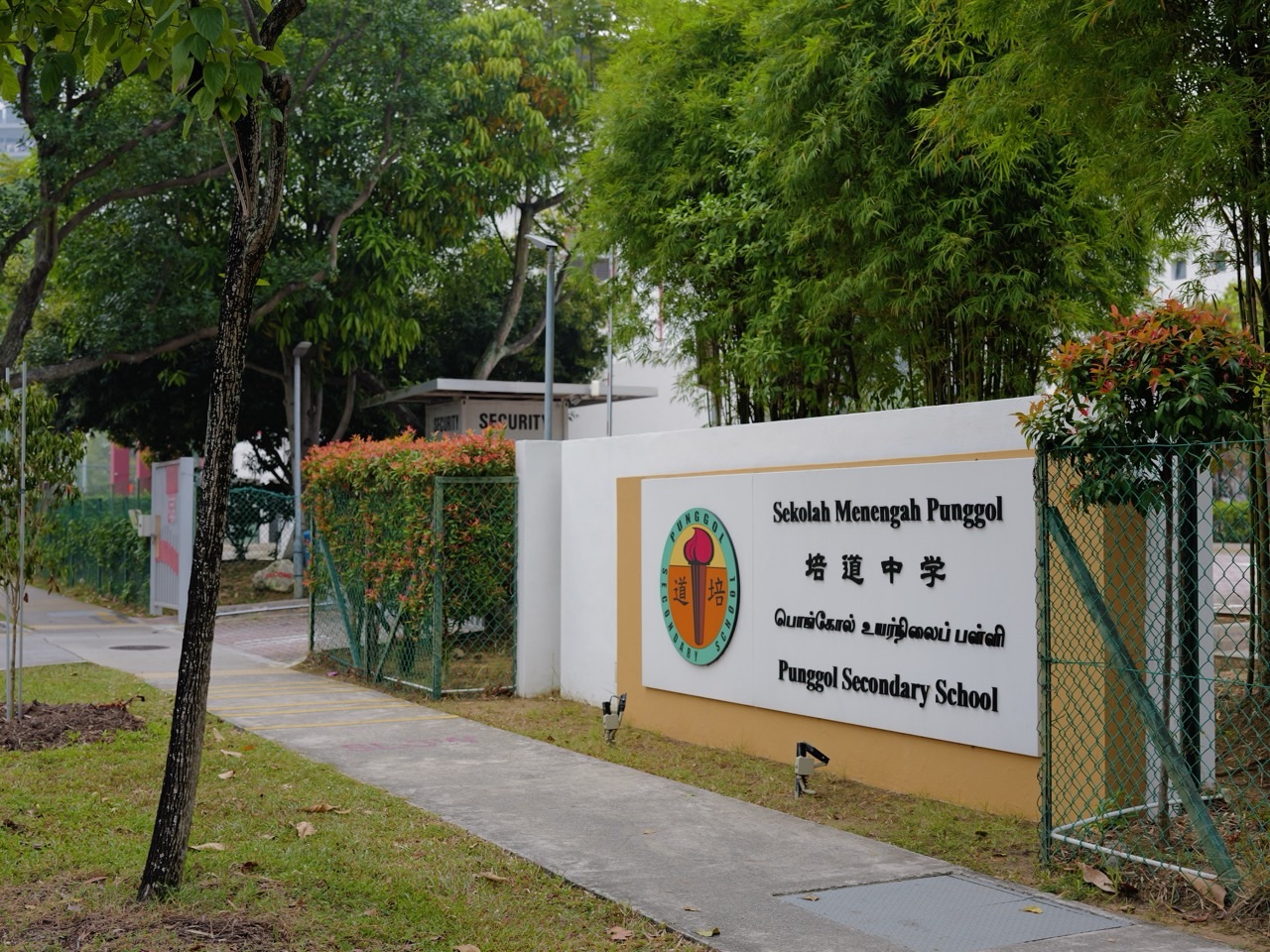
Punggol Secondary is at 51 Edgefield Plains, Singapore 828870. Its environment and community leadership programmes provide meaningful learning connected to nature, sustainability and service. Outdoor exploration may feature in some learning experiences, but the school should be asked about actual Secondary 1 activities rather than assumed to operate a particular camp format.
A student who enjoys plants or environmental study but is nervous about overnight stays may still be drawn to the school. Parents should distinguish day fieldwork, normal PE and a residential camp. Also check the ordinary subject levels and CCA choices. A school can support a child who enjoys nature without requiring the family to pretend that overnight concerns do not exist.
Yusof Ishak Secondary: smart-city learning and student leadership
Yusof Ishak Secondary is at 8 Sumang Walk, Singapore 828676. Its S4TEM@YI ALP includes practical STEM and sustainability, while its LLP develops student leadership. A parent should ask what outdoor, orientation or group experiences are included in the actual 2027 programme, especially if the child has particular concerns about unfamiliar people or physical challenges.
A school with a technology-based ALP is not automatically free of camps, and leadership programmes can include group activities beyond classroom lessons. Ask how the child is supported, whom they can speak to privately and how relevant health information is handled. The campus’s proximity to some western Punggol homes can also support daily routines, but ordinary home distance is not a school-posting priority.
The four schools’ previous admission figures
These are historical last-posted scores from the completed 2026 Secondary 1 intake following PSLE 2025, not guaranteed admission thresholds for 2027. They do not measure camp safety, student anxiety or how teachers respond to concerns.
| Punggol school | Past PG3 COP | Past PG2 COP | Past PG1 COP |
|---|---|---|---|
| Edgefield Secondary | 14 | 23 | 27 |
| Greendale Secondary | 16 | 23 | 27 |
| Punggol Secondary | 19 | 24 | 27 |
| Yusof Ishak Secondary | 15 | 22 | 27 |
A PG3 pupil scoring 18 who enjoys Greendale’s design programme but worries about adventure should note the school’s previous PG3 endpoint of 16 was more competitive than that pupil’s score. Punggol Secondary’s old PG3 endpoint of 19 was less stringent, while Edgefield 14 and Yusof Ishak 15 were also historically more competitive. These numbers inform admissions; they cannot tell the family which school has the best orientation support.
At PG2 score 24, Punggol Secondary was at its previous PG2 boundary while the other schools had prior values of 22–23. At score 25, the child may have a PG1/PG2 option requiring a separate comparison. A fear of camping cannot change the actual Posting Group admission rules. The child needs a sensible educational starting pace and realistic six-school list.
If the local Punggol schools offer too narrow a historically less stringent range, research other eligible schools in Sengkang, Hougang and practical nearby estates. The family can ask about outdoor experiences at those schools too instead of assuming all campuses offer an identical camp.
How to ask about safety without demanding a guarantee
| Parent’s concern | School question | What should not be promised |
|---|---|---|
| Sleeping away from home | Is the 2027 activity a day or overnight event, and what support is provided? | No school activity will ever require overnight participation |
| Heights or climbing | Which activities are planned and how are safety procedures applied? | Every child must complete an identical challenge |
| Water activities | What supervision, proficiency checks and approved safeguards apply? | Swimming ability or safety can be assumed |
| Food or medical needs | How are documented restrictions and emergency plans shared? | A generic form guarantees individual medical safety |
| Peer anxiety | Who helps a pupil who is new and worried? | The child will make close friends immediately |
| Privacy and hygiene | What toilets, changing and personal-care arrangements apply? | Every outdoor venue has identical facilities |
| Travel | What is the meeting point and safe return process? | Parents can infer arrangements from last year’s brochure |
A school can provide the general procedure before admission, but an individual medically informed adjustment may require confidential discussion after placement. Ask for the correct staff contact and relevant documents. A teacher cannot promise the same arrangement to all pupils with different health histories. When medical issues are involved, the treating clinician’s current written guidance should be used.
If a child has a serious fear connected to an earlier traumatic experience, persistent distress or another significant need, seek appropriate school or qualified professional support rather than expecting a single outdoor camp to cure it. Likewise, ordinary initial worry does not automatically require a diagnosis. The family should respond to what is actually happening.
A three-week preparation plan after school posting
Week one: make the unfamiliar concrete
Read the receiving school’s official orientation and camp instructions with the child. Identify where the day begins, who will be supervising, what to bring and how the pupil can ask a question. If details are not yet available, write down what remains unknown and ask the school rather than imagining worst-case situations.
Week two: practise one manageable independence skill
Depending on the concern, practise packing a bag, preparing toiletries, asking a trusted adult for help or reading a simple route. A pupil nervous about sleeping away may benefit from discussing normal evening routines and what the school’s current support will be. Do not require an unsupervised overnight trial or other unsafe activity to prove courage.
Week three: discuss safety and participation honestly
Ask the child what they would do if they felt unwell, confused or frightened during a group activity. Identify the approved school contact and help-seeking procedure. Remind the pupil that following safety instructions and reporting discomfort are responsible behaviours. The goal is calm preparation, not a forced promise to enjoy every challenge.
After the event, encourage reflection: what was enjoyable, what was hard, whom did the child meet and what would help next time? A pupil may gain confidence gradually even if the first experience was imperfect. The family should remain open to feedback from teachers and the child.
What about allergies, asthma or other documented needs?
A parent should not decide whether a pupil can take part in kayaking, climbing or another activity based on a generic article. Share relevant clinical information through authorised school channels and follow current medical guidance. Ask about emergency contacts, prescribed medication arrangements, food, weather and supervision. A child’s privacy should be protected.
An individual health need should neither be ignored nor used to make unsupported claims that an entire school is unsafe. The correct question is what the school and family can agree on for the pupil’s specific circumstances within applicable requirements. Medical clearance or an appropriate activity adjustment must come from the right professionals.
Questions to ask before ranking a school
- Which outdoor education experiences are part of normal Secondary 1 learning in 2027?
- Which are day events, residential cohort camps, selected CCAs or special DSA commitments?
- What supervision, risk assessment and weather protocols apply to planned activities?
- How are pupils introduced gradually to unfamiliar tasks?
- What does the school do when a child is worried about heights, water or staying overnight?
- How can parents share a documented health or accessibility concern privately?
- What is the emergency contact and family communication process during an activity?
- Can children ask for help without being publicly embarrassed?
- Which programme commitments can be confirmed on results day and which after posting?
- Does the school also fit the child academically and socially beyond outdoor learning?
Six-school decision checklist
- Read the official PSLE total and personalised Posting Group options.
- Separate the child’s outdoor worry from formal school eligibility.
- Check each school’s current ALP, LLP, CCA and orientation information.
- Do not confuse a selected DSA outdoor programme with ordinary school-wide PE.
- Ask about safety, gradual preparation, student wellbeing and necessary individual support.
- Use historical 2026-entry cut-offs in the correct PG1, PG2 or PG3 column only.
- Include two or three schools with previous cut-offs less stringent than the child’s score where suitable.
- Test ordinary morning and late activity travel from the Punggol home.
- Rank six schools the child could genuinely attend and grow in.
- Submit through the MOE S1 Portal before the deadline and retain confirmation.
Ordinary S1 Posting first considers academic merit; relevant equal-score ties are resolved through citizenship, choice order and computerised balloting. Living near the school is a suitability factor, not an automatic posting advantage. Neither choosing a school for its LLP nor avoiding it because of camp anxiety overrides these rules.
PSLE results and the official 2026 choice timetable
| Event | Announced timing |
|---|---|
| 2026 PSLE result release | Tuesday, 24 November at 11.00am |
| MOE S1 Portal opens | 24 November at 11.30am |
| School-choice deadline | Monday, 30 November at 4.30pm |
| Posting results | Tentatively Friday, 18 December; final date to be confirmed |
SEAB confirmed the timetable in its 17 November 2026 release. Use the MOE S1 Portal for the ordinary exercise; families needing help should contact the primary school before closing time.
Frequently asked questions
Is Greendale the only Punggol school with outdoor learning?
No. Greendale has a distinctive Outdoor Adventure LLP, but national outdoor education is part of secondary PE, and other schools may organise outdoor learning and camps. Compare specific school activities.
Does every Greendale pupil join ODAC or Canoeing?
No automatic conclusion follows. The school-wide LLP, selected CCA and DSA outdoor talent route have different arrangements. Ask the school about actual access and commitments.
Can a pupil skip all outdoor activities because they are nervous?
Do not assume a blanket exemption. The school can explain programme expectations and support; documented medical or special needs require appropriate individual discussion.
Do all four Punggol schools have a three-day overnight Sec 1 camp?
There is no verified single identical 2027 schedule across all four schools. Ask each receiving school for its current orientation and camp details.
Should we choose a school solely by its camp programme?
Not solely. Academic subjects, learning support, CCAs, school culture and daily travel will affect the child far beyond one activity.
What if the child remains very distressed?
Contact relevant school personnel and seek qualified professional support where appropriate. Parents should distinguish ordinary nervousness from persistent distress or a documented individual need.
Official references and related eduKate guides
- MOE: secondary Outdoor Education curriculum and risk management
- Greendale: Outdoor Adventure Learning for Life Programme
- Greendale: Outdoor Adventure Club as a selected CCA
- Greendale: separate DSA Outdoor Adventure route
- SEAB: official PSLE 2026 and Secondary 1 dates
- MOE SchoolFinder: school programmes and historical cut-offs
- eduKate Punggol: meeting new classmates and navigating orientation
- eduKate Punggol: individual medical plans, outdoor activities and school communication
Parent conclusion: A child who worries about camps still deserves a broad, appropriately challenging and supportive secondary education. Outdoor learning should be understood in terms of actual curriculum, safety, adult supervision and individual needs—not a blanket promise or a bravery test. Use the correct Posting Group, honest historical scores and real school fit to choose six schools where the pupil can learn and belong.


