
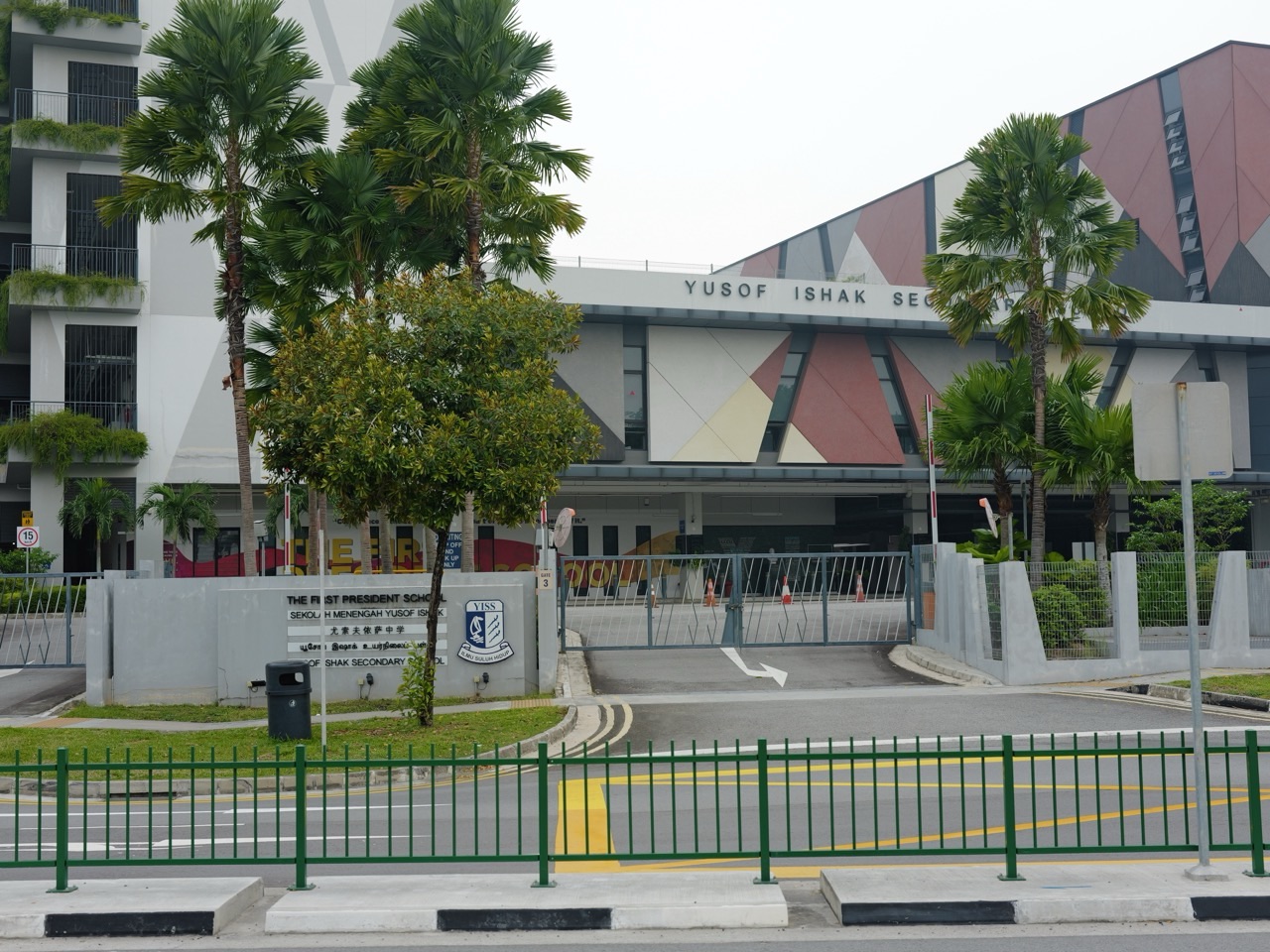
For a Punggol child with PSLE Score 25, Yusof Ishak Secondary School is an eligible mainstream school to investigate if the family considers Posting Group 2 (PG2), but the completed 2026-entry PG2 last-posted score was 22—three points more stringent than Score 25. It is therefore not a historical matching or safe PG2 choice for the 2027 intake. The school’s address is 8 Sumang Walk, Singapore 828676. Its distinctive experiences include S4TEM@YI: STEM for the strategic development of a sustainable and smart city and YI LEAD+: Honourable Leaders for Tomorrow and for the Greater Good. None of those strengths can guarantee admission.
Score 25 ordinarily offers a decision between PG1 and PG2; the selected group applies across all six ordinary school choices. Parents need to consider whether this school suits their child’s subject readiness, personality, support needs and everyday journey before ranking it. The 2026 PSLE results are released at 11.00am on Tuesday 24 November. The S1 Portal opens at 11.30am on that date, and the six-choice submission closes Monday 30 November 2026 at 4.30pm. The final 2027-entry school cutoff is unknown until the new posting exercise is completed.
- Score 25: eligible ordinary choice between PG1 and PG2, with one group for all six schools.
- Yusof Ishak Secondary School: 8 Sumang Walk, Singapore 828676.
- 2026-entry PG2 last-posted: 22; three points historically more stringent than Score 25.
- 2026-entry PG1 last-posted: 27; relevant only if selecting PG1, not PG2.
- Applied Learning Programme: S4TEM@YI: STEM for the strategic development of a sustainable and smart city.
- Learning for Life Programme: YI LEAD+: Honourable Leaders for Tomorrow and for the Greater Good.
- What parents must check: the child’s actual subject ALs, G2 teaching, programme access, CCAs, wellbeing, daily travel and realistic alternatives.
- Deadline: submit the selected group’s six preferred schools before 30 November 2026 at 4.30pm.
At a glance: Yusof Ishak Secondary School and PSLE Score 25
| Parent question | Verified starting point |
|---|---|
| School location | 8 Sumang Walk, Singapore 828676 |
| School type | Mainstream secondary school, Punggol |
| Previous PG2 last-posted score, 2026 S1 intake | 22 |
| Score 25 versus this prior PG2 cutoff | three points numerically less competitive than the prior boundary |
| Previous PG1 last-posted score | 27 (separate group) |
| Published ALP | S4TEM@YI: STEM for the strategic development of a sustainable and smart city |
| Published LLP | YI LEAD+: Honourable Leaders for Tomorrow and for the Greater Good |
| Core admission policy | Official 2026 PSLE result and MOE S1 Portal |
| Key dates | 24 November 2026 results; 30 November 4.30pm closes six choices |
The previous-year numbers are based on the completed Secondary 1 intake for 2026, after the 2025 PSLE. They do not constitute the cutoff that will eventually emerge for students entering in January 2027. Read the selected Posting Group column, not a more favourable PG1 or PG3 column, at MOE SchoolFinder. For the school’s own present emphasis, see Yusof Ishak Secondary School’s official programme information and its related official school information.
The word “best” in the headline means a potentially good fit for a specific child, not a ranking of teaching quality. A previous cutoff measures where a place was last allocated in one exercise. It does not show whether individual pupils feel supported, what happens when a student struggles or how much learning takes place in ordinary lessons. Those questions require current school information and a conversation with your child.
Who is this school genuinely for?
The child most likely to be interested is a child who enjoys understanding how cities work, sustainability, technology and responsible leadership. That is only a starting hypothesis for family discussion, not a personality test. Ask the pupil what part of the programme they would want to spend time doing, whether they like working with others, and how they react when a first attempt fails. Curiosity and responsibility are more useful than a vague attachment to a famous school name.
A parent should also ask what the child finds hard. One pupil may enjoy the programme yet struggle to read long instructions. Another may have sound Mathematics reasoning but feel uncertain speaking in a new class. A third may be eager for CCAs but exhausted by public transport. These are different support questions, and a PSLE aggregate of 25 cannot distinguish them.
When families discuss school culture, the strongest questions are specific: How are new Secondary 1 students welcomed? Who gives feedback when work is poor? What is the process if a student is isolated? How do children from different primary schools make friends? An attractive programme is not automatically the right everyday environment.
An independent school’s or mainstream school’s numerical prestige should not decide a child’s sense of belonging. This family’s job is to combine the correct admission rules with a place where the student could genuinely participate and develop knowledge, rather than forcing the child to prove their worth through the least attainable preference.
Smart-city STEM begins with the question ‘who benefits?’
Yusof Ishak Secondary’s official Applied Learning Programme is S4TEM@YI—STEM for the Strategic Development of a Sustainable and Smart City. The school connects technology and environmental enquiry with questions about the community, rather than teaching one isolated technical skill. This may attract a pupil curious about transport systems, urban farming or how technology can improve daily living.
The published 2026 programme explicitly mentions schoolwide exposures in urban farming, coding and aeronautics. Parents should ask how an ordinary Secondary 1 student encounters these topics and which activities are linked to particular modules or year levels. A schoolwide introduction is different from a guaranteed place in an advanced robotics team.
A smart city is not only a collection of sensors and machines. A pupil can ask whether a system works for older residents, whether it wastes energy, how its performance should be measured and what happens when a technical solution fails. These are useful interdisciplinary questions that bring English, Mathematics, Science and civic judgement together.
The child who enjoys technology may also need encouragement to slow down and explain evidence rather than jump to a preferred gadget. A parent’s useful question is how teachers help pupils compare competing solutions and evaluate trade-offs. An attractive sustainability programme should develop reasoning, not only enthusiasm.
Urban farming and the AgriSphere context
The school describes urban farming as a regular learning context, including care for vegetables grown in soil and hydroponic systems. Its 2024 programme highlights included the development of AgriSphere lab and garden learning spaces. These details provide tangible examples of how ecological knowledge and technology can interact in school life.
A pupil may ask what conditions help plants grow in different systems, what is measured and how to interpret conflicting results. That kind of inquiry can train scientific observation and data judgement. Parents should ask whether all pupils experience the same fieldwork or whether some enrichment and competition teams receive deeper access to the facilities.
Gardening may seem unrelated to a child who wants to become an engineer, but it provides an authentic system with inputs, constraints and feedback. Likewise, a pupil interested in environmental service may enjoy the community value of growing food while discovering the importance of measurement.
Do not turn a 2024 showcase into a fixed promise for the 2027 incoming cohort. School facilities, programmes, partnerships and specific activities should be reconfirmed with current school staff.
STEMx IPW: learning across subject boundaries
Yusof Ishak Secondary also describes STEM Experiences through Inter-disciplinary Work (STEMx IPW). The school presents it as a way to learn about complex STEM issues that are not confined to one subject, with links to the Singapore Green Plan and sustainability themes.
For a child, interdisciplinary work can be demanding. A project may require reading a public issue, using simple calculations, applying a Science concept and explaining why an action is reasonable. Parents can ask how teachers support pupils who understand the technical idea but struggle with report writing or group discussion.
External experts, research agencies, tertiary institutions and learning journeys appear in the school’s programme material. The school lists past collaborations with organisations including A*STAR, Singapore Institute of Technology and SUTD, as well as STEM clubs and robotics CCAs. These details show possible enrichment; they should never be advertised as universal internships or guaranteed selection for every student.
The child’s underlying interest is more important than the existence of a prestigious partner name. Ask which normal Secondary 1 experiences will be part of the 2027 timetable and which specialised activities are optional or selected.
YI LEAD+: the moral dimension of technical capability
The school’s Learning for Life Programme is YI LEAD+, which aims to nurture honourable leaders for tomorrow and for the greater good. Its official 2026 description emphasises gratitude, respect, integrity, teamwork, communication, critical thinking and ethical decisions. This helps parents understand that the school’s identity is not STEM alone.
Students are given opportunities for leadership workshops, dialogue, reflection and service work, with further experiences for student leaders. These may strengthen the ability to listen, contribute and make responsible choices. Parents should ask what the whole cohort receives and what is restricted to selected officeholders or particular projects.
A child who is shy may still contribute through careful planning, responsible research or helping younger pupils. A family should ask how leadership is developed in every student, rather than promising the incoming pupil an election to a student-leadership board.
A project that improves the community requires empathy as well as technical skill. A pupil designing a better environment should consider who is affected and what can go wrong. This can make YI LEAD+ and S4TEM@YI complementary learning experiences rather than disconnected brands.
Score 25 versus the old PG2 cutoff 22
Yusof Ishak Secondary’s previous 2026-entry PG2 last-posted score was 22. This was three numerical points more stringent than Score 25—more than the one- or two-point historical gaps at the other three local Punggol schools. This is a clear admissions warning. The fact that the campus sits inside Punggol does not make it a guaranteed or historically matched PG2 place.
A family can still research Yusof Ishak as a sincere preferred school when the child enjoys its culture and learning opportunities, but should communicate that the old PG2 data did not reach Score 25. Its 2027-entry cutoff has not yet been determined and may vary with the new cohort; there is no basis to promise a three-point shift.
The school’s previous PG1 last-posted score was 27, but this is relevant only if the family chooses PG1 for the complete six-school preference list. PG1 and PG2 are different admission groups and generally correspond to different starting subject levels. The correct choice should follow the child’s actual readiness and real school options, not a tactic of borrowing a more comfortable-looking cutoff.
A family living near Sumang Walk may value the potential for a straightforward school journey, particularly after activities. Treat that convenience as a positive practical factor, separately from the uncertainty of gaining a PG2 place. A close address does not reserve a place.
Sumang Walk and the real route to school
The school’s official contact page confirms 8 Sumang Walk, near the Punggol and Soo Teck area, with references to Soo Teck and Sumang LRT stations. It lists bus services including 39, 43, 118 and 381 near Soo Teck, with additional routes at other nearby stops. These are grounded transport references, not a calculated travel time from a specific family’s home.
A child living around Matilda may use a different approach from a pupil near Northshore, Punggol Field or Punggol Coast. Parents should confirm the actual morning student gate and test the journey at a realistic reporting hour. A straight-line map can underestimate waiting, crossings and the last walk.
If the child joins the STEM Club, Robotics Club or another CCA, ask about beginner allocation, selection and actual dismissal time before deciding how they will travel home. A technically exciting school is only a good fit when the pupil can sustain its daily routine and build friendships alongside academic work.
Three pupils who could read the same school differently
The city-systems thinker
This child wants to know how transport, energy, resources and residents interact. S4TEM@YI may offer genuine questions for exploration, but parents should check whether the pupil enjoys careful data and explanation as well as ideas.
The family still needs to investigate Yusof Ishak Secondary School’s ordinary 2027 student timetable, not only the relevant theme. A pupil can thrive in a programme without possessing special primary-school certificates or competition awards. Likewise, a child who already knows a little about the field will need academic foundations, feedback and an approachable group of classmates.
The sustainability-minded team member
The child enjoys growing plants, learning ecology and helping the community. Urban farming and YI LEAD+ may be motivating. Ask how broad-based experiences differ from selected teams or leadership posts.
The family still needs to investigate Yusof Ishak Secondary School’s ordinary 2027 student timetable, not only the relevant theme. A pupil can thrive in a programme without possessing special primary-school certificates or competition awards. Likewise, a child who already knows a little about the field will need academic foundations, feedback and an approachable group of classmates.
The young technology enthusiast with uneven subjects
The student loves robotics but finds some algebra or English comprehension challenging. The family should ask how ordinary G2 lessons and project work are scaffolded, and whether the school can offer appropriate subject levels according to actual PSLE ALs.
The family still needs to investigate Yusof Ishak Secondary School’s ordinary 2027 student timetable, not only the relevant theme. A pupil can thrive in a programme without possessing special primary-school certificates or competition awards. Likewise, a child who already knows a little about the field will need academic foundations, feedback and an approachable group of classmates.
Why the school-choice label and subject levels are not the same
Under Full Subject-Based Banding, Posting Groups support Secondary 1 admissions and guide most initial subject levels. Students are in mixed form classes and may take individual subjects at a different G level if they meet the applicable criteria and their school offers the arrangement. A Score-25 child ordinarily chooses PG1 or PG2 at admission, and that choice applies to all six ordinary school preferences.
PG2 usually leads to most starting academic subjects at G2; PG1 usually leads to G1 for most. This does not mean the child can never study a different level. Ask the eventual receiving school what the pupil’s individual English, Mathematics, Science and Mother Tongue Achievement Levels make possible, and when those offerings are confirmed. Do not promise G3 Mathematics from an aggregate score alone.
The parent should compare two complete plans when the child is eligible for two groups. Each plan needs six genuinely acceptable schools using that group’s historical ranges, as well as an honest account of teaching pace, support, transport and the child’s interests. A family may prefer PG2 educationally yet find its local previous-year cutoffs more competitive; the decision should be deliberate, not based on embarrassment about PG1.
The Singapore-Cambridge Secondary Education Certificate replaces the older stream-separated national examination arrangement from 2027. Later post-secondary routes depend on subjects, grades, levels and the rules applying when the child reaches them. A school or Posting Group chosen now cannot guarantee a later JC, polytechnic, PFP or ITE outcome.
Why the six-school choice list needs honest numerical comparisons
The official Secondary 1 exercise uses six ranked school choices. Parents should put down schools the child would really attend rather than fill the form with names that appear impressive. The ordering matters when applicants with the same score compete for final places, but it is not a device for overriding PSLE merit or the school’s actual group eligibility.
Within the completed 2026 S1 intake, no regular PG2 last-posted cutoff was numerically higher than 25. MOE generally encourages two or three schools with less stringent previous cutoffs, but a Score-25 PG2 family cannot manufacture such a numerical buffer from that historical range. A previous cutoff of 25 is an exact boundary, not a safe one; a previous cutoff of 24 or 23 was more stringent for this score.
Regionally, parents may investigate Yuying, Serangoon Secondary, Peicai, Meridian or other schools that previously had a PG2 last-posted score of 25. Their programmes and commutes differ substantially, and this is an investigation set rather than an automatic six-choice ranking. Some families might reasonably choose a local aspirational campus above one with a matching historical boundary because of genuine preference, while still understanding that neither promises a place.
Where scores are tied at the final place, citizenship, the order of the chosen schools and computerised balloting may apply according to the official sequence. Published previous cutoffs do not disclose this year’s applicant mix, seats or final boundary. It is dishonest to claim a 70%, 90% or ‘guaranteed’ probability without valid real-time evidence.
School culture and wellbeing: ask for ordinary examples
Parents should ask who helps a pupil who arrives without friends, how form teachers notice isolation and how a child reports bullying or online harassment. A programme description can show an educational ambition, but it does not prove every student feels safe. Ask for the school’s actual process for handling concerns, providing counselling and arranging learning support where appropriate.
Learning may become difficult because of reading demands, unfamiliar algebra or multiple assignments across subjects. Ask how teachers return corrections and how a pupil can seek help. One school may have an attractive STEM or leadership theme but a child still needs patient explanation in ordinary lessons. A poor test should generate useful feedback, not become an identity.
Some students have learning, communication, attention or emotional support needs. Discuss those privately with the school, using appropriate existing documents and asking what current support can be offered. Do not infer the availability of a specific SEN officer, facility or adjustment from a general promotional page; provision must be confirmed for the individual pupil.
CCAs can build belonging, but participation rules, tryouts, rehearsal or practice hours and fees vary. Confirm what is offered to beginners and how the child will return home when activities end late. The strongest school fit is a weekly environment the pupil can manage for years, not a campus that made the best first impression at an open house.
The first month of Secondary 1: a practical family plan
After official posting, read the receiving school’s actual reporting instructions, booklist, uniform guidance, financial-assistance information and communication channels. Avoid buying expensive or school-specific materials before a place is confirmed, particularly when applying for financial help. Some families will also need to practise a public-transport route and identify the correct student entrance.
In the weeks before Secondary 1 starts, a modest learning routine is enough: practise reading a short explanation and using evidence, review fractions and the balance principle in algebra, and discuss how experiments depend on observations and fair comparisons. A child who has been through PSLE also needs rest, friendships and family activities. Overloading the holiday with advanced classes may leave the pupil exhausted rather than prepared.
In the first two weeks, focus on the timetable, a trusted adult at school, one or two developing friendships and the way to record assignments. Ask the child what lesson made sense and what was confusing instead of demanding a daily list of class rankings. A teenager who is comfortable asking for help has already made an important transition.
By the end of the first term, assess whether the actual subject levels, travel, CCA and homework routine remain sustainable. If the child is consistently struggling or anxious, seek specific school feedback early. The goal is steady progress and increasing independence, not proof that the PSLE score was ‘right’ or ‘wrong’.
How the real Punggol journey changes the comparison
Start at the actual family block, not at an assumed central MRT station. Punggol Coast and Northshore may have different first-stage journeys from Oasis, Matilda, Waterway Point, Punggol Field or Sumang. The nearest school on a map is not necessarily the simplest route, and no article can responsibly invent a single door-to-gate travel time for every household.
Check 8 Sumang Walk, Singapore 828676 on the school’s own official contact information, confirm which gate students use and practise a school-day morning journey at the intended departure time. Count walking, traffic crossings, waiting, transfers and the final approach. An open-house journey made by car on a Saturday may hide an awkward weekday route for a twelve-year-old travelling alone.
Repeat the test for a late CCA dismissal. If the child carries sports equipment or works on a project after normal lessons, the return route may be different. Ask whom the pupil should contact during a transport disruption and whether a safe alternative exists. Sustainable sleep, food and family time are part of educational fit, not separate administrative details.
A short journey to Yusof Ishak Secondary School is a genuine positive factor for some Punggol families, but it does not change the official admissions score or create priority for living nearby. Keep location suitability and admission probability as two separate questions. The child needs both a realistic school place and a workable daily life.
The official 2026 results and S1 posting calendar
| Event | Singapore date and time | Parent action |
|---|---|---|
| PSLE result release | Tuesday 24 November 2026, 11.00am | Collect the official result; review group eligibility and individual subject ALs. |
| Online S1 choice window opens | Tuesday 24 November 2026, 11.30am | Use a valid Singpass and consider six genuinely acceptable schools. |
| S1 Portal closes | Monday 30 November 2026, 4.30pm | Submit the final ranked list and save confirmation. |
| S1 posting outcome | Tentatively Friday 18 December 2026 | Check MOE’s later confirmation and follow the receiving school’s reporting instructions. |
The dates above are confirmed or designated tentative, as applicable, by SEAB’s 17 November 2026 results notice. The online submission requires one parent’s valid Singpass; parents who need help should contact the student’s primary school before closing time. The December date is tentative until a later official update.
An accepted DSA-Sec place or specialised admissions route may follow different rules. If such a placement applies, follow the primary school’s and MOE’s specific instructions rather than making a second ordinary application from a generic article. Keep family communication calm: selecting a school is not the same as having secured that place.
Frequently asked questions about Yusof Ishak Secondary School at Score 25
Is Yusof Ishak Secondary School safe for PG2 Score 25?
No. Its 2026-entry PG2 cutoff was 22, three points more stringent than Score 25. The forthcoming 2027-entry result is not known, so there is no guaranteed offer.
Can we still put Yusof Ishak Secondary School on the list?
Parents may research and list eligible schools they genuinely prefer, but must treat its previous PG2 cutoff of 22 as a warning rather than a safety match. Rank a complete list of acceptable schools.
Does Score 25 allow PG3?
No, not under the ordinary current score bands. A Score-25 pupil is usually offered PG1 or PG2. Check the student’s actual results and individual circumstances.
Can we mix three PG2 schools and three PG1 schools?
No. A child with a two-group option chooses one Posting Group for the whole six-school ordinary submission.
Would selecting PG1 make this school’s historical range more favourable?
Its previous PG1 last-posted cutoff was 27, a different numerical comparison from the PG2 cutoff of 22. This is not a promise of admission and should be weighed with the child’s suitable subject start.
Is a lower previous cutoff proof of better teaching?
No. Cutoffs reflect how places were allocated to applicants in a particular cohort. They are not an independent quality rating.
Can a PG2 pupil take a G3 subject?
Possibly when the individual PSLE subject result and MOE/school eligibility conditions permit. The aggregate Score 25 alone does not grant it.
Will the school’s ALP guarantee a particular career?
No. The ALP develops interests and capabilities. Later professional education and work require separate qualifications and choices.
Does a nearby Punggol home guarantee a place?
No. A convenient commute may improve everyday fit but does not create a blanket proximity entitlement in ordinary S1 posting.
What if the school has a selected CCA or special programme?
Ask which activities are offered to all pupils and which involve trials, merit, year-level requirements or limited capacity.
What if the child needs learning support?
Contact the prospective school about the pupil’s actual needs and available help. Keep sensitive information private and verify arrangements.
What happens if the school is not allocated?
Read the official posting, keep the assigned place secure and investigate any legitimate appeals under the current rules. No appeal or transfer is guaranteed.
Should the parents pay for extra tuition now?
Only if a specific educational gap is evident and support is appropriate. Avoid premature advanced study merely to justify a desired posting group.
When can we rely on the next cutoff?
The eventual 2027-entry last-posted outcome will be known only after the 2026 S1 posting process is completed and the relevant official data are released.
Final parent action list before 30 November
- Confirm the official Score 25, individual PSLE Achievement Levels and the ordinary PG1/PG2 option.
- Use the correct 2026-entry PG2 historical cutoff of 22 for Yusof Ishak Secondary School, without treating it as a 2027 promise.
- Read Yusof Ishak Secondary School’s official 2026 programme information and ask what the incoming cohort actually does.
- Ask about ordinary G2 English, Mathematics and Science support, and which subject-level variations are genuinely available.
- Compare the child’s interests, wellbeing, cultural fit and CCA options without using a past cutoff as a quality rating.
- Test the actual home-to-school journey to 8 Sumang Walk, Singapore 828676, including a late CCA return.
- Construct six genuine school choices under one selected Posting Group; consider the PG1 alternative carefully if the PG2 list is not workable.
- Use the official S1 Portal and submit before Monday 30 November 2026 at 4.30pm.
- Keep the posting acknowledgement, await the confirmed result and follow the receiving school’s actual induction instructions.
Parent conclusion: Yusof Ishak Secondary School offers a distinctive focus on smart-city STEM, urban farming and honourable community leadership. That may be a strong educational match for an individual child. But a Score-25 PG2 family must not present this Punggol campus as safe when its previous PG2 cutoff was 22. The useful choice combines educational interest, actual support, daily travel and honest admissions uncertainty.
Continue with the Score-25 PG2 master Punggol school finder, the Score-25 PG1 versus PG2 parent decision guide, the six-school preference risk guide, the local pairwise school comparison and the wider north-east regional school shortlist. For authoritative facts use MOE SchoolFinder, MOE’s Full SBB guidance and MOE Secondary 1 Posting.
Editorial verification: 19 November 2026. The score ranges quoted concern the 2026 Secondary 1 intake (PSLE 2025), not the uncompleted 2027-entry posting. School programmes and arrangements were checked against published 2026 school information but should be confirmed for the incoming year. This is a parent guide to school fit, not an admission prediction, quality ranking or promise of a specific later pathway.


