
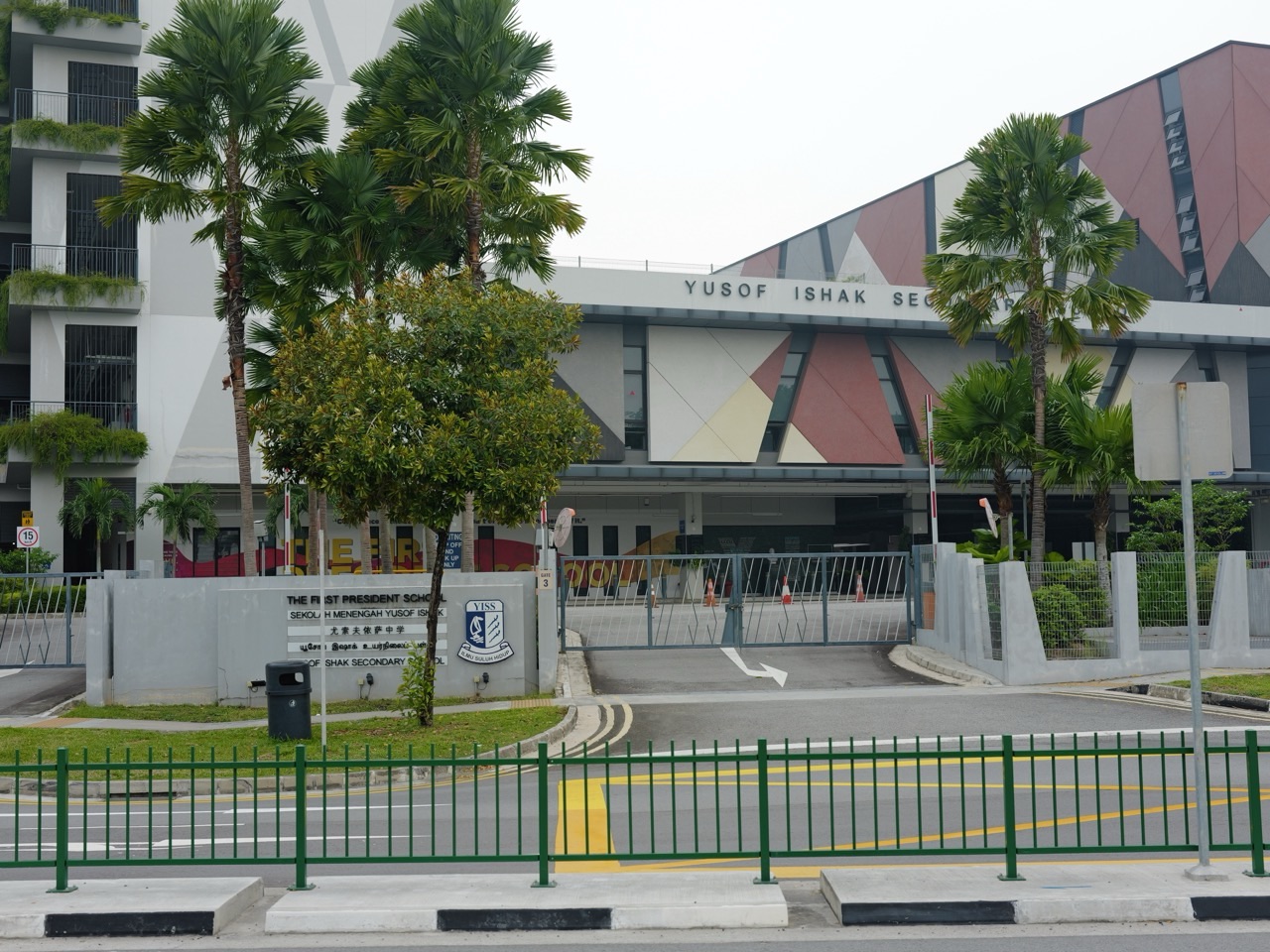
For a Punggol pupil who receives PSLE Score 25, the Secondary 1 decision begins with a real choice: Posting Group 1 (PG1) or Posting Group 2 (PG2). PG2 generally starts most subjects at G2, while PG1 generally starts most at G1. Yet a Score-25 family must also compare actual school opportunities: the four mainstream Punggol schools recorded 2026-entry PG2 last-posted scores of 22–24, but all four recorded a PG1 last-posted score of 27. Choosing PG2 is legitimate, but it can make the local school list less attainable on historical figures.
Do not choose a posting group as a reward or a stigma. The practical task is to check the child’s four PSLE subject Achievement Levels, learning independence, need for support, acceptable travel and genuine school interests, then choose one group for all six school choices. The 2026 PSLE result is released on 24 November at 11.00am; choices begin at 11.30am and close 30 November 2026 at 4.30pm. This guide provides a decision framework, not a promise of school admission or a recommendation that every Score-25 child should enter the same group.
- Score 25 ordinarily gives a PG1/PG2 option; Scores 26–30 are not ordinary PG2 choices and need the stated English/Mathematics condition for PG1.
- A single selected Posting Group applies across the whole ordinary six-school choice list.
- PG1 generally starts most subjects at G1; PG2 generally starts most subjects at G2, subject to Full SBB differentiation.
- Four Punggol schools’ 2026-entry PG2 historical COPs: 22, 23, 23 and 24; PG1 COPs: 27 at all four.
- Only PG1 has a historically less stringent local numerical comparison at Score 25; neither group guarantees a school place.
- Review individual English, Mathematics, Science and Mother Tongue ALs and the child’s coping strategies, not only the aggregate.
- Ask primary and receiving schools about subject-level options, support, school culture and real commutes.
- Compare two full six-school lists privately before selecting the group through the MOE S1 Portal.
What the school-choice group decides—and what it does not
Under Full Subject-Based Banding, a Posting Group has two main functions: helping allocate places at Secondary 1 and guiding the usual subject levels at the beginning of secondary school. It is not the child’s identity or a permanent academic stream. Once pupils start secondary school, they experience mixed form classes and may study individual subjects at different G levels according to their learning needs and eligibility.
This matters because parents sometimes hear that PG1 means a child can never learn G2 Mathematics or access a broad post-secondary route. That is misleading. A pupil entering PG1 may be eligible to offer particular subjects at G2 or G3 under MOE’s subject-specific provisions; further changes can be considered from secondary performance. Conversely, PG2 is not permission to ignore a child who has gaps in primary numeracy, reading or organisation.
The question is about starting readiness. A child who still loses the meaning of a long English question may find G2 work challenging even if they can memorise routine answers. A child who reads independently and enjoys investigating scientific ideas may feel ready for a more demanding pace. Neither observation can be reduced to whether the aggregate total is exactly 25.
Parents also need to understand that the group they select applies to all six ordinary S1 choices. A family cannot place three PG2 schools, then three PG1 schools, and assume MOE will decide the best of the two lists. Choose the group first, then evaluate and rank six eligible, acceptable schools under it.
Why Score 25 is a special boundary
| PSLE score | Ordinary Posting Group option | What it means for this decision |
|---|---|---|
| 21–22 | PG2 or PG3 | Different two-group choice; not directly comparable to a Score-25 situation. |
| 23–24 | PG2 | Children in this band normally do not have a PG1 choice. |
| 25 | PG1 or PG2 | The family chooses its starting route for all six schools. |
| 26–30 | PG1 if English and Mathematics meet AL7-or-better requirement | Not an ordinary PG2 option; additional conditions must be checked. |
| 31–32 / no qualifying group | No ordinary PG1–PG3 posting | Seek official primary-school guidance about alternative educational routes. |
A Score-25 child is not “almost PG2” or “forced into PG1”. Both options are open through the ordinary score table, and the decision deserves time. Parents may feel pressure from relatives or friends to select the academically more demanding starting level without checking whether the child can do well. Others may feel pressured to select the group with the most favourable previous cutoffs even when the child wants additional subject challenge.
A useful first conversation with the child is: “Which parts of primary school made you feel confident? Which tasks did you find difficult even when you tried? What school day do you think you can manage?” This produces educational evidence. “What school is most famous?” and “Where did your best friend go?” may be interesting but do not substitute for a readiness discussion.
School access: why the historical cut-offs look so different
| Punggol school | 2026-entry PG2 COP | 2026-entry PG1 COP | Practical meaning at Score 25 |
|---|---|---|---|
| Edgefield Secondary | 23 | 27 | PG2 was two points more stringent; PG1 two points less stringent. |
| Greendale Secondary | 23 | 27 | PG2 was two points more stringent; PG1 two points less stringent. |
| Punggol Secondary | 24 | 27 | PG2 was one point more stringent; PG1 two points less stringent. |
| Yusof Ishak Secondary | 22 | 27 | PG2 was three points more stringent; PG1 two points less stringent. |
The numbers are historical last-posted scores from the completed 2026 Secondary 1 intake, which arose from the PSLE 2025 cohort. They are not set cutoffs for 2027 entry. They do show why it is irresponsible to tell a family that choosing PG2 will automatically keep their child inside Punggol. At Score 25, all four local PG2 numerical comparisons were outside the previous boundary. The same schools’ old PG1 figures were less stringent numerically, although never a guarantee.
If the family is strongly drawn to PG2, it needs a credible list of acceptable schools with the correct PG2 admissions history. Outside Punggol, some schools—such as Yuying, Serangoon Secondary, Peicai, Meridian, Serangoon Garden and Loyang View—recorded prior PG2 last-posted scores of 25. These were boundary matches, not available safe options. The family should check whether any of the routes is sustainable and whether the child genuinely wants to attend.
PG1 offers a different numerical picture. Edgefield, Greendale, Punggol and Yusof Ishak each recorded previous PG1 cutoff 27. A child with 25 is two points numerically stronger than that historical boundary, which may make a local shortlist more viable. However, if the pupil’s strongest reason to choose PG2 is sound educational readiness, the family still needs to explore the trade-off carefully. Last year’s cutoff cannot decide a child’s preferred curriculum.
A lower number in the historical table means a more stringent prior cutoff, not a better school. There is no national ranking of teaching quality hidden in these columns. A good fit could mean academic challenge, a welcoming learning environment, a CCA that sustains participation, structured guidance for a hesitant learner, or a safer shorter commute. The full Score-25 PG2 school finder compares the PG2 options in detail.
Look inside the four subject Achievement Levels
The PSLE aggregate is the sum of four subject Achievement Levels, but it hides how unevenly a pupil may perform. For the PG1/PG2 decision, parents should look separately at English, Mathematics, Science and Mother Tongue, including any Foundation-grade mappings. Ask what the child understands, not merely which AL they received. Two children can each score 25 but have very different strengths.
A strong Mathematics result alongside weaker reading comprehension is a different learning profile from a pupil who writes clearly but struggles with fractions, negative numbers and word problems. In the former case, subject-level mathematics challenge may be worth asking about while also building reading; in the latter, targeted mathematics support may matter more than a blanket demand for a higher level across every subject.
Under the published Full SBB principles, a pupil entering with most subjects at G2 may qualify for a specific G3 core subject when the relevant PSLE subject AL is strong enough. A pupil entering PG1 may qualify to take a specific subject at G2 or G3 if its own conditions are satisfied. Eligibility is determined by the official subject rules and school placement, not by this article’s aggregate-score examples.
Ask the receiving school when and how subject levels are confirmed, what happens when the student finds an offered higher level too demanding, how subject-level progression works after S1, and how teachers decide the appropriate balance of challenge and mastery. Do not announce to the child that a particular G3 placement is confirmed until it appears in official school arrangements.
A sensible home plan focuses on evidence: how precisely the pupil explains answers, whether they check algebra working, whether they can use vocabulary in context, and whether they understand experimental evidence. Adding more tuition hours is not a substitute for understanding which specific concepts are weak. Build the foundation that supports sustained learning at whichever levels are offered.
Five child profiles: different families may reach different answers
A pupil who learns steadily but needs more time to read
This child often understands a worked example but is slow to parse unfamiliar passages. A family considering PG2 should ask whether the student can sustain the reading and written explanation across several subjects at once. PG1 might be appropriate for mastery, and a higher subject level may still be possible in areas of strength. A slow reader is not a lazy child; specific instruction and realistic pacing matter.
Ask teachers whether the difficulty is vocabulary, decoding, comprehension, attention or organisation. These call for different kinds of support. A school with calm instructions and feedback may matter more than an impressive specialised programme.
An independent child who enjoys academic challenge
This pupil finishes tasks carefully, seeks explanations and is motivated by difficult problems. PG2 may be a worthwhile starting option if a realistic school list exists, the child understands the greater demand and parents have checked both curriculum fit and travel. Do not infer that every Score-25 child has this readiness, or that confidence at one primary subject predicts all secondary subjects.
A parent should also investigate whether PG1 with eligible higher-level subjects could provide adequate challenge in a school that is a better cultural and geographical fit. Comparing alternatives is not a judgement about the child’s ambition.
A pupil with strong practical and creative interests
This child loves experiments, making, food science, engineering or community projects. Both PG1 and PG2 schools can offer Applied Learning and Learning for Life programmes. Ask whether those activities are available to all students and how much of the experience is project-based. A child may thrive with practical relevance without needing a specific group label to validate their interests.
Do not assume G1 is automatically practical and G2 is automatically theoretical. Investigate each school’s real curriculum and approach. The right programme is one the child can access, enjoy and sustain while progressing in English and Mathematics.
A pupil with additional learning or emotional needs
A family should check what school staff, counselling, learning support and accessibility are actually offered. PG2 may be suitable for some pupils with additional needs, but the family’s decision should be based on the child’s learning strengths, wellbeing and the real school’s provision. Some support arrangements vary across campuses, and prospective schools should confirm the current details.
Ask about transition planning, communication with caregivers, how difficulties are flagged early and what the school does when a student becomes overwhelmed. The group choice should not be used to hide a need or to make an exaggerated claim about ability.
A family with serious transport or caregiving constraints
A Punggol child attending a school in a different estate every weekday may face a longer day with multiple transport changes. If the family’s work patterns make emergencies and late CCA pickups difficult, a nearby PG1 school that fits the child educationally may be preferable to a more distant PG2 school chosen mainly for label. For another household with direct transport or caregiving support, the calculation may differ.
Commute is not the only factor, but it affects sleep, safety, recovery, homework time and wellbeing. Try the actual journey instead of assuming that a school appearing close on a map must be convenient.
The practical two-column decision worksheet
| Question to answer with evidence | PG2 answer for this child | PG1 answer for this child |
|---|---|---|
| Which subject levels would most likely be offered? | Check G2 baseline and any specific G3 eligibility. | Check G1 baseline and any specific G2/G3 eligibility. |
| Which six schools are genuinely acceptable? | List six actual PG2 schools and old PG2 COPs. | List six actual PG1 schools and old PG1 COPs. |
| What is the child’s strongest reason? | Sustained readiness and challenge, not status. | Appropriate foundations and fit, not fear. |
| Which daily journey is sustainable? | Test likely cross-estate routes as needed. | Test both local and wider routes as needed. |
| How would the school support difficulty? | Ask about subject teaching, corrective feedback and wellbeing. | Ask about subject progression, stretch and additional support. |
| What is the family not sure of? | Bring precise questions to teachers. | Bring precise questions to teachers. |
Do not score the decision using a fake algorithm that declares a winner after adding arbitrary percentages. A family might prioritise curriculum fit even when the route is inconvenient, or might choose a nearer school because long days reliably undermine the child’s ability to study. What matters is making the trade-off visible and checking whether the child understands it.
Set the two draft lists side by side. Put a star only beside a school the child would truly like to attend, not one that merely meets a score. Mark any unknown cutoffs, current eligibility details or transport questions for verification. A list filled with six unreachable or unacceptable schools is not a thoughtful plan, even if its arithmetic looks impressive.
If the PG2 column produces only historically exact-boundary or more stringent schools, say so plainly. MOE’s advice to include two or three numerically less stringent previous COPs is impossible to apply literally to Score 25 within the completed 2026 PG2 numbers, because none had a last-posted cutoff above 25. This is a reason for careful discussion, not for inventing a safety school.
Seven questions to ask the child’s primary-school teachers
- Which of English, Mathematics, Science and Mother Tongue does the child consistently understand without prompting?
- What gaps arise when tasks require reading closely, showing working, explaining a conclusion or switching between topics?
- Would the child thrive at the ordinary G2 pace across most subjects, and what evidence supports that view?
- Could the child benefit from PG1 with a more demanding individual subject where officially eligible?
- What is the child’s homework independence, emotional response to mistakes and ability to seek help?
- Are there specific school support, transition or wellbeing needs that should be considered before selecting a group?
- Would you review these two realistic six-school lists with us, including the travel and historical admissions differences?
The purpose of this conversation is not to make the teacher decide for the family. It is to replace vague labels with observed behaviour. A teacher may know that the child does much better when problems are read aloud, or that they thrive on unfamiliar challenges. Such details can change the choice, provided they are considered together with the child’s own aspirations and the schools’ current offerings.
Prepare a short note before calling. Say: “Our child has Score 25, and we are considering PG1 and PG2. We have looked at the prior Punggol cutoffs, but we want to understand which start is educationally suitable. Could you comment on independent work, subject ALs and the support likely needed?” This frames the conversation respectfully and efficiently.
A family meeting that respects the child
Begin with confirmed facts on a sheet: Score 25, the two eligible groups, the six-choice deadline and the correct historical school ranges. Keep opinions in a separate area. The child should be invited to say which school features feel attractive and which circumstances cause worry. Parents can explain the budget, daily transport and family responsibilities without suggesting that one group proves love or ambition.
Ask the child to describe an ordinary Wednesday. What time would they rise? Where would they travel? Which lessons might be hardest? What CCA would they genuinely want to attend? How could they ask for help? Thinking about real days is often more informative than imagining a future certificate from a school logo.
When parents disagree, avoid having the child serve as referee. Each adult can write down two reasons tied to learning, two tied to school fit and one unresolved risk. A serious risk may be worth investigating, while a prestige preference should not dominate the child’s routine. If all parties agree on the child’s goals, they may find they differ only in what information is missing.
The misconception that one decision determines JC, polytechnic or ITE
For students taking the Singapore-Cambridge Secondary Education Certificate (SEC), post-secondary eligibility is determined by subsequent subjects and levels, results and the rules applying to the intake in question. SEC begins under Full SBB from 2027. A child’s Secondary 1 Posting Group alone is not a guaranteed ticket to, or exclusion from, junior college, polytechnic, the Polytechnic Foundation Programme or ITE.
Parents should focus on a learning environment where progress is sustainable. Reading accuracy, sound mathematical foundations, scientific reasoning, written communication and social confidence remain relevant whichever pathway later suits the teenager. If the child wishes to change subject levels or pursue more demanding options, the family should ask school teachers about the published criteria and actual performance needed.
Do not promise that all routes will always remain available regardless of subject choices, because eligibility requirements are real. Equally, do not tell a twelve-year-old that choosing PG1 or PG2 seals the rest of their life. It is a consequential educational starting choice, not a lifelong identity.
2026 PSLE and S1 submission dates
| Event | When | Parent action |
|---|---|---|
| PSLE results | 24 Nov 2026, 11.00am | Collect the official result and verify the option band. |
| S1 Portal opens | 24 Nov 2026, 11.30am | Use Singpass and begin checking the selected group. |
| S1 Portal closes | 30 Nov 2026, 4.30pm | Submit six genuine choices and save the confirmation. |
| Posting result | 18 Dec 2026, tentative | Check final confirmation and follow receiving-school instructions. |
SEAB confirmed the results and S1 timetable on 17 November 2026. The official release should be used over assumptions based on earlier years. One parent needs a valid Singpass to submit the ordinary S1 choices; families who need assistance should contact the child’s primary school before the deadline. Any DSA-Sec acceptance or special admission arrangements must be followed through their official procedures.
After the choice window closes, avoid relying on unauthorised appeal promises. If the eventual posting result surprises the family, follow official advice, retain the assigned place and check any appeal criteria and vacancies accurately. The educational objective is not to win an argument over the December result; it is to help the child begin Secondary 1 well.
Frequently asked questions about Score 25
Is PG2 objectively better than PG1?
No. PG2 typically starts most subjects at G2 and PG1 at G1, but schools and student profiles differ. Appropriate learning levels, subject differentiation, programmes and support matter more than a prestige label.
Does Score 25 allow PG3?
No, not under the ordinary current PSLE score-band table. Score 25 offers PG1 or PG2, not PG3.
Can we list Punggol Secondary under PG2?
Its previous PG2 cutoff was 24, one point more stringent than Score 25. Researching or considering the school is not the same as a guaranteed or historically matched place.
Can we list the same Punggol school under PG1?
The four local schools previously recorded a PG1 cutoff of 27, which is numerically less stringent than Score 25; a future place is still not guaranteed.
Can a PG1 child learn G2 Mathematics?
Potentially, if the pupil satisfies the individual subject eligibility rules and the receiving school’s arrangements. Confirm the actual subject offering rather than relying on a blanket statement.
Can choosing PG2 change all of my six school choices?
Yes. The selected Posting Group applies to the six choices, so PG2 and PG1 require separate, correct school lists.
Which is a safer way to choose?
There is no guaranteed choice. Compare the two group-specific sets of school data and the child’s learning readiness, and seek primary-school guidance where the uncertainty matters.
Should the child have the deciding vote?
The child should contribute real preferences and concerns, while parents remain responsible for eligibility, transport, finance and submitting a thoughtful choice order.
What if a child’s learning support needs are complex?
Ask prospective schools directly about current support, transition arrangements and subject-level decisions. Do not assume all schools offer identical services.
Could my child still reach post-secondary courses from PG1?
Potentially, depending on the later SEC subjects, levels, grades and applicable admission requirements. No route should be promised solely from the S1 group.
What to do next: a five-step parent decision
- Review the official result and the four subject Achievement Levels with your child.
- Write two genuine school lists: one for PG2, one for PG1, using each school’s correct historical cutoff column.
- Check actual school programmes and support, then test the most likely commute including late CCA days.
- Discuss the educational difference with a primary-school teacher and agree which group fits the child’s learning now.
- Select one group and submit six genuinely acceptable schools by Monday 30 November at 4.30pm.
The best result of this conversation is not that every family selects the same group. It is that one family can explain its choice without shame or wishful thinking: “This is the level where our child can learn well, these are six schools we would truly accept, these journeys are workable, and we understand which past numbers are uncertain.”
For detailed local school research, open the Score-25 PG2 school finder and the Score-25 PG1 school finder; for official rules, start with MOE Full SBB, MOE SchoolFinder, MOE S1 Posting and SEAB’s confirmed 2026 results notice. These links address different questions: subject-level policy, historical school comparisons and submission dates.
Explore related PG2 parent guides
These connected parent guides provide score-specific options, school programme details and realistic travel or subject-level advice. Check the child’s official posting eligibility before choosing one group for six schools.
- All PSLE Scores 21–25 PG2 guide
- Score 25 PG2 six-choice cutoff risk
- PG2 school choices across the north-east
Editorial note, 19 November 2026: Previous cutoffs refer to pupils who entered Secondary 1 in 2026 after PSLE 2025. At publication, the new 2027-entry cutoffs are unknown. The article is guidance for thoughtful family decisions, not an admission forecast, ranking or substitute for official eligibility.


