
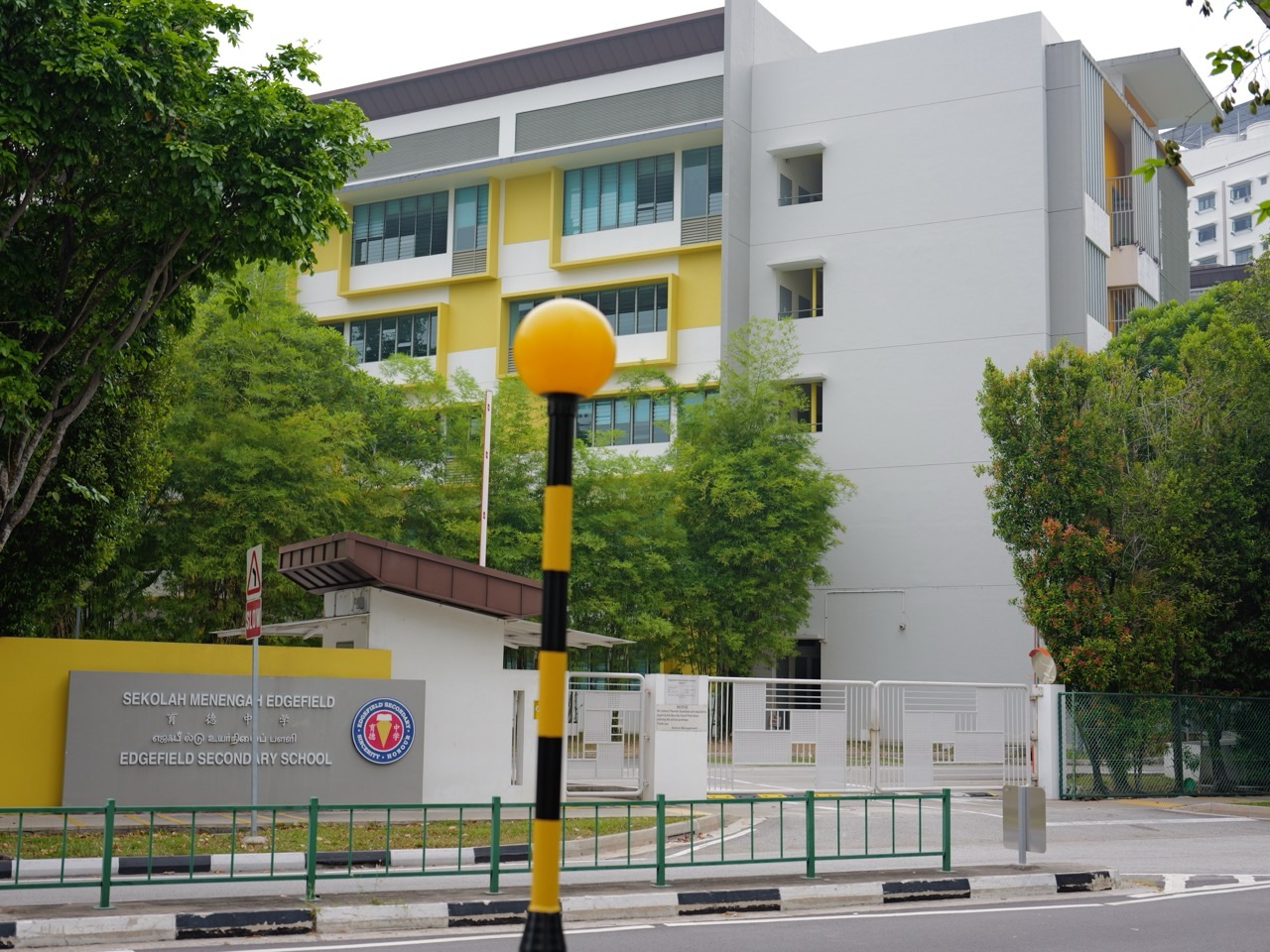
PSLE Scores 26 and 27 both qualify for Posting Group 1 (PG1) only when English Language and Mathematics are each AL7 or better. The difference for Punggol parents is how the two results compare with the completed 2026 intake: Edgefield, Greendale, Punggol Secondary and Yusof Ishak each had a previous PG1 cutoff of 27. Score 26 is one point numerically stronger than that old endpoint; Score 27 exactly matches it. Both children can investigate the schools if eligible, but neither has a guaranteed place for 2027. Start with MOE’s official Posting Group table.
A family at Score 26 may include local schools with an earlier numerical advantage while also researching neighbours. At Score 27, the same Punggol schools are historical boundary comparisons, making credible alternatives at previous PG1 28, 29 or 30 important to investigate where they fit the child. Compare current school programmes, learning support, CCAs, eligible subject levels under Full SBB, and real travel from the family’s home. Six genuine preferences and official eligibility matter more than a numerical school ranking.
- Both scores: conditional PG1, requiring AL7 or better in both English and Mathematics.
- Punggol’s four schools: previous PG1 cutoff 27 in the 2026 intake.
- Score 26 comparison: numerically one point stronger than former local PG1 27; not a guarantee.
- Score 27 comparison: exact previous boundary at all four Punggol schools; not a guarantee.
- Wider options: North Vista, Junyuan and Meridian at previous 28; Yuying and East Spring at 29; verify appropriate 30/30* schools.
- School fit: examine Full SBB subjects, student support, CCA opportunities and actual commuting.
- 2026 submission: results 24 November at 11am; S1 options close 30 November at 4.30pm.
Editorial fact-check: 19 November 2026. All school COP examples refer to the previous 2026 Secondary 1 intake after PSLE 2025, not confirmed 2027 cutoffs. MOE and SEAB information govern actual eligibility and posting.
Chapters — PG1 Score 26 versus 27 around Punggol’s historic 27
- 1. The official eligibility for both scores
- 2. The one-point difference at Punggol’s historic 27
- 3. Punggol Secondary and Edgefield: two distinct school experiences
- 4. Greendale and Yusof Ishak: the same number, different fit
- 5. A score-by-school comparison table for PG1
- 6. School selection at Score 26: local options with a one-point previous difference
- 7. School selection at Score 27: a former boundary requires more careful alternatives
- 8. Sengkang schools expand the comparison without guaranteeing convenience
- 9. Junyuan and Meridian at a former PG1 28
- 10. Wider PG1 29 and 30 schools
- 11. Why the asterisk at 30 is not a guarantee
- 12. Full SBB: what the child starts in, not a permanent identity
- 13. Four subject strengths and gaps deserve more attention than one point
- 14. Compare actual programmes and who participates
- 15. The commute from Punggol is not a single number
- 16. Six choices: how Score 26 and Score 27 lists may differ
- 17. Tie-breaking, affiliation and preference order
- 18. If the English or Mathematics condition fails
- 19. The 2026 PSLE results and the 2027 S1 calendar
- 20. Frequently asked questions about the 26-to-27 difference
- 21. Official sources, the two score guides and a family checklist
1. The official eligibility for both scores
Both PSLE 26 and PSLE 27 fall within MOE’s conditional Posting Group 1 band covering Scores 26 to 30. A pupil needs AL7 or better in both English Language and Mathematics to qualify for ordinary PG1 entry. This is a subject-by-subject requirement and is not satisfied merely because the aggregate falls within 26–30. Parents should use the actual result slip and any official course eligibility shown.
Neither Score 26 nor Score 27 has a normal option to select PG2 instead; the PG1-or-PG2 option applies at Score 25. A parent may be attracted to a school’s previous PG2 cut-off, but an applicant cannot change the permitted admission group to make that number available. A student may still qualify for a more demanding individual subject under Full Subject-Based Banding, which is a distinct matter.
At both totals, the responsible first question is ‘What does the official slip say?’ not ‘Which school has the highest historical COP?’ Once the route is confirmed, parents can make a correct PG1 school comparison.
Family action: Check English and Mathematics ALs separately before using a PG1 table.
Chapter 1 · MOE SchoolFinder · Punggol school-choice hub
2. The one-point difference at Punggol’s historic 27
The completed 2026 Secondary 1 intake recorded a PG1 last-posted score of 27 at each of the four mainstream schools within Punggol: Edgefield, Greendale, Punggol Secondary and Yusof Ishak Secondary. A child with Score 26 is numerically one point stronger than that previous endpoint. A child with Score 27 matches the old cutoff. These are meaningfully different references for planning, although they are not promises for 2027.
A one-point historical numerical advantage does not allow parents to call the school ‘guaranteed’. Future cut-offs can change with results, choices and available places. Equality also does not mean a pupil will necessarily be posted to the school. Parents should distinguish a prior numerical comparison from an actual offer.
Both families can investigate the same four school environments. They might reasonably rank the schools differently based on transport, programmes, support and the child’s interests. A common old COP across four schools does not make their teaching or culture identical.
Family action: Record 26 as one point numerically stronger than the old 27, and 27 as an exact former boundary.
Chapter 2 · MOE SchoolFinder · Punggol school-choice hub
3. Punggol Secondary and Edgefield: two distinct school experiences
Punggol Secondary and Edgefield both carried a previous PG1 cutoff of 27 for the completed intake. Yet one school’s educational identity does not automatically match the other’s. Punggol Secondary highlights environmental education, community engagement and youth leadership, while Edgefield has discussed innovation, entrepreneurship and character-building through sport. School programmes should be verified directly because offerings and participation can change.
Ask your child which learning experience would interest them during the first year. Then ask each school what activities ordinary Secondary 1 pupils take part in, whether there are selections or trials, and how teachers support pupils who need additional help with foundation concepts. An open-house photograph may feature a specialised team rather than a programme available to every newcomer.
The daily journey can also separate two candidates with identical old scores. The family should test travel from its own residential block and check what happens after CCAs. A school with an easier journey can offer more time for rest and participation.
Family action: Compare the child’s actual reasons for Punggol Secondary and Edgefield rather than their matching old COP.
Chapter 3 · MOE SchoolFinder · Punggol school-choice hub
4. Greendale and Yusof Ishak: the same number, different fit
Greendale and Yusof Ishak also recorded previous PG1 27. Greendale has described design, technology, engineering and outdoor learning, while Yusof Ishak has highlighted STEM and leadership experiences. Such descriptions may help a family identify questions, but current school information determines which programmes are available and whether all pupils participate.
A child might enjoy exploring practical problems, sport, service or arts, or prefer a school where the first-term support is explained clearly. Ask how ordinary pupils are introduced to CCAs and what happens if the first choice is unavailable. The best fit depends partly on the child’s willingness to join and seek help.
A Punggol Coast household may experience a different route to these campuses from a family near Punggol Field or Waterway Point. Do not assume every school within the estate has the same transport cost. The walk to the gate and return after school matter.
Family action: Use current school materials and a real route check when comparing Greendale and Yusof Ishak.
Chapter 4 · MOE SchoolFinder · Punggol school-choice hub
5. A score-by-school comparison table for PG1
The table below places a selected group of historical PG1 schools in an unranked research basket. Punggol’s four mainstream secondary schools and neighbouring Compassvale and Seng Kang Secondary previously ended at 27. North Vista, Junyuan and Meridian were among schools ending at 28, and other schools recorded 29 or 30. The numerical difference from a child’s score is useful context, not admission certainty.
A family’s shortlist should have positive educational reasons for every school. A previous endpoint of 30 is more lenient numerically than 27, but that does not show superior teaching or lower educational worth. School culture, support for the child’s subjects, CCA access and travel should be evaluated independently of the number.
Take particular care with values displayed with a 30* asterisk. The notation describes a previous vacancy-related posting outcome rather than a guaranteed place next year. The exact school, group, year and programme must remain attached to the figure.
| School and area | Previous PG1 COP | Score 26 compared with old result | Score 27 compared with old result |
|---|---|---|---|
| Edgefield Secondary (Punggol) | 27 | One point numerically stronger | Exact previous boundary |
| Greendale Secondary (Punggol) | 27 | One point stronger | Exact previous boundary |
| Punggol Secondary (Punggol) | 27 | One point stronger | Exact previous boundary |
| Yusof Ishak Secondary (Punggol) | 27 | One point stronger | Exact previous boundary |
| Compassvale Secondary (Sengkang) | 27 | One point stronger | Exact previous boundary |
| Seng Kang Secondary (Sengkang) | 27 | One point stronger | Exact previous boundary |
| North Vista Secondary (Sengkang) | 28 | Two points stronger | One point stronger |
| Junyuan Secondary (Tampines) | 28 | Two points stronger | One point stronger |
| Meridian Secondary (Pasir Ris) | 28 | Two points stronger | One point stronger |
| Yuying Secondary (Hougang) | 29 | Three points stronger | Two points stronger |
| East Spring Secondary (Tampines) | 29 | Three points stronger | Two points stronger |
| Peicai Secondary (Serangoon) | 30* | Prior vacancy-related notation | Prior vacancy-related notation |
| Loyang View Secondary (Pasir Ris) | 30* | Prior vacancy-related notation | Prior vacancy-related notation |
Family action: Use the correct completed intake year and PG1 column for every school.
Chapter 5 · MOE SchoolFinder · Punggol school-choice hub
6. School selection at Score 26: local options with a one-point previous difference
At Score 26, an eligible child is numerically stronger than Punggol’s previous PG1 27 cutoff by one point. This might make local campuses important to research before searching the entire island. However, the one-point margin is too small to be used as an assurance. A new cohort might alter the last-admitted score at any school.
Ask the child which Punggol school they would choose if two could offer a place and why. A shorter route, an approachable school culture or a meaningful CCA may be a valid answer. Look beyond the parent’s impression of prestige, because the previous admission number cannot tell which place will support this particular pupil.
Build an unranked list of eight to ten eligible schools before choosing the final six. Even when a local favourite is clear, consider neighbouring schools with less stringent previous COPs if their environments and journeys fit the household.
Family action: For Score 26, identify at least two plausible school alternatives beyond a local favourite.
Chapter 6 · MOE SchoolFinder · Punggol school-choice hub
7. School selection at Score 27: a former boundary requires more careful alternatives
At Score 27, the child matches the former PG1 last-posted score of the four Punggol schools. This is a different historical position from Score 26’s one-point margin. If the next cutoff becomes more stringent, a new Score 27 applicant might not receive the school; if it becomes less stringent, the comparison changes. No parent can know the final 2027 outcome before the exercise ends.
A sensible family should research each local school as a genuine option but not build all six preferences around exact or stricter former cutoffs. North Vista, Junyuan and Meridian at former PG1 28, or other schools at 29 and 30, can broaden the numerical historical range when they fit the child’s educational and transport requirements.
The child should not be told that a previous boundary means an offer is certain. Instead, explain the purpose of the shortlist: finding several schools the pupil could attend positively and where the family can support the normal school week.
Family action: Mark all Punggol local old PG1 27 entries as exact historical matches for Score 27.
Chapter 7 · MOE SchoolFinder · Punggol school-choice hub
8. Sengkang schools expand the comparison without guaranteeing convenience
Compassvale and Seng Kang Secondary also ended at PG1 27 in the referenced completed intake, while North Vista ended at 28. These can be meaningful neighbouring school candidates for eligible Scores 26 and 27. A pupil at 26 is one point stronger than old 27 and two stronger than 28; a pupil at 27 matches old 27 and is one point stronger than 28.
Nevertheless, Sengkang is not one destination. A Punggol family near Sumang may have a different route than one near Northshore or Punggol Central. Checking how a child gets to the correct school gate and returns after CCA can reveal differences not visible in a score table.
Use current school websites to compare the actual programmes and support. A school with a less stringent old cutoff may be an excellent first preference, while one that is difficult to reach may not belong on the list despite its numerical value.
Family action: Check travel to two Sengkang campuses from the exact home rather than a generic town centre.
Chapter 8 · MOE SchoolFinder · Punggol school-choice hub
9. Junyuan and Meridian at a former PG1 28
Junyuan in Tampines and Meridian in Pasir Ris recorded previous PG1 cutoffs of 28. At Score 26, a child is two numerical points stronger than that former endpoint; at Score 27, the child is one point stronger. Those differences may be useful in the historical research basket, but neither tells the family the new cutoff or the student’s individual chance of a place.
These campuses are in different parts of the eastern region, with distinct programmes and transport patterns. A parent should not choose both automatically simply because their numbers match. Ask the child about school activities, learning support and the normal journey. An attractive school may be acceptable even with a longer commute, provided the family understands the trade-off.
Keep any school with a positive reason to attend, and discard one whose only attraction is a comfortable-looking historical number. A school list is a statement of preferences rather than a catalogue of last-admitted totals.
Family action: Trial the journey to one PG1 28 school and note a reason your child would genuinely attend.
Chapter 9 · MOE SchoolFinder · Punggol school-choice hub
10. Wider PG1 29 and 30 schools
Yuying and East Spring were among schools with historical PG1 endpoints of 29, while Peicai, Bartley, Loyang View and others displayed previous PG1 30 or 30* references. These schools can provide a numerically less stringent old comparison for either Score 26 or 27, but the actual location and programme details require current verification.
Some schools serve specific gender intake or have affiliation or language conditions. Do not borrow an affiliated or specialised programme cutoff for a child whose own admission category differs. And do not treat asterisk notation as a guarantee of an opening in the next cohort.
Ask what the school offers beyond its previous cutoff: learner support, relevant practical activities, CCAs, student welfare and an ordinary timetable. The family should be comfortable with every choice before it enters the final six.
Family action: Verify exact school category, old notation and actual route before keeping a PG1 29/30 candidate.
Chapter 10 · MOE SchoolFinder · Punggol school-choice hub
11. Why the asterisk at 30 is not a guarantee
A historical PG1 30* describes a school where places remained even though the last actual pupil posted had a stronger score than 30, so an eligible Score 30 pupil could have joined if that school had been chosen in that former exercise. This is a past vacancy note, not a guarantee that vacancies exist in the 2027 intake.
Neither Score 26 nor Score 27 needs to search for a fictional PG1 31 or 32 school to create numerical headroom. There are genuine historic PG1 schools with different previous endpoints to investigate, but only if their programmes and travel make sense for the child.
The family should retain a 30* symbol whenever it copies a score from a table. An unstarred last-posted 30 and a starred vacancy note are different historical observations and should not be merged into a simplified claim that either school is certain.
Family action: Keep the full COP notation with the cohort year and avoid ‘guaranteed’ labels.
Chapter 11 · MOE SchoolFinder · Punggol school-choice hub
12. Full SBB: what the child starts in, not a permanent identity
At eligible Scores 26 and 27, pupils enter through PG1, with G1 as the indicative level of most subjects. Under Full Subject-Based Banding, pupils may take eligible individual English, Mathematics, Science or Mother Tongue subjects at more demanding levels according to the relevant ALs and school arrangements. The starting group is not a statement that every subject must remain at the same level forever.
MOE’s published subject criteria include a Standard-level AL6 or better as a key condition for G2 in an individual subject, and AL5 or better for G3. Foundation-level grades can have separate mapped eligibility. Parents should verify the actual options for their child with the receiving school rather than assume an automatic offer.
That flexibility can help families choose an appropriate pace while recognising distinct strengths. An overall Score 26 or 27 does not identify the strongest subject and should not be used in place of the results slip.
Family action: Record the four individual ALs and ask about current subject-level offers.
Chapter 12 · MOE SchoolFinder · Punggol school-choice hub
13. Four subject strengths and gaps deserve more attention than one point
A Score 26 child can have different patterns of English, Mathematics, Science and Mother Tongue ALs from another child at the same total, and so can a Score 27 pupil. A one-point aggregate difference cannot explain their learning habits, confidence, curiosity or the support they need in the first term.
Ask whether the child understands a mathematical idea but loses marks by not showing the steps, or can talk about a science concept but struggles to write an evidence-based explanation. In English, distinguish reading comprehension from organising a response. Such descriptions allow more constructive questions to teachers than simply saying the child is ‘a PG1 student’.
Also identify what the pupil enjoys outside examinations. The school might offer sport, music, design, community service or practical projects that create belonging. A supportive routine and real engagement matter throughout secondary education.
Family action: Write one strength and one support question for each PSLE subject.
Chapter 13 · MOE SchoolFinder · Punggol school-choice hub
14. Compare actual programmes and who participates
Applied Learning Programmes and Learning for Life Programmes can show a school’s emphasis, but publicity photographs do not automatically describe what every Secondary 1 student experiences. Ask whether an activity is school-wide, elective, part of a selected programme or run as a CCA with trials. A child’s interest is valuable only when the family understands actual access.
Take the same questions to the schools on the shortlist. How are new pupils introduced to CCAs? What happens if the child does not get the first choice? How are learners supported when a topic is confusing? What is the typical schedule after lessons? These comparable answers are more useful than a school-name reputation.
A pupil may favour a school with a previous 30* even if a nearer school has a 27, or vice versa. The parent’s task is to make sure the preference is informed, eligible and supported by a workable household plan.
Family action: Find one ordinary Year 1 opportunity at every preferred school and verify participation conditions.
Chapter 14 · MOE SchoolFinder · Punggol school-choice hub
15. The commute from Punggol is not a single number
Punggol includes households near Northshore, Sumang, Punggol Field, Waterway Point and other parts of town. They may have different bus or LRT connections to the same school. A route planner’s estimate from Punggol MRT cannot substitute for a real home-to-school journey.
Include walking to the stop, waiting, transfers, crossings and reaching the actual gate. Do a separate after-CCA return check, because departure time and transport connections can change. Consider a wet-weather alternative and whom the child will contact if a service is disrupted.
A school that is farther away may offer a meaningful educational advantage for a particular child, but the family should understand the cost in rest and homework time. A previously more lenient cutoff cannot make an impractical routine sustainable.
Family action: Test two school journeys at realistic weekday times when practical.
Chapter 15 · MOE SchoolFinder · Punggol school-choice hub
16. Six choices: how Score 26 and Score 27 lists may differ
SEAB encourages six genuine preferences, including two or three schools with previous cutoffs less stringent than the child’s result. For an eligible Score 26 pupil, local schools at prior PG1 27 meet that numerical comparison; for Score 27, those same four local schools are historical exact matches instead. A family at 27 may therefore look more deliberately at previous 28, 29 and 30 options where suitable.
Do not turn this into a mechanical strategy of ranking the highest cutoff last. A child may prefer North Vista over Punggol Secondary because of its programme or journey. The final list should reflect real preferences after verifying each school’s eligibility and fit.
The school placed sixth still deserves a positive reason for being there. A family that selects six names only to fill boxes risks being dissatisfied even if the student is posted to one of them.
Family action: Ask the child to explain why they would attend all six schools.
Chapter 16 · MOE SchoolFinder · Punggol school-choice hub
17. Tie-breaking, affiliation and preference order
Ordinary S1 posting considers the PSLE score first in the relevant group. If equal-scoring pupils compete for the last places, MOE’s tie-breakers include citizenship, choice order and computerised balloting. The preference order therefore matters in the specified circumstances, but it does not make a weaker score automatically outrank stronger results.
Affiliation, language-related priority, gender intake, specialised programmes and a successful DSA-Sec placement can change which rules apply to an individual pupil. Do not use someone else’s affiliated historical cutoff as evidence for your child when the relevant condition does not apply.
Arrange the final six eligible schools by genuine preference and check every school code. An exact former cutoff match should not be described as an offer; a one-point former margin is also not an offer.
- Check official English and Mathematics ALs separately
- Use PG1 ranges rather than PG2 or PG3 school data
- Compare Punggol’s 27 with the child’s 26 or 27 accurately
- Investigate school teaching, support and current CCA offerings
- Test the full commute and after-CCA return
- Rank six genuine preferences and check school codes
- Save the S1 Portal confirmation
Family action: Check current school requirements and keep the final six in true preference order.
Chapter 17 · MOE SchoolFinder · Punggol school-choice hub
18. If the English or Mathematics condition fails
The AL7-or-better requirement in both English and Mathematics applies to both Score 26 and 27. If either subject is AL8, the ordinary conditional PG1 route is not available under the published table, regardless of the aggregate. Parents should ask their primary school to explain the child’s actual progression and any relevant specialised route or repeat-year discussion.
NorthLight and Assumption Pathway provide specialised educational pathways for eligible pupils who do not qualify for ordinary Posting Groups, subject to their own admission arrangements. Neither is a guaranteed placement based only on a score or one subject grade, and a PSLE re-attempt is not an automatic entitlement. The child’s school can provide personalised guidance.
An accurate family response is more helpful than inventing a PG2 exception or arguing that a preferred school can simply disregard the entry table.
Family action: Confirm the official eligibility and next steps with the primary school before using a PG1 option form.
Chapter 18 · MOE SchoolFinder · Punggol school-choice hub
19. The 2026 PSLE results and the 2027 S1 calendar
SEAB confirms the 2026 PSLE results release on Tuesday, 24 November at 11.00am Singapore time. The ordinary S1 choices portal opens at 11.30am and closes at 4.30pm on Monday, 30 November. Posting results are tentatively expected on Friday, 18 December, with an official update if the plan changes.
Eligible Score 26 and 27 families can use the window to verify school names, codes, programme conditions and six genuinely preferred choices. One parent should submit using a valid Singpass and retain the official acknowledgement. Families needing help can contact the primary school before the deadline. A screenshot of a planning worksheet is not proof of a completed application.
Prepare before the last afternoon so there is time to resolve an unfamiliar school rule, visit a school website or test a journey. When the result is outside the ordinary PG1 conditions, the family should use the primary school’s official guidance instead of rushing a wrong form.
Family action: Set a family deadline earlier than 30 November and save the portal acknowledgement.
Chapter 19 · MOE SchoolFinder · Punggol school-choice hub
20. Frequently asked questions about the 26-to-27 difference
Do Scores 26 and 27 both use PG1? Yes, only when English and Mathematics are each AL7 or better. Can either choose PG2? Not under the ordinary 26–30 mapping. Does Score 26 guarantee a Punggol school with former PG1 27? No. The older numerical advantage does not reserve a place.
Does Score 27 guarantee a Punggol school because its old PG1 cutoff matched? No. It was a completed-year last-posted number. Are schools with old PG1 28 or 29 automatically better backups? They may be useful historical comparisons, but the child must like them and be able to travel there.
Can a PG1 child take a G2 subject? Potentially, if the individual subject result and current school arrangements meet the requirements. What matters next? Six real schools, a viable daily routine and support for the child’s learning.
Family action: Use accurate old cutoff labels and allow the child a voice in school fit.
Chapter 20 · MOE SchoolFinder · Punggol school-choice hub
21. Official sources, the two score guides and a family checklist
Continue with Score 26 — conditional PG1 Punggol school guide and Score 27 — conditional PG1 Punggol school guide. The Scores 4–32 Punggol hub also links all the other score and boundary guides.
The eligibility table is at MOE Posting Groups; consult MOE SchoolFinder for current school and programme information, MOE’s posting rules for tie-breakers, and SEAB’s 2026 results announcement for dates. The Clementi Secondary 1 learning support reference concerns education after entry, not school admission guarantees.
An effective family worksheet records the actual English and Mathematics ALs, the permitted PG1 route, previous school ranges with year, school-specific attractions, support, real travel and six genuine preferences. After submission, retain the official acknowledgement and help the pupil prepare for the actual school.
Family action: Keep all relevant official sources with the final worksheet.


