
If your Punggol child receives AL8 in PSLE Mathematics but achieves strong English results, do not decide their secondary-school future from either subject alone. The actual overall PSLE Score and personalised Posting Group information determine the ordinary school-entry route, and the Mathematics AL helps identify a learning need that deserves careful attention. At overall Scores 26–30, ordinary PG1 eligibility requires AL7 or better in both English and Mathematics. Standard Mathematics AL8, or a Foundation Mathematics grade C mapped to AL8, does not meet that particular condition. However, a child with Mathematics AL8 can still obtain an overall score within PG2 or PG3 bands when other subjects are stronger, so the total must be read alongside the individual results.
When 2026 PSLE results are released on Tuesday, 24 November at 11.00am, Punggol parents should read the official result slip, clarify any uncertain eligibility with the child’s primary school and, where eligible, investigate Edgefield Secondary, Greendale Secondary, Punggol Secondary and Yusof Ishak Secondary. A school should be evaluated for its actual Mathematics teaching, feedback, support under Full Subject-Based Banding, English and Humanities opportunities, school culture and travel. The four local schools have different historical 2026-entry cut-offs by PG1, PG2 and PG3, but none is a guarantee for Secondary 1 entry in 2027. This guide explains what to do, worked score examples, how to diagnose Mathematics difficulties and how to prepare six suitable schools by 30 November 2026, 4.30pm.
Quick parent summary
• Check the overall PSLE total, individual Mathematics and English grades and the personalised S1 eligibility.
• An AL8 in Mathematics alone does not identify the child’s entire Posting Group; the total and other criteria matter.
• At totals 26–30, ordinary PG1 requires both English and Mathematics at AL7 or better. Mathematics AL8 does not satisfy that rule.
• If the child is not eligible for ordinary posting, speak to the primary school about the authorised educational pathways instead of inventing a mainstream school list.
• Identify the exact Mathematics barriers: number sense, fractions, ratio, word problems or working under time pressure.
• Compare actual school support, teaching pace and the child’s English and Humanities strengths.
• Where eligible, rank six real schools using the correct historical cut-off column, with suitable less stringent choices.
The official Mathematics result is one piece of a larger picture
A pupil who finds Mathematics difficult may be very articulate, read widely, enjoy debating ideas or communicate clearly in English. That is a genuine strength. The Mathematics result should not erase it. Equally, being good at English does not automatically remove the need for numeracy in daily life, Science, Geography, design or future courses. Parents should aim for an academic setting that supports both the strength and the gap.
MOE’s Standard PSLE Mathematics band AL8 corresponds to a score below 20 marks on the Standard paper. Foundation Mathematics uses grades A, B and C, mapped to equivalent AL6, AL7 and AL8 respectively for posting purposes. These numbers are assessment categories, not diagnoses. A pupil with AL8 might lack basic number sense, misread multi-step word problems, struggle with fractions and ratios, or have another difficulty; the grade does not tell us which explanation is correct.
Ask the Primary 6 teacher to identify patterns in actual work. Does the student understand when a problem is read aloud but struggle to interpret it independently? Can they perform short calculations accurately but cannot choose the correct operation? Do mistakes cluster around negative values, fractions or proportion? These questions provide a practical basis for help instead of an unhelpful label such as ‘hopeless at Maths’.
What the overall PSLE Score changes
| Hypothetical ALs: English / Maths / Science / MTL | Total | Ordinary route to verify |
|---|---|---|
| AL1 / AL8 / AL4 / AL4 | 17 | Usually PG3 based on aggregate; Mathematics support is still essential |
| AL3 / AL8 / AL5 / AL6 | 22 | Usually PG2/PG3 option band; compare the personalised choices |
| AL5 / AL8 / AL5 / AL6 | 24 | Usually PG2; use PG2 historical school ranges |
| AL6 / AL8 / AL6 / AL7 | 27 | Fails the AL7-or-better Mathematics condition for ordinary PG1 at scores 26–30 |
| AL7 / AL7 / AL6 / AL7 | 27 | Meets the stated English and Mathematics condition for PG1, subject to personal official records |
These are illustrative combinations, not actual children’s records. Their purpose is to prevent a parent from treating a Mathematics AL8 as a standalone admission verdict. A pupil with AL8 Maths and an overall score of 17 has a very different ordinary school-entry situation from a pupil with AL8 Maths and total score 27. Follow the actual S1 option slip where it exists and check Foundation-subject cases with the primary school.
The numerical direction matters too. A lower PSLE Score means stronger aggregate examination performance. When the child scores 24 under PG2, the relevant school comparison is PG2, not PG1. When the child scores 17 under PG3, the family cannot borrow a Punggol school’s PG2 cut-off simply because the pupil needs Mathematics support. The route and the support question must be handled separately.
When Mathematics AL8 prevents ordinary PG1 eligibility
The published ordinary rule for totals 26–30 requires AL7 or better in both English and Mathematics. AL8 is not AL7 or better. Parents should not submit a PG1 list or tell the pupil they are guaranteed a PG1 seat if the formal requirement is not met. The child’s primary school can advise the actual options, including whether a practice-oriented or specialised route and any reattempt arrangements are applicable under current rules.
Options discussed in official PSLE guidance can include institutions such as NorthLight School or Assumption Pathway School for pupils who require an alternative educational pathway, subject to their own admission conditions. These are not automatic destinations for every Mathematics AL8 pupil and should not be used as labels for failure. Ask about the individual child’s learning needs, educational readiness and the actual application process rather than choosing a school from a generic online table.
A student with a strong English AL may benefit from an environment that values communication and practical learning while strengthening numeracy. The practical next step is qualified school guidance and a specific learning plan, not a public comparison with classmates or rushed promises about later qualifications.
Full Subject-Based Banding can accommodate subject-specific strengths
Since the 2024 Secondary 1 cohort, Full Subject-Based Banding has been implemented across mainstream secondary schools. Posting Groups guide entry, while subjects may be offered at G1, G2 and G3 based on eligibility and progress. A pupil who is strong in English and comparatively weaker in Mathematics may have different subject learning needs. That does not mean the family can choose any combination at will; the actual offers and progression rules must be confirmed with the receiving school.
Mixed form classes give pupils opportunities to learn alongside peers with varied strengths, while different subject groups follow their relevant academic levels. The family should ask how the child can receive appropriate English challenge and Mathematics support without feeling that a single grade defines them. A school that teaches core Mathematics concepts clearly may be a more appropriate choice than a school selected solely for its historic academic competitiveness.
As the child grows, later subject decisions will depend on actual performance and school arrangements. The SEC framework replaces the old separate O- and N-Level examinations from 2027 for graduating cohorts and records subjects at the actual G levels taken. A pupil beginning Secondary 1 in 2027 should be supported in building foundations rather than being forced to forecast every later outcome.
What to ask about actual Mathematics instruction
| Mathematics area | Possible difficulty | Specific support question |
|---|---|---|
| Place value and number sense | Cannot estimate whether an answer makes sense | How do teachers use concrete models and number relationships? |
| Fractions and decimals | Misunderstands quantities or operations | How are equivalent values and visual models explained? |
| Ratio and percentage | Chooses a memorised method incorrectly | How do teachers establish proportional meaning? |
| Algebra readiness | Does not understand the idea of an unknown or equality | How is the transition from arithmetic to algebra scaffolded? |
| Reading word problems | Can calculate but misidentifies what is asked | How do English and Mathematics teachers support precise interpretation? |
| Working and checking | Answers are copied or steps are unclear | How is independent explanation and feedback developed? |
| Confidence and organisation | Stops immediately when a problem looks unfamiliar | What support helps students ask for help and try a first step? |
A useful teaching plan starts with one or two recurring barriers, explains the underlying idea and then checks whether the pupil can use it without prompting. A long set of similar worksheets can reinforce an incorrect rule when the misconception has not been corrected. Ask the primary or secondary teacher to show a worked example and explain how the child should practise independently.
An English-strong pupil may be able to explain a mathematical mistake aloud when given a supportive prompt. Use that strength. Invite the child to read a problem, say what it asks and compare their explanation with the actual numerical relationship. Clear language can help Mathematics, but some gaps still require number models and focused practice.
Punggol’s four schools: what to investigate
Edgefield Secondary — enterprise and communication
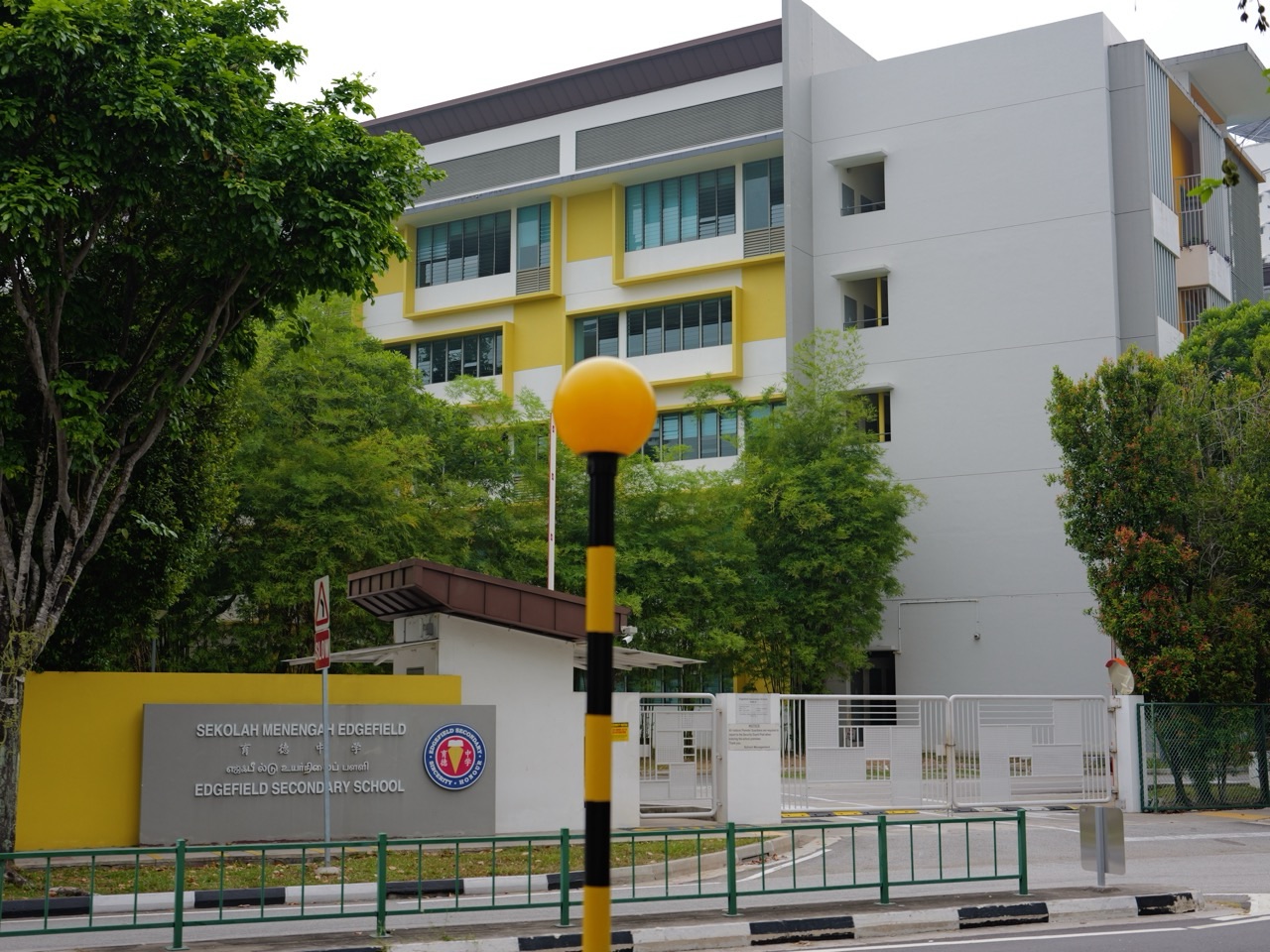
Edgefield Secondary is at 36 Punggol Field, Singapore 828814. Its Growing the Edgefield Mindset programme encourages initiative, ideas and collaboration. A pupil strong in English may enjoy presenting solutions or communicating through group projects. Parents should separately ask about Mathematics learning support, subject-level teaching and how teachers respond when a pupil cannot begin a multi-step numerical task.
An ALP does not guarantee targeted Mathematics remediation, so ask for the actual school’s support procedures and the child’s eligible subject arrangements. The pupil’s journey from home and the overall school culture also matter.
Greendale Secondary — practical design with Mathematics demands
Greendale Secondary is at 51 Edgedale Plains, Singapore 828866. Its design, technology and engineering ALP could interest a pupil who enjoys making things, even when Mathematics is difficult. However, design uses measurement, quantities and reasoning. Parents should ask how the school helps beginners connect practical tasks to mathematical ideas.
A school’s technology programme is not a substitute for teaching basic fractions or ratio carefully. Check current curriculum, support, teachers’ feedback and actual CCA allocation rather than assuming every technical activity is accessible automatically.
Punggol Secondary — environment and community projects
Punggol Secondary is at 51 Edgefield Plains, Singapore 828870. Its environmental learning and community leadership provide real-world contexts that can combine reading, Science, numbers and communication. An English-strong pupil may enjoy explaining environmental issues, while needing careful support when graphs and percentages are involved.
The previous admission cut-off does not identify the school’s Mathematics teaching quality. Ask how teachers support pupils whose numerical foundations are unstable and how the pupil receives meaningful feedback.
Yusof Ishak Secondary — smart-city learning and student growth
Yusof Ishak Secondary is at 8 Sumang Walk, Singapore 828676. Its sustainable smart-city STEM programme may interest a child who likes understanding real problems, and its leadership activities can develop communication. But technology-based projects can also require numbers, graphs and measurements.
Ask what happens if a new pupil struggles with these elements and whether the school provides appropriate academic support. A child should not be ruled out of every practical or scientific interest because of one weak PSLE Mathematics grade, but realistic support and appropriate level matter.
Use the correct Punggol historical cut-offs
The following are previous last-admitted scores from the completed 2026 Secondary 1 intake, following PSLE 2025. They are historical references rather than guaranteed thresholds for 2027. Compare the child’s real ordinary Posting Group with only the corresponding column.
| Punggol school | Previous PG3 COP | Previous PG2 COP | Previous PG1 COP |
|---|---|---|---|
| Edgefield Secondary | 14 | 23 | 27 |
| Greendale Secondary | 16 | 23 | 27 |
| Punggol Secondary | 19 | 24 | 27 |
| Yusof Ishak Secondary | 15 | 22 | 27 |
A pupil with Mathematics AL8 but an overall PG3 Score 17 should compare the PG3 figures: Edgefield 14, Greendale 16, Punggol Secondary 19 and Yusof Ishak 15. Punggol Secondary’s previous 19 was numerically less stringent than Score 17, whereas the others were more competitive. No 2027 seat can be promised. The family should include suitable other schools where needed and ask about the child’s Mathematics needs separately.
For an eligible pupil with PG2 Score 24, Punggol Secondary had a historical PG2 boundary of 24, while the others were more competitive at 22–23. This is not a comfortable guarantee. A family should expand its school research beyond Punggol if necessary to find two or three suitable schools with less stringent previous scores.
For a child whose overall total is 27 and Mathematics is AL8, the issue is not whether Punggol’s four old PG1 scores all showed 27. The child does not meet the stated English-and-Maths ordinary PG1 condition at that band. The parent should seek primary-school guidance about the actual entry options rather than apply an inapplicable cut-off.
A four-week Mathematics confidence plan
Week 1: identify the first unstable idea
Use a few representative Primary 6 problems without setting a full timed examination. Ask the child to explain the first step. If they cannot, use concrete objects, drawings or a simpler numerical example to identify whether quantity, equality or reading is the obstacle. Record the specific misconception privately.
Week 2: explain and retry with short independent questions
Teach one concept clearly. For fractions, visualise parts of the same whole; for ratio, clarify which quantities are compared. Give a small independent question and ask the child to explain why the solution works. Short successful practice is often more useful than a long worksheet that repeats confusion.
Week 3: connect the strength in English
Invite the pupil to turn a Mathematics question into a short explanation: what is given, what is asked, which relationship is needed and how they can check the answer. Discuss the meaning of words such as ‘difference’, ‘total’, ‘per’, ‘remaining’ and ‘at least’. The aim is to make English comprehension support, not obscure, numerical reasoning.
Week 4: prepare one school help-seeking routine
Practise how the child can tell a teacher precisely what they do not understand: ‘I know how to calculate the fraction, but I don’t understand why the question asks us to multiply.’ This is much more actionable than saying ‘I can’t do Maths’. The child should also learn how to check homework instructions and when to ask for help.
The plan is a gentle bridge, not a substitute for qualified intervention or a promise that every difficulty can be repaired in four weeks. Where the pupil has a persistent learning difficulty or known support need, work with the primary and receiving school, and seek appropriate professional advice when required.
Seven questions about school fit for this child
- Does the official PSLE total and individual Mathematics grade permit this school-entry route?
- What Mathematics subject level will the pupil actually start at, and what review opportunities exist?
- How does the school assess basic number sense, fractions and algebra readiness in Secondary 1?
- What targeted support and feedback are available to a pupil with persistent misconceptions?
- How can the pupil continue to develop strong English, reading, writing or Humanities skills?
- Does the school have a supportive process for students who feel embarrassed asking a question?
- What are the normal CCA schedule and safe travel route after academic support sessions?
A school-choice plan that does not confuse ability with eligibility
- Read the official PSLE result slip, including Standard or Foundation subject levels and the child’s actual total.
- Check the relevant English and Mathematics condition for totals 26–30; seek primary-school guidance if ordinary eligibility is unclear or not met.
- For eligible mainstream pupils, confirm the chosen PG1, PG2 or PG3 route and use the matching historical school cut-off.
- Compare actual Mathematics support, English subject opportunities and general school culture.
- Ask the child for genuine school preferences and what teaching environment would help them learn.
- Include two or three schools with less stringent previous cut-offs where suitable, following SEAB’s guidance.
- Research eligible schools in Sengkang, Hougang and other reachable areas when local score history is too competitive.
- Test morning and late CCA travel from the family’s real home.
- Rank six eligible schools the child would genuinely attend and save the official submission acknowledgement.
- After posting, prepare a focused Maths and English learning handover with the receiving school.
The official result and submission timetable
| Event | Announced 2026 timing |
|---|---|
| PSLE results released | Tuesday, 24 November at 11.00am |
| S1 Portal opens | Tuesday, 24 November at 11.30am |
| Ordinary school choices close | Monday, 30 November at 4.30pm |
| Posting results | Tentatively Friday, 18 December; final date to be confirmed |
SEAB confirmed the dates in its 17 November 2026 announcement. A parent with valid Singpass can ordinarily submit via MOE’s S1 Portal. If the child is not eligible for ordinary posting, or the family needs assistance, seek direct guidance from the primary school. A confirmed DSA-Sec case may follow distinct rules.
Frequently asked questions
Does Mathematics AL8 automatically mean PG1?
No. The total and personal eligibility govern the route. An AL8 in Mathematics can coexist with a total normally within PG3 or PG2 when other subjects are strong. But at totals 26–30, Mathematics AL8 does not meet the stated ordinary PG1 condition.
Is Foundation Mathematics C the same as AL8 for posting?
Foundation Mathematics C maps to equivalent AL8 for the PSLE aggregate. The actual paper and curriculum are different from Standard Mathematics, and the official personalised result controls eligibility.
Can a child with Mathematics AL8 learn a more demanding subject later?
Individual progress and the applicable Full SBB criteria matter. Do not promise a specific G2 or G3 offer, but do not assume the Primary 6 result permanently fixes every future subject level.
Which Punggol secondary school teaches weak Mathematics students best?
There is no verified universal ranking for the child’s particular need. Ask about actual teaching, misconception diagnosis, classroom feedback, targeted support and the school environment.
Should we start intensive tuition immediately?
Not necessarily. Begin by understanding the precise gap and the child’s readiness. A targeted explanation and consistent feedback may help, while some pupils require additional school or specialist support. Avoid a blanket plan based on one AL alone.
Can strong English cancel out the Mathematics eligibility rule?
No. At total Scores 26–30, the ordinary PG1 rule explicitly requires AL7 or better in both subjects. Strength in English does not remove the Mathematics condition.
Official sources and eduKate reading
- MOE PSLE and Full SBB microsite: Posting Groups and eligibility
- MOE: Standard ALs, Foundation mapping and AL7 English/Mathematics condition
- SEAB: PSLE 2026 results and S1 submission timetable
- MOE SchoolFinder: historical COPs and school profiles
- eduKate Punggol: the opposite case—English AL8 and strong Mathematics
- eduKate Punggol: Foundation AL mapping and eligibility
- eduKate Punggol: asking about specific educational support needs
- eduKateSG: first-principles Clementi Secondary 1 Mathematics teaching reference
Final parent move: Strong English and a weak Mathematics result can coexist, and both deserve attention. Read the official total and eligibility first, seek guidance when the ordinary PG1 subject condition is not met, then look for actual teaching that builds number sense and mathematical confidence. For eligible pupils, a balanced six-school list and a targeted learning plan are more useful than pretending one grade decides the entire future.


