
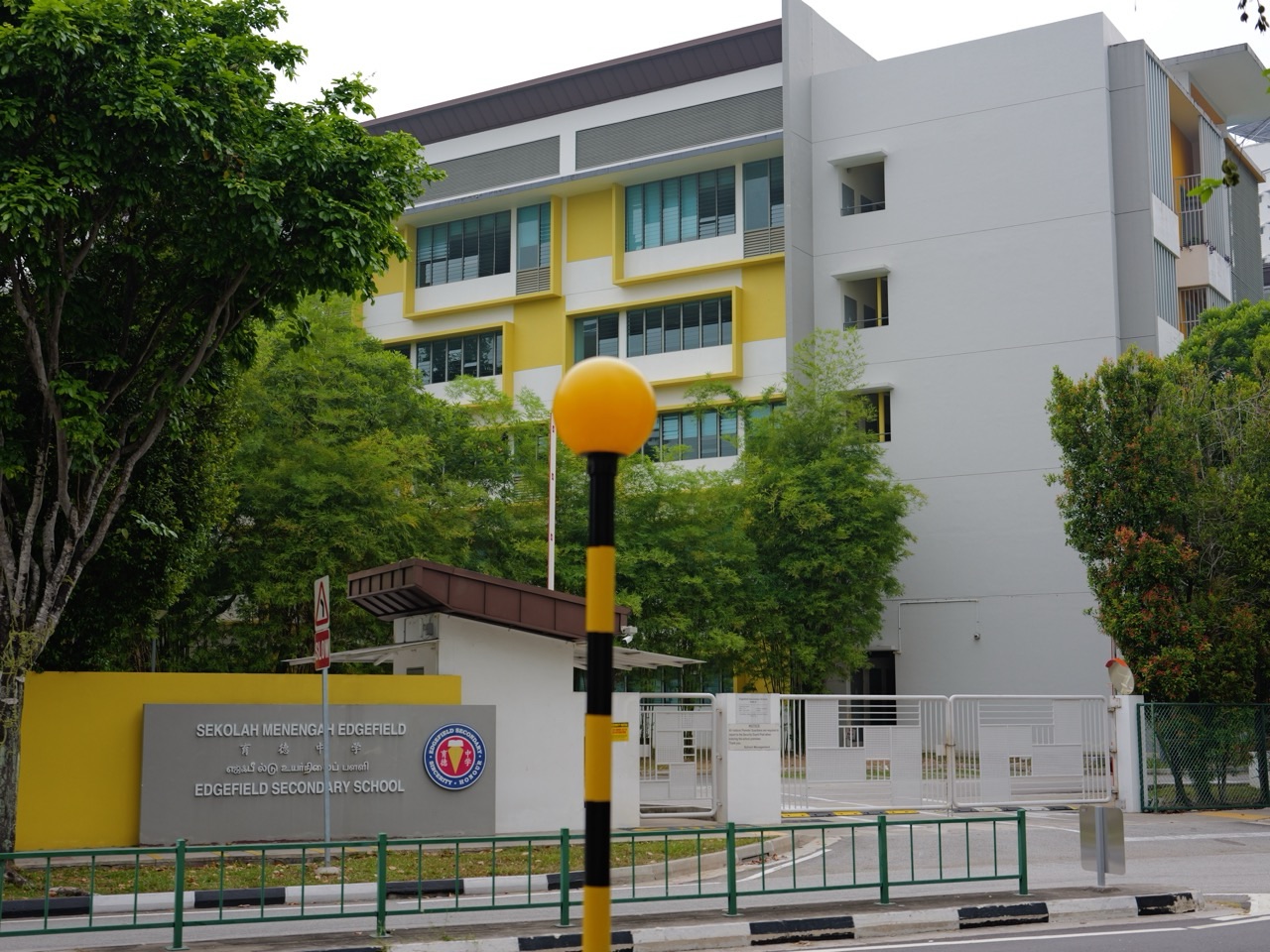
If your Punggol child loves planes, building gliders, using flight simulators or learning about drones, Edgefield Secondary, Greendale Secondary and Yusof Ishak Secondary provide three different aviation-related opportunities worth investigating. Edgefield publishes a Singapore Youth Flying Club (SYFC) CCA with gliders, flight simulation, radio-control aircraft and drone activities. Greendale publishes National Cadet Corps (NCC) Air with aeromodelling and radio-control flying within a broader cadet programme. Yusof Ishak describes aeronautics among school-wide S4TEM@YI STEM experiences. Punggol Secondary has a broader environmental and community applied-learning focus, not a documented equivalent aviation specialist programme in the sources reviewed.
The family still needs a formally eligible secondary school, not just a desired flying activity. After 2026 PSLE results are released on Tuesday, 24 November at 11.00am, read the pupil’s total, individual ALs and personalised PG1/PG2/PG3 options. A school’s aviation CCA does not override ordinary academic posting, and a school place does not guarantee CCA allocation or permission to operate a drone. This guide distinguishes actual flying-club, NCC Air and STEM experiences, asks what pupils learn about flight safety and engineering, and compares the four Punggol schools’ historical completed 2026-entry cut-offs for 2027 Secondary 1 selection. The S1 Portal closes on Monday, 30 November 2026 at 4.30pm.
Quick parent summary
• Edgefield: school-published SYFC CCA with glider building, flight simulation, radio-control planes, drones and competitions.
• Greendale: NCC (Air), a uniformed group combining discipline, fitness and cadet skills with RC flying and aeromodelling.
• Yusof Ishak: school-wide S4TEM@YI activities include aeronautics; STEM and Robotics CCAs are separate opportunities.
• Punggol Secondary: investigate ordinary Science, Mathematics, D&T, environment and other CCAs; do not invent a dedicated aviation programme.
• Flight-related activities need appropriate supervision and compliance with relevant drone and model aircraft rules.
• School placement, a selected CCA, a flying-club experience and a future pilot licence are different matters.
• Compare the actual Posting Group and historic school COP, rank six genuine schools and submit on time.
First ask what attracts the child to aircraft
Aviation covers more than being a pilot. One child likes recognising aeroplane models, another loves folding and testing paper gliders, a third enjoys building drones and another wants to understand engines, flight control or airport logistics. Some pupils enjoy aviation simulation because it combines spatial reasoning and procedures, while others want outdoor model-building with friends. These are different interests and can lead to different school activities.
Ask the pupil to explain what they want to do weekly. Are they eager for structured cadet training, interested in flight theory and simulators, or curious about engineering design and coding? Do they enjoy teamwork and outdoor training? A child may admire the uniform of an aviation-related group but prefer a different practical learning experience once they understand the routine.
A good secondary-school choice should also preserve the child’s wider education. Science, Mathematics, English, Humanities, character, friendships and a sustainable commute all matter. An aviation interest at twelve can evolve into aerospace engineering, design, computing or an unrelated hobby. It is not a promise of a flying career or a reason to ignore other subject strengths.
Three aviation routes in Punggol are genuinely different
| School | Published opportunity | What the child can investigate |
|---|---|---|
| Edgefield Secondary | Singapore Youth Flying Club CCA | Glider construction, flight simulators, radio-control aircraft, drone activities and flight theory |
| Greendale Secondary | NCC (Air) uniformed group | Cadet training, team discipline, fitness, aeromodelling and RC flying |
| Yusof Ishak Secondary | S4TEM@YI school-wide aeronautics among STEM learning | Applied aeronautics, design, coding and sustainable-city connections |
| Punggol Secondary | Environment Education and community leadership | Science and technical interests through current subjects and actual club options, rather than a claimed aviation programme |
The most important warning is that an ALP is not the same as a CCA. Yusof Ishak’s aeronautics exposure within school-wide STEM learning does not necessarily provide the same weekly aircraft activities as Edgefield’s SYFC CCA. Greendale’s NCC Air is a cadet programme with military-related training and aviation-related enrichment; it should not be described as a pure flying club.
Even where the school lists a CCA in 2026, entry for the 2027 cohort may involve recruitment or a capacity-limited allocation. Ask the actual school about its incoming-year process rather than telling the pupil that school admission will deliver a guaranteed weekly drone experience.
Edgefield Secondary: Singapore Youth Flying Club
Edgefield Secondary is at 36 Punggol Field, Singapore 828814. Its official SYFC CCA page describes glider construction, flight simulation, flying radio-control planes, drones and drone soccer. Pupils learn about aircraft, aeromodelling, teamwork and problem-solving through hands-on projects and competitions.
The independent Singapore Youth Flying Club CCA programme also lists Edgefield among its participating secondary schools. The wider programme introduces aviation knowledge, simulator flying and aeromodelling for students within the applicable age range. This independent confirmation is helpful because it distinguishes an actual ongoing aviation CCA from a single school open-house demonstration.
For a child who wants an aviation-centred club, Edgefield is therefore a concrete school to investigate. Ask how new pupils are introduced to flight theory, model construction and simulator use, whether particular advanced flying opportunities are selected, what safety rules apply and how school equipment is managed. A past competition award does not guarantee the pupil will attend an aircraft experience or a national competition.
Edgefield’s official 2026 training information lists Friday activity time, but 2027 dates, venues and recruitment should be checked directly after posting. A child may also need to explore other CCAs if their desired SYFC place cannot be allocated. The whole school should still suit the pupil’s academic needs.
Greendale Secondary: NCC Air as a cadet experience
Greendale Secondary is at 51 Edgedale Plains, Singapore 828866. The official NCC Air page describes a cadet programme involving teamwork, drills, fitness, fieldcraft and other structured activities. It also reports radio-control flying and aeromodelling experiences, including opportunities associated with relevant competitions and NCC events.
A pupil interested in aircraft may enjoy Greendale NCC Air, but they should understand that the CCA is not merely an aeroplane hobby group. Physical fitness, discipline, group responsibilities and cadet values form part of the ordinary programme. Ask the child whether they enjoy this broader experience before choosing the school solely because of the word ‘Air’.
Greendale also has a separate Design, Technology and Engineering ALP. A student interested in engineering a glider may find the design process motivating, but ALP and NCC Air are distinct experiences. Parents should ask how students are allocated to uniformed groups and which elements of aeromodelling are part of regular training versus selected events.
Yusof Ishak Secondary: aeronautics within S4TEM@YI
Yusof Ishak Secondary is at 8 Sumang Walk, Singapore 828676. Its S4TEM@YI Applied Learning Programme explicitly includes aeronautics, together with urban farming and coding, as part of school-wide STEM exposure connected with a sustainable smart city. The school also lists separate STEM and Robotics Clubs.
This may appeal to a pupil who likes aerodynamics but also enjoys programming, physics and systems engineering. Ask what a Secondary 1 class actually does in the aeronautics component, how projects are supervised and what is available to students who wish to go deeper. An ALP description does not prove that the school has a separate SYFC flying CCA.
Yusof Ishak’s location in western Punggol can make the morning journey easy for some families while others may need longer travel. It is sensible to consider the full school-day timetable as well as a possible late club day when comparing with Edgefield or Greendale.
Punggol Secondary: still a valid school for a flight enthusiast
Punggol Secondary is at 51 Edgefield Plains, Singapore 828870. Its published emphasis is environmental learning and community leadership rather than a dedicated aviation programme. It would be misleading to invent an aviation club at the school solely to make a four-column comparison look symmetrical.
A child passionate about aircraft can still study Mathematics, Science, English and design at a school without an aviation-specific club. They may pursue age-appropriate aviation reading, model-building or other approved outside interests, with family and school guidance. Ask Punggol Secondary about actual current Science and technology opportunities, CCAs and how the pupil can balance them with their interest.
A mainstream school with a supportive learning culture and a manageable journey can be a strong educational fit even if the pupil’s favourite specialised activity takes place outside school. The child need not be told that an aviation career is impossible because their school does not run one named CCA.
Flight simulation, aeromodelling and drone flying are not the same activity
| Activity | Useful learning | Safety and eligibility question |
|---|---|---|
| Paper or unpowered gliders | Lift, balance, design, repeated fair comparisons | Where can pupils test models safely with school supervision? |
| Flight simulators | Spatial reasoning, procedures and recognising controls | What actual hardware and teaching are available? |
| Radio-control model aircraft | Aerodynamics, discipline and technical operation | Who supervises and where is operation authorised? |
| Drones | Sensors, control, practical technology and safe operations | What drone and airspace rules apply, and who is qualified to supervise? |
| Cadet aeromodelling | Teamwork, fitness, organisation and aviation-related skills | Is the pupil comfortable with NCC’s broader commitments? |
| Professional pilot training | Much later regulated qualification pathway | Do not confuse a secondary CCA with a pilot licence |
Singapore has legal and safety requirements governing unmanned aircraft and model flying in relevant areas. A school-sponsored experience should use its authorised equipment, approved locations and supervised procedures. A parent should not tell a child to fly a privately bought drone from an HDB rooftop, crowded park or restricted airspace simply because they saw a drone video online.
A safe family learning activity can begin with paper gliders, a simple explanation of forces or an appropriate simulator. Actual outdoor model operation should follow the current Civil Aviation Authority of Singapore rules and proper adult supervision. School staff can explain what pupils may do under the programme.
What science and maths make aviation interesting?
Aeronautics provides natural reasons to learn about forces, motion, energy, materials, measurement, geometry, graphs and coding. A pupil who loves aeroplanes may discover why small changes in wing shape alter a model’s behaviour or why measurement and reliable records are important when testing. The goal in Secondary 1 is to build scientific habits, not to master university aerodynamics.
| Learning foundation | Aviation example | What to practise |
|---|---|---|
| Mathematics: ratio and scale | Comparing two model wings | Clear proportional reasoning |
| Geometry | Wing and glider shape | Accurate drawing and measurement |
| Science: forces | What affects flight and motion? | Conceptual explanation |
| Graphing | Distance or time from simple trials | Proper axes, units and interpretation |
| English | Describing a design decision | Clear evidence-based explanation |
| Design & Technology | Prototype, test and revise | Learning from mistakes |
| Collaboration | Working with a CCA team | Planning, communication and responsibility |
A student who is strong in Mathematics but developing scientific explanations may benefit from a school that explicitly connects models with concepts. Another who likes hands-on gliders but struggles with ratio needs appropriate numeracy help. These are individual teaching questions; the CCA name alone does not answer them.
The four Punggol school cut-offs for the completed 2026 intake
These are the historical final-admitted PSLE Scores for the 2026 Secondary 1 intake after PSLE 2025. They are not confirmed thresholds for 2027 or rankings of aviation teaching quality. A smaller numerical PSLE Score reflects stronger aggregate examination performance.
| School | Past PG3 COP | Past PG2 COP | Past PG1 COP |
|---|---|---|---|
| Edgefield Secondary | 14 | 23 | 27 |
| Greendale Secondary | 16 | 23 | 27 |
| Punggol Secondary | 19 | 24 | 27 |
| Yusof Ishak Secondary | 15 | 22 | 27 |
A PG3 pupil with Score 16 may genuinely want Edgefield SYFC, but Edgefield’s previous PG3 endpoint of 14 was numerically more competitive. Greendale’s previous PG3 endpoint of 16 was a boundary match, not a guaranteed place; Yusof Ishak’s was 15 and Punggol Secondary’s 19 was less stringent. These historical distinctions are important even when the pupil is highly enthusiastic about one club.
At PG2 Score 23, the old local PG2 endpoints were Edgefield 23, Greendale 23, Punggol Secondary 24 and Yusof Ishak 22. A pupil with Score 25 may have a PG1/PG2 option, creating different school ranges. Parents should not apply a PG1 historic cut-off to a PG2 applicant because the school offers a compelling aviation CCA.
If the child’s score and Posting Group make the local schools historically ambitious, use MOE SchoolFinder to investigate eligible schools outside Punggol and compare their actual school profiles. The Singapore Youth Flying Club programme operates at other participating secondary schools, but every pupil must still satisfy the relevant school admission and CCA procedures.
What is the difference between SYFC and DSA-Sec?
The Singapore Youth Flying Club secondary-school CCA is a structured extracurricular programme for eligible members at participating schools. Direct School Admission (DSA-Sec) is a distinct school-entry pathway involving applications, talent assessment, offers and commitment rules. Joining or liking SYFC does not create a DSA offer after PSLE results day, and a confirmed DSA placement follows its separate binding conditions.
The pupil may gain aviation knowledge and teamwork experience through SYFC or NCC Air, but the future pursuit of a professional aviation qualification is a later regulated decision. Families should avoid promising that a secondary CCA experience automatically leads to flying a full-sized aircraft, enrolling in a specific polytechnic diploma or securing a career.
A safe four-week aviation interest project
Week 1: learn the basic question
Read an age-appropriate explanation of lift, weight, thrust and drag. Ask the pupil to describe what happens when a paper glider travels through the air. Avoid oversimplifying a complex physical process into one inaccurate rule; the aim is curiosity and language for further study.
Week 2: design two paper gliders
Use ordinary paper, measure dimensions and make one planned design change. Test only in a safe open space with adult guidance and without disturbing other people. Record the test conditions so the comparison is meaningful.
Week 3: record results
Use a short table to record what was observed, including any measurement limitations. Ask whether the result is consistent or may be due to variation in throwing technique. A strong Mathematics pupil can practise graphs and averages, while another pupil may focus on accurate descriptions.
Week 4: reflect and revise
Ask the pupil to write which design appeared to work better and what would need to be tested next. A thoughtful explanation of uncertainty is valuable. Do not purchase or operate a drone solely to complete a home project or bypass local airspace rules.
Questions to ask the schools before ranking them
- Is the aviation-related activity currently offered to the 2027 Secondary 1 cohort and how are pupils allocated?
- At Edgefield, what does the SYFC programme teach beginners before advanced activities?
- At Greendale, how much of NCC Air involves flying-related learning versus general cadet training?
- At Yusof Ishak, what aeronautics experiences are school-wide and which are selected enrichment?
- Which school equipment, training locations and safety rules apply to model or drone operations?
- Are additional competitions, flights or experiences selected rather than guaranteed?
- What time does the activity end, and how will the child travel home?
- How are Science, Mathematics and English foundations supported alongside the pupil’s interest?
- What school can the pupil enjoy if the preferred aviation CCA place is not available?
- How do the school’s admission range and the child’s actual Posting Group compare?
The six-school decision checklist
- Read the child’s actual total, subject ALs and personalised Posting Group choices.
- Identify whether the child wants a flying club, cadet programme, STEM exploration or general aerospace reading.
- Check the school’s official SYFC, NCC Air or ALP description rather than assuming all aviation opportunities are identical.
- Verify which experiences are open to all and which require CCA selection.
- Compare school culture, regular teaching, student support and practical travel.
- Use the correct previous PG1, PG2 or PG3 COP for every candidate school.
- Include two or three schools with less stringent historic cut-offs where suitable, following MOE advice.
- Broaden beyond Punggol if the child cannot form a balanced, genuine list locally.
- Rank six eligible schools the pupil would happily attend even without the first-choice CCA.
- Submit by 30 November and retain the portal confirmation.
Ordinary S1 posting considers academic merit and uses citizenship, choice order and computerised balloting for relevant same-score ties. Home distance is not an automatic selected-school priority. An impressive aeromodelling competition result cannot be used as a substitute for formal school eligibility unless a distinct accepted DSA arrangement applies.
The 2026 PSLE result and choice calendar
| Event | Announced timing |
|---|---|
| PSLE results | Tuesday, 24 November 2026 at 11.00am |
| S1 Portal opens | 24 November at 11.30am |
| Ordinary submission closes | Monday, 30 November at 4.30pm |
| Posting outcome | Tentatively Friday, 18 December; date to be confirmed |
SEAB confirmed the school-choice window in its 17 November 2026 announcement. One parent with Singpass can submit through the official MOE S1 Portal; those requiring help should contact the primary school before the deadline.
Frequently asked questions
Does Edgefield really have a flying CCA?
Yes. Its school-published SYFC CCA is corroborated by the Singapore Youth Flying Club’s list of participating schools. Ask about the actual 2027 application, activities and capacity.
Is Greendale NCC Air just an aviation club?
No. It is a uniformed group with cadet training, discipline, fitness and leadership, alongside aeromodelling and RC flying opportunities. A pupil should understand the full programme before joining.
Does Yusof Ishak run SYFC?
Its verified school ALP includes aeronautics within S4TEM@YI. That does not establish that it runs a separate SYFC CCA. Do not confuse the school-wide STEM theme with a named club.
Can every pupil fly drones in a school programme?
No such guarantee should be made. Opportunities depend on the school’s actual activities, safety, supervision, equipment, selection and relevant regulatory requirements.
Does an aviation CCA guarantee a pilot career?
No. A secondary CCA supports learning and interest, while pilot training and other aviation professions have separate future entry and qualification requirements.
What if my child prefers Punggol Secondary despite having no aviation CCA?
That can be a valid school choice if the pupil is eligible and likes the school’s teaching, culture and other opportunities. Their aviation interest can continue through appropriate safe learning and approved external experiences.
Official references and related eduKate reading
- Edgefield: official Singapore Youth Flying Club CCA
- Singapore Youth Flying Club: secondary-school CCA participating schools
- Greendale: official NCC Air and aeromodelling
- Yusof Ishak: S4TEM@YI including aeronautics
- Edgefield: current aviation and technology CCA directory
- MOE SchoolFinder: school programmes and historic cut-offs
- SEAB: 2026 PSLE and S1 school-choice timetable
- eduKate Punggol: coding, robotics and STEM clubs
- eduKate Punggol: sports and outdoor CCA school selection
Final parent move: Choose aviation learning by its real character: SYFC flying activities, NCC Air cadet development or STEM aeronautics are not identical. A child can be inspired by aircraft without needing a guaranteed flight, drone licence or aviation career at twelve. Confirm school entry, CCA recruitment, safety and the daily journey, and submit six real school preferences before the official deadline.


