
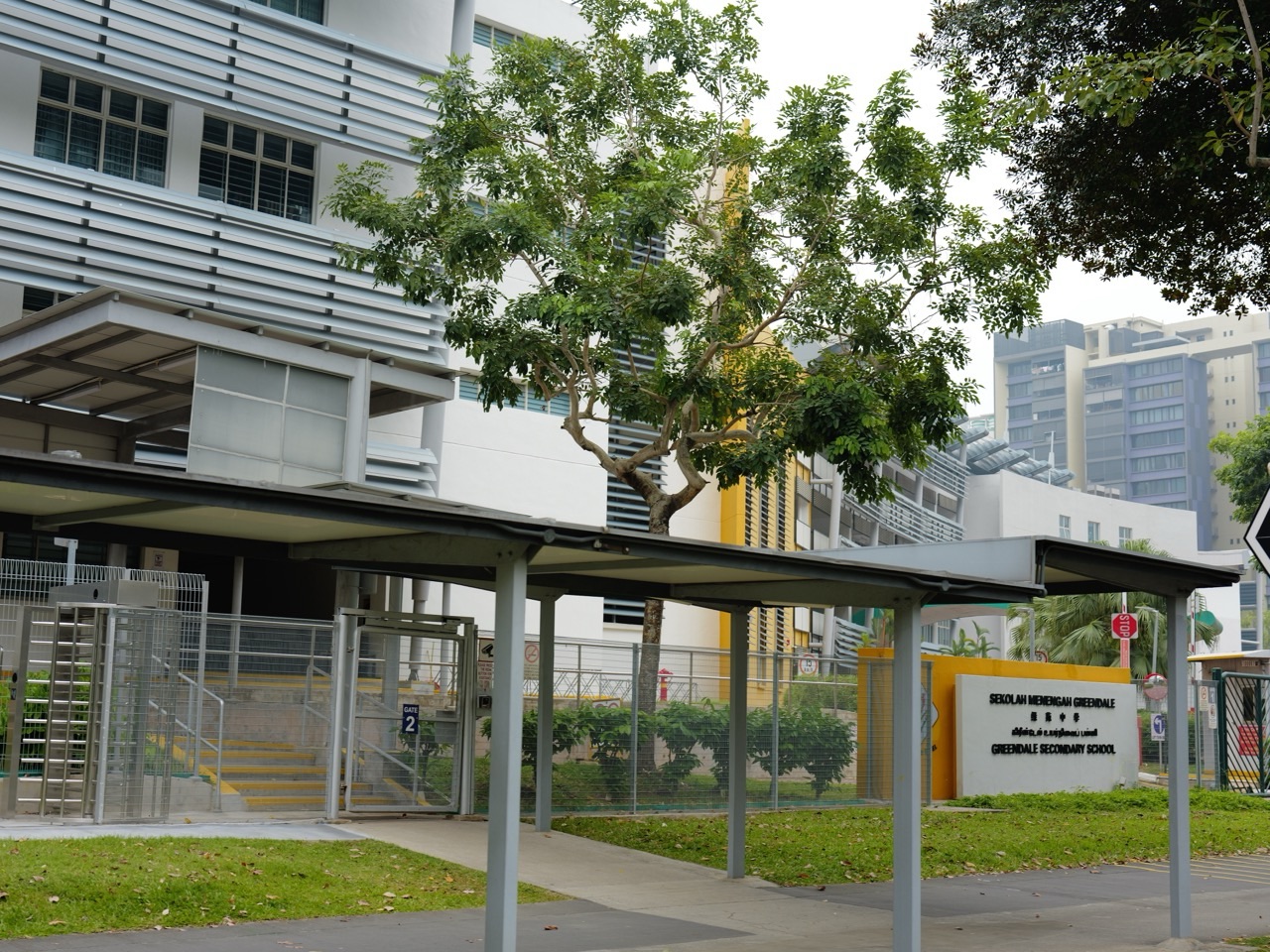
There is no verified public ranking that says Edgefield, Greendale, Punggol Secondary or Yusof Ishak Secondary gives the least homework or has the best teaching support for every child. For Punggol parents receiving 2026 PSLE results on Tuesday, 24 November at 11.00am, the practical way to choose is to ask each eligible secondary school how teachers set, coordinate and review assignments; how the child can get help with English, Mathematics and Science; and what the ordinary Secondary 1 timetable looks like. The child’s official PSLE Score and Posting Group must still be checked before any school can be treated as a realistic option for Secondary 1 entry in 2027.
A school with more worksheets is not automatically stronger, and a school assigning fewer worksheets is not automatically more supportive. Good homework gives a pupil practice at an appropriate difficulty, feedback that identifies misunderstandings and sufficient time to rest, read and participate in CCAs. A child who struggles with algebra or comprehension may benefit from direct explanation and short targeted practice, not an additional stack of questions. This guide shows parents how to compare school expectations, class and subject-group sizes, feedback systems, Full Subject-Based Banding, wellbeing and after-school workload, while using the four Punggol schools’ 2026-entry historical PG1/PG2/PG3 cut-offs honestly rather than treating them as 2027 guarantees. Ordinary S1 school choices close at 4.30pm on Monday, 30 November 2026.
Quick parent summary
• No trustworthy 2027 school-by-school ‘least homework’ ranking is available for the four Punggol schools.
• Ask for real examples of Secondary 1 work, feedback and the response when a pupil struggles.
• Distinguish form-class size from a subject teaching group; Full SBB can use different subject-level classes.
• MOE’s national 2024 Secondary 1 average form-class size was about 33.6, not a figure for any individual Punggol school.
• Compare teachers’ explanation, formative assessment, learning support and the time left for CCAs, rest and family.
• Use the correct historic school score column for the pupil’s selected Posting Group; past COPs are not admission promises.
• Rank six suitable schools and submit the official application before the deadline.
What parents usually mean by ‘less homework’
A family may say ‘We want a school with less homework’ because a child spent Primary 6 overwhelmed by tuition, schoolwork and test preparation. Another family may simply prefer time for sports and music. A third may worry that their child will not keep up with secondary algebra, Science explanations or English writing. These are different problems, even though the first question sounds the same.
Ask what kind of workload the child found difficult. Was it the sheer number of tasks, the level of the questions, unclear instructions, slow reading, difficulty concentrating, last-minute deadlines or the pressure of an adult checking every answer? If the main issue is missing fractions or ratios, a short lesson that repairs the underlying concept may reduce homework time more than changing schools.
Secondary 1 brings new subjects, teachers, timetables, CCA routines and independent travel. A pupil who used to complete assignments quickly may initially need more time just to organise the bag, read a learning platform, record tasks and ask questions. Before deciding a school has an excessive workload, distinguish temporary adjustment from persistent demands that do not suit the student.
Homework quantity is not the same as learning quality
| Type of assignment | Possible educational purpose | What parents should check |
|---|---|---|
| Short skill practice | Consolidate something just taught | Is it at the pupil’s actual level and followed by feedback? |
| Reading before a lesson | Prepare concepts and vocabulary | Is the amount and text accessible? |
| Extended project | Apply concepts, communicate and collaborate | Are milestones clear and tasks coordinated across subjects? |
| Revision or reflection | Identify uncertain areas and prepare a question for the teacher | Does the pupil learn from mistakes rather than copy answers? |
| Repeated long worksheets | May provide repetition but can become low-value when misunderstandings persist | Is the child solving independently or repeating the same error? |
| Digital assignments | Develop information and digital literacy | Are device rules, deadlines and expectations manageable? |
A useful homework policy should support learning rather than create a competition over who completes the most pages. For parents, the best questions are whether teachers identify specific errors, how homework is returned or reviewed and what happens when a child cannot understand the first step. A school should also help pupils develop independence, rather than assume every parent has time to reteach the lesson in the evening.
A child who finishes an appropriate problem independently and can explain the reasoning has learned something more durable than one who copied ten solutions from a model answer. This principle is especially relevant for Mathematics and Science. Reading and writing practice also benefit from thoughtful feedback that identifies whether the issue is content, organisation, evidence or language.
Class size: what the MOE numbers really show
Parents frequently ask whether a particular school has smaller classes. MOE’s 2025 Education Statistics Digest reports that in 2024, the national average number of pupils per Secondary 1 form class was approximately 33.6. It was about 32.9 across all secondary levels. These are national historical aggregates, not figures proving Edgefield, Greendale, Punggol Secondary or Yusof Ishak has a particular 2027 class size.
The distinction between a form class and a subject teaching group matters under Full Subject-Based Banding. Pupils may share common curriculum experiences in mixed form classes and attend different subject-level groups for other lessons. MOE’s statistical notes explain that some teaching groups can be smaller depending on learning needs and practical subjects such as Design and Technology. Parents should not assume that a school’s form-class number equals the size of every Mathematics or English lesson.
A school might have an average form class close to the national norm while some workshops or selected subject groups are smaller. Conversely, a school promotional photograph of six children around one teacher does not establish that every ordinary Secondary 1 lesson has six pupils. Ask what group sizes apply to the child’s actual subject route and what level of teacher assistance is available.
The six questions behind a meaningful class-size comparison
- What is the current typical Secondary 1 form-class size at this school, and can you confirm it for the 2027 cohort when available?
- How are English, Mathematics, Science and Mother Tongue subject teaching groups organised under Full SBB?
- Are some practical or learning-support sessions organised differently from ordinary subject groups?
- How does a pupil ask questions or seek extra help when several classmates are struggling at once?
- Does the school provide targeted small-group support for particular needs, and what determines eligibility?
- How do teachers give useful individual feedback on written or mathematical work?
The answer may depend on enrolment and timetabling that are not fixed on PSLE results day. An accurate school may explain its general arrangements and say that 2027 groups will be confirmed later. That is better than claiming an exact future class size that no one has established.
What to look for at the four Punggol schools
Edgefield Secondary: project work and strong academic foundations
Edgefield Secondary is at 36 Punggol Field, Singapore 828814. Its Growing the Edgefield Mindset Applied Learning Programme links initiative, real-world problem-solving and collaboration. A project-oriented pupil may enjoy authentic tasks, but parents should ask how ordinary English and Mathematics homework is structured and what happens when a student cannot manage a multi-step problem.
Ask for an example of feedback a lower-secondary Mathematics teacher might give when a pupil divides by the wrong quantity or misreads a ratio. Ask whether a project is broken into milestones and how teams share responsibility. This tells you more about daily learning than the school’s previous cut-off number or a picture of a successful enterprise project.
Greendale Secondary: engineering projects and practical lessons
Greendale Secondary is at 51 Edgedale Plains, Singapore 828866. Its Design, Technology and Engineering ALP includes coding and hands-on design, and its outdoor programme adds a different learning experience. Practical lessons can make difficult ideas meaningful, but the pupil may still have written assignments and ordinary assessment tasks.
Ask how teachers help students who struggle with measurement, proportional reasoning or explaining their design process. The national statistics indicate that some practical teaching groups may differ in size, but that is not proof of Greendale’s exact current group size. Parents should seek school-specific, cohort-specific facts rather than guess.
Punggol Secondary: environmental learning and subject feedback
Punggol Secondary is at 51 Edgefield Plains, Singapore 828870. Its sustainability learning can connect Science, Mathematics and writing to community and environmental problems. Parents should ask how homework is coordinated across subjects and whether project work is assessed through manageable stages.
Its published 2026 school timetable illustrates how ordinary and special learning schedules may differ, but families must obtain actual 2027 arrangements after placement. A school-day plan should include CCAs, any home-based learning and the time the pupil needs for independent revision.
Yusof Ishak Secondary: STEM learning with a balanced timetable
Yusof Ishak Secondary is at 8 Sumang Walk, Singapore 828676. Its smart-city STEM Applied Learning Programme can offer investigation and projects, while leadership and CCAs develop other skills. A family should ask how students balance different assignments and how teachers respond when a pupil’s Science interests are strong but their Mathematics foundations are developing.
For western Punggol households, the route may be manageable, leaving more evening time for rest; for others the commute may involve further travel. That is not a school quality ranking. Ask about actual reporting and dismissal arrangements alongside the pupil’s learning needs.
A realistic school comparison table—without inventing homework hours
| Question | Edgefield | Greendale | Punggol Secondary | Yusof Ishak |
|---|---|---|---|---|
| Current typical Sec 1 assignment load | Ask directly | Ask directly | Ask directly | Ask directly |
| Example of feedback to a struggling pupil | Request example | Request example | Request example | Request example |
| Subject group sizes for the child’s route | Confirm with school | Confirm with school | Confirm with school | Confirm with school |
| Project or ALP commitments | G.E.M. activities | DTE experiences | Sustainability activities | S4TEM@YI experiences |
| CCA late return and homework routine | Test from home | Test from home | Test from home | Test from home |
The deliberately unfilled comparisons are honest: there is no publicly confirmed single 2027 homework-hours figure or exact group size to copy into all four columns. Parents can use the table during a school visit and record official answers. If a school says ‘It depends on the teacher and subject’, ask for a typical week and how assignments are coordinated.
The historical 2026-entry cut-offs still determine the research shortlist
The following are the completed 2026 Secondary 1 intake cut-off points, following PSLE 2025. They are historical last-admitted scores by Posting Group and cannot guarantee a 2027 entry. A lower numerical PSLE Score reflects stronger aggregate performance. The family must compare within the child’s actual chosen group.
| Punggol school | Past PG3 COP | Past PG2 COP | Past PG1 COP |
|---|---|---|---|
| Edgefield Secondary | 14 | 23 | 27 |
| Greendale Secondary | 16 | 23 | 27 |
| Punggol Secondary | 19 | 24 | 27 |
| Yusof Ishak Secondary | 15 | 22 | 27 |
A PG3 pupil scoring 17 who wants strong feedback in Mathematics should note that Punggol Secondary’s previous PG3 endpoint of 19 was numerically less stringent, whereas Greendale’s 16, Yusof Ishak’s 15 and Edgefield’s 14 were more competitive. This historical comparison does not prove that one school offers more individual attention. It is only an admissions planning reference.
At Score 24 under PG2, Punggol Secondary’s previous PG2 endpoint of 24 was a boundary comparison and the other local PG2 numbers were 22–23. If the child has Score 25, the ordinary PG1/PG2 option may provide very different school choices and starting subject levels. The family’s concern about homework should be considered alongside academic readiness, not substituted for the correct Posting Group choice.
If local historical ranges are too competitive, families can research eligible schools in Sengkang, Hougang and other reachable estates. The ‘nearest school’ is not automatically the school whose teaching or workload is the best fit. Check each candidate’s actual subjects, support, culture and commute before listing it.
What Full Subject-Based Banding means for workload
Full SBB has been implemented from the 2024 Secondary 1 cohort. It allows eligible students to study individual subjects at levels G1, G2 and G3 that better match learning readiness. Posting Groups guide the entry route and the usual starting levels; they do not permanently define a pupil’s ability in every subject.
A child with strong English comprehension but a weaker Mathematics foundation may be eligible for a suitable combination of subject levels depending on individual PSLE ALs and school rules. The teaching pace and demands may differ between subjects. Parents should ask which levels the school will actually offer and what evidence it uses for subsequent adjustment.
Choosing PG1 solely because it seems to mean less homework can be a mistake if the child’s academic readiness and realistic school opportunities suggest otherwise. Choosing PG3 merely because the parent wants the most demanding label can also create unnecessary pressure if the child is not coping. Ask about the whole timetable, individual subject strengths and school support.
Homework and well-being: the seven-day test
Parents can use a simple one-week log after the child starts school in January. It should not become a surveillance spreadsheet or daily interrogation. Note when the pupil reaches home, how long they spend organising tasks, whether they understand the assignments and whether they have time to eat, sleep and participate in other activities.
| Observe | Possible concern | Useful response |
|---|---|---|
| Homework starts extremely late after travel | Unmanageable CCA and commute routine | Discuss schedule and transport with the child and school |
| A task takes far longer than expected | Unstable concept, reading difficulty or unclear instructions | Ask the pupil to show the first difficult step; seek teacher feedback |
| Several deadlines cluster together | Organisation or cross-subject coordination issue | Use a weekly planner and ask about school processes |
| Pupil copies answers without understanding | Practice is not producing learning | Return to the underlying concept and explain one example |
| Pupil has no time to rest | Unsustainable overall workload | Review optional commitments and speak with school staff |
| Pupil finishes but cannot explain work | Possible shallow understanding | Ask a short open question about reasoning |
The aim is to identify a pattern, not to count minutes as a competition. A child may need more time during the first weeks simply because routines are new. If the difficulty persists, seek specific help. Some students need better organisation; others need a Mathematics explanation, English reading support or a different assessment of the workload. Work with the receiving school rather than blaming the pupil for every long evening.
How the Clementi small-group teaching principle can help at home
A useful educational approach is to identify precisely which concept is unstable and provide clear, focused instruction. For example, a pupil who repeatedly adds denominators when adding fractions is showing a particular misconception, not evidence that they need two hours of random extra questions every night. A child who cannot explain why a ratio method works may need a diagram or a more concrete example before independent practice.
Likewise, a pupil writing a Humanities paragraph may understand the event but lack the ability to select evidence and explain how it supports a claim. Ask the teacher for an example of successful work and a specific next step. Better feedback can reduce repeated mistakes and frustration.
Extra tuition is optional and should respond to a genuine need. A child who is settling well may benefit more from reading, recreation and sufficient sleep than from extra classes. If targeted tutoring is chosen, it should complement rather than duplicate school teaching and leave time for independence.
Twelve questions for a school open house or enquiry
- How does the school help new Secondary 1 pupils learn to record assignments and organise deadlines?
- What does a typical week of English, Mathematics and Science homework look like?
- How do teachers coordinate larger projects or assignments across subjects?
- What type of feedback does a pupil receive after making repeated conceptual errors?
- How does a child ask for extra help after class or through authorised school channels?
- Are there targeted learning support groups and how is entry into those sessions decided?
- What is the current typical Secondary 1 form-class size and how do subject groups differ?
- How does Full SBB affect the actual class timetable for pupils taking different G levels?
- What is the school policy for digital learning, submissions and unexpected technical problems?
- How do teachers support students who struggle to balance CCA and study?
- How are parents informed if the child is falling behind or becoming distressed?
- Which details can the school confirm now, and which will only be known after 2027 enrolment?
Building a balanced six-school list
- Read the pupil’s official PSLE Score, individual ALs and personalised Posting Group options.
- Choose the appropriate entry route before comparing school cut-offs or workload.
- Use MOE SchoolFinder to confirm the current programmes, subjects and previous score ranges.
- Ask about academic support, class group arrangements and the feedback a pupil will receive.
- Record what the child values in school culture, CCAs and friendships.
- Include two or three schools with less stringent previous COPs than the child’s score where suitable.
- Research other reachable schools when the four local Punggol scores offer too narrow a historical range.
- Test morning and after-CCA travel to understand the real evening timetable.
- Rank six genuine schools in preference order and verify the school codes.
- Submit through the S1 Portal and save the official confirmation.
Ordinary school posting considers academic merit. In relevant same-score ties, citizenship, school-choice order and computerised balloting are the tie-breakers. A school with less homework is not automatically a guaranteed place, and living across the road does not give normal selected-school distance priority. Admission and daily learning quality must be evaluated separately.
The 2026 results and S1 submission dates
| Event | Timing |
|---|---|
| PSLE results | Tuesday, 24 November 2026, 11.00am |
| S1 Portal opens | Tuesday, 24 November, 11.30am |
| S1 school-choice deadline | Monday, 30 November, 4.30pm |
| Posting outcome | Tentatively Friday, 18 December; final confirmation to follow |
The SEAB results-day release recommends holistic school choices and two or three schools with previous COPs less stringent than the child’s score. One parent with valid Singpass can ordinarily submit through MOE’s portal; families needing assistance should contact the primary school before the deadline.
Frequently asked parent questions
Which of the four Punggol schools gives the least homework?
There is no verified school-by-school 2027 homework workload ranking. Ask the schools about typical weeks and how students get help, and compare answers without inventing quantitative claims.
Is a smaller class always better?
Not as a universal rule. Teaching quality, appropriate subject grouping, feedback and classroom culture also matter. National form-class averages do not establish a named school’s exact subject group size.
Does Full SBB mean my child stays in one class for every subject?
No. Mixed form classes provide common experiences, and pupils may attend different groups according to individual G1, G2 and G3 subject levels. Ask the school how it organises the actual timetable.
Should we choose PG1 for less academic work at Score 25?
Not automatically. A score-25 pupil may have PG1/PG2 options; compare real school choices, individual readiness and subject opportunities rather than assume a group is simply an amount of homework.
Is a more competitive school cut-off proof of better teachers?
No. A historical COP records one cohort’s last admitted score and is not a causal rating of teachers, homework design or child wellbeing.
Should I hire a tutor before Secondary 1?
Only when a particular learning gap calls for targeted help. Some children settle and learn well through their school lessons; avoid making extra tuition an automatic response to a new timetable.
How can parents know whether homework is appropriate?
Ask whether the child understands its purpose, can attempt it independently, receives useful feedback and still has a sustainable routine. If difficulties persist, discuss a specific example with the teacher.
Official sources and related eduKate reading
- MOE Education Statistics Digest 2025: 2024 Secondary 1 form-class sizes and explanatory notes
- MOE: Full Subject-Based Banding, Posting Groups and individual subject levels
- SEAB: 2026 PSLE result day, school choice and deadlines
- MOE SchoolFinder: verified school profiles and previous cut-offs
- Punggol Secondary: historical published timetable arrangements
- eduKate Punggol: identifying Mathematics gaps alongside Science strengths
- eduKate Punggol: working parents’ school-day and CCA routines
- eduKateSG: immutable Clementi first-principles small-group Mathematics reference
Parent conclusion: A school should help a child understand, practise and grow—not simply accumulate pages of homework. Ask honest questions about assignments, class and subject groups, the feedback students receive and their daily wellbeing. Compare educational fit with correct historical admission ranges, protect time for rest and genuine interests, and submit six realistic school preferences before the official deadline.
