
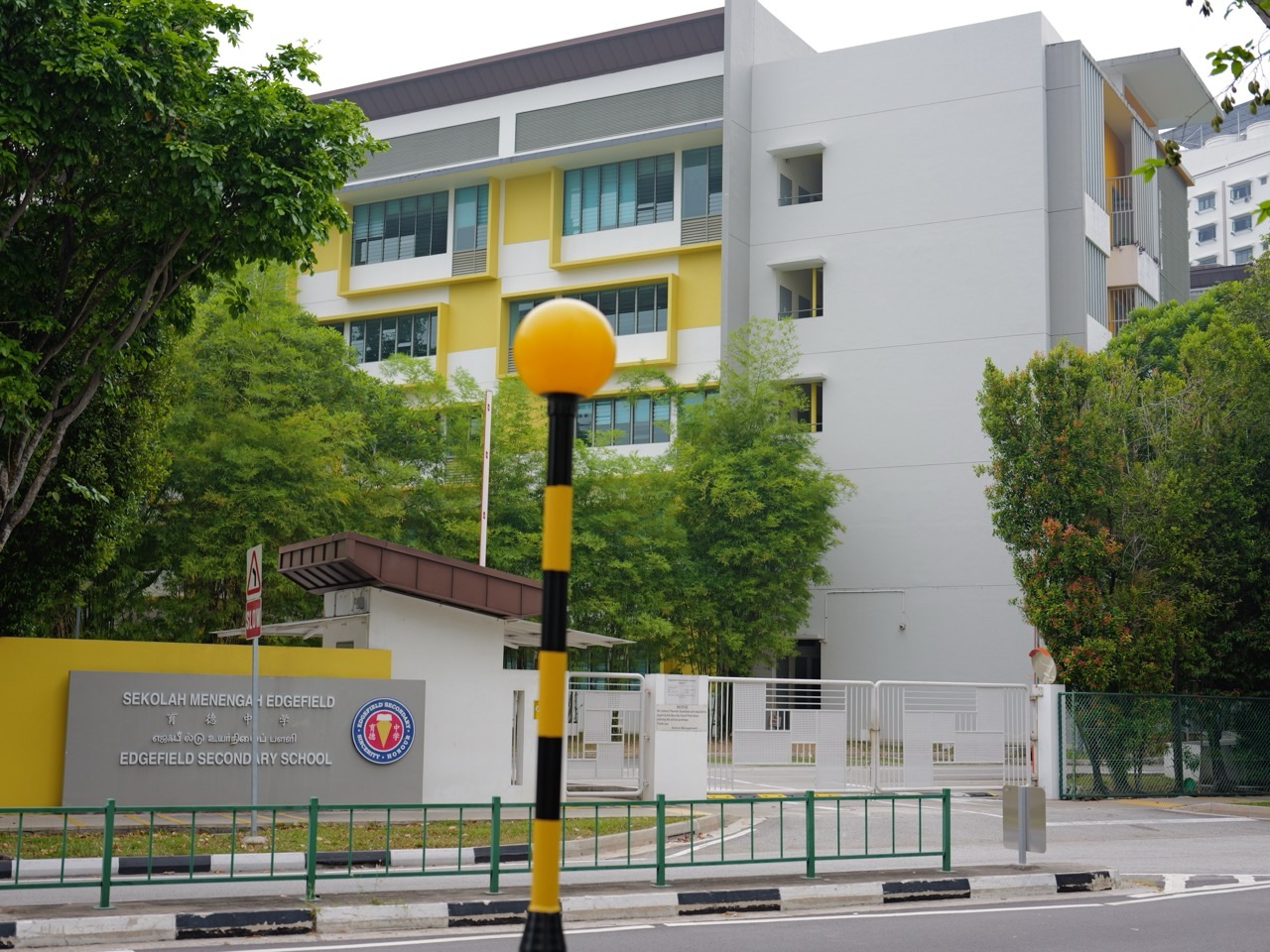
For a Punggol child with a PSLE Score between 13 and 16, the normal Secondary 1 route is Posting Group 3 (PG3). The question is not whether a family should choose PG2 instead; it is which eligible PG3 school provides the best combination of teaching, subjects, CCAs, school culture and a daily journey the pupil can manage. Punggol has four mainstream secondary campuses: Edgefield at Punggol Field, Yusof Ishak at Sumang Walk, Greendale at Edgedale Plains and Punggol Secondary at Edgefield Plains. They have different historical score ranges and different programmes.
For the completed 2026 Secondary 1 intake, their PG3 last-posted scores were Edgefield 14, Yusof Ishak 15, Greendale 16 and Punggol Secondary 19. Thus Score 13 was numerically stronger than all four last-posted scores; Score 14 equalled Edgefield’s old boundary; Score 15 equalled Yusof Ishak’s old boundary; and Score 16 equalled Greendale’s old boundary. These are previous intake observations, not guaranteed 2027 cut-offs. The final 2027 intake result is known only after the new cohort’s results and choices are processed. Families should check the latest official MOE SchoolFinder profile before submitting their six ranked choices.
- PSLE 13–16: normally PG3; compare PG3 school information, not more lenient-looking PG2 figures.
- 2026 Punggol PG3 historical last posted: Edgefield 14, Yusof Ishak 15, Greendale 16 and Punggol Secondary 19.
- Score 13: numerically stronger than all four old local cut-offs, but admission remains competitive.
- Score 14: at Edgefield’s previous boundary, stronger than the other three.
- Score 15: historically beyond Edgefield, at Yusof Ishak’s boundary, and stronger than Greendale and Punggol Secondary.
- Score 16: historically beyond Edgefield and Yusof Ishak, at Greendale’s boundary, stronger than Punggol Secondary.
- Six school choices: consider genuinely preferred schools with a spread of past margins; Punggol offers only four local campuses.
- Future study: later SEC subject levels and grades, not the school’s past admission score, govern JC, polytechnic, PFP, ITE and degree pathways.

Read the score direction correctly
PSLE totals run in the opposite direction from some parents’ intuition about grades: lower totals mean stronger performance. A result of 13 is stronger than 16. In a historical PG3 table, a cut-off of 14 means the last admitted pupil in that exercise had Score 14; it does not mean that a pupil scoring 14 will always enter in every future year, and it does not tell us how good the school’s teaching is.
Cut-off points emerge from applicants’ preferences, cohort scores, capacity and the applicable tie-breaks. A family cannot know the next last-posted score in advance, and small differences may move between cohorts. A school that had a last-posted 16 in one year may not necessarily do so the next. Parents should treat a numerical margin as an input to a school-choice plan, not a guarantee or a measure of their child’s worth.
| School | Completed 2026 PG3 COP | Campus location | School-published emphasis |
|---|---|---|---|
| Edgefield Secondary | 14 | 36 Punggol Field | G.E.M. entrepreneurial thinking and a Taekwondo-anchored character programme |
| Yusof Ishak Secondary | 15 | 8 Sumang Walk | STEM for sustainability and smart cities, plus student leadership |
| Greendale Secondary | 16 | 51 Edgedale Plains | Design, Technology and Engineering with Outdoor Adventure Education |
| Punggol Secondary | 19 | 51 Edgefield Plains | Environmental Education with Community and Youth Leadership |
The programme descriptions come from the schools themselves, not from a league table. A programme’s existence does not mean every pupil participates in advanced competitions or takes every related examinable subject. Parents should confirm the incoming cohort’s actual learning and CCA arrangements with the school.
Four worked PSLE scenarios
Score 13: four historically plausible Punggol campuses
For a Score 13 pupil entering PG3, all four local 2026 last-posted scores were numerically weaker: Edgefield 14, Yusof Ishak 15, Greendale 16 and Punggol Secondary 19. This gives the family more historical options to investigate locally, but it does not imply that these schools will all offer a place next year. The correct question is which school the pupil would genuinely want to attend and where the academic programme, CCA opportunities and commute fit.
This pupil may be interested in English and Humanities, Science and Robotics, music, sport or community service. A stronger PSLE total does not require the child to attend a school perceived as most prestigious. A child may benefit from a distinctive programme they enjoy and a stable routine near home. The family can also consider suitable schools beyond Punggol if their programmes better meet the child’s interests.
Score 14: understand the difference between a boundary and a margin
At Score 14, Edgefield’s completed 2026 PG3 last-posted score was also 14. That is a historical boundary match, not a guaranteed place. The same pupil was numerically stronger than the other three local historical PG3 cut-offs. If Edgefield is the genuine first preference, it can be investigated as such; the family should still include other schools the child would willingly attend.
If the pupil likes entrepreneurial work or Taekwondo, Edgefield’s official school information makes those themes worth discussing. If the pupil is more interested in Greendale’s technology and outdoor learning, Greendale could be a genuine preference even though its old cut-off was numerically different. Ranking schools solely from the lowest cut-off would be an inferior decision method.
Score 15: Yusof Ishak at the old boundary
At Score 15, the 2026 PG3 score of Edgefield 14 was numerically stronger than the pupil’s result. Yusof Ishak 15 was an old boundary match. Greendale 16 and Punggol Secondary 19 were numerically less competitive historical references. In this situation, a family should not automatically discard a school that might be preferred just because another had a more selective last-posted score. Evaluate academic support, culture and daily transport.
Yusof Ishak’s official STEM programme offers activities such as urban farming, coding and aeronautics connected to sustainable and smart cities. The pupil should ask whether those activities sound engaging and what the ordinary Secondary 1 experience involves. A child who does not enjoy STEM activities might prefer another environment, regardless of numerical score.
Score 16: Greendale at the old boundary
At Score 16, Greendale 16 was the previous PG3 boundary, Punggol Secondary 19 was historically less selective, and Edgefield 14 and Yusof Ishak 15 were numerically tighter. That suggests a local shortlist can include a mixture of previous margins rather than six aspirational names. Still, neither Greendale nor Punggol Secondary should be described as guaranteed for 2027.
Greendale’s school-published focus on engineering, design, coding and outdoor adventure may attract a pupil who likes making things, learning in groups and solving unfamiliar problems. Ask whether the pupil actually wants those experiences and can cope with the normal academic day. The school’s 2026 open-house information described a collaborative, thinking and safe learning environment, which parents can explore through school visits and direct conversations rather than treating a slogan as a proven outcome.
Why one school is not automatically better than another
A lower last-posted score indicates greater competition for places in that particular posting group and year. It is not a controlled study of teaching effectiveness, school safety, future university admissions or student happiness. Punggol Secondary’s historical PG3 score of 19 does not make its Environmental Education programme less valuable to a student who loves ecology or community projects. Edgefield’s 14 does not mean every child will flourish there.
The child’s fit is a combination of curriculum, teachers, student relationships, available CCAs, individual strengths, school culture and daily travel. Two pupils with the same PSLE Score may rationally choose different schools. A family should make those differences explicit rather than assume that ‘higher-ranked’ means ‘best for us’.
Compare the programmes with questions that have actual answers
| Programme question | Useful verification | Question to avoid |
|---|---|---|
| Entrepreneurship and problem solving | Which G.E.M. activities do all Edgefield pupils undertake? | Will this automatically make my child a business leader? |
| STEM and sustainability | Which Yusof Ishak activities are school-wide, optional or selected? | Does urban farming guarantee a science diploma? |
| Engineering and outdoor learning | Which Greendale design or Outdoor Adventure activities happen in Secondary 1? | Does a coding showcase mean every pupil gets G3 Computing? |
| Environment and leadership | How do Punggol Secondary pupils take part in environmental and service projects? | Does the ALP guarantee university admission? |
Programme fit becomes more meaningful when the pupil can answer why it interests them. A student who likes robotics should be able to describe an actual problem they enjoy solving. A pupil who loves storytelling may prefer English Drama or a media CCA. A student who values environmental sustainability may enjoy projects that combine Science and service. Parents should avoid projecting their own preferred career onto the child at age twelve.
How to include six school choices when there are four local campuses
The usual S1 Posting process asks eligible families to submit six ranked secondary-school choices. Even if all four Punggol campuses are under consideration, the family needs to examine at least two other realistic schools. They may include suitable schools in Sengkang, Hougang or elsewhere depending on the pupil’s historical PG3 margin and the actual journey. A school in the next town can be more convenient than one on the opposite side of Punggol.
MOE recommends a spread of previous-year cut-offs and, where possible, around two or three schools whose old cut-offs are numerically weaker than the pupil’s score. At Score 13, the local old cut-offs provide several numerical margins, but this does not remove competition. At Score 16, the family may need to widen the set to build an adequately balanced list. The list must remain grounded in actual eligibility and genuine preferences.
The official tie-breaks at the same PSLE score involve citizenship, school preference order and computerised balloting. Ranking a preferred school higher can matter in a defined tie situation; it does not override a stronger PSLE score. A parent should not submit a false order merely because an online calculator offers imagined admission odds.
Understand Punggol geography before signing up for four years
Yusof Ishak’s campus on Sumang Walk may be accessible to some western Punggol households; Greendale at Edgedale Plains may suit a different part of the town. Edgefield and Punggol Secondary are also in different streets. The family should calculate from its own HDB block or residential entrance, not from Punggol MRT as an imaginary universal origin.
- Record the actual student gate and morning reporting time.
- Walk from the real home exit to the intended bus, MRT or LRT boarding point.
- Include waiting, transfers and the final walk.
- Test a rainy-day or disrupted-service alternative.
- Ask when the chosen CCA typically finishes and how the child will get home.
- Consider safety, independent travel, books and PE equipment, and the impact on sleep.
A short straight-line distance does not automatically produce a short commute. For a family with another child in primary school, independent travel and the ability to support both children matter. School selection should protect enough daily time for meals, homework, sport, reading and sleep.
Preparing for G3 English, Mathematics, Science and Humanities
The start of Secondary 1 requires a different kind of independence. In Mathematics, pupils must interpret variables and equations, organise multi-step reasoning and check working. In English, they must interpret unfamiliar passages and write precise explanations. Science increasingly requires evidence from variables, diagrams and observations. Humanities asks pupils to distinguish claims, sources and interpretations. The pupil may be ready for PG3 overall while still needing targeted support in one subject.
Consider the simple equation 5x + 3 = 28. Subtracting three from each side gives 5x = 25, so x = 5. The important skill is explaining why both operations preserve the equality. A pupil who memorises ‘move the three over’ without understanding may struggle with negative values and fractions. A useful parent can ask for explanation before asking for speed.
In reading, ask the pupil to summarise a passage and identify evidence supporting one inference. A pupil who copies long phrases without understanding needs a comprehension strategy, not only more difficult vocabulary. Schools and tutors can help diagnose specific learning gaps, but families should first observe the actual work.
The future JC, polytechnic, PFP and ITE choice is not made at PSLE
The first Singapore-Cambridge Secondary Education Certificate (SEC) graduating cohort sits examinations in 2027. Its certificate records the actual G1, G2 and G3 levels of subjects examined. From 2028, the announced JC, MI and polytechnic admissions frameworks recognise prescribed subject combinations and grades, while PFP and ITE have other qualifying routes. A child entering Secondary 1 in 2027 will normally reach this stage several years later, so current requirements are reference points rather than immutable future promises.
JC and MI pathways require qualifying language, Humanities and Mathematics/Science subject combinations at the relevant levels; direct polytechnic diplomas impose their own Mathematics, Science or other relevant-subject criteria. ITE Higher Nitec and PFP offer additional applied or foundation routes. Later university admissions depend on recognised post-secondary qualifications and course requirements. An old PG3 school cut-off is not a JC or university-admission rule.
A parent decision matrix for Scores 13–16
| Decision dimension | What to collect | Why it matters |
|---|---|---|
| Eligible PG3 schools | The child’s exact PSLE score and each school’s completed-intake PG3 range | Prevents PG2/PG3 column confusion |
| Actual school programme | Official ALP, LLP and current pupil access | Distinguishes real learning from marketing |
| Subject foundations | Individual ALs, classwork, reading and Mathematics reasoning | Shows where extra support may be useful |
| CCA and peer fit | Activities the child genuinely wants, timetable and selection | Helps build belonging without overstretching |
| Daily travel | Actual morning and late-CCA home-to-gate route | Protects energy, safety and time |
| Future options | School’s real subject menu and published later prerequisites | Avoids closing off desired paths unintentionally |
Frequently asked questions
Does Score 13 guarantee Edgefield?
No. It is numerically stronger than Edgefield’s completed 2026 PG3 last-posted score of 14, but admission for the next cohort is not fixed and relevant posting conditions still apply.
Is Greendale a weaker school because its old cut-off is 16?
A cut-off is an admissions outcome, not a teaching-quality score. Compare Greendale’s actual programmes and support with the other schools on their merits.
Can a Score 16 pupil put Yusof Ishak first?
A family can investigate and rank eligible schools according to the official rules, but the completed 2026 PG3 last-posted score of 15 was numerically stronger than 16. Do not build the entire six-choice plan around a previous numerical non-match.
Does starting in PG3 require attending JC later?
No. Depending on future subjects, grades and eligibility, pupils can pursue JC, MI, polytechnic, PFP, ITE or other pathways; PG3 is a secondary entry route, not an obligation to take a pre-university path.
Official sources and supporting guides
- MOE SchoolFinder — school profiles, previous score ranges and programmes
- MOE S1 Posting — current school choice and tie-break rules
- Edgefield Secondary: official programmes
- Yusof Ishak Secondary: STEM and sustainability ALP
- Greendale Secondary: Design, Technology and Engineering ALP
- Punggol Secondary: environmental and community programme
- MOE: 2028 post-secondary admissions update
- Related: PG3 school search for Scores 19–20
- Related: local school ALPs, LLPs and CCAs
Updated 17 November 2026. All 2026 cut-offs refer to the completed intake following the 2025 PSLE; the 2027 intake’s final cut-offs are not known in advance. Programme descriptions derive from official school pages and do not establish individual admission, subject or CCA entitlement. This is an independent parent guide, not an official MOE communication.
