
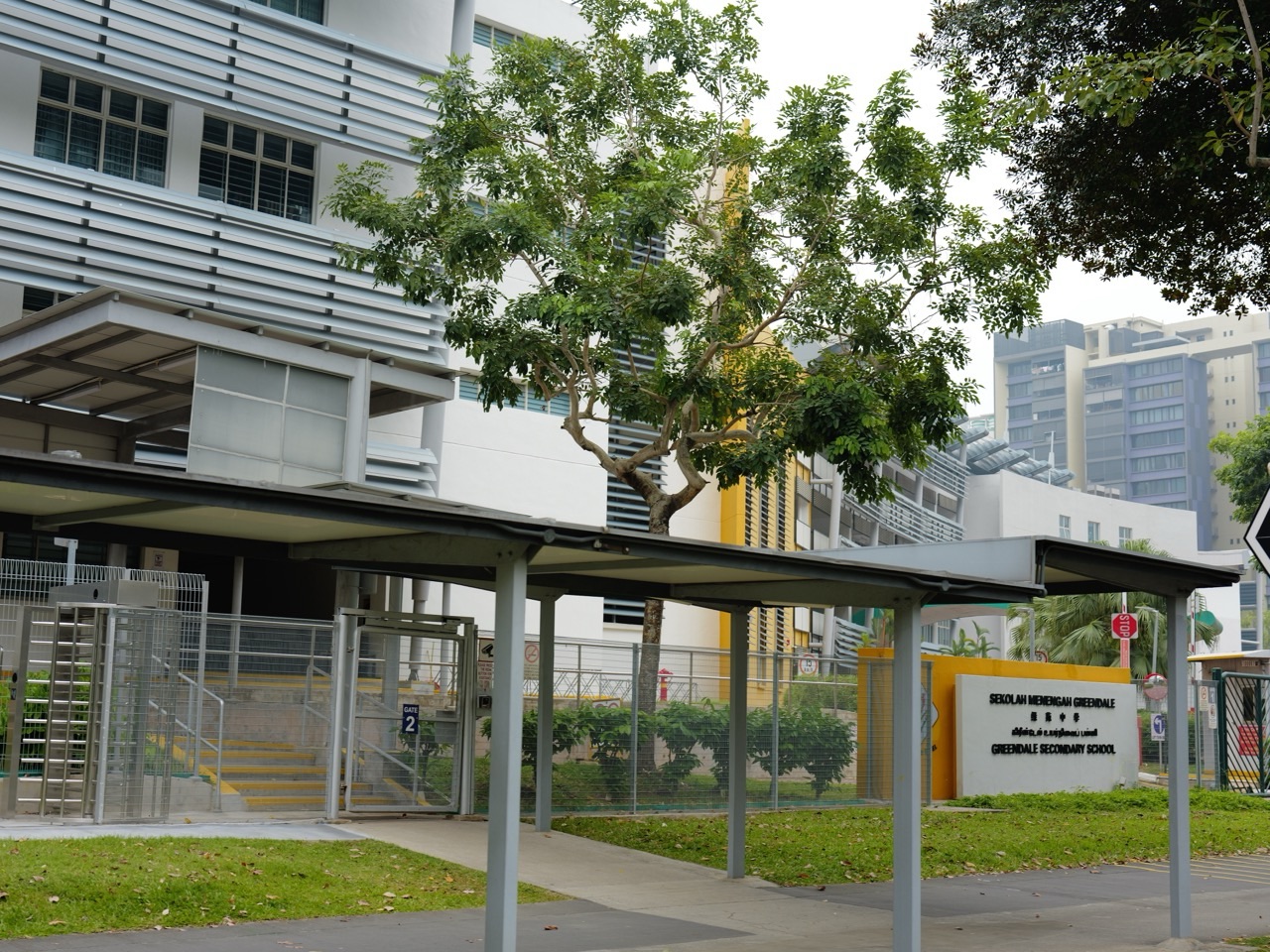
For Punggol parents comparing G3 and G2 secondary-school routes, the school’s real programmes and Co-Curricular Activities (CCAs) should be examined alongside the correct Posting Group cut-off points. Edgefield Secondary emphasises entrepreneurship and character development through Taekwondo; Greendale connects design, technology and engineering with outdoor adventure; Punggol Secondary highlights environmental education and community leadership; and Yusof Ishak Secondary has a STEM-based smart-city and sustainability programme alongside leadership development. These are verified school-published emphases, but an advertised programme is not a guarantee that every entering pupil can take every activity.
For the completed 2026 Secondary 1 intake, Edgefield’s last-posted score was PG3 14 / PG2 23; Greendale’s was PG3 16 / PG2 23; Punggol Secondary’s was PG3 19 / PG2 24; and Yusof Ishak’s was PG3 15 / PG2 22. Those are historical observations, not 2027 admission offers. A Punggol pupil with PSLE Score 21 or 22 can usually choose PG2 or PG3, but must select one group for the six-school submission. The family should use MOE SchoolFinder, the school’s own current information and actual travel arrangements to compare the eligible choices.
- Edgefield: Growing an Entrepreneurial Mindset (G.E.M.) ALP; Taekwondo-based character LLP; robotics, aviation and arts/sport CCAs.
- Greendale: Design, Technology & Engineering ALP; Outdoor Adventure Education LLP; canoeing, fencing, orchestra and other CCAs.
- Punggol Secondary: Environmental Education ALP; Community & Youth Leadership LLP; Environmental Club, Interact Club, performing arts and sports.
- Yusof Ishak: S4TEM@YI sustainability/smart-city STEM ALP; YI LEAD+ leadership LLP; STEM, robotics and arts/sport choices.
- PSLE 21–22: a PG2/PG3 choice does not override a school’s actual posting-group cut-off history.
- CCA is not a shortcut to JC or university: sustained participation builds development, while later admissions still require specific grades and programmes.
- Ask before ranking: which parts are school-wide, which are selected CCAs, whether there are trials or places, and how much time the activities require.
- Commute matters: compare the journey home after training or rehearsals, not only arrival before morning assembly.

Four school programmes: what is genuinely different?
| Punggol school | Current published Applied Learning Programme | Current published Learning for Life Programme | Question for a parent |
|---|---|---|---|
| Edgefield Secondary | Growing an Entrepreneurial Mindset (G.E.M.) | Character development through sports, anchored on Taekwondo | Is the pupil more drawn to problem-solving and enterprise, physical discipline, both, or neither? |
| Greendale Secondary | Design, Technology & Engineering | Outdoor Adventure Education | Does the child enjoy designing, coding, building, challenging themselves outdoors and working in teams? |
| Punggol Secondary | Environmental Education | Community & Youth Leadership | Would environmental investigations and sustained service work give this pupil a meaningful role? |
| Yusof Ishak Secondary | S4TEM@YI: STEM for sustainable and smart cities | YI LEAD+: nurturing honourable leaders | Does the pupil enjoy science/robotics/sustainability and communicating or leading responsibly? |
The programme descriptions in this table are from the schools’ own current pages, checked November 2026. They are not claims that the programmes are equivalent in duration, that every activity is compulsory, or that every pupil gets a competition berth. The family must ask what is core curriculum, what is enrichment, what is a CCA, and what is open through selective entry. School programmes and school subject combinations are different: an engineering-themed ALP does not automatically provide every upper-secondary computing or engineering-related subject.
This is also not a ranking. A pupil who loves acting may find a theatre CCA more valuable than robotics. A pupil interested in physics may enjoy flight or aeronautics, but not wish to take a highly competitive sports CCA. Another may value a quieter environment where they can build stable study habits and friendships. School suitability is multidimensional.
Edgefield Secondary: entrepreneurial thinking and Taekwondo-related character
Edgefield’s official description identifies its Growing an Entrepreneurial Mindset (G.E.M.) programme as its Applied Learning Programme. The associated Future Ready work emphasises scenario-based problem solving and creativity. This is relevant to a student who asks questions such as: Why would someone buy this? Can we redesign a service to reduce waste? What evidence suggests a solution is valuable? Learning entrepreneurial habits can be useful in many disciplines, not only business.
The school describes its Learning for Life Programme as character development through sports anchored on Taekwondo. For a pupil who benefits from discipline, physical activity and structured feedback, that is a meaningful topic to explore. Parents should ask what participation is universal, what activities have separate selection and how the character programme relates to the child’s ordinary timetable. Do not infer that every student must compete in Taekwondo.
Edgefield’s current CCA catalogue includes clubs such as Robotics, New Media, Art and the Singapore Youth Flying Club; performing arts such as Concert Band, Choir, Guzheng and Modern Dance; Uniformed Groups such as Girl Guides, NPCC (Sea), NCDCC and Scouts; and sports such as Badminton, Softball, Taekwondo, Volleyball and Wushu. The catalogue itself warns that its Harmonica CCA is not offered to Year 1 pupils from 2025 onwards, a useful illustration of why parents must check the incoming cohort rather than trust an old list.
Which child might benefit?
An academically curious pupil with creative confidence may respond well to an entrepreneurial ALP, while a pupil who is more hesitant could still benefit if the programme creates safe opportunities to practise. A strong Science or Mathematics score is not essential to appreciating enterprise, and a good enterprise project is not necessarily a prerequisite for an academic qualification. Ask whether the child prefers to research, plan, prototype, pitch, work with customers or help coordinate a team. Different strengths can contribute.
A parent whose child has an uneven PSLE subject profile should also ask about the support offered for weaker subjects. A Grade 4 in Mathematics cannot compensate for every English difficulty. A school’s signature programme is a bonus, not a replacement for daily teaching and pastoral support.
Greendale Secondary: design, technology, engineering and the outdoors
Greendale’s official programme overview describes its Design, Technology & Engineering ALP as supporting coding, design and real-world engineering thinking. The same school describes Outdoor Adventure Education as its LLP, with activities that develop character, resilience, teamwork and leadership. For pupils who learn well through building and testing or whose confidence improves through outdoor tasks, this combination may be appealing.
A useful parent question is whether the child’s enjoyment is practical and sustained. Some children say they enjoy coding because they have used an app. When asked to debug an actual program, they find it demanding. That is not a reason to discourage them, but it is a reason to prefer a school programme that provides staged instruction and patient feedback rather than only competitive performance.
Greendale publishes Canoeing, Fencing, Floorball, Football and Softball in its sports catalogue; Angklung and Kulintang, Dance Ensemble, Greendale Chorale, Greendale Orchestra and Theatricks! in performing arts; and NCC (Air), NPCC and Singapore Red Cross Youth among its Uniformed Groups. It also describes media-making through the Greendale Broadcasting Club. These are concrete avenues for exploring strengths beyond exam results.
Do not equate outdoor adventure with a guarantee of frequent overnight camps. Ask about the activities for the actual intake, safety briefings, medical arrangements, time commitment and whether a pupil needs selection for particular expeditions. If a child has mobility, health or sensory needs, speak directly with the school about suitable participation and support.
Punggol Secondary: environmental education and community leadership
Punggol Secondary’s principal’s programme description identifies Environmental Education as its ALP and Community and Youth Leadership as its LLP. The environmental focus can support pupils who enjoy observing nature, understanding energy and resource use, testing claims and connecting Science concepts to daily Singapore life. The community leadership focus can support empathy, communication, responsibility and service.
The school publishes an Environmental Club that organises sustainability campaigns, conservation experiences and environmental projects, and an Interact Club for service leadership. These are different from merely writing ‘I care about the environment’ in a portfolio. Members can develop project planning, communication and collaboration skills, but parents should check whether the pupil is interested in doing that work regularly.
Other current club pages identify Art, Audio Visual Aid and English Language Drama and Debate, alongside the Indian Language Drama and Debate Society. The sports catalogue includes Basketball, Football, Netball, Shooting, Table Tennis and Volleyball. Its Uniformed Groups include NCC, NPCC, Red Cross Youth and Scouts. The school has its own CCA allocation process, so a popular activity is not automatically available simply because it is listed on the website.
A pupil aiming for future environmental science or sustainability work would still need appropriate Mathematics, Science and later diploma or pre-university subjects. The school’s ALP can encourage interest and provide experience, but it cannot replace qualifying examination grades. Similarly, a pupil who becomes confident in drama has gained valuable capability even if they never apply for a performing-arts diploma.
Yusof Ishak Secondary: sustainability, robotics and leadership
Yusof Ishak’s official S4TEM@YI ALP focuses on STEM in sustainable and smart cities. The school’s current programme page mentions urban farming, aeronautics, coding, interdisciplinary work and sustainability themes. It also describes STEM Club and Robotics Club pathways. This is a substantive distinction for a Punggol child who enjoys technology and wants to see how STEM affects the built environment.
Its YI LEAD+ LLP emphasises development of leaders with a sense of service and wider awareness, through communication, guided reflection, collaboration and community initiatives. These skills are valuable for a pupil considering any later pathway, whether a JC classroom, polytechnic group project or technical workplace.
The school’s current CCA table includes STEM Club, Robotics, Infocomm Technology, English Drama, Chinese Orchestra, Concert Band, Choir, Modern Dance, Art Club, Fencing, Badminton, Table Tennis, Wushu and other named sports and Uniformed Groups. Its Robotics Club page specifically describes LEGO SPIKE work, Python and drone flight. Parents should confirm training days and selection details for the relevant Secondary 1 year rather than using a timetable from a previous cohort.
For a child interested in sustainability, both Yusof Ishak and Punggol Secondary provide relevant published programmes, but the emphases differ. Yusof Ishak’s STEM-oriented programme includes smart-city and engineering-related work; Punggol Secondary identifies an Environmental Education ALP. A parent should ask which activities the student will personally do, what prior skills are needed and whether the school environment encourages exploration.
How to read a CCA catalogue correctly
- Locate the school’s own current CCA listing; do not rely on a social-media post from several years ago.
- Check which activities exist for Secondary 1 and whether they have auditions, trials, quotas or gender-specific teams.
- Ask the training day, reporting time, dismissal time and whether competitions add sessions.
- Determine whether there are transport arrangements or the child must independently return home from a different venue.
- Ask whether compulsory equipment, instruments, uniform or programme costs require budgeting.
- Clarify any medical, accessibility, safety or personal-support requirements early.
- Discuss what the child genuinely enjoys, rather than choosing a CCA solely to accumulate a portfolio.
- Distinguish school-wide ALP/LLP exposure from membership in a separate selective CCA.
In particular, a CCA is not interchangeable with an academic elective. A Robotics Club may help a child understand coding and solve engineering problems, but it is not automatically the same as taking upper-secondary Computing or meeting Mathematics prerequisites for an engineering diploma. Choir may improve teamwork and performance confidence but it does not replace an English examination. Good co-curricular choices enrich the student; they are not admissions loopholes.
What if the pupil prefers a school but not its signature programme?
Do not reject a school solely because its signature ALP is not the child’s favourite topic. Ask how much of it is part of ordinary learning and whether there are options to explore other talents. Children change: a pupil who enters uninterested in environmental science might discover a fascination with data or insects. Similarly, do not select a school solely for one narrow CCA when the overall academic support or travel does not suit the pupil.
A good comparison includes the current school environment, teacher communication, mixed G2/G3 subject arrangements, pastoral care, parental partnership and the child’s willingness to attend. The most visible programme is only one component of four years of education.
LEAPS 2.0: educational development and potential admissions bonus
Secondary CCAs contribute to the LEAPS 2.0 framework, which recognises participation, leadership, achievement and service. A pupil’s overall co-curricular attainment can generate the applicable admissions bonus points at certain later post-secondary stages under the rules then in force. Punggol Secondary’s published LEAPS explanation currently describes Excellent attainment as two points, Good as one and Fair as none. The bonus is conditional on the official admissions exercise; do not promise that it changes every route or cancels mandatory subject prerequisites.
LEAPS recognition should not become the sole motivation for joining an activity. A child who serves willingly, learns a difficult instrument or practises with a team develops genuine skill and responsibility. Those are durable outcomes even if the future application system changes. Conversely, a parent who pushes for numerous activities may exhaust the child and undermine the academic foundation that later courses require.
Does PG2 or PG3 determine which CCA a child may join?
Not as a simple universal rule. Posting Group is primarily about admission and indicative curriculum levels. CCA access may involve school-specific offerings, sports trials, auditions, health and safety requirements or capacity. A parent should ask the relevant school whether there is any programme-specific condition rather than assuming all PG2 pupils are excluded from a named club or every PG3 pupil gains priority.
For pupils whose learning needs involve language, executive-function, social confidence or disability accommodations, ask the school how the child will participate safely. Where necessary, discuss appropriate adaptations or alternative meaningful contributions. A student should not be forced to prove worth by meeting a timetable designed for another student’s needs.
Historical cut-offs: keep the score columns separate
| Punggol campus | 2026 Secondary 1 PG3 COP | 2026 Secondary 1 PG2 COP | Programme comparison cannot prove… |
|---|---|---|---|
| Edgefield Secondary | 14 | 23 | that a Score 22 pupil can enter PG3 at Edgefield in the next exercise |
| Greendale Secondary | 16 | 23 | that a pupil automatically receives the desired advanced subject |
| Punggol Secondary | 19 | 24 | that every listed club has unlimited vacancies |
| Yusof Ishak Secondary | 15 | 22 | that a future Score 22 PG2 application is guaranteed |
These completed 2026-intake figures are an admission-history reference, not fixed 2027 cut-offs. A PSLE Score 21 or 22 family may compare two possible posting-group plans, but the entire six-school list uses the group selected for that child. Choosing a school because of ALP and LLP alone, without a realistic score comparison, creates a preventable risk of missing the desired school.
What the chosen CCA may mean for later JC, polytechnic, ITE or university
For a future JC or MI application, the key academic tests under the published 2028 framework include appropriate G3 subject combinations and an eligible L1R4 score, alongside bonus point rules and other requirements. A strong CCA record can help develop leadership or support a suitable aptitude narrative, but it does not remove grade thresholds. For a polytechnic or ITE applicant, practical projects, service or performance experiences can help demonstrate genuine interest in a course, especially where an early-admissions route assesses aptitude. Again, the particular course’s entry requirements remain decisive.
A student might start at Greendale with design projects, move to a relevant polytechnic diploma after meeting subject requirements, and later apply for a suitable degree. Another might start at Punggol Secondary, develop an environmental interest, qualify for JC and pursue science at university. These are illustrative possible pathways, not claims about the actual outcomes of school alumni or guaranteed places.
A child who enters via PG2 may still develop particular qualifying G3 subjects under Full SBB where eligible; that can affect later admissions. But no CCA alone upgrades academic levels. The family should therefore evaluate the school’s teaching and subject-level support as carefully as its extracurricular appeal.
A practical 30-minute school visit or parent conversation
- Ask the pupil to name the first two activities they would genuinely like to try.
- Check the actual school website and verify that those activities are offered to the incoming cohort.
- Ask the school which ALP/LLP modules all students experience and which require selection.
- Ask how students at G2/G3 subject levels are supported academically.
- Compare a normal lesson day and a long-CCA day from your actual Punggol home to the school gate.
- Look at the child’s energy, sleep and existing commitments before choosing an intensive activity.
- Ask about the school’s response if the pupil wishes to change CCA or cannot participate on medical grounds.
- Recheck the applicable previous-year PSLE range and school type in MOE SchoolFinder.
- Confirm the full six-school choice list using the one authorised Posting Group.
Frequently asked questions
If Greendale has a design ALP, does my child automatically take G3 Computing?
No. ALP and national examinable subjects are different programmes. The actual subject offering and entry conditions need to be verified with the school.
Does Edgefield’s Taekwondo LLP mean every pupil must join Taekwondo CCA?
Not necessarily. The school distinguishes its broader LLP from the CCA catalogue. Ask about school-wide experiences and separate CCA membership.
Can a G2 pupil join a Robotics or STEM club?
The posting group itself is not a general ban. Actual eligibility, selection, school provision and places must be checked with the school.
Is a CCA more important than the school’s last posted score?
They answer different questions. The correct posting-group score range helps assess past admission competitiveness; the CCA helps evaluate personal fit. Neither replaces the other.
Does the school’s LLP guarantee more LEAPS 2.0 points?
No. Attainment depends on the student’s documented participation and achievements against the relevant framework, not the prestige of an LLP title.
Official school references and linked reading
- Edgefield: G.E.M. ALP and Taekwondo-based LLP
- Edgefield: current CCA catalogue and cohort notes
- Greendale: ALP and LLP programme catalogue
- Greendale: performing-arts CCA details
- Punggol Secondary: environmental ALP and leadership LLP
- Punggol Secondary: clubs and societies
- Yusof Ishak: S4TEM@YI STEM ALP
- Yusof Ishak: published CCA list
- MOE SchoolFinder: verify group, latest cut-offs and location
- Next reading: four Punggol schools by historical cut-offs and travel
Checked 14 November 2026. Programme and CCA descriptions use current published school pages, which can be revised by the schools. Admission figures are from the completed 2026 Secondary 1 intake and cannot promise 2027 places. This guide is independent parent education, not an official announcement by the named schools, MOE or SEAB.


