
A Punggol dog owner may arrive at a fenced dog run and find that the entry gate does not latch, the inner gate swings open by itself or a section of the fence has come loose. Do not unclip the lead and let the dog run free simply because the entrance is partly open. Keep the dog leashed, move away from the damaged gate and alert the park operator. If dogs are already inside, wait until the entry and exit area is clear before moving through it. A faulty gate can turn a secure off-leash area into an escape route towards a shared path, nearby roads or other park users.
NParks’ Animal and Veterinary Service (AVS) dog-run guidance, last updated on 13 January 2026, explains that double-gated entrances and exits are installed in most dog runs to reduce the chance of unleashed dogs escaping. Its etiquette asks users to let one person pass at a time, check that the holding area is clear, remove the leash between the two gates and leash the dog again before returning to the main park. NParks lists a dog run at Punggol Waterway Park, so this is a practical local facility issue. The gate is not just a fence fitting: it is part of the safety arrangement that separates off-leash play from the public path.
- Keep your dog on its lead if either gate, latch or fence looks damaged or does not close properly.
- Do not prop a gate open, tie it shut with a leash, or use a personal padlock or cable tie.
- Wait for the double-gated holding area to clear before entering or exiting.
- If a dog is loose outside the enclosure, do not chase it towards a road or create a crowd; alert the owner and appropriate park staff.
- Identify the dog run, entrance, damaged gate, latch or fence section and nearest park landmark.
- Report a defect at an NParks-managed park through NParks’ official feedback channels or onsite staff.
- Do not assume the dog run is closed or repaired unless an official notice or operator confirms it.
- Supervise children closely and do not let them operate a damaged gate or stand in its swing path.
1. Why a dog-run gate is a safety feature
A dog run is designed to let dogs exercise off leash within an enclosed area. Its fence and gate define where that off-leash activity is permitted. When the gate does not close or the boundary has a gap, the separation between dogs and the wider park becomes unreliable.
A gate problem can therefore affect more than convenience. A dog may bolt out when another animal enters, a child opens the gate or a delivery cyclist passes nearby. A dog that normally responds to its owner may still react unexpectedly to a noise, another dog or a moving object. A reliable gate helps owners manage those moments.
2. Punggol Waterway Park has a dog run
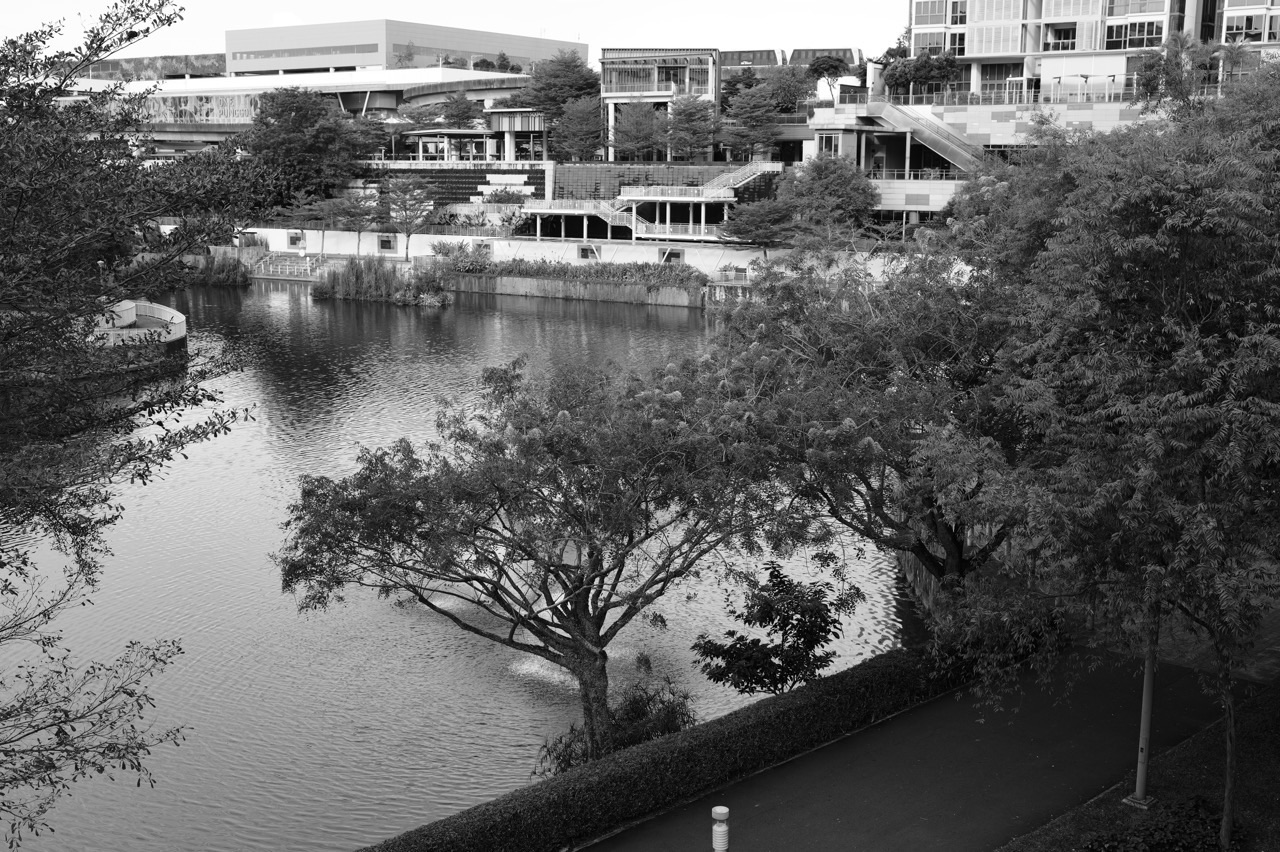
NParks’ official Punggol Waterway Park page lists a dog run as an amenity and describes it as a safe, contained place for dogs to run off leash and socialise. This confirms the facility type in the park, but it does not provide a live inspection report on the current gate condition.
The location of the actual enclosure should be confirmed from onsite signs and the current park map. Do not rely on a third-party pin alone to identify a particular gate or assume that every grassy fenced area beside a path is an official dog run.
3. What the double-gate system does
AVS explains that double-gated entrances and exits are installed in most dog runs to reduce the risk of unleashed dogs escaping, becoming lost or reaching traffic. The two gates create a small holding space between the public park and the off-leash area. When used in sequence, they provide an additional barrier.
The double gate works only when users operate it properly and both gates are able to close. If one latch is broken or one leaf does not align with its frame, the holding area may no longer function as intended. Do not treat the two gates as two ordinary doors that can both be left open.
4. One user at a time
AVS asks users to allow one person at a time to pass through the double-gated entrance or exit. This reduces the likelihood that several dogs or handlers crowd the holding area and an animal slips through an opening before the inner gate is secured.
If a gate is damaged, this one-at-a-time practice becomes even more important, but it does not make a defective gate safe. Wait for the area to be clear and keep your dog leashed until the park operator has confirmed that the entrance can be used safely.
5. The correct leash sequence
AVS guidance describes removing a dog’s leash within the space between the two gates before opening the inner gate to enter the dog run. On the way out, the dog should be leashed before returning through the outer gate to the public park. This sequence helps prevent a dog bolting into an uncontrolled area.
If a gate does not latch, do not try to shorten the sequence or remove the leash early. Keep the dog under control and wait for an alternative route or staff instruction. A lead is not a substitute for a functioning gate, but it provides an additional layer of control while you are outside the secure enclosure.
6. A latch that does not catch
A latch may fail to engage because the gate has sagged, a strike plate is displaced, the catch is worn or a component is broken. A gate that appears closed may still swing open when pushed by a dog or a breeze. A quick visual check from a safe position cannot establish that the catch is secure.
Do not slam the gate repeatedly or lift it by the frame to force the latch into place. That can worsen the alignment or pinch fingers. Tell the operator exactly which gate and latch are affected and leave the gate unused if it cannot close normally.
7. A gate that swings open by itself
A gate can move after someone releases it if its closer, hinge or latch is damaged. A dog may follow another dog through the opening before its handler can react. A gate that is only partly closed is not a reliable barrier.
Do not use a leash, water bottle, rock or other object as a doorstop or improvised counterweight. A temporary obstruction could create a trip hazard or prevent another user from leaving. Report the movement and keep your dog leashed until the operator provides a safe arrangement.
8. A broken hinge
A hinge carries the weight of the gate and controls its movement. If the fixing is loose, cracked or partly detached, the gate may sag or swing unpredictably. The door leaf could also fall or trap a hand if the damaged section is handled.
Do not lift the gate or put your fingers between the hinge and post. Keep people and dogs clear of its swing path and report the defect. The repair may require alignment, replacement hardware or a broader check of the post and fixing.
9. A bent gate frame
A metal frame can become bent following impact or repeated force. A distorted frame may prevent the latch from meeting the catch and leave a gap beside the post. Even a small gap may be enough for a small dog to squeeze through or for a collar to catch.
Do not push the frame back with body weight or a vehicle. A bent section may have weakened welds or hidden stress. Describe the gap, distortion and location, and let the park maintenance team decide whether repair or replacement is needed.
10. A gap beneath the gate
A gate that does not meet the ground or has a large gap may create an escape route, especially for a small dog. The gap could result from uneven ground, a sagging door leaf or an altered surface level. It should not be filled with loose bricks or personal objects.
Do not place a dog near the gap to test whether it can get through. Report the size and position in general terms and keep your dog leashed. The operator can assess the intended clearance and decide on an appropriate repair.
11. A damaged fence panel
A fence panel may have broken mesh, a detached wire, a bent bar or a loose fixing. Dogs may press their noses or paws against the enclosure, while children may touch the same section from outside. Sharp edges and openings need attention even if the gate itself still works.
Do not bend the panel, weave new wire through it or attach a temporary net. Improvised materials can injure animals, snag collars or detach. Keep animals clear and report the exact fence section.
12. A hole large enough for a dog to escape
The size of a gap matters relative to the dog using the enclosure. A hole that seems too small for a large dog may still allow a puppy or smaller breed to squeeze through. Dogs can also dig under a damaged fence or exploit an opening at a corner.
Do not measure a gap by encouraging your dog to approach it. Provide a safe photograph from outside the fence and a description of its location. The operator can inspect the opening and determine whether the area needs temporary closure.
13. A gate that cannot be opened from inside
A gate that is jammed shut can create a different hazard from one that will not close. Someone inside may be unable to exit normally, and a dog may become distressed in the confined space. Never force a heavy gate while other dogs are crowded around it.
Alert park staff or the responsible operator immediately. If a person or animal is in immediate danger, seek urgent assistance through the appropriate service. Do not climb the fence or squeeze through a gap if doing so could injure you or the dog.
14. A gate that cannot be opened from outside
If the outer gate is stuck closed, users may be unable to enter or leave the enclosure through the intended route. Do not climb over it or lift a small dog over the fence while other dogs are moving nearby. Wait for authorised help.
Describe whether the gate is locked, jammed, physically blocked or misaligned. These are different conditions and may need different responses. The park operator can explain whether another authorised access point is available.
15. Dogs can react quickly at entrances
The entrance is often a high-stimulation area. Dogs may be excited to enter, respond to another dog leaving or become anxious in a crowded holding space. A faulty gate adds uncertainty at the precise point where owners need the most control.
Keep the lead secure and avoid allowing dogs to greet each other nose-to-nose through a narrow gate. If the holding area is busy, wait outside at a safe distance. The dog run should not become a place where owners hurry animals through a damaged entrance.
16. Why children need to stay clear
Children may want to help open a gate or greet a dog entering the run. A heavy or spring-loaded gate can swing unexpectedly, and a dog may move before the child understands what is happening. A damaged latch can also expose sharp metal or create a pinch point.
Keep children beside the supervising adult and away from the gate’s arc. Do not ask a child to hold one gate while an adult manages a dog at the other. If the gate is faulty, use another safe activity and report it.
17. The dog may not be comfortable with other dogs
A dog run is a shared environment. AVS advises owners to ensure dogs are healthy, suitably socialised and supervised. Not every dog enjoys close interaction or can cope with a busy enclosure. A narrow entrance can intensify stress when several animals are waiting.
Do not force a reluctant dog through the gate. Keep it leashed, give other users room and choose a different walk if the entrance is crowded or unsafe. The equipment fault and the dog’s behaviour are separate considerations, but both affect the decision to enter.
18. Check health and condition before entering
AVS dog-run etiquette says dogs should be healthy, free from signs of ill-health and open wounds, and up to date with preventive healthcare. It also advises that dogs should be sterilised or not in heat and be well socialised and obedient.
A defective gate is not the only reason to avoid entry. If your dog is unwell or the enclosure is overcrowded, choose a calm walk outside the dog run instead. This protects your animal and other dogs while the facility condition is assessed.
19. Supervision remains necessary inside
Even with a sound fence, dogs must be supervised at all times. A secure enclosure does not remove the owner’s responsibility to monitor interactions, recall the dog and intervene appropriately. A gate that is being repaired may make supervision at the boundary especially important.
Do not leave a dog unattended while you visit a nearby shop or use another facility. If the gate is damaged and the dog is already inside, remain with it and follow park staff instructions about safe exit.
20. Scheduled breeds and muzzle requirements
AVS says scheduled breeds must remain muzzled in dog runs. Owners should check the current official list and use a suitable muzzle as required. A gate defect does not create an exception to these rules.
Do not rely on an old social-media list or another dog owner’s opinion. Check AVS’s current guidance. If a gate is too narrow or damaged to pass safely with a muzzled dog, ask park staff for an appropriate alternative rather than forcing the animal through.
21. Leashing before leaving the run
AVS instructs owners to leash their dogs before returning to the main park area. This is important because the dog run’s off-leash permission does not extend to the surrounding path. A gate that does not close can make this transition more difficult.
Put the lead on while still inside the enclosure and away from other moving dogs. If the internal gate cannot close, ask for help rather than releasing the dog into the holding space. The public path outside remains a shared area where dogs must be managed under the applicable rules.
22. A loose dog outside the run
If a dog escapes through a faulty gate, do not start chasing it towards a road or crowding it. Sudden pursuit may frighten the dog or cause it to run further. Alert the owner, park staff or the appropriate animal response channel, and keep other dogs from approaching.
If you know the dog’s owner, provide calm information about where it was last seen. Do not attempt to grab an unfamiliar dog unless there is an immediate safe opportunity and you are competent to do so. The priority is preventing traffic danger and further distress.
23. Keep the main path clear
Dog-run entrances may sit beside park paths used by walkers, cyclists, joggers and families. A group gathering around a damaged gate can block movement or cause dogs to approach people who are not expecting them.
Move away from the path and keep leads short enough to avoid creating a trip hazard. Do not place bags or water bowls in the access route. Report the defect without turning the entrance into an informal crowd-control area.
24. What if the gate is held open for maintenance?
An operator may deliberately leave a gate open while carrying out authorised maintenance or moving equipment. A sign or barrier may indicate that the dog run is temporarily unavailable. Do not assume the gate has been forgotten or try to close it while staff are working.
Follow official notices and ask staff where dogs may be exercised safely. Do not use the run until the operator confirms that it has reopened. A temporary closure is inconvenient but safer than using an enclosure whose boundary is being repaired.
25. How to report a gate fault at NParks facilities
NParks provides official feedback and enquiry channels for park matters through its Contact Us page. For a dog run in an NParks-managed park, identify the park, dog-run entrance and exact component that is damaged. If staff are present, tell them promptly rather than relying only on a later online report.
The report should be about the physical facility. Animal emergencies or lost-pet incidents use different NParks/AVS services. A gate that will not latch is a maintenance issue; a dog that has escaped or is injured may require a separate immediate response.
26. Use precise location details
Punggol Waterway Park has several entrances, paths and amenities. A report that says only ‘dog gate broken in Punggol’ may not tell the maintenance team which enclosure or entrance is affected. Include the nearest path junction, car park, park sign or other fixed landmark.
If the enclosure has two gates, say whether the outer or inner gate is affected. Include the date and approximate time and whether the gate fails to close, swings open, sticks or has a damaged fence connection.
27. A safe photograph
A photograph can show the entrance, hinge, latch or fence opening. Take it from outside the gate and away from the movement of dogs and other visitors. Do not place your hand near a damaged hinge or ask another owner to open and close the gate repeatedly for a video.
Avoid photographing children or identifying other dog owners unnecessarily. A wide view that locates the enclosure and a close view of the empty defective component may be enough. If taking a photo would bring you close to an agitated dog, rely on a written description.
28. Do not repair the gate yourself
A resident may think a simple cable tie, rope, carabiner or padlock will keep the gate shut. These can create additional hazards, trap users inside or interfere with emergency access. They may also be unsuitable for public fixtures and damage the gate’s intended movement.
Do not attach your dog’s leash to a gate to hold it. Do not remove screws or bend the latch. The park owner must decide how to isolate the enclosure and appoint a competent contractor for the correct repair.
29. What a good report sounds like
A clear message might say: ‘At Punggol Waterway Park dog run, the outer gate nearest [landmark] does not latch and swings open after release. I noticed this at [time/date]. I kept my dog leashed and did not use the entrance. Please inspect and advise whether the run should be temporarily closed.’
This statement identifies the exact problem and shows the reporter avoided making it worse. It does not claim that a dog has escaped or that the park operator was negligent unless those facts are known.
30. A Punggol family example
A family arrives with a dog and finds that the double-gate holding area is occupied while the outer latch appears loose. They wait at a distance, keep the dog leashed and tell the other owner that the gate may not secure. They then contact park staff or NParks rather than letting the dog enter.
This is a hypothetical example, not an allegation that Punggol Waterway Park has a broken gate. It shows how to use the double-gate space responsibly while avoiding a crowd at the entrance.
31. A small dog and a low fence gap
An owner notices a gap near the bottom of the fence and worries that a small dog could squeeze out. The owner does not test the opening with the dog or fill it with a bag. They keep the dog on lead and report the gap’s position.
The concern may be more significant for smaller animals, but the public should not measure the opening through an escape attempt. The operator can assess the fence design and decide whether a barrier or repair is necessary.
32. An exit gate stuck while dogs are inside
Several owners are inside the run when the exit gate stops opening normally. They do not climb over the fence or pull the gate while dogs gather around it. One person contacts park staff while the group calmly keeps the animals under control.
If a person or animal is in immediate danger, seek urgent help. Otherwise, wait for the authorised operator to provide a safe exit. The gate must be repaired before normal use resumes.
33. A dog bolts when another dog enters
A dog may rush towards the entrance when another animal arrives. With a working double-gate, the holding area gives owners a chance to close one barrier before opening the other. A broken latch weakens that sequence.
Owners should wait for the entrance to clear, keep the dog leashed until the inner gate is secured and avoid entering when the mechanism is unreliable. A dog that is difficult to recall may need a quieter walk rather than a crowded dog-run session.
34. A gate is locked unexpectedly
An operator may lock the dog run for maintenance, cleaning or another facility reason. A locked gate does not automatically mean it is broken. Look for a notice and follow the posted restriction.
Do not climb the fence, cut a lock or ask another visitor to open it. If there is no explanation, use NParks’ official enquiry route to ask whether the run is temporarily closed. Use another permitted area for a leashed walk.
35. Weather and ground conditions
Heavy rain can make the dog-run surface muddy or slippery and may affect the movement of gates or their supports. A puddle can also conceal an uneven threshold. Even if the gate works, the conditions may not be suitable for safe play.
Do not wedge the gate open to let water drain or dig a channel beside the enclosure. Report a drainage or ground defect separately and keep dogs away from unsafe areas. The operator can assess the surface and close the facility if necessary.
36. Why recurring gate faults matter
If the same latch repeatedly fails after adjustment, the underlying cause may involve a worn closer, distorted frame, loose post or unsuitable alignment. A temporary push that makes the gate close once does not establish a durable repair.
When reporting a recurrence, quote the earlier case reference and provide the latest date and observed symptom. Do not conclude that a particular contractor has performed poor work without evidence. The maintenance owner can review whether further inspection or a component replacement is needed.
37. What to do if a dog is injured
If a dog is cut by a sharp fence edge or injured during an escape, secure the animal if safe and seek veterinary advice promptly. Do not reach through damaged mesh to grab a frightened animal, as it may bite or become more distressed.
Once immediate care is arranged, report the location and observed damage to the park operator. Keep the description factual, including whether a gate or fence was involved. An injury may require a separate animal-care or incident process in addition to the facility repair.
38. What the operator may inspect
An authorised maintenance team may check hinge condition, latch engagement, frame alignment, posts, mesh, ground clearance and the double-gate holding area. The operator may isolate the entrance or temporarily close the run until safe operation is restored.
A visitor cannot certify the gate by opening and closing it once. The correct repair may require replacement hardware or a more extensive fence adjustment. Follow the official reopening notice and report any new fault rather than attempting your own stress test.
39. Responsible dog-run use after repair
When an operator confirms that the run is open, use the double gate one person at a time. Check the holding area, manage the lead in the correct sequence and supervise the dog inside. Continue to observe whether the latch closes normally without forcing it.
A repaired gate does not remove ordinary dog-run etiquette. Keep the dog under control, clean up after it, respect other owners and leash it before leaving the enclosed area. Report any unusual movement or repeat fault.
40. The practical takeaway
A double gate helps keep off-leash play separated from the rest of Punggol’s shared park space. It only works when the gate, latch and fence are secure and users follow the intended sequence. When a component fails, keep the dog leashed, avoid improvised repairs and tell the actual park operator.
Precise reporting helps the next owner make a safe decision and gives maintenance staff a clear place to inspect. The aim is not to blame a dog or owner, but to restore a secure enclosure that can be used responsibly by the whole community.
Dog-run gate reporting checklist
- Keep your dog leashed if either gate or fence looks unreliable.
- Do not prop, tie, padlock or force a damaged gate.
- Wait for one user at a time and keep the double-gate holding area clear.
- Identify the inner or outer gate, latch, hinge, fence panel or ground gap.
- Record the exact park and nearest fixed landmark.
- Keep children away from the gate’s swing path and damaged metal.
- Report an NParks park facility through onsite staff or NParks official feedback.
- Do not enter a run that is marked closed or out of service.
- If a dog escapes or is injured, manage the animal situation separately and seek appropriate help.
- Follow the operator’s reopening notice and continue normal AVS dog-run etiquette.
Frequently asked questions
Why do dog runs have two gates?
AVS explains that double gates reduce the chance of an unleashed dog escaping into the park or traffic.
Can I let my dog off leash if one gate will not latch?
No. Keep the dog leashed and do not use the enclosure until the operator confirms it is safe.
Where is the dog run in Punggol?
NParks lists a dog run at Punggol Waterway Park. Check its current park page and onsite signs for the exact location.
Should I hold the gate closed with my dog’s leash?
No. A leash is for controlling the dog, not for modifying or securing public equipment.
Can I use a cable tie to repair the latch?
No. Do not make unauthorised repairs to a public gate.
What if the gate swings open after I close it?
Stop using it, keep the dog leashed and report the latch or closer fault.
What if a fence gap is small?
Do not test it with the dog. Report the opening and let the operator assess whether it creates an escape risk.
Can two owners enter at the same time?
AVS says one user at a time should pass through the double-gated entrance or exit.
When should I remove the leash?
AVS says to remove it within the double-gated area before opening the inner gate, when the gate system is operating normally.
When should I put the leash back on?
Before leaving the dog run and returning to the main park area.
Must I supervise the dog inside?
Yes. AVS says dogs must be supervised at all times.
Do scheduled breeds need a muzzle?
AVS says scheduled breeds must remain muzzled in dog runs; check the current list and rules.
What if my dog is sick or has an open wound?
AVS advises that dogs using the run should be healthy and free from signs of ill-health or open wounds.
Can my child open the dog-run gate?
Children should be supervised; keep them away from a damaged or swinging gate and manage the entry yourself.
Who should I contact for a dog-run gate defect?
For an NParks park dog run, inform onsite staff or use NParks’ official contact and feedback route.
Should I report a gate fault to AVS or NParks?
AVS provides animal and dog-run safety guidance; the physical park facility defect should be reported to the park operator, typically NParks for its managed park.
What if a dog escapes?
Alert the owner and appropriate park staff, avoid chasing it towards traffic and keep other dogs away.
What if the dog run is locked?
Respect the closure or lock. Do not climb or tamper; ask the operator whether it is a planned closure.
Does a repaired gate mean I can ignore etiquette?
No. One user at a time, supervision, cleaning up and leashing before returning to the park remain important.
What is a useful one-line report?
‘At Punggol Waterway Park dog run, the [inner/outer] gate [does not latch/swings open/has a loose hinge] at [landmark]; please inspect and advise if the run should be closed.’
Official sources and related Punggol reading
- AVS — Dog Run Etiquette and User Safety (Updated 13 January 2026)
- AVS — Dog Run Double-Gate Entry and Exit Guidance
- NParks — Punggol Waterway Park: Dog Run Amenity
- NParks — Park Facility Feedback and Contact
- NParks — Fun with Your Dog and Dog-Run Etiquette
- OneService — Municipal Facility Feedback
- eduKate Punggol — Playground Swing and Moving Equipment Safety
- eduKate Punggol — Sports Court Fence and Gate Faults
Updated 15 November 2026. NParks lists a dog run at Punggol Waterway Park, but this article does not claim that its gate or fence is currently defective. AVS guidance explains how double gates should be used; physical repairs and access decisions belong to the responsible park operator. Keep dogs leashed when the enclosure is not secure.


