
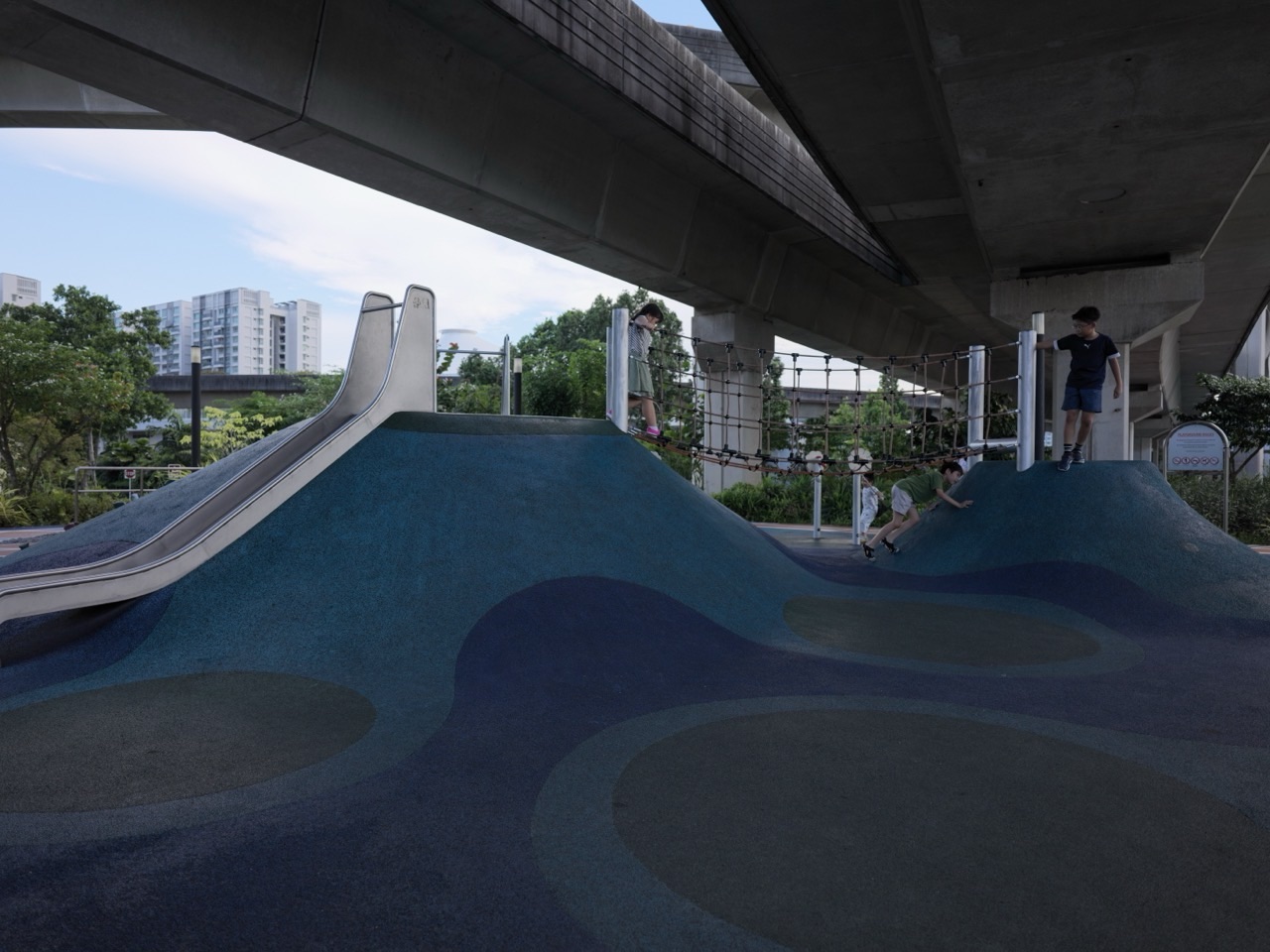
A child reaches a swing in a Punggol playground and a parent notices that one hanging chain looks twisted, a seat has split, or a connector appears partly open. The swing may still move, but that does not mean it is safe for another ride. Keep the child off the affected swing, avoid standing within its travel path and report the exact play area to the relevant Town Council, NParks or building manager. Do not pull on the chain to test its strength, tighten a connector with household tools or let someone use the seat to prove it still holds weight.
Singapore’s Health Promotion Board, through HealthHub, tells caregivers to look out for damaged playground equipment and supervise children carefully. It also advises children to use swings properly, hold on with two hands and avoid walking across a moving swing. HDB estates include shared playground facilities maintained through relevant Town Councils, and the OneService app accepts reports of broken neighbourhood play equipment. These official sources support a simple division of responsibility: families notice and avoid a hazard; trained and authorised maintenance teams inspect, repair and decide when the swing can be used again.
- Do not use a suspect swing: a damaged seat, loose suspension, sharp chain or moving frame needs assessment.
- Keep other children away: do not allow a second child to try it because they are lighter.
- Do not perform a strength test: swinging, pulling or hanging on the equipment can worsen damage.
- Notice the specific part: seat, chain or rope, upper connection, frame, ground anchor, or impact surface.
- Report the exact site: nearest Punggol HDB block, park entrance, play zone or permanent landmark.
- Use the right operator: Town Council for relevant HDB common playgrounds, NParks for its park facilities, MCST or building manager for private common play areas.
- Use OneService when useful: include a safe image, precise position, date and observed condition.
- For a real fall or injury: get appropriate care first; do not continue play or attempt DIY repair.
1. Not every swing uses an ordinary chain
Playground swings can use metal chains, ropes, enclosed suspension links or another approved attachment design. Some seats are flat, some are bucket-shaped for younger children, and others support different users under specified conditions. A family should follow the actual age and usage signs rather than assuming every model is intended for everyone.
The parts work as a system. A sound seat is not enough if a hanger is loose, and a sound chain does not compensate for a damaged frame or foundation. A resident’s report should identify the actual material and part without guessing at the technical load rating or manufacturer.
2. Why an obvious chain defect matters
A suspension chain transfers the weight and movement of the seat to the support frame. A visibly opened link, broken connector or unusual twist may change how it carries force. Someone cannot establish safe strength simply by looking at the remaining links or gently shaking the seat.
A child swinging adds movement and changing forces, so a structure that hangs normally at rest might behave differently in use. If a link appears damaged, avoid the equipment and report the exact side. Do not attach a replacement link or bend metal back into position without the authorised maintenance procedure.
3. A chain that is rusty versus one that is broken
Outdoor metal may show surface corrosion after years of exposure. Rust staining alone does not automatically prove a chain is about to fail, but a visibly thinned link, broken weld, crack, sharp edge or deformed connector is more concrete evidence of a problem. The real condition requires suitable inspection.
Do not sand, scrape or bend a link to discover whether the corrosion is deep. The operator should assess the material and decide if a component needs replacement. Tell staff what is visible rather than asserting the metal’s grade or remaining safe working load.
4. The upper attachment is easy to overlook
Many swings hang from a pivot or bracket near the top of the frame, partly hidden above normal adult eye height. If a visible connector is missing a component, tilted unusually or separating from its mount, the concern should be reported. Do not climb the frame for a closer look.
A support at height may need specialist access and safe isolation before inspection. A casual photograph from the ground cannot confirm its internal condition. The user only needs to describe the abnormal connection and avoid allowing children beneath the equipment until the operator assesses it.
5. A seat that has cracked or split
A seat may be made from rubber-like, plastic, timber-like or another material designed for outdoor play. A crack can catch clothing or affect how weight is distributed. A sharp fracture or missing piece can also injure exposed skin. The position and severity of a crack require proper evaluation.
Do not ask the child to sit on the unbroken side as a compromise. A seat that is partly damaged should be taken out of use until the responsible owner assesses it. A strip of household tape does not restore an approved playground product.
6. A seat that hangs unevenly
One side of a swing seat may sit lower than the other because of a suspension issue, twist, different connection length or another reason. Some specialty swing designs have non-standard seats, so appearance must be assessed against the intended model. A new or abnormal tilt deserves caution.
A family should not try to rebalance it by knotting a rope or looping a chain differently. Such changes affect geometry and can create pinch points or unexpected motion. The maintenance team can verify whether the suspension remains as designed.
7. The support frame and crossbar
An overhead beam or support frame carries forces from all swings attached to it. Visible cracks, unexpected movement, separated connections or a leaning upright can be serious concerns. The fact that another swing in the same frame appears undamaged does not automatically establish that the shared support is safe.
Keep children clear of the potentially affected structure and tell the operator. Only qualified personnel should decide whether one swing or the entire frame must be isolated. Do not attempt to test a post by pushing, shaking or swinging from it.
8. Ground anchors and foundations
Support posts may be fixed into concrete, buried foundations or another approved base. A widening gap, exposed anchor or unexpected movement can reduce confidence in the structure. A person cannot infer the actual foundation design from what is visible at the surface.
Do not dig around the base or use a lever to see whether the frame rocks. Report the observed movement and condition. The operator may need to inspect both the playground equipment and the surrounding surface to make sure the structural support remains appropriate.
9. Why swing movement is different from a static load
During play, a seat moves through an arc and the forces on its suspension change. The occupant may shift weight or jump off, and another child may push from behind. This is why hanging an adult briefly from a chain to ‘test’ it cannot establish safety under normal swinging conditions.
Good playground design and maintenance account for intended movement, but the public should not attempt improvised load tests. A legitimate inspection requires knowledge of the equipment and suitable procedures. The safest response to an obvious defect is to stop use and report.
10. A twist in a swing chain
A chain can sometimes appear twisted because children have spun the seat or the swing has been used in a way not intended. Excessive twisting can affect how the suspension behaves or create entanglement hazards. A resident should not assume twisting is harmless simply because the swing still moves.
HealthHub recommends appropriate use of play equipment and close adult supervision. Do not unwind a suspect chain by spinning a child repeatedly in the opposite direction. If the suspension appears distorted or damaged, tell the operator and use another safe activity.
11. Frayed ropes and other suspensions
Some playground swings use thick ropes or coated flexible components. Fraying, missing protective covers or exposed internal material can indicate wear and may catch skin or clothing. The significance depends on the product, but a visible defect is enough to justify reporting.
Do not cut away frayed fibres or tie the rope in a knot. Changes to length, tension or connection can make the swing unsuitable. A manufacturer-approved replacement may be needed. Keep the affected unit out of play until the responsible maintenance team checks it.
12. Pinch points around connectors
A moving swing can have places where fingers might become caught between the chain, seat and connector. Damaged or incorrectly assembled parts can increase the risk. Children often hold chains close to the seat, so a sharp or partly opened fitting is especially concerning.
Do not teach a child to reach into a connector to check whether it is loose. If the joint looks damaged, avoid the swing. The operator can compare the assembly with the manufacturer specification and replace or adjust it safely.
13. Playground impact surfaces matter too
The ground beneath a swing may be designed to cushion ordinary falls using an approved surface. Cracked rubber, exposed concrete, deep holes, loose surfacing or pooled water can create hazards even if the swing itself is intact. These are separate but related maintenance observations.
Do not assume any surface is safe for every fall height. The installed equipment and surfacing must be considered together under the applicable playground guidance. A resident can report visible damage or unsafe ground without measuring compliance or trying a fall test.
14. Why HealthHub stresses supervision
The HealthHub Growing Up Safe guide tells caregivers to check playground equipment for damage, choose age-suitable structures and supervise children to prevent injury. It also recommends holding on with two hands when swinging and not crossing the path of a moving swing.
Those behaviours support safe play but do not compensate for defective equipment. A parent can supervise perfectly and still encounter a broken chain. The correct response is to stop using the damaged station, not assume that caution alone makes an unsafe fitting acceptable.
15. Keep clear of the swing arc
The space in front of and behind a moving swing is part of the area needed for its motion. Children walking through it can be struck by the seat or occupant. A damaged swing may also move unpredictably, making the ordinary clear zone even more important.
If a child is already swinging and a defect is noticed, ask them to slow down and stop safely without grabbing a moving chain abruptly. Move others out of the path, then keep the unit unused while reporting. Do not race towards it or stand directly in front of the moving seat.
16. Why a broken bucket seat matters
Bucket-style seats are intended to provide a different kind of support for younger children. A split front, broken closure or missing component may affect how a child is positioned or contained during motion. It is not acceptable to improvise a replacement with string or tape.
Use the correct age-appropriate alternative when available. The operator must check the complete seat and attachment arrangement. A parent should never leave a baby or toddler unsupervised in a swing even when the equipment appears intact.
17. No standing or jumping from a damaged swing
Some children stand on flat seats, jump from a moving swing or twist the suspension to make it spin. Those behaviours can cause injury or damage even with an intact structure. With suspected equipment damage, attempting them adds further risk.
Parents and older students can reinforce the posted play rules. The lesson is about using equipment for its intended purpose and recognising when a defect means no play at all. It is not appropriate to test the swing’s limits to see whether the problem is serious.
18. What about children of different sizes?
Playground equipment has intended users and may display age or use guidance. A very large user on a structure intended for young children may introduce loads or movements outside the design. But an observed break should not automatically be blamed on a particular age group without evidence.
The operator needs to establish the actual component condition and cause through maintenance and incident records. Parents should follow the posted instructions and report damage rather than confront other users based on assumptions about who caused it.
19. A visible missing bolt is not a DIY job
A bolt or fastener at a seat connector may appear loose or absent. A passer-by may have a wrench in the car and think the repair takes seconds. But bolt size, locking method, torque and part compatibility matter, and an unauthorised fix can hide a deeper defect.
Do not replace public swing hardware yourself. The Town Council, NParks or private operator can arrange the right contractor and decide whether the affected station must be closed. A precise report identifies which connection appears abnormal without specifying an unverified part number.
20. The difference between a chain problem and a ground problem
A swing can be properly suspended while the nearby rubber surface is damaged, or the surface can be intact while the chain is unsafe. These require different inspections. A good report separates what is hanging above from what is underfoot.
If both issues appear, list them clearly: ‘right-hand chain connector looks partly open’ and ‘surface below the seat has a raised edge’. The operator can send the appropriate equipment and surfacing specialists. A single vague complaint about a ‘bad playground’ is less actionable.
21. HDB Town Council playground management
The HDB explanation of Town Council responsibilities says Town Councils manage and maintain common estate property and facilities. A public playground within an HDB precinct may therefore need a Town Council inspection and repair.
Give the block number, exact play area and swing position. Punggol contains facilities under different management arrangements, so do not assume every playground is maintained by the same organisation. A Town Council can confirm whether the asset is within its common property.
22. NParks park playgrounds
A playground in a public park may be maintained through NParks or another authorised operator. Its official contact channels accept park and facility feedback. A park name and nearest entrance are more useful than the name of a nearby housing estate alone.
Do not walk into a cordoned play area simply to identify a swing’s manufacturer. Use the nearest permanent landmark and a safe overview photograph. NParks or the facility operator can confirm ownership and inspect the damaged equipment.
23. Condo and private play areas
Private condominium playgrounds are generally managed through the MCST or managing agent under the property’s common facility arrangements. A visitor should report the concern through security or the property office rather than expect an HDB Town Council to attend.
The management body can decide which contractor, parts and closure process apply. A resident should not borrow spare swing parts from another facility or privately commission a modification without authorisation.
24. OneService’s damaged facility category
The OneService common-area guide expressly includes damaged playground equipment among problems Town Councils may receive. The OneService App and chatbot help route suitable municipal reports when residents do not know the exact responsible agency.
A report should include date, precise location and a clear description. The 2026 chatbot FAQ also permits a generic surroundings photo when a close photograph would be unsafe. Do not put a child on a suspect seat merely to meet an image requirement.
25. How to identify one swing among several
A playground may have multiple seats on the same frame, including different designs for different ages. Identify the affected one by position: left side when facing the frame from the approach, bucket seat closest to a path, or the swing nearest a named block.
If there are two similar frames, describe the location of the entire structure as well. A contractor who receives ‘Punggol swing broken’ might otherwise inspect the wrong play area. A wide image of the facility can help more than a close-up of one link without context.
26. A safety photo without touching equipment
From a safe public position, photograph the swing’s overall frame and the suspect part if visible. Do not climb above it, pull the chain towards the camera or direct another child to use it for a demonstration. If the damage cannot be captured without risk, write a detailed description instead.
Avoid photographs identifying unrelated children and caregivers. The maintenance issue concerns the public equipment, not the people who happen to be there. A neutral, privacy-conscious record supports the operator without creating an avoidable embarrassment.
27. When a swing should not be used
A visibly broken suspension, loose structural support or split seat is enough reason to choose another activity. Children may be disappointed and ask for ‘just one turn’, but there is no benefit in gambling on a damaged structure.
If the operator has put up a closure sign or tape, follow it. A parent should not remove a barrier or decide the swing looks repaired after someone has handled it. The responsible maintenance team determines when public use can safely resume.
28. Why a nearby swing might also need assessment
Two swings may share a frame, support beam or foundation. One damaged connector does not automatically mean the other seat is unsafe, but a common support problem could affect more than one unit. A resident cannot establish this without inspecting the actual structure.
If the frame or support appears compromised, keep children away from the whole affected assembly and report that observation. If only the seat covering is torn, the operator may isolate a smaller area. The decision should be based on professional assessment rather than a parent’s assumption that the other side looks fine.
29. What if a part fell onto the ground?
A missing metal piece, broken link or sharp seat fragment on the play surface may create an additional trip or cutting hazard. Keep children clear of the debris and notify the facility manager. Do not handle unfamiliar sharp components with bare hands.
The operator may need to inspect the entire swing and remove the fallen material safely. A part on the ground can be useful evidence about which component failed, so avoid carrying it home or throwing it away without direction from staff.
30. What if a child falls from a swing?
After a fall, the immediate task is the child’s safety. Assess the condition and seek medical assistance where warranted, especially if there is suspected serious head injury, loss of consciousness, unusual drowsiness, repeated vomiting, difficulty breathing, major bleeding or another concerning symptom.
Do not continue swinging to recreate the incident. The HealthHub information on head injuries in children provides general guidance, but a qualified medical professional must assess an actual injury. Equipment reporting and an incident record can follow once the child is safe.
31. Reporting without deciding blame
A broken chain may have resulted from wear, misuse, accidental impact, manufacturing fault or another issue. A public observer normally cannot establish the cause by looking at the broken component. Do not accuse a named child or neighbour of vandalism because they happened to use the swing earlier.
A fair report states the damage and time observed. If someone personally witnessed deliberate tampering, that can be shared with the appropriate authority as a factual observation, not a public accusation. The owner still needs to address the equipment safety whatever caused the defect.
32. How routine maintenance works
Playground owners and contractors can inspect components, wear, moving joints, foundations and surfaces according to applicable standards and the actual manufacturer’s instructions. A visual check by a resident cannot replace those controls. Operators may record findings and close defective units pending proper repair.
The exact inspection schedule depends on the owner and equipment type. Avoid claiming that every public swing must legally be inspected on the same day each month without citing an applicable requirement. What matters for a resident is reporting an observable defect promptly rather than waiting for a scheduled inspection.
33. Repairs may require approved parts
A swing’s connector, chain, seat and frame may be designed to work together with specific parts and attachments. Substituting an ordinary hardware-store chain or carabiner can introduce wrong dimensions or failure points. Repair should follow the equipment’s specifications.
A competent maintenance team may need to replace a section, renew the entire suspension or assess the support. A parent should not choose a replacement merely because the metal looks thicker. The owner must confirm suitability and safe reopening.
34. A Punggol preschool family example
A parent and preschooler visit a neighbourhood playground. The child approaches a bucket swing, but the parent sees a split seat near a strap or side support. They keep the child off that swing, select another suitable activity and report the precise location through the managing operator.
This is a hypothetical example, not a claim that any named Punggol playground has broken equipment. It demonstrates a simple safety decision: do not attempt a trial ride, do not photograph the child on the faulty seat and provide accurate observations for the maintenance team.
35. An older child’s swing example
A school-age child notices that a flat swing sits at an unusual angle and one chain appears twisted. A responsible adult tells the child not to use it and explains that an unknown attachment problem needs professional inspection. They record which side is affected and report it.
The lesson is not that every twist is structural failure. It is that children should not test unfamiliar moving hardware with their own weight. The operator can verify whether the chain needs proper untwisting, adjustment or replacement.
36. A park after heavy rain
A family passes a swing area after rainfall and sees water pooled around the support post, with part of the surfacing lifted. The swing itself appears intact, but the ground condition creates concern. The family avoids the slippery area and reports the base and surface separately.
This is distinct from a broken chain, yet it illustrates the need to assess the whole play environment. The owner may need drainage, surface repair or foundation inspection. Do not dig around the pole or use the swing to see whether the base moves.
37. A loose upper connector example
An adult notices a metal connection near the top of the frame appearing open or unusually tilted. They keep children away from the whole affected frame and send a report using the nearby block and a safe photo from the side. They do not climb the equipment for a closer look.
The operator can assign an appropriately qualified contractor and decide whether the whole assembly must be isolated. The public does not need to name the connector’s engineering type to provide useful evidence.
38. Why a parent should not issue an unofficial repair notice
A well-meaning parent might tape a handwritten ‘swing broken’ sign to the chain. While the intention is to protect others, the sign can fall, create litter or give the false impression the writer has official control over the site. A more effective action is to report directly and request proper isolation.
If immediate bystanders need warning, tell them respectfully without touching the equipment or blocking paths. The responsible operator can install authorised signage or barriers according to its maintenance process. Do not tie a rope around the swing to prevent movement.
39. What makes a follow-up useful
If the operator confirms a repair but the equipment still appears abnormal, refer to the original report and provide a fresh dated observation. A second issue may have developed, or the original part may need further attention. A factual account is better than asserting poor workmanship without evidence.
Do not ask someone to demonstrate the unresolved defect by swinging. The manager can inspect under controlled conditions and communicate whether the unit remains closed. A resident’s role is careful observation, not re-testing an uncertain structure.
40. The family safety takeaway
Playgrounds are places for movement, confidence and fun, but a damaged swing should not be treated as another challenge to overcome. A child needs a suitable, intact seat and suspension, clear swing path and safe ground. Families should observe, supervise and stop use when something seems physically wrong.
Maintenance teams have the responsibility to inspect equipment and approve repairs. Accurate reports with a location and actual symptom help make the facility safer for later visitors. That is the practical purpose of this guide, rather than a claim that any specific Punggol swing is defective.
Swing defect reporting checklist
- Keep the child off the affected swing and clear of its travel path.
- Identify the specific seat, chain or rope, upper connector, support frame or ground surface.
- Do not pull on the equipment or ask anyone to test its strength.
- Record the nearest Punggol block, park name, path and play-area position.
- Take a safe overview photo without involving a child in a demonstration.
- Report an HDB common playground to the Town Council or suitable OneService channel.
- Use the actual NParks or private operator contact for other premises.
- Mention sharp pieces, hanging fittings or possible falling hazards explicitly.
- Obtain medical help if anyone has already been injured.
- Follow closure notices and save the report reference.
Frequently asked questions
What should I do when a swing chain looks loose?
Stop use, keep children clear, note which side or link appears abnormal and report it to the operator. Do not test the chain by pulling on it.
Is rust on a swing chain proof it will break?
Not automatically. Rust can be a maintenance clue; visible deformation, cracks or looseness need professional assessment.
Can I tighten a swing bolt with my own tools?
No. Public equipment must be repaired by the authorised owner or qualified contractor using suitable parts and procedures.
What if only one swing seat is cracked?
Do not use that seat. The operator can assess whether one unit or the whole shared frame must be isolated.
Can my child use the other swing on the same frame?
The answer depends on whether the common support is affected. If the frame or anchor looks unsafe, keep clear and let the operator decide.
Should I let a smaller child test the damaged seat?
No. Lighter weight does not make an uncertain or broken component safe.
Why shouldn’t children twist swing chains?
Twisting can lead to abnormal movement or entanglement and may exceed the intended use. Follow posted playground instructions.
Can I replace a damaged chain link?
Do not make unauthorised substitutions. Connector design and compatibility matter; the equipment owner should arrange repair.
What if the swing is hanging at a strange angle?
Avoid it and report the actual position and suspension condition. Do not try to rebalance it with knots or adjusted links.
Who maintains a swing in an HDB playground?
The relevant Town Council typically manages common estate playground facilities. Confirm the precise location.
Who maintains a park playground?
NParks or another authorised park operator may be responsible. Use official site signage and contact information.
What if the playground belongs to a condo?
Contact its MCST or managing agent; HDB does not automatically maintain private equipment.
Can OneService route playground damage?
Yes. Its official service accepts damaged municipal facilities, including playground-related issues, with location and photographic information.
Should I test a chain by hanging on the swing?
No. A test with your body is unsafe and not an engineering inspection.
Can I attach warning tape to the swing?
Do not make unauthorised modifications or create new entanglement hazards. Tell the operator and warn nearby users respectfully.
What if a swing has no safety strap?
Not every swing design has straps. Follow the intended age and type. A broken fitted restraint is a different issue and should be reported.
What if rubber ground surfacing is torn?
Report the specific surface damage separately, even if the swing itself appears sound.
What if a child falls and seems unwell?
Obtain prompt medical attention for worrying symptoms or possible significant injury. HealthHub provides general information, not a diagnosis.
Does every Punggol playground have the same swings?
No. Different play spaces have different equipment and intended ages. This article does not allege any particular swing is damaged.
What is the fastest useful report?
‘At playground [location], the [seat/chain/anchor] on the [position] swing appears [actual observed defect] on [date/time]; please inspect and make safe.’
Official sources and related Punggol reading
- HealthHub — Growing Up Safe, Playground Safety and Damaged Equipment
- HDB — Town Councils and Shared Estate Maintenance
- HDB — HDB Neighbourhood Playgrounds and Shared Facilities
- OneService — Reporting Damaged Playground Facilities
- OneService — Municipal Feedback and Repairs
- OneService — Precise Locations and Photos
- NParks — Park Facilities and Reporting
- eduKate Punggol — A Separate Guide to Playground Shade Canopy Defects
Reviewed 11 November 2026. This is an educational playground safety and reporting guide, not an inspection of a particular swing or a determination of compliance with a specific standard. Follow the relevant owner’s rules and let trained maintenance teams assess and repair damaged equipment.


